Since it was first published in 2006, this beloved volume of essays by A. R. Venkatachalapathy on the cultural history of colonial Tamilnadu has been enjoyed equally by scholars looking for rigorous history-writing and lay informed readers in search of a classic good read. The new expanded edition hopes to do more of the same.
The author draws from sources as varied as poetry, fiction, essays, reviews, comments, advertisements, and notices to bring to life a rich and vibrant cultural history. As authoritative as they are captivating, the ten essays in the volume represent a valuable addition to the small corpus of history titles which also qualify as accomplished writing.
A.R. Venkatachalapathy, historian and Tamil writer, is a Professor at the Madras Institute of Development Studies, Chennai. He has taught at universities in Tirunelveli, Chennai, Singapore, and Chicago. A recipient of the V.K.R.V. Rao Prize, the Mahakavi Bharati Award, and the Ramnath Goenka Award he has also received the Vilakku Pudumaippithan Award and Iyal Virudhu, both for lifetime contribution to Tamil. In 2024, he won the Sahitya Akademi award for Tamil. Venkatachalapathy has written/edited over thirty books in Tamil. His publications in English include Swadeshi Steam: V.O. Chidambaram Pillai and the Battle Against the British Maritime Empire (winner of the Ramnath Goenka Award for Excellence non-fiction, 2024); The Brief History of a Very Big Book: The Making of the Tamil Encyclopaedia; Tamil Characters: Personalities, Politics, Culture; Who Owns That Song?: The Battle for Subramania Bharati’s Copyright; and The Province of the Book: Scholars, Scribes, and Scribblers in Colonial Tamil Nadu.
In The Health and Wealth Paradox, Ankush Datar and Mihir Patki present a set of principles. These principles of health and wealth are known already to everyone but the emphasis that the authors place on them being so intertwined with each other that one can learn from either discipline and apply those lessons to both. Principles such as less is more, your plan is your north star, delayed gratification, and to never judge a book by its cover. These also lend themselves to the chapter titles. Based on decades of their combined experiences in overcoming lifestyle diseases, creating sustainable patterns of healthy eating and workouts without compromising on occasional binges, and building a robust investment process for wealth creation, Datar and Patki bust popular myths, provide an actionable toolkit and endeavour to bring sanity back to the lives of many who have given up on the idea of having health and wealth together.
Ankush Datar is an investment professional, health and fitness enthusiast, and writer. He has been working in the professional investing field for the last eight years and is currently associated with PhillipCapital India in their portfolio-management services fund-management team, giving him a ringside view of the investing profession. He is a marathon runner and weightlifter, and has been doing both for the last fifteen years. He has also contributed articles to financial-services publications, appeared on podcasts and written blogs for health-tech startups and brands. He writes a personal blog on investing, health and psychology, and how these disciplines converge.
Mihir Patki is an investment professional with a deep passion for personal finance and nutrition. He started his career at Deloitte before transitioning to various capital markets roles with Bank of America Merrill Lynch and JM Financial. From 2013 to 2020, Mihir led CVK Advisors, a boutique advisory firm where he focused on special situations credit. In 2020, he co-founded Multipie, a social network for investors that grew into a vibrant community of over 1 lakh members from novices to seasoned experts. Multipie was acquired by ICICI Securities in 2022. Mihir currently works with Tata Capital’s structured finance team. He is a chartered accountant and holds an MBA from the University of Oxford.
A provocative new vision of how our world really works – and why chance determines everything.
In Fluke, myth-shattering social scientist Brian Klaas deep-dives into the phenomenon of randomness, unpicking our neat and tidy storybook version of events to reveal a reality far wilder and more fascinating than we have dared to consider. The bewildering truth is that but for a few incidental changes, our lives – and our societies – would be radically different.
Offering an entirely new perspective, Fluke explores how our world really works, driven by strange interactions and random events. How much difference does our decision to hit the snooze button make? Did one couple’s vacation really change the course of the twentieth century? What are the smallest accidents that have tilted the course of history itself?
The mind-bending lessons of this phenomenon challenge our beliefs about the very workings of the world. From the evolution of human biology and natural disasters to the impact of global events on supply chain disruptions, every detail matters because of the web of connectivity that envelops us. So what if, by exploding our illusion of control, we can make better decisions and live happy, fulfilling lives?
Brian Klaas grew up in Minnesota, earned his DPhil at Oxford, and is now a professor of global politics at University College London. He is a contributing writer for The Atlantic, host of the award-winning Power Corrupts podcast, and frequent guest on national television. Klaas has conducted field research across the globe and advised major politicians and organizations including NATO and the European Union. Klaas also writes a newsletter called The Garden of Forking Paths.
One ancient language transformed our world. This is its story.
Star. Stjarna. Stare. Thousands of miles apart, people look up at the night sky and use the same word to describe what they see.
Listen to these English, Icelandic and Iranic words and you can hear echoes of one of the most extraordinary journeys in humanity’s past. All three of these languages – and hundreds more – share a single ancient ancestor.
Five millennia ago, in a mysterious Big Bang of its own, this proto tongue exploded, forming new worlds as it spread east and west. Today, nearly half of humanity speaks an Indo-European language. How did this happen?
In Proto, acclaimed journalist Laura Spinney sets off to find out. With her we travel the length of the steppe, navigating the Caucasus, the Silk Roads and the Hindu Kush. We follow in the footsteps of nomads and monks, Amazon warriors and lion kings – the ancient peoples who spread these tongues far and wide. In the present, Spinney meets the linguists, archaeologists and geneticists racing to recover this lost world. What they have discovered has vital lessons for our modern age, as people and their languages are on the move again.
Proto is a revelatory portrait of world history in its own words.
Laura Spinney is a science journalist and writer. She is the author of the celebrated Pale Rider: The Spanish Flu of 1918 and How it Changed the World. Her writing on science has appeared in National Geographic, Nature, The Guardian and The Atlantic, among others. Born in the UK, she lives in Paris.
‘Laura Bates explains how they built the future – and forgot to put women in it’ CAITLINMORAN
‘Fascinating and essential… I urge you to read every syllable’ JO BRAND
‘All men must read this book if they have any interest in a truly just, fair and equal society’ ROBIN INCE
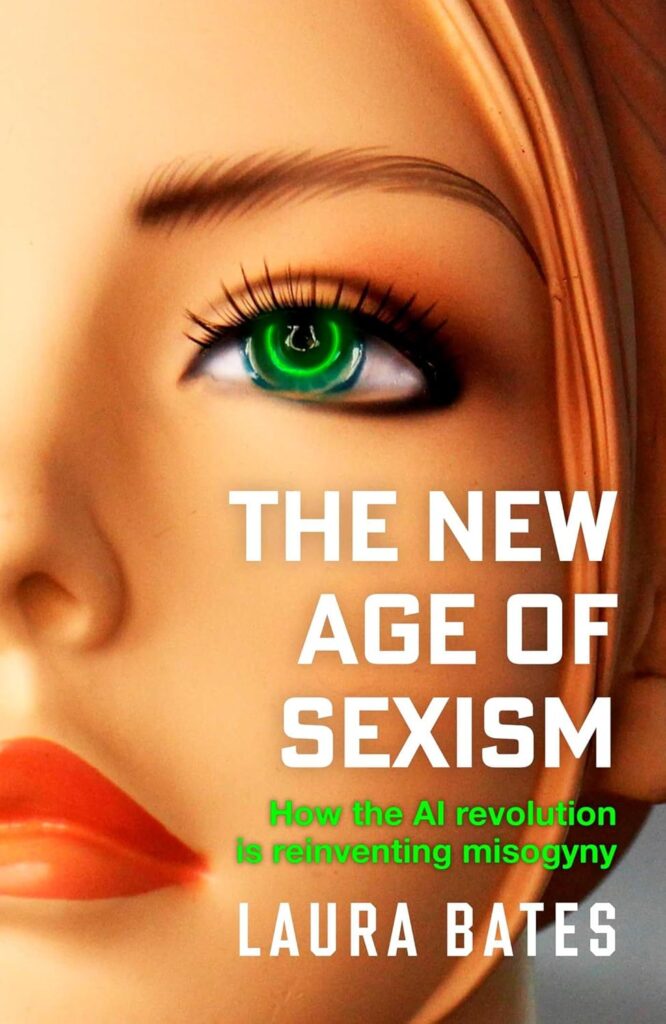
AI is here, bringing a seismic shift in the way our society operates. Might this mean a future reimagined on equitable terms for women and marginalised groups everywhere?
Not unless we fight for it. At present, power remains largely in the hands of a few rich, white men. New AI-driven technologies, with misogyny baked into their design, are putting women in danger, their rights and safety sacrificed at the altar of profitability and reckless speed.
In The New Age of Sexism, Sunday Times bestselling author and campaigner Laura Bates takes us deep into the heart of this rapidly evolving world. She explores the metaverse, confronts deepfake pornography, travels to cyber brothels, tests chatbots, and hears from schools in the grip of online sexual abuse, showing how our lives – from education to work, sex to entertainment – are being infiltrated by easily accessible technologies that are changing the way we live and love. What she finds is a wild west where existing forms of discrimination, inequality and harassment are being coded into the future we will all have little choice about living in – unless we seize this moment to demand change.
Gripping, courageous and eye-opening, The New Age of Sexism exposes a phenomenon we can’t afford to ignore any longer. Our future is on the line. We need to act now, before it is too late. ‘Urgent reading for anyone who is interested in the intersection of tech and gender equality, and indeed anyone who wants to be a part of building a better future, free from misogyny’ EMMA-LOUISE BOYNTON
‘A brilliantly researched, incredibly illuminating and frequently chilling account of the next chapter in tech’s ongoing assault on our core values. A chapter that is already unfolding around us all’ JAMES O’BRIEN
Laura Bates studied English at Cambridge University and went on to be a freelance journalist. She has written for TheGuardian, The Independent, The New Statesman, Red Magazine and Grazia among others. She is also contributor at Women Under Siege, a New-York based organisation working to combat the use of sexual violence as a tool of war in conflict zones worldwide. She is the founder of the Everyday Sexism Project.
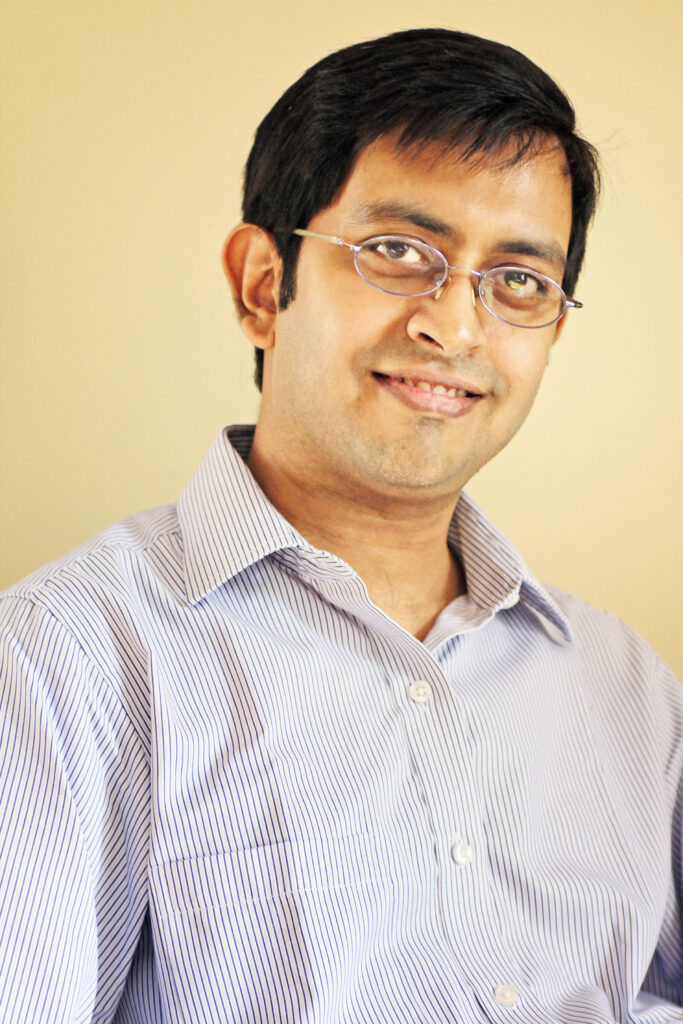
Bhaskar Chattopadhyay is an author, screenwriter and academic. He is Professor of Cinema, York University, Toronto. He divides his time between writing, publishing, teaching and research. He has written sixteen books and one feature length film. His popular mystery series featuring the astute detective Janardan Maity and his friend and chronicler Prakash Ray have six novels, with more to come. Bhaskar has translated veteran Bengali authors including Rabindra Nath Tagore, Bibhutibhushan Bandyopadhyay and Satyajit Ray. He has novelized Satyajit Ray’s iconic 1961 film Nayak, and written a book titled The Cinema of Satyajit Ray that is taught in universities and film schools around the world. Bhaskar’s first feature film released to packed theatres and was received well by audiences and critics alike. Bhaskar has an MFA degree in Screenwriting and an MBA in Marketing. He had a long corporate career during which he worked for such companies as GE, Cognizant and Capital One. Bhaskar is based in Toronto, Canada.
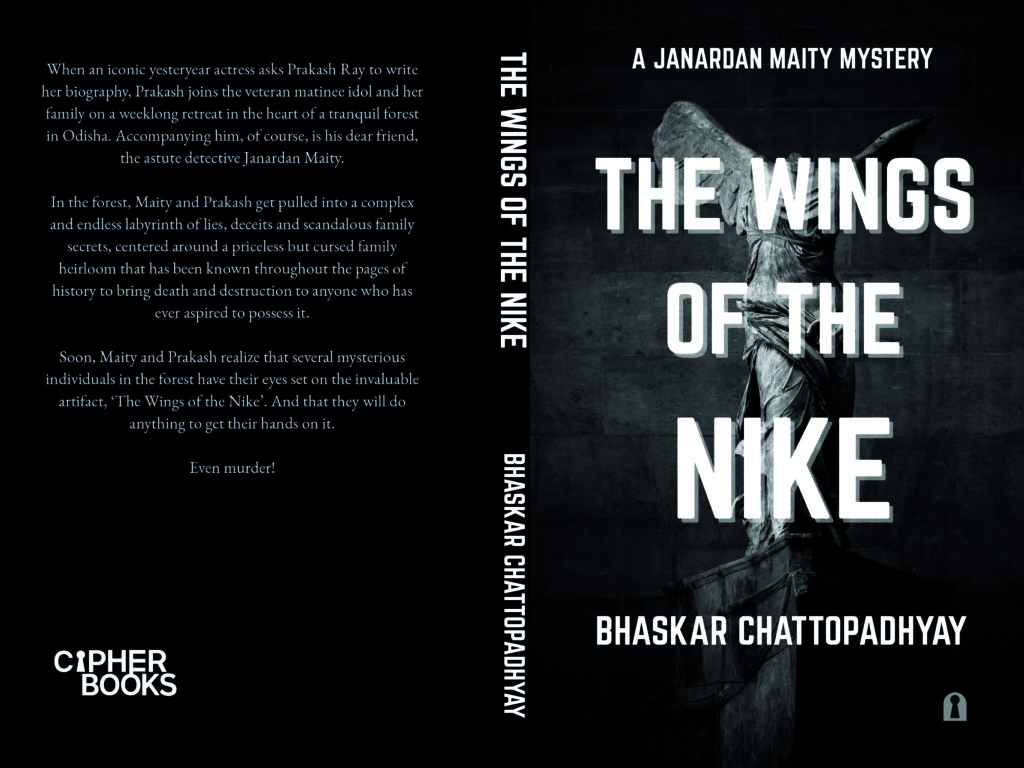
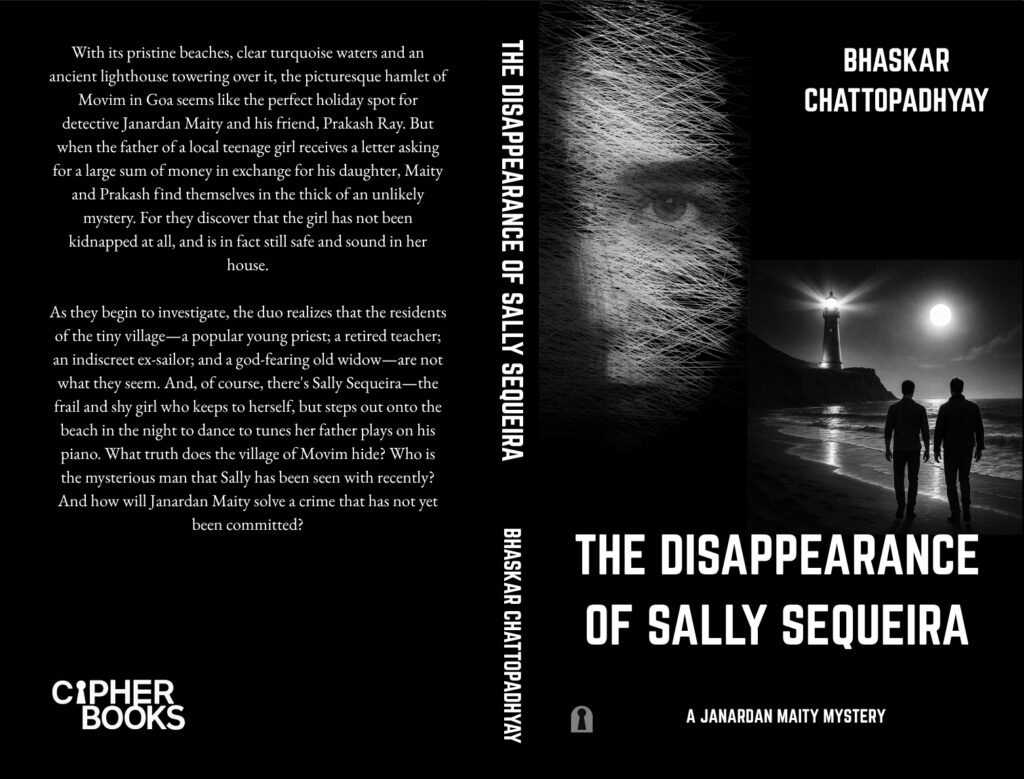
Recently, Bhaskar Chattopadhyay launched his own imprint titled Cipher Books (see logo). It is registered in Canada. The first book to be published under this imprint is The Wings of the Nike (see cover attached), which happens to be the sixth book in the popular Janardan Maity mystery series. So far, he had been published by traditional publishers such as Penguin Random House India, Harper Collins India, Hachette India, Westland Books etc. But the idea of creating his own imprint had been with him for several years now except that he couldn’t get around to doing it. Now that he has, the plan is simple. Ambitious, but doable. In fact, the launch of his first book has proven that he with the first book that has been published in this new model he has “already earned significantly more than what [he] had earned in all the previous books combined through traditional publishing”.
Janardan Maity (without the H) is the Bengali ‘bhodrolok’ detective from Kolkata, although he hates being called a detective. He reads widely, relishes the finer tastes of life – good food, good coffee, music, cinema – and has an unshakable ethic that can sometimes go beyond the law. His dear friend and chronicler is an author named Prakash Ray, who is several years younger than him. Maity is in his early 50’s, Prakash in his early 30’s. The two men travel a lot, and seem to get entangled in baffling mysteries. Sometimes, people come to Maity to ask for his help in solving a ‘case’, Maity agrees to help if the case appeals to his intellect, or if he feels the request for help is genuine. Even Kolkata Police come to him for help in certain complex situations.
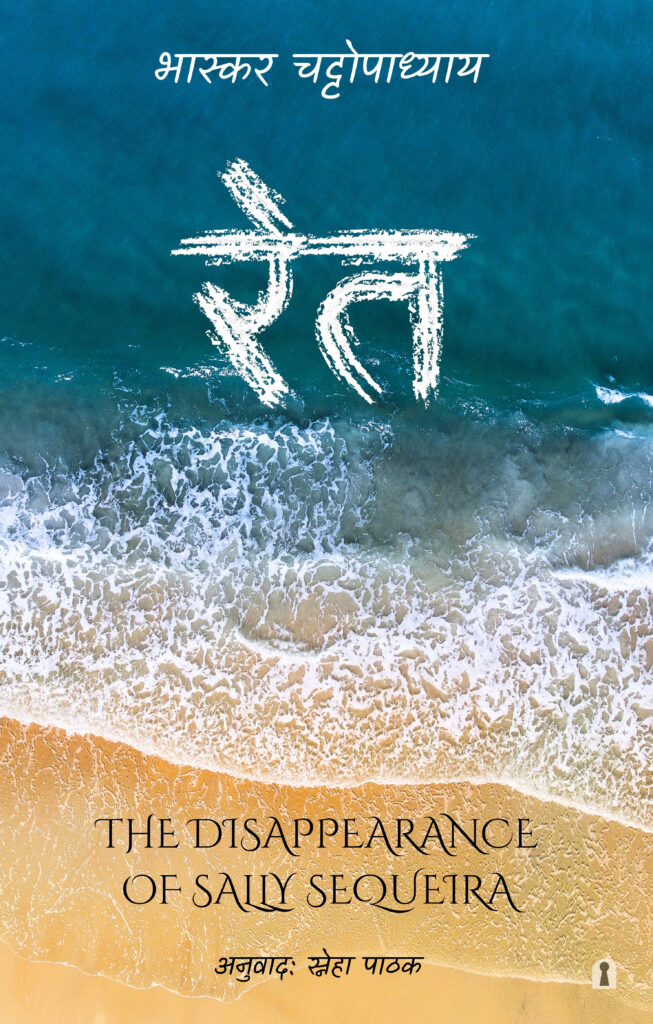
He plans to publish all his Maity novels (including the previous five books in the series) under the imprint of Cipher Books. This will include short stories, novellas and plays, all featuring Maity and Prakash. Alongside, he plans to publish translations of Maity novels in Indian and non-Indian languages. The first translation is ready and will be published relatively soon. It is a Hindi translation of his novel The Disappearance of Sally Sequeira, by Dr. Sneha Pathak. Sally has been one of the most popular Maity novels, and it is only fair that it reaches a larger audience. French, Swedish and Korean language translations are planned too, as are books in accessible formats. Working with a team of believers, translators who adored his books and the approached him, is like hitting the jackpot. They will help lift the Maity stories like it has never been done before.
The overall idea is to create an entire ecosystem of stories around these two much-loved characters that readers seem to be waiting so eagerly for — at least that’s what the reviews say. The previous books in the series are (Maity novels can be read in any order, without loss of information):
Penumbra
Here Falls the Shadow
The Disappearance of Sally Sequeira
Best Served Cold
Aperture
The following interview with Bhaskar Chattopadhyay was conducted via email over a few weeks. It was not done in a hurry as there were so many interesting titbits that he was sharing regarding the expansion of the publishing space. The conversation has been lightly edited.
Your enthusiasm for the future of your books is infectious. You are super-excited, as it should be. Nothing else will keep you going through the highs and lows of publishing.
Thanks for the kind words, Jaya. To answer your questions, I am planning to take Maity to various readerships in India, hence the translations. English language readership is but a fraction of all the books read in India, and I would like to take my stories to this vast reader base. Similarly, I want to take Maity global, hence the non-Indian language translations. I now live in a small town in the suburbs of Toronto, which is a pretty cosmopolitan city. Many of my friends, colleagues and neighbours have read my books, and I was quite surprised to discover that the stories seemed to have crossed the boundaries of milieu. Every story has its own milieu. My Maity stories, for instance, are quintessentially Indian. They have been written with the Indian reader in mind. So, I was surprised to find that people from all over the world enjoyed reading these stories. I can only attribute this to two facts: a) the puzzle at the crux of every single one of these stories is an extremely interesting one (baffling, and yet, interesting), and b) the themes I cover in these stories are universal in nature, the themes themselves are not confined to a specific milieu.
Even the nuances of Indian writing didn’t deter them. It was this unexpected discovery that led me to think of this plan. But I also know that my primary readership was, is and will continue to be India. These are Indian stories, and like Satyajit Ray never ever made a film without keeping the Bengali audience in mind (despite being such a global figure), I wouldn’t stop writing stories that are quintessentially Indian.
I will fund the entire project myself. When it comes to recovering costs, the books will pay for themselves, and hopefully gather traction. That’s the goal. Of course, my main profession is teaching cinema, and I will continue to do that, alongside my screenwriting. Now that I have a degree in screenwriting, and now that my first feature film did so well, I have run out of excuses for not writing more and more films!
Why have you been keen to launch your own imprint?
The first and foremost reason was to have better control – editorial, marketing and commercial. For instance, I would want to publish one Janardan Maity adventure every year, but that may not be the publisher’s vision. I wanted to have total control over how and where my book was being marketed. Similarly, I wanted to take Maity stories beyond the novel format – to short stories, novellas, screenplays and even plays. This wouldn’t have been possible with a traditional publisher, as their focus is primarily on novels.
You mention that you have written sixteen books so far, have all the rights reverted to you? Why am I under the impression that you wrote for theatre too?
Out of the sixteen books I have written, there are translations, non-fiction, novelizations, and my original fiction. Among these, I have taken back the rights to only my Janardan Maity series, all other books are with the respective publishers. As for theatre, I have not written a play so far, although I intend to. I did translate a play once — Abhishek Majumdar’s Dweepa.
Which feature film did you write recently? Are the themes of your feature films different to your books?
I wrote Tekka, and it was directed by Srijit Mukherji, who made it in Bengali. It tells the story of a wrongfully fired janitor who takes a little girl hostage in the same office building he was fired from. It is a spiritual sequel to my novel Patang, part of a city trilogy that I have planned. Although the themes of the two stories are different, they are both set in the heart of urban metropolitans, and talk about the cracks and rifts in contemporary city-centric civilization.
When you create a series, do you first develop a series arc or do you work from book to book?
I work book to book, story to story, I don’t have a series arc in mind, I would rather let the stories take the two central characters forward in their lives. Having said that, I did plan to create my series in such a way that the individual books (or stories in other formats) can be read and watched in any order. I did this so as to not have any constraints of following a specific order in order to enjoy the stories.
How will your publishing programme recover its costs? Why are you not keen to explore crowd funding as Brandon Sanderson did? There are so many income generating possibilities now. What is going to be your bouquet offering?
To be honest, I haven’t thought that far ahead. I know I want to do this, because this is the right thing to do, and that’s all the reason I need. I do know that if anything, I won’t lose money. With the first book that has been published in this new model (The Wings of the Nike – the sixth Janardan Maity mystery), I have already earned significantly more than what I had earned in all the previous books combined through traditional publishing. But like I said, it’s not about the money, I just want to have better control over my stories. I want to do what I want with my stories. I have an immense amount of faith in my readers. I know that they will read my stories irrespective of who publishes them – a big brand, or my own tiny brand. It simply won’t matter to them.
Please elaborate on your translation initiatives. It is an incubation and innovative process that sounds utterly fascinating. How will you assess the quality of translation in the destination language if you are unable to understand it?
It’s a simple model, really. Through my friends, I reach out to translators from all over the world. I send them the original and ask them if they’d be interested in translating it. I offer them 50% of all revenues earned. If they agree, I have their translations read and edited by a second person who my friends have vouched for, and who knows the language. Then I publish them and do my marketing. It’s a very simple model; I like to keep things simple.
How did the Hindi translation happen? You commissioned it or was the translator keen to work with you?
The translator reached out to me (many translators do, Hindi, Bengali, Odia, Marathi…) I liked her approach and encouraged her to go ahead. I have a royalty sharing arrangement with my translators. They earn the same amount as I do. All my translators are part of the Cipher family; they literally live and breathe the Maity stories. I would love to have Maity stories translated in several Indian languages.
One of the things I liked was that she came to me with a sample chapter that she had translated. Not only did it make my job easier, she instantly had my attention. I thought that was a very professional thing to do. The other thing I liked about her is that I have known her to be a long-standing diehard fan of the Maity novels. That passion itself is worth its measure of prowess, of which she lacks not one bit. As for the other translators, I am not in a position to talk about those projects at the moment, because we are still in discussion. They are equally passionate too.
Has the first Hindi translation of your book been published? What has been the reception so far?
Not yet, it has been written and is being edited now. The cover has been released; the book will be published by the end of this year. It is titled ‘Ret’ (sand), and is the translation of the third book in the Janardan Maity series – The Disappearance of Sally Sequeira – in which Maity and Prakash have gone to the picturesque little village of Movim in South Goa to spend a few days of rest and recharge, but are soon embroiled in a bizarre mystery: the father of a young girl has received a ransom note asking for a huge sum of money in return of his daughter. But the girl has not been kidnapped at all, and is safe and fine in her home. Since I have deliberately designed the Maity series in such a way that the books can be read in any order without any loss of information, I decided to release the third book first.
The foreign language translations that you mention were brokered by you via email / cold calling or did you travel to specific book fairs?
Mainly through my friends’ network. Since I don’t know the language, I usually look for TWO people who do: one of them translates it, the other reads it and gives me honest feedback. This process takes time, but the translations will be published soon.
Are your publishing initiatives completely human driven or will there be some reliance on AI?
I am not a big fan of AI when it comes to creativity. Artificial Intelligence has still a very long way to go before it can tell interesting stories. So, to answer your question, no, there would be no reliance on AI at all.
How do you propose to create “an entire ecosystem” around the two characters? Is it possible to share some more details?
By that I mean I would like to have the stories told in all kinds of formats — novels, novellas, short stories in print, but also audio books, audio plays, theatre, television and of course — the cinematic format too. In other words, everyone should be able to enjoy the Maity/Prakash stories, they mustn’t remain confined to any single format. Similarly, I would like to do this entire thing in multiple languages — Indian and foreign.
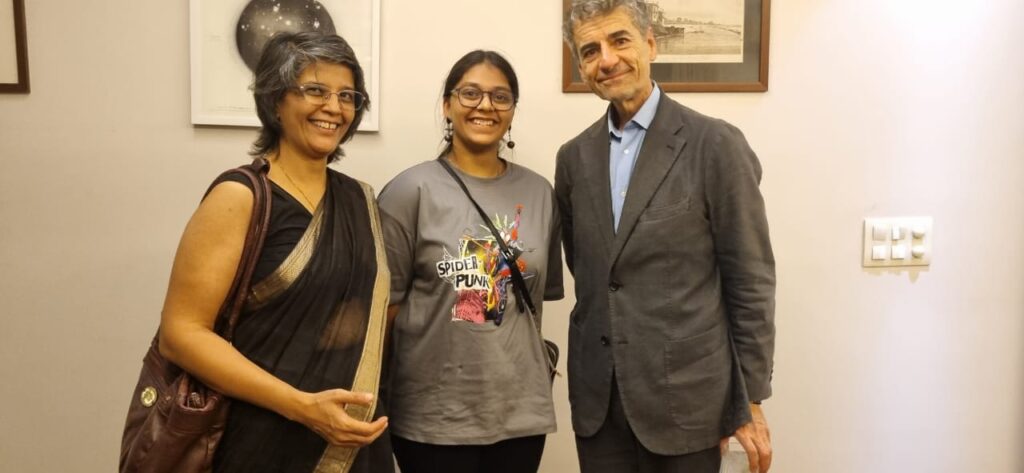
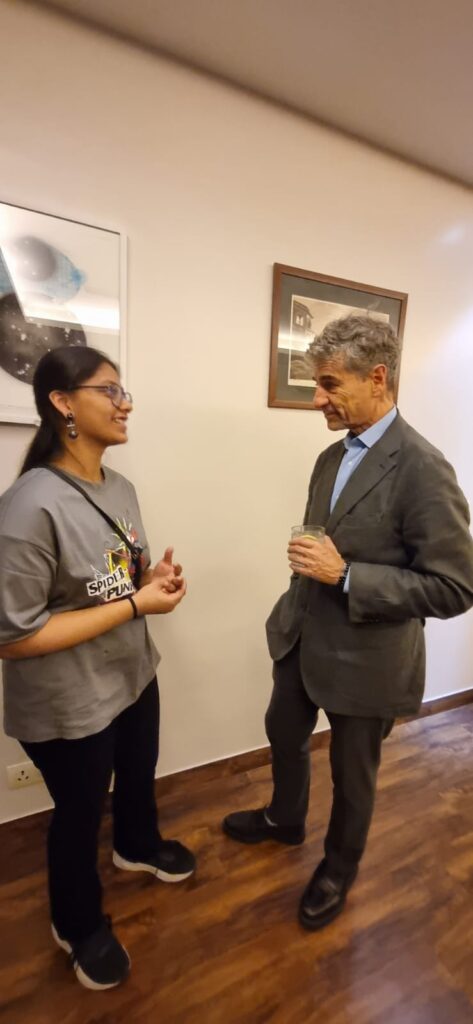
On Friday, 3 October 2025, I was invited to an exclusive interaction with Andres Velasco — economist, former Finance Minister of Chile and Dean of the School of Public Policy at the London School of Economics and Political Science. He has co-edited The London Consensus: Economic Principles For The 21st Century. It is forthcoming by the LSE Press. It was a select gathering, by invitation only, that included journalists (international and national), policy makers, lawyers, and academics. The discussion that ensued was fascinating. With the gracious consent of the hosts, I was accompanied by my daughter, who heard the conversation in wide-eyed wonder. Her eyes were twinkling with excitement listening to Andres Velasco’s speech and the discussion that ensued. She was the only teenager in the room and as someone rather dismissively said to her “Oh, you are the kid”. Well, this kid witnessed a good discussion and took back some of it with her to mull over. She enjoyed her 1:1 conversation with Anders Velasco who did not talk down to her and instead heard her out. He was in full agreement with my parenting of taking children everywhere as he does the same with his. His parents did the same. My parents did the same. This is how childhood memories are created and over a period of time when these kids become adults, they will learn to connect dots and build upon what they were taught.
Book blurb
A generation ago, the so-called Washington Consensus laid out a series of dos and don’ts for policymakers around the world. Today, that vision is recognised as having fallen short in a number of ways – particularly in its neglect of the social and institutional factors that are indispensable for achieving sustained growth and for building fairer and more cohesive societies.
The immense challenges humanity faces are easy to list: climate change, pandemics, social inequalities, the far-reaching effects of the tech revolution and AI, a fragmenting world economy, and a wave of populism and political polarisation that has undermined support for liberal democracy in many countries. It is much harder to identify a set of new ideas – and policies – that will solve these seemingly intractable global problems.
In this new world, political leaders and policymakers need guidance and principles that can assist when choosing among policy alternatives. To this end, the editors of this volume convened over 50 of the world’s leading economists and policy experts at the London School of Economics and Political Science (LSE). The London Consensus: Economic Principles for the 21st Century is the result of these exchanges. It is not intended as a one-size-fits-all set of economic remedies, but an exercise in assembling the best available evidence and ideas to foster dialogue, and ultimately to develop a set of principles that can address the urgent political, social and economic tasks ahead.
A friend asked for a list of books to recommend to university students. They had been invited to address the students. I have thought long and hard about it but the best I could do was the following. It is tough recommending a list of books to read. I usually structure it acc to every individuals interests.
Read anything that you like. Go into a bookstore or a library, browse, flip, and pick up any book that you like. Don’t fall prey to the mantra that this is a classic or this is the buzz or this is the genre you must read. Read, read, read. Read eclectically. Read voraciously.
Learn to challenge yourself. Rewire your brains. The brain grows till the age of 25, after which it is the constant rewiring that keeps it alive and keeps the individual young. Read. Read in the language that you are most comfortable in but for the purposes of profession and education, you may need to engage with English too.
Listen to audio books if you must, but do it sparingly. Devote a few minutes of about 15-20 min (for starters) every day to reading. It does not matter if you find it tough to understand at first. Or you are stuck on a line. Or even on the first page. It will get easier with time. Learn to read words, string them together in a sentence, develop the idea in a paragraph, take it to the next paragraph, remember the thought/emotion conveyed over into the next page and more and more. Learn to connect dots throughout the text. Whether mentioned explicitly or in the subtext. Immerse yourself.
Expand your vocabulary from the basic 800 words that will enable you to get by thinking you know a language. But, you do not. Learn to read, write, and express yourself in a manner that will teach you to read/ communicate in a nuanced manner.
Every profession, even engineers and doctors, rely on their writing and reading skills. On an average, every professional spends 50-60% of their time reading and writing, particularly if they wish to be good professionals. Some, such as journalists, may devote up to 80% of their time on reading and writing. But this is something that cannot be ignored.
Look up words you don’t understand. Look up words you think you know but don’t really. It helps to keep a notebook of new words.
Books to read:
Anthologies of short stories — best way to introduce yourself to a vast array of writers, writing styles, periods of literature and perhaps some even in translation. As you become a more confident reader, read longer stories and branch into reading novels. These could be commercial fiction to literary fiction. Try. Don’t say no.
Longreads in journalism — excellent stories being published online now. Look at the website aggregator “Longreads”. Otherwise, The Guardian, Caravan, The NYT, The New Yorker etc.
Fiction and non-fiction of any kind. History, biographies, thrillers, short stories, novels, historical fiction, travelogues, comic fiction. commercial fiction, espionage, legal dramas etc.
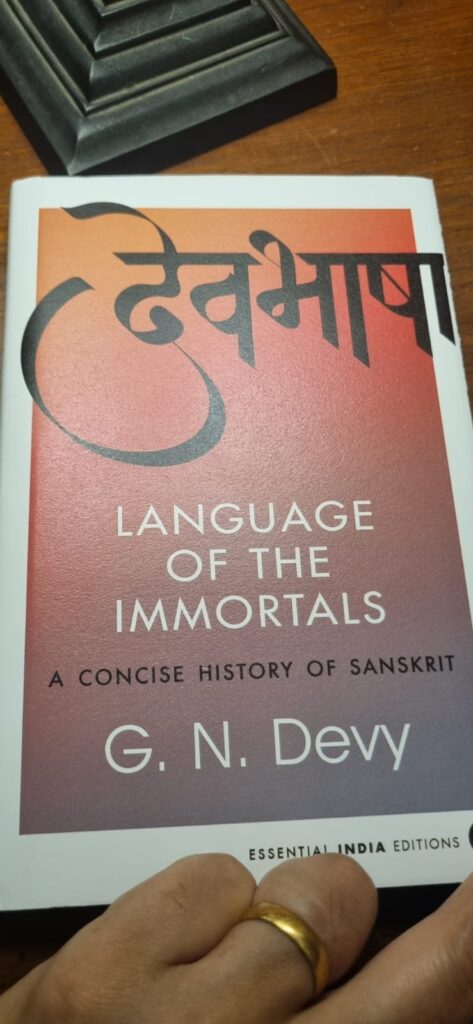
Sanskrit has long been celebrated as one of the building blocks of Indian civilization, and is venerated in temples, scriptures, and classical literature. In Language of the Immortals, renowned scholar and critic G. N. Devy uncovers the astounding paradox of Sanskrit—an ancient language that shaped Indian thought, philosophy, and identity for millennia, yet was never truly a language of the people.
With rigorous scholarship, Devy dismantles enduring myths and offers a revealing commentary on Sanskrit’s historical and cultural trajectory. He shows how it achieved unsurpassed prestige not through conquest or commerce, but sheer intellectual brilliance. He explores the way in which Sanskrit shaped intellectual life across centuries, influenced cultures beyond India, and maintained its prestige through the oral tradition and spiritual symbolism rather than the patronage of the state.
This concise yet profound work reimagines what it means for a language to live on—long after it has ceased to be spoken.
G. N. Devy is currently the Senior Professor of Eminence and Director, School of Civilization, Somaiya Vidyavihar University and was previously the Obaid Siddiqi Chair Professor at the National Centre for Biological Sciences, and Director, Adivasi Academy, Tejgadh, and Professor of English at the Maharaja Sayajirao University of Baroda. He led the People’s Linguistic Survey of India (PLSI), a comprehensive documentation of all living Indian languages, forming a fifty-volume PLSI Series. He has received several awards for his writing as well as for his community work, including the Padma Shri, Prince Claus Award, and Linguapax Award. His English publications include After Amnesia, Of Many Heroes, Painted Words, Nomad Called Thief, The Question of Silence, Countering Violence, The Crisis Within: On Knowledge and Education in India, Mahabharata: The Epic and the Nation, and India: A Linguistic Civilization. He is the co-editor (with Ravi Korisettar and Tony Joseph) of The Indians: Histories of a Civilization.
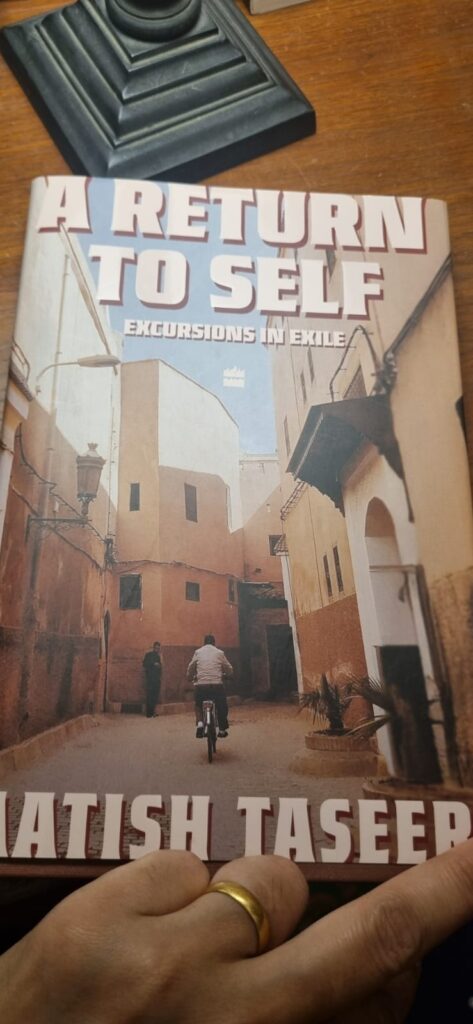
Aatish Taseer’s A Return to Self : Excursions in Exile ( HarperCollins India) is a collection of essays written over a period of time. The opening essay begins with the loss of his Overseas Citizenship of India in 2019. It was revoked by the Indian Ministry of Home Affairs. As a result, Aatish, a British citizen, has been unable to visit India, the country where he grew up and lived for thirty years. This loss, both practical and spiritual, sent him on a journey of revisiting the places that formed his identity and, in the process, compelled him to ask broader questions about the complex forces that make a culture and nationality. According to Wikipedia, Aatish Taseer became a US citizen on 27 July 2020.
In Istanbul, he confronts the hopes and ambitions of his former self. In Uzbekistan, he sees how what was once the majestic portal of the Silk Road is now a tourist facade. In India, he explores why Buddhism, which originated here, is practiced so little. Everywhere he goes, the ancient world mixes intimately with the contemporary: with the influences of the pandemic, the rise of new food cultures, and the ongoing cultural battles of regions around the world. How do centuries of cultures evolving and overlapping, often violently, shape the people that subsequently emerge from them?
In this blend of travelogue and memoir, Taseer casts an incisive eye at what it means to belong to a place that becomes a politicized vessel for ideas defined by exclusion and prejudice, and delves deep into the heart of the migrations that define our multicultural world.
He acknowledges the “ambition, inspiration and, at times, sheer relentlessness of Hanya Yanagihara” without whom this book would not have been possible. Hanya Yanagihara is an incredibly powerful writer in her own right, with a powerful eye for detail, but more than that, she has the knack of embodying her written word with a force, an energy, that makes her works unforgettable. It is a rare talent. Aatish is fortunate to have her as his mentor. As he asks, who else would commission an eighteen-thousand-word piece on pilgrimage? In A Return to Self, Aatish Taseer has truly transformed as a writer. As writer and academic Amitava Kumar puts it eloquently, “Writers I admire travel to discover other states of mind. But the even more admirable ones travel also to find new parts of their most authentic selves. In these pages, Taseer is such a traveller: the maps he is working with are those of the world, and also of the body, the soul, and the senses. His findings are fascinating and rich.” The book extract that has been published on Moneycontrol is from Aatish Taseer’s trip to Mongolia. The peace at the centre of this travelogue is extremely powerful and this section of the book begs to be read over and over again.
With this book, Aatish’s voice is much stronger, clearer, sharper, and very sure of himself. He has made choices or they have been foisted upon him. No one is questionning the impact of those decisions made, but the quiet strength and steely determination that imbues this book, even in the extraordinary sections of meditative reflection, ensures his space on the literary stage in a powerful manner. Much to look forward to in the future with regard to Aatish’s literary ouevre — before and after 2019.
Aatish Taseer is the author of the memoir Stranger to History: A Son’s Journey Through Islamic Lands; the acclaimed novels The Way Things Were, a finalist for the 2016 Jan Michalski Prize, The Temple-Goers, short-listed for the Costa First Novel Award, and Noon; and the memoir and travelogue The Twice-Born. He is also the translator, from the Urdu, of Manto: Selected Stories by Saadat Hasan Manto. His books have been translated into more than a dozen languages. He is a writer at large for T: The New York Times Style Magazine. Born in England, raised in New Delhi, and educated in the United States, Taseer now lives in New York.