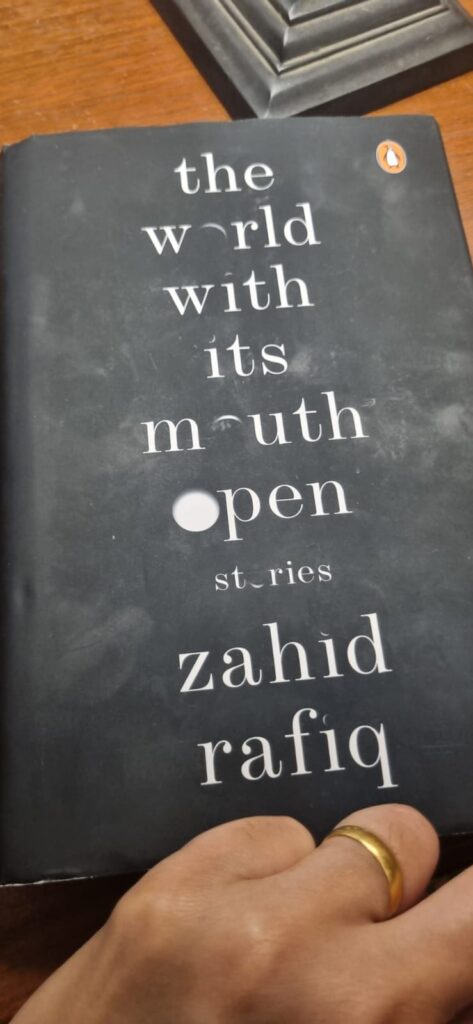
I had been hearing all good things about The World With Its Mouth Open for a while now. It lives up to its expectations. It is never an easy task, especially for a debut writer, to produce eleven short stories and every single one of them unusual in its tone, literary style, and subject matter. I cannot help but wonder if Zahid Rafiq shifts effortlessly in his thinking and writing between two languages — English and Kashmiri. Reading the stories in English, the structured sentences, turn of phrases, use of literary techniques, experimentation with the form, and the ability to play with voices is of a confident writer and speaker of the language. Yet, when it comes to dialogue and some observations of the local terrain, particularly in the change of rhythm in the words, or even the repetition, I felt as if the author was relying considerably on Kashmiri for expression and structure of conveying emotion and feeling. There were times when it almost felt as if there were elements used from fairy tales and fables, to some degree even oral narratives. I can only attribute it to being evident when there was a slight shift in the rhythm and unexpectedness of what came in the text, with echoes of what I recalled from reading such fairy tales or being told stories by elders. When I posed this to Zahid, he said that he was unable to articulate now, long after the book has been published as to what exactly he was doing because he was so immersed in the storytelling that he did what he felt best. Nor can he understand where the variation in style came. It just did. We recorded a freewheeling conversation for an episode of TOI Bookmark. Unfortunately, it was on a day when Zahid was battling a viral fever and was under the weather.
I spoke to Zahid for TOI Bookmark. Here is the Spotify link:
Book blurb
In eleven stories, The World With Its Mouth Open maps the inner lives of the people of Kashmir as they walk the uncertain terrain of their days, fractured from years of war. From a shopkeeper’s encounter with a mannequin, to an expectant mother walking on a precarious road, to a young boy wavering between dreams and reality, to two dogs wandering the city, these stories weave in larger, devastating themes of loss, grief, violence, longing, and injustice with the threads of smaller, everyday realities that confront the characters’ lives in profound ways. Although the stories circle the darker aspects of life, they are―at the same time―an attempt to run into life, into humor, into beauty, into another person who can offer refuge, if momentarily.
Zahid Rafiq’s The World With Its Mouth Open is a powerful collection announcing the arrival of a new voice that bears witness to the human condition with nuance, heart, humor, and incredible insight.
Zahid is a writer living in Srinagar, Kashmir. He did his BA at Kashmir University, studied journalism as a Fulbright scholar at the University of California, Berkeley. As a journalist, he wrote for Indian and international publications including The New York Times, Christian Science Monitor, the BBC, Vice, Al Jazeera, Foreign Policy, and others. Rafiq completed his MFA in fiction at Cornell University and has been a teaching fellow in the Humanities at Bard College.
The World with Its Mouth Open (published by Penguin India) is his first book.
I read this anthology. I interviewed Gautam Bhatia for TOI Bookmark.
Here is a snippet from the conversation:
I, of course, have been a long-time writer, editor, and reviewer of science fiction and more broadly speculative fiction which includes fantasy, horror, slipstream and magical realism. One thing you often hear from people, or two things you often hear from people when you talk about Indian SFF is well first, “What is that?” and then secondly, “Isn’t SFF a Western genre that is written in the West?”In India, of course, we have mythology but SFF is not homegrown here. Both those observations are quite off the mark. Because as far back at the late nineteenth century, Jagdish Chandra Bose, was famous as a scientist but was writing a SF story about a bottle of hair oil that stops a typhoon in its tracks and Rokeya Shekhawat Hossain is writing The Sultana’s Dream in English. I could go on but basically SFF has a very homegrown history.
Much has to be said about this initiative particualrly about the careful selection of stories via an open submission and then a double-blind peer review. Yet I cannot wrap my head around the fact that none of the authors are mentioned in the table of contents nor does a bio blurb exist for them in the book! How can that be?!
Gautam Bhatia is a writer, reviewer and editor based in New Delhi, India. He is the author of The Sentence, and the science fiction duology, The Wall and The Horizon, and the coordinating editor of the science fiction magazine Strange Horizons. In his other life, he is a constitutional lawyer and public commentator on civil and constitutional rights in India.
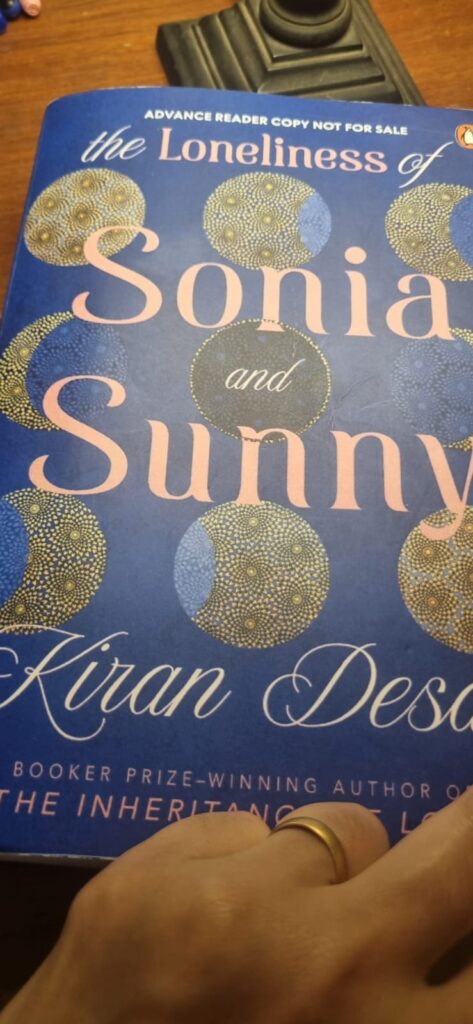
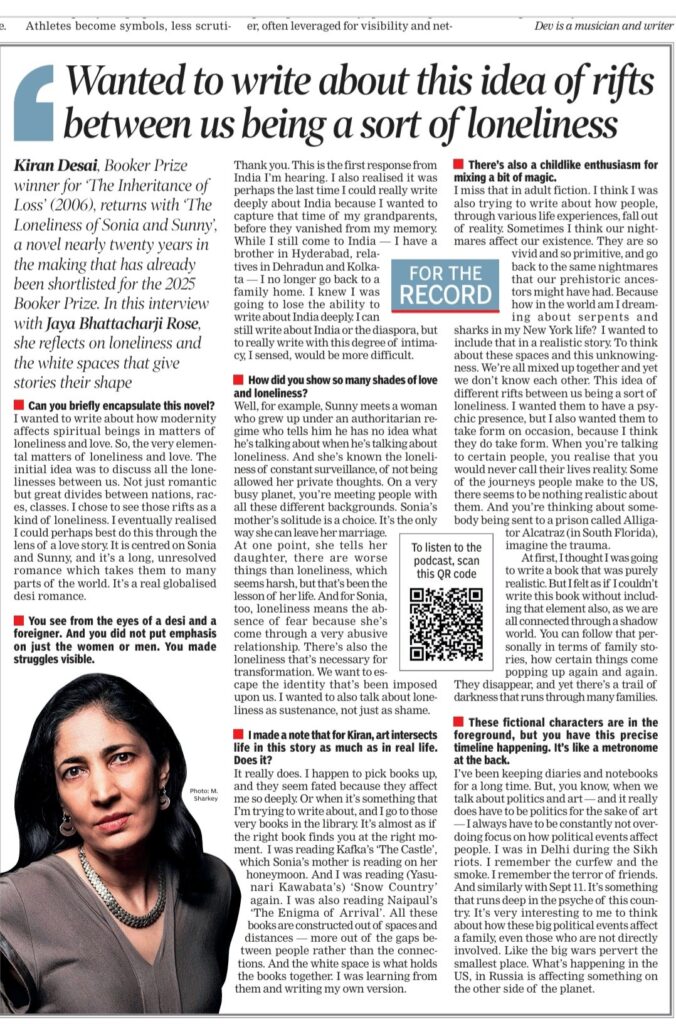
Booker Prize winner Kiran Desai’s latest novel is The Loneliness of Sonia and Sunny: A Novel. It is published by Penguin Random House India. It is a doorstopper of a novel and utterly delicious. It is ostensibly about Sonia and Sunny who are based in the USA. They are more or less of the same age. Coincidentally, their grandparents are neighbours in Allahabad or Prayagraj as it is now known. The older generation attempt to be matchmakers for their grandchildren, encouraging them to meet with the view to get married. This is the basic plotline. The story is spread over many, many years. It moves between continents, nations and cultures. It is a slow moving novel wherein the reader wishes to soak in every detail.
And wow! The details.
Kiran Desai inserts herself in the text, in the good old-fashioned form of storytelling — the authorial narrative. She does not hold herself back. She provides a running commentary on society, the shifting political winds, socio-economic disparities, etc. Interestingly, it is a big fat novel with both men and women characters explored at length. It is not possible to say that this is a woman-oriented or a male-oriented novel, a peg that many seek in contemporary fiction. In reality, we co-exist side by side with a range of experiences. Yet, Kiran Desai’s uncanny ability to observe sharply, assess, and articulate on behalf of the characters is worth reading. It is a phenomenal cast of characters, across the socio-economic spectrum, in India and abroad. She writes about them, but does not judge them. That, if need be, is left to the reader. I had the strong feeling that with her art intersects life in more ways than one.
The Loneliness of Sonia and Sunny is written from the perspective of the desi author who also has the good fortune of seeing with the eyes of a foreigner. She left India at the age of 16. First she moved with her mother, Anita Desai, to the UK and later to the USA, where they now reside. Kiran Desai spent nearly two decades writing this story. She pared it down from 5000+ pages to the current length of approximately 700 pages. Extraordinary confidence given that publishers are lamenting the dwindling book market sizes, with readers rapidly vanishing, in all likelihood succumbing to the internet and mindless reels. So, to create a novel that is of this magnitude, with even the main protagonists meandering in and out of the landscape, requires a remarkable sense of conviction in one’s storytelling. In this case, it holds true. It is a novel that will remain with the reader for a very long time.
Much will be said about the book from today, as it is the day when the embargo on writing about the novel publicly is lifted. Apart from which, it has been longlisted for The Booker Prize 2025. The shortlist announcement is on 23 Sept 2025. This book is expected to make the cut. Let’s see.
I read the ARC in less than three days. It would have probably been quicker if life had not interrupted. The last time I read big fat novels like this was when I read War and Peace and A Suitable Boy. But those were many decades ago, when there were fewer distractions and reading was all that we did in our leisure time.
I interviewed Kiran Desai for TOI Bookmark. Ours was the first interview that she did in India even if it is published later than those that appeared today. As soon as the link is available, I will post it here.
And here it is. Published today, 23 Sept 2025, a few hours before the shortlist announcement is made.:
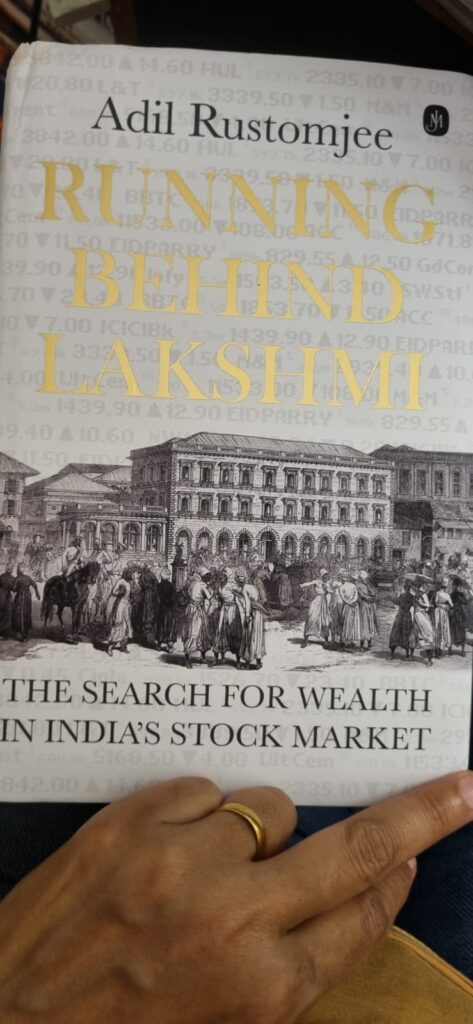
This book came in the post today. Flipping through it, there is a lot of history and plenty of technical jargon, but it is obvious that it has been written by someone very passionate about the subject + excited about delving into the archives. Truly look forward to reading this.
Book blurb
From banyan trees to electronic screens – the authoritative account of India’s stock market over two centuries.
For millions of people, the stock market is the canvas on which are sketched fantasies of riches, of lives transformed. Yet, the history and methods of one of modern India’s most transformative forces remain underexplored till now.
Starting from the early nineteenth century, when a few banias traded shares under banyan trees, to the Cotton and Share Mania occasioned by the American Civil War, to the decades of marking time during the Nehruvian Era, to 1991’s great unshackling that made the market accessible to the public, all the way to the market cycles of the new millennium, Running behind Lakshmi ( John Murray/Hachette India) brings India’s stock market into focus.
By combining archival sources with observations and expertise forged through immersion in the markets, Adil Rustomjee provides a wide-ranging account that is equal parts analytical history, financial practice, and market lore. Brimming with pioneers and adventurers, grand rivalries and petty jealousies, scams and scandals, this is the story of a nation and a people told through a lens that’s never been used, but is more relevant than ever.
After a career in international development and markets, Adil Rustomjee discovered his life’s work as a chronicler of India’s stock markets.
The idea for the book came when he stumbled upon the BSE archives during the time he had an office in the exchange’s building. These nuggets of history were just lying around, but a substantial account had yet to be written about an equity market that was over two centuries old.
Adil Rustomjee then made it his calling to narrate the market’s past, outline its methods, and detail its participants. Born in Hyderabad, he attended the universities of Madras and Bombay, from which he graduated with degrees in commerce and management. He also holds graduate degrees in international relations from Johns Hopkins University’s School of Advanced International Studies, and in business from Yale.
Besides taking a keen interest in financial markets, he is a student of military history and strategy.
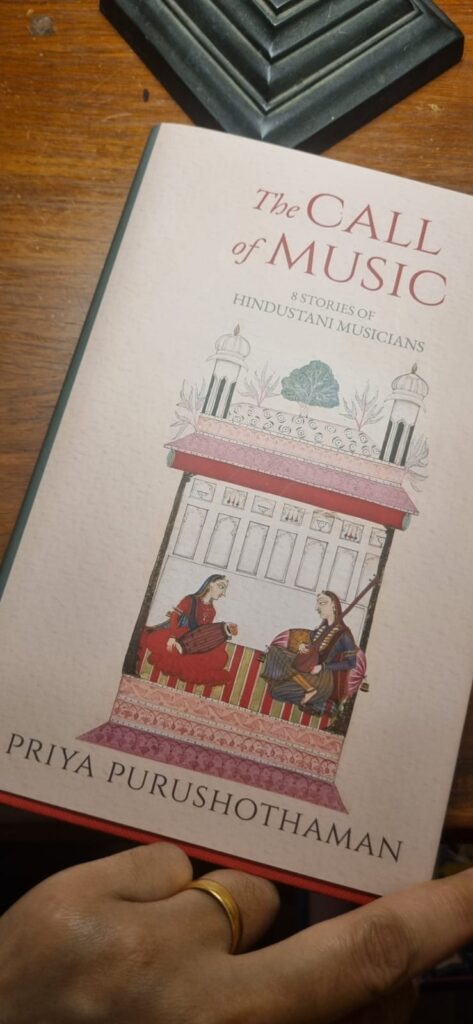
The Call of Music: 8 Stories of Hindustani Musicians ( Hachette India) is gorgeous. It is accessible to even the non-Indian classical music listener. More importantly, the sensitivity, understanding, and empathy with which Priya Purushothaman is stunning. Her elegant writing is gracious and dignified as she profiles a fellow musician. She is right when she says in her introduction that it is critical for the younger musicians to be profiled as well. Here is an extract from the introduction:
During the pandemic, when the transiency of life took on an entirely new dimension, I felt an urgent need to document the inner stories of serious practitioners of music, some of whom are not in the limelight. If you’re part of the music world, chances are that you’ve heard such stories through fellowmusicians, perpetuating the casula culture of sharing oral histories that blur the boundaries between rumour, legend, and fact. I wondered about all the stories I wouldn’t get to hear or read, out of sheer lack of access or documentation. This compelled me to seek these individuals and see if they would give me the privilege of sharing a slice of their lives, coming together as something akin to an ethnographic survey of select Hindustani musicians in the twenty-first century.
Normally, such collections would only feature senior artistes, senior by age, that is. I chose to include a spectrum of ages in this collection. Though the culture of Hindustani music glorifies age as a virtue — and certainly age often comes with wisdom and experience — I have also felt that this confines younger musicians to a permanent place of inadequacy. What a young artiste may lack in experience, they may compensate for in freshness of perspective. It is also not always the case that young artistes lack experience, because many musicians begin training at a very young age. By their thirties, they have been in the business for decades. I believe there is much value in hearing the thoughts of younger generation performers — to inspire other youngsters who may be looking up to them, and also to acknowledge that wisdom is not a function of time but of depth of experience and capacity for reflection.
The first musician featured, Alam Khan, reminds of an old soul trapped in a young man’s body. He is wise beyond his years, having immersed full time in this world since his teenage years. He carries the legacy of his father, Ustad Ali Akbar Khan, with tremendous humility, reverence, and responsibility. His deep commitment to musical honesty made me ponder the question of intention and awareness as we make music.
Shubhada Paradkar is an indomitable musical spirit whose music negotiates the lively spirit of the Agra and Gwalior gharanas, while challenging the notions of gender in music.
Kala Ramnath’s journey to becoming a world renowned violinist is filled with a lifetime of consistent effort and a quest for a unique, individual voice by innovating on an instrument that was introduced quite late into the Hindustani music firmament.
Rumi Harish turns all conventions of Hindustani msuci upside down with his radical interrogation of concepts of gender and voice through his lived truths in music and activism.
The youngest musician in this collection is Suhail Yusuf Khan, a sarangi player who has performed around the globe, collaborated across genres, and become the first hereditary musician to earn a PhD in Ethnomusicology. Suhail opened my eyes to issues of caste and discrimination as a Mirasi musician.
Shubha Joshi has dedicated her lifetime to mastering the multitude of forms that comprise Hindustani music, deconstructing notions of the feminine voice while intentionally carving her own unique sound.
Yogesh Samsi speaks a complex language of tabla that has evolved through momentous historical moments of both loss and ingenuity. As a master soloist and accompanist, he shows the path to a future of aesthetic and intellectual music.
It is my hope that those who take the time to read his book will gain an insider’s view into the creative processes of music making — the gruelling effort, dedicatio, and sacrifice that make a musician — as well as the undeniable presence of social issues in the world of classical music. Often, musicians choose their path not out of choice, but from a persistent inner call, a driving necessity for their existence. Perhaps after reading these stories, you, the reader, will appreciate the complex life of a musician the next time you hear a piece of music or attend a concert.
I began flipping through this book on a whim, but before I knew what was what, I was immersed in reading the profiles and was able to shut out the world. It is the rare author who can achieve that with their writing. Priya Purushothaman does. The ability to write about a subject that not everyone is familiar with and yet with such elegance create bridges of communication between Hindustani music and the readers is an extraordinary talent. I sincerely hope that she will write more of these long profiles. These must be taxing to write and emotionally draining but the end result is superb.
Book blurb
The Call of Music traces the journeys of eight singular voices in Hindustani music – some acclaimed performers, others quiet torchbearers who create, teach and sustain the tradition far from the public eye. From the narrow lanes of Kashipur to the sweeping hills of San Rafael, these artists emerge from vastly different worlds, yet each has devoted their life to music with unflinching conviction and artistic courage.
Among them are the heirs of musical legacies, grappling with the weight of inheritance; vocalists who challenge gendered assumptions embedded in the tradition; instrumentalists who reimagine the expressive possibilities of their craft; a sarangi player navigating the complexities of caste and faith; and a tabla maestro bridging a lineage ruptured by Partition.
As these musicians forge their identities within a classical tradition, they reveal an artform not only enduring, but continually transforming – connecting generations, reshaping boundaries and resonating anew. What binds them is a profound surrender to the art, a deep-seated devotion that transcends convention and circumstance. Together, they form a luminous, emotionally textured portrait of a musical legacy – rooted and radically alive.
‘This is a rich and beautiful meditation on the greatest of our art forms. Herself an exceptionally gifted vocalist, Priya Purushothaman writes with elegance and empathy about the life and vocation of eight musicians of different backgrounds, whom she has known or studied with. While attentive to questions of caste, gender and religion, Priya never lets her focus waver from the “practice“ of classical music, of what it means to devote oneself to learning, listening, absorbing, practising and performing. As a lover of our shastriya sangeet I found this book utterly compelling. So will readers with a more general interest in narrative non-fiction, and those seeking to make of their profession a calling.’ – Ramachandra Guha
‘Introducing readers to the lives, personalities, strengths, challenges, and music of eight artists who have inspired her over the years, Priya Purushothaman’s writing reflects in totality the rigour and introspection that has marked her journey as a singer.’ – Shubha Mudgal
‘The Call of Music is one of those rare books that forces us to see ourselves for who we are. In this collection of stories, Priya Purushothaman allows us to accompany musicians and learn from the intricate threads that stitch together their identity and life experience with making music. She brings together musicians from very different social and philosophical spaces and lets each of their stories flow into another, subtly initiating a conversation between them. This book is, in its essence, about finding and retaining one’s own voice. For us, the readers, these are moments of personal reflection.’ – T.M. Krishna
Priya Purushothaman is a reputed Hindustani vocalist. She is trained in the style of the Agra gharana, and has performed in major venues in India and abroad. She is also the author of Living Music: Conversations with Pandit Dinkar Kaikini. Priya is interested in documenting stories of musicians and their creative processes from her perspective as a practitioner. Her music can be heard at www.priyapurushothaman.com.
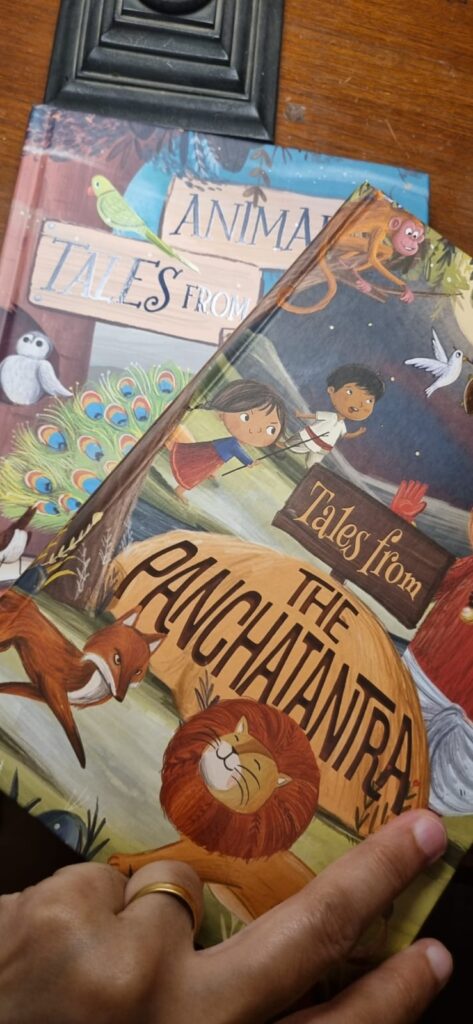
Step into a world where animals talk, trick and teach, where tiny sparrows dream of the big sea and little parrots take on mighty fires. In Timeless Animal Stories from India, every forest hums with laughter and wisdom, every river carries a secret and every creature has a tale to tell. These heart-warming stories, full of wit and wonder, celebrate courage, cleverness and the simple magic of kindness. Written by Chesta Wadhwani, these stories are perfect for readers aged six and above—and just right for younger children to enjoy at story time too. Brimming with adventure, gentle humour, old-world charm and even wit and wisdom, this collection will be loved by anyone who has ever loved animals or enjoyed listening to their tales.
Chesta Wadhwani is a journalist and writer passionate about stories that explore the connection between nature and the human experience. She studied fiction at Sarah Lawrence College in New York, has written widely for national publications and has contributed to anthologies, including works for children. As the co-author of HUM—When Women Lead for UN Women India, her work is deeply rooted in storytelling that brings the natural world to life.
Step into a world of wisdom, wit, and wonder with this beautifully illustrated collection of 25 timeless tales from the Panchatantra. Meet a brave princess, sly fox, clever hare, and many more unforgettable characters as they navigate thrilling adventures, tricky dilemmas, and unforgettable life lessons. From the Mongoose and the Snake to the Monkey and the Crocodile, these beloved fables have been passed down for generations, teaching kindness, intelligence, and the power of good choices. With vivid full-colour illustrations and engaging storytelling, this stunning book brings ancient wisdom to life. A must-have for every child’s library—perfect for reading alone or sharing with family!
Sahar Beg Oddly enough, the author is not acknowledged on the cover the book nor it there an author blurb available online. But, if I am right, then Sahar Beg is now a young woman who as a teenager would write and comment enthusiastically about children’s and YA literature. (Here, here) In all likelihood, she is another Samhita Arni in the making, who many years ago, retold the Indian epics as a twelve-year-old.
These two books were sent by Red Panda, the children’s imprint of Westland Books. Beautiful editions to look at, even if a tad too heavy to hold. Full page, four colour illustrations complementing the text. Curiously, the illustrator of both the texts is Nayan Bose, about whom there is no description in either the published books nor online. Nor is Nayan Bose acknowledged on the cover of the books. Why? Mysterious. Great idea to publish these two collections. One can never tire of such stories. They can be told and retold umpteen times. But, but, but…
Transferance of oral stories to the written word at the best of times can be challenging. So, I feel a little more effort could have been made, to go that extra mile, to create these stories in a little more child-friendly and definitely easier to read for readaloud. For example, the sentences are too long. The reader will get breathless or just start yawning reading it out aloud. A young listener will tire easily. A neo-literate will struggle to get to the end of a sentence instead of feeling a sense of achievement at having read a description or a piece of action before triumphantly moved on to the next sentence. Why is it that sentences cannot be short and sweet? Why must there be long winded with far too many conjunctions used? Why must there be so many polysyllabic words? Why cannot there be mesmerising joy in the rhythm of words and thus create an engaging text instead of a flat monotone? To top it all, the font used is very turgid. It should be softer and less tighter than it is at present. It is harsh to the eyes. Not at all enticing.
These story books are a good idea, a good effort, available at an affordable price point. and it is truly paisa vasool (value for money as many desi parents would like), but seriously, a little more effort put in to the editing and production, would have ensured a long tail of sales.
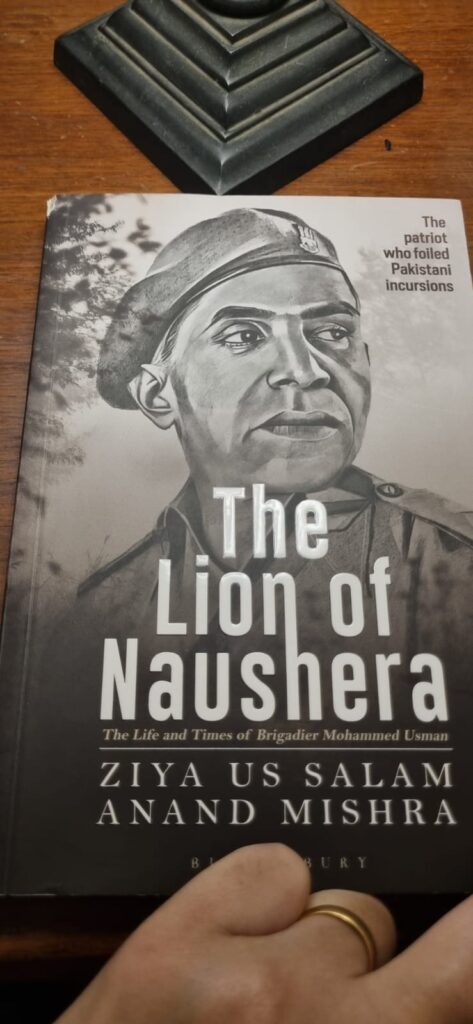
Within weeks of India gaining independence, Kashmir resembled a battlefield because of Pakistan’s repeated incursions to capture the Muslim-dominated princely state. Towering among the soldiers who fought with grit and gumption to foil Pakistan’s designs was Brigadier Mohammed Usman, who chose to remain in pluralist India. Sadly, he lost his life twelve days shy of his thirty-sixth birthday, fighting Pakistani forces. The newly born nation saluted the fearless warrior conferring on him the sobriquet ‘the Lion of Naushera’ for his bravery.
While some heroes have been duly and gratefully feted, others have not always got their due. The Lion of Naushera is an attempt to clear some of the debts we owe to Brigadier Usman. Not only does it tell the story of the brave soldier, it also presents a multifaceted narrative of India – of how people of all faiths, castes and regions fought for the independence of the country and protected its borders.
Ziya Us Salam is an eminent journalist and a widely published author. A literary and social commentator, Salam has examined critical subjects through his books Women in Masjid: A Quest for Justice (Bloomsbury 2019), Nikah Halala: Sleeping with a Stranger (Bloomsbury 2020) and Being Muslim in Hindu India: A Critical View (HarperCollins 2024). His other books include Of Saffron Flags and Skullcaps: Hindutva, Muslim Identity and the Idea of India (Sage 2018), which deals with challenges to the idea of India, and Lynch Files: The Forgotten Saga of Victims of Hate Crime (Sage 2019), which focuses on the victims of hate and violence.
Anand Mishra is currently a political editor. As a senior journalist who has travelled across north India to cover key political developments and elections, tracking the evolution of political parties across the spectrum — left, right and centre — in the national capital and the states in the Hindi speaking belt.
Hailing from Gaya in Bihar, Mishra is an English literature graduate. His poems have been published in national and international publications.
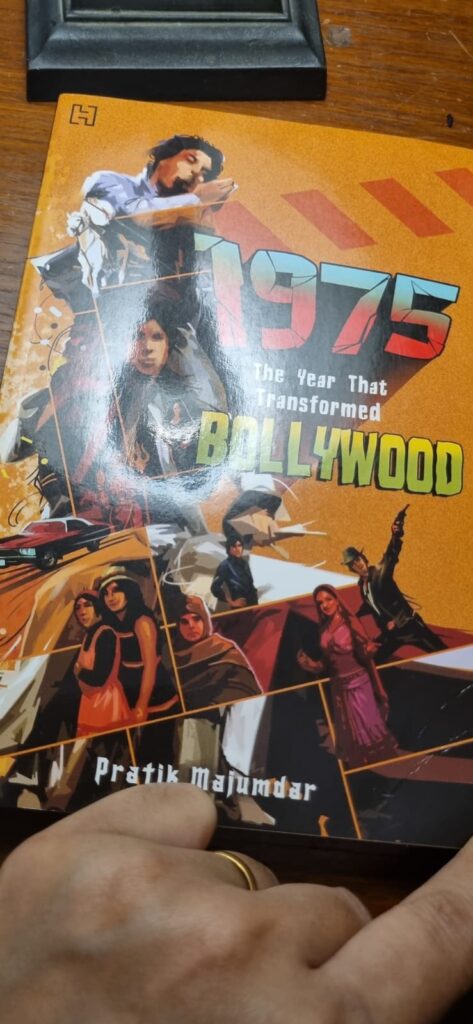
The year 1975 to Bollywood is what 1939 is to Hollywood – the greatest year in film history of the respective industries. Sholay, Deewaar, Pratiggya, Aandhi, Mausam, Khel Khel Mein, Warrant, Chupke Chupke, Mili, Nishant and then … who can forget the jaw-dropping success of Jai Santoshi Maa! Rarely a year sees the release of such a great number of films that go on to become cult classics.
With iconic films, leading actors, film-makers and music composers, shelved movies from that year and the impact of the Emergency on Hindi films, this guide to 1975’s Bollywood offers wholesome information with fulsome entertainment.
Pratik Majumdar began his career in advertising, working in both India and London, before returning home to successfully run a family-owned homeopathy business.
A passionate cinephile, music enthusiast and published author of a collection of short stories, Pratik has amassed an impressive collection on Blu-rays, DVDs and vinyl records over the years. His articles on film have been published in the Telegraph, the Daily Eye and Kolkata Konnect. 1975: The Year That Transformed Bollywood is his first book on cinema.
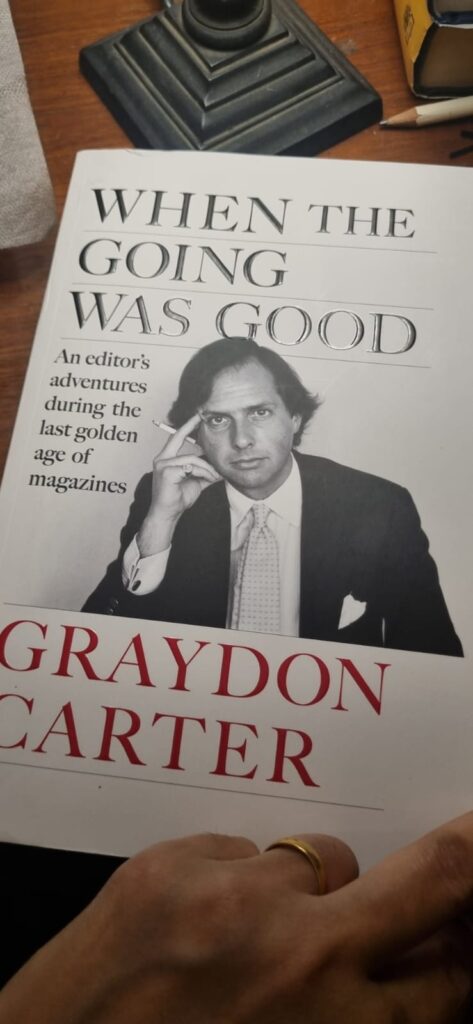
I had just started reading this magnificent memoir when the news broke of actor Robert Redford’s passing on 16 Sept 2025. What is the connection you may wonder between the two. Well, Graydon Carter was the legendary editor of Vanity Fair. The opening essay in When the Going was Good is about Graydon Carter and his colleagues working for nearly a year in complete secrecy to verify and reveal the true identity of “Deep Throat”. Deep Throat was the pseudonym given to the secret informant who provided information in 1972 to Bob Woodward, who shared it with Carl Bernstein. Woodward and Bernstein were reporters for The Washington Post, and Deep Throat provided key details about the involvement of U.S. president Richard Nixon’s administration in what came to be known as the Watergate scandal.
On May 31, 2005, Vanity Fair revealed that Felt was Deep Throat in an article on its website by John D. O’Connor, an attorney acting on Felt’s behalf. 31 years after Nixon’s resignation and 11 years after Nixon’s death, Mark Felt − who at the time had been Deputy Director of the FBI − revealed through an attorney that he was Deep Throat. Felt reportedly said, “I’m the guy they used to call Deep Throat.” After the Vanity Fair story broke, Woodward, Bernstein, and Benjamin C. Bradlee, the Post’s executive editor during Watergate, confirmed Felt’s identity as Deep Throat.
In 1974, the two investigative journalists, Carl Bernstein and Bob Woodward, wrote All the President’s Men about the June 1972 break-in at the Watergate Office Building and the resultant political scandal. The book chronicles the investigative reporting of Woodward and Bernstein from Woodward’s initial report on the Watergate break-in through the resignations of Nixon Administration officials H. R. Haldeman and John Ehrlichman in April 1973, and the revelation of the Oval Office Watergate tapes by Alexander Butterfield three months later. It relates the events behind the major stories the duo wrote for the Post, naming some sources who had previously refused to be identified for their initial articles, notably Hugh Sloan. It also gives detailed accounts of Woodward’s secret meetings with his source Deep Throat.
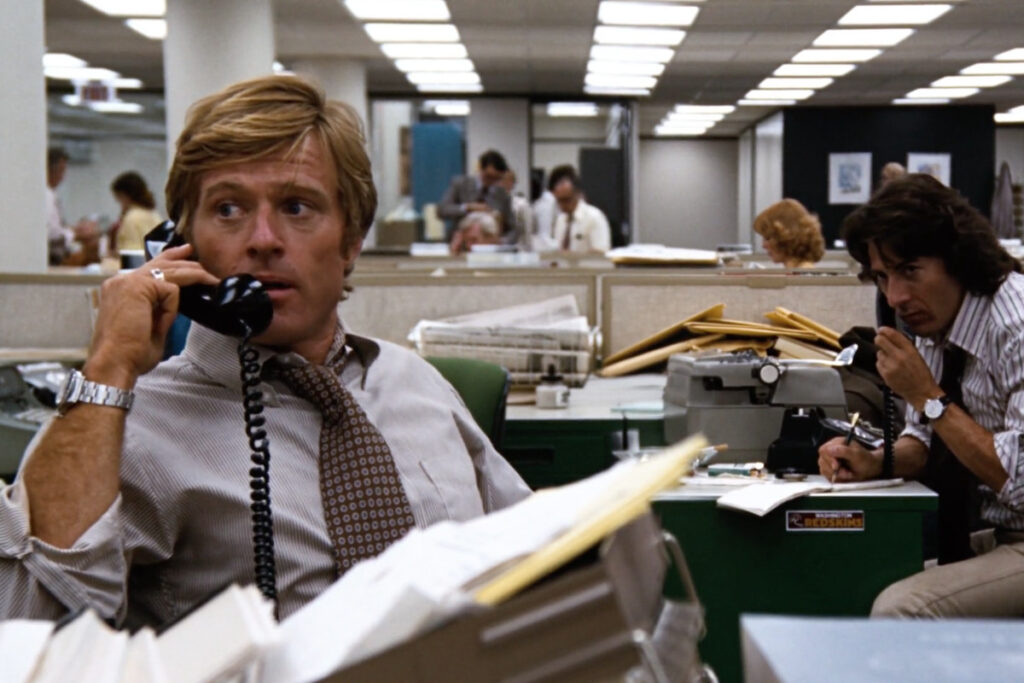
Robert Redford and Dustin Hoffman in All the President’s Men
A film adaptation, starring Robert Redford and Dustin Hoffman as Woodward and Bernstein, respectively, was released in 1976. Woodward and Bernstein had considered the idea of writing a book about Watergate, but did not commit until actor Robert Redford expressed interest in purchasing the film rights. Redford bought the rights to Woodward and Bernstein’s book in 1974 for $450,000, with the idea to adapt it into a film with a budget of $5 million. In Telling the Truth About Lies: The Making of “All the President’s Men”, Woodward noted that Redford played an important role in changing the book’s narrative from a story about the Watergate events to one about their investigations and reportage of the story and was thus successful in transferring the content from one medium and one genre to another.
The film was nominated in multiple Oscar, Golden Globe and BAFTA categories; Jason Robards won the Academy Award for Best Supporting Actor for his portrayal of Ben Bradlee. In 2010, it was selected for preservation in the United States National Film Registry by the Library of Congress as being “culturally, historically, or aesthetically significant”.
Graydon Carter’s essay is fascinating as it recounts the time and effort it took him and his team to confirm the identity of Deep Throat and till the last minute they were anxious in case the story turned out to be a hoax. Remember this was 2005, a little before the digital boom, invention of smartphones and iPads, and the widespread use of the internet. So, when Vanity Fair broke the news, they had to use traditional methods of publicising the information.
Anyway, for me, the incredible coincidence of reading this memoir and the passing of the legendary actor, Robert Redford, will forever be etched in my mind.
Avtar Singh is an internationally published author and magazine editor. He was the founding editor of Time Out Delhi and was most recently managing editor of The Indian Quarterly. He has twenty years of experience editing magazines engaged with arts and literature, entertainment, food, travel and fiction. Recent fiction credits include the short story ‘A Scandal in Punjab’ in The Hachette Book of Indian Detective Fiction (2024), and ‘The Corpse Bearer’ in Subnivean.org (shortlisted for the Subnivean prize 2023). Recent non-fiction credits include work in Foreign Policy, The Washington Post, Nikkei Asian Review, India Today and Biblio. He was a summer fellow at the MacDowell Colony in 2018. His last novel, Necropolis, about crime, poetry and a woman who may be centuries-old (HarperCollins India and Akashic Press, US, 2014), was translated into German as Nekroplis. His first novel was The Beauty of These Present Things (Penguin India, 2000). Among other print credits, his work has been collected in Mumbai Noir, Civil Lines and the essay volume Pilgrim’s India. He has written for GQ, Cosmopolitan and other prestigious publications. He has lived and worked in India, the US and China, and is now based in Germany.
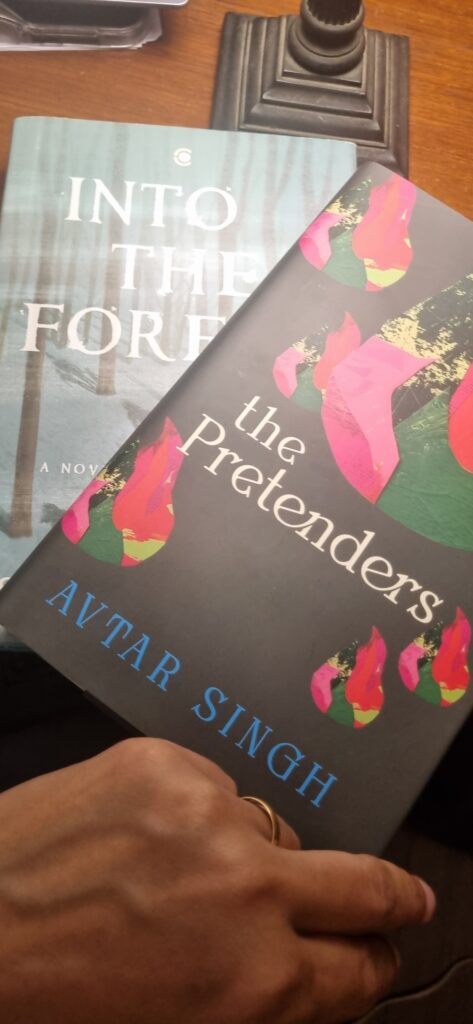
In less than a year, he has published two novels. Into the Forest (2024, Westland Books) and The Pretenders (2025, Simon and Schuster India).
INTO THE FOREST, AN EXQUISITELY WRITTEN, HARD-TO-DEFINE NOVEL, IS AS MUCH A MEDITATION ON THE HUMAN RELATIONSHIP TO NON-HUMAN LIFE AS IT IS A LOOK AT THE PUSH AND PULL OF GENDER, CLASS AND RACE IN OUR SOCIETIES. ‘Why do you want to know about what happened, bhai?’ The older man mentions a paper in the UK that may be interested in what happened to Nabi. Its politics are impeccable. His story will resonate there. Nabi looks unconvinced. ‘People must know our stories,’ says the reporter. ‘Why? What good does it do?’ There are three disappearances; they could all be ‘crimes’, but only one of them ends up in murder. Germany, with its unique fractures, is the perfect setting. This story could only be about women. Yet, this is also a novel about the human condition anywhere, everywhere. Into the Forest is about loneliness and isolation, migration and belonging. It is also about how times of great stress are both brake and accelerant to human connection.
Shamsher Singh (Sammy to his friends) watches a man carry a corpse around Delhi, looking for a place to cremate the body with dignity. Sammy’s is a privileged life, yet the sickness has ripped open all the insecurities and anxieties of his past. In Beijing, Mei must come to terms both with her stepfather’s demands and her long-distance relationship with Farid, Shamsher Singh’s young “nephew”. Changez Khan finds kindness from an unexpected quarter in Bangkok, but his own ghosts carry an intolerable weight. In Jakarta, Nina, Mei’s mother, must overcome her husband’s paranoia and her own isolation. As death steps ever closer, lies are exposed and deceptions unraveled. But there is always hope.
Set across Asia at the peak of the brutal Delta wave, The Pretenders is a novel about finding love, freedom, and human connection in the bleakest of times. In Delhi’s sprawling homes, in the cramped quarters of the staff that keep them running, in the loneliness of Bangkok’s streets, The Pretenders takes one to the heart of what it means to be human when life itself is in the balance. Policemen and predators, the privileged and the under-privileged, masters and servants: everyone must look in the mirror when the time comes and know truth from artifice.