Jaya Posts

“What’s Up With Women and Money?: How to Do All the Financial Stuff You’ve Been Avoiding”

Former CNN/CNN International Anchor and Business Correspondent Alison Kosik —recognised around the globe as the face of Wall Street for the network — found herself trapped in a failing marriage. The savvy mother of two, was terrified to leave her husband. Why? She didn’t have the confidence to take on big financial decisions on her own. Despite spending her working hours explaining financial and business concepts, she had allowed her husband to take charge of all their big money decisions — from buying a house and how to finance it to their investments and retirement savings — and had no clue how to do any of it on her own. It sounds crazy, doesn’t it? But Alison is far from atypical. It turns out plenty of educated and high-achieving women — married or single — avoid getting involved with managing their financial lives. In What’s Up With Women and Money? Alison gives a step-by-step action plan on a variety of money topics. Alison also interviews dozens of women who share their cautionary tales of why avoiding money decisions can lead to bad outcomes. Alison also talks one on one with inspirational women like Sheryl Sandberg, Rebecca Minkoff, Jessica Alba, Barbara Corcoran, and Deepica Mutyala — women who inspire other women and help them gain confidence — to take control of their financial lives. Alison simplifies complicated financial topics of investing, car buying and paying down debt, breaking them down into easy-to-follow steps, with practical tidbits that make each page accessible, digestible and fun. By the end of What’s Up With Women and Money?, women will not only feel empowered and confident about their finances, but they will also feel ready to take action after being motivated without judgment.

Read an extract from the book on Moneycontrol. It is published by Harriman House/ PanMacmillan India.

Alison Kosik is a Journalist and Freelance Correspondent and Anchor at ABC News. Prior to joining ABC, Kosik was a Business Correspondent and Anchor at CNN and CNN International. Alison has interviewed leading CEOs, investors, executives, international dignitaries, musicians, and sports figures. She has interviewed some of the biggest names in business, politics and technology, from Warren Buffett to Hillary Clinton to Mark Cuban and Michael Saylor.

22 August 2025

Kavitha Rao’s books

Kavitha Rao is a London-based author and journalist. Her work has appeared in the Guardian, New York Times, South China Morning Post, Mint, The Hindu and various other publications. She is the bestselling author of Lady Doctors. Spies, Lies and Allies is her latest books and is published by Westland Books.

We spoke on TOI Bookmark regarding her Spies, Lies and Allies. Here is a snippet:

Well, you just sink yourself in it. I mean when you are writing historical fiction this book is curious because as you pointed out, it has won a couple of prizes for historical fiction and both those prizes have a rule which is that it has got to be set sixty years before the date of publication. So, we were just kind of over a line. I don’t claim to be an expert, there is a lot of smoke and mirror involved, you try to get a feel and a sense of what it might have been. So yes it is research, reading, and the kind of stuff a scholar might recognise, but we are not scholars.  

Listen to our conversation on the Times of India website and Spotify:

TOI Bookmark is a weekly podcast on literature and publishing. TOI is an acronym for the Times of India (TOI) which is the world’s largest newspaper and India’s No. 1 digital news platform with over 3 billion page views per month. The TOI website is one of the most visited news sites in the world with 200 million unique monthly visitors and about 1.6 billion monthly page views. TOI is the world’s largest English newspaper with a daily circulation of more than 4 million copies, across many editions, and is read daily by approximately 13.5 million readers. The podcasts are promoted across all TOI platforms. I have recorded more than 145+ sessions with Jnanpith, Padma Bhushan, and Padma Shree awardees, International Booker Prize winners, Booker Prize winners, Women’s Prize for Fiction, Nobel Laureates, Pulitzer Prize, Stella Prize, AutHer Awards, Erasmus Prize, BAFTA etc. Sometimes the podcast interviews are carried across all editions of the print paper with a QR code embedded in it.

Some of the authors who have been interviewed are: Banu Mushtaq, Deepa Bhashti, Samantha Harvey, Jenny Erpenbeck, Michael Hoffman, Paul Murray, V. V. Ganeshananthan, Hisham Matar, Anita Desai, Amitava Kumar, Hari Kunzro, Venki Ramakishnan, Siddhartha Deb, Elaine Feeney, Manjula Padmanabhan, NYRB Classics editor and founder Edwin Frank, Jonathan Escoffery, Joya Chatterji, Arati Kumar-Rao, Paul Lynch, Dr Kathryn Mannix, Cat Bohannon, Sebastian Barry, Shabnam Minwalla, Paul Harding, Ayobami Adebayo, Pradeep Sebastian, G N Devy, Angela Saini, Manav Kaul, Amitav Ghosh, Damodar Mauzo, Boria Majumdar, Geetanjali Mishra, William Dalrymple, Abdulrazak Gurnah, Dr Rachel Clarke, Charlotte Wood, Catherine Chidgey, Andrew Miller, Sam Dalrymple, and Annie Ernaux.

22 August 2025

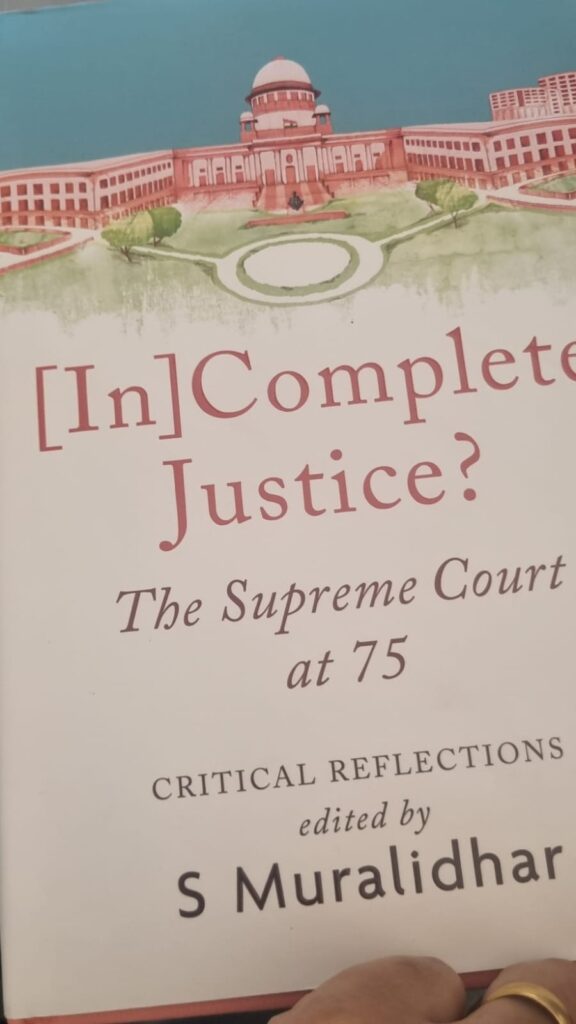
“[In]Complete Justice? The Supreme Court at 75: Critical Reflections” by S Muralidhar (Editor) 

Look what arrived today. Definitely a must read. The introduction is fascinating. Now to read the rest.

Book blurb:

In its seventy-fifth year, how should one view the Supreme Court of India – an institution that has not only transformed in its composition and functioning but has also been a catalyst for change in other branches of the State? How has it fared in terms of accountability, transparency and its responsibility to both the law and the people? Has it consistently managed to strike the delicate balance between judicial activism and the imperative of accountability in the exercise of judicial power?

To what extent has the Court fulfilled its role as a countermajoritarian body capable of checking majoritarian impulses and the excesses of State power? Has it remained true to its constitutional mandate, interpreting the Constitution in the spirit of its foundational values – liberty, equality, fraternity and dignity? And how consistent has its jurisprudence been in defending these ideals?

This book brings together a range of voices – former judges, practicing lawyers, legal scholars, researchers and a journalist – to engage with these questions through a series of essays and interviews. Their reflections offer a critical exploration of the Supreme Court’s evolving role and functioning. This volume aims to foster meaningful dialogue and deepen public understanding of the Court’s challenges in retaining its legitimacy while striving to fulfill the constitutional promise of equal and fair justice.

S. Muralidhar is a Senior Advocate at the Supreme Court.He has previously served as the Chief Justice of the Odisha High Court and as the Chief Justice of the Punjab and Haryana High Court and he has also served as a Justice of the Delhi High Court.

[In]Complete Justice? The Supreme Court at 75: Critical Reflections is published by Juggernaut Books.

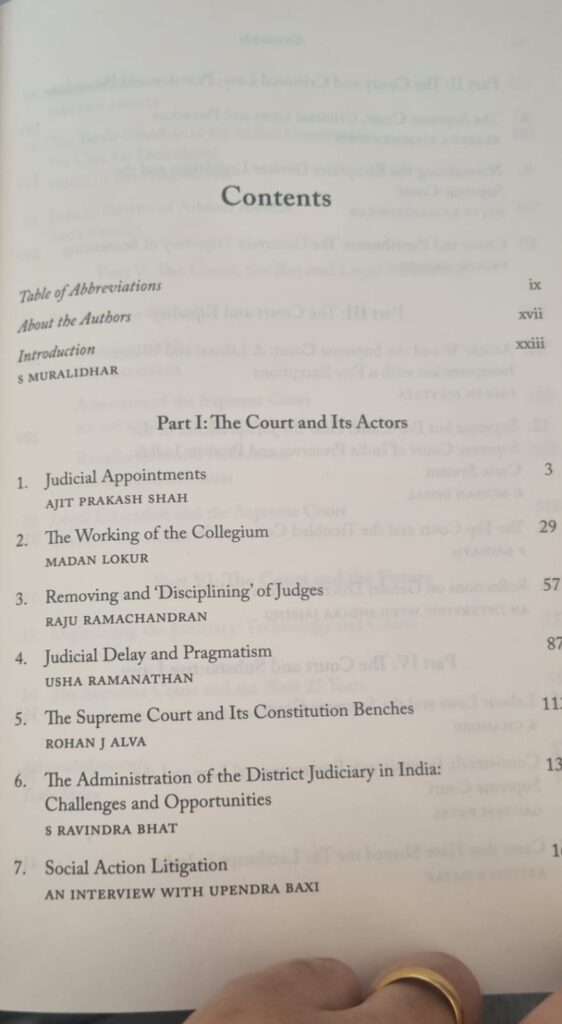
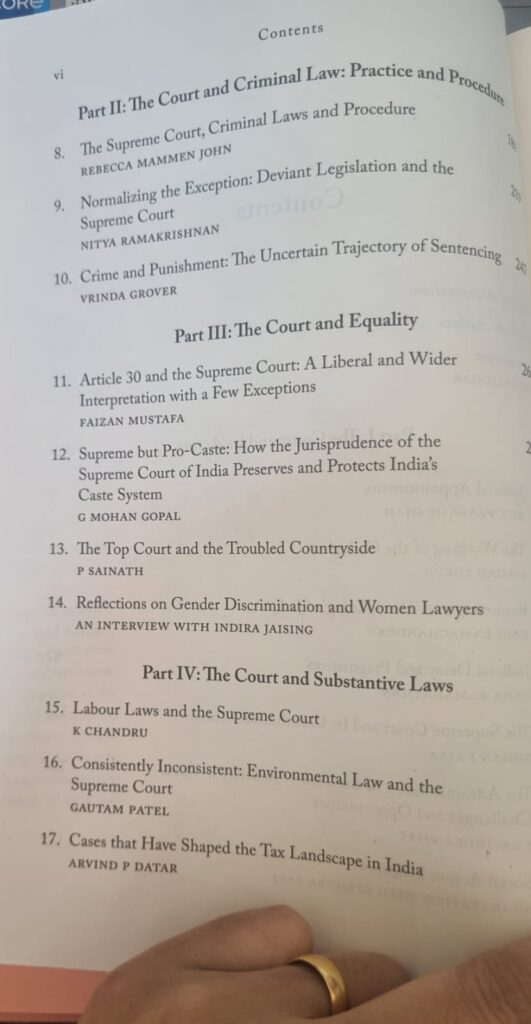
Meanwhile, here is the list of contents.

Interestingly, the editor has pledged the royalties to be received from this book to Vanavil Trust.

Read a book extract on Moneycontrol.

21 August 2025

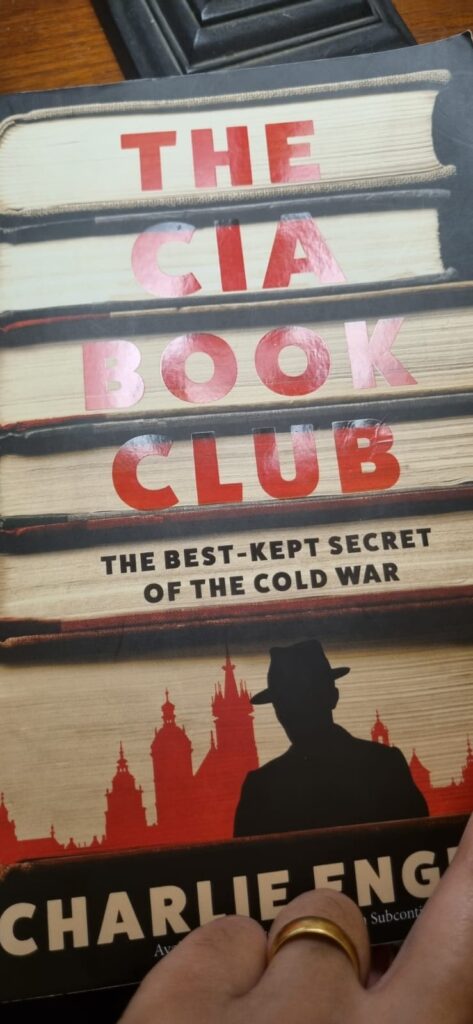
“The CIA Book Club: The Best Kept Secret of the Cold War”

The CIA Book Club: The Best Kept Secret of the Cold War by Charlie English is an extraordinary book. It is the account of the CIA Book Club that ran for decades. It’s sole purpose was to get literature and provide support to people in Eastern Bloc.

Charlie English began writing this book in January 2020 and spent nearly five years on it. The research entailed interviewing many of the people involved in running this programme, particularly in Poland, where it was most successful. He interviewed many people and accessed whatever declassified documents that he could, although many are still inaccessible. He even managed to speak to some former CIA personnel but was only offered as much information as they could legally provide.

The CIA Book Club argues that the cultural and ideological warfare that the CIA promoted via the books programme enabled the fall of the Iron Curtain and crumbling of the former communist countries. There are incredible titbits in this book that could have only been gained by having numerous conversations and with people remembering what they did, saw, and experienced. This is not a book that is based on dry documentation and research and trawling big data. In fact, one of the interviewees remarked that Charlie English’s interviewing style reminded them of the communist-era interrogation! Anyway, it was worth it if it meant unearthing a slice of history that was largely hidden. Another fact that was amusing was because the state and its secret police were misogynistic, they could not believe that women could be recruited in political activism or participate in underground publishing and dissemination of newspapers and books. So, even when facing leading women activists of the movement, the police would ignore them and mostly arrest the men. As a result, the programme thrived since the women were free to pursue whatever they wished to.

I spoke to Charlie Englishi earlier today for TOI Bookmark. Here is the conversation on Spotify:

18 August 2025

“The Economic Consequences of Mr Trump: What the Trade War Means for the World” by  Philip Coggan 

Economic policy set at the whim of one man.

Tariffs up one day and down the next.

Businesses bewildered, consumers alarmed.

As Donald Trump wages his trade war, what will become of a global economy dependent on close trading links?

Leading financial journalist Philip Coggan lifts the lid on Trump’s economic gamble, why it’s a universal threat and how we can make sense of this new ‘age of chaos’. This is his clear-sighted and powerful rallying cry in defence of global trade — and why it matters for the world.

On 2 April 2025, President Donald Trump unveiled a package of tariffs on products from almost every nation in the world. The scale of these tariffs (which are taxes on imports) surprised observers around the globe and quickly sent financial markets into a tailspin. While Mr Trump said the announcement represented ‘Liberation Day’, the Economist quickly dubbed it ‘Ruination Day’.

Exactly 100 years previously, in 1925, Winston Churchill, as chancellor of the exchequer, took Britain back onto the gold standard. John Maynard Keynes, the great economist, advised again the decision and published a book lambasting the move called The Economic Consequences of Mr Churchill. This book is a homage to Keyne’s polemic and argues that Mt Trump’s package, and the confusing announcements that followed it, was one of the great economic mistakes in history.

The tariffs, or Trump tax, are a mistake in many different ways. But the most important error is a fundamental misunderstanding of the global trading system. The US does not make wholly American goods, nor the UK wholly British goods. Products are constructed from materials and components brought in from all over the world. Around half of all US cars are made from imported parts, for example. When you impose tariffs on imported components, you increase the cost of domestic producers.

The decisions of Winston Churchill and President Trump have some striking parallels. Keynes lamented that the consequences of a return to the gold standard would be a decline in the standard of living in the form of lower wages. Economists today worry that US workers will face a reduced standard of living in the form of higher prices.

Nostalgia also links the two proposals. Churchill was trying to recreate the conditions that existed before the First World War when Britain was the centrepiece of the global financial system, sterling was the pre-eminent currency and British industries were matched only by those of Germany and the US. Mr Trump is trying to recreate the conditions of the 1950s and 1960s, when US industry dominated the world and the men (and they were mostly men) employed in manufacturing could afford a house, a gas-guzzling car and all the latest gadgets.

If there are similarities between the mistakes of Trump and Churchill, there are also big differences. With the exception of Keynes, most experts in 1925 urged Churchill to rejoin the gold standard. Most modern economists would advise Mr Trump against hist trade policies – but he relies on his own instincts and the support of a narrow coterie of acolytes. Worst of all, Churchill’s policy mainly did damage to his own economy, but Trump’s approach is causing turmoil both in the US and in the rest of the world.

Read an extract from the book on Moneycontrol. It has been published by Profile Books/ Hachette India.

Philip Coggan is a former Economist and Financial Times journalist. In 2009, he was voted Senior Financial Journalist of the Year in the Wincott awards and best communicator in the Business Journalist of the Year Awards. Among his books are The Money Machine; The Economist Guide to Hedge Funds; the highly acclaimed More: The 10,000-Year Rise of the World Economy and Surviving the Daily Grind.

17 August 2025

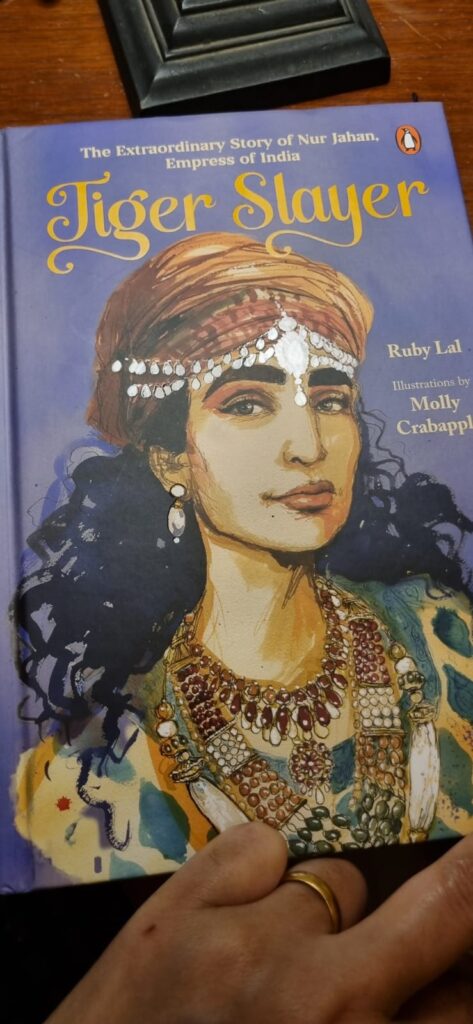
“Tiger Slayer: The Extraordinary Story of Nur Jahan, Empress of India” by Ruby Lal and Illustrated by Molly Crabapple

Who knew we needed this?!

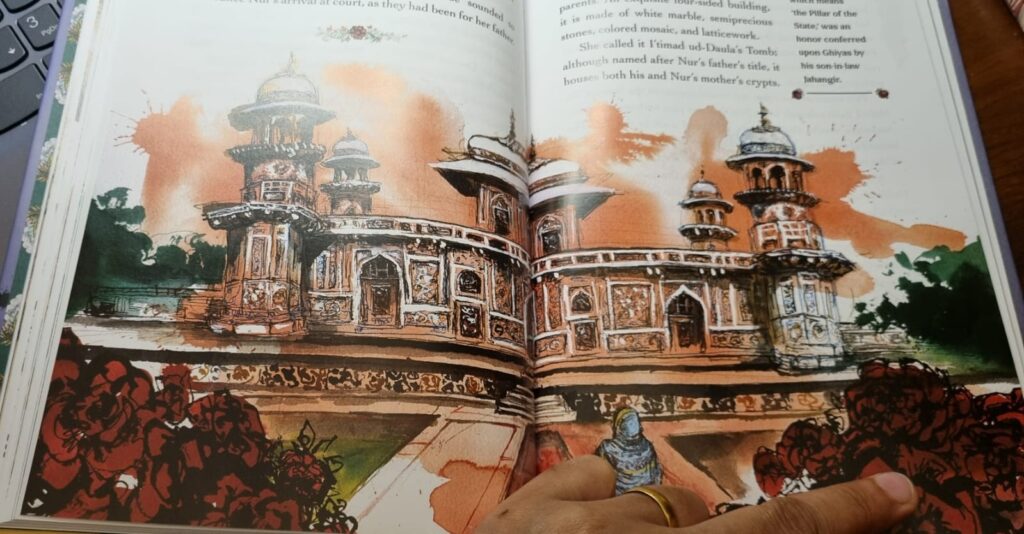
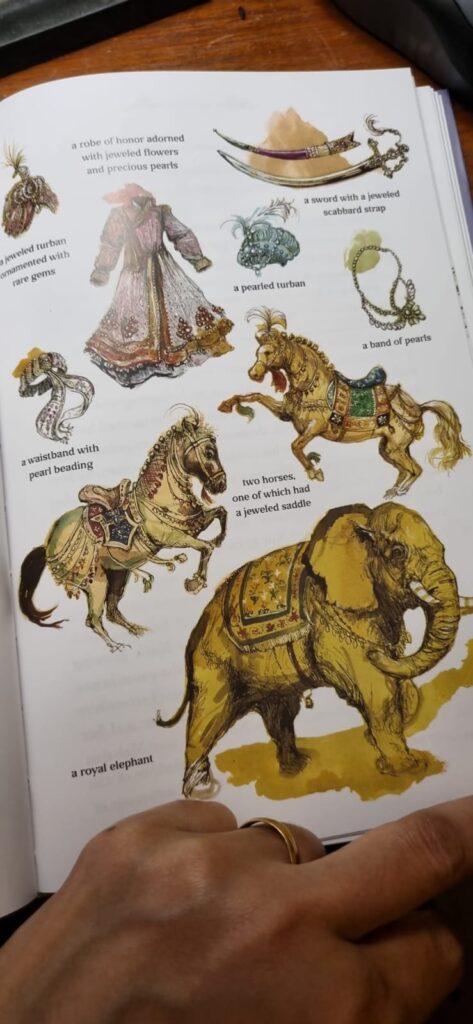
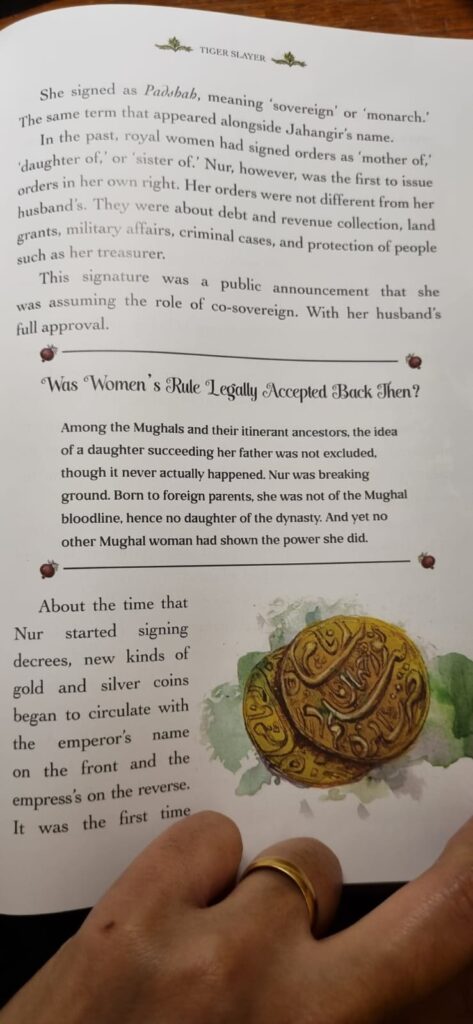
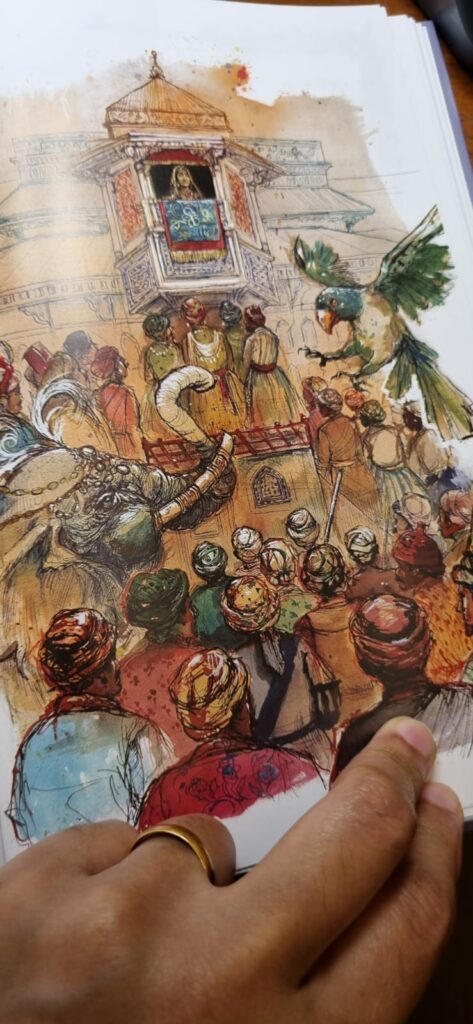
Some years ago, Ruby Lal had written  Empress: The Astonishing Reign of Nur Jahan. It was received well worldwide. But who knew that this extraordinary book needed to be retold for teenagers, imbued with the perfect zippity zap magic of Ruby Lal’s storytelling and Molly Crabapple’s fabulous illustrations. Sometimes when creative souls come together for a project and pour their passion into it, the end result is a product that is utterly perfect. This is one of those rare gems.

Decide for yourself in these snapshots from the book. Look at the layouts. Look at the illustration. Look at the font. Look at the page design. Look at the manner in which the text is not crowded on every page.

Although targetted for the young adult market, this is one of those titles that in all likelihood will become staple fare in the crossover market or for tourists.

Ruby Lal is an award-winning historian of India and professor of South Asian history at Emory
University whose writing has appeared in TimeBBC History, and Literary Hub. She is the author
of Empress: The Astonishing Reign of Nur Jahan, which was a finalist for the Los Angeles Times Book Prize. Her most recent book, Vagabond Princess: The Great Adventures of Gulbadan, was longlisted for the prestigious Cundill History Prize and received praise from the BBCWall Street Journal, and Times Literary Supplement, among others. She divides her time between Atlanta, Georgia, and Delhi, India.

Molly Crabapple is an artist and writer whose articles and art have appeared in the New York TimesNew York Review of BooksParis ReviewRolling Stone, and The New Yorker. Her work has been nominated for three Emmys, has been longlisted for the National Book Award, and is in the permanent collection of the Museum of Modern Art. She lives in New York City.

16 August 2025

“India in Triangles: The Incredible Story of How India was Mapped and the Himalayas Measured” by Shruthi Rao and Meera Iyer

The Great Trigonometrical Survey (GTS), an ambitious mission in the nineteenth century to map India using triangulation―a brilliant method that helped them measure every inch with accuracy. Along the way, they calculated the height of the world’s tallest mountain and revealed the true shape of the earth. The survey lasted nearly a hundred years and was led by several men, including William Lambton, George Everest and Andrew Waugh. But it wasn’t just them—thousands of people worked on this massive project.

India in Triangles is a fascinating account of the survey in India. The authors are able to share an important piece of history without dumbing down any information, even though the intended target audience is for young adults. This is the kind of book that will work supremely well in the crossover market for its readability, accessibility to information, listing and acquisition of the heavy equipment used in the mapping and of course, the stories involving the key people. It is a slim volume that is easily read like a thrilling adventure story. The fascination with which these pioneers chose to map the subcontinent does not dim with time.

Read an extract from the book on Moneycontrol. It is published by Puffin Books, Penguin Random House India.

Shruthi Rao has a master’s degree in energy engineering, and worked in the IT industry before she started writing. She is the author of multiple books such as 10 Indian Women Who Were the First to Do What They Did ,20 Indians Who Changed the World, Manya Learns to Roar, among others. She lives in the San Francisco Bay Area, and loves books, desserts, trees, benches, science and long walks.

Meera Iyer loves listening to, researching and writing about stories of people and places, buildings and streets. She volunteers with the Indian National Trust for Art and Cultural Heritage (INTACH) to help protect and celebrate Bengaluru’s history and heritage. She loves coffee, dark chocolate and potsherds.

15 August 2025

“Song of India: A Study of the National Anthem” by Rudrangshu Mukherjee

The rousing chords and stirring message of ‘Jana Gana Mana’ are familiar to every Indian citizen. The song defines with clarity India’s most cherished values. Composed by Nobel laureate Rabindranath Tagore, it celebrates the unity in our diverse and plural society, praises the beauty of our mountains, rivers, and seas, and honours our civilizational values. In this insightful study, scholar and historian Rudrangshu Mukherjee traces its origins (showing us what its creator had in mind when he composed the song), explains how and why it was chosen over other contenders, examines the occasional controversies that have surrounded it, and reminds us about the truths that underlie it. The national anthem is visionary. It recognizes and salutes everything that is brave, noble, and unique about our country. It also contains within it a promise and a pledge to uphold our lofty ideals and traditions. Citizens, and especially our elected representatives, should understand that every time they stand up in respect when ‘Jana Gana Mana’ is played or sung, it is their responsibility to fulfil the promise and honour the pledge.

Read an excerpt from the book on Moneycontrol. It is published by Aleph Book Company.

Rudrangshu Mukherjee is Chancellor and Professor of History at Ashoka University, of which he was the founding Vice Chancellor. He was educated at Calcutta Boys’ School, Presidency College, Calcutta, JNU, and St Edmund Hall, Oxford. He was awarded a DPhil in Modern History by the University of Oxford. He has taught in the department of history, Calcutta University, and held visiting appointments at Princeton University, Manchester University, and the University of California, Santa Cruz. From 1993 to 2014, he was the Editor, Editorial Pages, The Telegraph. He is the author of many books—these include Nehru & Bose: Parallel Lives; Awadh in Revolt 1857–58: A Study of Popular Resistance; Spectre of Violence: The Massacres in Kanpur in 1857; The Year of Blood: Essays on 1857; Dateline 1857: Revolt against the Raj. His recent books include A Begum and A Rani: Hazrat Mahal and Lakshmibai in 1857; Tagore and Gandhi: Walking Alone, Walking Together, which won the Valley of Words Award 2022, non-fiction; and Twilight Falls on Liberalism. He is the editor of Great Speeches of Modern India and The Penguin Gandhi Reader, and the co-author (with Shobita Punja and Toby Sinclair) of A New History of India: From Its Origins to the Twenty-First Century.

15 August 2025

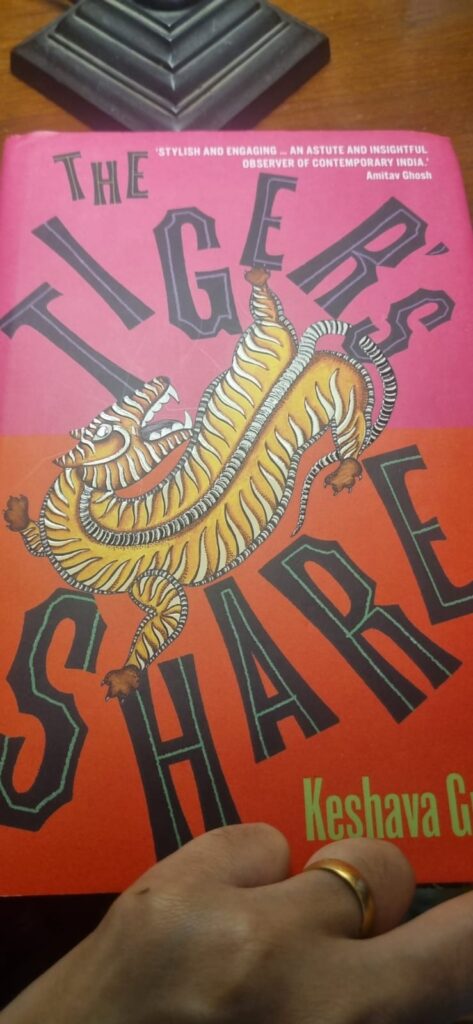
“The Tiger’s Share” by Keshava Guha

A Delhi novel. About two women. About one’s father. Middle class. Typical Delhi crowd. Patriarchal. Different socio-economic stratifications. While providing a commentary on the changing Delhi, particularly after 2014. An ending that is curious.

Tiger’s Share is Keshava Guha’s second novel.

Read it.

Listen to TOI Bookmark episode with Keshava Guha.

Here is a snippet from the conversation:
It is a relatively new term. So, fifty or sixty years ago there was just fiction. And yes at some level I think people understood that there was a difference between Iris Murdoch and Arthur Hailey, even though you would see them both at the British Council Library or whatever. But the idea was that there were novels and you read those that you liked. The problem with this category of literary fiction is that it can give the false impression that these books are not meant to be enjoyable to read. As if eat your vegetables, take your vitamins kind of reading. So, to that extent it is an unhelpful term. But how I would define it is that I think it is fiction that aspires to the status of art …you are trying to create something of enduring aesthetic value whether it has to do with an idea or a sentence, but it does not mean that it should not be enjoyable to read. You still want people to turn the pages.

15 August 2025

“The Penguin Book of Poems on the Indian City: A Poetic Journey Through 37 Indian Cities, Exploring Their Stories, Struggles, and Spirit”, Edited by Bilal Moin

Economist Bilal Moin’s ambitious project of creating The Penguin Book of Poems on the Indian City: A Poetic Journey Through 37 Indian Cities, Exploring Their Stories, Struggles, and Spirit is commendable. It consists of 375 poems, translated from nearly 20 languages and takes readers across 40 cities. If it were not of a doorstopper size, it would be a comforting book to carry and dip into. Ideally, Bible paper should have been used and not bulk paper as has been. It is formidable to pick this volume up and read. Nevertheless, it does have some fine poetry and unexpected voices. From the expected, canonised poets, to new and emerging voices.

Here is the list of contents:

15 August 2025

Web Analytics Made Easy -
StatCounter