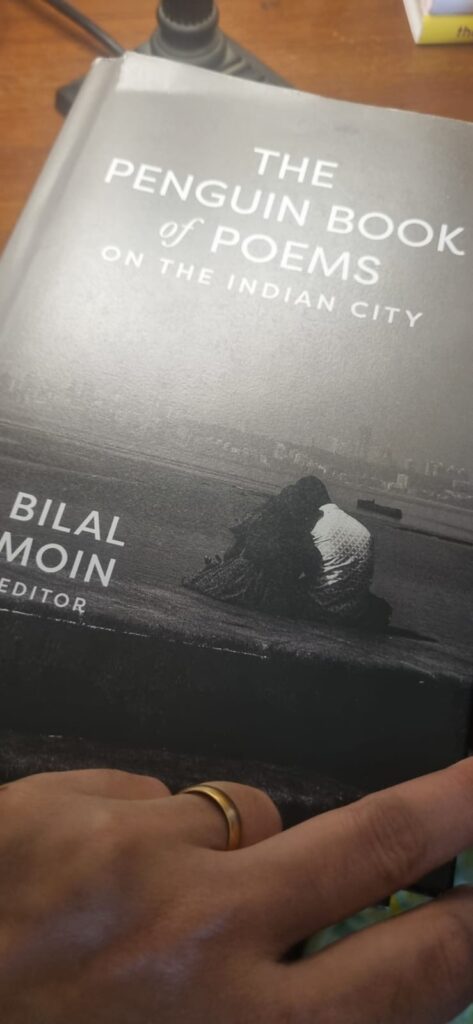
Economist Bilal Moin’s ambitious project of creating The Penguin Book of Poems on the Indian City: A Poetic Journey Through 37 Indian Cities, Exploring Their Stories, Struggles, and Spirit is commendable. It consists of 375 poems, translated from nearly 20 languages and takes readers across 40 cities. If it were not of a doorstopper size, it would be a comforting book to carry and dip into. Ideally, Bible paper should have been used and not bulk paper as has been. It is formidable to pick this volume up and read. Nevertheless, it does have some fine poetry and unexpected voices. From the expected, canonised poets, to new and emerging voices.
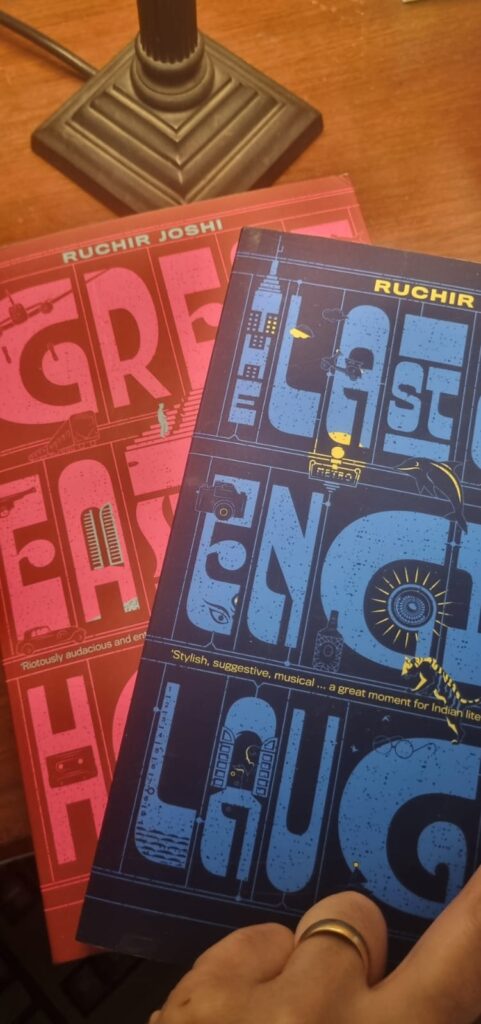
Ruchir Joshi spent twenty-five years writing this novel. It is meant to be read in the leisurely manner that it seems to have been written in. It is a history of Calcutta captured beautifully in words. The reader has to immerse themselves completely in it to get a sense of the landscape or even the characters. It is a very Bengali bhadra kind of literature. Hard to describe it to those who do not understand what “bhadra” is. Loosely put, cultured, Western upbringing while hanging on to your local cultural roots. An elegant balancing act between two cultures and yet making it your own. There will be something in this novel for everyone to appreciate but for me, it is Ruchir’s writing on food. He is always brilliant on food as is evident in the column he writes or his social media posts and it shows even in the novel. Worth savouring!
The Great Eastern Hotel is a history of Calcutta of the past, captured in words but with the eye of a filmmaker.
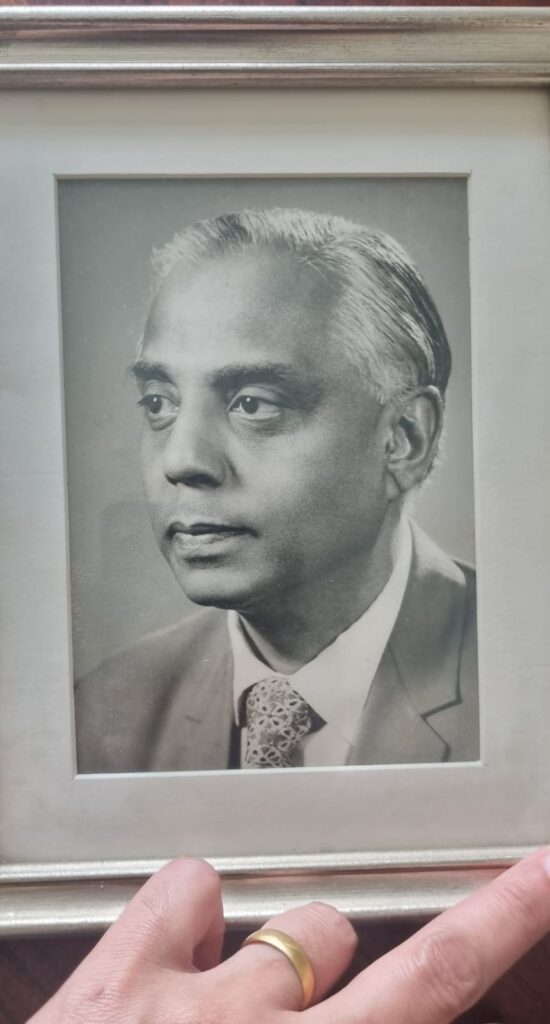
My maternal grandfather was the last ICS officer. He belonged to the Punjab cadre. I recall his telling us accounts of him as a young officer overseeing the partition of Punjab once Independence had been announced. He recorded his oral history at the Teen Murti Library. It is the longest oral history recorded so far. Given that today is 14 Aug 2025, I am posting a snippet from it, where he talks about being Under Secretary (Political) in undivided India in Lahore from 3 January 1947 to 14 August 1947. He continued as Under Secretary (Political) with the East Punjab Government in Simla from 15 August 1947 to 19 September 1947. He was then promoted to a senior scale post, Governor’s secretary, with effect from 19 September 1947. He became Governor of Punjab in 1989.
In the 1990s, I remember driving him to the Teen Murti library for these recording sessions. I would wait outside the recording room while he was being interviewed. It took nearly two years to record. It was a slow and methodical process. The research team would ask my grandfather detailed questions. He would usually prepare in advance, knowing the topic that they were going to talk about. But much before the recordings began, he had discussed with them the narrative that he would share. They would then share the rough transcripts of every recording which he would later edit. It was the final version that he had passed that was finally put on the shelves of the library.
Nirmal Kumar Mukarji (ICS)
Here he is in his own words (Part 1, Vol 1, pp. 275 onwards). Manchanda was his interlocutor on behalf of Nehru Memorial Museum and Library, Oral History.
Mukarji: I took over as Governor’s Secretary on the 20th September 1947 and stayed in that post up to the 19th December 1948. At the time that I took over, the East Punjab’s Government’s temporary headquarters was at Jullundur. The Governor was also there. He had taken up residence in a sort of bagicha building of a rayees on the Grand Trunk Road, north of Jullundur going towards Amritsar, about five miles out of Jullundur. I was the second person to be Governor’s Secretary.
When I went back as the Governor of Punjab much later, I found that there was a board in the room of the Governor’s Secretary listing all the names of the previous Secretaries and, sure enough, my name was there at Number 2. I suppose I am one of the few, if not the only, Governor’s Secretary who has gone on to become Governor of the same State.
My spell as Governor’s Secretary can be divided into two parts. The first one was during the period that East Punjab Government was locaed in Jullundur. This was, you might call, an emergency period. When the emergency period was over, the East Punjab Government went back to its regular headquarters at Simla and thereafter you might say the conditions were normal. The emergency conditions under which I served as Governor’s Secretary stretched from the 20th September when I took over to about the end of February or beginning of March 1948. I cannot recall the exact date. The East Punjab Government felt that by then all was reasonably under control and they could go back to their regular headquarters.
I shall now talk about this emergency period. The Governor, as I said, was Sir Chandulal Trivedi. He was a Gujarati, a former ICS man from the Central Provinces and Berar cadre. He had been Secretary in an important Ministry of the Government of India. After that, during the British period, he ahd been elevated to the post of Governor of Orissa. It was from there that he came to take over as Governor of East Punjab. He was an experienced man, very able, thoroughly honest and a solid worker. I do not think he was brilliant in any sense, nor did he possess the faculty of being a visionary. He was very down-to-earth.
Manchanda: Pragmatic, you mean.
Mukarji: No. I mean a practical, nuts-and-bolts administrator, which I suppose was what East Punjab needed at that time. He seemed to us, Punjab civilians, somewhat overanxious to prove that although he was from a backwater province like C.P. and Berar and had been Governor of an even more backwater province like Orissa, he was as good if not better than all of us put together. I think there was a psychological factor involved here. This, coupled with the strain and stress of having to be responsible for a province in such a high state of chaotic turbulence, probably accounted for his gruff and generally aggressive style of functioning. In his own way my predecessor my old friend, Saroop Krishen, warned me about this at the time of taking over. … .
Now I have spoken of the Governor as having been responsible for the province. But was he? Considering that there was a ministry. I would like to mention four reasons for the special role which the Governor was required to play in the early months of this emergency period. Firstly, the aura of Governorship under the British especially in Punjab continued for some time even after the British left. Everybody, whether they were Ministers of civil servants or even in the people, tended in those early months to view Trivedi as some kind of reincarnation of Jenkins. Secondly, Trivedie had been hand-picked by the national leadership, maybe on Mountbatten’s advice, because East Punjab was obviously going to be a difficult province to be governed and would therefore need an experienced administrator. All concerned showed him due deference because they saw him as the Centre’s man, one who enjoyed the confidence of the then power structure at the Centre, comprising Mountbatten, Jawaharlal Nehru and Vallabhai Patel. Thirdly, following the pattern adopted at the Centre for handling the prevailing emergency in the country as a while, and at the instance of the Centre, East Punjab also set up an Emergency Committee which was headed by the Governor, just as at the Centre it was headed by Mountbatten. For all practical purposes this became the supreme decision-making body. So long as it lasted, the Cabinet functioned in a shadowy manner handling only routine issues. Fourthly, no constitution had yet come into being. The role of the Cabinet vis-a-vis the Governor in the changed conditions of freedome was thus undefined. In this vacuum, the Rules of Business carried over from the British days tended to persist and, under those rules, the Governor continued to have a special position. For all these reasons, the Governor of East Punjab was indeed responsible for the good governance of his province. Maybe, he was uniquely so in the whole country. He himself saw his role in that way. I believe the Centre also held his responsible. After all, as I said, he had been hand-picked by the Central leadership.
The Governor’s role as the de facto ruler in those early emergency days inevitably affected the role of the Governor’s Secretary. Although he had less than three years service — four years if you count the probabtionary year also — he found himself, that is to say I found myself, pitch-forked into a fairly key role. During this emergency period, there were two aspects to my work. There was work relating to the Emergency Committee and other work …
Manchanda: … other usual work which was assigned to the Secretary.
Mukarji: Nothing was usual at that time.
Manchanda: I mean which was given by the Governor.
Mukarji: No, I will come to that.
Again following the central pattern, Governor’s Secretary was appointed the Secretary of the Emergency Committee, because at the Centre Mountbatten had insisted that his own secretary should be the Secretary of the Emergency Committee there. So the same pattern was followed here. The Emergency Committee — I am talking from memory — consisted of the Governor as the Chairman, and the Chief Minister, Gopichand Bhargava, the Home Minister, Swaran Singh, and two or three selected Ministers as members. One of them was the newly-appointed Transport Minister, none other than Saradar Partap Singh Kairon. The Committee also had senior officials, the Chief Secretary, the Home Secretary, the Inspector-General of Police and the Financial Commissioner for Relief and Rehabilitation. These were regular members. Other Secretaries or Heads of Departments attended when required for an agenda item covering them. The General Officer Commanding in Jullundur, who was none other than Major General Thimayya, or his representative also used to attend when required.
In the early days the Committee met every single day in the late afternoon. No notice went out. It was understood that everybody would come at that time. It was understood that everybody must come at that time. The Committee broadly attended to three things: It took stock of the latest information, from the districts as also from Pakistan, in regard to law and order and the movement of refugees both to and from East Punjab. Secondly, it reviewed the action taken on the previous days decisions. Thirdly, it took decisions on points arising indicating the nature of action to be taken. The discussions were not always in the sequence that I have mentioned.
Manchanda: Was the third point not about relief and rehabilitation?
Mukarji: Yes.
Manchanda: What you are saying was movement of refugees to and from East Punjab. But what about the setting up of camps, providing them shelter, etc.?
Mukarji: This was connected with the movement of refugees. We were constantly in touch with West Punjab. Whenever we heard that some kafila was being attacked or had been attacked on that side, we had to be on guard to prevent or contain retaliation on our side, because we were responsible for the Muslim kafilas going from this side to the other. The agenda thus changed according to the circumstances. The discussions were not always orderly or in any kind of sequence, as I have mentioned. Whatever was hot on anybody’s mind was brought up. Maybe a letter from Jawaharlal Nehru or a reported massacre in Lahore or a huge refugee caravan moving from point X to point Y, whether in East or West Punjab.
Manchanda: That means there was no fixed agenda.
Mukarji: There was this broad agenda always.
Manchanda: I mean on a particular day, there was no fixed agenda . . . .
Mukarji: . . . unless someboady wanted to discuss a special subject. There was no time to issue agenda notices anyway. The atmosphere was such that these discussions were, though fairly tightly controlled by the experienced Trivedi, inevitably somewhat chaotic. It was left to the Governor’s Secretary to distill coherence and sense out of what was discussed in the shape of action points. Immediately after each meeting I was required to dictate crisp minutes, setting out action points. This was important as each minute indicated who was to take action on what and by when. The minutes were dispatched that very evening to all concerned who had to take action so that they could initiate action without delay. Of course, in most cases action was initiated by the concerned persons without waiting for the minutes to arrive. That was just as well because the situation demanded that. For a young officer like myself it was a unique opportunity to learn what crisis management was all about. The writing of minutes, which I did, was solely my responsibility. There was no question of obtaining the Governor’s approval before sending the minutes out. There was never time for it anyway.
Mukarji: Just the action points.
Manchanda: But you would write something in the minutes . . . .
Mukarji: . . . if there was something that required explanation. That would be mentioned.
Manchanda: Generally, how many pages did a single days’s minutes contain?
Mukarji: Anything up to half a dozen pages.
Manchanda: That’s right.
Mukarji: It was a treat to see the next day how promptly and efficiently all action had been attended to. The East Punjab Government was still finding its feet, but even so it was dealt with this wholly unprecedented crisis, I would say, rather well.
The following is a sample of the issues that were attended by the Emergency Committee: (1) Monitoring the movement of refugee kafila from and into East Punjab, (2) Providing protection to outgoing Muslim kafilas, (3) Directing incoming kafilas to refugess camps, (4) Setting up refugee camps and seeing to the required logistics and the organisation. Setting up these camps involved enormous problems, getting tents, making food arrangements, seeing to the layout of camps, selecting camp officers, defining the precise responsibilities of the Deputy Comissioners and his officers, making health and sanitary arrangements, and ensuring special attention to widows and children, (5) Initiating action for rehabilitation as distinct from relief. It was the first time anybody was addressing this kind of action agenda.
Manchanda: This was unprecedented thing in the history of India.
Mukarji: These were the kinds of issues that used to come up and they were dealt with regularly. On the whole the Emergency Committee worked with smooth efficiency.
I recall an occassion when this smooth functioning was rather rudely interrupted. This was when the Director of Health Services, a very eminent medical man, highly respected by everybody, by the name of Colonel B. S. Nat, was invited specially to attend a particular meeting because health arrangements in the camps were being discussed. There had been complaints of inadequacies here and there. Before Colonel Nat could speak a word, Governor Trivedi jumped on him, as it were, and was very rough in what he said to him. I remember Colonel Nat was almost reduced to tears. After the meeting the Chief Secretary M. R. Sachdev asked me whether I would like to have a lift back to where I was staying.
He took Colonel Nat and me in his station wagon. The Chief Secretary and I tried to pour oil on troubled waters on this return journey. The Chief Secretary said that the Governor’s outburst should be seen in the light of the heavy strain on him. He reassured Colonel Nat that he would still be highly regarded by all of us as before. Sachdev told him: You have to deal with the new Governor only once like this. Look at young Mukarji here, he has to face him everyday and yet carry on! In other words he said that the times were such that we all had to go on doing our best for East Punjab and the country. Colonel Nat of course responded accordingly, being the great and good man that he was.
The most terrible aspect of the emergency period was the mass killings and also other killings. The Emergency Committee was at its wits’ end about how to control this because normal law and order methods or even extra-normal law and order methods were just not good enough. The mood of anger, resentment, revenge was so great: the temperature was so high that there was nothing that could be done. This most terrible aspect came to a full stop through what I can only think of as divine intervention. This came in the form of the heaviest downpour of rain that I have personally witnessed in Punjab in all the years that I was there. It rained heavily, non-stop, for four to five days. It started raining at night on the 27th September. Every river and stream was in flood. All communications were broke down. There were two streams called the East and West Beins. They lie on either side of Jullundur on the Grand Trunk Road. They both became swollen and overflowed, so the East Punjab Government and its officers, all of us, were imprisoned between the two Beins. We could not move out. The points at which these two crossed the Grand Trunk Road were about ten to twelve miles apart. At each crossing point there was a Muslim kafila lying encamped, each other ten to fifteen thousand in numbers. When the rains started these thousands of fleeing Muslims were encamped on the banks of the two Beins. I should explain that these kafilas were spaced out at ten to twelve miles distance from each other. This was done so as not to allow one kafila to telescope into the kafila ahead. When the two Beins were suddenly flooded, the two camps, each in the lowlands adjoining the streams, anything up to 20,000 people plus tens of thousands of cattle, were simply drowned or washed away. Any attempt by these people to escape was futile. The lowlands stretched from the streams to the bluffs from where the highlands started. Along the periphery of the highlands roamed armed Sikh peasants ready to kill or loot anyone trying to escape.
After the rains stopped, J. M. Shrinagesh who was the Commissioner, Jullundur Division asked me if I would like to visit one one of these camp sites. I said: Yes. We went by jeep to the East Bein site. There were corpses of humans and animals bloated and rotting. It was difficult to breathe. The stink was nauseating. It was easily the worst disaster I have personally seen.
Now all this rain meant that agricultural lands became ready for the Rabi crop. It has to be borne in mind that East Punjab was largely barani, that means rainfed. The bounty of Bhakra waters was far off. So the peasantry laid down their arms and picked up their ploughs. It was thus that the killings came to a sudden stop. Even otherwise, a feeling had probably come about that enough was enough.
This is a story about a piano and its most prodigious player — how it, along with him, survived.
When her father died, singer songwriter Roxanne de Bastion inherited a piano she knew had been in her family for over a hundred years. But it is only when she finds a cassette recording of her grandfather, Stephen, playing one of his compositions, the true and almost unbelievable history of the piano, this man and her family begins to unravel.
Stephen was a man who enjoyed great fame, a man who suffered the horrors of concentration camps in WWII, a man who ultimately survives — along with his piano. By piecing together his cassette recordings, unpublished memoirs, letters and documents, Roxanne sings out her grandfather’s story of music and hope, lost and found, and explores the power of what can echo down through generations.
Roxanne de Bastion is a singer-songwriter and artist advocate. She has released two critically acclaimed albums that have been championed by the likes of Iggy Pop and Steve Lamacq. Her music has garnered praise in the Observer, NME, Record Collector and Rolling Stone Germany, and her pioneering DYI artistry and activism have been featured in the Metro, Huffington Post, LBC and Sky News. Roxanne has toured opening for Katie Melua, Howard Jones, Lambchop and Martha Wainwright and has performed at Latitude, Glastonbury and Cambridge Folk Festival. In 2018, she self-published her tour diaries Tales from the Rails and in 2021, she was the first artist to embark on a virtual UK tour when the pandemic hit. Roxanne sits on the board of the Featured Artist Coalition (alongside artists such as Dave Rowntree of Blur and Imogen Heap) and the PPL Performer Board, where she represents artists’ rights. She is the founder of the independent artist conference FM2U (From Me to You). Roxanne has held talks at Brunel University, Reeperbahn Festival and re:publica on topics such as ‘Designing your Own Future’ and ‘Female is not a Genre’ and has been invited to speak on panel discussions at international music industry conferences such as The Great Escape, Folk Alliance and the English Folk Expo. Roxanne also hosts a radio show on North London’s Boogaloo Radio. The Piano Player of Budapest is her first book.
Epictetus, a luminary in the realm of Stoic philosophy, first saw the light of day as a slave in the ancient city of Hierapolis, Phrygia, nestled in what is now the enchanting landscape of Pamukkale, Turkey. His journey took him to the heart of Rome, until fate swept him to the shores of Nicopolis in northwestern Greece. It was there, amid the whispers of the ages, that he carved his indelible mark on history and breathed his last. The essence of his wisdom was captured for eternity by his devoted pupil, Arrian, in the seminal works, the Discourses and The Enchiridion.
This ancient manual for living offers a blueprint for resilience, emotional intelligence, and personal freedom amidst the chaos of modern life. Its teachings on the power of perspective, the importance of focusing on what’s within our control, and the pursuit of virtue over external successes resonate with contemporary seekers of meaning and well-being. Amidst the noise of digital distractions and societal pressures, the book serves as a compass, guiding individuals towards a life of purpose, tranquillity, and self-mastery, proving that Stoic philosophy remains a vital source of inspiration and practical guidance for navigating the challenges of the modern world.
Epictetus, a renowned ancient Greek philosopher, emerged as a prominent figure in Stoic philosophy during the 1st and 2nd centuries AD. Born into slavery, his journey to enlightenment is as inspiring as his teachings. Epictetus’ profound insights on ethics, resilience, and the human condition are encapsulated in his Discourses and The Enchiridion, timeless works that continue to shape philosophical thought. His pragmatic approach to life’s challenges has made him an enduring influence on countless individuals seeking wisdom and inner peace.
Andrew Miller is longlisted for The Booker Prize 2025. His novel, “The Land in Winter”, is a gorgeous historical fiction set in the terrible winter of 1962/63. It has already won the Walter Scott Prize for Historical Fiction 2025 and Winston Graham Historical Prize 2025.
I have always enjoyed reading his novels. So, it was a privilege to converse with him. A freewheeling conversation about historical fiction and writing.
Here is a snippet:
“Well, you just sink yourself in it. I mean when you are writing historical fiction this book is curious because as you pointed out, it has won a couple of prizes for historical fiction and both those prizes have a rule which is that it has got to be set sixty years before the date of publication. So, we were just kind of over a line. I don’t claim to be an expert, there is a lot of smoke and mirror involved, you try to get a feel and a sense of what it might have been. So yes it is research, reading, and the kind of stuff a scholar might recognise, but we are not scholars.”
We recorded this TOI Bookmark episode a few days before his longlisting for The Booker Prize was announced.
TOI Bookmark is a weekly podcast on literature and publishing. TOI is an acronym for the Times of India (TOI) which is the world’s largest newspaper and India’s No. 1 digital news platform with over 3 billion page views per month. The TOI website is one of the most visited news sites in the world with 200 million unique monthly visitors and about 1.6 billion monthly page views. TOI is the world’s largest English newspaper with a daily circulation of more than 4 million copies, across many editions, and is read daily by approximately 13.5 million readers. The podcasts are promoted across all TOI platforms. I have recorded more than 142+ sessions with Jnanpith, Padma Bhushan, and Padma Shree awardees, International Booker Prize winners, Booker Prize winners, Women’s Prize for Fiction, Nobel Laureates, Pulitzer Prize, Stella Prize, AutHer Awards, Erasmus Prize, BAFTA etc. Sometimes the podcast interviews are carried across all editions of the print paper with a QR code embedded in it.
Some of the authors who have been interviewed are: Banu Mushtaq, Deepa Bhashti, Samantha Harvey, Jenny Erpenbeck, Michael Hoffman, Paul Murray, V. V. Ganeshananthan, Hisham Matar, Anita Desai, Amitava Kumar, Hari Kunzro, Venki Ramakishnan, Siddhartha Deb, Elaine Feeney, Manjula Padmanabhan, NYRB Classics editor and founder Edwin Frank, Jonathan Escoffery, Joya Chatterji, Arati Kumar-Rao, Paul Lynch, Dr Kathryn Mannix, Cat Bohannon, Sebastian Barry, Shabnam Minwalla, Paul Harding, Ayobami Adebayo, Pradeep Sebastian, G N Devy, Angela Saini, Manav Kaul, Amitav Ghosh, Damodar Mauzo, Boria Majumdar, Geetanjali Mishra, William Dalrymple, Abdulrazak Gurnah, Dr Rachel Clark, Charlotte Wood, Catherine Chidgey, Andrew Miller, Sam Dalrymple, and Annie Ernaux.
I do not have a standard recipe. I merely recall watching it being made at home. It was a dish we had regularly. It is labour intensive and not many people like to make it now at home. I can imagine why. But if you have the patience, try it.
Keema/ mince ( any will do although red meat is the best because of its fatty content) Salt Garam masala ( I make it at home) Turmeric Dhania powder Ginger Garlic Onions 1 or 2 eggs tomatoes Fresh green coriander to garnish
To make the kofta
I use the sil batta. You may want to use the food processor. Take the mince, small amounts at a time, add the garam masala and salt. Grind it till it is a paste. Grinding like this helps release the fats within the meat and it makes for an excellent binding agent. Use the entire quantity of meat in this manner. Then add an egg or maybe two, work it into the mixture. Make the meat balls.
To make the curry. Normal manner.
Brown the onions in oil. Add the cut ginger and garlic. Cook. Add tomatoes, Add the garam masala, dhania powder, haldi, and salt. You can add khada masala or powdered. I prefer the powdered for this as it does not get into the teeth. Add a dash of water.
Cook on a slow fire. Cover. Stir till it begins to release oil.
Add water. Salt it.
Bring to a rolling boil. Then put the fire on low. Let it roll till the flavours come together. Taste it. If need be, add more salt or even garam masala.
Once done, slowly slip in the meat balls. They will hold. There is no need to fry these as many recipes on the internet advise one to do so.
At this point, I raised the flame once more, to bring it to a rolling boil. Then reduce it. Leave the dish on an open fire and let it cook gently for at least an hour or more, depending on the quantity of meat used.
You will also see it come together.
Once done, garnish with the green coriander.
Btw, my mum did not always use the sil batta as my grandmothers and great-grandmothers did. Mum merely mixed the mince with the masalas and egg and made meat balls that she slipped into the curry. It is yummy. The only difference is that if you grind the meat, you get a lovely texture like a goshtaba. But if you do not, it is still yummy but the mince grains are visible.
I have not given you quantities of ingredients as you can use it as per your taste buds. But normally for 1 kg meat, I would like to use a decent amount of onions as they get reduced considerably once browned. Also, go easy on the tomatoes if they are sour. Use the masalas sparingly, just enough to give the dish a personality. Turmeric is essential for digestion and colour. Also, always remember to salt at every stage of cooking/grinding. I alsoprefer to use a generous quantity of ginger to ensure that it does not sit heavy on the tummy. It gets polished off very rapidly.
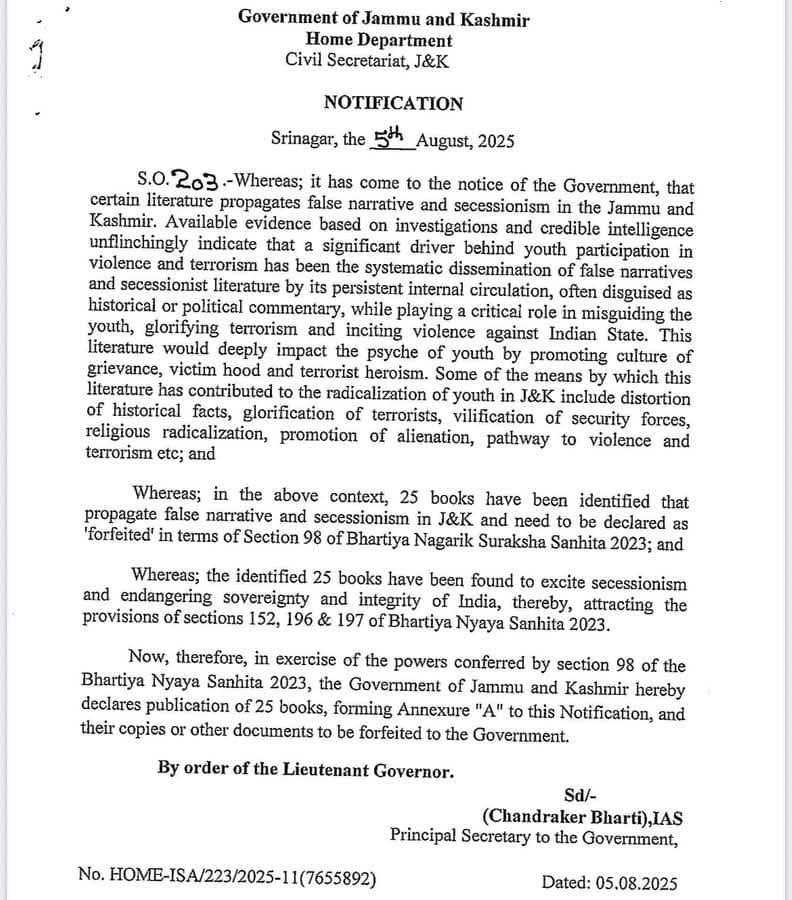
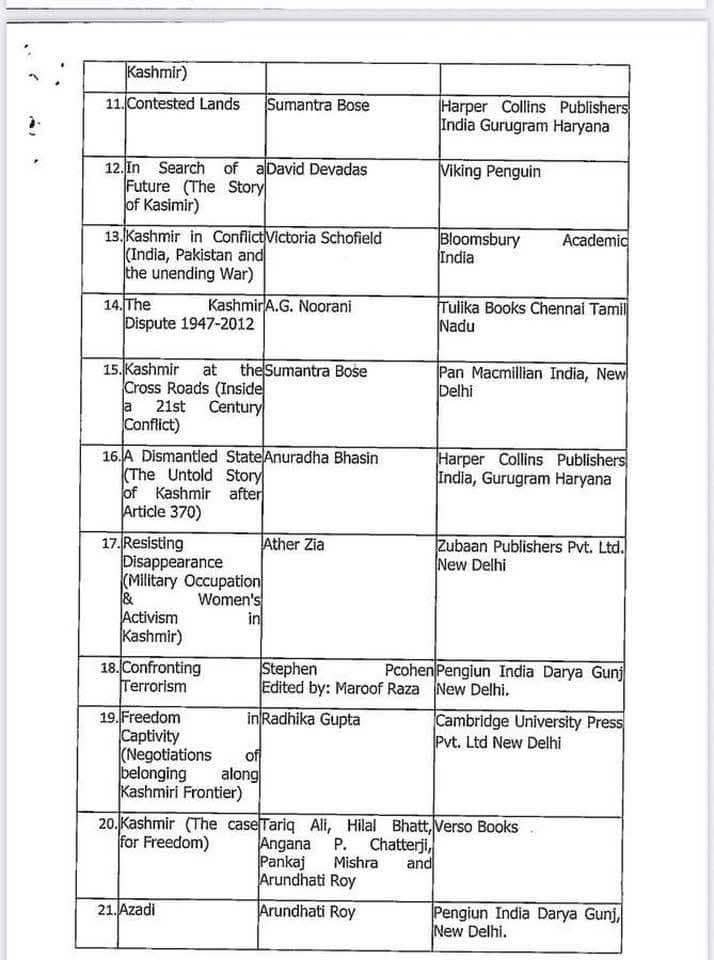
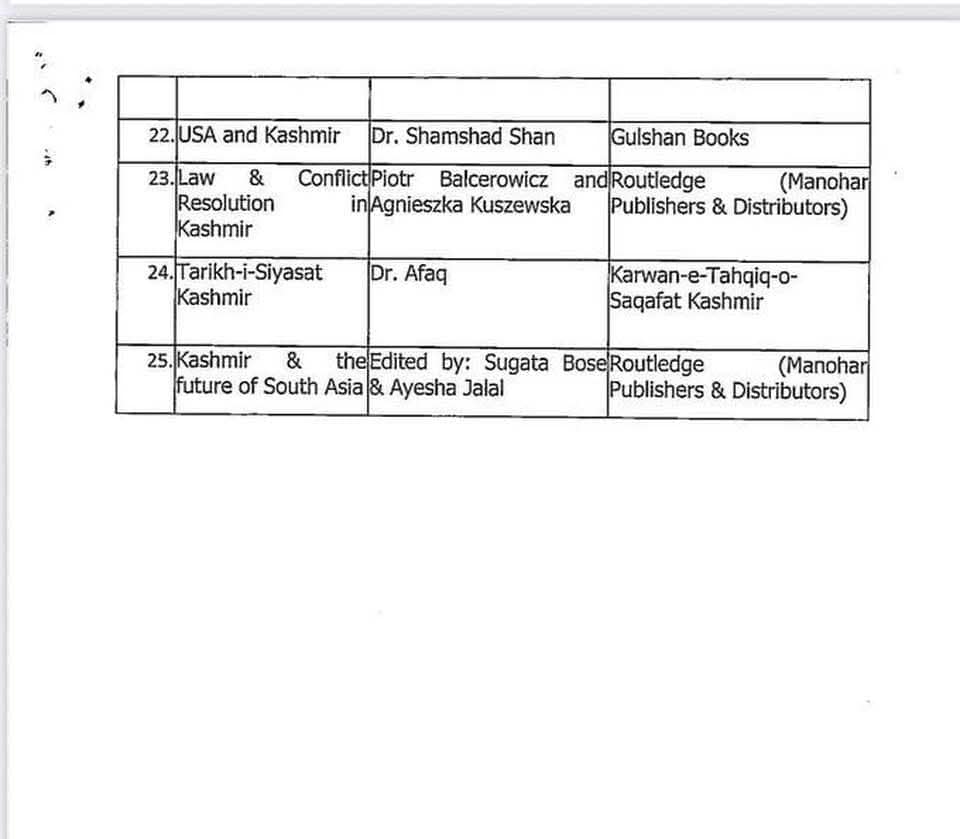
The administration has directed the forfeiture of these titles, alleging that the books promote false narratives, glorify terrorism, and incite secessionism in the Union Territory.
Among the authors whose works have been banned are acclaimed writer and activist Arundhati Roy (for her book Azadi), constitutional expert AG Noorani (The Kashmir Dispute 1947–2012), and political scientist Sumantra Bose (Kashmir at the Crossroads).
Officials said the decision was taken after a detailed review of the content, which was found to be “objectionable” and “potentially harmful to public peace and the unity of the nation.”
A notification issued by the Home Department said that investigations and intelligence inputs revealed that these publications played a significant role in radicalizing youth by distorting historical facts, vilifying security forces, and promoting violence.
Acting under Section 98 of the Bharatiya Nagarik Suraksha Sanhita, 2023, the Government declared these books forfeited due to their threat to national integrity and public order.
The notification S.O.203 issued by the Home Department read, “Whereas, it has come to the notice of the Government, that certain literature propagates false narrative and secessionism in Jammu and Kashmir. Available evidence based on investigations and credible intelligence unflinchingly indicate that a significant driver behind youth participation in violence and terrorism has been the systematic dissemination of false narratives and secessionist literature by its persistent internal circulation, often disguised as historical or political commentary, while playing a critical role in misguiding the youth, glorifying terrorism and inciting violence against Indian State”.
“This literature would deeply impact the psyche of youth by promoting a culture of grievance, victimhood, and terrorist heroism. Some of the means by which this literature has contributed to the radicalization of youth in J&K include distortion of historical facts, glorification of terrorists, vilification of security forces, religious radicalization, promotion of alienation, pathway to violence and terrorism etc; and Whereas; in the above context, 25 books have been identified that propagate false narrative and secessionism in J&K and need to be declared as ‘forfeited’ in terms of Section 98 of Bhartiya Nagarik Suraksha Sanhita 2023; and Whereas; the identified 25 books have been found to excite secessionism and endangering sovereignty and integrity of India, thereby, attracting the provisions of sections 152, 196 & 197 of Bhartiya Nyaya Sanhita 2023”.
“Now, therefore, in exercise of the powers conferred by section 98 of the Bhartiya Nyaya Sanhita 2023, the Government of Jammu and Kashmir hereby declares publication of 25 books, forming Annexure “A” to this Notification, and their copies or other documents to be forfeited to the Government”, the notification added.
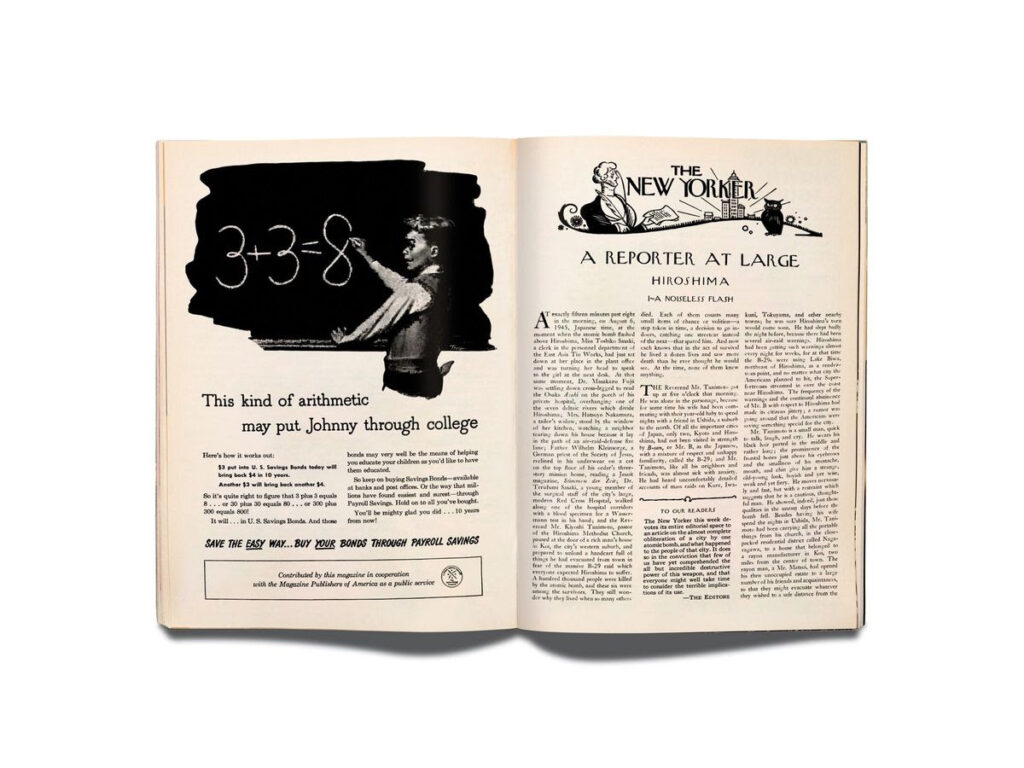
Today is the eightieth anniversary of the atomic bombing of Hiroshima. Every time I have to teach the undergraduates, I give them John Hersey’s essay, “Hiroshima” (The New Yorker, 23 August 1946) to read and analyse. Many give up, but those who persevere, are stunned by it. For many of these students, reading English at the best of times is a bit of a struggle and most certainly a long essay that made up the entire special issue of The New Yorker.
In the newsletter circulated by the magazine on 3 Aug 2025, their staff reporter, Jane Mayer writes:
Thirty years after this magazine published John Hersey’s “Hiroshima,” I sat in his classroom at Yale, hoping to learn how to write with even a fraction of his power. When “Hiroshima” appeared, in the August 31, 1946, issue, it was the scoop of the century—the first unvarnished account by an American reporter of the nuclear blast that obliterated the city. Hersey’s prose was spare, allowing the horror to emerge word by word. A man tried to lift a woman out of a sandpit, “but her skin slipped off in huge, glove-like pieces.” The detonation buried a woman and her infant alive: “When she had dug herself free, she had discovered that the baby was choking, its mouth full of dirt. With her little finger, she had carefully cleaned out the infant’s mouth, and for a time the child had breathed normally and seemed all right; then suddenly it had died.”
Hersey’s candor had a seismic impact: the magazine sold out, and a book version of the article sold millions of copies. Stephanie Hinnershitz, a military historian, told me that Hersey’s reporting “didn’t just change the public debate about nuclear weapons—it created the debate.” Until then, she explained, President Harry Truman had celebrated the attack as a strategic masterstroke, “without addressing the human cost.” Officials shamelessly downplayed the effects of radiation; one called it a “very pleasant way to die.” Hinnershitz said, “Hersey broke that censorship.” He alerted the world to what the U.S. government had hidden.
Soon after “Hiroshima” was published, the influential Saturday Review ran an editorial condemning “the crime of Hiroshima and Nagasaki.” America’s military establishment tried to quell the outrage with a piece in Harper’s by Henry Stimson, a retired Secretary of War. The article—ghostwritten by McGeorge Bundy, a future national-security adviser—claimed that dropping nuclear bombs on Japan had averted further war, saving more than a million American lives. Kai Bird, a co-author of “American Prometheus,” the definitive biography of J. Robert Oppenheimer, told me that this pushback was specious: “Bundy later admitted to me that there was no documentary evidence for this ‘million’ casualty figure. He just pulled it out of thin air.”
Hersey’s report helped transform The New Yorker. Although the magazine had published dispatches from brilliant war correspondents, including Janet Flanner, it was still widely considered a weightless amusement. “Hiroshima” marked a new, more serious era. It also changed journalism. For many reporters of my generation, “Hiroshima” was a model of what might be called the ethical exposé. It was built on rigorous reporting and meticulously observed details, and, through its quiet, almost affectless voice, the reader became another eyewitness. Hersey’s narrative approach was deceptively simple. Threading together the stories of six survivors, he described the destruction from their perspective, which implicitly made the point that nuclear warfare posed an unconscionable threat to humanity. People usually think of investigative reporting as relying on obscure documents and dry financial data. But Hersey, whose 1944 novel, “A Bell for Adano,” won a Pulitzer, showed that to truly affect readers such reporting must be paired with literary craft and be propelled by a sense of urgency.
Hersey, the secular son of high-Wasp missionaries to China, transferred an almost stern sense of morality to his work. As a professor, he was priestly, soft-spoken, and intimidating. His reverence for journalism as a sacred duty could be self-righteous, but it set a standard for conscientiousness that I still try to meet. His seminar Form and Style in Non-Fiction Writing required students to analyze and emulate the techniques of great writers from Homer to Thornton Wilder. In fact, “The Bridge of San Luis Rey,” Wilder’s 1927 novel, which unfurls the personal stories of characters who die at the bridge, had inspired the form of “Hiroshima,” and Hersey hoped to teach us through such examples. Private tutorials were equally inspiring and mortifying. Some of my Yale classmates still burn with embarrassment when recalling them. One remembers Hersey pulling out a copy of Fowler’s “Dictionary of Modern English Usage” and asking, “Are you familiar with this?” Another will never forget Hersey, who marked comments in pencil, noting that she’d misspelled “masturbation.” A third says that Hersey, a stickler for accuracy, criticized a description of fingernails “bitten to half the normal length” as hyperbolic. After making each point, Hersey erased his notes. The message was clear: now we were on our own.
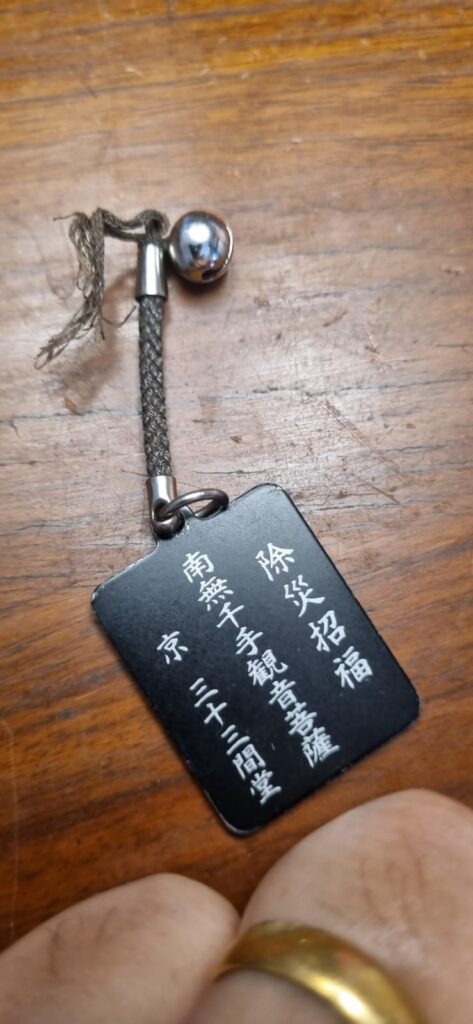
Years ago, my mother had visited Hiroshima. She was very moved by the experience. She bought a memento for me. First I tied it to whichever handbag I carried. Once the threads weakened and fell apart, I put it into a pocket of my handbag and carry it still. I do not know what the letters in Japanese spell out but the changing colours of the design in different lights is extraordinary.
In this image, it looks green, but I have seen it a vibrant blue, a dull gold-brown and even turn to black. I have no idea why or how it does this, but it does.
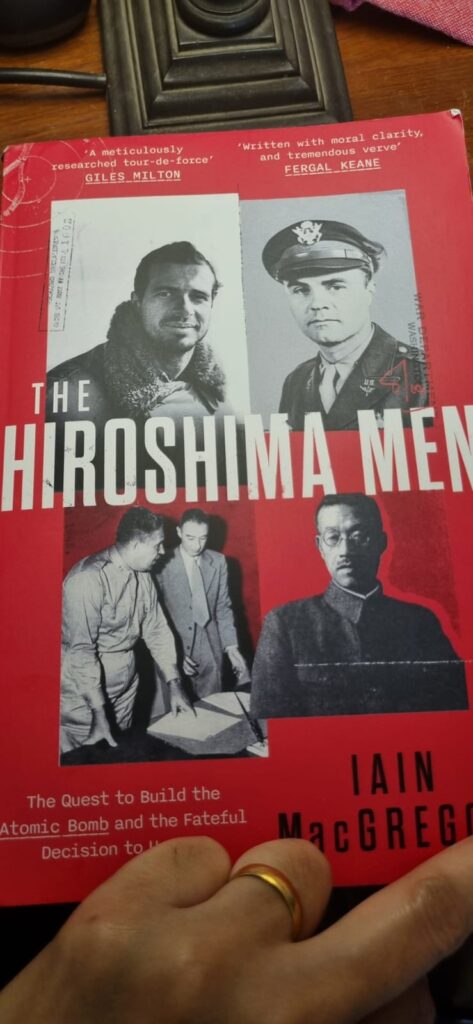
Yesterday, Hachette India sent The Hiroshima Men. I have as yet to read it but it is a timely publication.
Here is the book blurb:
At 8:15 a.m. on August 6th, 1945, the Japanese port city of Hiroshima was struck by the world’s first atomic bomb. Built in the US by the top-secret Manhattan Project and delivered by a B-29 Superfortress, a revolutionary long-range bomber, the weapon destroyed large swaths of the city, instantly killing tens of thousands. The world would never be the same again.
The Hiroshima Men’s unique narrative recounts the decade-long journey towards this first atomic attack. It charts the race for nuclear technology before, and during the Second World War, as the allies fought the axis powers in Europe, North Africa, China, and across the vastness of the Pacific, and is seen through the experiences of several key characters: General Leslie Groves, leader of the Manhattan Project alongside Robert Oppenheimer; pioneering Army Air Force bomber pilot Colonel Paul Tibbets II; the mayor of Hiroshima, Senkichi Awaya, who would die alongside over eighty-thousand of his fellow citizens; and Pulitzer Prize-winning novelist John Hersey, who travelled to post-war Japan to expose the devastation the bomb had inflicted upon the city, and in a historic New Yorker article, described in unflinching detail the dangers posed by its deadly after-effect, radiation poisoning.
This thrilling account takes the reader from the corridors of the White House to the laboratories and test sites of New Mexico; from the air war above Nazi Germany and the savage reconquest of the Pacific to the deadly firebombing air raids across the Japanese Home Islands. The Hiroshima Men also includes Japanese perspectives – a vital aspect often missing from Western narratives – to complete MacGregor’s nuanced, deeply human account of the bombing’s meaning and aftermath.
Reviews published on Amazon India
I can think of no more important book for our time. Written with moral clarity, tremendous verve, and the ability of a truly great historian to render the immensity of a moment through the smaller voices as well as being faithful to the facts. I recommend this magisterial, haunting book to all generations — Fergal Keane, award-winning BBC foreign correspondent and author of Road of Bones: The Siege of Kohima 1944
Iain Macgregor’s compelling account impresses in many ways. Unheralded individuals take centre stage. Vividly drawn characters spring to life. But it is his expertly managed juxtaposition of science, strategy and visceral horror that stands out — Joshua Levine, New York Times bestselling author of Dunkirk
The nuclear destruction of Hiroshima and Nagasaki was one of the most iconic moments of the twentieth century. Yet little has been written about the individuals whose actions led to Japan’s unconditional surrender. Iain MacGregor’s The Hiroshima Men is epic in scale yet intimate in detail, its pages filled with mavericks and geniuses who forever changed our world. A meticulously researched and compellingly written tour-de-force — Giles Milton, author of The Stalin Affair
The Hiroshima Men is a brilliant, superbly researched story of genius and terrifying destruction — Alex Kershaw, New York Times bestselling author of Against All Odds: a True Story of Ultimate Courage and Survival In World War II
The atomic bombing that obliterated Hiroshima has not lacked for attention from historians and other writers. But Iain MaGregor’s gripping book vastly expands the cast of characters: politicians and scientists in Japan and the United States; military men on both sides, from generals to pilots and air crews; victims on the ground both dead and alive; writers and journalists covering the story – all portrayed vividly as the story dramatically unfolds — William Taubman
Once again, MacGregor weaves together a wide range of sources to create a gripping, moving and frequently surprising narrative, this time of how World War II ended in human-created apocalypse, and a new era began with a mix of hope and horror that still characterizes our lives eight decades later — Frederick Taylor, author of Dresden: Tuesday 13 February, 1945
A meticulously researched and profoundly thought-provoking account of one of history’s most consequential events . . . More than just a work of history, this is also a sobering meditation on war, science and morality. Superb — James Holland
The Hiroshima Men is a searing and humane reckoning with the human cost of atomic warfare, blending meticulous history with unflinching moral clarity — Philip W Blood, author of War Comes to Aachen: The Nazis, Churchill and the ‘Stalingrad of the West’
Iain MacGregor has been an editor and publisher of nonfiction for thirty years working with esteemed historians such as Simon Schama, Michael Wood and James Barr. He is himself the author of the acclaimed oral history of Cold War Berlin: Checkpoint Charlie and his writing has appeared in the Guardian, the Express, as well as the Spectator and BBC History magazines. As a history student he has visited East Germany, the Baltic and the Soviet Union in the early 1980s and has been captivated by modern history ever since. He has published books on every aspect of the Second World War. Iain is a Fellow of the Royal Historical Society and lives with his wife and two children in London.
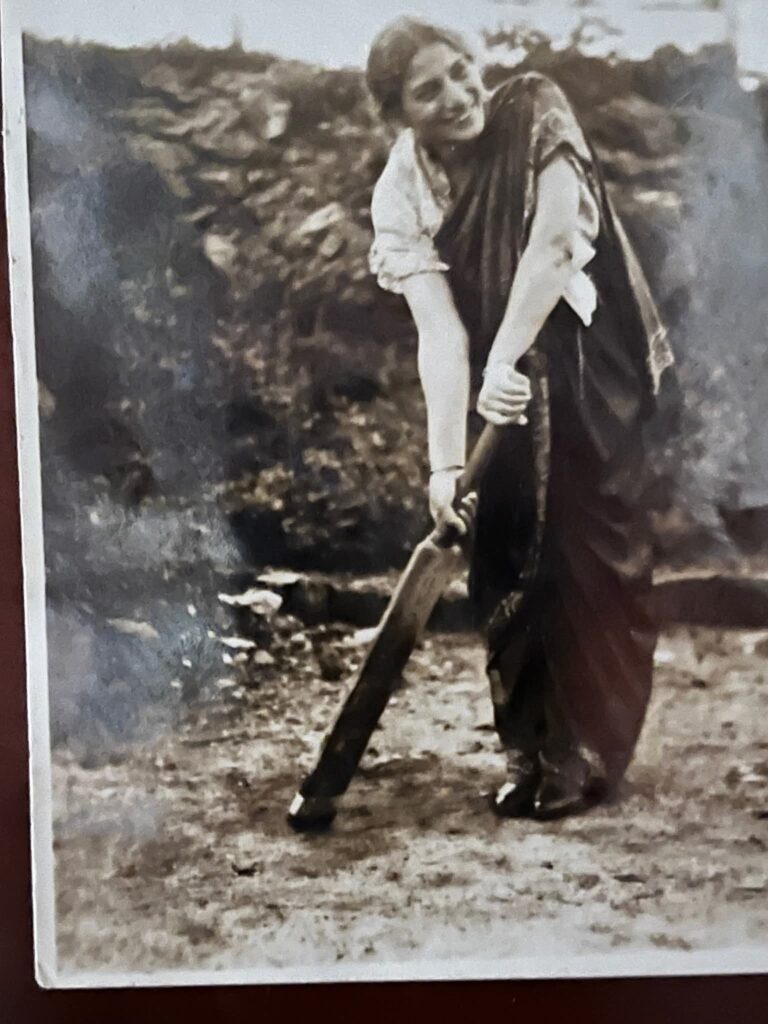
My paternal grandmother Mary Chandulal Mukarji (1889-1984), in her home in Dalhousie. She was married to Satyanand Mukarji who was principal, St. Stephen’s College, Delhi. A feisty lady. Great singer. Great cook. Great housekeeper. Phenomenal grandmother. Career woman when she was widowed in her 50s. She had no daughters to whom she could pass on her considerable knowledge but never daunted by circumstances, she taught her five sons – all of whom except my 5’11 & 3/4“ dad ( Nirmal Kumar Mukarji, ICS) were over 6’ tall – lo cook, embroider, knit, pack crockery etc while encouraging their cricket and studies.