Jaya Posts

“Ocean: Earth’s Last Wilderness” by Sir David Attenborough & Colin Butfield

From the icy oceans of our poles to remote coral islands, Sir David Attenborough has filmed in every ocean habitat on planet earth. In fact, he is known to be (probably one of the rare few) who has been engaged with all kinds of audio-visual technology, across formats, from the time television was launched till date (2025). In his centenary year, with long-term collaborator Colin Butfield, he shares the story of our last great, critical wilderness, and the one which shapes the land we live on, regulates our climate and creates the air we breathe.

Through one hundred years, eight unique ocean habitats, countless intriguing species – and through personal stories, history and cutting-edge science — Ocean uncovers the mystery, the wonder and the frailty of the most unexplored habitat on our planet. And it shows its remarkable resilience: it is the part of our world that can, and in some cases has, recovered the fastest, and in our lifetimes we could see a fully restored marine world, even richer and more spectacular than we could possibly hope, if we act now.

Ocean: Earth’s Last Wilderness (published by Hachette India) is the book accompanying the last film that Sir Attenborough will ever make. In India it was released on 8 May 2025 by Jio Hotstar. We are honoured that Sir Attenborough gave us permission to publish this book extract on Moneycontrol. It is from the opening chapter wherein he ruminates about the discoveries in the oceans that have been noticed and documented by humans. The vast advancements in technology have helped tremendously. Whether it is the ability to scan the depths of the ocean and map the ocean bed to relying upon satellite imagery to spot sea mounts.

In this chapter, Sir Attenborough uses the lifetime of a blue whale – some ninety years — as a handy benchmark to mark the timeline of modern ocean discovery. Apparently, blue whales have been recorded in all the ocean basins; only the frozen parts of the Arctic and Southern Ocean were out of their reach, something that he is convinced will surely change over the coming years as whale numbers recover and the sea ice retreats. Ocean is a fascinating film and an equally fascinating book. For once, the print product accompanying a film is perfect.

It is a book almost a century in the making, but one that has never been more urgently needed.

Sir David Attenborough is a broadcaster and naturalist whose television career is now in its seventh decade. After studying Natural Sciences at Cambridge and a brief stint in publishing, he joined the BBC in 1952 and spent ten years making documentary programmes of all kinds, including the Zoo Quest series. In 1965, he was appointed Controller of a new network, BBC2, and then, after four years became editorially responsible for both BBC1 and BBC2.

After eight years of administration, he returned to programme-making to write and present a thirteen-part series, Life on Earth, which surveyed the evolutionary history of animals and plants. This was followed by many other series which, between them, surveyed almost every aspect of life on earth.

Colin Butfield is co-founder of Studio Silverback, Executive Producer of the WWF’s Our Planet project and an advisor for the Earthshot Prize.

3 August 2025

Premchand ki khaniya, Ekada, Westland Books

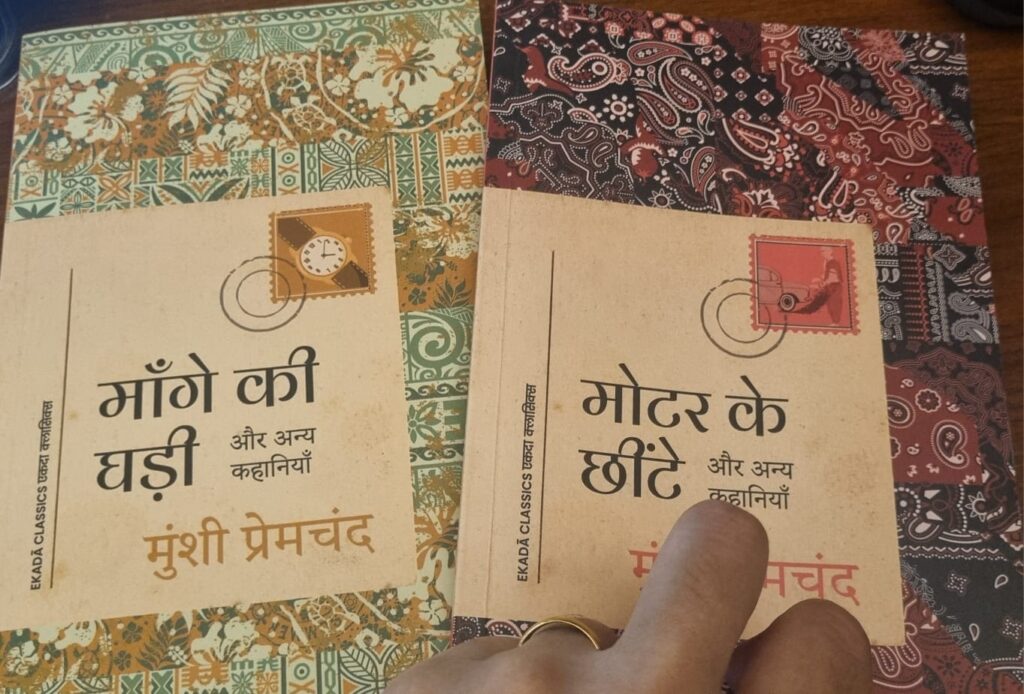
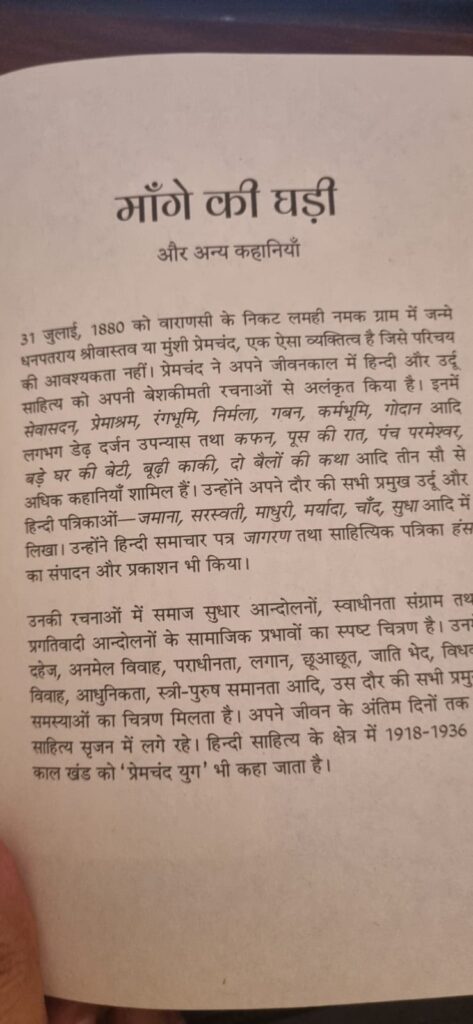
Today is Premchand’s 145th birth anniversary. He was born on 31 July 1880. Dhanpat Rai Srivastava or Munshi Premchand as he was known is famous for his stories in Hindustani. Premchand was a pioneer of Hindi and Urdu social fiction. He was one of the first authors to write about caste hierarchies and the plight of women and labourers prevalent in the society. He is one of the most celebrated writers of the Indian subcontinent and is regarded as one of the foremost Hindi writers of the early twentieth century. He began writing under the pen name ‘Nawab Rai’, but subsequently switched to ‘Premchand’. He published his first collection of five short stories in 1907 in a book called Soz-e-Watan (Voice of the Nation). His body of work includes more than a dozen novels, around 300 short stories, several essays and translations of a number of foreign literary works into Hindi.

Even though he died in 1936, his stories continue to be read and are very popular. Although, I have to say that I have read some recent versions of his stories and they are nothing like the original. New editions tend to “revise” his stories into Hindi rather than retaining the original Hindustani — a mix of Hindi and Urdu that many generations, including mine, grew up speaking and writing. We are familiar with it. Westland Books imprint, Ekada, focusses on Indian language books. Ekada Classics is a curated list that revives beloved literature from various Indian languages. This month, Ekada Classics released माँगे की घड़ी और अन्य कहानियाँ and मोटर के छींटे और अन्य कहानियाँ.

Premchand’s stories will never be out of fashion but will they be permitted to survive as he wrote them, only time will tell.

31 July 2025

Milton’s Paradise Lost (Unabridged) – Narrated by Anton Lesser [CD1]

I found this referenced on the social media. It is one of my favourite books. I cannot find CD2 narrated online. If anyone finds the link, please send it to me.

30 July 2025

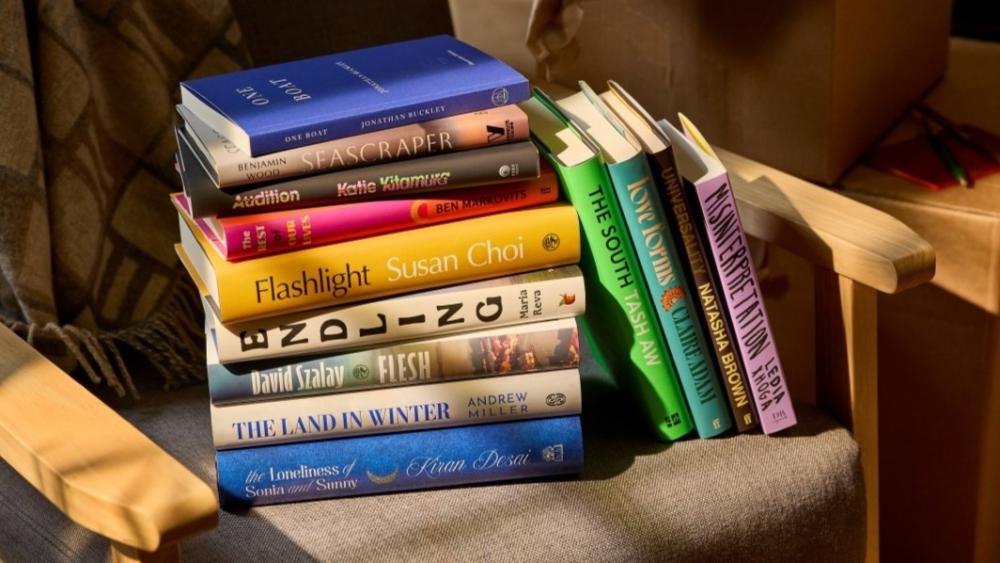
The Booker Prize 2025 longlist

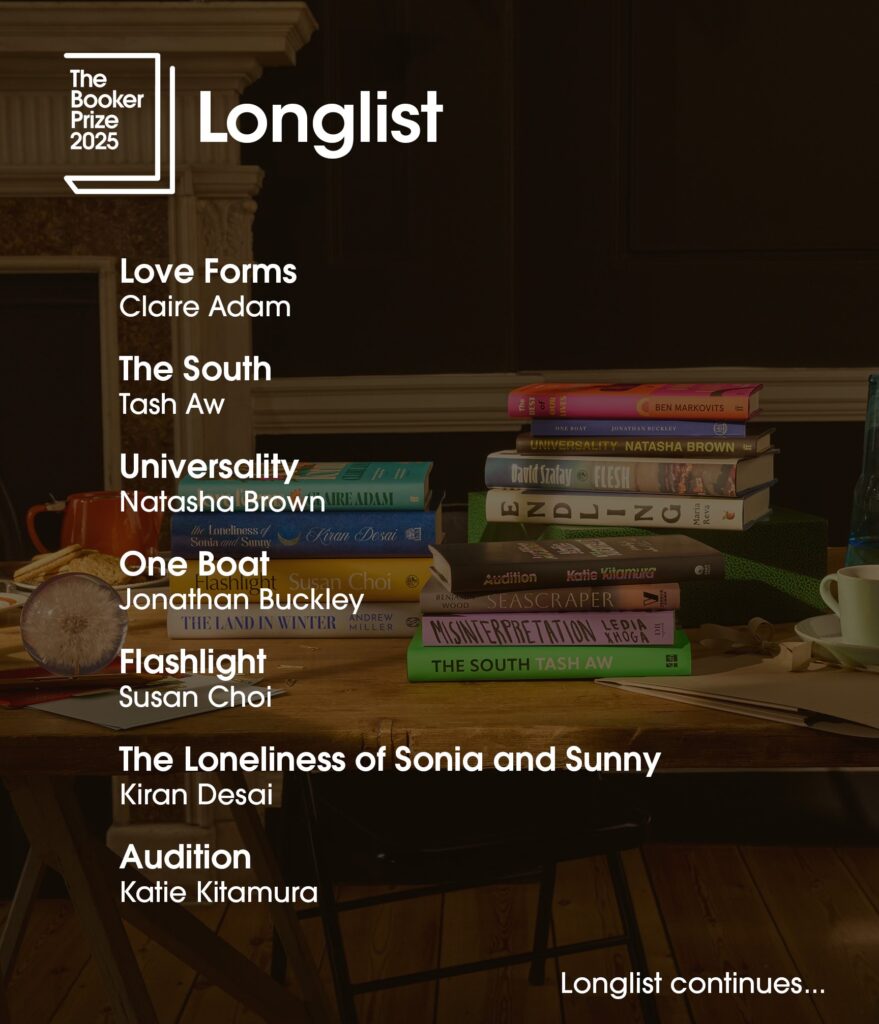
The full Booker Prize 2025 longlist, including author nationality, is:

– Love Forms (Faber) by Claire Adam (Trinidadian)

– The South (4th Estate) by Tash Aw (Malaysian)

– Universality (Faber) by Natasha Brown (British)

– One Boat (Fitzcarraldo Editions) by Jonathan Buckley (British)

– Flashlight (Jonathan Cape) by Susan Choi (American)

– The Loneliness of Sonia and Sunny (Hamish Hamilton) by Kiran Desai (Indian)

– Audition (Fern Press) by Katie Kitamura (American)

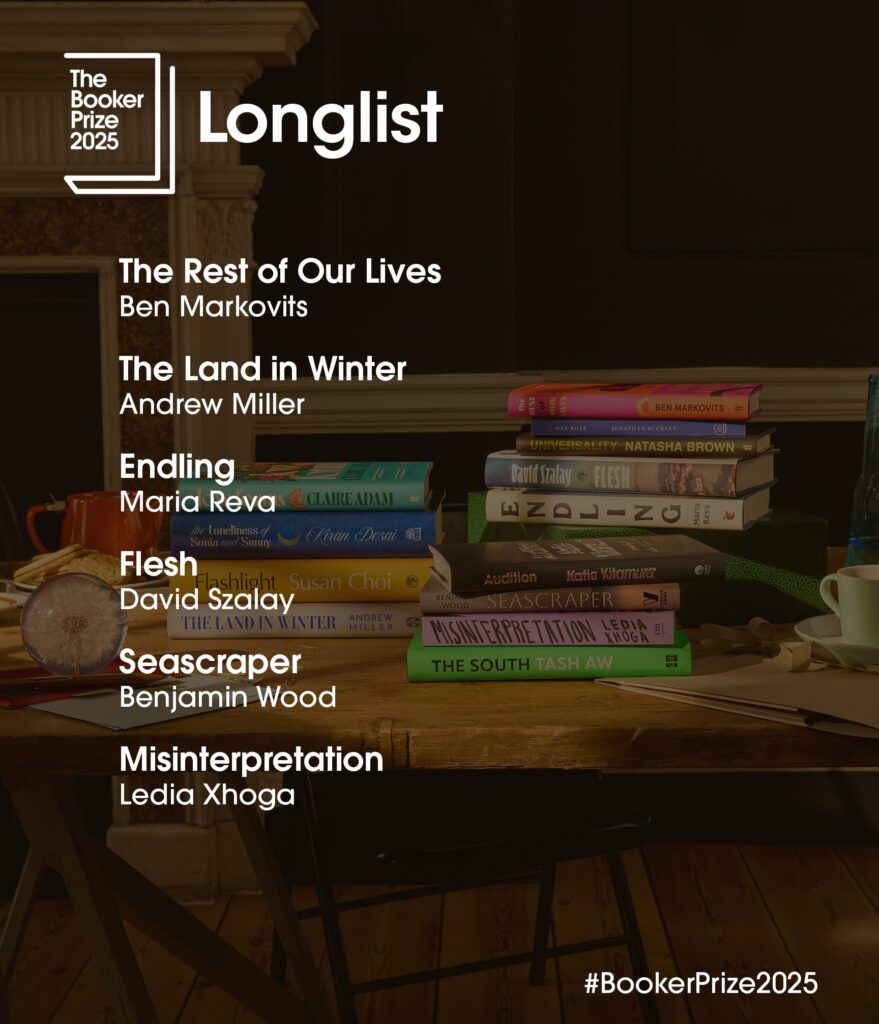
– The Rest of Our Lives (Faber) by Ben Markovits (American)

– The Land in Winter (Sceptre) by Andrew Miller (British)

– Endling (Virago) by Maria Reva (Canadian-Ukrainian)

– Flesh (Jonathan Cape) by David Szalay (Hungarian-British)

– Seascraper (Viking) by Benjamin Wood (British)

– Misinterpretation (Daunt Books Originals) by Ledia Xhoga (Albanian-American)

Discover the full list: https://thebookerprizes.com/bp2025

The longlist has been selected by the 2025 judging panel, chaired by critically acclaimed writer and 1993 Booker Prize winner Roddy Doyle

Doyle, who is the first Booker Prize winner to chair the panel, is joined by Booker Prize-longlisted novelist Ayọ̀bámi Adébáyọ̀; award-winning actor, producer and publisher Sarah Jessica Parker; writer, broadcaster and literary critic Chris Power; and New York Times bestselling and Booker Prize-longlisted author Kiley Reid

This year’s selection, which was chosen from 153 submissions, celebrates the best works of long-form fiction by writers of any nationality, written in English and published in the UK and/or Ireland between 1 October 2024 and 30 September 2025.

For the first time, the shortlist of six books will be announced at a public event, to be held at Southbank Centre’s Royal Festival Hall in London on Tuesday, 23 September 2025. The six shortlisted authors will each receive £2,500 and a specially bound edition of their book. The announcement of the winning book  will take place on Monday, 10 November 2025 at a ceremony at Old Billingsgate in London. The announcement will be livestreamed on the Booker Prizes’ channels. The winner receives £50,000.

The ‘Booker Dozen’ features five British authors, while also encapsulating a vast range of global experiences. The 13 novels transport readers to a farm in southern Malaysia, a Hungarian housing estate and a small coastal town in Greece. They shine a light on the lives of Koreans in postcolonial Japan, a homesick Indian in snowy Vermont, a Kosovar torture survivor living in New York, a shrimp fisherman in the north of England, a mother’s search for a child given up for adoption in Venezuela and even endangered snails in contemporary Ukraine. They reimagine the great American road trip as a slow-burning mid-life crisis and take us into the heart of the UK’s coldest winter. 

The judges’ selection features: 

  • Authors representing nine nationalities across four continents, with UK authors securing the highest number of nominations  
  • Kiran Desai, who is nominated 19 years after her previous book won the Booker Prize 
  • Tash Aw, longlisted for a third time, who could become the first Malaysian winner 
  • Past shortlistees Andrew Miller and David Szalay  
  • Two debut novelists among nine authors who appear on the Booker Prize longlist for the first time 
  • The first novel from an opera librettist and the 12th from a former professional basketball player 
  • A book that first garnered acclaim as a short story, and one that is the first in a proposed quartet 
  • Three titles from independent publisher Faber and a first Booker longlisting for Fitzcarraldo Editions, to add to its 16 International Booker Prize nominations  
  • Novels that are ‘alive with great characters and narrative surprises’ which ‘examine the past and poke at our shaky present’, according to Roddy Doyle, Chair of the 2025 judges  

This is a fabulous longlist with so much to discover. I am truly delighted at the coincidence that last week I had interviewed Andrew Miller on his fabulous book The Land in Winter for TOI Bookmark.

29 July 2025

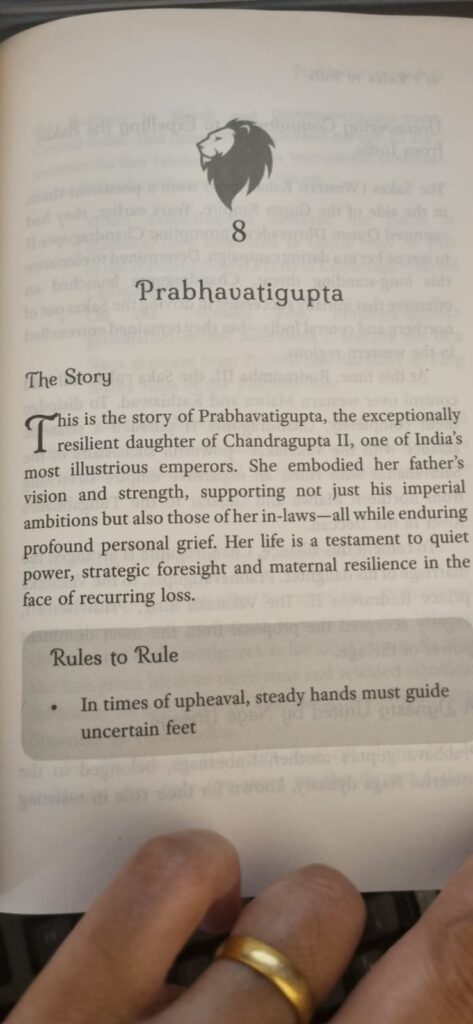
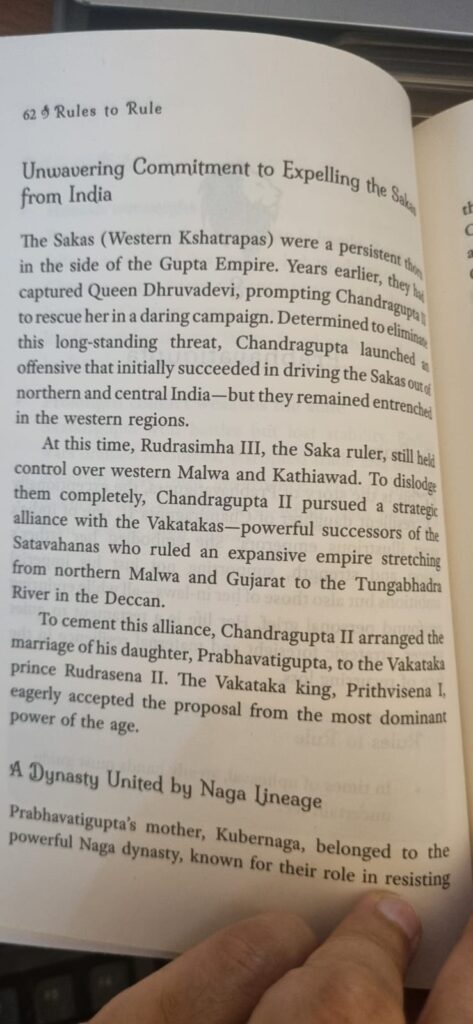
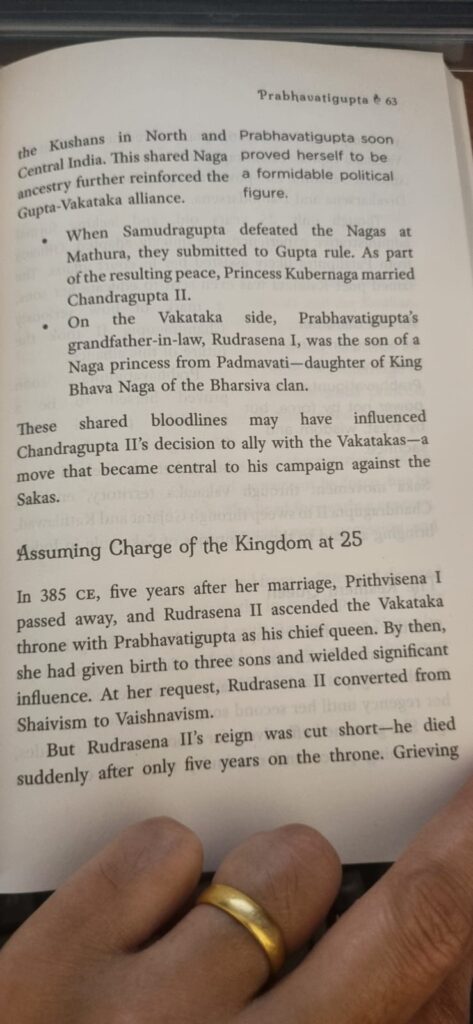
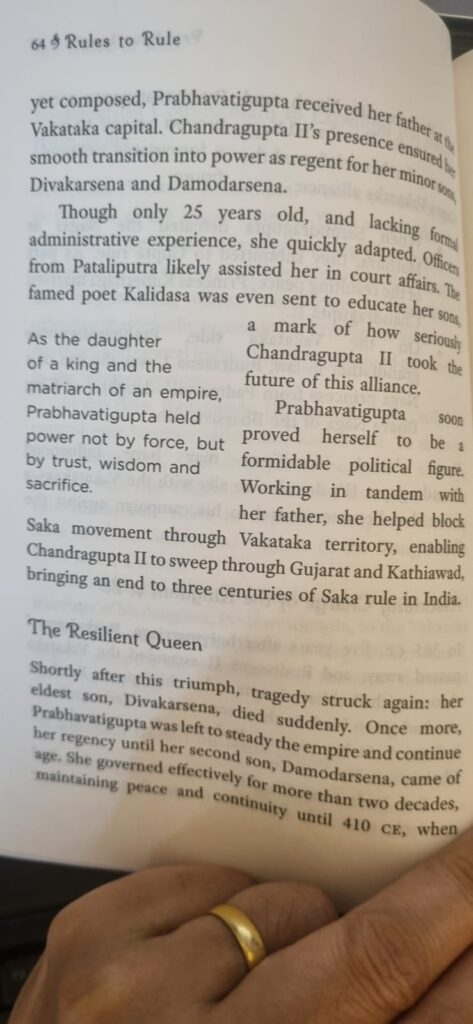
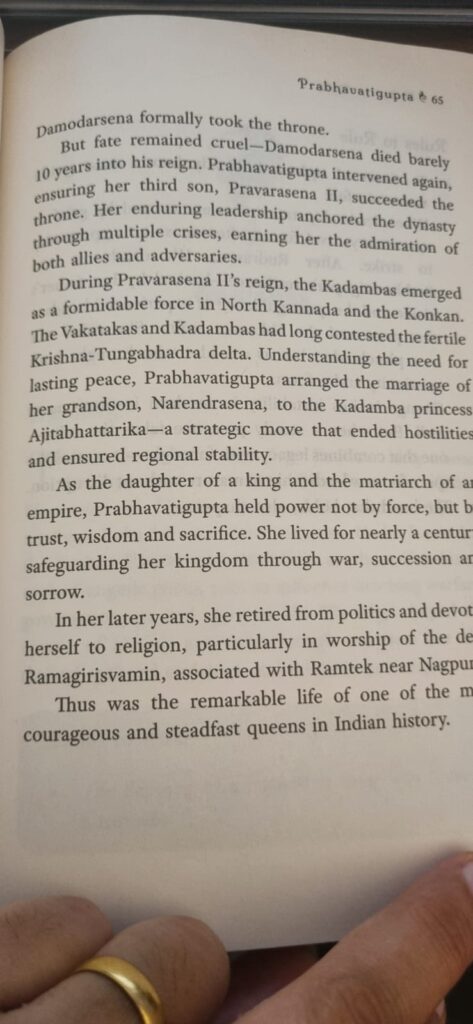
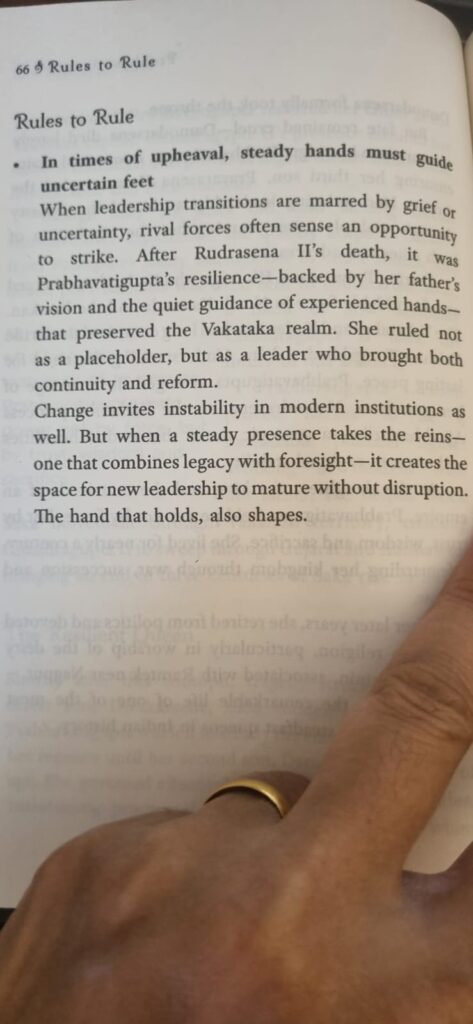
“Rules to Rule: Ancient History, Modern Lessons” by Prashant Anand

Increasingly the book market has many books that heark upon the past leaders and intellectuals to glean learnings from them. Not every modern reader has the time or inclination to read the original texts referenced by modern authors, so we have to assume that what is shared is authentic. Nevertheless, these anthologies are an effective way of introducing new audiences to legendary people of the past.

In Rules to Rule, the author, Prashant Anand distills timeless lessons from ancient Indian rulers into a practical guide for modern readers. It is quite simply written. There is a biography and significant achievements of the historical figure followed by a pithy analysis on what a modern reader can glean from a life well lived. The people profiled are: Chandragupta Maurya, Bindusara, Ashoka, Pushyamitra Shunga, Karikala Chola, Samudragupta, Chandragupta II, Prabhavatigupta, Kanishka, Gautamiputra Satakarni, Harshavardhana, Pulakeshin II, Narasimhavaraman I, Dantidurga, Dhruva, Amoghvarsha and Krishna III, Mayurasharma, Mithira Bhoja, Dharmapala, Rajaraja Chola and Rajendra Chola. It is an interesting mix of figures.

Here is the entry on Prabhavatigupta:

Pick up the book. Read it.

28 July 2025

“Pitch: How to Captivate and Convince Any Audience on the Planet” by Danny Fontaine

Sensible advice in this book that is more like a manual. Although, given the speed age that we live in, would there be many takers for this book? Everyone is in a tearing hurry to make PPTs and pitch their ideas, but how many are prepared to read/listen to others giving good tips to improve their technique? I certainly hope that they will pay heed to Danny Fontaine.

Danny Fontaine coaches teams and pitches multi-million-dollar deals to the biggest brands in the world. His unique approach blends creativity, psychology, storytelling and immersive experiences, based on years of research and application.

Danny also hosts the Pitch Masters podcast where he interviews the masters of the advertising, sales and marketing industries to find out how they win business.

He has taught photography, done voice-over work, been the lead singer in a band, earned a Fine Art degree, and done many other seemingly irrelevant things that fuel his creative work in surprising ways. Pitch is his first book. He lives in Colchester with his wife and three sons.

Here are some of the reviews posted on Amazon:

An instant classic. From the opening story of the legendary ABM pitch for British Rail through step-by-step instructions on how to organise, craft and deliver an effective pitch, Danny has created an indispensable guide for any individual or organisation that needs to up its pitch game. Highly recommended — Peter Coughter, author of The Art of the Pitch

In a world of digital tricks and games Danny’s book brings a refreshing focus on the fundamentals of how to win. His principles and stories are timeless. Read it. Live it. Enjoy the Reward. — Doug Hall, founder of Eureka! Ranch

You can’t convince anyone of anything without a good story. Danny has masterfully captured that connection in this concise and practical book. Pick this book up and land your next pitch like a pro — Jeff Gothelf, author ― Lean UX

When I finished Pitch, my first thought was: how much would it cost to hire him? This is the go-to compendium of pitching -as an ex-sales trainer, I found things I’d never considered. It’s light-hearted and packed with incredible stories and tools. Seriously impressive — Thomas Erikson, author of Surrounded by Idiots

If you want to beat the competition then this is the most thorough and engaging pitch book that I’ve had the pleasure to read. It covers everything from A to Z – and beyond – and will become an indispensable guide on not just pitching but how to prepare for and present yourself in any situation when your persuasive power is paramount — Graham Thomas, former CEO and President of Saatchi & Saatchi

Almost every great business is the product of two great ideas. A great idea, and another great idea about how to sell the first idea. It pains me to think how many wonderful innovations and great businesses we may have lost because they never cleared the second hurdle. If only they had read this wonderful book — Rory Sutherland, author of Alchemy

In a world saturated with uninspired pitches and tedious presentations, Pitch emerges as a beacon of hope for anyone yearning to transform their communication into a powerful, emotional experience. Fontaine artfully weaves together the science of psychology, the magic of storytelling and practical strategies that can elevate any speaker’s game … This book is not just a guide; it’s a revolution in the art of pitching — Robin Dreeke, author of It’s Not All About Me

Danny Fontaine has masterfully laid out the essentials for the perfect pitch. Whether you’re a nervous newbie or seasoned pro, there are lessons to be learned on every single page — M. A. Batten, award-winning writer

Time to give away any other books you have on pitching – and on presenting, storytelling and creativity while you’re at it. Pitch has it all – case studies, research and brilliant advice that anyone can follow. Danny’s wide experience and personal insights prove that it’s possible to find power beyond Powerpoint — Neil Mullarkey, author of In The Moment

Danny is the modern authority on the art of the pitch — Adam Morgan, former Adobe Executive Creative Director and author of Sorry Spock, Emotions Drive Business

Fontaine distills the art of persuasion into a practical, battle-tested framework that anyone can apply – whether you’re leading a team, selling an idea, or standing in front of a boardroom full of skeptics. A must-read for leaders, entrepreneurs, and anyone serious about influence – literally everybody needs to read this book — Ben Williams, founder and CEO of Loopin and author of Commando Mindset

Everyone has to pitch at some point – whether it’s landing a job, leading a team, or winning a deal. Pitch gives you the playbook to create unforgettable moments that captivate, inspire, and win. — Jim Highsmith, co-author of the Agile Manifesto

This book has become my pitching bible and is seriously in a league of its own. It doesn’t just help in winning business, it helps you win people over in every aspect of life. Whether you’re closing deals, or making your ideas heard at work, if you want to be more persuasive, make your words more impactful, and ultimately be more successful in any area of your life, please read this book. Then read it again…! — Carl Hewitt, co-founder and CEO of Hewitt Matthews

Danny’s ability to tap into what truly makes us human-and yes, that includes engineers-offers a fresh, powerful approach to pitching that can transform not just how we do business, but how we connect and inspire action in every aspect of life — Hilary Salzman, author of The Roar of Her Story

If pitching is a game, this book is the cheat code — Tommy Schaff, Cialdini Method Certified Trainer

The book is published by Hachette India.

28 July 2025

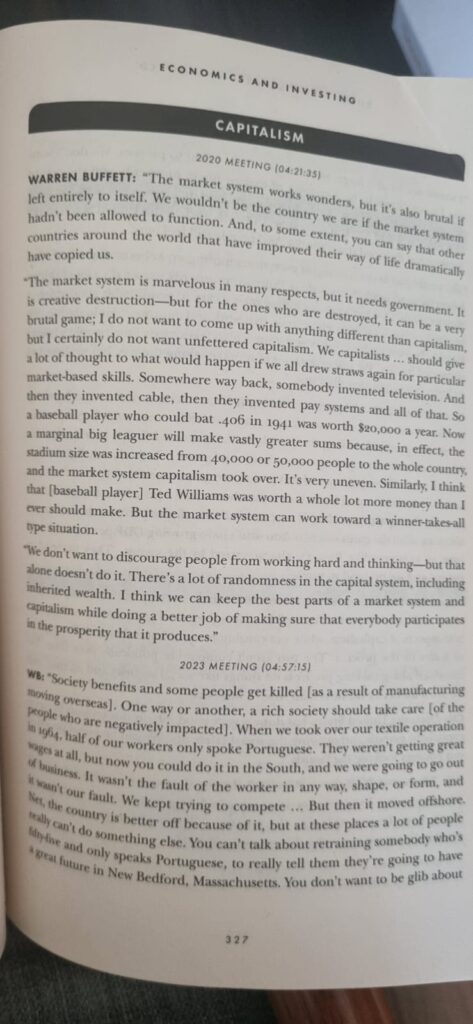
“Buffett & Munger Unscripted” by Alexis W. Morris

The twenty-first century will probably go down in history as not just as the second Industrial Revolution but also the Age of Capitalism. It is not the digital revolution that has governed this age nor the information age nor Artificial Intelligence. It is the rapid rise of a handful of men, especially in Silicon Valley, to gain an obscene amount of wealth. Before them too, there had been a handful of men who had achieved financial wealth. Two notable names stand out — Warren Buffett and the late Charlie Munger. They are almost like gurus to the younger and dare I say, brasher generation of capitalists. And as happens with many of the business book narratives, these successes seem to be confined to the USA but many others, equally wealthy in other countries, are overlooked. Nevertheless, it is these two men who have been legendary in forming (or at least we are led to believe) much of the capitalist successes in the USA. They have helped build businesses, revived floundering ones, engaged in acquisition and mergers, expanded their businesses with a sure footedness and yet, given away much of it too.

For decades, once a year, these two billionaires and very good friends, would gather at the Berkshire Hathaway AGM and field questions from the floor. These were inevitably lively discussions but held behind closed doors. Only those in attendance benefitted. In 2018, Berkshire released the archives of the meetings going back to 1994. Equities analyst and finance writer, Alex Morris, waded through many hours of footage, covering 31 years and more than 1700 questions. Buffett & Munger Unscripted is a distilled version of his research. It is published by Harriman House/ Pan Macmillan India.

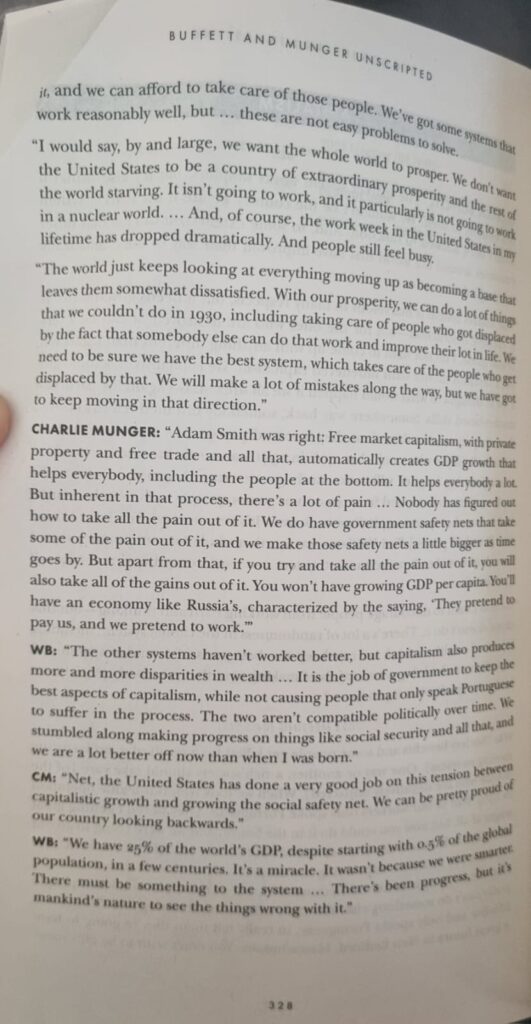
Here is an example of the two billionaires talking about capitalism:

It is no wonder that nuggets of these conversations are perpetually being circulated on the internet. Not a day goes by when the pearls of wisdom shared by Buffett and Munger are shared on various social media platforms. Whether you believe them or not, you cannot deny the wisdom in much of what they have to say.

Buffett & Munger Unscripted is a book that will rapidly become the go-to book on financial wisdom, much like The Intelligent Investor by Benjamin Graham, Warren Buffett’s teacher and guru at Columbia Business School. Buffett & Munger Unscripted imparts sound advice and it will not go out of fashion irrespective of the kinds of market shifts and geopolitical formations that will take place in this century. It is here to stay.

28 July 2025

Love vs Arranged Marriage

Off the internet, stock image.

In August 2007, I got married. India Today asked for an article. I forget why it had been commissioned. Nor does the original link seem to exist any more on the internet. I found a copy of the article and here it is. A question that forever bothers many — love vs arranged marriage.

I got married a few weeks ago. By Indian standards, it is late. Probably by now I should have been a mum at least a couple of times over and worrying about homework. Instead, I opted to concentrate on my career as a publisher. Well, that’s the easiest story to trot out to anyone who would care to ask about why I have not been married all this time.

The pressure to “settle down” began in college when my Dadi began to hint at it. There were gentle suggestions to comments accompanied by a long sigh, “Please don’t delay settling down, otherwise you will be too set in your ways and it won’t be easy to find a husband for you.” As the years rolled on, the pressure became worse. It had insidious ways of making its presence felt. For instance, one day I was accompanying Nana on his walk, we met an old friend of his who by way of “polite” conversation, asked if I was settled. Before I could reply, Nana said, “Oh don’t ask her. She has decided not to get married.” (I was not even 25!) My parents fortunately supported me and said, “Let her finish studying and then she will decide. “ I was relieved. My Nani and mum may have got married at the “right age” of 21 and 22, respectively. But I had good examples in my great-grandmothers’ who got married at 27 and 28 respectively. In fact, one of them only agreed to marry her husband upon her return from Goucher College in the early twentieth century. (He was standing at Bombay port waiting for her ship to dock with a bunch of red roses. He had waited eight years for her. )

Once I joined the workforce, the pressure really intensified. Since I was obviously not making “sufficient” progress in finding the right partner for me, various concerned adults around start clucking and doing the needful. I began to dread those unexpected dinner/wedding invitations or even the unexpected “visitor” at work. It was ridiculous! I began to receive “rishtas” from all over the place. Funnily enough these were 99.9% from the concerned mothers, sisters, aunts and other sundry women of the “prospective groom”. Initially, I would go with the flow and figured, if the elderlies are “introducing” us, then surely the actual moment would be fine. Then, slowly it began to dawn upon me, after a few such “set ups” that this was a futile exercise. It was the women who were more concerned than the guy. Over time, as I began to grow in my career, the silliest excuse began to be used to fob me off. Then my twin brother got married. Oh dear! What tragedy. Instead of congratulating me on such a happy occasion, I was being commiserated. “Poor girl! Your twin brother is getting married before you.” But what really took the cake was that when it became evident that I still had not found someone suitable and had crossed that dreaded age of 30 that I began to receive “kindly advice”. The classic was, “When you meet men in your social circuit or otherwise, please do not talk about work. Or even for that matter tell them that you live at home with your parents. You should always keep quiet and listen to what the man has to say!” Well… .

I gave up. This was a hellish emotional roller coaster ride and very distracting from my career. After a while I swore, that I would not compromise. I hated the fact that people would pass judgment without really getting to know you. For instance, I heard comments like, “You are a beautiful and competent girl, but men get intimidated by strong women like you!” Also, I disliked the fact that they would assume that I was purely career oriented and hence, knew no other skills. Well, snooks to them! I refused to speak about the “homely” skills that I had since those are more life skills than “qualifications for being a commodity in the marriage market”.

Anyway, I did not and still do not regret exploring the “arranged” marriage route. All the parties concerned did their best in locating a suitable match. You name it! From the well settled NRI to a “good match” in India. I saw and met the spectrum. It’s always done with the best intention at heart. Also, the idea is to sort out all “parameters” – family, education, value systems, tastes, personalities etc. After all, in India, a marriage is not between the bride and groom alone, but also between the two families. It’s a far more complicated procedure. It has its positives and negatives. Well, it did not work for me.

Instead I found my husband on my own. Or rather, we found each other. Internet zindabad! J In the early days of our courtship, if complete strangers asked us whether it was an arranged or a love marriage, we would falter for an answer. Finally, we decided, it was definitely love. What else can one say?

Jacob and I had registered on a matrimonial website. After his persistence, I deigned to reply to his messages. Then we agreed to meet. Well… he decided within two minutes of seeing me that I was going to be his wife. He proposed in less than twenty four hours. I was horrified and said no, and rejected him. But, he persisted and we continued to meet. Well, obviously I agreed to marry him. I suppose it is appropriate for this modern day fairy tale that he turned out to be a “Cavalier” as he had been “knighted” last year by the Italian president. What more could one ask for! (By the way, Jacob too had met many prospective brides. So he was very familiar and sensitive to my situation.)

After we had met, we decided that we could only proceed after our families had met and approved. Fortunately, it turned out exactly like that and we had everyone’s blessings and we were married within a couple of months. Of course, it was a pleasant coincidence that we were from the same community and denomination, he is “well settled”, we are living in sneezing distance of our families and most importantly, he is not at all “intimidated” by my career. It’s a love marriage that was arranged by modern technology and is a partnership between equals.

Having explored both routes, it is very hard to conclude that one is better than the other. I guess if we had not been through the “arranged” route umpteen times, we would not have been able to assess each other swiftly. So, in a way, there was some merit in having been through many introductions. Yet, there is also a sense of peace in that we took the decision to choose our partner ourselves. This is life. It has its trials and tribulations. Sometimes a clear cut route like that of an arranged match works and sometimes, it takes time to find the right person.

(First published in 2007 by India Today.)

28 July 2025

“Abundant Sense: Rahim – Selected Dohas” by Chandan Sinha

While reading Abundant Sense, I realised how many of Rahim’s doha’s were familiar. These were part of our Hindi curriculum in middle school. We had supplementary books that consisted of prose and poetry. If memory serves me correctly, we had one volume of poetry devoted to Hindi poets like Mahadevi Varma, Dinkar, Suryakant Tripathi (Nirala), Harivansh Rai Bachchan et al. Another volume of poetry consisted of poets like Kabir and Rahim. For prose, we had a fine collection of Premchand’s stories written in the Devnagari script. These were slim texts published by the National Council of Educational Research and Training (NCERT). So, reading Rahim’s doha’s in Abundant Sense brought back memories.

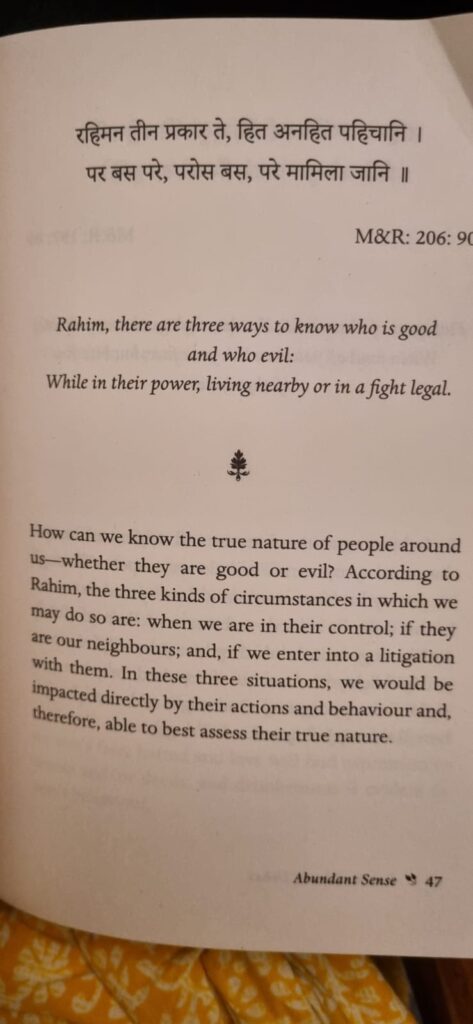
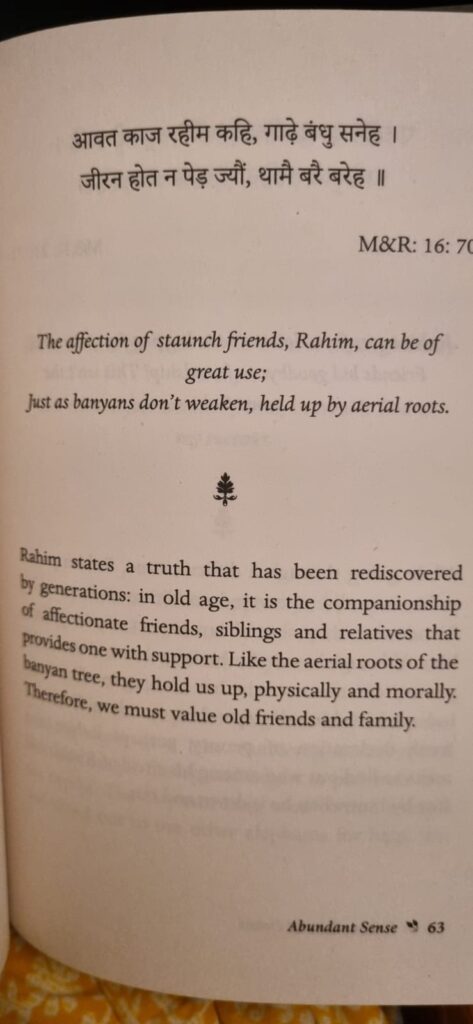
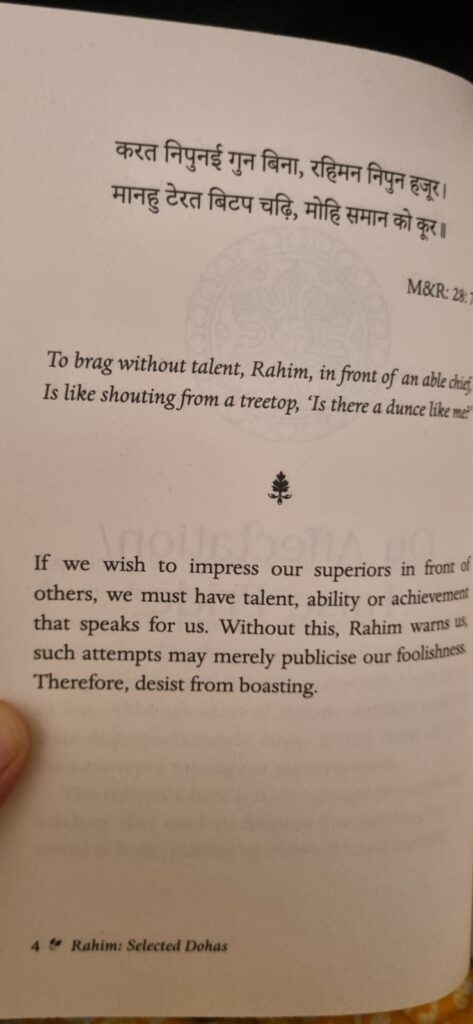
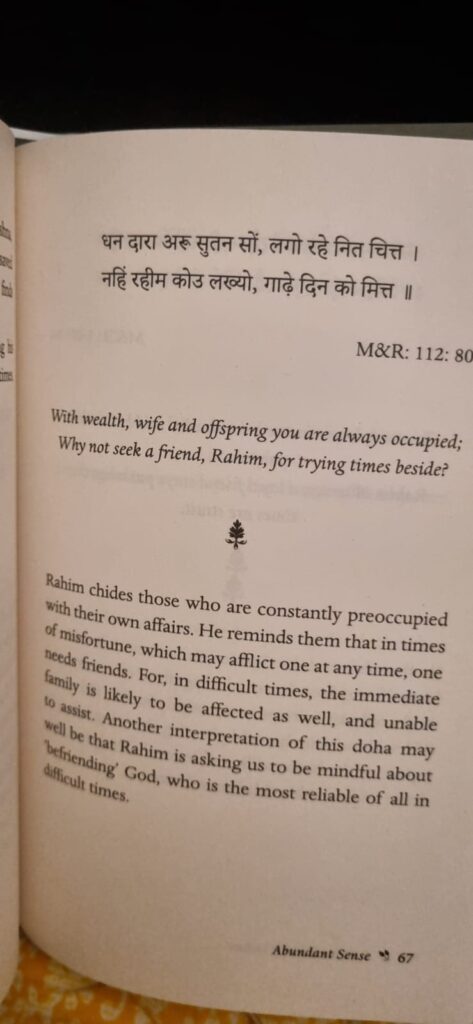
Every page has a doha. The original in Hindi, followed by a literal translation of the couplet and the explanation in English. Here are four examples of these competent translations:

Abundant Sense ( published by Westland Books) is an exquisitely produced book, beginning from the elegant dust jacket to the design layout of every single page. It is generous and a pleasure to read. This is a book that is a keeper but has probably been designed keeping the “gift market” in mind as well. For instance, it would make for an excellent contribution to the Diwali hampers that are circulated.

Book blurb

Abdur Rahim Khan-i-Khanan was a remarkable man, a navaratna in Akbar’s court—warrior, general, administrator, minister, scholar, polyglot, translator and poet. But, today, he is remembered primarily as a poet, a fact evident in his mausoleum in Delhi, now partially restored, which introduces him thus: ‘Rahim was famous for his dohas and Persian translation of the Ramayana.’

Rahim’s life saw wild swings of fate; he knew glory and ignominy, power and insignificance, and above all, loss. Born into wealth and nobility, he was yet finely attuned to the lives and needs of the common man. And four centuries later, his dohas, or couplets, are still invoked, still on the tongue of ordinary folk.

This thoughtfully compiled volume is the first substantial body of translations of Rahim’s dohas, comprising more than half of the 290 dohas he has written. Chandan Sinha’s translation breaks with the modern tendency to use free verse, working instead with meter and rhyme to strongly evoke the original, especially its memorability. Accompanied by brief explanations of each verse as well as the original in Devanagari, Abundant Sense is a tribute to one of the greats of Indian history and literature.

A writer, translator and former civil servant, Chandan Sinha read English Literature at St. Stephen’s College, Delhi, and Public Administration at the Universities of South Carolina and Syracuse in the USA. In 2023 he superannuated from the Indian Administrative Service as Director General of the National Archives of India.

Sinha writes in both English and Hindi. He has published articles in various journals and is the author of three books: Public Sector Reforms in India: New Role of the District Officer (Sage, 2007); Kindling of an Insurrection: Notes from Junglemahals (Routledge, 2013) and The Vision of Wisdom, Kabir: Selected Sakhis (Rupa, 2020).

The present work is the second in a series of translations of Hindi poetry from the early modern period in India.

27 July 2025

“One In a Billion: Becoming India’s First Master of Wine” by Sonal C. Holland

Who would have guessed that it is possible for an Indian woman to defy all odds to become India’s first master of wine. One in a Billion is an account of how Sonal C. Holland did just that. It is a smoothly written memoir, straddling the space of motivational and narrative non fiction books. There are interesting nuggets of information shared, such as:

p. 173 It’s no secret that Indians love to drink! India is the third largest alcobev market by volume in the world, next only to the United States and China. Every year, Indians guzzle six billion litres of alcohol, over half the world’s whisky ( a staggering 1.5 billion litres) and double the amount of beer. We imported 219 million bottles of whisky in 2023, which was up by 60 per cent from 2011.

A double-digit growth consistently over the past decade makes wine the fastest-growing beverage in the country. Indians are becoming exposed to the wine lifestyle on account of their social networks, international travel, rising disposable incomes and aspirational living. As the demand for luxury products and more spending drives premiumisation across sectors, wine and other alcoholic beverages are the direct beneficiaries of this upward moving trend. Premium vodka, rum, gin and sake, alongside high-quality wines and craft beers, have grown popular too.

Consumers perceive wine to be healthy, see it as a symbol of success and sophistication, and it is socially the most acceptable drink. No other alcoholic beverage enjoys this trilogy of appeal, and it has worked in the favour of wine remarkably.

….

Women represent an important demographic for wine consumption in India as they are choosing wine for being a softer, healthier option as well as for its aura of elegance. Research shows that women, in general, feel less inhibited and face less criticism when drinking wine in front of their family members. In a soceity that has traditionally lived in joint families and encouraged only male drinking, women drinking wine at restaurants, bars and at home is a huge opportunity and a real game changer for the industry. In a way, wine has democraticised drinking for women in India, allowing them to join their male counterparts in enjoying a drink. This movement is now reaching smaller cities; with the exposure to urban culture and the arrival of luxury dining options, women finally have the liberty to experience wine regularly.

A book that is far too smoothly written, almost as if ghost written, and not a firsthand lived experience. There is something very sanitised, without granularity in the prose. Definitely has interesting nuggets of information about Sonal Holland’s life and the wine sector in India, but it is almost as if this book is fulfilling the desire to be a calling card of the subject. After all, Indians (possibly globally too), once you have a book to your name, your respectability rises manifold.

Good luck to Sonal on her wine journey.

27 July 2025

Web Analytics Made Easy -
StatCounter