Jaya Posts

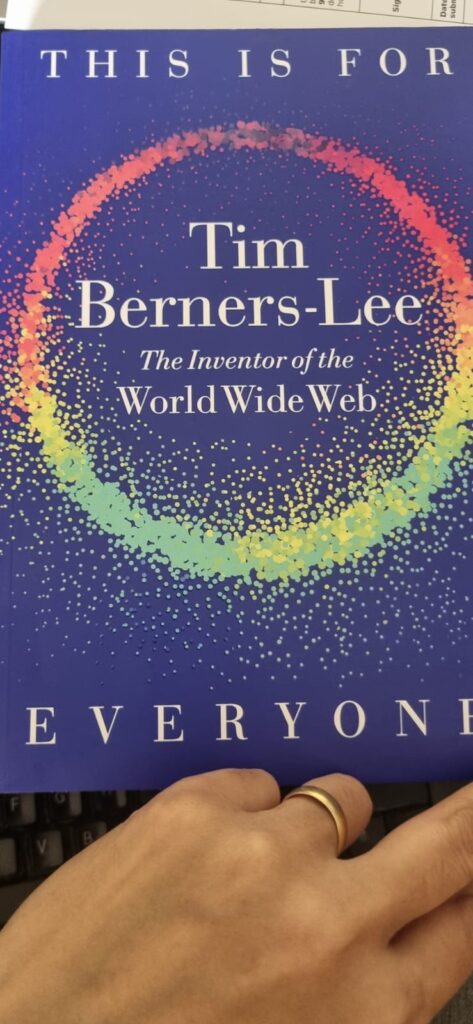
“This is For Everyone” by Tim Berners-Lee

The groundbreaking memoir from the inventor of the World Wide Web, Sir Tim Berners-Lee. This is the story of our modern age.

The most influential inventor of the modern world, Sir Tim Berners-Lee is a different kind of visionary. Born in the same year as Bill Gates and Steve Jobs, Berners-Lee famously shared his invention, the World Wide Web, for no commercial reward. Its widespread adoption changed everything, transforming humanity into the first digital species. Through the web, we live, work, dream and connect.

In this intimate memoir, Berners-Lee tells the story of his iconic invention, exploring how it launched a new era of creativity and collaboration while unleashing a commercial race that today imperils democracies and polarizes public debate. As the rapid development of artificial intelligence heralds a new era of innovation, Berners-Lee provides the perfect guide to the crucial decisions ahead – and a gripping, in-the-room account of the rise of the online world.

Filled with Sir Tim’s characteristic optimism, technical insight and wry humour, this is a book about the power of technology – both to fuel our worst instincts and to profoundly shape our lives for the better. This Is for Everyone is an essential read for understanding our times and a bold manifesto for advancing humanity’s future.

While he spends a fair bit in the book discussing the invention of the web and the necessity of invention, to help the computers and scientists working at European Organization for Nuclear Research or as it was previously known, Conseil Européen pour la Recherche Nucléaire (CERN) to co-ordinate their work. It is the last one-third of the book that is particularly fascinating as he reflects upon the impact of the internet on humanity – the fact today nearly 5.5 billion people are using it or relying upon it. This, despite nearly 60% of the links on it are defunct. Nevertheless, the importance of the web cannot be emphasized enough. He witnesses the growth of the tech firms and their increasing evaluation. But to his mind, the original premise of releasing the WWW for free was that it was for everyone and it was enriched by a collaborative experience between many individuals. To concentrate information and content on a few tech platforms is not correct. Hence, he created the concept of Solid, a web decentralization project developed collaboratively at the Massachusetts Institute of Technology (MIT). The project aims to radically change the way Web applications work today, resulting in true data ownership as well as improved privacy by developing a platform for linked-data applications that are completely decentralized and fully under users’ control rather than controlled by other entities. The ultimate goal of Solid is to allow users to have full control of their own data, including access control and storage location. The digital wallet, or a pod, that would enable every individual to have control over their rights to all digital content and related material. Tim Berners-Lee established a company called Inrupt to help build a commercial ecosystem to fuel Solid. He also in the last section of the book reflect upon Artificial Intelligence (AI) and that is where this book extract published on Moneycontrol has been taken from.

Sir Tim Berners-Lee invented the World Wide Web in 1989 at CERN in Switzerland. Since then, through his work with the World Wide Web Consortium (W3C), The Open Data Institute and the World Wide Web Foundation he has been a tireless advocate for shared standards, open web access for all and the power of individuals on the web. A firm believer in the positive power of technology, he was named in Time magazine’s list of the most important people of the 20th century.

9 Sept 2025

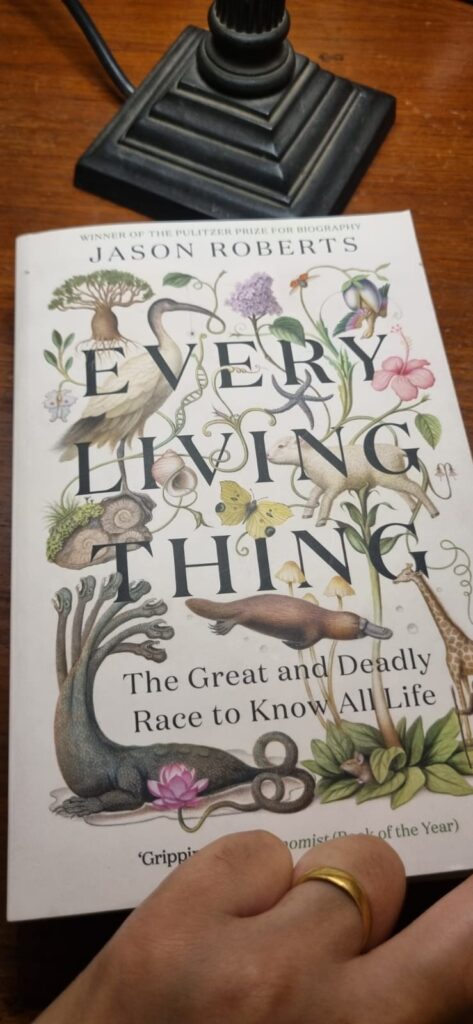
“Every Living Thing: The Great and Deadly Race to Know All Life” by Jason Roberts

The dramatic, globe-spanning and meticulously-researched story of two scientific rivals and their race to survey all life.

In the 18th century, two men dedicated their lives to the same daunting task: identifying and describing all life on Earth. Their approaches could not have been more different. Carl Linnaeus, a pious Swedish doctor with a huckster’s flair, believed that life belonged in tidy, static categories. Georges-Louis de Buffon, an aristocratic polymath and keeper of France’s royal garden, viewed life as a dynamic, ever-changing swirl of complexities. Both began believing their work to be difficult, but not impossible–how could the planet possibly hold more than a few thousand species? Stunned by life’s diversity, both fell far short of their goal. But in the process, they articulated starkly divergent views on nature, on humanity’s role in shaping the fate of our planet, and on humanity itself.

The rivalry between these two unique, driven individuals created reverberations that still echo today. Linnaeus, with the help of acolyte explorers he called “apostles” (only half of whom returned alive), gave the world such concepts as mammalprimate and homo sapiens–but he also denied species change and promulgated racist pseudo-science. Buffon coined the term reproduction, formulated early prototypes of evolution and genetics, and argued passionately against prejudice. It was a clash that, during their lifetimes, Buffon seemed to be winning. But their posthumous fates would take a very different turn.

With elegant, propulsive prose grounded in more than a decade of research, bestselling author Jason Roberts tells an unforgettable true-life tale of intertwined lives and enduring legacies, tracing an arc of insight and discovery that extends across three centuries into the present day.

Read an extract from the book on Moneycontrol.

I interviewed Jason for TOI Bookmark. Here is the Spotify link:

Jason Roberts is the author of the national bestseller A Sense of the World, which was a finalist for the National Book Critics Circle Award, longlisted for the Guardian First Book Award, and named a best book of the year by the Washington Post, San Francisco Chronicle, Kirkus Reviews, and School Library Journal. The winner of the Van Zorn Prize for fiction (founded and awarded by Michael Chabon), he is a contributor to McSweeney’s, The Believer, The Rumpus, and other publications, as well as editor of the bestselling 642 Things to Write About series. He lives in the San Francisco Bay Area.

Every Living Thing won the Pulitzer Prize for Biography/Autobiography 2025. It is published by Quercus Books/ Hachette India.

5 Sept 2025

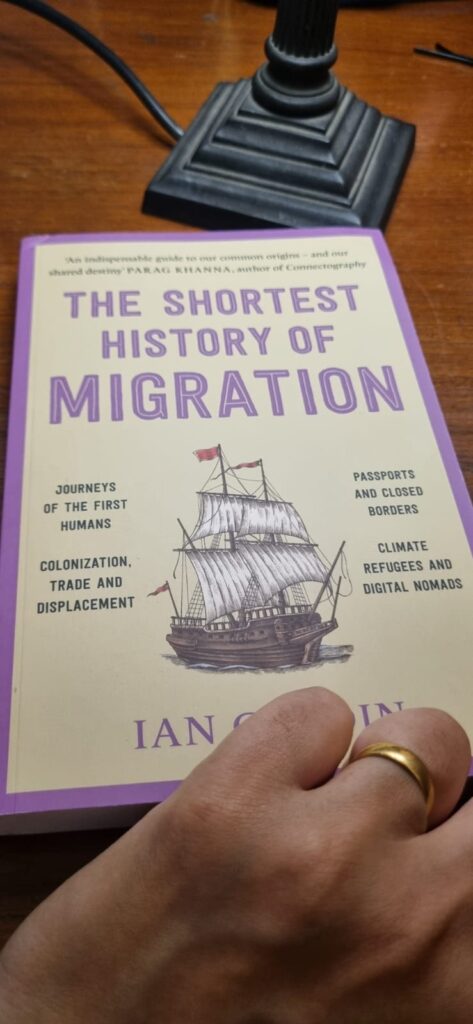
“The Shortest History of Migration” by Ian Goldin

From the earliest human wanderings to the rise of the digital nomad

For hundreds of thousands of years, the ability of Homo sapiens to travel across vast distances and adapt to new environments has been key to their survival as a species. Yet this deep migratory impulse is being tested like never before as governments build ever-stronger walls that adversely impact the lives of migrants and the well-being of our societies.

In The Shortest History of Migration (published by PanMacmillan India), visionary thinker and a migrant himself, Ian Goldin chronicles the movement of peoples that spans every age and continent to arrive at the heart of what truly makes us human. He recounts strange, terrible and uplifting tales of migrants past and present, examining the legacies of empire, slavery and war. Learn about how the first humans originating in Africa populated the world; the exchange of knowledge, food, language and religion through migration, and the exploited migrant populations that built the modern Western world, only to be shut out of it.

Finally, Goldin turns his attention to today’s increasingly fragmented world, bringing together historical evidence and recent data to suggest how we might create a more humane future where we can reap the tremendous benefits that migration has to offer.

Read an extract from the book on Moneycontrol.

Ian Goldin is Professor of Globalisation and Development at the University of Oxford, Fellow at Balliol College, Oxford University, was the founding Director of Oxford University’s Oxford Martin School, and leads its research programmes on Technological and Economic Change, Future of Work and Future of Development.

He has an MSc from the London School of Economics, and a MA and Doctorate from the University of Oxford.

From 1996 to 2001, he was chief executive and managing director of the Development Bank of Southern Africa (DBSA) and at that time also served as an adviser to President Nelson Mandela.

From 2001 to 2006 Ian was Vice President of the World Bank and the Group’s Director of Policy and Special Representative at the United Nations. Previously, Ian served as Principal Economist at the EBRD and the Director of Programmes at the OECD Development Centre.

He has been knighted by the French Government and received numerous awards. He has published over 60 journal articles and 23 books. His most recent is Rescue: From Global Crisis to a Better World. His previous books include Terra Incognita: 100 Maps to Survive the Next 100 Years, Age of Discovery: Navigating the Storms of Our Second Renaissance and The Butterfly Defect: Why Globalization Creates Systemic Risks and What to Do, in which he predicted that a pandemic was the most likely cause of the next financial crisis. Other books include: Development: A Very Short Introduction; and Is the Planet Full? He has authored and presented three BBC Documentary Series After The Crash; Will AI Kill Development? and The Pandemic that Changed the World. He has provided advisory services to the IMF, UN, EU, OECD and has served as a non-executive Director on six globally listed companies. Ian is an acclaimed speaker at TED, Google Zeitgeist, WEF and other meetings and is Chair of the core-econ.org initiative to transform economics.

5 Sept 2025

“Kanchhi” by Weena Pun

Nepali writer Weena Pun’s writings have appeared in Himal Southasian, the Kathmandu Post, The Record, “House of Snow: An Anthology of the Greatest Writing About Nepal”, and elsewhere. She is a graduate of Stanford University and the MFA Program in Creative Writing at Cornell University. Her debut novel “Kanchhi” is published by Hachette India.

It was a pleasure speaking with Weena Pun on TOI Bookmark.

Here is a snippet of our conversation:

“…it was not easy. It took me a lot of drafts to make it seem like the scenes wrote themselves. Language was a problem. If I had to write a dialect, I would write it in Nepali first in longhand, then I would later translate it and then go back and edit it to ensure that they flowed well. “

Spotify link is given below.

Book blurb

In the misty foothills of Torikhola, Kanchhi, the only child of her mother, Maiju, refuses to play by the stifling rules of her hamlet. She befriends boys, writes letters to them, and opposes the shame imposed on her swelling ambitions and curiosity. There is a life beyond the forlorn valleys and gorges, and Kanchhi is intrigued by the possibilities. One cold November morning she leaves home – with two bags and some millet bread Maiju prepares for her. That, however, is the last anybody sees of her.

Now, a decade after Kanchhi’s puzzling disappearance, echoes of her defiance grow thin. Life has moved on. For one, the civil war has arrived at the hamlet’s doorstep. And yet, much has remained still. Maiju lights a lamp in front of the gods and feverishly prays for her daughter’s return. And the villagers, uncertain of what befell Kanchhi, continue to debate. Did she run off, chasing the highs and lights of the big city? Or did the cruelties of the ongoing civil war engulf her whole?

In this impressively sure-footed debut, Weena Pun brings to life the political and social tremors stirring the valleys of Nepal at the turn of the millennium, as well as the tenacious, tragedy-riven women of the time. A delicate and finely wrought saga, Kanchhi is an intimate exploration of vulnerable girlhood in turbulent territories.

***

TOI Bookmark is a weekly podcast on literature and publishing. TOI is an acronym for the Times of India (TOI) which is the world’s largest newspaper and India’s No. 1 digital news platform with over 3 billion page views per month. The TOI website is one of the most visited news sites in the world with 200 million unique monthly visitors and about 1.6 billion monthly page views. TOI is the world’s largest English newspaper with a daily circulation of more than 4 million copies, across many editions, and is read daily by approximately 13.5 million readers. The podcasts are promoted across all TOI platforms. I have recorded more than 145+ sessions with Jnanpith, Padma Bhushan, and Padma Shree awardees, International Booker Prize winners, Booker Prize winners, Women’s Prize for Fiction, Nobel Laureates, Pulitzer Prize, Stella Prize, AutHer Awards, Erasmus Prize, BAFTA etc.

Some of the authors who have been interviewed are: Banu Mushtaq, Deepa Bhashti, Samantha Harvey, Jenny Erpenbeck, Michael Hoffman, Paul Murray, V. V. Ganeshananthan, Hisham Matar, Anita Desai, Amitava Kumar, Hari Kunzro, Venki Ramakishnan, Siddhartha Deb, Elaine Feeney, Manjula Padmanabhan, Edwin Frank, Jonathan Escoffery, Joya Chatterji, Arati Kumar-Rao, Paul Lynch, Dr Kathryn Mannix, Cat Bohannon, Sebastian Barry, Shabnam Minwalla, Paul Harding, Ayobami Adebayo, Pradeep Sebastian, G N Devy, Angela Saini, Manav Kaul, Amitav Ghosh, Damodar Mauzo, Boria Majumdar, Geetanjali Mishra, William Dalrymple, Abdulrazak Gurnah, Andrew Miller, Dr Rachel Clarke, and Annie Ernaux.

2 Sept 2025

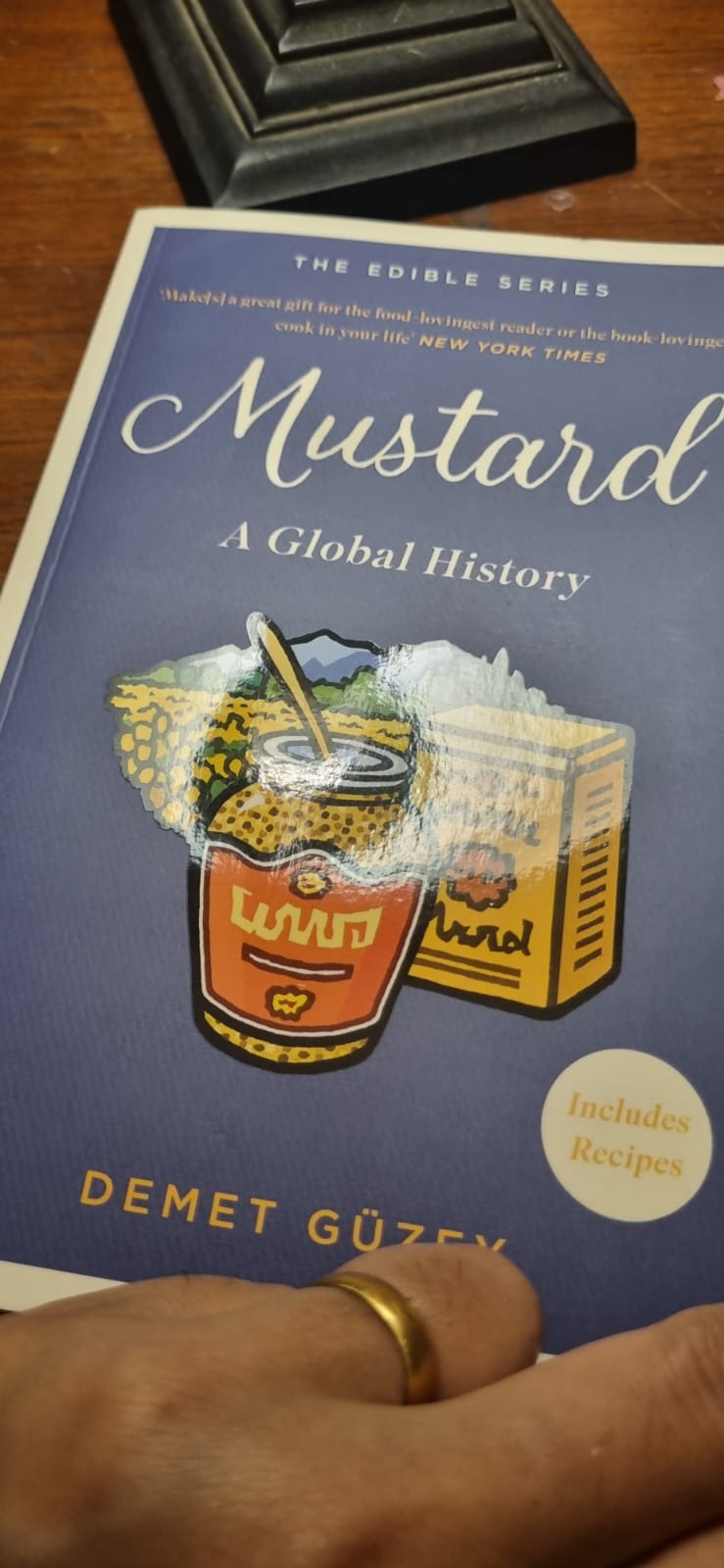
“Mustard: A Global History” by Demet Guzey

The Edible Series launched by Reaktion Books in the UK and licensed by Pan Macmillan India is a brilliant set of books on food. At a time when there is excessive information available on the internet about food and a zillion cooking programmes, with many people advising on different kinds of cuisines, this series does a remarkable job of offering in a nutshell, a global history of the specific food item. Also included in every book are a bunch of recipes. Whether you agree with them or not is immaterial; the fact that they exist and allow the reader to explore some styles of cooking is a start. In fact, this series reminds me of The Modern Library Food series (Series Editor, Ruth Reichl). Those books were mostly a mix of travelogue, memoir and recipes, and were far more subjective than The Edible Series. The latter is objective, with well-researched images illustrating the text (a possible genuflection to the information age of “picturising” every text) and plenty of history. The space reserved for the recipes are at the end, a few pages. I find them a curious selection in every text — but then I read cookbooks to unwind, I collect recipe books and recipes and cook regularly in the old fashioned way.

Mustard: A Global History is fascinating in its own way but what I cannot comprehend is that if editors lay stress on appropriate images to illustrate the text, then why not connect the dots with regard to the food mentioned. For example, on the opening page of the book, the first dish mentioned using mustard is mayonnaise. Throughout the book, there are a few more scattered references. Understandably so, since mustard is a key ingredient to the condiment. Yet, there isn’t a single recipe for it in the book. Why? Is it because it is considered to be an extremely difficult emulsion to prepare at home? In fact, the hallmark of a good cook is if they can create a perfect mayonnaise dressing. It is not easy! Trust me. I make it regularly. Everything has to be just right but once you master it, it is very quick and easy to make.

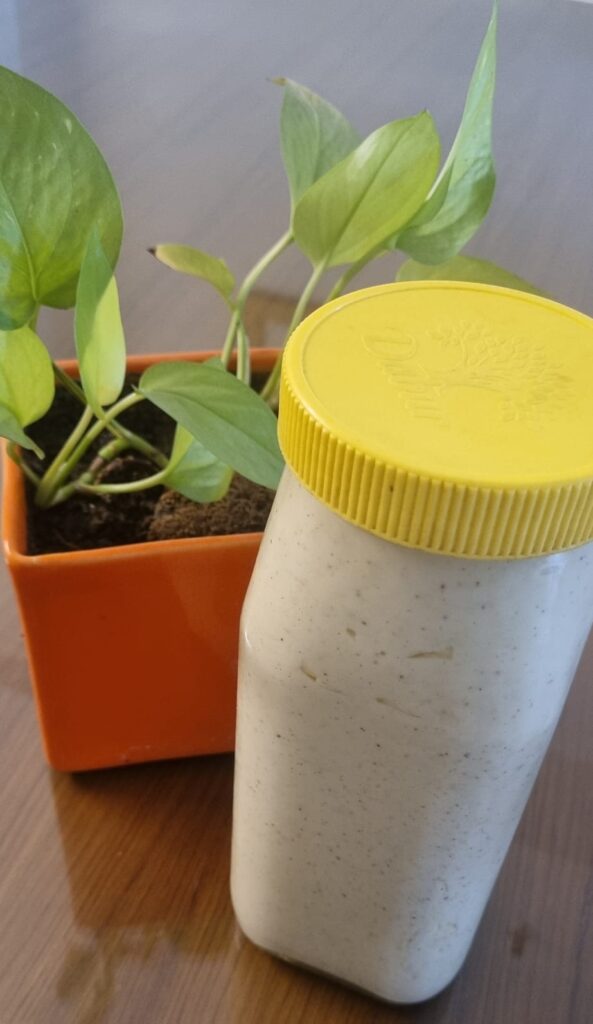
In fact, to correct the aberration in the book, here is my recipe for mayonnaise. It was given by a grand aunt. I find it very easy to make a large jar of it. It refrigerates well too. It is convenient to have it handy, as a sandwich spread or the base of other dressings, especially for a prawn cocktail.

Mayonnaise recipe

4 tablespoons vinegar
3 – 4 large eggs
4 teaspoons sugar
1 heaped teaspoon mustard
Salt and pepper to taste
1 large bottle salad oil
Mix all ingredients except salad oil at speed 3 for half a minute. Gradually add oil running the mixie motor on speed 1, turning it off every few seconds, till all the oil has been mixed.
Frankly, you can add the salt, pepper, mustard, and sugar as per your taste. Mix at a high speed for more than half a minute, if need be, to ensure that all the ingredients mix well. Then dribble the oil in slowly. I never switch off the mixie. It gets done.
Pour into bottles and refrigerate.
There are no shortcuts to making this recipe. Also be warned there will be many disasters along the way, but once past the learning curve, this is a brilliant recipe to keep handy.

Here is an image of the latest batch that I made. It is devoured by everyone in the family. So, I have to ensure that there is always a fresh stock readily available.

31 August 2025

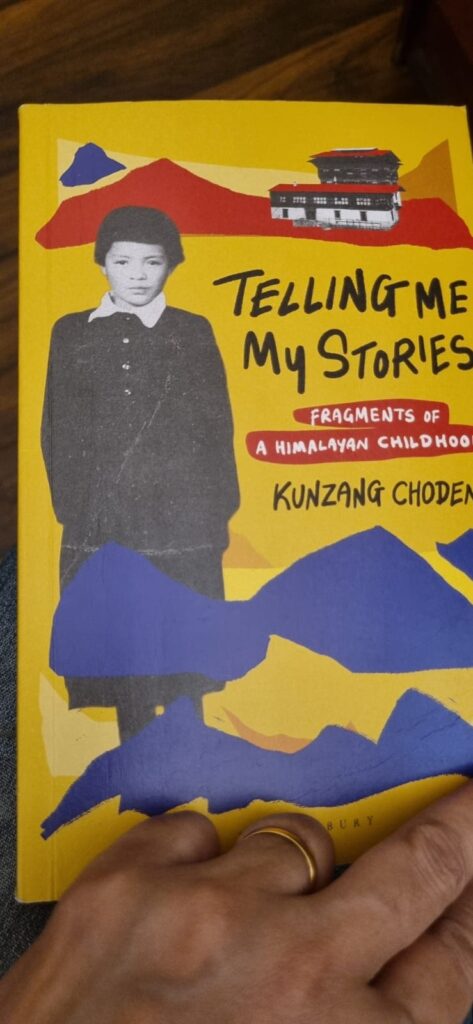
“Telling Me My Stories: Fragments of a Himalayan Childhood” by Kunzang Choden

My first introduction to Kunzang Choden was when her manuscript The Circle of Karma was placed on my desk. It was one of the first novels that I edited and thoroughly enjoyed doing so as well. It was also the first book that was placed on the Penguin/Zubaan joint imprint. It was a project that we poured our heart and soul into. We even created a micro-author website for Kunzang to promote her and the book. It was delightful. It was experimental and unheard of. This was in 2004 or so, when the internet was still in its nascent stages and we were using dialup modems to connect to the world wide web. Later, when I organised the book launch at the British Council, New Delhi, it was an incredible experience. The auditorium was packed. Some of us were left standing outside in the foyer. It is then that I noticed a quiet young man standing near the front door, flanked by a bunch of smartly dressed men. It was the then prince and now King of Bhutan, Jigme Khesar Namgyel Wangchuck. He had just finished or was about to finish studying at the University of Oxford. It was extraordinary to see him at the event. But if you read Kunzang’s latest book, Telling Me My Stories ( published by Bloomsbury India), her association with the royal family is explained. Kunzang’s mother was related to the royal family.

I interviewed Kunzang Choden for TOI Bookmark. Here is the Spotify link:

Telling Me My Stories is a stunning memoir that truly exemplifies the title of the book. It is almost as if Kunzang has taken these fragments of stories that she heard, or were passed down generation to generation, and has tried to create a coherent narrative about her family. She was orphaned at a very young age — her father passed away when she was 9 and her mother a couple of years later. Over the years, Kunzang heard stories about them, or was handed pieces of their belongings by various relatives that made her want to patch together their stories. She has done a fine job in this book.

Her skill as a storyteller and as a collector of forgotten Bhutanese folktales and retelling them has become an important art form. Probably in many ways it enabled and empowered her to share the history of her family in the way she has done so. She focussed on herself and her ancestors, shared their stories pleasantly, gleaning facts from bits and pieces of oral testimonies and memories shared by those who knew her family in the past. The conversion of oral tales into the written word, providing a coherent narrative to the story is not as easy as it looks when read. It requires patience, persistence, and plenty of research to connect the dots and produce a chronological narrative. This is what Kunzang has achieved in Telling Me My Stories.

While weaving together her ancestral history particularly that of her parents, she also achieves a remarkable feat of documenting the change in Bhutan: from a closed nation, relying on a barter economy to becoming the modern country it is today. She refers to the various social reforms that the government instituted, including sponsoring Bhutanese children to be educated in India. Kunzang was one of those who benefitted from this scheme even though it entailed a 15-day trek from Bhumthang to Kalimpong. Quite an introduction to a new life when you are merely a nine-year-old girl, leaving home for the first time.

I truly enjoyed reading Telling Me My Stories.

Listen to our conversation on TOI Bookmark. It is available on Spotify.
Here is a snippet:

I mention somewhere that the death of our parents came to us in such a blasé way and we never really had the time and the opportunity to absorb it, to mourn it, to understand it, and it stayed with me. You are right, it is kind of like a healing process for me to write about it, talking to myself about it, and going through the whole process. The time we learned about the deaths and how we had nobody to really help us or guide us. Even to help us to mourn, to cry, to hold us or explain things to us. We sort of just developed, my brothers and I, developed our own coping strategies and that sort of stays embedded in my psyche.

29 August 2025

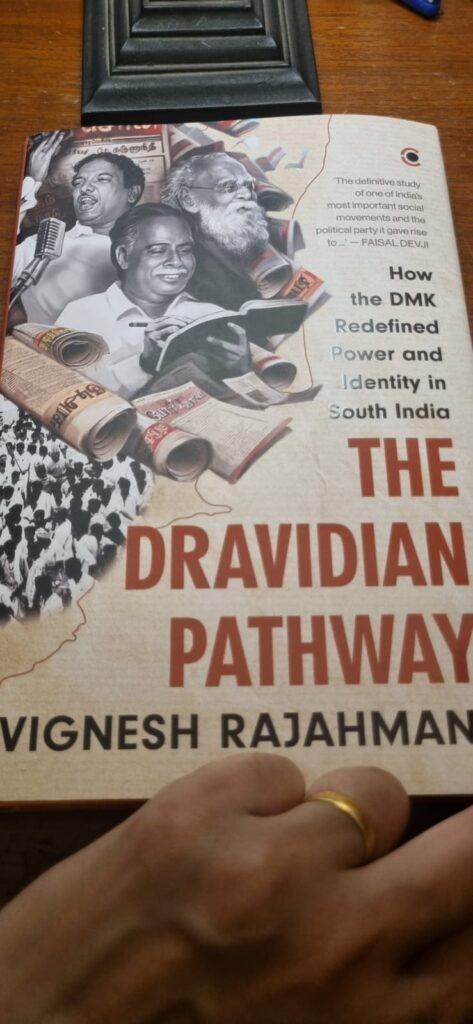
“The Dravidian Pathway: How the DMK Redefined Power and Identity in South India” by Vignesh Rajahmani

Politics at the best of times can be bewildering. So, when a book like The Dravidian Pathway comes along, one can only hope it provides a useful explanation on how and why the Dravida Munnetra Kazhagam (DMK) movement became as big as it did and is a political entity to contend with in Tamil Nadu. The DMK is a political party that cannot be ignored and is able to hold its own. It is particularly fascinating when observing contemporary politics and the inroads that the North Indian parties like the BJP are trying to make in South India. These days, there are videos circulating on social media of various DMK party members or individuals linked to DMK politicians, refusing to acknowledge BJP politicians ( here and here). The why and the wherefores about the DMK are documented and analysed by Vignesh Rajahmani, He has put together a lot of information and data to provide a sense of history and chronology about the DMK. It is a book that will be useful to political scientists, perhaps even politicians, researchers, and journalists. It has been published by Westland Books.

Book blurb

The transformation of the Dravidian socio-cultural movement into an electorally viable political party-the Dravida Munnetra Kazhagam, or DMK-is one of the most fascinating stories in modern India. It is also one that is critical to an understanding of South Indian politics as a whole.

Although the movement and the party have both been widely studied, the interplay between the two has been largely neglected, with scholars tending to focus on outcomes. Vignesh Rajahmani’s innovative, detailed study of the Dravidian Movement explores the strategic leadership of DMK and non-DMK figures like Periyar E.V. Ramasamy, C.N. Annadurai, M. Karunanidhi and K. Kamaraj. It illustrates their synthesis of anti-caste ideology, socio-economic and educational mobility, and inclusive Dravidian-Tamil identity, and considers why that vision resonated with marginalised communities.

Tracing the early DMK years, from the party’s social justice campaigns to its landmark electoral victory in 1967, Rajahmani highlights the challenges of navigating ideological commitments within the constraints of political pragmatism, while also making politics accessible to the common person. He explains how iterations on the initial ideology and political offering can reinvigorate such movements, keeping their politics agile, and importantly, incentivising inclusive policymaking. An investigation into how the DMK shaped Tamil Nadu’s counter-hegemonic political identity, which has proven electorally resilient in spite of majoritarian onslaughts, The Dravidian Pathway is a timely contribution to the public and scholarly understanding of Tamil Nadu’s politics.

‘The definitive study of one of India’s most important social movements and the political party it gave rise to’ — Faisal Devji, Beit Professor of Global and Imperial History, University of Oxford

‘[C]asts casts new light on the deepening of democratic politics in the early decades of the Indian republic.’ — Srinath Raghavan, author of Indira Gandhi and the Years That Transformed India

‘Ideas and interests, coalitions and contests, personality and populism are measured in Rajahmani’s stimulating book.’ — Shruti Kapila, author of Violent Fraternity: Indian Political Thought in the Global Age

‘[S]hows us that majoritarianism is not the only pathway to power—social reform is not just a viable political strategy, it is rich with democratic possibilities too’. — Siddharth Varadarajan, founding editor of The Wire

Vignesh Rajahmani is a postdoctoral research fellow in Indian and Indonesian politics at the Royal Netherlands Institute of Southeast Asian and Caribbean Studies, with a PhD in Political Science and Public Policy from King’s College London. He is also a postdoctoral affiliate at the Center for Information, Technology, and Public Life at the University of North Carolina at Chapel Hill, and a research affiliate at the King’s India Institute, King’s College London. Rajahmani has over five years of professional experience in public policy, legislative research and political consulting, including his advisory work on a range of Indian parties’ electoral strategies and manifestos, at regional and national levels. His research interests include public policy, the politics of mobilisation, democratic development, the interplay between domestic politics and foreign policy, and political communication in the age of social media.

28 August 2025

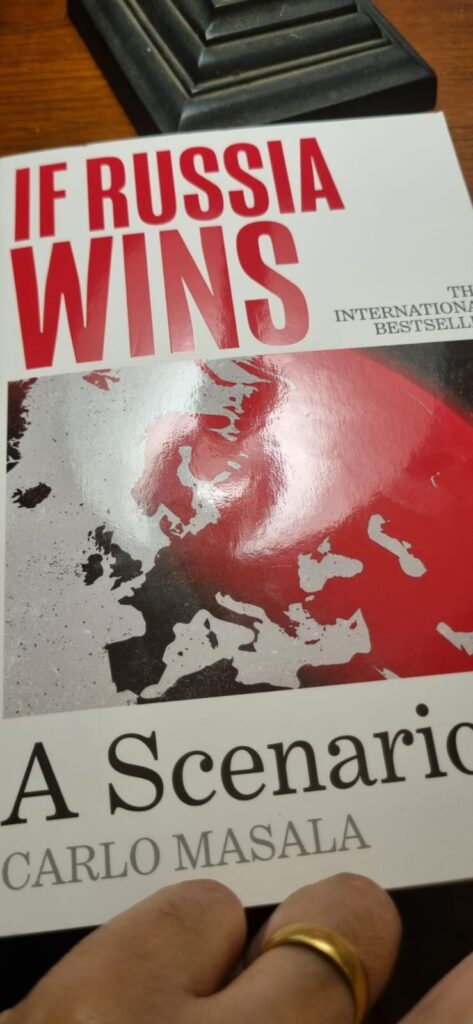
“If Russia Wins: A Scenario” by Carlo Masala, translated by Olena Ebel and Ruth Ahmedzai Kemp

If Russia Wins: A Scenario by political scientist and expert for international security policy, Carlo Masala has just been released in English. It has been translated from German by Olena Ebel and Ruth Ahmedzai Kemp. It is fiction and has been a resounding success in Europe. In Germany, for example, it has been on the bestseller list for weeks.

In If Russia Wins, military expert and Professor of International Relations at the University of Munich, Carlo Masala explores these questions and underlines what is at stake in Ukraine in the starkest possible terms.

March 2028: Russian troops capture the small Estonian town of Narva and the island of Hiiumaa in the Baltic Sea. After victory in Ukraine, Putin’s long-mooted encroachment into the Baltic states has begun. Europe’s slow rearmament and its compromised military and intelligence capabilities is now clear for its enemies to exploit. Does Article 5 of NATO apply? What will the alliance decide? Will they risk nuclear war?

Carlo Masala is Professor for International Politics at the Bundeswehr University Munich. He previously worked as Deputy Director in the research department at the NATO Defence College in Rome. Since January 2024, Masala has been Director of the Centre for Intelligence and Security Studies at the University of the Federal Armed Forces in Munich. He received the Lichtenberg Medal in Goldfrom the Lower Saxony Academy of Sciences in Göttingen in 2023 for his academic work and science communication. If Russia Wins was an immediate #1 bestseller upon publication in Germany, and has since become a bestseller in the Netherlands.

27 Aug 2025

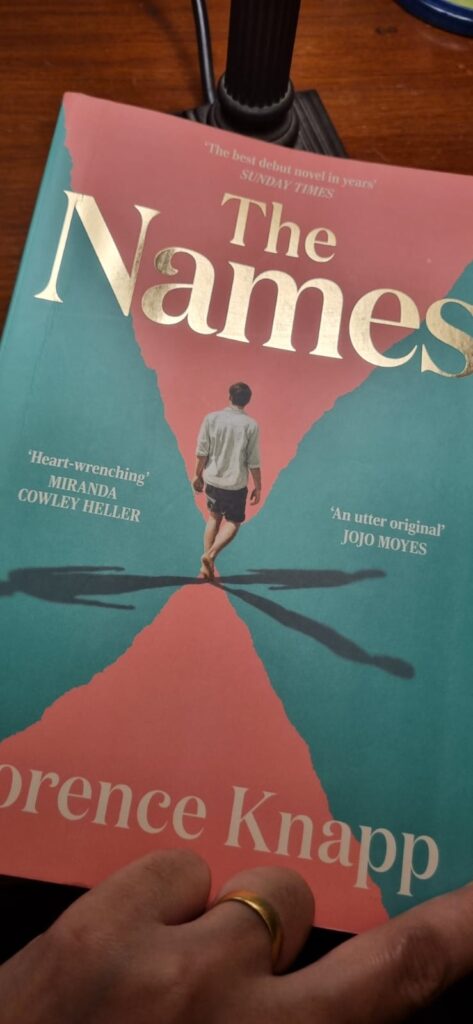
“The Names” by Florence Knapp

Cora is used to sudden explosions that come at a light being left on, or realising too late she’s been overly friendly in the way she’s spoken to a tradesman. She lives trying not to set a match to Gordon’s anger, but sill she spills petrol about her, dripping it over shoes she has forgotten to polish, sloshing it across a particular shirt not washed in time. She races from thing to thing, tending to whatever might spark, but it’s always something behind her, just out of sight that she hadn’t thought of. But today is different. She gets to choose how it’s presented. And she feels fearless. Yes, he might — will — be furious, but the consequences won’t be pointless this time. She will have got what she wants: for her son to grow up with his own name.

….

You reminded me how important it is for everyone to have their own name, but it was completely my decision to call him something different.

Debut novelist Florence Knapp’s The Names is about Cora and her family, her children Maia and Bear/Julian/Gordon — depending on which strand of the story you wish to dwell upon. Cora’s husband is a successful doctor, who is well liked in the community he serves, but his darker side of being a patriarch, who believes in the traditional gendered roles of a woman and man and is passionate about tradition — are facts that no one outside the family seems to be aware of. It is this intersection of the private and public, the relationship between the husband and wife, father and daughter, father and son that is explored by the author. The Names is spread over thirty five years, beginning with the birth and registeration of the son’s name. The story is narrated with gaps of seven years, with the story revolving around either Bear or Julian or Gordon. This is dependant on whether Cora registered her son’s name as “Bear”, as suggested by Maia or “Julian”, as preferred by Cora, or “Gordon”, as ordered by Gordon the father, to carry on the patriarchal tradition of naming the first son as his father and grandfather before him. Florence Knapp in her storytelling explores the what-if scenarios of naming Cora’s son one of the three names suggested for him. She believes that it is the smallest of actions that brings about the change in the future. The Names illustrates that belief through the three different stories. But it is the relentless and sharply observed scenarios of domestic violence, in even the “meaningless” actions of a woman/wife/mother, that makes the reader’s heart race. It is alarming.

Florence Knapp is a seamstress who wrote this novel fairly quickly but then put it into a drawer. After a few months, she read it once more and decided to have it published. In her interviews promoting the book, she often mentions that in one of her circle’s, the women were introduced to a domestic violence activist. This person spoke at length about the violence perpetrated upon women. It made Florence Knapp think about it a lot. The end result is this book.

While I understand the precision of this writing is as precise as that probably required in creating a garment or embroidering when working with a thread and a needle, it is the horror of the violence on the page that is deeply disturbing. Not that it is unheard of or is unusual but for us, living in India, in a hyper-masculine society, where patriarchal norms have returned with such a fury, this book is hard to read. Daily news consists of women being burnt to death for dowry, young girls being raped and murdered, sexual harrasment and eve teasing are rampant. Earlier we read about these violent acts of violence but today with smartphones available in everyone’s hands, there are reels easily available on social media platforms. It is ghastly. And these are only a few of the stories that make their way into the main media. There are countless such stories that play out, day and night, across socio-economic classes. So, while I can understand the rave reviews it is receiving in the Anglo-American book market, the 13-publisher auction and (so far) sale into twenty languages for translation, it is a story that will require nerves of steel to be read.

While the characters in the book, the major and the minor, are well etched, it is Gordon (the father) who comes across as a flat character. It is almost as if the entire energy of the author was spent in making the invisible in a homemaker’s life visible. A sterling effort but then the perpetrator of the gendered violence should have been a little more rounded.

Nevertheless, The Names reputation as a book that must be read in 2025 stands true. Sometimes stories like this need to be told, so that victims while reading the novel, can recognise situations for themselves, and perhaps, figure out a way forward. Many a time and oft, victims and their children/younger wards are trapped and lose their sense of reality. The simplest act, such as calling out for help, is the hardest task.

Read The Names. It is published by Hachette India.

26 August 2025

“How We Grow Up : Understanding Adolescence” by Matt Richtel

The transition from childhood to adulthood is a natural, evolution-honed cycle that now faces radical change and challenge. The adolescent brain, sculpted for this transition over eons of evolution, confronts a modern world that creates so much social pressure as to regularly exceed the capacities of the evolving mind. The problem comes as a bombardment of screen-based information pelts the brain just as adolescence is undergoing a second key change: puberty is hitting earlier. The result is a neurological mismatch between an ultra-potent environment and a still-maturing brain that can lead to anxiety, depression, and other mental health challenges. It is a crisis that is part of modern life but can only be truly grasped through a broad, grounded lens of the biology of adolescence itself. Through this lens, Richtel shows us how adolescents can understand themselves, and parents and educators can better help.

For decades, this transition to adulthood has been defined by hormonal shifts that trigger the onset of puberty. But Richtel takes us where science now understands so much of the action is: the brain. A growing body of research that looks for the first time into budding adult neurobiology explains with untold clarity the emergence of the “social brain,” a craving for peer connection, and how the behaviors that follow pave the way for economic and social survival. This period necessarily involves testing—as the adolescent brain is programmed from birth to take risks and explore themselves and their environment—so that they may be able to thrive as they leave the insulated care of childhood.

Richtel, diving deeply into new research and gripping personal stories, offers accessible, scientifically grounded answers to the most pressing questions about generational change. What explains adolescent behaviors, risk-taking, reward-seeking, and the ongoing mental health crisis? How does adolescence shape the future of the species? What is the nature of adolescence itself?

Matt Richtel is a health and science reporter at the New York Times. He spent nearly two years reporting on the teenage mental-health crisis for the paper’s acclaimed multipart series Inner Pandemic, which won first place in public-health reporting from the Awards for Excellence in Health Care Journalism and inspired his book How We Grow Up: Understanding Adolescence. He received the Pulitzer Prize for national reporting for a series of articles about distracted driving, which he expanded into his first nonfiction book, A Deadly Wandering, a New York Times bestseller. His second non-fiction book, An Elegant Defense, on the human immune system, was a national bestseller and chosen by Bill Gates for his annual Summer Reading List.

Web Analytics Made Easy -
StatCounter