Poetry Posts

“Bessie Smith” by Jackie Kay

Bessie Smith by Jackie Kay, Scotland’s National poet is a biography of a legendary blues singer. It is also a fascinating account of the history of blues, jazz, and what is today the popular form, Chicago Blues when the male musicians hijacked the scene with their acoustic guitars. Jackie Kay develops the scene brilliantly by pointing out that the blueswomen sang whatever they wanted to. They were ruthless while talking about men. These women were like a band of travelling musicians.  They belonged to troupes. The most famous being Ma Rainey.  All the women had “Smith” as a surname to give them some legitimacy as well as anonymity. These women were like a sisterhood that was powerful and knew they were good at what they did — singing. They also had no qualms being open about their sexuality even if they had male partners. They made lots of money and shared it generously. Their songs were the equivalent of modern poetry. They were also the first to adopt new technology like gramophones and made recordings.

Bessie Smith signed a lucrative eight-year contract with Columbia Records between 1923-1931. She recorded 160 songs, twenty a year! On 15 February 1923, the Queen of Blues, recorded ‘Downhearted Blues’ and ‘Gulf Coast Blues’. She arrived at the studio ‘tall, fat and scared to death’. It took her many attempts to make the wax recordings. She was probably nervous or stone cold sober. As Jackie Kay speculates, “She possibly mistrusted the whole technological thing, such as it was then. She might have felt that she was being had. But she soon got the hang of it. Humphrey Lyttelton says, ‘The singing that was transmitted to wax was, from the outset, mature, steeped in harsh experience and formidable commanding.'”

The sales of ‘Downhearted Blues’ — three quarters of million copies in six months — far exceeded the sales of any other blues record. The black public were eager to purchase records through mail-order catalogues, record stores in black neighbourhoods or even through the Pullman porters. The blues sold both in the North and in the South and became part of the record companies’ ‘race records’ series. These were issues directed solely to the black purchaser. By the end of 1922 Race records were being distributed in many Northern cities and as far south as Alabama.

In the South the blues sold to black and white people; in the more ‘liberal’ North, they just sold to black people. It was possible to have been white in the North in the 1920s and never have known that blues records even existed. This is because in the North, advertising of so-called ‘Race records’ was restricted to the black press, and the distribution of the records took place only in black areas. Southerners, though, became part of the ‘race market’. White and black people, though segregated, crowded into those tents to hear the blues.

During the Columbia period, Bessie Smith worked alongside some of the best musicians of her day: Fletcher Henderson, Louis Armstrong, Fred Longshaw, Jack Teagarden, James P. Johnson, Coleman Hawkins, and Joe Smith. But the most exciting combination musically was Bessie Smith and Louis Armstrong, in those sessions they recorded on 14 January 1925. ‘Reckless Blues’, “Cold in Hand Blues’, ‘Sobbin Hearted Blues’, and ‘You’ve Been A Good Ole Wagon’ were all recorded that day.  It has turned out to be the most memorable dates in the history of blues.

Singers at that time were never paid a royalty but paid as usable side. These amounts varied depending on the musician’s popularity but Bessie Smith could earn as much as $250.  She was the best paid of all the classic blueswomen. The women singers who came after her like Billie Holiday and Ella Fitzgerald were known as Jazzwomen who sang a different kind of music. Five of Bessie Smith’s records were on the market, and her reputation had grown beyond all expectations. But success would not last. After the Wall Street Crash of 1929 and the Depression, a new combo style of blues became fashionable. ‘Urban Blues’ or ‘Chicago Blues’ then dominated the scene from the mid-1930s through the 1940s. The likes of Muddy Waters and Howlin’ Wolf took off; the classic blues singers were replaced by men with acoustic guitars.

In the 1920s she who loved to party, participated in many ‘rent parties’ or parlor socials. This was home entertainment. You could get into any of them from 10 cents to a dollar. The other guests were ordinary, working-class people: tradesmen, housemaid, laundry workers, seamstresses, porter, elevator ‘boys’. But writers and artists and singers loved to go along too. On a Saturday night in Harlem, the music pounder out of the open windows. There was always an upright piano, a guitar, a trumpet and sometimes a snare drum. Rent parties originated in the South, where rents were so high that people had to organise such socials to pay their landlords. You needed no social standing to throw a rent party. All you needed was a piano player and a few dancing girls. Drinks were bathtub gin and whiskey. Food was fried fish, chicken, corn bread etc. Music was played by some of the masters and students of Harlem stride piano. Dancing — the Charleston, the black bottom, the monkey hunch, the mess around, the shimmy, the bo-hog, the camel, the skate and the buzzard — went on till the break of day. You were not regarded as much of a jazz pianist unless, wherever else you appeared, you played the rent-party circuit. You earned your spurs not only by sending the dancers into flights of ecstasy but also by ‘cutting’, or outperforming, rival piano players. Duke Ellington, Bill Basie — not yet Count— a young Fats Waller and Bessie Smith enjoyed these rent parties. One of Bessie’s best-known songs, ‘Gimme a Pigfoot’, written by Leola ‘Coot’ Grant and Wesley Wilson and performed with Jack Teagarden and Benny Goodman in 1933 is about rent parties.

Bessie Smith wrote blues for herself to reflect the experience of ordinary working-class people. The blues she sang and the blues she wrote often contained elements of burlesque, music hall and vaudeville which reflected her background as a young girl who had first joined a travelling troupe in 1912. A lot of her blues were raunchy, bawdy, double-entendre-filled, sexy sings, as well as tragic, painful and depressing. Bessie’s blues moved people.

According to Jackie Kay, “Her voice just got to them. Perhaps she reminded them of the past, of losses, of longing. Something in her voice went way back into a deeper past. Her voice seemed to contain history, tragedy, slavery, without self-pity. It had the ability to stretch beyond even the lyrics of her blues into something more complex. Her blues were universal, but also deeply personal.  They allowed her to express the whole range of her complex personality– the wild promiscuous drunken side and the depressed, insecure, lonely side.”

Bessie Smith became poorer when the blues that she knew began to die. Columbia Records dropped her on 20 Nov 1931. Jackie Kay uses terms like hedonistic and self-destructive for Bessie Smith which are probably apt descriptors given her alcoholism, temper and impetuous nature. Nothing fazed her. She did exactly as she pleased. Once she confronted the Ku Klux Klan single-handedly. In July 1927, Concord, North Carolina, she was performing in a tent when her musicians discovered that the Ku Klux Klan had removed most of the tent stakes. Her prop boys ran away seeing the white-sheeted men, but Bessie Smith blasted the Ku Klux men:

“I’ll get the whole damn tent out of here if I have to. You just pick up those sheets and run.” The Klansmen, shocked, stand and gawp whilst the Empress shouts obscenities at them until finally they disappear into the darkness. “I ain’t never heard of such shit,” says the Empress, walking over to the prop boys. “And as for you, you ain’t nothing but a bunch of sissies.” Then she goes right back into that same tent for her encore.

Sorted.

Bessie Smith died as a result of the injuries she got in a horrific road accident. She had thousands of mourners at her funeral. Yet her pallbearers were hired. None of the people she had helped over the years came forward. Her ex-husband, Jack Gee, siphoned away her money and despite there being two fund raisers for the specific purpose in 1948 and in the early 1950s he let her remain in an unmarked grave for 33 years. Then in 1970, Columbia Records reissued her five albums. They won two Grammy awards. At this time, it was asked by the public if Bessie Smith could have a headstone now. So, another fund raiser was organised. But it took only two phone calls to get the money. One donor was Bessie Smith’s former cleaning girl, now a rich woman, Juanita Green, who owned two nursing homes and the singer Janis Joplin. Coincidentally, Janis Joplin died of a drug overdose on 4 Oct 1970, the date of Bessie Smith’s funeral.

Bessie Smith is utterly fabulous. It is an excellent example of a biography. Jackie Kay hero worships Bessie Smith but as a professional poet herself recognises the challenges and joys of being an artist. Jackie Kay describes Bessie Smith as a strong woman associated with style, glamour, freedom, strong woman, a real queen, she drank, she cussed, she spent money, she partied, she fought, she was beaten up regularly by her second husband, and was a bisexual. She lived life on her own terms. Money just became another expression of her impulsive, party-loving, binge-drinking generosity. She spent money liberally on her friends and family but was not known to treat her musicians kindly.

There are so many ways in which the author’s and the subject’s professional and personal interests intertwine. Bessie Smith is written brilliantly. At the same time, it is an excellent historical account of blues. Faber Books imprint that focuses on music publishes excellent stuff. No wonder they once had hired Pete Townshend of The Who as Commissioning Editor. This is book is a fine example of this excellent list.

Worth reading.

23 may 2021

“Shimmering Spring”

Shimmering Spring ( Hawakal Publishers) is an interesting collection of poems and prose edited by Kiriti Sengupta. 39 contributors from around the world but mostly Indians. It is refreshing to see the arrangement of poets is alphabetically and not necessarily according to some perceived hierarchy of established and upcoming voices. A beautifully produced edition with very bright paintings by Pintu Biswas. The layout is generous and respectful to every single poet featured in the book. It is the kind of book that makes you want to read the poems over and over again till you zone in completely to what the text is saying and shut out the world. It works. My only quibble is the manner in which at times the text has been plonked on to the page, trickling into the artwork and thus disrupting the reading experience. Nevertheless, an edition that many will return to for the extraordinary variety of poetry.

8 Jan 2021

Tuesday Reads ( Vol 10), 22 October 2019

Dear Reader,

There are many books and essays to discuss but today I would like to share two poems from a slim but exquisite and powerful collection of poetry called Serpents Under My Veil. It is by Kashimiri poet Asiya Zahoor. The book was published on 15 August 2019. She has written on Kashmiri and Caribbean Literature, exile and psycholinguistics. Her film ‘The Stitch’ has won the Critics award in the Second South Asian film Film Festival by Federation of Film Society of India and has been screened at various festivals including the 48th Roshd International Festival in Tehran. Her poetry is translated into many languages.

****

Lightness of Being in a Heavily Militarised Zone

before they lay barbed wire 
across our tongues
let’s sing of almond blossoms

before they hammer our heads
to harvest thoughts let’s think
what we want to think

before they wall our sleep
let’s whisper dreams
into cold cruel ears

before they blind us
with a burst of lead
let’s mirror our darkness

let’s engrave this story
with fingertips on palms
before they erase our words

*******

My Grandmother Spun Soft Revolutions on a Charkha

Turning the fleece
of a Kashmir goat
into cashmere.

Her lullabies
on a rabab
put heavy guns
to sleep.

Her prayers soared
from chimneys,
wished for rivers
not cursed with myths,
breasts not drilled
with bullets,
streets not hemmed

with barbed wire,
history
not written with scars.
She paused her singing
to boil almanacs
in a samovar,
inhaling embers,

exhaling fire. Her passion
faded like posters
on municipal walls

we ignore in our daily routine.
She offered trays
of mustard rice
to a shrine on a mountain

where a soothsayer
had predicted,
embers turn to ashes.


(C) The copyright to the poems rests with Asiya Zahoor.
Serpents Under My Veil has been published by Tethys, an imprint of Yatra Books.

“Krishna in Rhyme”


Krishna in Rhyme is a fabulous retelling of the story of  Krishna by  Kairavi Bharat Ram and  Ananya Mittal, published by  Scholastic India. It is in couplets. Ishan Trivedi’s sumptuous illustrations fit so beautifully with the text, making the reading experience magical. Gift it now. Gift it in Diwali hampers. It is a book for children and adults to read, whether already familiar with the stories or not, is immaterial.

He is always remembered for the fun he had,
For being a playful god, beyond the good and the bad.

He represents the child in us, who enjoys life and is free,
He’s the balance between fun and responsibility.

He taught us that to your fate you are bound,
This idea’s called karma, what goes ’round comes around.

The Gita is perhaps his most famous speech,
In this all about duty and dharma he does teach.

When you do what you must, things will always be okay,
Following your heart will never lead you astray.

We hope this epic story you all have understood,
Remember this forever: evil never beats good.

26 August 2019

Tuesday Reads (Vol 5), 16 July 2019

Dear Reader,

Choosing a book or two to write about always throws me into a pother. The three mentioned in today’s post are not to be missed.

Writer and translator Shanta Gokhale’s autobiography One Foot on the Ground: A Life Told Through the Body is brilliant. Shanta Gokhale is known for her translations from Marathi into English but she is fluently bilingual in English and Marathi. One Foot on the Ground is an account of her childhood, her father’s insistence on sending her to England to complete her school and later University. She returned home to become a teacher and then later joined the PR team of Glaxo. Ultimately she became known for her work as a journalist/columnist, screenwriter, translator and writer. She quit her day job once her children were old enough. Most interestingly, as the subtitle indicates, this is an autobiography that documents the various stages of her life through memorable experiences pertaining to the body. From the first remembered instances of molestation by the cook, dental troubles, babies, cancer, glaucoma etc. Then there are those other quiet assertions of her identity and her self, like filing an affidavit in the court to use her maiden name while still married, allowing her ex-husband to share her apartment till he had found a place for himself ( which was not to be for some years!), revelling in the joy of having her own space, her own bed where she could stretch out and read/work, ultimately recognising that she “needed a room of her own to be the person I was”. The calm tenor and poise with which Shanta Gokhale discusses her life, her body, her responsibilities and her ambitions is delightful. One Foot on the Ground is like reading the testimony of a woman who lives her feminism and do so contentedly. ( Read an extract published in Scroll on 10 July 2019. )

The second book, On Earth We’re Briefly Gorgeous: A Novel is an extraordinary debut novel by award-winning queer Asian-American writer Ocean Vuong. Written in the first person by the narrator, Little Dog, it is a coming-of-age tale in America. It is about the boy, his Vietnam War veteran grandfather, his schizophrenic maternal grandmother and his mother who suffers from PTSD. It is a thinly veiled autobiographical account of Ocean Vuong’s life, of migrating to USA as a two-year-old refugee via a brief stay at a refugee camp in the Philippines. The precision of his writing, much as the fineness of description that is associated with poetry, is a remarkable transferance of creative talent into prose. The long beautifully crafted flowing sentences. In fact Ocean Vuong wondered in an interview if it was a comically futile effort. He had to contend with various multiplicities while also being very aware of the American lineage of biographies. Yet the agency as an artist is also very important to him. He adds that he was very inspired by the American idea that one can create a mythology for oneself.

Once at a writing conference, a white man asked me if destruction was necessary for art. His question was genuine. He leaned forward, his blue gaze twitching under his cap stitched gold with ‘Nam Vet 4 Life‘, the oxygen tank connected to his nose hissing beside him. I regarded him the way I do every white veteran from that war, thinking he could be my grandfather, and I said no. “No, sir, destruction is not necessary for art.” I said that, not because I was certain, but because I thought my saying it would help me believe it.

A coming-of-age novel that can be seen to exist firmly within the American tradition of literary biographies but at the same time is that of an Asian-American negotiating his adopted country. By writing this novel, Ocean has put together the best of literary traditions of his country of origin and his adopted country — the written word with the oral tradition and its folksy element. Thereby making it possible to speak of his schizophrenic grandmother and his mother who suffers from PTSD. There is plenty to unpack in this novel. It has many autobiographical elements which Ocean acknowledges in his various interviews but it has been announced as a novel. Ironically this is in the form of a long letter to his mother who is unable to read English. He states “the chance this letter finds you is slim — the very impossibility of your reading this is all that makes my telling it impossible.” At the same time Ocean Vuong rightly points out that “Conflict driven plot becomes its own protagonist” . Here is a wonderful profile of Ocean Vuong published in the Guardian. ( 9 June 2019).

The final book is another debut novel that has been considered by its publishers “the most coveted debut of 2019, an intoxicating story of art, obsession and possession”. Elizabeth Macneal’s The Doll Factory is set in Victorian London, at the time of the Great Exhibition and the Pre-Raphaelite Brotherhood. The Doll Factory is about the heroine Iris who aspires to be an artist while employed with her twin sister painting dolls faces. Iris soon finds herself a part of the PRB. She is hired as a model. It is a fine mix of nineteenth century preoccupation with details and twenty-first century preoccupations of modern storytelling while being very aware of concepts like male gaze. There are moments of pure gorgeousness in the book especially when the author is describing the Great Exhibition.

Elizabeth Macneal is a graduate of the creative writing course at the University of East Anglia where she was the Malcolm Bradbury Scholar, and The Doll Factory has won her the Caledonia Novel Award. It has been sold to 28 territories so far, while TV rights have already been snapped up. Alan Massie puts it well in The Scotsman review:

It’s accomplished; there’s nothing raw about it. Today’s young novelists have all been schooled in the making of a novel and they have usually submitted drafts of it to fellow students as well as teachers, and taken their suggestions and criticisms on board. Their novels are far less clumsy, far less raw, than first novels so often were a couple of generations ago. The Doll Factory is a perfect example.

In the acknowledgements Macneal thanks a long list of people for their help and encouragement. No doubt they have all been useful. Nevertheless, it’s fair to assume that only she is responsible for the novel’s charm. It is indeed charming. But is it about anything that matters? Perhaps we shall have to wait for a second or even a third novel before knowing whether the author’s evident ability can carry her beyond charm so that she deals with matters of significance, writing something which has the reader engaged in both feeling and thought.

The Doll Factory will undoubtedly be seen on longlists and all the noteworthy literary prizes meant for debut authors. Ultimately Elizabeth Macneal may win one of the big literary prizes for a later novel she writes, by which time she will have rid herself of all the creative writing school learnings and learned to be confident of her own voice. She will have learned to trust herself.

For now enjoy this wonderful Twitter thread by Elizabeth Macneal describing how the exquisite book cover was designed:

One Foot on the Ground, On Earth We’re Briefly Gorgeous and The Doll Factory are three unmissable books of 2019. They have the incredible quality to stay with the reader long after the books are over and done with.

Enjoy!

JAYA

16 July 2019

Book Post 34: 14-20 April 2019

Every week I post some of the books I have received recently. In today’s Book Post 34 included are some of the titles I have received in the past few weeks.

22 April 2019

Extract from “The Hungryalists: The Poets Who Sparked a Revolution”

The Hungryalists: The Poets Who Sparked a Revolution by Maitreyee Bhattacharjee Chowdhury is an interesting tribute to a short lived but intense literary movement in West Bengal that has left an lasting impact around the world. Their well documented relationship with the Beats poet is also analysed in The Hungryalists. This book will become one of the go-to reads on The Hungryalists precisely for the very reason that little documentation of the movement exists in English as these poets mostly wrote in Bengali. So to transcend languages and cultures requires a bridging language which is English.

The Hungryalist or the hungry generation movement was a literary movement in Bengali that was launched in 1961, by a group of young Bengali poets. It was spearheaded by the famous Hungryalist quartet — Malay Roychoudhury, Samir Roychoudhury, Shakti Chattopadhyay and Debi Roy. They had coined Hungryalism from the word ‘Hungry’ used by Geoffrey Chaucer in his poetic line “in the sowre hungry tyme”. The central theme of the movement was Oswald Spengler’s idea of History, that an ailing culture feeds on cultural elements brought from outside. These writers felt that Bengali culture had reached its zenith and was now living on alien food. . . . The movement was joined by other young poets like Utpal Kumar Basu, Binoy Majumdar, Sandipan Chattopadhyay, Basudeb Dasgupta, Falguni Roy, Tridib Mitra and many more. Their poetry spoke the displaced people and also contained huge resentment towards the government as well as profanity. … On September 2, 1964, arrest warrants were issued against 11 of the Hungry poets. The charges included obscenity in literature and subversive conspiracy against the state. The court case went on for years, which drew attention worldwide. Poets like Octavio Paz, Ernesto Cardenal and Beat poets like Allen Ginsberg visited Malay Roychoudhury. The Hungryalist movement also influenced Hindi, Marathi, Assamese, Telugu & Urdu literature. ( “The Hungryalist Movement: When People Took Their Fight Against The Government” Md Imtiaz, The Logical Indian, 29 June 2016)

*****

With the permission of the publisher here are two short extracts from the book:

Like everywhere else, the shadow of caste hung over the burning ghats as well. There were different burning sections for different castes. The Indian poets accompanying Ginsberg were usually Brahmins. Being there and smoking up was in itself an act of defiance, which normally nobody but the tantrics indulged in. Sunil, who had brought in his dead father here not too long ago, even joked about the place. Later, Ginsberg would go on to write:

I lay in my Calcutta bed, eye fixed

On the green shutters in the wall, crude

Wood that might have been windows

in your Cottage, with a rusty nail

and a ring iron at the hand

To open on heaven. A whitewashed

Wall, the murmur of sidewalk sleepers,

the burning ghat’s sick rose flaring

like matchsticks miles away, my cough

from flu and too many cigarettes,

prophet Ramakrishna banning

the bowels and desires—

War was on everyone’s mind. Ginsberg spoke extensively on what he called the ‘era of wars’. ‘There are as many different wars as the very nature of these wars,’ he had told his fellow poets. Following the death of Stalin and the Cuban Missile Crisis, an uneven calm seemed to have descended, only to be followed by skirmishes here and there. Issues of sovereignty dominated East and West Germany; the Kurds and Iraq were at loggerheads; closer home, the Tibetans were, of course, still struggling to ward off the Chinese invasion of their lands.

Without much ado, Ginsberg, along with Orlovsky and Fakir, arrived one Sunday at the Coffee House looking for Bengali poets. The cafe was abuzz with writers, editors and journalists. Each group had a different table—some had joined two or more tables and brought together different conversations on one plate. But somehow, everyone seemed to have an inchoate understanding of the business of war and what it spelled out for them in the end.

Ginsberg’s arrival was something of a coincidence, Samir mused. Contrary to what one would think was a far-fetched reality, especially in bourgeois Calcutta, a significant number of young Indian students had around that time begun applying for undergraduate courses in American colleges and universities. Times had fundamentally changed, of course. Where once an aspiring middle-class Bengali academic might have chosen to pursue his studies at either Oxford or Cambridge or some university in the Soviet Union, the new mindset now included American universities as the next lucrative biggie to venture forth into. Typically, one would hear snide remarks and private jokes about it in inner circles—about the disloyalty apparent in such choices and more. But those with aspirational values had learnt to live with it, was Malay’s understanding.

Even amid the erratic crowd and the loud voices that drowned everything in coffee, Ginsberg commanded attention. Samir had recalled to Malay:

He approached our table, where Sunil, Shakti, Utpal and I sat, with no hesitation whatsoever. There was no awkwardness in talking to people he hadn’t ever met. None of us had seen such sahibs before, with torn clothes, cheap rubber chappals and a jhola. We were quite curious. At that time, we were not aware of how well known a poet he was back in the US. But I remember his eyes—they were kind and curious. He sat there with us, braving the most suspicious of an entire cadre of wary and sceptical Bengalis, shorn of all their niceties—they were the fiercest lot of Bengali poets—but, somehow, he had managed to disarm us all. He made us listen to him and tried to genuinely learn from us whatever it was that he’d wanted to learn, or thought we had to offer. Much later, we came to know that there had been suspicions about him being a CIA agent, an accusation he was able to disprove. In the end, we just warmed up to him, even liked him. He became one of us—a fagging, crazy, city poet with no direction or end in sight.

All around the Coffee House, there were discussions on war. Would the Chinese Army march up to Calcutta? Would the Indian soldiers hold out? During one of these discussions, Ginsberg spoke with conviction: ‘People who want peace must intervene now, before it’s too late. But, no one will, I’m afraid. Let’s have debates if you will, let’s get talking. Let the Nehrus, the Maos and the Kennedys of this world come together, sit across and talk. Who are we without a debate?’

******

Very early on, the Hungryalists had announced, rather brashly, their lack of faith and what they thought of god. To them religion was an utter waste of time, and they made no bones about this. In fact, in one of their bulletins, they had openly denounced god and called organized religion nonsense. Many of the Hungryalists, with their sharp knowledge of Hindu scriptures, had been challenging temple elders on the different rituals and modes of worship. This came as a shock to many, in a country where religion was very much a part of everyday life—a matter of pride and culture even. On the other hand, Ginsberg was evidently quite taken with religion in India and sought out sadhus and holy men wherever he went in the country. While this might have been because he was in search of a guru, he seemed to be fascinated, in equal measure, by the sheer variety that religion opened for him in India—from Kali worship to Buddhism. But like the Beats, the Hungryalists came together in denouncing the politics of war, which merged with their larger world view.

*****

A tribute to the Hungryalist movement was uploaded on YouTube. It is in Bengali. Here is the film. In the comments Malay RoyChoudhury has also replied.

Maitreyee Bhattacharjee Chowdhury The Hungryalists: The Poets Who Sparked a Revolution Penguin Viking, an imprint of Penguin Random House, an imprint of Penguin Random House, India, 2018. Hb. pp. 190 Rs 599

Further Reading:

Ankan Kazi “Open Wounds: The contested legacy of the Hungry Generation” Caravan, 1 October 2018

Juliet Reynolds “Art, the Hungryalists, and the Beats” Cafe Dissensus, 16 June 2016

A new book chronicles the radically iconoclastic movement in Bengali poetry in the 1960s” Scroll, 8 Jan 2019

Book Post 25: 20 January – 2 February 2019

Every Monday I post some of the books I have received in the previous week. This post will be in addition to my regular blog posts and newsletter. Today’s Book Post 25 is after a gap of two weeks as January is an exceedingly busy month with the Jaipur Literature Festival, Jaipur BookMark and related events.

In today’s Book Post 25 included are some of the titles I received in the past few weeks as well as bought at the literature festival and are worth mentioning.

4 February 2019 

My Best Reads of 2018

Lists are subjective. Reading lists are even more difficult to cobble. Today my list consists of the following books. A few days later it may change ever so slightly. But these are the books that have stayed with me over the months.

Tabish Khair’s Night of Happiness 

Anuradha Roy All The Lives We Never Lived 

Supriya Kelkar Ahimsa

Mark O’Connell’s To Be A Machine 

Alejandro Zambra’s My Documents 

Gabriela Wiener Sexographies 

Ranjit Hoskote Jonahwhale 

Ravish Kumar’s The Free Voice: On Democracy, Culture and the Nation

C G Salamander and Samidha Gunjal’s Puu

Khaled Hosseini Sea Prayer

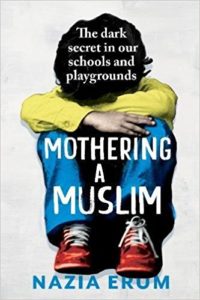
Nazia Erum’s Mothering a Muslim 

Jarrett J Krosoczka’s Hey, Kiddo

Henry Eliot’s The Penguin Classics Book

Cordis Paldano The Dwarf, the Girl and the Goat

Mohammed Hanif Red Birds 

Neil Gaiman and Chris Riddell Art Matters

T M Krishna Reshaping Art 

Alan Lightman In Praise of Wasting Time

Interview with instapoet Nikita Gill

Alice in Wonderland 

Alice’s rabbit hole began when she entered her father’s library and picked up one of the books she was forbidden to read. In it, the words were flavoured with anger and terror and beauty and everything she hadn’t tasted yet in her young life. People revolting, war, famine, anger at the aristocracy, compassionate philosophers writing famous ideas and wild theories. 

Wonderland emerged when Alice found her love for reading, and even better, acting on what she read. …

She scorned the idea that young ladies of that time should not do what she did. Make change and make waves and create a world more equal for everyone that lives in it. She was more concerned about making a change and in every little way she could find, she would. 

                                                                                                            Wild Embers, pp. 68-69

Nikita Gill is a British-Indian writer and poet living in the south of England. With a huge online following, her words have entranced hearts and minds all over the world. Wild Embers (2017) was her first book. I discovered the hugely popular Instapoet poetry in print, not on social media. It were the print editions that caught my attention primarily because her book publicists sent the beautifully designed editions of Wild Embers  and Fierce Fairytales & Other Stories to Stir Your Soul.  Strong poetry that is a pleasure to read for its sharply articulated ideas and representation of strong, independent, and thinking women characters especially in the retelling of the age-old fairytales. In fact Fierce Fairytales was whisked away by my young daughter as her own! I was a little surprised at her action as I was not sure how much of the poetry she would understand. Yet she surprised me pleasantly by getting the gist of the stories. She may not have got the layered meaning but she got the gist. It speaks volumes of Nikita Gill’s skill as a poet to be able to connect across generations.  Unsurprisingly she has a legion of followers on social media: Facebook (109k), Instagram ( 478K), Twitter ( 26.6K) and Tumblr 

Hachette India helped faciliate this email interview.

1. How and why did you decide to become a poet? 

When I was 13 years old, I was introduced to the work of Robert Frost through English class. There was something incredible in capturing such a wide span of emotion inside a single poem that rattled my soul and I felt a deep connection with it. Soon after, my nani (maternal grandmother) gave me my very own copy of Sukhmani Sahib and the hymns and verses there made me realise how poetry and prayer were not dissimilar, each one crafted from air to create something beautiful in and of itself. This was what made me fall in love with and want to write poetry.

2. How long does it take you to write a poem?

Genuinely speaking I am never done writing my poems. I think it was Da Vinci who said, “Art is never finished, only abandoned.”, and I resonate with that deeply. I frequent my old journals often, and rewrite pieces that I wrote years ago. I have a fondness for visiting an old thought with a fresh mind and a newer heart. I edit my manuscripts over and over again until I have to give them up. On a good day, a first draft will take about 6 hours, and rewrites take longer.

3. You are a huge success on social media. You are one of the few Instapoets who is known worldwide with a celebrity following too. But traditionally publishers are hesitant to publish poetry for the book gets easily read in a store or can be easily copied. How do you manage your poetry posts online from being plagiarized or shared without acknowledgement?

There are battles you can fight and battles you can’t. Plagiarism is a difficult thing to battle when your intellectual property is out on the internet. People get inspired by things, when we are finding our voices, our work tends to be clichéd. The easiest way for me is to write new things which I’m not seeing done around me right now. Fairytales verse retellings, writing about my very specific experiences with Partition and being Kashmiri and Punjabi, and my love for the night sky. The point is to keep reinventing yourself and keeping your head above the water. It’s also the only way to become a better creator.

4. Your primary audience are on social media. Do you find writing poetry for publication on paper is any way different to putting out posts in cyberspace? How does it affect your style of poetry? Would you say that writing for an online audience is predominantly performance poetry but it’s tone has to change for consumption in print? Do you edit the poems before the print publication or do you publish the poems as was first put out on social media? 

It’s interesting because I always thought my primary audience was on social media. But my sales figures show an even split between bookstores and internet sales. Social media is also a very different realm than to paper. You’re fostering a community there. Thoughts, ideas, friendships – also there is close interaction with your audience which you don’t get with a book. I have always said that the community in the comments section is the most magnetic thing about posting your work, unfiltered, online. I wouldn’t call it performance simply because performance poetry is such a beautiful craft in and of itself (the poets on Button who are powerhouses for instance). I would call it “confessionalist bite-sized poetry” which exists to cause a reaction, a thought, a feeling. When I write for a book, the work is edited and reedited many times before I am happy with the story it tells, whereas on the digital platform, I predominantly share excerpts or aphorisms.

5. Do you find that interacting regularly with your readers on social media influences your poetry as well as selection of themes?

I think I have a huge responsibility towards my readers to ensure my platform remains a safe space for them to share their experiences. My first allegiance is to marginalized people and survivors of trauma and I ensure posts contain trigger warnings. I don’t let it affect my work for the simple reason that the people who follow me only follow me because they enjoy the work I already put out. I need to be true to myself to be true to them. I don’t post at any particular time of the day or daily. Just when I have a fleeting thought to put something up or create something. It’s all so much more organic that way.

6. Who are the poets who have influenced you the most?

I have a fascination for the works of Emily Dickson, Maya Angelou, Sharon Olds, Lucille Clifton, Rabindranath Tagore, Amrita Pritam, Walt Whitman, Anne Carson, Emily Berry – this list is non exhaustive. I think the more older poetry we read, the better we learn how to truly see that poetry is a very vast subject and means very different things for different people.

7. What are the forms of poetry you prefer to read and write in? 

I like to read every form of poetry – there are so many genres to enjoy and such a rich world of poets to discover. Recently, I’ve been experimenting more and more with lyric poetry and moving away from free verse which has been my form for so long. Lyric poetry is far more based on regular meter and it’s teaching me a lot to try and learn how to write it.

8. Your poems seem to be in free verse with a “fludity” about the stories. Do you “work” at this craft or does it evolve on its own when you are writing?

It does evolve on its own. I have to often stop myself from rhyming but the poem does exactly what it wants to do without permission from me. I’ve found that it is best not to fight it, fighting it leads to writers block. So I just go with it instead. And then edit like I am own worst critic (because truly, I am. I don’t know anyone who has ever sworn or yelled at me as much as my inner critic has.).

9. Jesuit priest and poet Gerard Manley Hopkins was very clear that his poetry was meant to be meditative and it is the reason why he developed the inscape technique. It forces the reader to engage with the poems. Whereas your poetry is far easier to read but the ideas of love, feminism and independent women that you share are powerful. Do you, like Hopkins, wish for something equally transformative wrought in the reader after engaging with your poetry?

Absolutely, but I do think that will take time. I am still young in my writing journey and discovering my voice. To be truly transformative is to not only find your voice but have complete of command over it. Whilst I have discovered what I want to say, what messages I want to put out, I feel like I am just at the very beginning of honing my craft. I feel like language shouldn’t be something that is overly difficult to read, but it should make the reader feel changed when they have read a thought a certain way.

10. How did wonderfully sharp and witty Fierce Fairytales & Other Stories to Stir your Soul come about?

I think Fierce Fairytales was something I was always meant to write. The idea within the book all germinates from a single thought: the incredible magic we seek in our environments, in other people, is already within us, and we must seek it out. This idea has been within all my books but with Fierce Fairytales I got to explore it, and tell the stories of the villains who I genuinely believe have so much more to say than just “we are evil people doing evil things”. I enjoyed writing this book thoroughly, so much so that it has been the seeds for multiple new projects which are presently in development.

7 December 2018 

Web Analytics Made Easy -
StatCounter