I interviewed Rahul Pandita on his debut novel, Our Friends in Good Houses (HarperCollins India), for Moneycontrol. It was published on 12 Nov 2025.
Rahul Pandita is a journalist who is known for his reporting from war-torn areas. He is the author of Hello, Bastar: The untold story of India’s Maoist Movement; Our Moon has Blood Clots: A memoir of a lost home in Kashmir; The Lover Boy of Bahawalpur; and the co-author of The Absent State. He was awarded the International Red Cross Award for conflict reporting in 2010. His debut novel, Our Friends in Good Houses, has just been published by HarperCollins India.
Our Friends in Good Houses is about Neel, a journalist drawn to war zones. It’s in these spaces riven by conflict that his sense of dislocation, of not belonging anywhere, drops off him. At all other times, he’s in quest, seeking solid ground: a home. It is a pursuit that takes him halfway across the world to America and back to the urban dystopia of Delhi, headlong into fleeting relationships that glimmer with the promise of shelter.
He is a Yale World Fellow and also the recipient of the New India Foundation Fellowship. He lives in Delhi.
The following interview was conducted via email.
How and why did Our Friends in Good Houses come about? Would you like to elaborate on the title too?
RP: A major part of my journalistic career has been spent at the cusp of journalism and writing, what David Foster Wallace would term as being a “non-journalist journalist.” It means that I wrote in a certain way, to build the narration of a story in a particular way. The idea always was to offer a Denkbild or thought-image to my experiences. But even as I was doing it, I felt an inadequacy in my dispatches, namely that it did not have that additional layer of meaning that, in my view, made it complete. Through Our Friends in Good Houses I think my attempt was to put that additional layer. But it was also an attempt to make sense to myself of so many things I had experienced out there.
The title came to me very organically. Its meanings changed for me at different stages of writing. I’d like the readers to have the chance to derive their own meanings from it.
For most of your professional life, you established your credentials as a memoirist and a narrative nonfiction writer. So, why did you choose to write fiction? How many years did it take to write this novel?
RP: Fiction simply for reasons mentioned earlier. But also, because I felt that there are some truths you come closer to in fiction than in non-fiction. I was telling my editor Dharini Bhaskar the other day that I have no belief in psychoanalysis. But in many ways, this novel is me lying down on a couch, smoking a cigarette, while a psychoanalyst in tweed jacket with leather elbow patches, who, lo and behold, is also me, hears me out. It is like what the Buddhists say: Thought is the thinker.
The first passages of the novel were written in the US in the year 2015. But a majority of it was written between 2022-23.
In a recent panel discussion in Rome, Juan Gabriel Vásquez said that “There is a sense in which we have as novelists that we can say anything, we can discuss anything because the way stories go, seems to make them, seems to enjoy a certain kind of impunity.” Thoughts?
RP: I think what Vásquez calls “impunity” is really the moral latitude of fiction; it is the permission to wander into difficult or uncomfortable territories without the burden of having to declare a position. A novel can explore what is unspeakable in ordinary language because it doesn’t argue; it listens, it witnesses, it imagines. Storytelling allows for that simply because it creates a space where contradictions can coexist without needing to be resolved.
In Our Friends in Good Houses, I found myself drawn to lives caught between belonging and estrangement, love and loss. These are not easy moral terrains, and yet fiction allows you to walk through them without fear of judgment — to feel your way, rather than reason your way, toward understanding. That’s the novelist’s real privilege, perhaps: not impunity in the sense of freedom from consequence, but the deeper freedom to look closely, to stay with the discomfort, and to find in it some trace of truth.
What are the freedoms that fiction enables and empowers a writer with that non-fiction does not?
Fiction gives you the freedom of uncertainty, the freedom to not know and to write anyway. In non-fiction, there is an implicit contract with fact, a responsibility to the verifiable. But fiction allows you to approach truth obliquely, through emotion, through intuition, through invention. You can tell a lie that reveals something profoundly true.
When I’m writing fiction, I’m not accountable to chronology or evidence; I’m accountable to the inner weather of a character, to rhythm, to silence, to the unsaid. Fiction lets you stretch time, blur voices, or inhabit contradictions that reality might resist. It allows for moral complexity without the need for moral clarity.
What is the difference between reportage and fiction? What are the different demands that these writing styles make upon the author?
RP: Reportage and fiction share a common impulse: understanding human experience; but they travel toward it through very different routes. Reportage demands fidelity to the visible world; fiction demands fidelity to the inner one. In reportage, the writer is a witness. The reporter’s task is to see clearly, to document with precision, to stay alert to what is real and verifiable. The discipline is outward: you listen, you observe, you report. Fiction, on the other hand, asks you to surrender certainty.
In this age of migrations and conflicts, the idea of home is very fluid. What is your definition of home?
RP: I wish I could articulate that. But I can tell you this much: it is a sacred space, a hermitage. And it is something that is inseparable from love.
Conflict writing is your forte. Whether as a survivor or as a writer. But this novel describes multiple levels of conflict, even those that exist in domestic spaces. What are the emotional see-saws that you registered while writing?
RP: I’ve spent much of my writing life inside the vocabulary of external conflict. But while writing Our Friends in Good Houses, I had to meditate upon how those same fractures replicate themselves in smaller, quieter rooms. The domestic space can be just as volatile; love can wound as sharply as any shrapnel.
Is it fair to ask an author about the similarities between their life and the fiction that they create?
RP: The writer always draws something from his life or from those around it. Fiction is never hallucination unless one is describing hallucination experienced by a character. Invariably, that experience will also turn out to be that of the writer. Beckett had a heart murmur, so had Murphy. But having said that, a lot of it also bears no similarity. With the first novel, though, the similarities can be much more. As my friend Manu Joseph told me the other day: the real challenge is the second novel. Ha ha ha.
How much war and other types of literature did you read to write Our Friends in Good Houses or was that unnecessary?
RP: I had no need; I have been to enough wars myself.
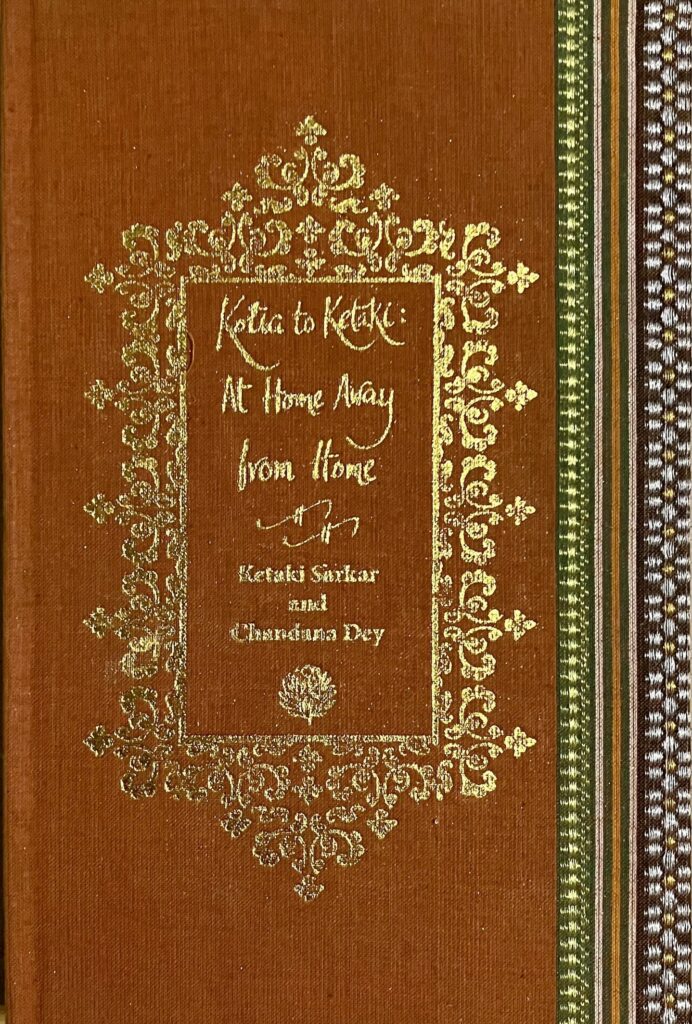
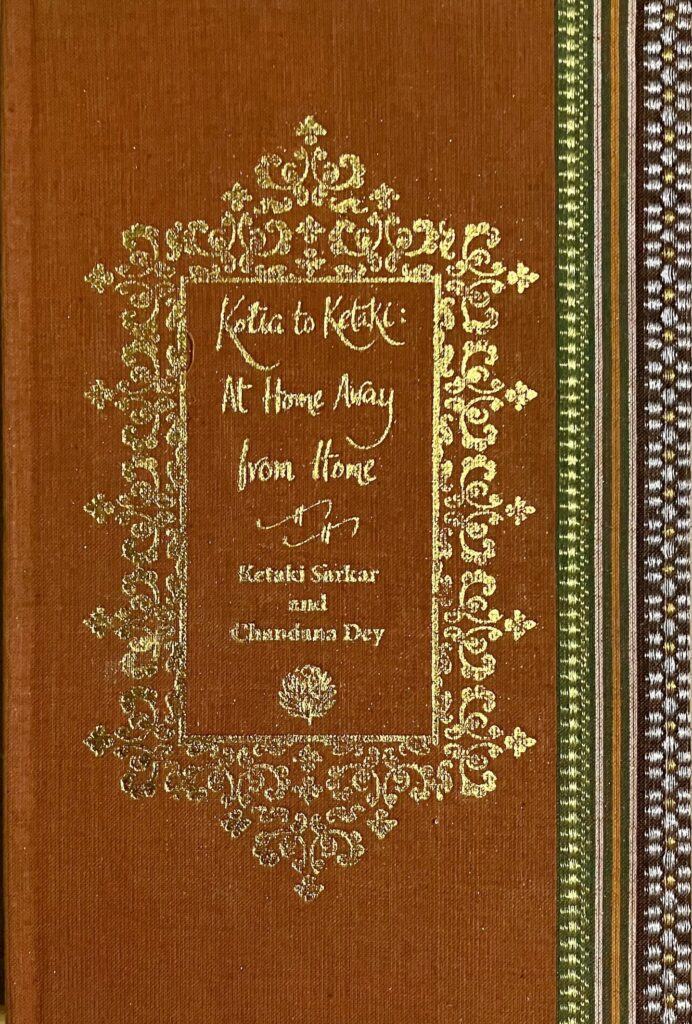
Chandana Dey studied Modern Indian History at the Jawaharlal Nehru University, Delhi and International Affairs at the School of International Studies (SAIS), Washington D.C. She has recently published her Russian/Lithuanian Jewish grandmother’s memoir — Kotia to Ketaki: At Home Away from Home. It is published by Writers Workshop India. In fact, Chandana Dey more or less, co-authored the publication by adding a substantial afterword to the original memoir entitled My Life. Ketaki Sarkar was born Kotia Jonas to a middle-class family in Moscow in 1907. She lived through the Russian Revolution, famine and the civil war. The family moved to Switzerland in 1921. Kotya met her husband, Nitai De Sarkar, a medical student. They married in 1930 and came to India in 1934. Kotia learnt Bengali, always wore a sari and made India her home. On one of their visits to Santiniketan, Rabindranath Tagore bestowed the name, Ketaki, on Kotia Jonas. This is the name she retained for the rest of her life. Ketaki made Santiniketan her home and died at the age of ninety-one. Kotia to Ketaki is a slim book but packed with detail – by both grandmother and granddaughter, stretching across time. Truly worth reading!
Here is the interview conducted with Chandana Dey conducted via email.
When and why did your grandmother, Ketaki Sarkar nee Kotia Jonas write this Memoir? Was it all from memory or did she consult any living relatives at the time?
My grandmother has dated the memoir as 1972. My mother typed the manuscript on her portable typewriter. I would imagine that my Dida got the time for reflection and thought after 1971. She retired from the Alliance Francaise and came to live in Santiniketan, in her home, ‘Akanda’ permanently. Before this, she used to visit Santiniketan only on holidays or occasional weekends. My family members who had heard stories of her childhood in Russia kept urging Dida to write her memoir. I don’t think she consulted any family members, although she was in regular touch with her sister, Tina. When I started the research for the book, no one in the extended family knew that such a document existed. The only people who had read the memoir were people in Santiniketan whom my grandmother was close to — among these were Kshitis Ray, (Teacher of English in Patha Bhavan and Tagore researcher), Rani Chanda (artist and Freedom Fighter) and Uma Das Gupta (foremost scholar of the history of Santiniketan and Sriniketan). Part of the reason for not passing around the Memoir much was partly my grandmother’s own diffidence and the fact that the Jonas family members were not comfortable in English. This discomfort with English also affected many potential readers in Santiniketan in my grandmother’s circle.
The memoir reads swimmingly well for a modern reader, even if a little sparse on the historical details. Did you print it in its entirety or is this an abridged version?
It has recently come to my attention that there may have been an original version of the memoir that was written in French. I have never seen such a document. From the 1970s, family members heard of the memoir and each family member was given a typed copy of My Life. This is the entire text that I was given by my mother. I put it and the photographs my mother gave me in a small black suitcase. I think the genesis of Kotia to Ketaki was in my mind for the past 40 years. However, as all precious things are stored away, so was the black bag! When I went to retrieve the contents, I found the black bag empty. My late aunt came to my rescue. As my cousin and I went through her things, we found the copy of My Life. I immediately scanned the single copy and sent a copy to each living family member.
Unfortunately, the memoir ends in 1946. I think we did not pester my grandmother sufficiently to compel her to write about her remaining life history. It was a fascinating one. She was the sole breadwinner of the family. She worked in multiple jobs and made enough money to send my mother to Europe for her higher studies. She also built three houses. I really regret not recording her life and bringing out a companion volume. I also regret not asking her about the memoir in sufficient detail.
Your grandmother was a Lithuanian Jew who had been born and brought up in Russia before and after the Russian Revolution and in parts in Switzerland and France. Her memoir observes a smoothish transition for her to living in British India, especially in Shantiniketan; to the extent she learned Bengali so as to speak to family members. How did she assimilate in the Bengali Bhadra society? Did she have to forego her Judaism?
My grandmother spoke Bangla fluently. She did not manage to learn the language to be able to read or write in Bangla. But she used to listen to poetry, would attend all the functions in the Ashrama. Both my uncle and mother studied in Patha Bhavan and Bengali was spoken at home. My grandparents, however, spoke in French with each other. Perhaps it was my grandfather’s support that enabled such a smooth transition into Bengali society. The story goes thus: once they were settled in Calcutta, Dadu said to Dida, ‘Come, let me take you somewhere you will feel at home’- and this was Santiniketan — where there were many Bengalis married to foreigners. Besides, Rabindranth Tagore was almost singlehandedly responsible for trying to turn Santiniketan into a cosmopolitan place, while retaining its fundamentally Bengali ethos. Yet, it continues to be a mystery as to how Dida adjusted so well to Dadu’s family — a joint family that was extremely hierarchical and patriarchal. My grandmother’s mother-in-law was known to be a stern figure and extremely harsh with her daughters in law. My grandmother became her favourite daughter-in-law — and was given privileges, unheard of at that time. This remains a mystery to me and to everyone else.
A word on the Judaism is required here: my grandmother never had any Jewish artefacts in her home. Not even a menorah. The first menorah was one that my mother’s Jewish friend presented to her during their stay in the US. Nor did my grandmother ever step into a synagogue. Yet, the idea of Israel was very important to her since she felt that the Jews deserved a homeland after the Holocaust. This was a reason for perpetual strife in the family since my late brother was a vehement supporter of the Palestinian cause. The ‘Russianness’ revealed itself through a love of literature, music, language. She never taught Russian but never forgot the language. It was a great help to me when I started learning languages. I think I chose French and Russian so as to be able to speak to Dida.
Depending on the audience they are addressing, women tend to bifurcate their narratives for private or public consumption. You knew Ketaki Sarkar. Do you think her memoir is true to her personality, the person you knew, or did she skip information in writing that she may have told you verbally.
Interesting question. The memoir was written originally for her children — Maya and Nandan. In fact the memoir is addressed to them. Once written, my uncle and my mother persuaded my grandmother that it should be published. Initially reluctant, my grandmother acceded to their wishes. Dida was always very conscious of the lack of educational foundation in her growing years. She felt that she was self-taught to a large degree. In Santiniketan, she was surrounded by literati. But I think she held her own even in these circles. ‘Kotia Mashi’ was much sought after and she remained close to her friends and their children and grandchildren. Santiniketan is still a very small place where most people know each other. It would be natural therefore for Dida to eschew anything critical about the people she met. When she wrote the memoir, the characters in the narrative were all living. Besides, the memoir is a narrative where she looks back forty years. (She is writing in 1970 about what happened in 1930.). She is taking a look at her previous self.
Why did your grandmother’s family move to Switzerland? Were conditions conducive for a Russian/Lithuanian Jewish family to relocate to the fairly newly established country, Switzerland (established 1874)? Did the internal passport issued by the Lithuanian authorities play a key role or was it linked to the Bolshevik Revolution and the ‘threat of communism’?
My great grandfather, David Jonas, had purchased a piece of land in a place called Richielien, near the Lac Leman. Doctors in Moscow had suggested he go and take rest somewhere and since the family traveled widely, he chose Switzerland. This was around 1912. By 1914, the Swiss doctors gave David a clean bill of health and the family returned to Moscow. After the Russian Revolution, famine and civil war, David was keen to leave Russia. This was only possible because of the internal passport, issued by the Ober-Ost government. A large part of Lithuania was then under German rule. If David had been born in Moscow, it would have been impossible for the family to leave Russia after the Revolution. David’s sister, Sonya, lived in Lithuania. Sonya and her husband, Dr Frumkin, helped David get the Lithuanian passports. During my research, a Lithuanian researcher, Elena Borik, found proof of my grandmother’s family’s passports in the Lithuanian archives. My grandmother has written about the large Russian émigré community in Switzerland at the time the Jonas family lived there.
What was your Bengali grandfather doing in Geneva when he met Ketaki at a student dance before they moved to Orsieres as a married couple? Or to put it another way, was Geneva a regular landing spot for Indian/Bengali students going overseas to study and work?
My grandfather was studying medicine at the University of Geneva. He had first tried his luck in Paris (where there were more Indian students) and then moved to Geneva. He studied French and even wrote his thesis in French. Some Swiss friends located his thesis in the University of Geneva archives. This Swiss degree was not really recognized as a proper degree when my grandfather returned to India. He struggled to land a proper job and did not manage to have a very successful practice either. My grandfather came from the Amrita Bazar family. The family consisted of staunch nationalists. My grandfather did not want to go and study in a colonial setting. He therefore chose France, then Switzerland. There were many Indian students in Britain. This was the most popular choice and there was no need to learn a foreign language here.
Your grandmother and you make references to the Yonas family being related to Eliezer Ben Yehuda (ne Perlman), the founder of the modern Hebrew language. How did you verify your grandmother’s account?
My grandmother spoke often of Eliezer Ben Yehuda. When my parents visited Israel (my father was then in the World Bank, therefore travel was possible), they met Dola BenYehuda, Eliezer’s daughter by his second marriage. (Eliezer Ben Yehuda would marry two of the Jonas sisters, first the eldest Devorah, then the youngest, Pola). Dola presented my mother with a copy of Robert St. John’s book, The Tongue of the Prophets: the Story of Eliezer Ben Yehuda. The Ben Yehuda family considered this the authoritative account of their illustrious forefather. I corroborated the account by delving further into the Ben Yehuda family. The genealogical website revealed a lot of information. I cross-checked this with writing to family members and asking them for more information. I watched films on Eliezer Ben Yehuda and read what he had written. I consulted my friend Dr Brenda McSweeney who taught in Brandeis University and asked her to suggest any colleague who might have worked on the role of women in early nineteenth century Palestine. She suggested the name of Margaret Shilo and I read her work and corresponded with her also. I tried all manner of ways to get information on the Jonas children. The two most interesting remain the most undocumented — Boris and Penina. Of course, the person who wrote the most was Eliezer’s second wife —Pola — who took on the name of Hemda. By all accounts, she had a terrific personality. However, I tried to stay clear of hagiographic accounts as much as possible. It was Hemda who stayed in touch with the entire Jonas clan.
Your afterword is packed with historical context to Ketaki Sarkar’s memoir. Why did you feel the need to write this detailed account? Why did you decide to write a separate section, rather than heavily annotate Ketaki’s text?
My mother tried hard to get the memoir published. Everyone she spoke to said it was too short and could not be a standalone volume. Early on, I thought a short historical background was important to buttress the memoir. While working at the Social Science Press as an editor, I had approached Esha Beteille with the idea of the manuscript. She showed great enthusiasm, as did her daughter, Radha. I wrote a first draft but Radha found that the historical part should be more detailed and Esha di felt that something should be written on my grandmother’s siblings as well. I realized this would mean much more secondary research. Eventually, a chance meeting with Anada and Swati Lal at their iconic home at Lake Gardens allowed me to raise the matter with Ananda. He accepted the manuscript without question. I shortened the text to make it more reader-friendly and budget-friendly. Ananda did meticulous editing and this took time also. I started the research in 2017. My father passed away in 2018. My brother passed away earlier this year. I kept urging my brother to look at the various manuscripts, but he said he would wait to read the final book. This did not happen.
What was your research methodology? When did you realise you had sufficient material to put into this book?
I had thought, originally, of writing a very short background to the memoir. I felt that most people knew about Russia’s history, certainly about the Indian National Movement, the Bengal Renaissance and the genesis of Santiniketan. On rereading the memoir after many years, I just had so many questions on the veracity of my grandmother’s story. Surely my great-grandmother could not have ridden on horseback from Siberia to Moscow? I remember seeing her photographs and hearing stories about her. This was just one example. Another question in my mind and one that caused me sleepless nights was —what exactly were my great-grandparents’ political affiliations? Were they card-carrying Bolsheviks? My grandmother did not mention this anywhere. But I know they supported the Revolution. Were they Anarchists? I did not think so. So I went to consult Prof. Hari Vasudevan and he confirmed every single doubt I had. He gave me solid historical evidence to validate my grandmother’s memoir. Prof. Vasudevan passed away from the first round of Covid, leaving me and countless others bereft. I think that the ‘introduction’ developed into a ‘book’ when I found documentary evidence of the burgeoning Jewish ex-mercantilist, educated bourgeoisie and the wealth of secondary material on the Pale of Settlement, the Haskalah (Jewish religious reform movement) and the extent of education for Jewish girls in Russia. When I read about the Haskalah, I thought I was reading about the Brahmo Samaj and the Bengal Renaissance; when I turned to girls’ schools in Palestine or Russia, my thoughts turned to education for girls and women in nineteenth century Bengal. There were so many commonalities that could not be discounted as coincidence. And oh, the wealth of secondary material in English, French and Bengali! A veritable treasure trove. My one regret was that I had completely forgotten my Russian. As I read more and more, sitting in the India International Centre Library, New Delhi, I realized that there was material for a book, and this would be interesting for readers, if I could tie up the history with the narrative covered in the memoir.
What did it mean to you to delve into this history and discover details about your lineage? More importantly, make visible linkages in global movements of the early twentieth century that would have remained hidden from view, but probably continue to have ramifications today.
Global events such as the terrible treatment of migrants and refugees were the constant backdrop to researching and writing this book. I kept asking myself — were the barriers between countries really insignificant in the early twentieth century? It was indeed possible for my Russian grandmother to meet and marry my Bengali grandfather, live and work in Switzerland, and then come back and live in India. Would this story ever happen today? I have tried meeting and corresponding with Jonas/Frumkin/Ben Yehuda family members. It is astonishing how well we seem to ‘commune’, although I have to say that my fluency in French helps immensely. The global movements you speak of became visible during the research. But I think that more needs to be written on the commonalities of different historical events and movements. We should be linked by our common faith in humanity. I think Rabindranath Tagore thought deeply about so many issues and problems of the twentieth century. His answer was establishing Visva-Bharati — the world in one nest. But we who live and breathe Santiniketan have not been successful in taking his message of peace and brotherhood far enough.
After Ketaki Sarkar had retired (around 1970), her children urged her to write about her life as an archive of family history primarily for her children and grandchildren. She completed her memoir, entitled “My Life” in 1982. In her preface to the book, Ketaki’s granddaughter, Chandana Dey writes:
My Life traces her life from 1907 to 1946, or till just before India’s Independence. This is the story of a Russian woman who lived through the Russian Revolution, famine and the civil war, and whose family first took refuge in Lithuania and then Switzerland. After marriage to my grandfather, she left her family in Europe and made a new life in India. Calcutta [as it was known then] would become home and where she would become a teacher of spoken French in the Alliance Française, while Nitai [her husband] practised medicine. Kotia always wore a sari, spoke Bengali and was completely immersed in her surroundings. Santiniketan would become an integral part of their lives and she would live here in sylvan surroundings in the family home named “Akanda” (the Bengali name of the large shrub Calotropis gigantea) that she built and added to over the years, with her own earnings and savings.
Kotia to Ketaki: At Home Away from Homeis in two parts: the first is Kotia Jonas or Ketaki Sarkar’s memoir, entitled My Life. The second is the historical background. Chandana Dey begins this account in the 1850s and took it up to the Second World War. She became interested in the Jonas family antecedents and found historical material on the Russian-Jewish bourgeoisie of the mid-nineteenth century. Chandana adds, that she “attempted to write a micro-history, taking up particular aspects mentioned in the memoir and expanding on the history of the period. When I first read the memoir, soon after it was written, I felt a historical backdrop was needed for readers to appreciate the life and times of the Jonas and Sarkar families. The photographs in the book are from family archives.”
The extract that has been published on Moneycontrol is taken from Ketaki’s My Life. It is an account of her witnessing the 1917 Russian Revolution and then experiencing the aftermath, the new government, living with the communist principles, including living in a commune.
Ketaki Sarkar was born Kotia Jonas to a middle-class family in Moscow in 1907. She lived through the Russian Revolution, Famine and the Civil War. The family moved to Switzerland in 1921. Kotya met her husband, Nitai De Sarkar, a medical student. They married in 1930 and came to India in 1934. Kotia learnt Bengali, always wore a sari and made India her home. On one of their visits to Santiniketan, Rabindranath Tagore bestowed the name, Ketaki, on Katia Jonas. This is the name she retained for the rest of her life. Ketaki made Santiniketan her home and died at the age of ninety-one.
Chandana Dey studied Modern Indian History at the Jawaharlal Nehru University, Delhi and International Affairs at the School of International Studies (SAIS), Washington D.C. She has worked in an NGO for over 25 years. She lives in Santiniketan, in her grandmother’s home, ‘Akanda’. She speaks Bengali, English and French. This is her first book.
The Dark-Coloured Waters is as much the story of a river as it is of a man shaped by its course.
Danesh Rana has had a profound connection with the Chenab. As a child, it flanked family road trips to Kashmir. In the 1990s, it ran through the newspaper headlines of bloodshed and militancy. And in 2002, it flowed past his police station in Ramban during a tense posting in the heart of conflict. In 2018, on election duty in Himachal Pradesh, Rana arrived at the river’s source – a symbolic homecoming that compelled him to write this book.
Spanning decades and landscapes, The Dark-Coloured Waters traces the Chenab from its mythic origins to the violence-scarred landscape of Jammu and Kashmir. Along the way, Rana blends memoir, travelogue and keen observation to chart the river in all its complexity. Every bend reveals something new – culture and conflict, memory and myth, power and resistance. The Chenab is also a river of diplomacy, enshrined in the Indus Waters Treaty and entangled in the acrimony of India–Pakistan relations. From Bollywood to bloodshed, spiritual quests to statecraft, the Chenab reflects the many Indias that surge along its banks.
This is no linear chronicle, but a riverine journey – restless, reflective and deeply human.
Danesh Rana is an Indian Police Service officer of the AGMUT (Arunachal Pradesh, Goa, Mizoram, and various Union Territories) cadre. He has served for 25 years in different capacities in the three regions of (the erstwhile state of) Jammu and Kashmir. Presently, he is on central deputation with CRPF. His debut novel, Red Maize, won the Tata Literature Live! First book award for fiction in 2015. His second book, a work of non-fiction, As Far as the Saffron Fields: The Pulwama Conspiracy (2022), is a definitive work on the deadly Pulwama blast of 2019.
The Beast Within is the first piece of fiction by Rudraneil Sengupta. It is published by Westland Books. A journalist who is known for his longform writing on sports, crime, human-interest stories. Also, a documentary filmmaker. The Beast Within has an enormous cast of characters, across socio-economic, religion, gender, and castes, based in Delhi. Not necessarily focussed upon South Delhi drawing rooms but the length and breadth of this massive urban space.
Rudraneil Sengupta wrote this book after shadowing various police personnel for a long time. With their permission, he recorded many of their conversations, and later transcribed the tapes. It enabled him to get a technical understanding of the interrogation techniques, the medical procedures such as autopsies, and even dialogues between the police officers while conversing amongst themselves or with various individuals.
This is the book, probably the first of many, but as first books go, it is packed tightly with many incidents that he probably encountered during the course of his reportage. As he writes and creates a series arc with these characters, they will begin to come into their own. Most likely, there will be fewer stories to investigate and the focus will be on one major story and a few minor/peripheral stories that may or may not be played up in later books.
Rudraneil gets the pacing of the story, the plotline, the dialogues, the speech rhythms, the socio-economic context of the origin stories of the characters, and the glimpses into their brutal side very well. His soft corner for sports writing is visible especially in the creation of the former wrestler and now policewoman Meera. There will be more such people in his stories.
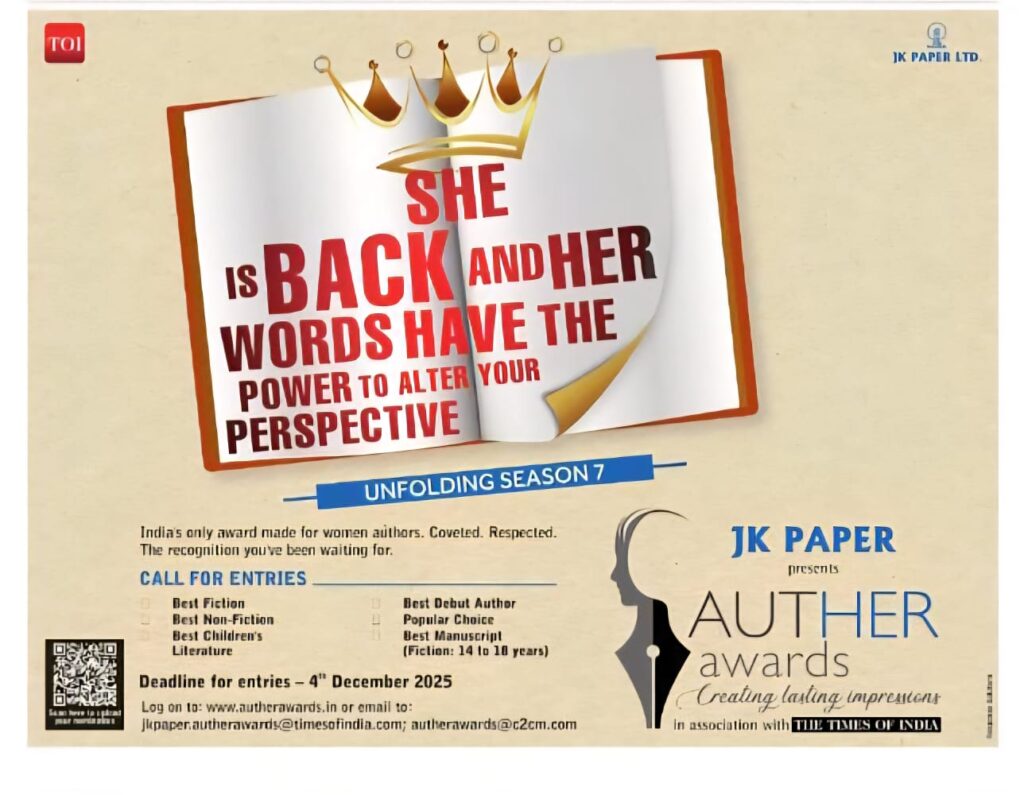
JK Paper and the Times of India proudly present 𝐒𝐞𝐚𝐬𝐨𝐧 𝟕 of India’s most prestigious literary celebration, AutHer Awards, honouring the brilliance, creativity, and powerful voices of women authors who continue to redefine storytelling.
We invite publishers and Indian women authors to submit their works for the prestigious award. Entries are open across six categories:
Sonora Jha is the author of the novels The Laughter and Foreign, and the memoir How to Raise a Feminist Son. She won the AutHer Award for Fiction 2024 for The Laughter. After a career as a journalist covering crime, politics, and culture in India and Singapore, she moved to the United States to earn a PhD in media and public affairs. Sonora and her work have been featured in the New York Times and literary anthologies, on the BBC, and elsewhere. She is a Loyola Endowed Professor at Seattle University and lives in Seattle.
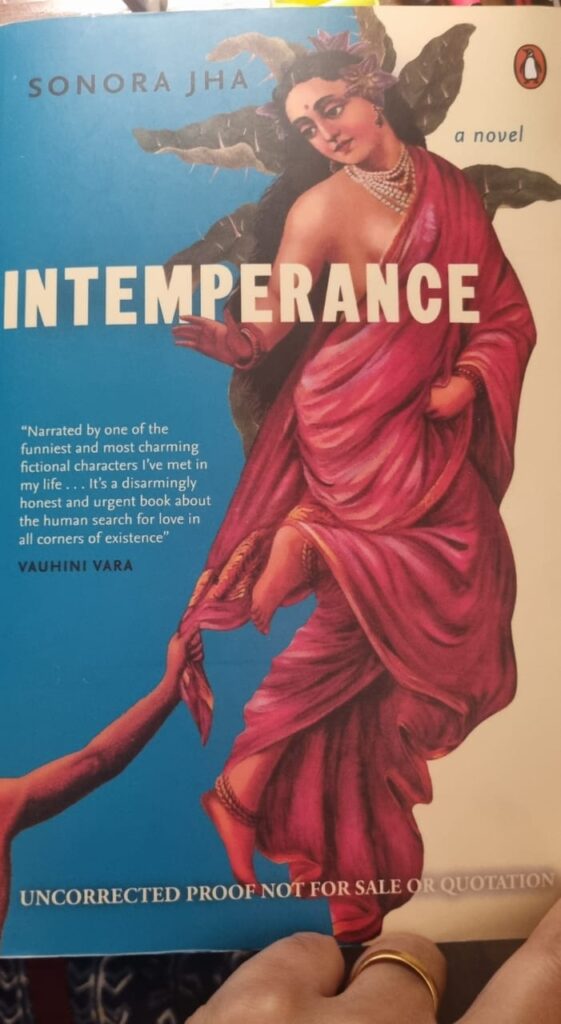
Her latest novel, Intemperance, is a love story. It is about a middle-aged, twice-divorced, Seattle-based professor, who decides to hold a swayamvar for herself as a fifty-fifth birthday celebration. She decides to lean upon her Hindu roots and resurrect a matrimonial tradition that is no longer practiced but remembered. It is an event held by the bride-to-be’s family where prospective male suitors are invited. Either the suitors line up for the bride to view. The person she likes, she garlands as her betrothed. Alternatively, the assembled suitors have to perform a series of tasks to prove themselves. These could be in the form of one challenging task or multiple rounds. The winner gets the hand of the bride.
The woman, a renowned and respected intellectual in an American town who had once declared she was “past such petty matters as love,” knows she is now setting herself up for widespread societal ridicule. To her surprise, a cast of characters shows up to support her call―a wedding planner looking for the next enchanting thing, a disability rights activist making a documentary film, and even, begrudgingly, her own young adult son. The Men’s Rights Movement protests her project, angry at her objectification of men. She must also reckon with a brutal love story in her ancestry that was endangered by the caste system―a story that placed a generational curse on those in the family who show an intemperance of spirit. As her whole plan spirals into a spectacle, the woman embarks on a journey to decide what feat her suitor must perform to be worthy of her wrinkling hand. What feat will define a newer, better masculinity? What feat will it take for her to trust in the tenderness of love?
Intemperance is at once a satirical feminist folktale and a meditation on how we might reach past all sense and still find love. It is published by Penguin Random House India.
The following interview with Sonora Jha was conducted via email.
What was the genesis of Intemperance?
After my last book, The Laughter, which was a dark satire, I found myself longing to write a love story. I started to toy with the idea of a protagonist who plans a swayamvar in middle age, and then I read bell hooks’ brilliant philosophy on love and marriage in Communion: The Female Search for Love. It all came together for me as I crafted a protagonist who makes the search for love a fiendishly playful act.
2. Why did you choose the title Intemperance? Why not How to live like a Feminist: A Memoir and a Manifesto, echoing your book How to Raise a Feminist Son: A Memoir and Manifesto (2021)?
Well, that was a memoir, and this is fiction. And this is not a manifesto either. The word “Intemperance” fit perfectly the practice of living unabashedly as a woman, living past the cautions of moderation and temperance.
3. For a writer, what is the difference between memoir, autofiction and literary fiction?
I believe there’s a bit of one’s own lived experience in every writer’s work, even if the writer is writing fiction from thin air. The norms of memoir dictate, though, that you hew close to fact. With autofiction, you can use your own life as a diving board and make leaps into fiction. This novel of mine is more fiction than autofiction.
4. When does the authorial narrative and the protagonist’s “I” merge, if at all?
It varies for every writer and every work. Kazuo Ishiguro’s The Remains of the Day uses the first-person “I,” but it’s clearly not Ishiguro writing about himself (he’s writing in the first-person voice of Stevens, an English Butler). In my novel, the “I” is the voice of an unnamed narrator, and I let some of my own ideas and interiority swim into hers even though the plot and characters in the story are not from my own life.
5. Transplanting an ancient Hindu wedding practice like a swayamvar into modern times is a way of testing your feminist ideas, is it not? Although conducting a swayamvar is like reality television today.
Yes, I decided to sharpen the concept of the swayamvar from a contemporary lens of power and agency. I decided to play with it. The protagonist encounters goddesses and princesses from Hindu mythology (as well as one character from Homer’s Odyssey) in the form of present-day people who either warn her against having a swayamvar or cheer her on. The book, however, becomes less about the spectacle and more about the journey, both inward and outward.
6. With every edit of the manuscript, does your feminism become stronger and sharper or does it have to be turned down a notch or two so as to be heard by a vast audience?
I didn’t set out to write a “feminist novel.” I set out to write a novel about a woman looking for love. The search for a true and beautiful love for a cis-gender, heterosexual woman today seems to me and several others to require a feminist way of loving, for her as well as for the man she seeks. I believe a vast audience exists for novels about love and novels with feminist stories. Men, women, non-binary people, everyone is aching for love and for fresh love stories with intemperate characters.
7. On p.167 you ask if “reclusiveness is allowed for women”? So, is it?
The protagonist wonders about this. I don’t. I believe healthy doses of solitude and reclusiveness should be everyone’s right to have. I claim these for myself. If more women claim time for themselves, we will have more delicious, richer partnerships.
8. Your novel has the classic structure of a novel and yet it has many elements of folklore and oral narratives with the interspersing of many micro-stories. Although, the presence of Alokendra and Heera’s story is much more than that. Please comment.
Thank you for appreciating that. I wanted to populate the novel with friends, found family, and community. People of all genders and sexuality. Gods and mortals. Sinners and saints. The fearful and the intemperate. I wanted to also show that the protagonist has a tradition in her ancestry where people loved passionately against all rules and against all odds. Placing a queer, inter-caste love story in the litchi orchards of 1895 Bihar gave me much joy as a writer. The protagonist is who she is today because of all the love that came before.
9. A love story involving an elaborate wedding is the perfect formula for a successful book. So how many conversations and backstories did it take to create this incredibly perceptive feminist commentary to the swayamvar, in itself on the threshold of a very patriarchal institution —matrimony?
Subverting the idea of a swayamvar, stealing it away from the patriarchs and their collaborations (kings marrying off their daughters to other kings), making contemporary men in Seattle perform feats for the hand of an aging, twice-divorced women in her sexual prime…all this just spilled out of me. But yes, I am an academic with a journalistic background, so of course I did a lot of research into these practices and also into caste and disability and more. One of the continued conversations that was invaluable to me was with author and journalist Yashica Dutt, who wrote Coming Out as Dalit.
10. Will you ever consider dramatising this for theatre, say along the lines of Eve Ensler’s The Vagina Monologues?
I hadn’t considered that, but that’s a wonderful idea.
This volume marks the fiftieth anniversary of one of the defining moments of Indian history. It examines the Emergency and its aftermath from diverse perspectives – political, historical, legal, economic, philosophical, experiential and cultural, among others. Bringing together leading scholars and writers, it explores how the Emergency transformed Indian polity, and shaped law enforcement and penal practices, the media, student movements, judicial responses, subaltern politics and literary expression, and examines why analysis of the Emergency is still relevant to political discourse in India today.
The extract published on Moneycontrol is from the chapter “Many Meanings of Freedom: The Dandawate Prison Letters” by scholar Gyan Prakash. It is about a set of letters exchanged between the socialist leader Madhu Dandavate (1924–2005) and his wife Pramila Dandavate (1928–2002). 50 Years of the Indian Emergency: Lessons for Democracy is published by Orient Blackswan.
‘. . . a probing and kaleidoscopic reassessment of the origins, . . . the book prompts us to reconsider the multiple dimensions and layers of a compacted historical period and the many frameworks that continue to influence our understanding of it. . . .’ Srinath Raghavan, author of Indira Gandhi and the Years that Transformed India
Peter Ronald deSouza is Senior Research Associate, African Centre for Epistemology and Philosophy of Science (ACEPS), University of Johannesburg, and Trustee of the Institute of Social Studies Trust. He was Director, Indian Institute of Advanced Study (IIAS), Shimla, for two terms (2007–13).
Harsh Sethi worked as Consulting Editor of the monthly Seminar for two decades. Earlier he was with Sage Publications as Acquisitions Editor. He also held positions of Fellow at the Centre for the Study of Developing Societies, and Deputy Director at the Indian Council of Social Science Research.
Music is not only widely discussed but also the most readily available form of art known to mankind. At just the click of a button, one can now listen to any song of any genre – even from the last century! But it wasn’t always this way.
In this brisk, breakneck journey across millennia, award-winning musician and broadcaster Andrew Ford paints a glorious picture to show what really draws us to this sonic art form and how it has evolved. He traces the inventions and reinventions that have contributed to the popularity and accessibility of modern music; early oral forms; the invention of notations; the first recording technology and record companies, and explores how the multibillion-dollar industry we know today came to be.
Andrew Ford’s music has been performed and recorded around the world, played by ensembles such as the Australian Chamber Orchestra, the Brodsky Quartet and the New Juilliard Ensemble, and sung by the likes of Yvonne Kenny, Katie Noonan and Iva Bittová. He presents The Music Show on ABC Radio National and has written ten books ranging from a study of sound in film to the songs of Van Morrison to the compulsion of composers to explore the primitive in their music.
The charity behind two of the world’s most significant literary prizes announces new £50,000 award for children’s fiction supported by AKO Foundation.
The UK’s Children’s Laureate Frank Cottrell-Boyce to be inaugural Chair of judges for 2027
The Children’s Booker Prize winner will be selected by a combined panel of child and adult judges
At least 30,000 copies of the shortlisted and winning books will be gifted to ensure more children can own and read the world’s best fiction
Former Booker Prize and Carnegie Medal-winning author Penelope Lively will give the keynote speech at the Booker Prize 2025 ceremony to celebrate the new prize
Watch the Children’s Booker Prize teaser video here
The Booker Prize Foundation today (Friday, 24 October 2025) announces the Children’s Booker Prize supported by AKO Foundation, the first prize for children’s fiction from the charity that awards the prestigious Booker Prize and International Booker Prize.
The Booker Prizes have rewarded and celebrated world-class talent for over 55 years, helping to shape the canon of 20th and 21st century literature, transforming the careers of writers and building a global community of readers. Today’s announcement marks the first major new prize from the Foundation in two decades, since the launch of the International Booker Prize in 2005.
The Children’s Booker Prize, which will launch in 2026 and be awarded annually from 2027, will celebrate the best contemporary fiction for children aged eight to 12 years old, written in or translated into English and published in the UK and/or Ireland. The aim of the prize is to engage and grow a new generation of readers by recognising and championing the best children’s fiction from writers around the world. Their nominated works will join almost 700 books in the Booker library.
The founding partner and principal funder of the Children’s Booker Prize is AKO Foundation, a grant-giving charitable foundation focused on supporting charities that improve education and the wellbeing of young people, promote the arts, and combat the climate emergency. AKO Foundation has generously committed to supporting the prize for its first three years. The development of the prize over the last three years has been made possible with thanks to donations from a small group of philanthropic supporters.
Gaby Wood, Chief Executive of the Booker Prize Foundation, says:
‘The Children’s Booker Prize is the most ambitious endeavour we’ve embarked on in 20 years – and we hope its impact will resonate for decades to come. It aims to be several things at once: an award that will champion future classics written for children; a social intervention designed to inspire more young people to read; and a seed from which we hope future generations of lifelong readers will grow.
‘In other words, the Children’s Booker Prize is not just a prize – it’s part of a movement: a cause that children, parents, carers, teachers and everyone in the world of storytelling can get behind.
‘We have been laying the groundwork for this prize for the past three years, and in that time we have been buoyed by many fruitful conversations with prospective partners: we could not do this alone. And we absolutely could not have launched it without the generosity of its founding partner and principal funder, AKO Foundation, to whom we are enormously grateful.
‘We’re delighted that Frank Cottrell-Boyce, master storyteller and passionate advocate, will be the inaugural Chair of the judges. And we can’t wait to hear the views of the ultimate judges of the quality of children’s fiction: children themselves.
‘The Booker Prize Foundation exists to inspire more people to read the world’s best fiction – because if you can imagine a different world, you can help to create a better one. The possibility of welcoming young readers into our growing global community is hugely exciting. We hope they discover stories and characters that will keep them company for life.’
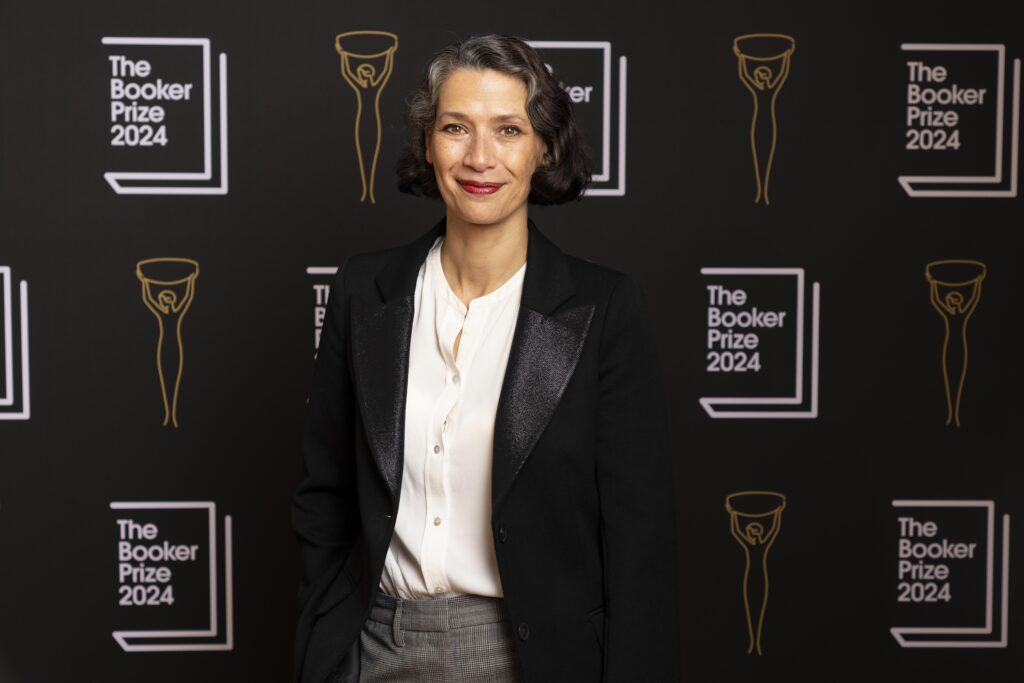
Gaby Wood, Chief Executive of Booker Prize Foundation at the Booker Prize 2024 shortlist announcement at Somerset House’s Portico Rooms, London.
Philip Lawford, Chief Executive Officer, AKO Foundation says:
‘We are very pleased to support the Booker Prize Foundation in launching the Children’s Booker Prize. At AKO Foundation we believe strongly in the importance of nurturing a love of reading from an early age. The evidence linking reading for pleasure to improved educational outcomes and greater social mobility is compelling, and this initiative aligns closely with our priorities as a funder. We are proud to contribute to a project that will inspire and empower young readers.’
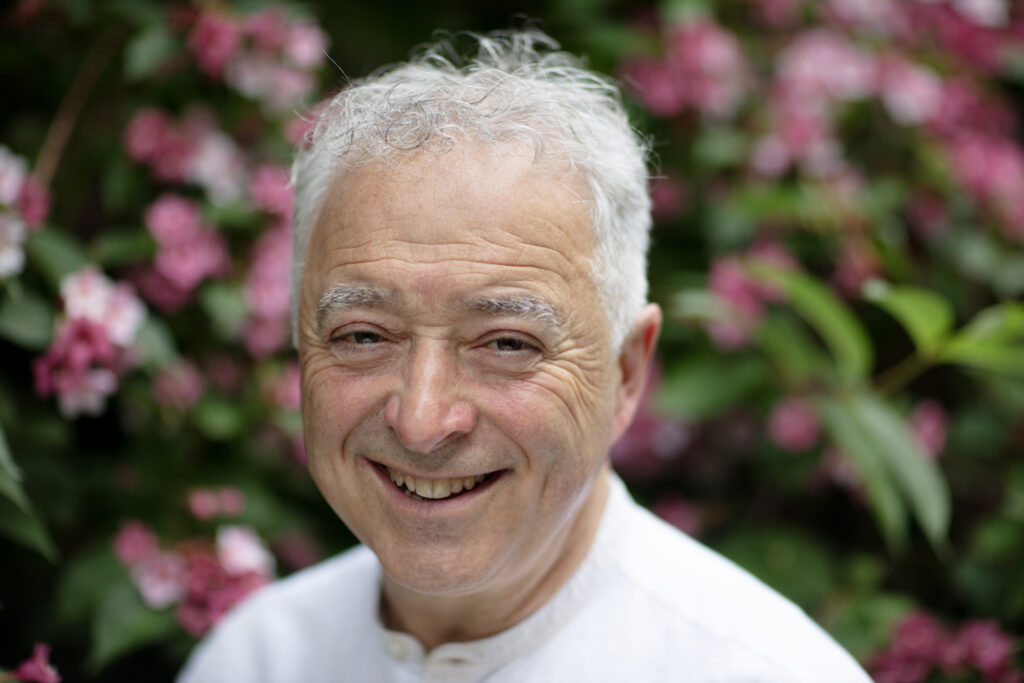
The multi-award-winning children’s book author and screenwriter Frank Cottrell-Boyce, who is the current Waterstones Children’s Laureate, will become the inaugural Chair of judges for the prize. Uniquely, the prize will be judged by a mixed panel of adult and child judges. Cottrell-Boyce and two other adult judges will select a shortlist of eight books. Three child judges will be recruited – with the support of schools and a range of partners across the culture and entertainment industries – to join the adults in choosing the winning book. The process will give children a direct voice in the outcome, ensuring the book is recommended by young readers to their peers.
Frank Cottrell-Boyce, Waterstones Children’s Laureate 2024-2026 and Chair of judges for the Children’s Booker Prize 2027, says:
‘Stories belong to everyone. Every child deserves the chance to experience the happiness that diving into a great book can bring. The Children’s Booker Prize will make it easier for children to find the best that current fiction can offer. To find the book that speaks to them. By inviting them to the judging table and by gifting copies of the nominated books it will bring thousands more children into the wonderful world of reading.
‘I am absolutely buzzing about the news that I’m going to be chairing the judging panel. It’s going to be – as they say – absolute scenes in there. Let the yelling commence.’
To mark the announcement of the Children’s Booker Prize, the Foundation has created a teaser video featuring children reading from a range of Booker Prize-winning classics, which can be watched here. The much-loved author Penelope Lively will give the keynote speech at this year’s Booker Prize ceremony on Monday, 10 November 2025 at Old Billingsgate, London sharing the reasons she thinks that children’s literature should be celebrated by this new prize. Lively is the only recipient of both the Booker Prize (for Moon Tiger, 1987) and the Carnegie Medal for writing, the UK’s longest-running children’s book award (for The Ghost of Thomas Kempe, 1973). Welcoming the announcement of the Children’s Booker Prize, she says: ‘Those who write for children especially need this – and it is needed equally for the children who read the books.’
The inaugural prize will open for submissions from publishers in spring 2026, when the remaining two adult judges will be made public. The shortlist of eight books – and the three child judges – will be announced in late November 2026, with the winner revealed at a high-profile event for young readers in February 2027. The eligibility period for the 2027 prize is 1 November 2025 to 31 October 2026.
Putting children’s books at the centre of our culture
The prize is being launched to inspire more children to discover and read great contemporary fiction and will tackle the challenge in a number of ways.
These include:
consulting with children to inform the ongoing development of the prize
involving children directly in judging so that the winning book is a peer-to-peer recommendation, underpinned by the quality stamp of the Booker Prizes’ rigorous selection process
collaborating with experienced organisations including publishers, schools, libraries, and bookshops
ensuring that more young people have access to the best new children’s fiction through targeted gifting of the shortlisted and winning books, delivered by a range of partners
partnering with brands that children love, creating effective campaigns to engage them outside of traditional book and educational spaces
and tracking trends in children’s reading for pleasure to measure impact and keep the prize relevant.
Delivering the Children’s Booker Prize with partners
The Booker Prize Foundation will be working with publishers and a range of partners, including the National Literary Trust, The Reading Agency, Bookbanks, and the Children’s Book Project to gift and deliver at least 30,000 copies of the shortlisted and winning books each year to children that need them the most.
The Foundation is working with Beano Brain, specialists in kids and youth insight, consulting children on the development of the Children’s Booker Prize, which will include regular co-creation sessions with eight to 12 year-olds. It will also be working with the National Literacy Trust to measure longer term trends in children’s reading.
Industry support for the Children’s Booker Prize
News of the Children’s Booker Prize has been met with enthusiasm from key figures across the books world, including a range of children’s authors and illustrators who have held the position of Waterstones Children’s Laureate, as well as the Publishers Association, the Booksellers Association and Waterstones.
Joseph Coelho, Children’s Laureate 2022-2024, says:
‘I’m incredibly excited by the announcement of the Children’s Booker Prize. This is a brilliant way to invite children into the world of words through a celebration of books, authors and illustrators. I fully welcome a robust prize that celebrates children’s literature in a manner equal to that which adult literature receives and one that makes essential space for the voice of the child.’
‘I am hugely excited about the launch of the Children’s Booker Prize. Children are the toughest critics out there, so literature for children has to be created with the greatest expertise. It has to be exciting, adventurous, funny and wise. And the stakes are the highest they’ve ever been, because children have more competition for their time than ever before: children’s authors and illustrators are fighting for the survival of a medium. Thank you to the Booker for acknowledging that they’re doing this with world-class creativity, and for supporting us all in our quest to get all children reading for enjoyment.’
Chris Riddell, Children’s Laureate 2015-2017, says:
‘It is great news that the prestigious Booker Prizes will honour a children’s book. The books we read as children stay with us and shape our future tastes in literature. It is exciting that the Children’s Booker Prize will consider the children’s books it chooses holistically – not only for the excellence of their prose and storytelling but the beauty of their design and illustration.’
‘The Children’s Booker Prize is a timely and very welcome addition to the children’s book world. Fundamental to the appeal of the prize is the fact that children are integral to the judging process. Children are an honest, discerning audience who deserve the very best stories and this award will highlight and celebrate the literary excellence to which they are entitled.’
‘It’s a marvellous idea to have a Children’s Booker Prize. Now, more than ever, children’s books need a huge boost. It’s so dismaying that only 30% of today’s children enjoy reading for pleasure – and yet there are so many exciting and enjoyable children’s books out there, many sinking without trace. I think a Children’s Booker Prize, like the Booker Prizes for adult fiction, will become a talking point, signposting more children, parents, carers and teachers to the best new children’s literature. The prize will also be a level playing ground, so that new sparkling talented writers will have the same chance of winning the sizeable prize as well as long-established authors. Three cheers for such an exciting project!’
Michael Morpurgo, Children’s Laureate 2003-2005, says:
‘A Booker for children! Great news for children and books! And it comes at a moment when there is much anxiety about the enjoyment of reading amongst our young. A Booker Prize for children will stimulate interest and excitement in books amongst children and amongst grownup children too, shining a light on great writing for children, and crucially, bringing more children to a love of reading, which is such a critical pathway to knowledge and understanding. A truly welcome innovation for all of us, young and old alike. Bravo the Booker!’
Anne Fine, Children’s Laureate 2001-2003, says:
‘When it comes to book prizes we all say, The More The Merrier, and especially when it comes to writing for children, which has all too often been the overlooked Cinderella of the book world.’
Bea Carvalho, Head of Books at Waterstones, says:
‘The Booker Prizes provide us with two of the most prestigious and impactful moments in the bookselling calendar, reliably creating bestsellers and setting the literary tone for the year ahead. At a time when children’s reading for pleasure is so vital, when we should all be doing everything we can to help spark and maintain a love of books amongst the younger population, it is a huge joy that the Booker Prizes are adding a prize for young readers to their roster. Children’s authors deserve to be celebrated and this prize will be a gamechanger for any writers who are elevated by its shortlists. Everyone at Waterstones will look forward to championing the Children’s Booker Prize, and to working closely with the Booker Prize Foundation on reaching young readers everywhere.’
Fleur Sinclair, President of the Booksellers Association for the UK & Ireland and owner of Sevenoaks Bookshop, says:
‘I’m 100% here for anything that shines a light on the joy, wonder and delight of children’s books! We all have nostalgic favourites from our own childhoods, but I’m especially delighted to have a brilliant new platform for children’s authors writing right now, and their newly published books. The Booker Prize has a long legacy of championing noteworthy books for adult readers, so I’m excited to see whole families, the older members and soon the young as well, coming together to read and celebrate great new books uplifted by the Booker Prize spotlight.’
Dan Conway, CEO of the Publishers Association, says:
‘The decline in children’s reading for enjoyment is a tragedy and we should all be doing our best to turn that trend around. Going into the National Year of Reading in 2026, it is so important that authors, publishers, booksellers, prizes, reading charities and all those invested in solving this societal issue support and reinforce each other for the greatest impact possible. The fact that the Booker has stepped up to the plate with the launch of the Children’s Booker Prize is hugely exciting. A high-profile award for children’s fiction is a great opportunity to showcase some of the brilliant books available for children and it could not be launching at a more important time.’
The impact of the existing Booker Prizes
The Booker Prize, first awarded in 1969, is the leading literary award in the English-speaking world, and has brought recognition, reward and readership to outstanding fiction for over five decades.
The 2024 winner Orbital by Samantha Harvey sold over 20,000 print copies in the UK in the week following its win on 12 November 2024, making it the fastest selling winner of the Booker Prize since records began. It was the bestselling title in the UK that week, topping the Audible audio and Amazon physical and eBook charts. Sales through Waterstones were more than double the volume of each of the last decade’s winners, up 3,000% the day after the announcement.
The UK publisher of Orbital, Vintage, reprinted 250,000 copies in response to the sales demand following its Booker Prize win and it remained top of the mass market fiction chart for eight consecutive weeks. Total sales of Vintage’s edition of Orbital across all formats and including its export markets and exclusive territories (South Africa, Australia, New Zealand and India) are now almost 750,000. That includes 357,000 copies of the hardback and paperback editions sold in the UK, up 3,867% since the book’s longlisting. Translation rights deals increased from eight before Orbital’s longlisting to a current total of 44 territories.
The International Booker Prize, the world’s most influential award for translated fiction, continues to build in global importance each year. The winners can expect a worldwide readership and a significant increase in profile and sales, including in the author’s home country.
The announcement of the 2025 winner, Heart Lamp, written by Banu Mushtaq and translated by Deepa Bhasthi – the first collection of short stories to win the prize and the first translated from Kannada – was reported in over 1,826 news stories across 60 countries around the world in the week after its win and the winners’ speech had over 26 million views online. The book rapidly sold out in the UK in the subsequent days, with the UK publisher And Other Stories immediately reprinting 40,000 copies.
According to And Other Stories, sales of the paperback have increased by 351% since it won the International Booker Prize 2025. Prior to the winner announcement in May 2025, it had sold 5,100 copies in the UK; since, it has sold over 23,000 copies. Prior to its longlisting, translation rights to Heart Lamp had been sold in eight languages, including seven Indian subcontinent languages with a further two English rights sales (in addition to the UK, US and India); that has now increased to an additional 13 languages, including five new Indian subcontinent languages.
The prize has helped to drive a boom in translated fiction in the UK: according to the Bookseller, sales have doubled since the International Booker Prize launched in its current form nine years ago, with ‘roughly £1 in every £8 spent through NielsenIQ BookScan’s Fiction category over the past year … on a translated title’. This is largely down to younger readers, with almost half of translated fiction in the UK bought by under-35s. The prize’s influence also extends to other awards, with five authors – Han Kang, Jon Fosse, Annie Ernaux, Olga Tokarczuk, and László Krasznahorkai – recognised by the International Booker Prize going on to win the Nobel Prize in Literature.
Nominated works for the Children’s Booker Prize could also enter into a tradition of Booker Prizes adaptations. More than 74 books that have been longlisted or shortlisted for the Booker or International Booker Prize have been adapted for the big or small screen over the years, with several going on to win Oscars, BAFTAS and Emmys. They range from The Remains of the Day to Atonement, Normal People to The Handmaid’s Tale, Wolf Hall to Life of Pi, True History of the Kelly Gang to The Line of Beauty, The Underground Railroad to Small Things Like These, Hurricane Season to Elena Knows, and in the last year, The Narrow Road to the Deep North, Harvest, and Hot Milk.
Frank Cottrell-Boyce is a multi award-winning author, screenwriter and the Waterstones Children’s Laureate 2024-2026 (managed by BookTrust). Millions, his debut children’s novel, won the prestigious Carnegie Medal. His other books include Cosmic, Runaway Robot, The Wonder Brothers and many more which have been shortlisted for a multitude of prizes. Frank is also a highly successful screenwriter and along with Danny Boyle, he devised the Opening Ceremony for the London 2012 Olympics. Frank is a lifelong champion of children’s books. In 2023 he launched a successful podcast with Nadia Shireen, The Island of Brilliant!, celebrating writing and illustration for children of all ages.
The Booker Prizes exist to celebrate the world’s best fiction. The symmetrical relationship between the Booker Prize and the International Booker Prize ensures that the Booker honours fiction on a global basis: outstanding fiction is highlighted by the prizes for English-speaking readers, whether that work was originally written in English (the Booker Prize) or translated into English (the International Booker Prize). The addition of the Children’s Booker Prize, supported by AKO Foundation, which recognises the world’s best fiction for children – both originally written in English and translated into English – means that readers can now see the Booker Prizes as a partner for life.
AKO Foundation, based in London, was established in 2013 by Nicolai Tangen, a native Norwegian who had previously founded AKO Capital, an investment business. The Foundation makes charitable grants towards causes which improve education, promote the arts, and combat climate change.
The Booker Prize is the world’s most significant award for a single work of fiction. This year’s judges are chaired by critically acclaimed writer and 1993 Booker Prize winner Roddy Doyle. Doyle, who is the first Booker Prize winner to chair a Booker judging panel, is joined by Booker Prize-longlisted novelist Ayọ̀bámi Adébáyọ̀; award-winning actor, producer and publisher Sarah Jessica Parker; writer, broadcaster and literary critic Chris Power; and New York Times bestselling and Booker Prize-longlisted author Kiley Reid. They are looking for the best work of long-form fiction by writers of any nationality, written in English and published in the UK and/or Ireland between 1 October 2024 and 30 September 2025. Find out about the Booker Prize 2025 shortlist at the thebookerprizes.comhere.
The International Booker Prize began life in 2005 as a biennial prize in recognition of an author’s overall contribution to world literature, with no stipulation that their body of work should be written in a language other than English. The winners of the prize in this format were Ismail Kadare, Chinua Achebe, Alice Munro, Philip Roth, Lydia Davis and László Krasznahorkai.
In 2015, after the rules of the original Booker Prize expanded to allow writers of any nationality to enter – as long as their books were written in English and published in the UK and/or Ireland – the International Booker Prize evolved to become the mirror image of the English-language prize. Since then, it has been awarded annually for a work of fiction, written in another language and translated into English. Winning author and translators have included Han Kang and Deborah Smith, Olga Tokarczuk and Jennifer Croft, and David Diop and Anna Moschovakis, among many others. The shortlist also brings great acclaim and global recognition to authors, often serving as a talent pool for lifetime achievement awards. The past four winners of the Nobel Prize in Literature were recognised by the International Booker Prize first.
The judges for the International Booker Prize 2026 are chaired by critically acclaimed Booker Prize 2025 longlisted-author Natasha Brown, one of Granta’sBest of Young British Novelists. Brown is joined on the judging panel by: writer, broadcaster and Oxford University Professor of Mathematics and for the Public Understanding of Science Marcus du Sautoy; International Booker Prize-shortlisted translator Sophie Hughes; writer, Lolwe editor and bookshop owner Troy Onyango; and award-winning novelist and columnist Nilanjana S. Roy.
This year’s judges are looking for the best works of long-form fiction or collections of short stories translated into English and published in the UK and/or Ireland between 1 May 2025 and 30 April 2026. A longlist of 12 or 13 books will be announced on Tuesday, 24 February 2026, with a shortlist of six books to follow on Tuesday, 31 March 2026. The winning book will be announced at a ceremony in May 2026.
Since 2020, the Booker Prizes has undergone a digital transformation, building an in-house digital team and developing a strategy to expand the reach and appeal of the prizes far beyond traditional audiences, and create a wealth of content optimised for social media.
The website, thebookerprizes.com – supported by Instagram, TikTok, Facebook and Bluesky accounts, as well as a YouTube channel and a Substack newsletter – is a unique online space which showcases the almost-700 exceptional books that have won – or been longlisted or shortlisted for – the Booker Prize and International Booker Prize. The website aims to be an entertaining and illuminating content destination that combines practical information about the prizes past and present with fresh and original features to bring the books and their authors to life, including an ongoing Monthly Spotlight series, encouraging readers new and old to visit and revisit titles in the ‘Booker Library’. The website’s average monthly active users have risen by 310% since 2022.
Since 2020, the total number of social followers across all Booker Prizes platforms has risen by 571%, with annual social video views increasing by over 23,000% over the same period. Newsletter subscribers have risen by 1,320% since 2020.
The Booker Prize Book Club is a dedicated online community with over 28,000 members from all over the world, who come together to find out more about and discuss the year’s nominated titles, as well as the almost 700 titles in the Booker Library.
The Booker Prize Foundation is a registered charity (no 1090049) established in 2002. Its purpose is to inspire people to read the world’s best fiction, driven by a simple belief – that great fiction not only brings joy to millions, it has the power to change the way we think about the world. It is responsible for awarding the Booker Prize and the International Booker Prize. Other aspects of the Foundation’s work include the funding of Braille and audio editions of Booker Prize books through the RNIB, the annual UEA Booker Prize Foundation Scholarship, PEN Presents x the International Booker Prize, which supports and funds translators from the Global Majority, and Books Unlocked, a long-standing reading initiative in prisons. In 2023, the award-winning singer-songwriter Dua Lipa visited HMP Downview to join a Books Unlocked reading group.
Crankstart, a charitable foundation, is the exclusive funder of the Booker Prize and the International Booker Prize.
Booker Group Ltd, which sponsored the prize from 1969 to 2001, is the UK’s leading food and drink wholesaler. The Booker Prizes license their name from Booker Ltd, and Helen Williams, a representative from Booker, sits on the Advisory Committee.