Non-fiction Posts

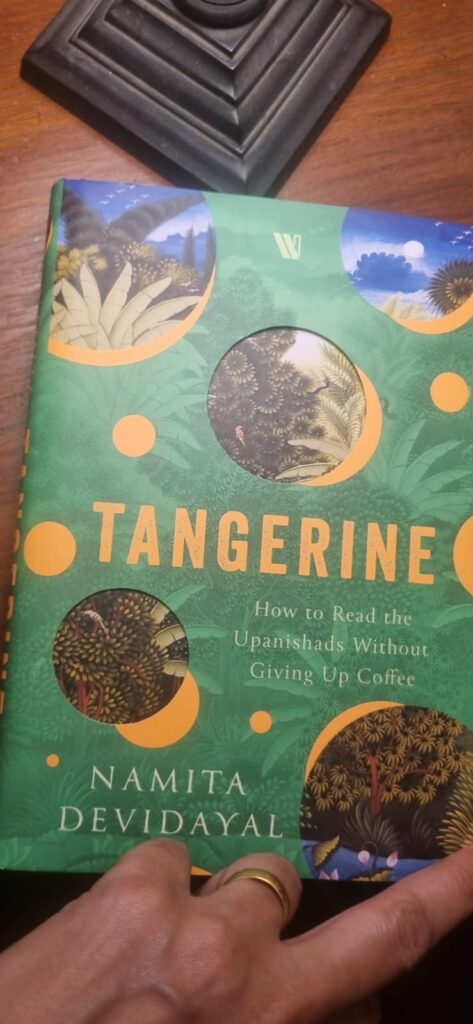
“Tangerine: How to Read the Upanishads Without Giving Up Coffee” by Namita Devidayal

p.21-22 I remember that moment when my constructed, conditioned versions of ‘self’ started dissolving, the disguises started peeling off.

It was the last morning of the retreat, which also happened to be my forty0seventh birthday. The previous evening, I had been sitting on a bench facing the river and the hill on the other side of it. I could see the cave where George Harrison had once hung out with Maharishi Mahesh Yogi. A quiet mist ascended from the water and I felt my eyes tearing. It may have been from sadness or joy, or both, or neither. The aquamarine water and the emerald green hill in the distance turned into Impressionist art in my blurred vision. I blinked a few time and saw a speck of tangerine in the distance. As it came closer, the object morphed into a monk.

Then, the bells started to chime. First one, and then many, in symphonic unison, little and big bells that hung at the entrances of temples all around, until they reached a crescendo, distant but also simultaneously vibrating within me.

I remembered what a qawwali singer at Ajmer Sharif had once told me: Music is always an offering in temples and churches and mausoleums.

‘This is why you find a bell at the entrance in places of worship. And this is why we sing in the dargah or in the gurudwara,’ he said, pausing to engage with his spittoon. ‘Even when a dacoit is about to attack someone, and he hears a temple bell, he will involuntarily stop in his tracks, even if only for a moment. This is kachcha jadoo, primordial magic.’ And back he went to his music, belting out more boisterous Allahoos.

It felt like I was in a timeless space. I could have been sitting there centuries ago, or at some point in the future. It didn’t really matter. Our version of the ‘self’ are all clay, mutable, and therefore capable of what psychologists call neuroplasticity: the human being’s inherent potential to transform into anything they wish to be. A rogue bandit can become a saint; a warrior king could become a Buddhist monk.

p. 75 Before women had access to therapy, they often turned to religion and gurus to help them navigate difficult families. My ma-in-law Hardevi battled the trauma of early widowhood and overbearing patriarchy by turning to god. But rather than sitting passively in front of a statue, she found her way to the non-ritualistic altar of Vedanta philosophy. she studied the Bhagvad Gita and translated it into Sindhi, patiently writing in the Arabic script, for she had attended school in pre-Partition Karachi.

Senior journalist and musician Namita Devidayal’s latest book, Tangerine: How to Read the Upanishads Without Giving Up Coffee is a memoir about her finding peace and tranquility and shedding unnecessary baggage. In short, it is the the self-help book that she avoids reading but wrote one herself. Honestly speaking, it is much more. It is deliciousness poured into words with generous sprinkling of wisdom and the elegant manner in which she straddles cultures while writing is superb. She makes visible that many of prefer to keep hidden. A sense of familiarity and ease to be who we are in this modern age. We live, borrow, and breathe many experiences — call them faith, call them culture, call them whatever you will — but many individuals prefer to either shush about different aspects of their life or not acknowledge it all. Spiritual sustenance being a very key part of Namita’s existence and that she does not shy away from discussing. It does create some awkward moments for her in social gatherings or even with her son when she wants to pursue her readings of the Upanishads and has many questions to ask, but given the times that we live in, people misinterpret her genuine queries and think that she has crossed over to the other side and is being irrational. She is not. She is interested. She wants to know. Hence, this book. It does not matter if you are an atheist or a believer, it is a book that you will devour and not forget in a hurry.

Tangerine is published by Westland Books. The exquisitely designedcover, with its peekaboo circles in the dust jacket highlighting the moonlit night sky and plenty of green vegetation has been designed by Saurabh Garge.

I interviewed Namita for TOI Bookmark. Here is the Spotify link:
19 Oct 2025
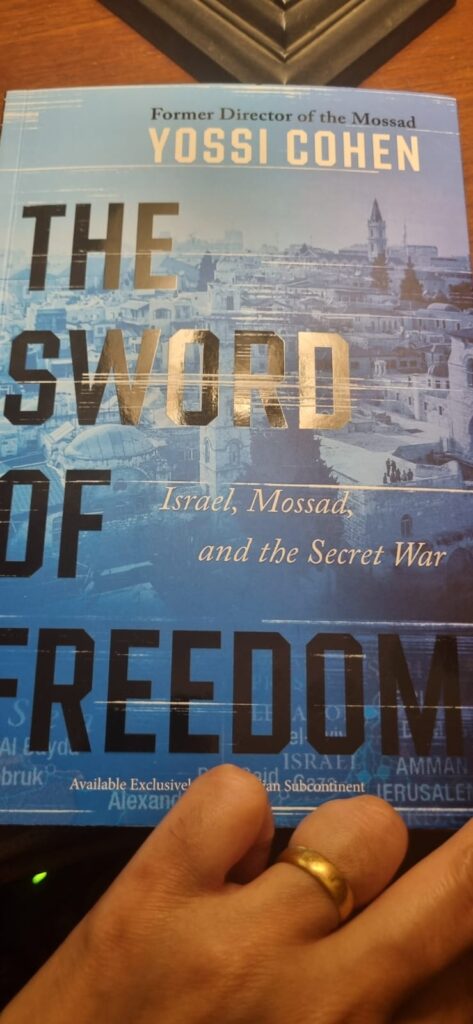
“The Sword of Freedom : Israel, Mossad, and the Secret War” by Yossi Cohen

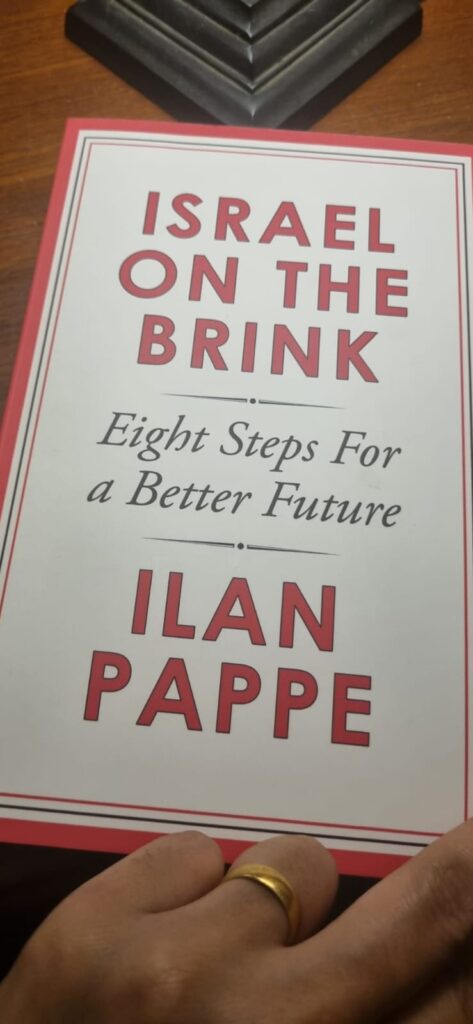
Book post that I received from the publisher. Interestingly enough, it came along with Israel on the Brink : Eight Steps for a Better Future by Ilan Pappe. Both the books (published by HarperCollins India) are filled with details about Israel and Palestine. It is challenging for a lay reader to make sense of it beyond gleaning what lies on the surface. Dialogue is urgently required. If books can help achieve it, then why not? Perhaps each side will pick up books about the opposite side and read it in quiet and come to their own conclusions. Hopefully, constructive dialogue rather than othering will be the positive impact.

Book blurb

This book unveils the clandestine strategies that have enabled Israel to not just survive but flourish since its founding in 1949, despite being surrounded and attacked by deadly adversaries. The Sword of Freedom is an eye-opening insider’s look into Israel’s transformation from a beleaguered nation to a formidable presence on the global stage.

Israel’s prosperity is rooted in smart strategies, carefully chosen alliances, and a society-wide understanding that there is no Plan B for the Jewish people. “It’s the job of the Israeli defense establishment to do whatever it can to put off the next war for as long as possible,” the author explains, “including using covert means.” Drawing from his vast experience in intelligence and national security, the author chronicles how Israel has consistently turned adversity into opportunity, brilliantly leveraging limited resources to maximum effect, using a range of strategies including:

Questioning all information from all sources.

Yossi Cohen served as the director of the Mossad from 2016 until 2021. As director, he personally orchestrated some of the Mossad’s most daring operations, such as the seizure of the Iranian nuclear archives—the exposure of which was among the main factors behind the United States’ withdrawal from the Iran nuclear deal—and clandestine activity all over the world. In 2020, Cohen led the negotiations between Israel and the UAE and Bahrain. His unique work with these countries, and the important connections he forged with them, played an important role in the signing of the groundbreaking Abraham Accords. He is now the head of SoftBank Investment Advisers in Israel. Cohen and his wife, Aya, live in Israel, and are blessed with four children and eight grandchildren.

19 Oct 2025

“Israel on the Brink : Eight Steps for a Better Future” by Ilan Pappe

Book post that I received from the publisher. Interestingly enough, it came along with Yossi Cohen’s The Sword of Freedom. Both the books (published by HarperCollins India) are filled with details about Israel and Palestine. It is challenging for a lay reader to make sense of it beyond gleaning what lies on the surface. Dialogue is urgently required. If books can help achieve it, then why not? Perhaps each side will pick up books about the opposite side and read it in quiet and come to their own conclusions. Hopefully, constructive dialogue rather than othering will be the positive impact.

Book blurb

Israel can’t go on like this.

7 October and Israel’s subsequent invasion of Gaza laid bare the cracks in its foundations. It was unveiled as a country unable to protect its citizens, divided between messianic theocrats and selective liberals, resented by its neighbours and losing the support of Jews worldwide. While its leaders justify bombing campaigns exceeding the worst atrocities of World War 2 and a spiralling humanitarian catastrophe in the Gaza Strip, Israel is becoming a pariah state. Its worst enemy is not Hamas, but itself.

Ilan Pappe paves a path out of the Jewish state, rooted in restorative justice and decolonisation, including the return of refugees, the end of illegal settlements, and building bridges with the Arab world. The future can be one of reconciliation, not endless war.

Ilan Pappe is Professor of History at the Institute of Arab and Islamic Studies and Director of the European Centre for Palestine Studies at the University of Exeter. He is the author of over a dozen books, including the bestselling The Ethnic Cleansing of Palestine and Lobbying for Zionism on Both Sides of the Atlantic. In 2017, he received the Middle East Monitor’s Lifetime Achievement Award at the Palestine Book Awards.

19 Oct 2025

“Is a River Alive?” by Robert Macfarlane

From celebrated nature writer and academic Robert Macfarlane comes this brilliant, perspective-shifting new book – which answers a resounding yes to the question of its title.

At its heart is a single, transformative idea: that rivers are not mere matter for human use, but living beings – who should be recognized as such in both imagination and law. Is a River Alive? takes the reader on an exhilarating exploration of the past, present and futures of this ancient, urgent concept. It is published by Penguin India.

The book flows first to northern Ecuador, where a miraculous cloud-forest and its rivers are threatened by goldmining.

Then, to the wounded rivers, creeks and lagoons of southern India, where a desperate battle to save the lives of these waterbodies is under way.

And finally, to north-eastern Quebec, where a spectacular wild river – the Mutehekau or Magpie – is being defended from death by damming in a river-rights campaign.

At once Macfarlane’s most personal and most political book to date, Is a River Alive? will open hearts, spark debates and lead us to the revelation that our fate flows with that of rivers – and always has.

Is A River Alive? is a beautifully written, poetic testament to the vitality of the Earth and the forms of politics that can be based upon that premise — Amitav Ghosh

A rich and visionary work of immense beauty. Macfarlane is a memory keeper. What is broken in our societies, he mends with words. Rarely does a book hold such power, passion, and poetry in its exploration of nature. Read this to feel inspired, moved, and ultimately, alive — Elif Shafak

This book is a beautiful, wild exploration of an ancient idea: that rivers are living participants in a living world. Robert Macfarlane’s astonishing telling of the lives of three rivers reveals how these vital flow forms have the power not only to shape and reshape the planet, but also our thoughts, feelings, and worldviews. Is a River Alive? is a breathtaking work that speaks powerfully to this moment of crisis and transformation — Merlin Sheldrake

This book is itself a river of poetic prose, an invitation to get onboard and float through the rapids of encounters with places and people, the eddies of ideas, to navigate the resurgence of Indigenous worldviews through three extraordinary journeys recounted with a vividness that lifts readers out of themselves and into these waterscapes. Read it for pleasure, read it for illumination, read it for confirmation that our world is changing in wonderful as well as terrible ways — Rebecca Solnit

Robert Macfarlane is a once-in-a-generation virtuoso, and I don’t know when his kaleidoscopic language and world-expanding scholarship have been used to more potent effect than in this impassioned, resounding affirmative to the title’s urgent question — John Vaillant

Is a River Alive? is one of the best books I’ve read in a very long time―exciting, brilliantly comprehensive, mind-altering. In one of its many stunning moments, Macfarlane describes the myriad rivers trapped and buried under the concrete of our cities. “Daylighting” occurs on those rare occasions when these ghost-rivers are dug out & released to the surface to feel the sun, to expand―majestic creatures―and spread life once again. To read this book is to feel your ghosted soul undergo such “daylighting”―metaphysical, political, emotional, linguistic. Any soul going dormant, any citizen going numb, will be revivified and propelled back to their essential core, where rage, wonder, and imagination intertwine, and a powerful hope for the earth arises. A spellbinding, life-changing work — Jorie Graham

Read an extract from the book on Moneycontrol.

Robert Macfarlane is internationally renowned for his writing on nature, people and place. His bestselling books include UnderlandLandmarksThe Old WaysThe Wild Places and Mountains of the Mind, as well as a book-length prose-poem, Ness. His work has been translated into more than thirty languages, won prizes around the world, and been widely adapted for film, music, theatre, radio and dance. He has also written operas, plays, and films including River and Mountain, both narrated by Willem Dafoe. He has collaborated closely with artists including Olafur Eliasson and Stanley Donwood, and with the artist Jackie Morris he co-created the internationally bestselling books of nature-poetry and art, The Lost Words and The Lost Spells. As a lyricist and performer, he has written albums and songs with musicians including Cosmo Sheldrake, Karine Polwart and Johnny Flynn, with whom he has released two albums, Lost In The Cedar Wood (2021) and The Moon Also Rises (2023). In 2017, the American Academy of Arts and Letters awarded him the E.M. Forster Prize for Literature, and in 2022 in Toronto he was the inaugural winner of the Weston International Award for a body of work in the field of non-fiction. The latter is worth CA $75,000. He is a Fellow of Emmanuel College, Cambridge, and is currently completing his third book with Jackie Morris: The Lost Birds.

17 Oct 2025

“Running behind Lakshmi: The Search for Wealth in India’s Stock Market” by Adil Rustomjee

From banyan trees to electronic screens – the authoritative account of India’s stock market over two centuries. For millions of people, the stock market is the canvas on which are sketched fantasies of riches, of lives transformed. Yet, the history and methods of one of modern India’s most transformative forces remain underexplored till now.

Starting from the early nineteenth century, when a few banias traded shares under banyan trees, to the Cotton and Share Mania occasioned by the American Civil War, to the decades of marking time during the Nehruvian Era, to 1991’s great unshackling that made the market accessible to the public, all the way to the market cycles of the new millennium, Running behind Lakshmi brings India’s stock market into focus. It has been published by John Murray / Hachette India.

By combining archival sources with observations and expertise forged through immersion in the markets, Adil Rustomjee provides a wide-ranging account that is equal parts analytical history, financial practice, and market lore. Brimming with pioneers and adventurers, grand rivalries and petty jealousies, scams and scandals, this is the story of a nation and a people told through a lens that’s never been used, but is more relevant than ever.

Read an extract from the book on Moneycontrol.

After a career in international development and markets, Adil Rustomjee discovered his life’s work as a chronicler of India’s stock markets. The idea for the book came when he stumbled upon the BSE archives during the time he had an office in the exchange’s building. These nuggets of history were just lying around, but a substantial account had yet to be written about an equity market that was over two centuries old.

17 Oct 2025

“In Those Days There Was No Coffee” by A.R. Venkatachalapathy

Since it was first published in 2006, this beloved volume of essays by A. R. Venkatachalapathy on the cultural history of colonial Tamilnadu has been enjoyed equally by scholars looking for rigorous history-writing and lay informed readers in search of a classic good read. The new expanded edition hopes to do more of the same.

The author draws from sources as varied as poetry, fiction, essays, reviews, comments, advertisements, and notices to bring to life a rich and vibrant cultural history. As authoritative as they are captivating, the ten essays in the volume represent a valuable addition to the small corpus of history titles which also qualify as accomplished writing.

Read an extract from the book on Moneycontrol. It is published by Yoda Press/ Simon & Schuster India.

A.R. Venkatachalapathy, historian and Tamil writer, is a Professor at the Madras Institute of Development Studies, Chennai. He has taught at universities in Tirunelveli, Chennai, Singapore, and Chicago. A recipient of the V.K.R.V. Rao Prize, the Mahakavi Bharati Award, and the Ramnath Goenka Award he has also received the Vilakku Pudumaippithan Award and Iyal Virudhu, both for lifetime contribution to Tamil. In 2024, he won the Sahitya Akademi award for Tamil. Venkatachalapathy has written/edited over thirty books in Tamil. His publications in English include Swadeshi Steam: V.O. Chidambaram Pillai and the Battle Against the British Maritime Empire (winner of the Ramnath Goenka Award for Excellence non-fiction, 2024); The Brief History of a Very Big Book: The Making of the Tamil Encyclopaedia; Tamil Characters: Personalities, Politics, Culture; Who Owns That Song?: The Battle for Subramania Bharati’s Copyright; and The Province of the Book: Scholars, Scribes, and Scribblers in Colonial Tamil Nadu.

15 Oct 2025

“The Health and Wealth Paradox : How to Use First Principles Thinking to Achieve Both” by Ankush Datar and Mihir Patki

In The Health and Wealth Paradox, Ankush Datar and Mihir Patki present a set of principles. These principles of health and wealth are known already to everyone but the emphasis that the authors place on them being so intertwined with each other that one can learn from either discipline and apply those lessons to both. Principles such as less is more, your plan is your north star, delayed gratification, and to never judge a book by its cover. These also lend themselves to the chapter titles. Based on decades of their combined experiences in overcoming lifestyle diseases, creating sustainable patterns of healthy eating and workouts without compromising on occasional binges, and building a robust investment process for wealth creation, Datar and Patki bust popular myths, provide an actionable toolkit and endeavour to bring sanity back to the lives of many who have given up on the idea of having health and wealth together.

Read an extract from the book on Moneycontrol. It is published by HarperCollins India.

Ankush Datar is an investment professional, health and fitness enthusiast, and writer. He has been working in the professional investing field for the last eight years and is currently associated with PhillipCapital India in their portfolio-management services fund-management team, giving him a ringside view of the investing profession. He is a marathon runner and weightlifter, and has been doing both for the last fifteen years. He has also contributed articles to financial-services publications, appeared on podcasts and written blogs for health-tech startups and brands. He writes a personal blog on investing, health and psychology, and how these disciplines converge.

Mihir Patki is an investment professional with a deep passion for personal finance and nutrition. He started his career at Deloitte before transitioning to various capital markets roles with Bank of America Merrill Lynch and JM Financial. From 2013 to 2020, Mihir led CVK Advisors, a boutique advisory firm where he focused on special situations credit. In 2020, he co-founded Multipie, a social network for investors that grew into a vibrant community of over 1 lakh members from novices to seasoned experts. Multipie was acquired by ICICI Securities in 2022. Mihir currently works with Tata Capital’s structured finance team. He is a chartered accountant and holds an MBA from the University of Oxford.

15 Oct 2025

“Fluke: Chance, Chaos, and Why Everything We Do Matters” by Brian Klaas

A provocative new vision of how our world really works – and why chance determines everything.

In Fluke, myth-shattering social scientist Brian Klaas deep-dives into the phenomenon of randomness, unpicking our neat and tidy storybook version of events to reveal a reality far wilder and more fascinating than we have dared to consider. The bewildering truth is that but for a few incidental changes, our lives – and our societies – would be radically different.

Offering an entirely new perspective, Fluke explores how our world really works, driven by strange interactions and random events. How much difference does our decision to hit the snooze button make? Did one couple’s vacation really change the course of the twentieth century? What are the smallest accidents that have tilted the course of history itself?

The mind-bending lessons of this phenomenon challenge our beliefs about the very workings of the world. From the evolution of human biology and natural disasters to the impact of global events on supply chain disruptions, every detail matters because of the web of connectivity that envelops us. So what if, by exploding our illusion of control, we can make better decisions and live happy, fulfilling lives?

Read an extract from the book on Moneycontrol. It is published by John Murray/ Hachette India.

Brian Klaas grew up in Minnesota, earned his DPhil at Oxford, and is now a professor of global politics at University College London. He is a contributing writer for The Atlantic, host of the award-winning Power Corrupts podcast, and frequent guest on national television. Klaas has conducted field research across the globe and advised major politicians and organizations including NATO and the European Union. Klaas also writes a newsletter called The Garden of Forking Paths.

15 Oct 2025

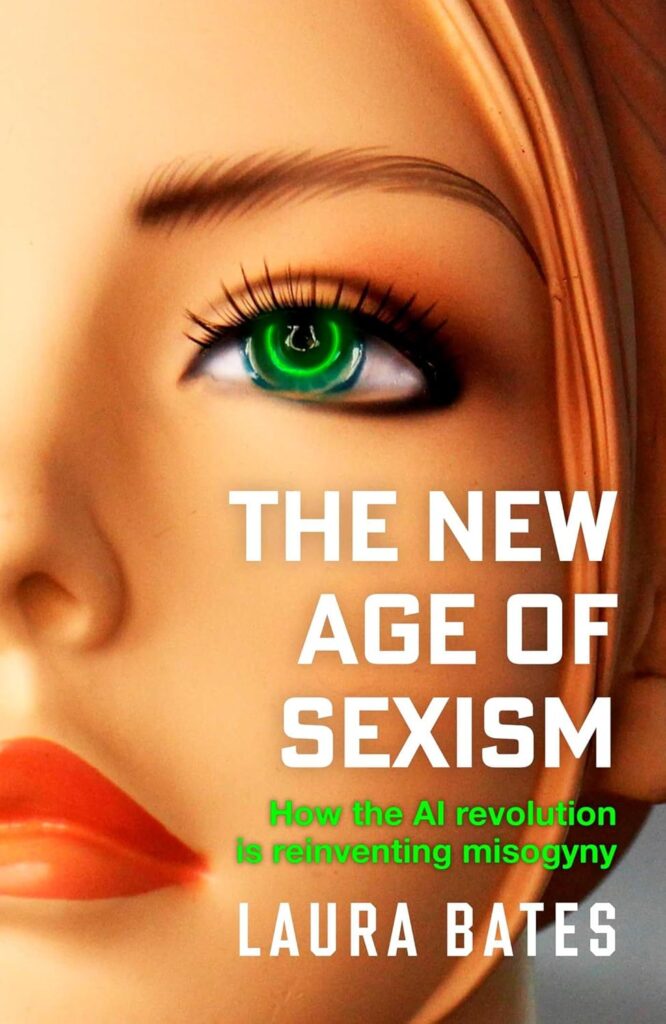
“The New Age of Sexism: How the AI revolution is reinventing misogyny” by Laura Bates

‘Laura Bates explains how they built the future – and forgot to put women in it’ CAITLINMORAN

‘Fascinating and essential… I urge you to read every syllable’ JO BRAND

‘All men must read this book if they have any interest in a truly just, fair and equal society’ ROBIN INCE

AI is here, bringing a seismic shift in the way our society operates. Might this mean a future reimagined on equitable terms for women and marginalised groups everywhere?

Not unless we fight for it. At present, power remains largely in the hands of a few rich, white men. New AI-driven technologies, with misogyny baked into their design, are putting women in danger, their rights and safety sacrificed at the altar of profitability and reckless speed.

In The New Age of Sexism, Sunday Times bestselling author and campaigner Laura Bates takes us deep into the heart of this rapidly evolving world. She explores the metaverse, confronts deepfake pornography, travels to cyber brothels, tests chatbots, and hears from schools in the grip of online sexual abuse, showing how our lives – from education to work, sex to entertainment – are being infiltrated by easily accessible technologies that are changing the way we live and love. What she finds is a wild west where existing forms of discrimination, inequality and harassment are being coded into the future we will all have little choice about living in – unless we seize this moment to demand change.

Gripping, courageous and eye-opening, The New Age of Sexism exposes a phenomenon we can’t afford to ignore any longer. Our future is on the line. We need to act now, before it is too late. ‘Urgent reading for anyone who is interested in the intersection of tech and gender equality, and indeed anyone who wants to be a part of building a better future, free from misogyny’ EMMA-LOUISE BOYNTON

‘A brilliantly researched, incredibly illuminating and frequently chilling account of the next chapter in tech’s ongoing assault on our core values. A chapter that is already unfolding around us all’ JAMES O’BRIEN

Read an extract from the book on Moneycontrol. It is published by Simon & Schuster India.

Laura Bates studied English at Cambridge University and went on to be a freelance journalist. She has written for The Guardian, The Independent, The New Statesman, Red Magazine and Grazia among others. She is also contributor at Women Under Siege, a New-York based organisation working to combat the use of sexual violence as a tool of war in conflict zones worldwide. She is the founder of the Everyday Sexism Project.

15 Oct 2025

An evening with Andres Velasco, 3 Oct 2025, New Delhi

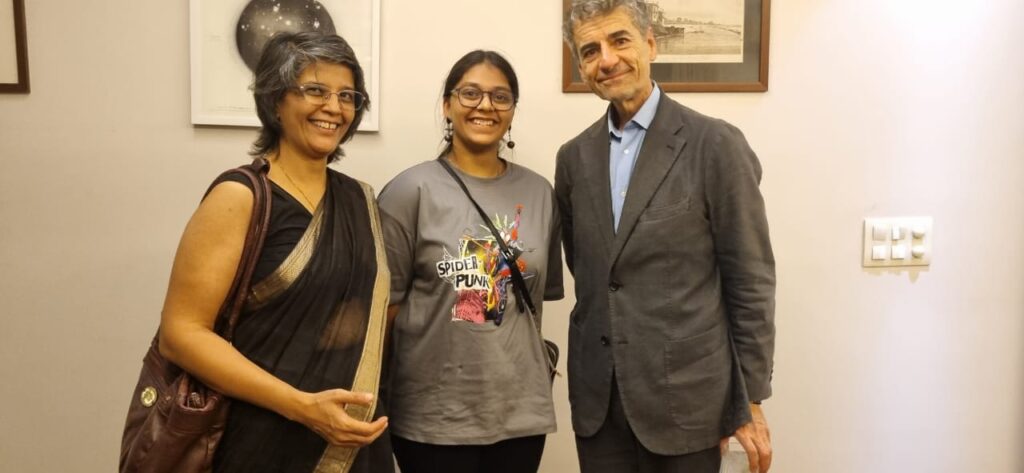
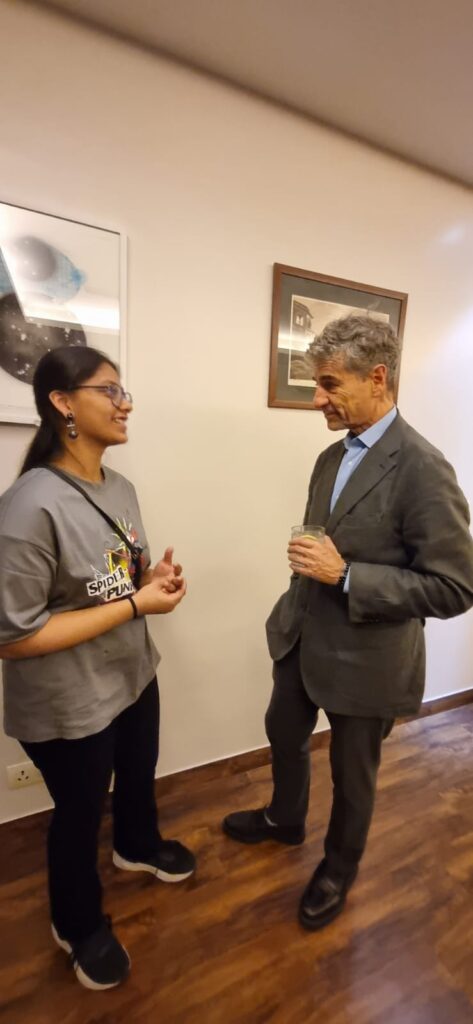
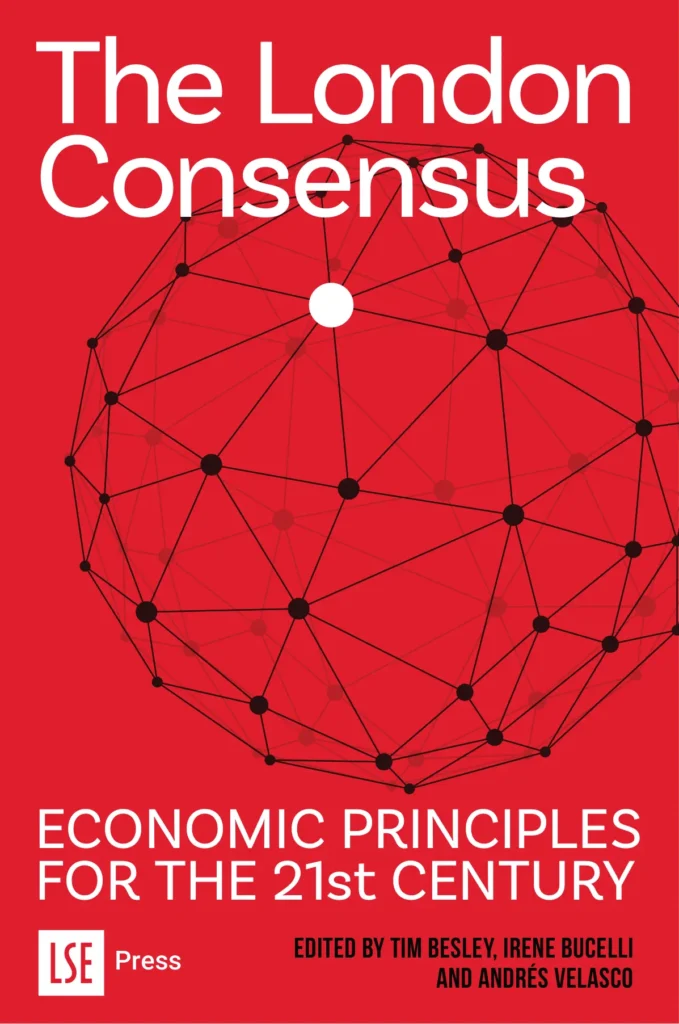
On Friday, 3 October 2025, I was invited to an exclusive interaction with Andres Velasco — economist, former Finance Minister of Chile and Dean of the School of Public Policy at the London School of Economics and Political Science. He has co-edited The London Consensus: Economic Principles For The 21st Century. It is forthcoming by the LSE Press. It was a select gathering, by invitation only, that included journalists (international and national), policy makers, lawyers, and academics. The discussion that ensued was fascinating. With the gracious consent of the hosts, I was accompanied by my daughter, who heard the conversation in wide-eyed wonder. Her eyes were twinkling with excitement listening to Andres Velasco’s speech and the discussion that ensued. She was the only teenager in the room and as someone rather dismissively said to her “Oh, you are the kid”. Well, this kid witnessed a good discussion and took back some of it with her to mull over. She enjoyed her 1:1 conversation with Anders Velasco who did not talk down to her and instead heard her out. He was in full agreement with my parenting of taking children everywhere as he does the same with his. His parents did the same. My parents did the same. This is how childhood memories are created and over a period of time when these kids become adults, they will learn to connect dots and build upon what they were taught.

Book blurb

A generation ago, the so-called Washington Consensus laid out a series of dos and don’ts for policymakers around the world. Today, that vision is recognised as having fallen short in a number of ways – particularly in its neglect of the social and institutional factors that are indispensable for achieving sustained growth and for building fairer and more cohesive societies. 

The immense challenges humanity faces are easy to list: climate change, pandemics, social inequalities, the far-reaching effects of the tech revolution and AI, a fragmenting world economy, and a wave of populism and political polarisation that has undermined support for liberal democracy in many countries. It is much harder to identify a set of new ideas – and policies – that will solve these seemingly intractable global problems. 

In this new world, political leaders and policymakers need guidance and principles that can assist when choosing among policy alternatives. To this end, the editors of this volume convened over 50 of the world’s leading economists and policy experts at the London School of Economics and Political Science (LSE). The London Consensus: Economic Principles for the 21st Century is the result of these exchanges. It is not intended as a one-size-fits-all set of economic remedies, but an exercise in assembling the best available evidence and ideas to foster dialogue, and ultimately to develop a set of principles that can address the urgent political, social and economic tasks ahead. 

For more on the London Consensus project, see: https://www.lse.ac.uk/school-of-public-policy/Research/London-Consensus 

Publication date: 16 Oct 2025

12 Oct 2025

Web Analytics Made Easy -
StatCounter