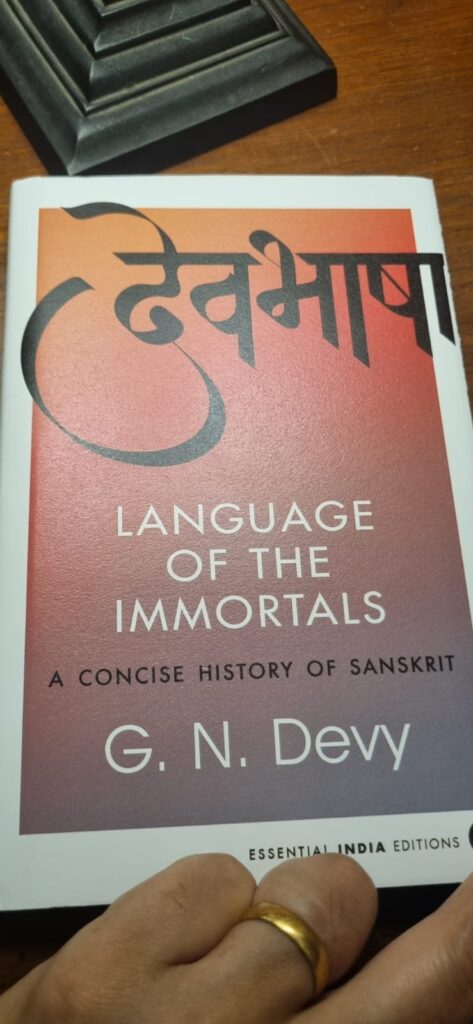
Sanskrit has long been celebrated as one of the building blocks of Indian civilization, and is venerated in temples, scriptures, and classical literature. In Language of the Immortals, renowned scholar and critic G. N. Devy uncovers the astounding paradox of Sanskrit—an ancient language that shaped Indian thought, philosophy, and identity for millennia, yet was never truly a language of the people.
With rigorous scholarship, Devy dismantles enduring myths and offers a revealing commentary on Sanskrit’s historical and cultural trajectory. He shows how it achieved unsurpassed prestige not through conquest or commerce, but sheer intellectual brilliance. He explores the way in which Sanskrit shaped intellectual life across centuries, influenced cultures beyond India, and maintained its prestige through the oral tradition and spiritual symbolism rather than the patronage of the state.
This concise yet profound work reimagines what it means for a language to live on—long after it has ceased to be spoken.
G. N. Devy is currently the Senior Professor of Eminence and Director, School of Civilization, Somaiya Vidyavihar University and was previously the Obaid Siddiqi Chair Professor at the National Centre for Biological Sciences, and Director, Adivasi Academy, Tejgadh, and Professor of English at the Maharaja Sayajirao University of Baroda. He led the People’s Linguistic Survey of India (PLSI), a comprehensive documentation of all living Indian languages, forming a fifty-volume PLSI Series. He has received several awards for his writing as well as for his community work, including the Padma Shri, Prince Claus Award, and Linguapax Award. His English publications include After Amnesia, Of Many Heroes, Painted Words, Nomad Called Thief, The Question of Silence, Countering Violence, The Crisis Within: On Knowledge and Education in India, Mahabharata: The Epic and the Nation, and India: A Linguistic Civilization. He is the co-editor (with Ravi Korisettar and Tony Joseph) of The Indians: Histories of a Civilization.
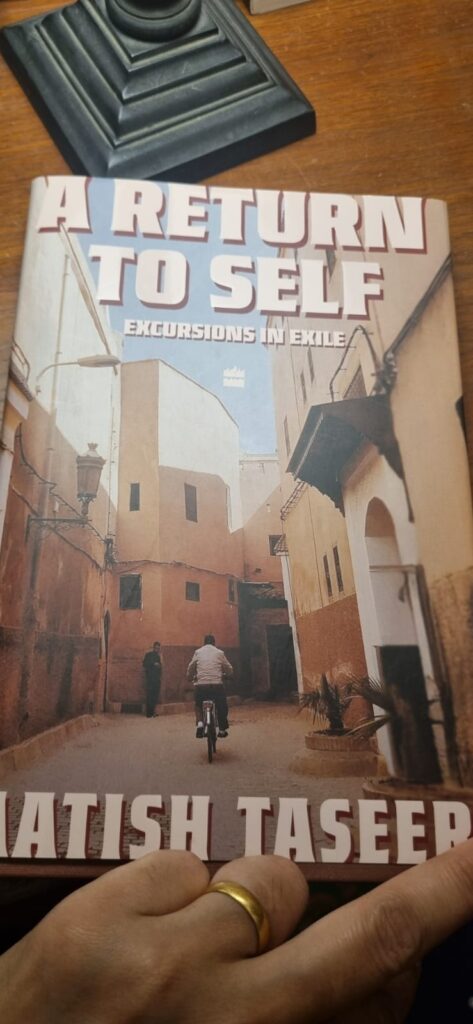
Aatish Taseer’s A Return to Self : Excursions in Exile ( HarperCollins India) is a collection of essays written over a period of time. The opening essay begins with the loss of his Overseas Citizenship of India in 2019. It was revoked by the Indian Ministry of Home Affairs. As a result, Aatish, a British citizen, has been unable to visit India, the country where he grew up and lived for thirty years. This loss, both practical and spiritual, sent him on a journey of revisiting the places that formed his identity and, in the process, compelled him to ask broader questions about the complex forces that make a culture and nationality. According to Wikipedia, Aatish Taseer became a US citizen on 27 July 2020.
In Istanbul, he confronts the hopes and ambitions of his former self. In Uzbekistan, he sees how what was once the majestic portal of the Silk Road is now a tourist facade. In India, he explores why Buddhism, which originated here, is practiced so little. Everywhere he goes, the ancient world mixes intimately with the contemporary: with the influences of the pandemic, the rise of new food cultures, and the ongoing cultural battles of regions around the world. How do centuries of cultures evolving and overlapping, often violently, shape the people that subsequently emerge from them?
In this blend of travelogue and memoir, Taseer casts an incisive eye at what it means to belong to a place that becomes a politicized vessel for ideas defined by exclusion and prejudice, and delves deep into the heart of the migrations that define our multicultural world.
He acknowledges the “ambition, inspiration and, at times, sheer relentlessness of Hanya Yanagihara” without whom this book would not have been possible. Hanya Yanagihara is an incredibly powerful writer in her own right, with a powerful eye for detail, but more than that, she has the knack of embodying her written word with a force, an energy, that makes her works unforgettable. It is a rare talent. Aatish is fortunate to have her as his mentor. As he asks, who else would commission an eighteen-thousand-word piece on pilgrimage? In A Return to Self, Aatish Taseer has truly transformed as a writer. As writer and academic Amitava Kumar puts it eloquently, “Writers I admire travel to discover other states of mind. But the even more admirable ones travel also to find new parts of their most authentic selves. In these pages, Taseer is such a traveller: the maps he is working with are those of the world, and also of the body, the soul, and the senses. His findings are fascinating and rich.” The book extract that has been published on Moneycontrol is from Aatish Taseer’s trip to Mongolia. The peace at the centre of this travelogue is extremely powerful and this section of the book begs to be read over and over again.
With this book, Aatish’s voice is much stronger, clearer, sharper, and very sure of himself. He has made choices or they have been foisted upon him. No one is questionning the impact of those decisions made, but the quiet strength and steely determination that imbues this book, even in the extraordinary sections of meditative reflection, ensures his space on the literary stage in a powerful manner. Much to look forward to in the future with regard to Aatish’s literary ouevre — before and after 2019.
Aatish Taseer is the author of the memoir Stranger to History: A Son’s Journey Through Islamic Lands; the acclaimed novels The Way Things Were, a finalist for the 2016 Jan Michalski Prize, The Temple-Goers, short-listed for the Costa First Novel Award, and Noon; and the memoir and travelogue The Twice-Born. He is also the translator, from the Urdu, of Manto: Selected Stories by Saadat Hasan Manto. His books have been translated into more than a dozen languages. He is a writer at large for T: The New York Times Style Magazine. Born in England, raised in New Delhi, and educated in the United States, Taseer now lives in New York.
This book came in the post today. Flipping through it, there is a lot of history and plenty of technical jargon, but it is obvious that it has been written by someone very passionate about the subject + excited about delving into the archives. Truly look forward to reading this.
Book blurb
From banyan trees to electronic screens – the authoritative account of India’s stock market over two centuries.
For millions of people, the stock market is the canvas on which are sketched fantasies of riches, of lives transformed. Yet, the history and methods of one of modern India’s most transformative forces remain underexplored till now.
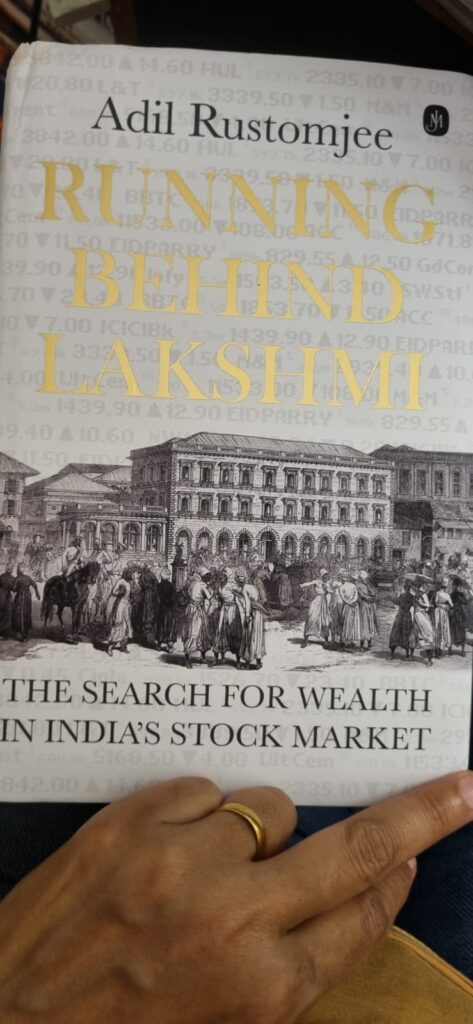
Starting from the early nineteenth century, when a few banias traded shares under banyan trees, to the Cotton and Share Mania occasioned by the American Civil War, to the decades of marking time during the Nehruvian Era, to 1991’s great unshackling that made the market accessible to the public, all the way to the market cycles of the new millennium, Running behind Lakshmi ( John Murray/Hachette India) brings India’s stock market into focus.
By combining archival sources with observations and expertise forged through immersion in the markets, Adil Rustomjee provides a wide-ranging account that is equal parts analytical history, financial practice, and market lore. Brimming with pioneers and adventurers, grand rivalries and petty jealousies, scams and scandals, this is the story of a nation and a people told through a lens that’s never been used, but is more relevant than ever.
After a career in international development and markets, Adil Rustomjee discovered his life’s work as a chronicler of India’s stock markets.
The idea for the book came when he stumbled upon the BSE archives during the time he had an office in the exchange’s building. These nuggets of history were just lying around, but a substantial account had yet to be written about an equity market that was over two centuries old.
Adil Rustomjee then made it his calling to narrate the market’s past, outline its methods, and detail its participants. Born in Hyderabad, he attended the universities of Madras and Bombay, from which he graduated with degrees in commerce and management. He also holds graduate degrees in international relations from Johns Hopkins University’s School of Advanced International Studies, and in business from Yale.
Besides taking a keen interest in financial markets, he is a student of military history and strategy.
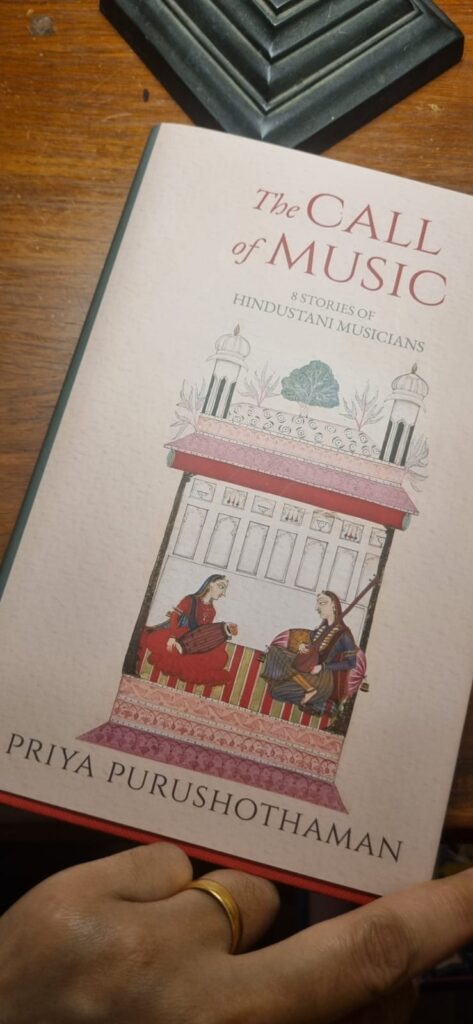
The Call of Music: 8 Stories of Hindustani Musicians ( Hachette India) is gorgeous. It is accessible to even the non-Indian classical music listener. More importantly, the sensitivity, understanding, and empathy with which Priya Purushothaman is stunning. Her elegant writing is gracious and dignified as she profiles a fellow musician. She is right when she says in her introduction that it is critical for the younger musicians to be profiled as well. Here is an extract from the introduction:
During the pandemic, when the transiency of life took on an entirely new dimension, I felt an urgent need to document the inner stories of serious practitioners of music, some of whom are not in the limelight. If you’re part of the music world, chances are that you’ve heard such stories through fellowmusicians, perpetuating the casula culture of sharing oral histories that blur the boundaries between rumour, legend, and fact. I wondered about all the stories I wouldn’t get to hear or read, out of sheer lack of access or documentation. This compelled me to seek these individuals and see if they would give me the privilege of sharing a slice of their lives, coming together as something akin to an ethnographic survey of select Hindustani musicians in the twenty-first century.
Normally, such collections would only feature senior artistes, senior by age, that is. I chose to include a spectrum of ages in this collection. Though the culture of Hindustani music glorifies age as a virtue — and certainly age often comes with wisdom and experience — I have also felt that this confines younger musicians to a permanent place of inadequacy. What a young artiste may lack in experience, they may compensate for in freshness of perspective. It is also not always the case that young artistes lack experience, because many musicians begin training at a very young age. By their thirties, they have been in the business for decades. I believe there is much value in hearing the thoughts of younger generation performers — to inspire other youngsters who may be looking up to them, and also to acknowledge that wisdom is not a function of time but of depth of experience and capacity for reflection.
The first musician featured, Alam Khan, reminds of an old soul trapped in a young man’s body. He is wise beyond his years, having immersed full time in this world since his teenage years. He carries the legacy of his father, Ustad Ali Akbar Khan, with tremendous humility, reverence, and responsibility. His deep commitment to musical honesty made me ponder the question of intention and awareness as we make music.
Shubhada Paradkar is an indomitable musical spirit whose music negotiates the lively spirit of the Agra and Gwalior gharanas, while challenging the notions of gender in music.
Kala Ramnath’s journey to becoming a world renowned violinist is filled with a lifetime of consistent effort and a quest for a unique, individual voice by innovating on an instrument that was introduced quite late into the Hindustani music firmament.
Rumi Harish turns all conventions of Hindustani msuci upside down with his radical interrogation of concepts of gender and voice through his lived truths in music and activism.
The youngest musician in this collection is Suhail Yusuf Khan, a sarangi player who has performed around the globe, collaborated across genres, and become the first hereditary musician to earn a PhD in Ethnomusicology. Suhail opened my eyes to issues of caste and discrimination as a Mirasi musician.
Shubha Joshi has dedicated her lifetime to mastering the multitude of forms that comprise Hindustani music, deconstructing notions of the feminine voice while intentionally carving her own unique sound.
Yogesh Samsi speaks a complex language of tabla that has evolved through momentous historical moments of both loss and ingenuity. As a master soloist and accompanist, he shows the path to a future of aesthetic and intellectual music.
It is my hope that those who take the time to read his book will gain an insider’s view into the creative processes of music making — the gruelling effort, dedicatio, and sacrifice that make a musician — as well as the undeniable presence of social issues in the world of classical music. Often, musicians choose their path not out of choice, but from a persistent inner call, a driving necessity for their existence. Perhaps after reading these stories, you, the reader, will appreciate the complex life of a musician the next time you hear a piece of music or attend a concert.
I began flipping through this book on a whim, but before I knew what was what, I was immersed in reading the profiles and was able to shut out the world. It is the rare author who can achieve that with their writing. Priya Purushothaman does. The ability to write about a subject that not everyone is familiar with and yet with such elegance create bridges of communication between Hindustani music and the readers is an extraordinary talent. I sincerely hope that she will write more of these long profiles. These must be taxing to write and emotionally draining but the end result is superb.
Book blurb
The Call of Music traces the journeys of eight singular voices in Hindustani music – some acclaimed performers, others quiet torchbearers who create, teach and sustain the tradition far from the public eye. From the narrow lanes of Kashipur to the sweeping hills of San Rafael, these artists emerge from vastly different worlds, yet each has devoted their life to music with unflinching conviction and artistic courage.
Among them are the heirs of musical legacies, grappling with the weight of inheritance; vocalists who challenge gendered assumptions embedded in the tradition; instrumentalists who reimagine the expressive possibilities of their craft; a sarangi player navigating the complexities of caste and faith; and a tabla maestro bridging a lineage ruptured by Partition.
As these musicians forge their identities within a classical tradition, they reveal an artform not only enduring, but continually transforming – connecting generations, reshaping boundaries and resonating anew. What binds them is a profound surrender to the art, a deep-seated devotion that transcends convention and circumstance. Together, they form a luminous, emotionally textured portrait of a musical legacy – rooted and radically alive.
‘This is a rich and beautiful meditation on the greatest of our art forms. Herself an exceptionally gifted vocalist, Priya Purushothaman writes with elegance and empathy about the life and vocation of eight musicians of different backgrounds, whom she has known or studied with. While attentive to questions of caste, gender and religion, Priya never lets her focus waver from the “practice“ of classical music, of what it means to devote oneself to learning, listening, absorbing, practising and performing. As a lover of our shastriya sangeet I found this book utterly compelling. So will readers with a more general interest in narrative non-fiction, and those seeking to make of their profession a calling.’ – Ramachandra Guha
‘Introducing readers to the lives, personalities, strengths, challenges, and music of eight artists who have inspired her over the years, Priya Purushothaman’s writing reflects in totality the rigour and introspection that has marked her journey as a singer.’ – Shubha Mudgal
‘The Call of Music is one of those rare books that forces us to see ourselves for who we are. In this collection of stories, Priya Purushothaman allows us to accompany musicians and learn from the intricate threads that stitch together their identity and life experience with making music. She brings together musicians from very different social and philosophical spaces and lets each of their stories flow into another, subtly initiating a conversation between them. This book is, in its essence, about finding and retaining one’s own voice. For us, the readers, these are moments of personal reflection.’ – T.M. Krishna
Priya Purushothaman is a reputed Hindustani vocalist. She is trained in the style of the Agra gharana, and has performed in major venues in India and abroad. She is also the author of Living Music: Conversations with Pandit Dinkar Kaikini. Priya is interested in documenting stories of musicians and their creative processes from her perspective as a practitioner. Her music can be heard at www.priyapurushothaman.com.
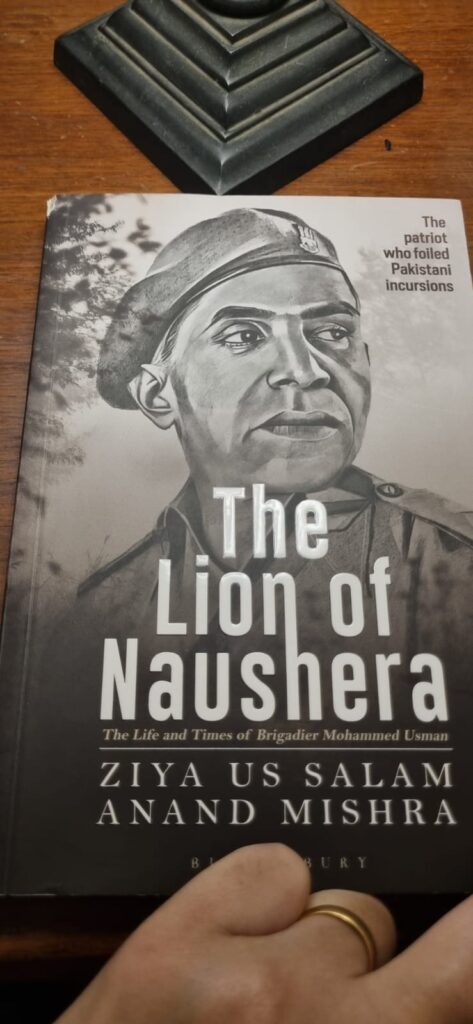
Within weeks of India gaining independence, Kashmir resembled a battlefield because of Pakistan’s repeated incursions to capture the Muslim-dominated princely state. Towering among the soldiers who fought with grit and gumption to foil Pakistan’s designs was Brigadier Mohammed Usman, who chose to remain in pluralist India. Sadly, he lost his life twelve days shy of his thirty-sixth birthday, fighting Pakistani forces. The newly born nation saluted the fearless warrior conferring on him the sobriquet ‘the Lion of Naushera’ for his bravery.
While some heroes have been duly and gratefully feted, others have not always got their due. The Lion of Naushera is an attempt to clear some of the debts we owe to Brigadier Usman. Not only does it tell the story of the brave soldier, it also presents a multifaceted narrative of India – of how people of all faiths, castes and regions fought for the independence of the country and protected its borders.
Ziya Us Salam is an eminent journalist and a widely published author. A literary and social commentator, Salam has examined critical subjects through his books Women in Masjid: A Quest for Justice (Bloomsbury 2019), Nikah Halala: Sleeping with a Stranger (Bloomsbury 2020) and Being Muslim in Hindu India: A Critical View (HarperCollins 2024). His other books include Of Saffron Flags and Skullcaps: Hindutva, Muslim Identity and the Idea of India (Sage 2018), which deals with challenges to the idea of India, and Lynch Files: The Forgotten Saga of Victims of Hate Crime (Sage 2019), which focuses on the victims of hate and violence.
Anand Mishra is currently a political editor. As a senior journalist who has travelled across north India to cover key political developments and elections, tracking the evolution of political parties across the spectrum — left, right and centre — in the national capital and the states in the Hindi speaking belt.
Hailing from Gaya in Bihar, Mishra is an English literature graduate. His poems have been published in national and international publications.
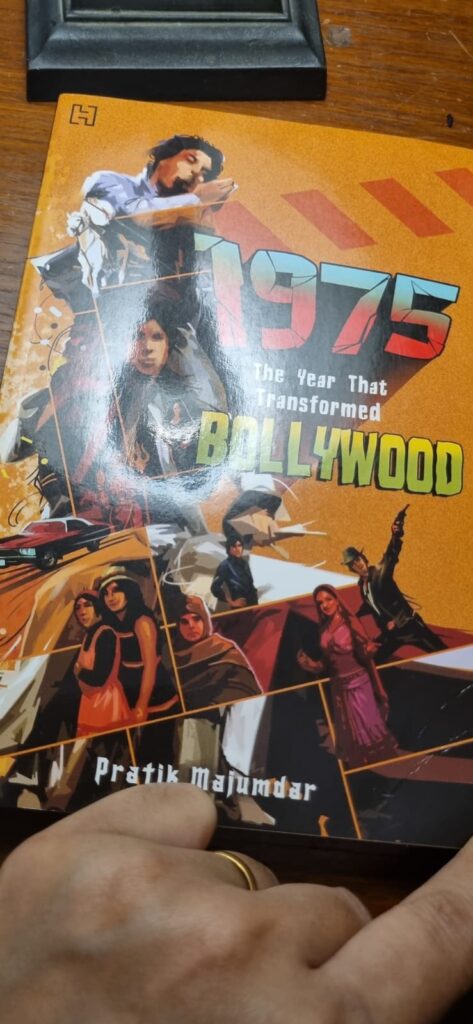
The year 1975 to Bollywood is what 1939 is to Hollywood – the greatest year in film history of the respective industries. Sholay, Deewaar, Pratiggya, Aandhi, Mausam, Khel Khel Mein, Warrant, Chupke Chupke, Mili, Nishant and then … who can forget the jaw-dropping success of Jai Santoshi Maa! Rarely a year sees the release of such a great number of films that go on to become cult classics.
With iconic films, leading actors, film-makers and music composers, shelved movies from that year and the impact of the Emergency on Hindi films, this guide to 1975’s Bollywood offers wholesome information with fulsome entertainment.
Pratik Majumdar began his career in advertising, working in both India and London, before returning home to successfully run a family-owned homeopathy business.
A passionate cinephile, music enthusiast and published author of a collection of short stories, Pratik has amassed an impressive collection on Blu-rays, DVDs and vinyl records over the years. His articles on film have been published in the Telegraph, the Daily Eye and Kolkata Konnect. 1975: The Year That Transformed Bollywood is his first book on cinema.
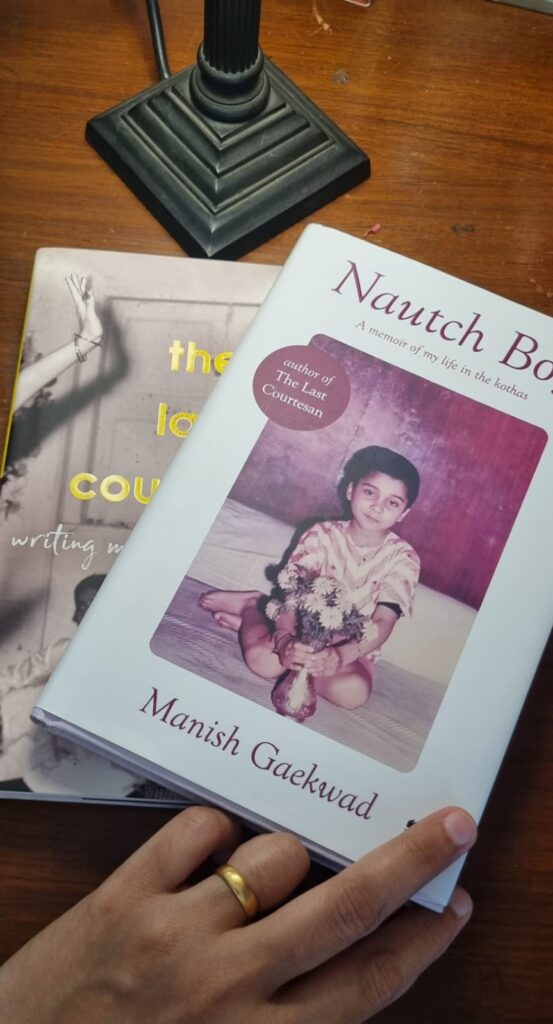
Manish Gaekwad was the only child of a courtesan, so he grew up in the kothas or a brothel. Courtesans would be defined as prostitutes but usually one man (patron) took care of her and her children. The evening festivies inevitably began with a mujra or a performance. It included singing and dancing by the courtesan (s), accompanied by their musicians, and watched by an audience consisting of their patrons. Manish Gaekwad was sent by his mother to the hills to study where he acquired an education in English. His mother did her best to ensure that he did not get stuck in poverty and on the margins of society.
Writing two memoirs in quick succession, one about his mother and the other about himself, is quite a feat. There is plenty of linguistic play in his storytelling, with loads of Hindi that is also made available in English but it is almost as if both languages have equal status in his mind. Memoirs inevitably are selective storytelling about a person’s life and sometimes of their community, their context. In Manish Gaekwad’s books, there is a continuity of narrative but at the same time many incidents seem episodic. As if they had to be written down and shared. There is also this emphasis on telling his mother’s story, making her life visible, a woman who lives in the shadow of society, but her son gives her a voice, a character. In his own story, it is not necessarily a coming-of-age story but it is certainly a juxtaposition of the public and private worlds in which the idea of masculinity is explored. In the public spaces, the men and boys linked to the courtesans are encouraged to figure out their relationships and if need be, have the necessary scuffle to assert their dominance. In the shadows of the kotha, it is predatory and seeing a young boy/man like Manish, they prey upon him and sexually assault him more than once. Both these texts are seeped in violence — whether the energy required by the fittest to survive or the violent “love” and its multiple shades. Ultimately, these books attempt to share unique experiences but one cannot help but think of it also as performance art. But, then isn’t most storytelling?
I spoke to him for TOI Bookmark. Here is the Spotify link:
Manish Gaekwad is a journalist and author. He has reported for Scroll and Mid-Day, and has contributed to The Hindu and other publications as a freelancer. His literary works include the novel Lean Days and The Last Courtesan, a memoir of his mother. He co-wrote the Netflix series She with Imtiaz Ali, script-consulted on Badhaai Do and served as a senior script creative at Red Chillies Entertainment.
Both books have been published by HarperCollins India.
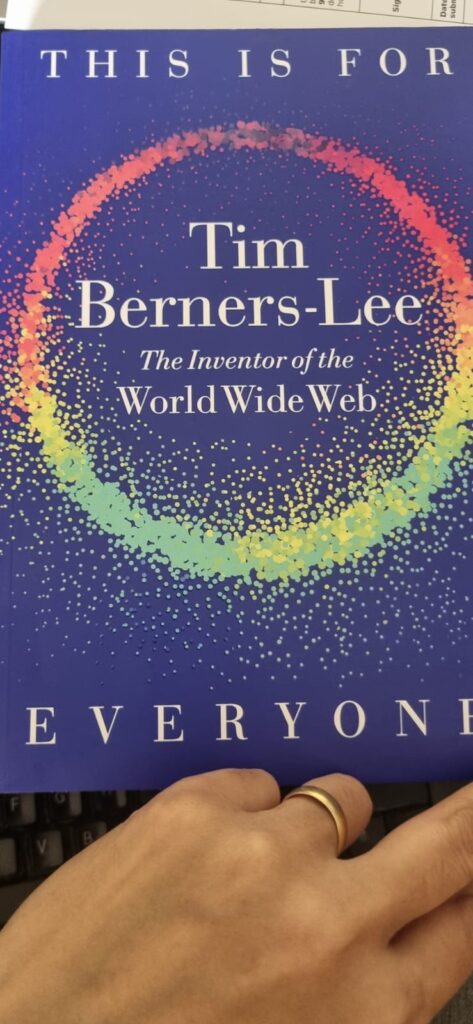
The groundbreaking memoir from the inventor of the World Wide Web, Sir Tim Berners-Lee. This is the story of our modern age.
The most influential inventor of the modern world, Sir Tim Berners-Lee is a different kind of visionary. Born in the same year as Bill Gates and Steve Jobs, Berners-Lee famously shared his invention, the World Wide Web, for no commercial reward. Its widespread adoption changed everything, transforming humanity into the first digital species. Through the web, we live, work, dream and connect.
In this intimate memoir, Berners-Lee tells the story of his iconic invention, exploring how it launched a new era of creativity and collaboration while unleashing a commercial race that today imperils democracies and polarizes public debate. As the rapid development of artificial intelligence heralds a new era of innovation, Berners-Lee provides the perfect guide to the crucial decisions ahead – and a gripping, in-the-room account of the rise of the online world.
Filled with Sir Tim’s characteristic optimism, technical insight and wry humour, this is a book about the power of technology – both to fuel our worst instincts and to profoundly shape our lives for the better. This Is for Everyone is an essential read for understanding our times and a bold manifesto for advancing humanity’s future.
While he spends a fair bit in the book discussing the invention of the web and the necessity of invention, to help the computers and scientists working at European Organization for Nuclear Research or as it was previously known, Conseil Européen pour la Recherche Nucléaire (CERN) to co-ordinate their work. It is the last one-third of the book that is particularly fascinating as he reflects upon the impact of the internet on humanity – the fact today nearly 5.5 billion people are using it or relying upon it. This, despite nearly 60% of the links on it are defunct. Nevertheless, the importance of the web cannot be emphasized enough. He witnesses the growth of the tech firms and their increasing evaluation. But to his mind, the original premise of releasing the WWW for free was that it was for everyone and it was enriched by a collaborative experience between many individuals. To concentrate information and content on a few tech platforms is not correct. Hence, he created the concept of Solid, a web decentralization project developed collaboratively at the Massachusetts Institute of Technology (MIT). The project aims to radically change the way Web applications work today, resulting in true data ownership as well as improved privacy by developing a platform for linked-data applications that are completely decentralized and fully under users’ control rather than controlled by other entities. The ultimate goal of Solid is to allow users to have full control of their own data, including access control and storage location. The digital wallet, or a pod, that would enable every individual to have control over their rights to all digital content and related material. Tim Berners-Lee established a company called Inrupt to help build a commercial ecosystem to fuel Solid. He also in the last section of the book reflect upon Artificial Intelligence (AI) and that is where this book extract published on Moneycontrol has been taken from.
Sir Tim Berners-Lee invented the World Wide Web in 1989 at CERN in Switzerland. Since then, through his work with the World Wide Web Consortium (W3C), The Open Data Institute and the World Wide Web Foundation he has been a tireless advocate for shared standards, open web access for all and the power of individuals on the web. A firm believer in the positive power of technology, he was named in Time magazine’s list of the most important people of the 20th century.
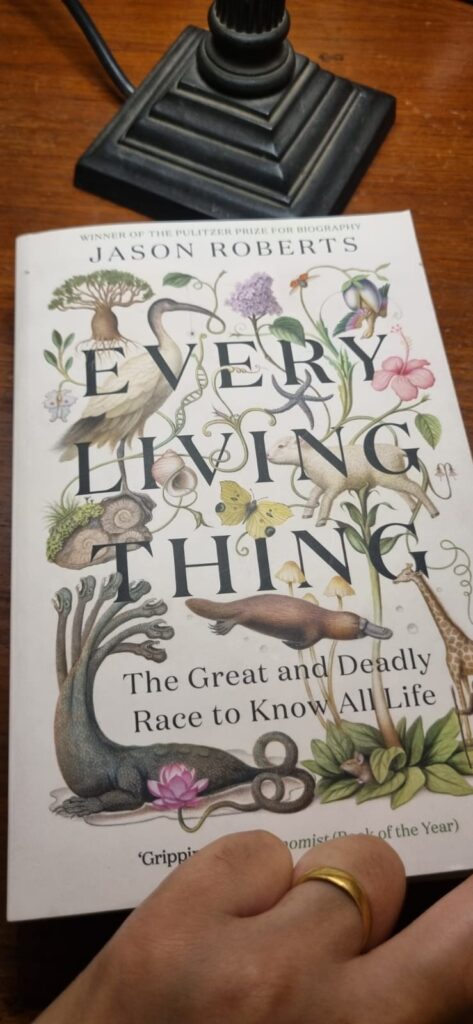
The dramatic, globe-spanning and meticulously-researched story of two scientific rivals and their race to survey all life.
In the 18th century, two men dedicated their lives to the same daunting task: identifying and describing all life on Earth. Their approaches could not have been more different. Carl Linnaeus, a pious Swedish doctor with a huckster’s flair, believed that life belonged in tidy, static categories. Georges-Louis de Buffon, an aristocratic polymath and keeper of France’s royal garden, viewed life as a dynamic, ever-changing swirl of complexities. Both began believing their work to be difficult, but not impossible–how could the planet possibly hold more than a few thousand species? Stunned by life’s diversity, both fell far short of their goal. But in the process, they articulated starkly divergent views on nature, on humanity’s role in shaping the fate of our planet, and on humanity itself.
The rivalry between these two unique, driven individuals created reverberations that still echo today. Linnaeus, with the help of acolyte explorers he called “apostles” (only half of whom returned alive), gave the world such concepts as mammal, primate and homo sapiens–but he also denied species change and promulgated racist pseudo-science. Buffon coined the term reproduction, formulated early prototypes of evolution and genetics, and argued passionately against prejudice. It was a clash that, during their lifetimes, Buffon seemed to be winning. But their posthumous fates would take a very different turn.
With elegant, propulsive prose grounded in more than a decade of research, bestselling author Jason Roberts tells an unforgettable true-life tale of intertwined lives and enduring legacies, tracing an arc of insight and discovery that extends across three centuries into the present day.
I interviewed Jason for TOI Bookmark. Here is the Spotify link:
Jason Roberts is the author of the national bestseller A Sense of the World, which was a finalist for the National Book Critics Circle Award, longlisted for the Guardian First Book Award, and named a best book of the year by the Washington Post, San Francisco Chronicle, Kirkus Reviews, and School Library Journal. The winner of the Van Zorn Prize for fiction (founded and awarded by Michael Chabon), he is a contributor to McSweeney’s, The Believer, The Rumpus, and other publications, as well as editor of the bestselling 642 Things to Write About series. He lives in the San Francisco Bay Area.
Every Living Thingwon the Pulitzer Prize for Biography/Autobiography 2025. It is published by Quercus Books/ Hachette India.
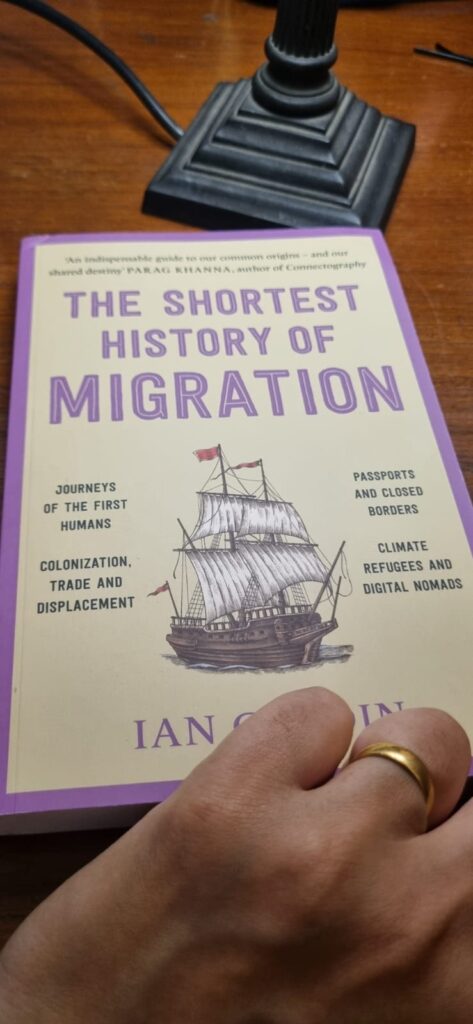
From the earliest human wanderings to the rise of the digital nomad
For hundreds of thousands of years, the ability of Homo sapiens to travel across vast distances and adapt to new environments has been key to their survival as a species. Yet this deep migratory impulse is being tested like never before as governments build ever-stronger walls that adversely impact the lives of migrants and the well-being of our societies.
In The Shortest History of Migration (published by PanMacmillan India), visionary thinker and a migrant himself, Ian Goldin chronicles the movement of peoples that spans every age and continent to arrive at the heart of what truly makes us human. He recounts strange, terrible and uplifting tales of migrants past and present, examining the legacies of empire, slavery and war. Learn about how the first humans originating in Africa populated the world; the exchange of knowledge, food, language and religion through migration, and the exploited migrant populations that built the modern Western world, only to be shut out of it.
Finally, Goldin turns his attention to today’s increasingly fragmented world, bringing together historical evidence and recent data to suggest how we might create a more humane future where we can reap the tremendous benefits that migration has to offer.
Ian Goldin is Professor of Globalisation and Development at the University of Oxford, Fellow at Balliol College, Oxford University, was the founding Director of Oxford University’s Oxford Martin School, and leads its research programmes on Technological and Economic Change, Future of Work and Future of Development.
He has an MSc from the London School of Economics, and a MA and Doctorate from the University of Oxford.
From 1996 to 2001, he was chief executive and managing director of the Development Bank of Southern Africa (DBSA) and at that time also served as an adviser to President Nelson Mandela.
From 2001 to 2006 Ian was Vice President of the World Bank and the Group’s Director of Policy and Special Representative at the United Nations. Previously, Ian served as Principal Economist at the EBRD and the Director of Programmes at the OECD Development Centre.
He has been knighted by the French Government and received numerous awards. He has published over 60 journal articles and 23 books. His most recent is Rescue: From Global Crisis to a Better World. His previous books include Terra Incognita: 100 Maps to Survive the Next 100 Years, Age of Discovery: Navigating the Storms of Our Second Renaissance and The Butterfly Defect: Why Globalization Creates Systemic Risks and What to Do, in which he predicted that a pandemic was the most likely cause of the next financial crisis. Other books include: Development: A Very Short Introduction; and Is the Planet Full? He has authored and presented three BBC Documentary Series After The Crash; Will AI Kill Development? and The Pandemic that Changed the World. He has provided advisory services to the IMF, UN, EU, OECD and has served as a non-executive Director on six globally listed companies. Ian is an acclaimed speaker at TED, Google Zeitgeist, WEF and other meetings and is Chair of the core-econ.org initiative to transform economics.