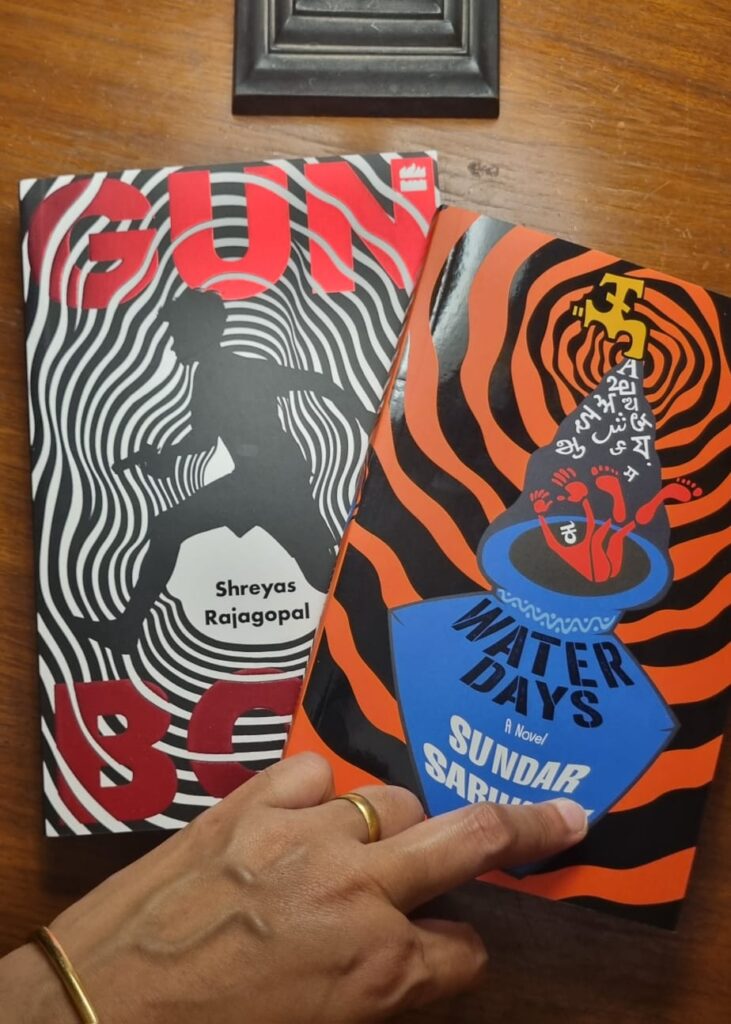
Brand new books launched this week — Gunboy and Water Days: A Novel. Both are by second-time fiction authors — Shreyas Rajagopal and Sundar Sarukkai. Fiction. Novels. It is a lovely coincidence that two titles released by separate publishing houses — HarperCollins India and Westland Books — have very similar cover designs. The designers are Haitenlo Semy and Srinivas Bhashyam, respectively.
The centuries-old philosophy of the Stoics holds the key to navigating our modern world. With its practices for staying calm under pressure, making ethical decisions and navigating challenges, Stoicism offers a practical framework for cultivating calmness and positivity in a complex world.
One of the greatest of the Stoics is Lucius Annaeus Seneca, whose writings explore the importance of ethics, resilience and virtue. His work lays the foundations of the Stoic way of life. Using curated quotations from Seneca’s work, and supplemented with helpful commentary, authors Jana Capri and Charan Díaz formulate seventy-nine questions that cover a range of universal concerns. Stay Calm with Seneca is a thoughtful and wise companion through the twists and turns of modern life.
Renowned as the last great Stoic philosopher, Marcus Aurelius is best known for his work Meditations, which grounds his philosophy in self-reflection, rationality, personal virtue, inner strength and an unbiased perspective to living a fulfilling life.
In Stay Positive with Marcus Aurelius, authors Jana Capri and Charan Díaz explores seventy-nine questions and scenarios that deal with both philosophical and practical concerns that people face—ethical dilemmas, existential inquiries, self-improvement prompts and reflective queries. Based on Meditations, the answers are adapted to the modern world and are accompanied by thoughtful reflections that help you remain positive amidst life’s upheavals.
Of late, book compilations of the Stoics by various publishers in India and globally are selling like hotcakes. All of a sudden, Stoic philosophy is back in vogue. It does not seem to matter how many publishers create texts of the stoic philosophers or in which format, they will sell. It is understandable. There is wisdom and practical sense. Westland Books newly launched “The Stoic Philosophy Series” falls into this category. Handy, decent size hardbacks, easy to hold and flip through, with wide margins for scribbling notes, and perhaps, adding a few more questions to those asked, these are worth keeping or even gifting.
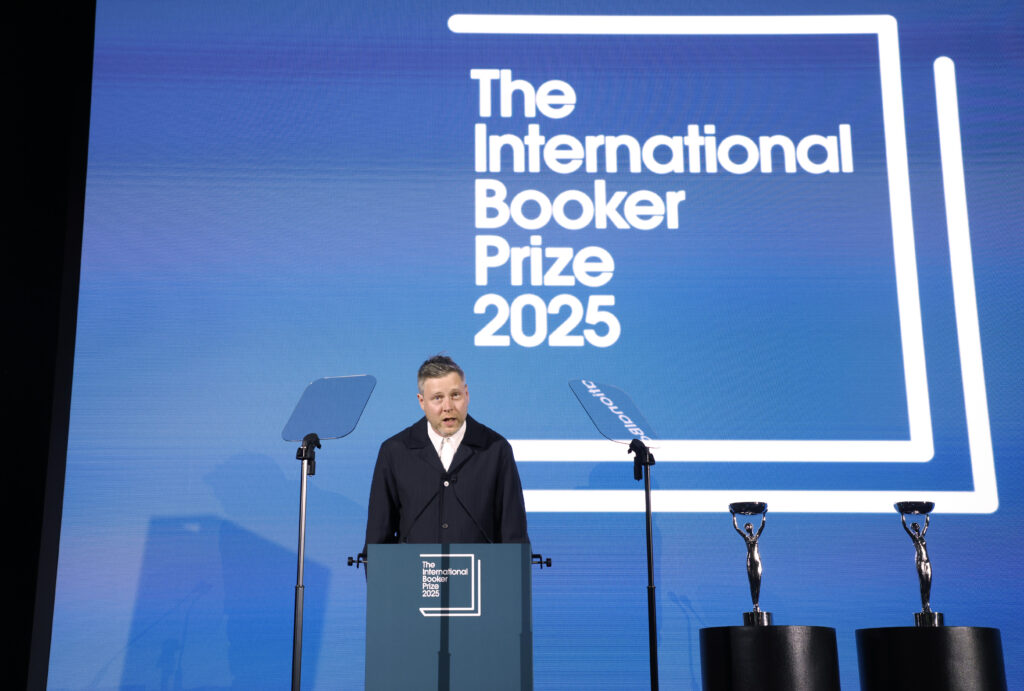
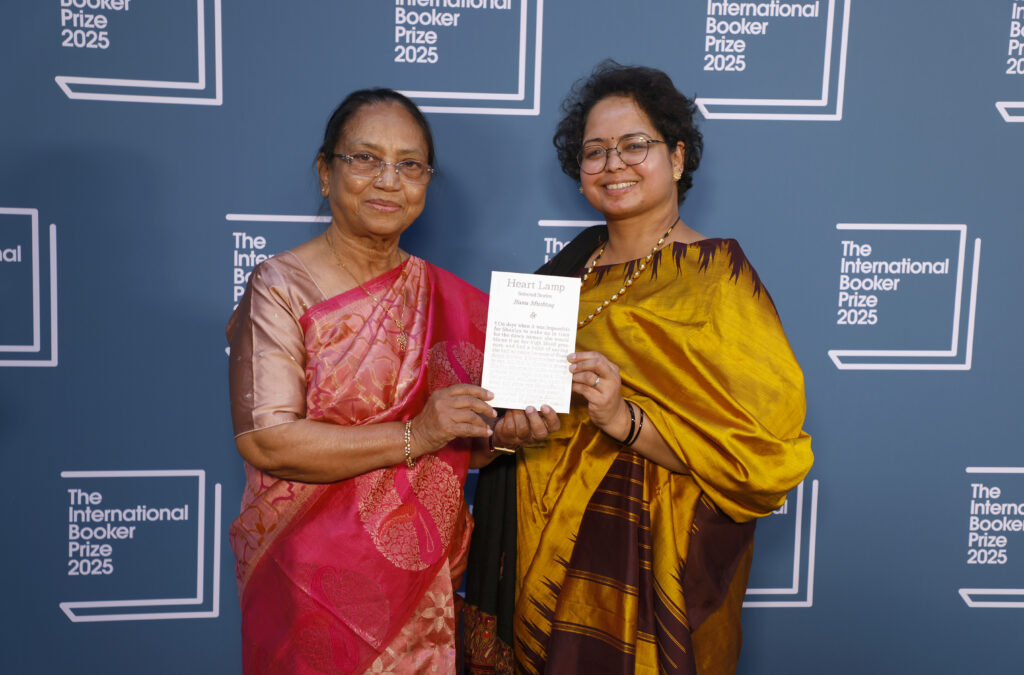
On 20 May 2025, at a glittering ceremony at the Tate Modern, London, the International Booker Prize 2025 winners were announced. They were Kannada writer Banu Mushtaq and translator Deepa Bhashti. They won it for the collection of short stories called Heart Lamp: Selected Stories. It has been published in the UK by And Other Stories and in India/South Asia by Penguin Random House India. The original stories in Kannada were published by Abhiruchi Prakashana.
Heart Lamp is an extraordinary collection of short stories. In it Banu Mushtaq has written about the lives women lead. Or rather, she has depicted the life cycle of a girl to womanhood and the many, many responsibilities that are thrust upon her by men. There is also persecution and violation of the girl/woman’s rights by men/patriarchy. It is not necessarily always physical violence that is shown, but emotional, psychological, financial, sexual, and mental violence are construed as forms of gender violence globally. There is sufficient evidence in the stories to show how these are perpetrated upon women on a daily basis in the most ordinary of situations and frighteningly, by men and women, closest to them in their familial/friends circle. It is a vicious tyranny. Yet, Banu Mushtaq in her act of writing, illustrate how women can act and push back, if need be. It is definitely not easy fighting systemic patriarchy and the social indoctrination of girls from a young age as to how they should conduct themselves vis-a-vis boys/men. Most often than not they are taught to disregard their innermost feelings and wishes and conform to the wishes of society/family for their own good. These wishes could be as simple as pursuing higher education and learning to be independent. Having said that, while these stories are ostensibly about women and different responsibilities that motherhood brings with it, Banu also do not shy away from exploring masculine responses to the domestic scenarios. It is a brilliant balance that she achieves. Of course, it also left me wondering if the short story form gave her more freedom to mimic the manner in which women speak and live their chaotic lives, operating at multiple levels, rather than a longer form of writing. A question that remains to be answered.
Banu speaks Dakhni, a fascinating mix of Persian, Dehlavi, Marathi, Kannada, and Telugu. Deepa’s mother tongue is Havyaka, a dialect that harks back to Old Kannada and is spoken by a small community of upper-caste Brahmins from the Arabian coast. Yet, the rhythm of the English flows beautifully in the translation. In fact, it is impossible to discern how much of the translated text that is available to Anglophone readers is a direct and true translation of the Kannada text or has it also been transcreated along the way. Having said that, Heart Lamp is a wonderful introduction Banu Mushtaq’s oeuvre. Here is a perceptive extract from Deepa’s essay on translating this text that is published in the book:
When I began to work with Banu’s stories, I grappled with what this project would be: a lapsed Hindu and an upper-caste person translating a minority voice into our shared alien language. It would be a disservice to reduce Banu’s work to her religious identity, for her stories transcend the confines of a faith and its cultural traditions. Nonetheless, in today’s India, where a decade of far-right politics has descended dangerously into Hindutva-led majoritarianism, hatred and severe persecution of minorities – iterations of such violence are found in many other countries of the world too, lest we forget – it is essential to note the milieu that she lives in and works out of. While of course a translator need not be from the same background as the writer, it still felt important to me to acknowledge our differences, our respective positions and privileges, and use this awareness to be more responsible and sensitive in my translation.
These stories are very refreshing to read given that Banu does not capitulate to any form of othering but chooses to depict life as it is within the community. It is almost as if by reading these stories, she is encouraging cross-pollination of our diverse cultures, much in the fabulously elegant way she uses references to Rama and Lakshman and Shakuni Mama. It exemplifies our syncretic Indian culture. Hence, it is no surprise that years ago a fatwa was issued against Banu Mushtaq for her outspoken writings. In fact, she was also attacked but her husband managed to fend off the attacker. (“India’s Banu Mushtaq makes history with International Booker win” BBC dot com, 21 May 2025)
There is magic in this partnership. It worked as is evident in the International Booker Prize 2025 win.
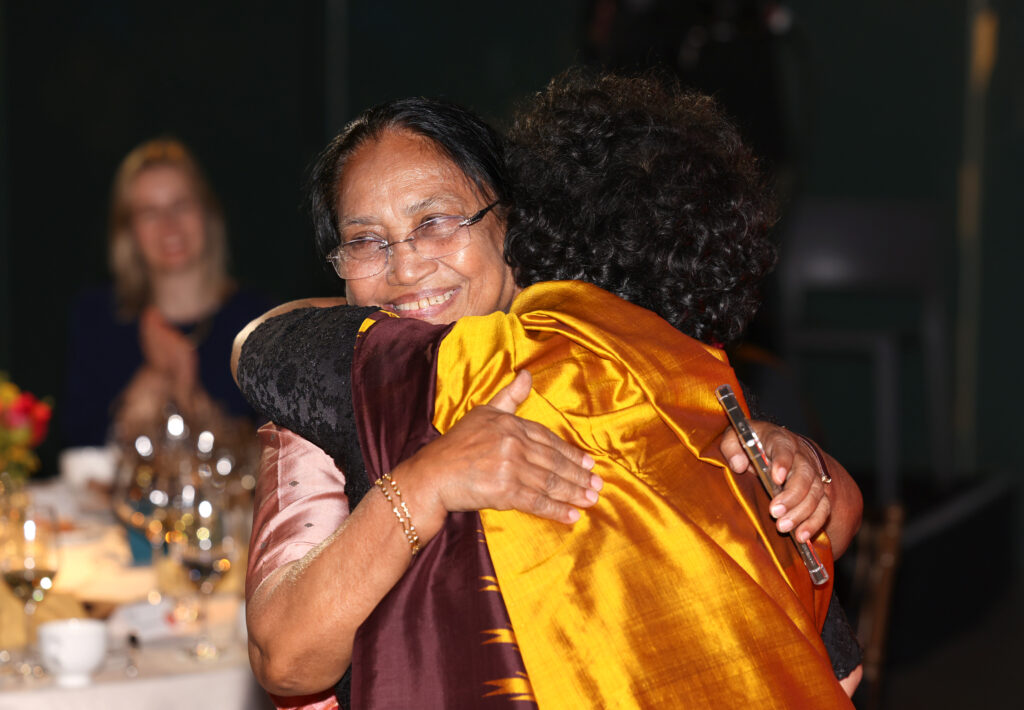
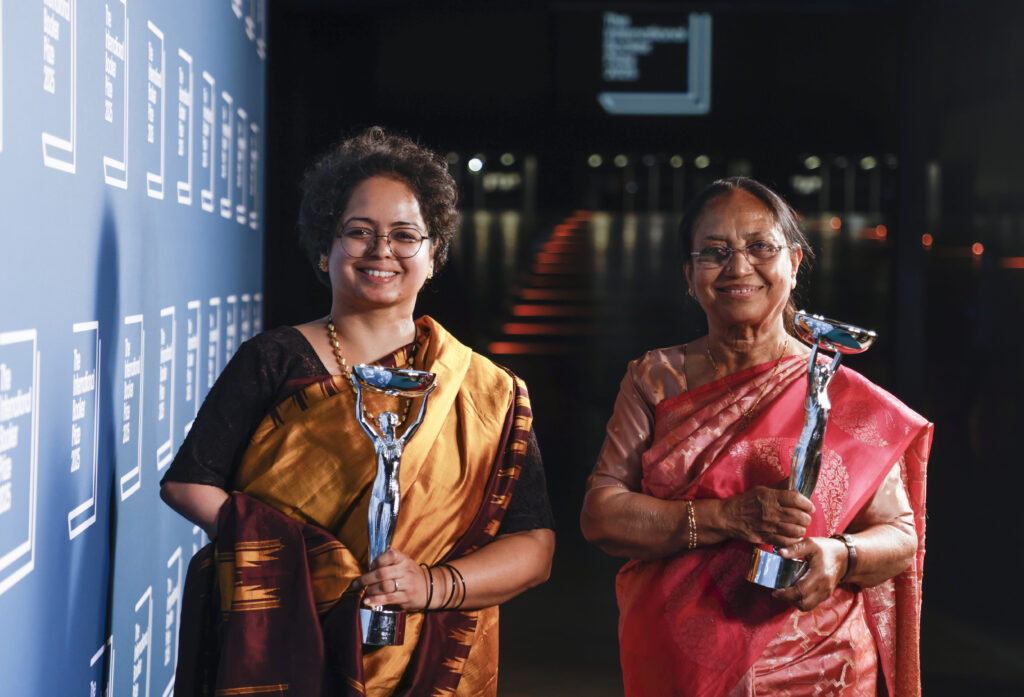
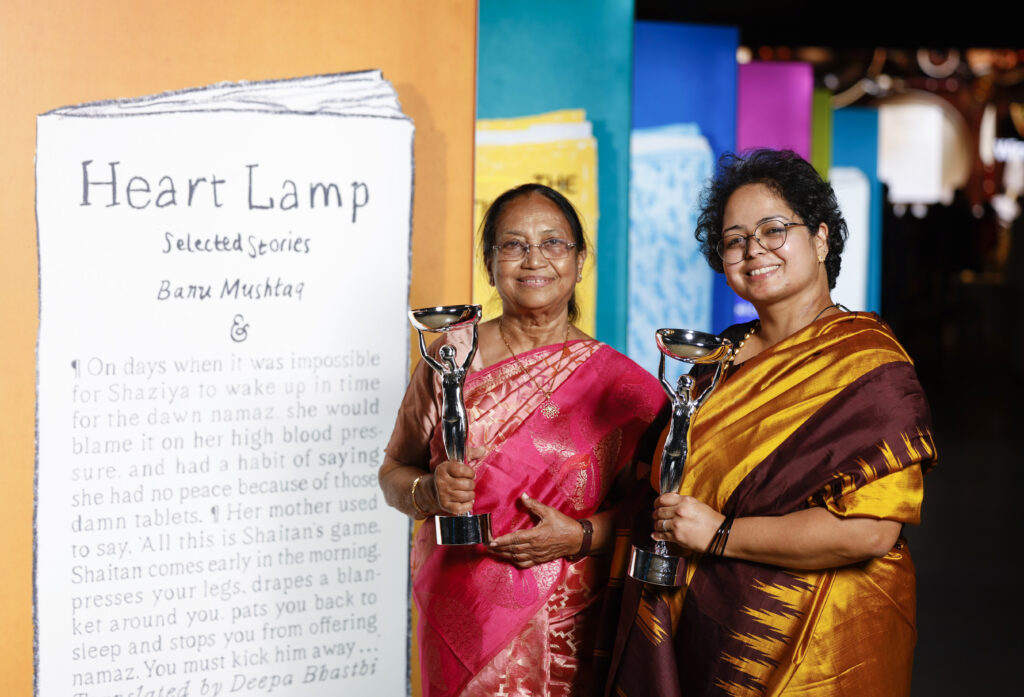
Author Banu Mushtaq (L) and translator Deepa Bhasthi, winners of the International Booker Prize 2025 ceremony at Tate Modern, London.
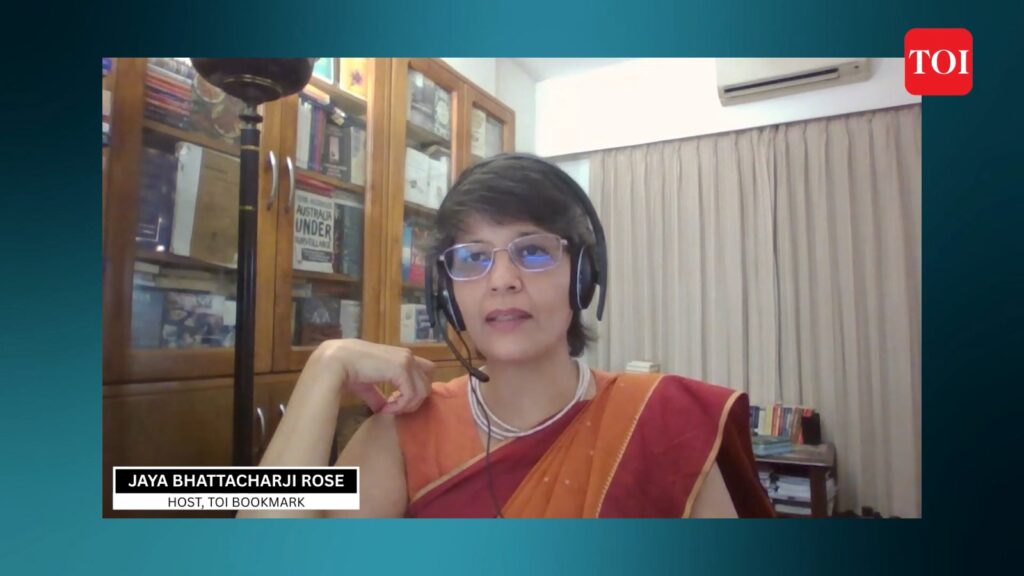
It was an honour and a privilege to interview the winners within hours of their win being announced. We recorded a special video podcast on 21 May 2025. The audio tracks were uploaded on the TOI website and Spotify. The video will be uploaded on YouTube shortly.
This morning’s Delhi NCR edition of Times of India has carried the news/podcast in all editions across India. It was on the front page and six articles inside. The QR code to the TOI Bookmark episode was embedded in an article and the brand name highlighted.
Front page, the Times of India, Thursday, 21 May 2025 The Times of India, Thursday, 21 May 2025
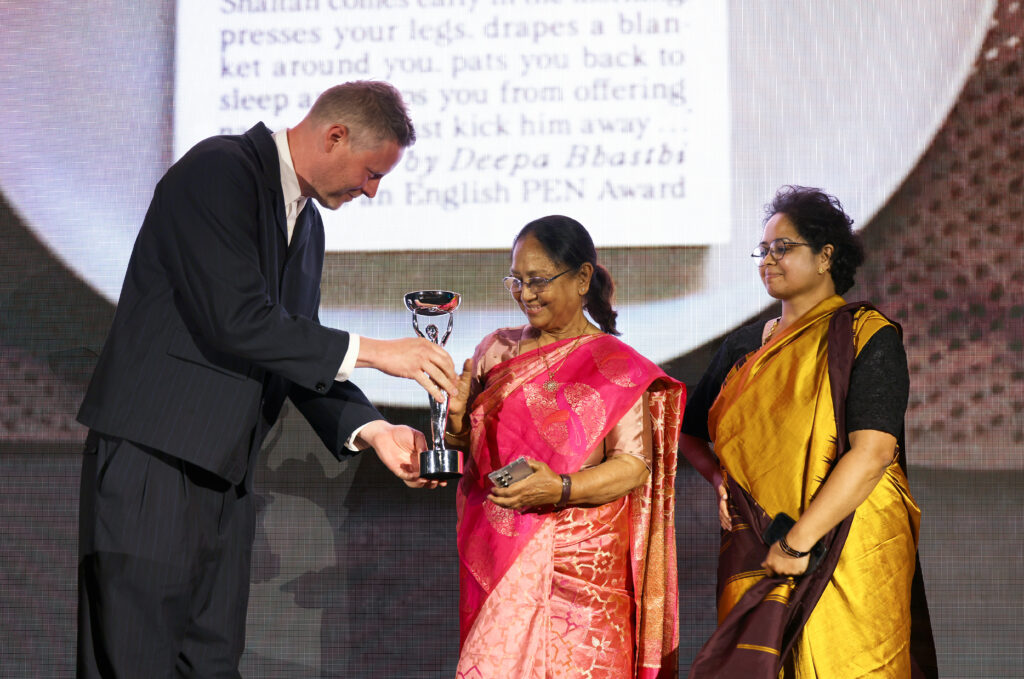
The prestigious literary prize, worth £50,000, is split equally, giving the author and translator their due recognition. The winners were announced by chair of the judges, Max Porter. He said ‘Heart Lamp is something genuinely new for English readers. A radical translation which ruffles language, to create new textures in a plurality of Englishes. It challenges and expands our understanding of translation. This was the book the judges really loved, right from our first reading.’ Heart Lamp is the first collection of short stories to have been awarded this literary prize.
Banu Mushtaq is a writer, activist and a lawyer and is from the state of Karnataka, southern India. Mushtaq began writing within the progressive protest literary circles in southwestern India in the 1970s and 1980s: critical of the caste and class system, the Bandaya Sahitya movement gave rise to influential Dalit and Muslim writers, of whom Mushtaq was one of the few women. She is a prominent champion of women’s rights. She was inspired to write stories by the experiences of women who came to her seeking help.
She is the author of six short story collections, a novel, an essay collection and a poetry collection. She writes in Kannada and has won major awards for her literary works, including the Karnataka Sahitya Academy and the Daana Chintamani Attimabbe awards. Her International Booker Prize 2025 winning book Heart Lamp is the first book-length translation of her work into English, having been translated into Urdu, Hindi, Tamil and Malayalam.
Kannada is spoken by an estimated 65 million people. These stories were written by Banu Mushtaq over a period of 30 + years, from 1990 to 2023. They were selected and curated by Deepa Bhasthi, who was keen to preserve the multi-lingual nature of southern India. When the characters use Urdu or Arabic words in conversation, these are left in the original, reproducing the unique rhythms of spoken language.
Author Banu Mushtaq (R) and translator Deepa Bhasthi, winners of the International Booker Prize 2025 ceremony at Tate Modern, London.
Deepa Bhasthi is a writer and literary translator based in Kodagu, southern India. Bhasthi’s columns, essays and cultural criticism have been published in India and internationally. Her published translations from Kannada include a novel by Kota Shivarama Karanth and a collection of short stories by Kodagina Gouramma. Her translation of Mushtaq’s stories won a PEN Presents award in 2024, a scheme from English PEN designed to support and showcase sample translations, giving UK publishers access to titles from underrepresented languages and regions. They were collected as the International Booker Prize 2025 winning book Heart Lamp.
Max Porter presents author Banu Mushtaq and translator Deepa Bhasthi, winners of the International Booker Prize 2025 ceremony at Tate Modern, London.
Fiammetta Rocco, Administrator of the International Booker Prize, said: ‘Heart Lamp, stories written by a great advocate of women’s rights over three decades and translated with sympathy and ingenuity, should be read by men and women all over the world. The book speaks to our times, and to the ways in which many are silenced.
‘In a divided world, a younger generation is increasingly connecting with global stories that have been skilfully reworked for English-language readers through the art of translation. Since 2016, the International Booker Prize has promoted the world’s best writing in translation, and it’s been fantastic that this year’s nominated titles have come to life through our “A feast of fiction from around the world” campaign, which we’ve been delighted to see projected through new and returning collaborations with cultural venues, festivals, booksellers and content creators.
‘Next year the prize celebrates ten years in its current form, and I am optimistic that the anniversary will lead more people to discover and embrace great translated fiction.’
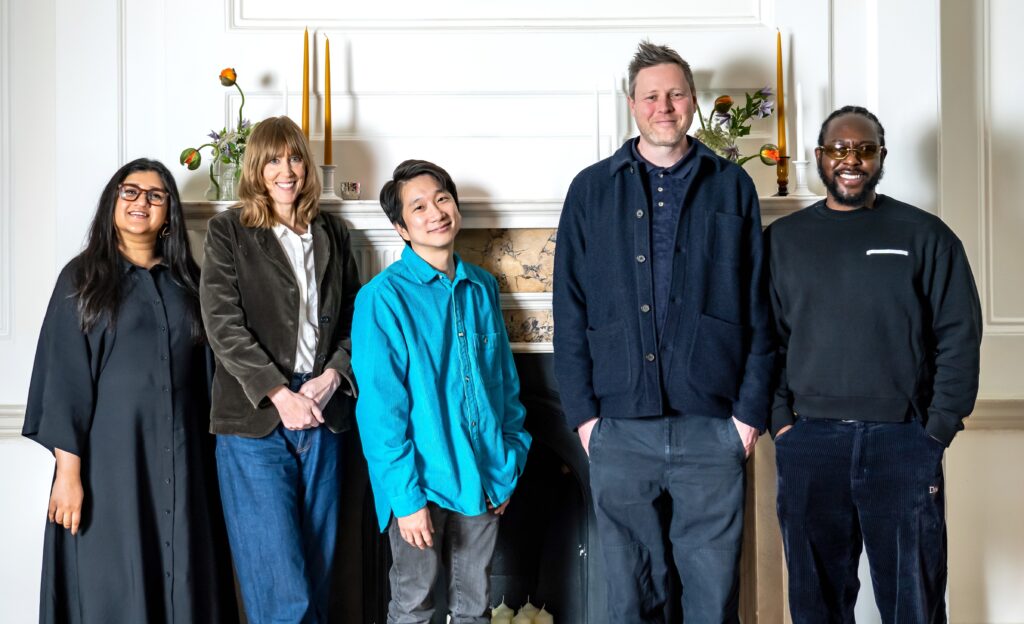
The winning book was chosen by the 2025 judging panel, chaired byPorter, which comprised: prize-winning poet, director and photographer Caleb Femi; writer and Publishing Director of Wasafiri Sana Goyal; author and International Booker Prize-shortlisted translator Anton Hur; as well as award-winning singer-songwriter Beth Orton. The judges were looking for the best work of long-form fiction or collection of short stories translated into English and published in the UK and/or Ireland between 1 May 2024 and 30 April 2025.
Both Mushtaq and Bhasthiwere nominated for the International Booker Prize for the first time this yearand Heart Lamp is Mushtaq’s first English-language publication. Mushtaq is the second Indian author to win the prize, and follows Geetanjali Shree who won in 2022 for Tomb of Sand, translated from Hindi by Daisy Rockwell. Bhasthi is the first Indian translator to win the prize. Mushtaq is the sixth female author, with Bhasthi the ninth female translator, to be awarded the prize since it took on its current form in 2016.
At just over 200 pages long, Heart Lamp was the second longest book on a shortlist of slim books: four of the six shortlisted works are under 200 pages long, with Under the Eye of the Big Bird the longest, at 278 pages.
Author Banu Mushtaq (L) and translator Deepa Bhasthi, winners of the International Booker Prize 2025 ceremony at Tate Modern, London.
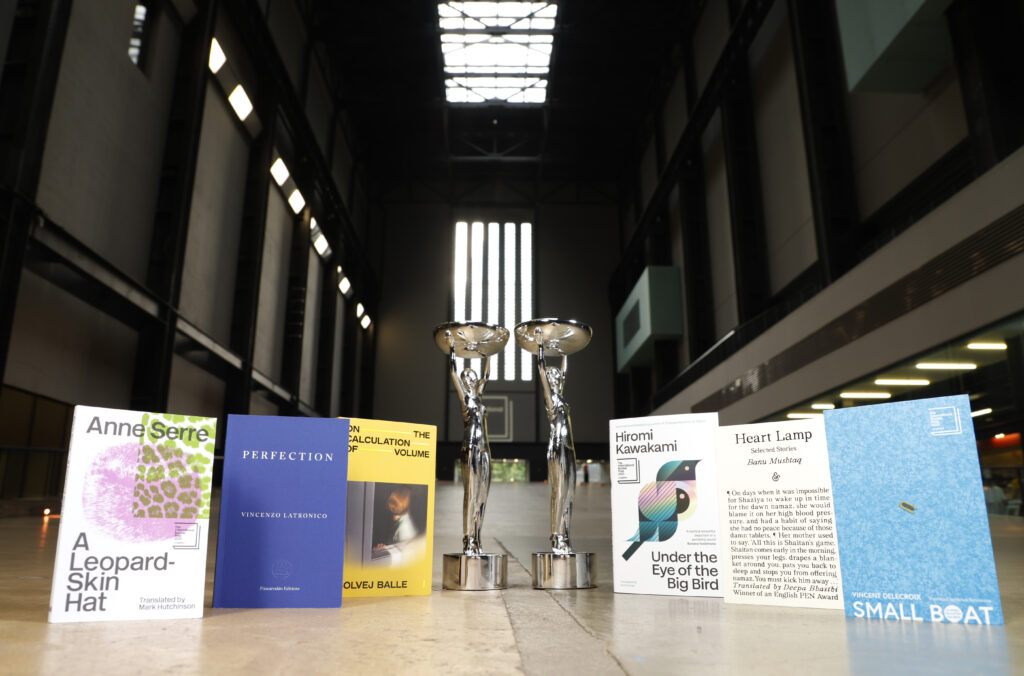
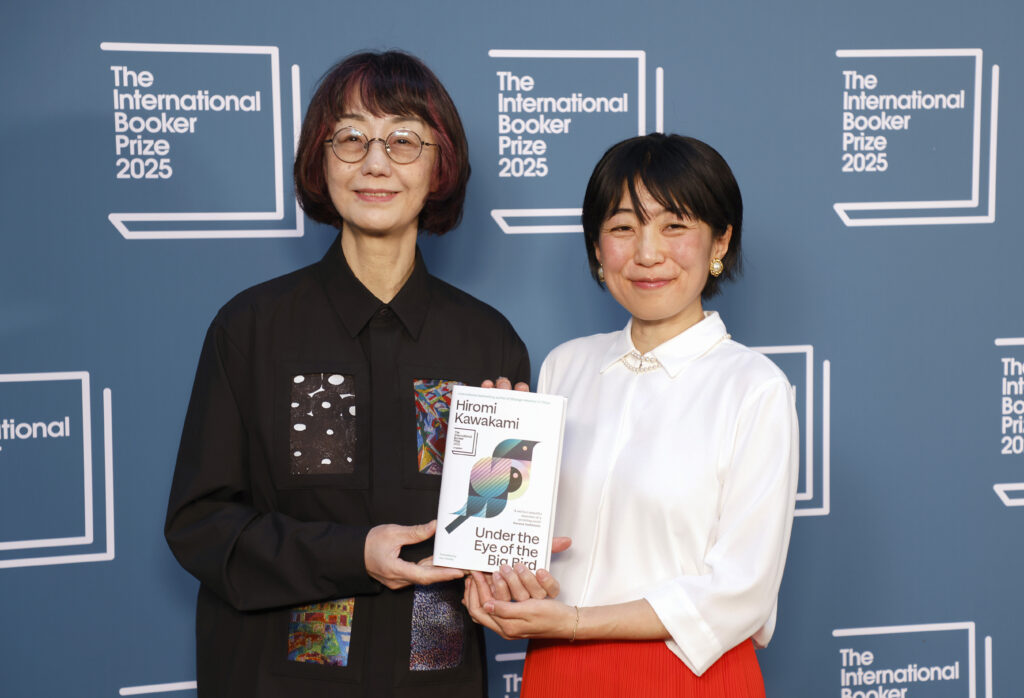
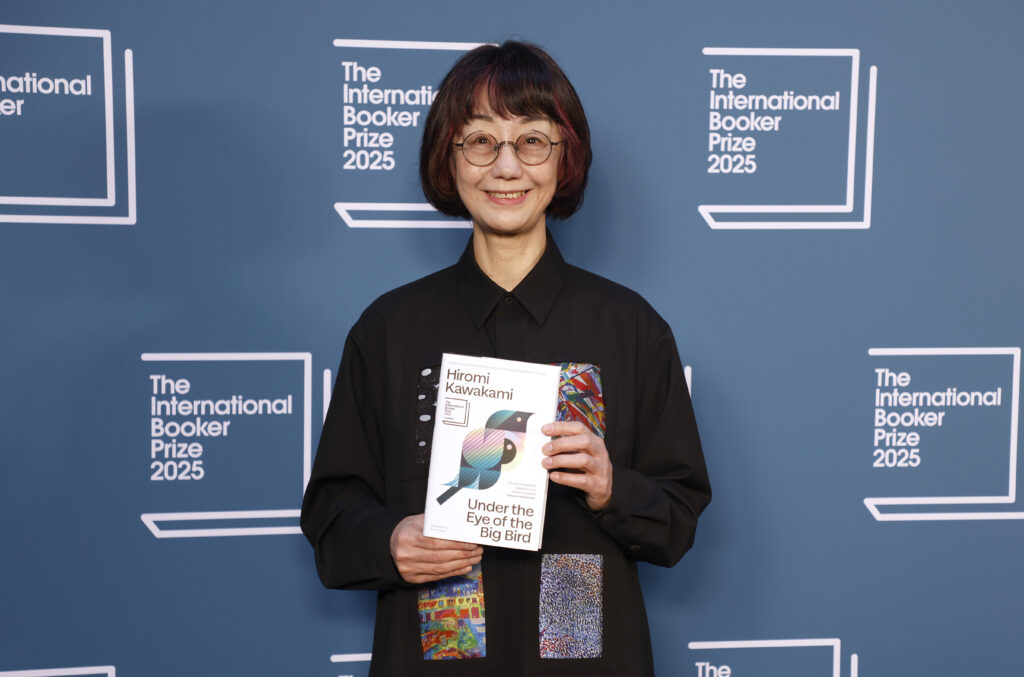
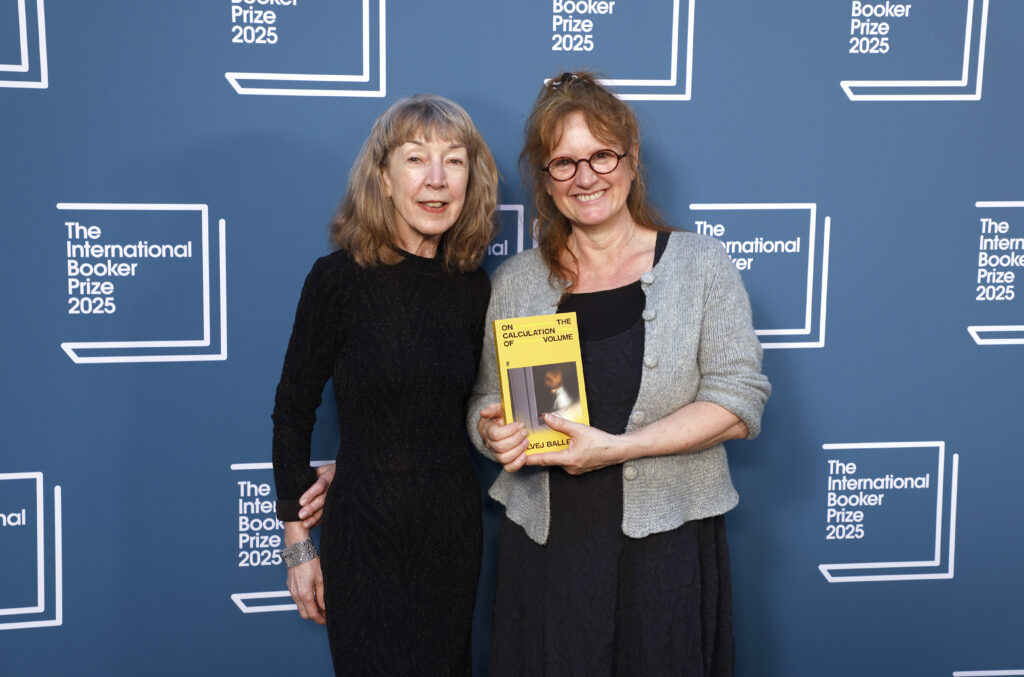
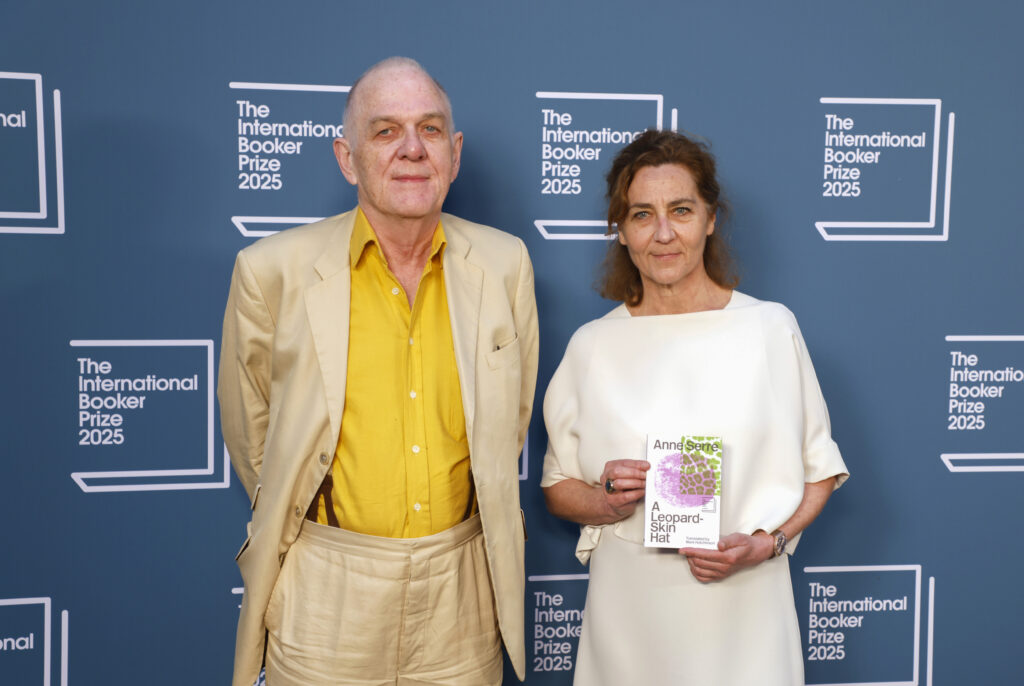
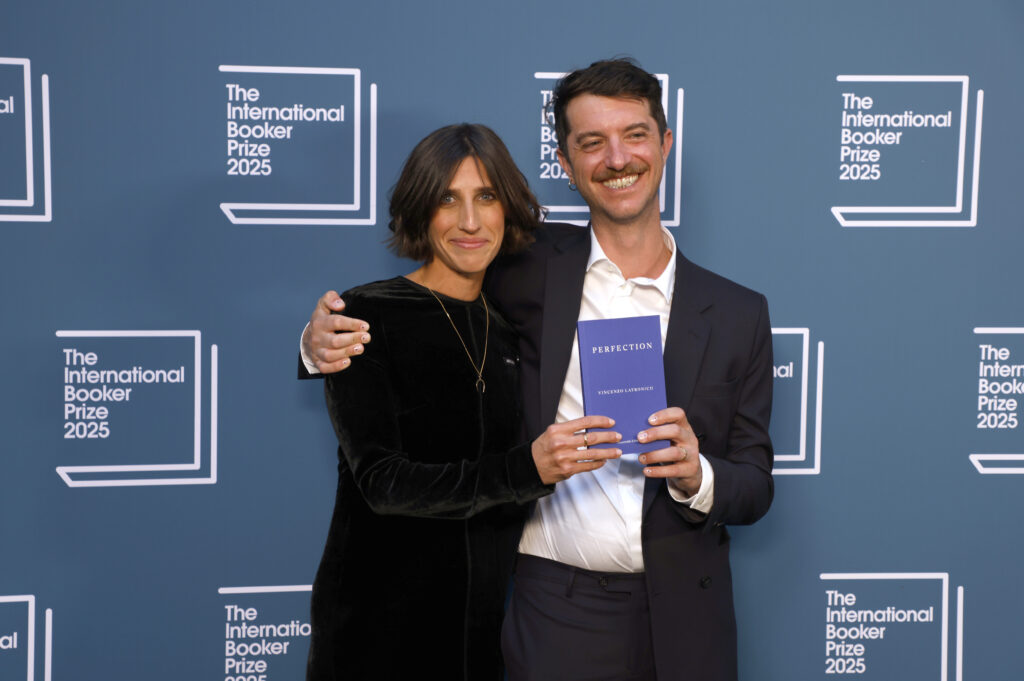
The other shortlisted writers and translators were photographed holding their books at the Tate Modern too. Here are the pictures:
The International Booker Prize 2025 ceremony at Tate Modern, London.Hiromi Kawakami and Asa Yoneda at the International Booker Prize 2025 ceremony at Tate Modern, London.Hiromi Kawakami at the International Booker Prize 2025 ceremony at Tate Modern, London.Barbara J. Haveland and Solvej Balle at the International Booker Prize 2025 ceremony at Tate Modern, London.Banu Mushtaq and Deepa Bhasthi at the International Booker Prize 2025 ceremony at Tate Modern, London.Mark Hutchinson and Anne Serre at the International Booker Prize 2025 ceremony at Tate Modern, London.Sophie Hughes and Vincenzo Latronico at the International Booker Prize 2025 ceremony at Tate Modern, London.
This is a selection by an eminent jury that is spot on. Read Heart Lamp.
22 May 2025
* The photographs have been used with due permission from The Booker Prize Foundation.
Read more:
“The roots of Banu Mushtaq’s literary rebellion” by Meghna Rao Banu Mushtaq’s International Booker-winning ‘Heart Lamp’, translated by Deepa Bhasthi, marks many historic firsts for Kannada literature and offers an unflinching look Muslim women’s lives in Karnataka (Himal SouthAsian, 21 May 2025)
Bothayna Al-Essa’s The Book Censor’s Library was published in 2024 by Restless Books. It is described a perilous and fantastical satire of banned books, secret archives, and the looming eye of an all-powerful government. In a near future where most literature is deemed dangerous by the state, a bureaucrat falls head over heels for the novel he’s supposed to ban. That leads to another book, and then another… soon he’s drawn into an underground movement of illegal readers laboring to save the stories they love. As the stakes go up, he must weigh his mission against the terrible risk posed to his family – particularly his young daughter, whose affinity for make-believe is already rousing suspicion.
This dark adventure is timely to the point of urgency, written in defiance of strict censorship laws in Al-Essa’s home country of Kuwait. It arrives in the U.S. amid a rising tide of restrictive legislation that targets schools, libraries, and marginalized writers. I’m thrilled to share this magical and important story.
Bothayna Al-Essa is the bestselling Kuwaiti author of nearly a dozen novels and additional children’s books. She is also the founder of Takween, a bookshop and publisher of critically acclaimed works. Her most recent book, The Book Censor’s Library, won the Sharjah Award for Creativity in the novel category in 2021 and is her third novel to appear in English, after Lost in Mecca and All That I Want to Forget. It was on the Time magazine’s 100 Best Books of 2024. The Book Censor’s Library was translated from the Arabic by Ranya Abdelrahman and Sawad Hussain. It was longlisted for the 2024 National Book Award for Fiction in their category for translated literature.
El Essa is a member of the Kuwaiti Writers Association as well as the Arab Internet Writers Union. She campaigned against censorship in Kuwait until it was abolished in 2020.
Al-Essa was author-in-residence at the British Centre for Literary Translation for the summer of 2023, and the recipient of Kuwait’s Nation Encouragement Award for her fiction in 2003 and 2012. She has written books on writing and led writing workshops throughout the Arab world.
I had the pleasure of interviewing Bothayna for TOI Bookmark podcast. Here is a snippet from the conversation:
Well, I guess that was the whole idea of writing that book. The defining line between reality and imagination is also imaginary. Everything is blended together. I think the more we deny the reality of imagination… if we deny it, it will haunt us in ways that never occurred to us, in ways that are unexpected.
Listen to it on Spotify:
TOI Bookmark is a weekly podcast on literature and publishing. TOI is an acronym for the Times of India (TOI) which is the world’s largest newspaper and India’s No. 1 digital news platform with over 3 billion page views per month. The TOI website is one of the most visited news sites in the world with 200 million unique monthly visitors and about 1.6 billion monthly page views. TOI is the world’s largest English newspaper with a daily circulation of more than 4 million copies, across many editions, and is read daily by approximately 13.5 million readers. The podcasts are promoted across all TOI platforms. I have recorded more than 130+ sessions with Jnanpith, Padma Bhushan, and Padma Shree awardees, International Booker Prize winners, Booker Prize winners, Women’s Prize for Fiction, Nobel Laureates, Pulitzer Prize, Stella Prize, AutHer Awards, Erasmus Prize, BAFTA winners etc. Sometimes the podcast interviews are carried across all editions of the print paper with a QR code embedded in it.
Some of the authors who have been interviewed are: Banu Mushtaq, Deepa Bashti, Samantha Harvey, Jenny Erpenbeck, Michael Hoffman, Paul Murray, V. V. Ganeshananthan, Hisham Matar, Anita Desai, Amitava Kumar, Hari Kunzro, Venki Ramakishnan, Siddhartha Deb, Elaine Feeney, Manjula Padmanabhan, NYRB Classics editor and founder Edwin Frank, Jonathan Escoffery, Joya Chatterji, Arati Kumar-Rao, Paul Lynch, Dr Kathryn Mannix, David Nicholls, Cat Bohannon, Charlotte Wood, Sebastian Barry, Shabnam Minwalla, Paul Harding, Ayobami Adebayo, Pradeep Sebastian, G N Devy, Angela Saini, Manav Kaul, Amitav Ghosh, Damodar Mauzo, Boria Majumdar, Geetanjali Mishra, William Dalrymple, David Walliams, and Annie Ernaux.
~ To launch six titles this year in non-fiction, poetry and more
Mumbai, 14 May 2025: Godrej DEI Lab, the diversity and inclusion initiative of the Godrej Industries Group and Westland Books, today announced the launch of “Queer Directions” (QD) – a new publishing imprint dedicated to amplifying LGBTQIA+ voices across genres spanning non-fiction, poetry, and eventually, fiction. With plans to launch six compelling titles this year, the collaboration signals a deep commitment to inclusive storytelling and representation.
At its core, Queer Directions will celebrate queer expression, identity, and lived experiences. From insightful memoirs to imaginative narratives for younger readers, Queer Directions aims to build an ever-expanding bridge between queer creators and readers everywhere.
Parmesh Shahani, Head of Godrej DEI Lab and author of Queeristan, will serve as Series Editor for Queer Directions. Shahani said, “The idea is to build a bridge, not a border. At a time when queer rights are being challenged across the world, this imprint stands as both an act of solidarity and a space to nurture fresh, authentic voices from within the LGBTQIA+ communities. It will showcase the rich diversity of queer lives to straight allies and non-queer readers.”
Westland Books, which has steadily built a credible LGBTQIA+ list over the years – from Queeristan to recent acclaimed fiction by Unmana and Santanu Bhattacharya – now takes a bold step forward with this focused publishing programme.
“It has been a long-cherished hope that someday we would be able to launch a thoughtful, inclusive and truly intersectional imprint that is focused on discovering and nurturing new voices in the LGBTQIA+ space. Queer Directions is that,” said Karthika V.K., Publisher at Westland Books. “‘And we couldn’t have found more supportive and engaged partners than Godrej DEI Lab and series editor Parmesh Shahani to help shape and enhance the impact of all that we publish in QD.”
With the launch of Queer Directions, the Godrej Industries Group reaffirms its continued investment in social equity and inclusion. The imprint, as a creative endeavour, will be a testament to the power of partnerships in shaping inclusive narratives and imagining progress for all.
About the Godrej DEi Lab
The Godrej DEI Lab empowers inclusion ecosystems both within and outside the Godrej Industries Group.
Godrej Industries Ltd. is the holding company of the Godrej Industries Group (GIG). We are privileged to serve over 1.1 billion consumers globally through our businesses with market leadership positions in the consumer products, real estate, agriculture, financial services and chemicals industries.
About Westland Books
Westland Books is an award-winning Indian publisher with a diverse and exciting range of books from popular and literary fiction to business, politics, biography, spirituality, popular science, health, and self-help. Its key publishing imprints include Context, which publishes award-winning literary fiction and non-fiction; Ekadā, which publishes the best of contemporary writing in Indian languages and in translation; Tranquebar, home to the best new fiction from the Indian subcontinent; the eponymous Westland Sport, Westland Business and Red Panda, which publishes a range of books for children of different ages.
I am sharing the text of a Facebook post that I created on 5 October 2024. We had crossed 100 podcast recordings. In December 2024, the podcast became available on Spotify as well. Today, we have crossed 130+ and growing every month.
An incredible milestone! We have recorded 100 episodes of #TOIBookmark. As the host of the show, I have interviewed a wide variety of authors, across genres.
We have recorded sessions with the winners of Jnanpith, Padma Bhushan, Padma Shree, International Booker Prize, Booker Prize, Women’s Prize for Fiction, AutHer Awards, Stella Prize, Nobel Laureates, Pulitzer Prize, BAFTA winners, etc. Also, diplomats, bestselling authors, debut writers, and legendary writers, across genres and languages. Sometimes the podcast interviews are carried across all editions of the print paper with a QR code embedded in it.
Some of the authors who have been interviewed are:Jenny Erpenbeck, Michael Hoffman, Paul Murray, V. V. Ganeshananthan, Hisham Matar, Anita Desai, Amitava Kumar, Hari Kunzro, Venki Ramakishnan, Siddhartha Deb, Elaine Feeney, Manjula Padmanabhan, NYRB Classics editor and founder Edwin Frank, Jonathan Escoffery, Joya Chatterji, Amish Tripathi, Ashwin Sanghi, Arati Kumar-Rao, Paul Lynch, Dr Kathryn Mannix, Cat Bohannon, Sebastian Barry, Shabnam Minwalla, Paul Harding, Ayobami Adebayo, Pradeep Sebastian, G N Devy, Angela Saini, Manav Kaul, Amitav Ghosh, Damodar Mauzo, Sonora Jha, Geetanjali Mishra, William Dalrymple, and Annie Ernaux.
TOI Bookmark is a weekly podcast on literature and publishing. TOI is an acronym for the Times of India (TOI) which is the world’s largest newspaper and India’s No. 1 digital news platform with over 3 billion page views per month. The TOI website is one of the most visited news sites in the world with 200 million unique monthly visitors and about 1.6 billion monthly page views. TOI is the world’s largest English newspaper with a daily circulation of more than 4 million copies, across many editions, and is read daily by approximately 13.5 million readers. The podcasts are promoted across all TOI platforms. The podcast is not behind a paywall. It is free to listen anywhere in the world.
We began recording TOI Bookmark episodes about two years ago. Initially it was with long gaps in between as we were trying to figure out details. Ultimately, it became easier to figure out the programme. This is a massive team effort with lots of folks helping behind the scene.
Anita Desai’s novella published on 7 July 2024. Rosarita is about a young student from India called Bonita who is visiting San Miguel, Mexico to learn Spanish. One day, while sitting quietly, she is approached by a flamboyantly dressed elderly woman, swishing her skirt, who plonks herself down next to Bonita, insisting that Bonita is “my adored Rosarita’s little girl. You are the image of her when she first came to us as an Oriental bird!” Later, Bonita refers to this stranger as the “Trickster”.
In the pages that follow, Bonita is mystified by the story spun about her mother being an exceptional artist, who stayed in various artist communes and travelled around the country. The Trickster takes Bonita to the various locations, but most of the buildings have been reduced to rubble. Despite her disbelief at her late mother’s life before marriage to her father, Bonita accompanies the Trickster to find out more. She doesn’t find much else. But she does find a sense of belonging in this distant land and realises she need not search any more.
When this book goes out into the world, there will be much said about motherhood and memory. Perhaps, even about grief and finding one’s own space and identity. Whereas, my understanding of reading this stupendous story is the energy criss-crossing generations. It is also making visible the lives women, especially married women, put in one lifetime. Their younger selves and their histories are blanked out in their marriages and thus, to their children too. It takes a special effort to make one’s life visible and share details of the past. Bonita feels bewildered about her mother’s past and her exceptional talent as a painter but she does nothing about it. Instead, she gets caught in a whirlpool of memories that do not help her in any way. She seems to recall her mother publicly being a good wife, hostess, and mum but who was in private, resentful of the chores that fell her way. It’s not said explicitly but mentioned.
The gaps in a mother’s life, before and after marriage, is a violent break that few talk about openly. In Rosarita it is merely displayed but at least it is made visible. Such an important task.
*****
When Pan Macmillan India announced that they were publishing in South Asia #AnitaDesai‘s forthcoming novella “#Rosarita“, it caused quite a stir. I read an ARC and enjoyed it immensely. Later, I was fortunate to record a conversation with the legendary writer. It was late at night for us and at her end, Mrs Desai and her daughter had been battling the aftermath of a terrible storm that had cut off their telephone lines and caused a few other inconveniences. Yet, there they were at the other end, bright and chirpy, ready for this special edition of #TOIBookmark podcast, a Times Special offering on books and literature. It was truly an honour and a privilege to speak with Anita Desai.
*****
Here is a snippet from the recording:
“Yes, I suppose we all do but maybe we only find a little key to that story, that is all and if you have that lingering in your mind, when we have so many encounters, we meet so many people, forget them, forget their names even, others you may have only spent two minutes with but they linger in your mind and that gives you a little key to unlock what you do not know about them. So, like all fiction writers I have to invent their stories for them which of course involves some research like I had to do for Baumgartner, his Jewish European past to do no research for the family in Clear Light of Day. It was a familiar world, I knew everything about it.”
This podcast was recorded at the beginning of 2025. Hence, the reference to the book being forthcoming. Now it has been released in various parts of the world. On 9 May 2025, Catherine wrote on Facebook that the New Zealand edition of The Book of Guilt was reprinted before it was even published! A dream come true for all writers.
We have had a fascinating range of guests on the weekly #TOIBookmark podcast. 124+ guests! The guests featured have been national and international authors including Jnanpith, Padma Bhushan, & Padma Shri awardees, Nobel Laureates, Booker Prize winners, Pulitzer Prize winners, BAFTA awardees, diplomats, bestselling authors, debut writers, and legendary writers, across genres and languages. But the conversation was Catherine Chidgey was extra special. For years, I have been hearing about her incredible work and never got a chance to read her books. Thanks to the New Zealand High Commission to India, Bangladesh & Nepal I not only managed to read a pile of Catherine’s incredible novels but got to interview her as well. She has garnered a pile of awards over the years but has also generously given back to the literary community by instituting the Sargeson Prize for short stories in recognition of Frank Sargeson’s influence on New Zealand literature. At NZD 15,000, it is the country’s richest short story award.
Her debut In a Fishbone Church won Best First Book at the New Zealand Book (1998) Awards and the Commonwealth Writers’ Prize (South East Asia/South Pacific,1999), as well as the Betty Trask Award (1999) in the UK. It was longlisted for the Orange Prize (1999). Other honours include the Prize in Modern Letters (2002), the Katherine Mansfield Award (2013) and the Janet Frame Fiction Prize (2017). Her novel Remote Sympathy was longlisted for the Women’s Prize in the UK and shortlisted for the Dublin Literary Award (both in 2022).
Her forthcoming novel “The Book of Guilt” (Hachette India) is a compelling work of dystopian fiction. It sparked two international bidding wars and is published in May 2025 by five different English-language publishers! John Murray (UK, in May), Hachette (US, in September), Knopf Canada (September), Penguin Random House Australia (May), Te Herenga Waka University Press (NZ, in May).
Catherine really explores the dark spaces in life, while seemingly not to. She does it well. In the conversation, she says that she really pushes herself hard. If anyone does that, then they squeeze the best out of themselves. It was such a pleasure to chat with “one of New Zealand’s greatest living writers” (Radio NZ).
Here is a snippet from our conversation:
“My life is very busy. So, I teach creative writing full time at the University of Waikato and we have a nine-and-a-half-year-old daughter and somehow around that I also seem to write full time. So the true answer is that I have no social life when I am in the generative phase of a novel rather than the late editing phase. I write first thing in the morning and I take my daughter to school and then I go into the university campus and then I come home and we have dinner and then we get our daughter to bed and then I write again. I do the evening shift. Morning and night, seven days a week. I am pretty hard on myself. I have a daily word count that I have to meet. There is no option of not meeting that. If I exceed it, which I most often do, it doesn’t mean that I get to go easy on myself the next day. The clock resets itself to zero and I have to start again. [Laughs]”
I highly recommend Catherine’s new novel. It is truly unforgettable. It has the incredible knack of popping up in one’s memory while reading other contemporary literature and discovering unexpected threads between the books. Utterly gorgeous!
Artificial Intelligence has been “just around the corner” for decades, continually disappointing those who long believed in its potential. But now, with the emergence and growing use of ChatGPT, Gemini, and a rapidly multiplying number of other AI tools, many are wondering: Has AI’s moment finally arrived? In AI Valley, Pulitzer Prize-winning journalist Gary Rivlin brings us deep into the world of AI development in Silicon Valley. Over the course of more than a year, Rivlin closely follows founders and venture capitalists trying to capitalize on this AI moment. That includes LinkedIn founder Reid Hoffman, the legendary investor whom the Wall Street Journal once called, “the most connected person in Silicon Valley.”
Through Hoffman, Rivlin is granted access to a number of companies on the cutting-edge of AI research, such as Inflection AI, the company Hoffman cofounded in 2022, and OpenAI, the San Francisco-based startup that sparked it all with its release at the end of that year of ChatGPT. In addition to Hoffman, Rivlin introduces us to other AI experts, including OpenAI cofounder Sam Altman and Mustafa Suleyman, the co-founder of DeepMind, an early AI startup that Google bought for $650 million in 2014. Rivlin also brings readers inside Microsoft, Meta, Google and other tech giants scrambling to keep pace.
On this vast frontier, no one knows which of these companies will hit it big–or which will flame out spectacularly. In this riveting narrative marbled with familiar names such as Musk, Zuckerberg, and Gates, Rivlin chronicles breakthroughs as they happen, giving us a deep understanding of what’s around the corner in AI development. An adventure story full of drama and unforgettable personalities, AI Valley promises to be the definitive story for anyone seeking to understand the latest phase of world changing discoveries and the minds behind them.
Fun fact. Geof Hinton who co-founded the University College London’s Gatsby Computational Neuroscience Unit where Demis Hassibis had a research fellowship on the possibilities of neuroscience and AI was awarded the Nobel Prize for Physics 2024. It was awarded for “for foundational discoveries and inventions that enable machine learning with artificial neural networks”. The same year, Demis Hassibis was awarded the Nobel Prize for Chemistry for “for protein structure prediction”. Interesting coincidence.
Meanwhile, as the book extract suggests, Demis Hassibis, CEO and co-founder of Google DeepMind and Mustafa Suleyman is CEO of Microsoft AI. Both of them were earlier co-founders of DeepMind, an AI company acquired by Google.
Read the extract from the book published on Moneycontrol. AI Valley: Microsoft, Google, and the Trillion-Dollar Race to Cash In on Artificial Intelligence has been published by HarperCollins India.
Gary Rivlin is a Pulitzer Prize–winning investigative reporter who has been writing about technology since the mid-1990s and the rise of the internet. He is the author of nine books, including Saving Main Street and Katrina: After the Flood. His work has appeared in the New York Times, Newsweek, Fortune, GQ, and Wired, among other publications. He is a two-time Gerald Loeb Award winner and former reporter for the New York Times. He lives in New York with his wife, theater director Daisy Walker, and two sons.
Buy. Read. Share. Brilliant book. Written with great tenderness and love, intertwined with indescribable pain and grief. Andaleeb Wajid writes about losing her husband and mother-in-law within five days of each other to covid.
You will read it, as I did, in one sitting. Truly unputdownable.