Jaya Posts

“Indian Literary Historiography” (Ed.) Harish Trivedi / TOI Bookmark

. It is always a pleasure to converse with academic and bilingual writer, Prof. Harish Trivedi . Recording this episode of #TOIBookmark took us into new and unexplored areas of Indian literature. Our discussion revolved around the recently published Sahitya Akademi volume that has been edited by the prpfessor “Indian Literary Historiography”.

Here is a snippet from the podcast:

“The book contains a history of histories of literatures in our various Indian languages. One thing that I have innovated from the regular Sahitya Akademi model is that in any book that has statements and discussions in many languages that is from the Sahitya Akademi, it always began in the English alphabetical order. So Assamiya came first and Urdu came last and Tamil & Telugu towards the end and Gujarati towards the early part. What I did was because it is a book about historiography is that I said lets begin with the oldest language so that you proceed in a chronological perspective. But that is not easy to determine because everything is political.”

Listen on Spotify:

Indian Literary Historiography (book blurb): The history of Indian literature goes back over three thousand years but “Histories” of Indian literature began to be written only in the nineteenth century. This volume provides a history of these Histories as written by both Western and Indian scholars, and an analysis of the assumptions and preconceptions underlying them. The five essays in Part I outline the key concepts and offer general surveys of the subject. In Part II, fifteen of the essays take up the histories of one major language each, while the last essay looks at histories of “Indian Literature” considered as a whole, focusing especially on some histories published in the 21st century. Some major, and often contentious, issues that run right though the volume are: whether Indians had (or have) a sense of history; whether itihasa-purana or literary sources can be considered as history; whether there is an Indian mode of perceiving time and composing history which is at variance with the Western mode; whether the multilingual plurality and social diversity of Indian literature can possibly be encompassed in any history; and whether history (still) can make a truth-claim or is just another narrative. This volume is a compendium not only of fascinating historical facts but also of literary practices as they have evolved over millennia and the constant alternation of tradition and innovation.

27 May 2025

” A Man of Two Faces: A Memoir, A History, A Memorial” by Viet Thanh Nguyen

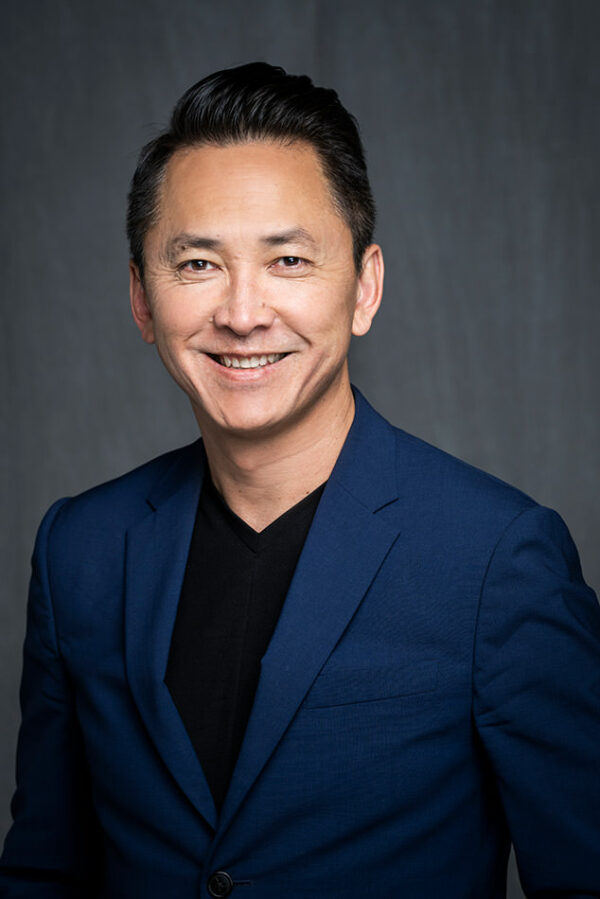
Viet Thanh Nguyen’s novel The Sympathizer won the Pulitzer Prize for Fiction and was turned into an HBO limited series. The recipient of fellowships from the Guggenheim and MacArthur Foundations, his most recent books are A Man of Two Faces: A Memoir, A History, A Memorial; To Save and to Destroy: Writing as an Other; and the edited volume The Cleaving: Vietnamese Writers in the Diaspora. All of them have been published by Hachette India.

How do you even begin to describe a book that is gut wrenching, relevant, and absorbing to read? I read it more or less in one fell swoop, despite many false starts. It took a while to read the first few pages and get my bearing. But once I had figured it out, I just read and read and read. A Man with Two Faces is very moving, very thought-provoking and it truly helps decontstruct the concep of America as everyone seems to think that they know. It is told from the point of view of a Vietnamese refugee whose parents flee at the time of the Vietnam war. Viet Thanh Nguyen is fours-year-old. But he seems to carry within him the experience of being a Vietnamese and a successful American. He has broken many barriers by being accepted for who he is, his views, his writing, and his opinion pieces. He has been true to his identity and not allowed anyone to tell him otherwise. All the while he also recognises the intense sacrifices his parents made for the sake of their two sons. Both of whom ended up living the American dream, but at what cost. Their mother quite literally had had to be institutionalised not once, but twice, and finally passed away a woman trapped within herself. It is a heartbreaking account of her downward spiral. Yet, what is extraordinary is that her younger son, the writer, recognises with acute sensitivity what it takes for a woman to live many lives in one. He refers to her marriage at the age of seventeen as the first time she was a refugee when Vietnam was split into two and then the second time, when she fled Vietnam for the USA. Throughout the text, he is able to draw comparisons between the freedom she had in Vietnam, including earning her livelihood and being able to drive a car, but in the USA, she was handicapped by language and ultimately, her existence was circumscribed by the provision store that she ran with her husband and her domestic chores. It broke her, piece by piece.

There is much else in A Man of Two Faces. It is a combination of sophisticated criticism and a witnessing to modern events in the USA. Also, what it takes to be an immigrant.

The writing style at first is peculiar to engage with. But as one proceeds through the book it becomes fairly obvious that these were previously published essays that are now interspersed with present day commentaries and observations by the author. It makes for an interesting visual arrangement on the page, almost like literary art. At the same it, it is like the reader is privileged to be privy to a dialogue. Ultimately, it illustrates the very title of the book wherein the two faces of the author — the public and the private are in constant engagement with each other in the prose format. Fascinating!

Read an extract from the book published on Moneycontrol to coincide with the fifty years of the conclusion of the Vietnam War on 30 April 2025.

Here is the TOI Bookmark conversation on Spotify:

Read it and you wil not regret it.

Viet Thanh Nguyen

26 May 2025

Inaugural Archer-Amish literary awards worth $25,000

Archer-Amish awards worth $25,000

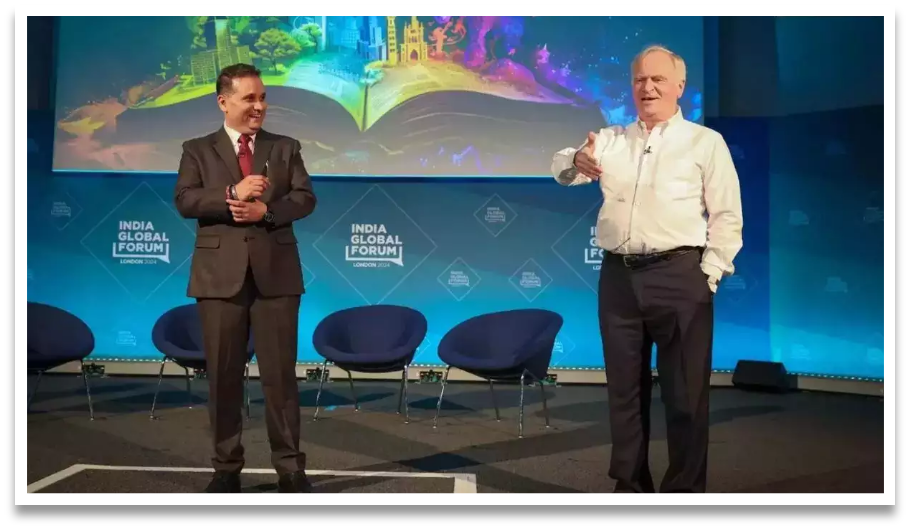
At IGF London 2024, two of the world’s most celebrated authors, Jeffrey Archer and Amish Tripathi, unveiled a first-of-its-kind honour celebrating the power of storytelling – The IGF Archer-Amish Award.

The Award recognises fiction writers who demonstrate a compelling will to tell India’s contemporary story, one shaped by complexity, creativity, and cultural dynamism. Because words don’t just tell stories, they shape societies. The first award will be presented at IGF London 2025, spotlighting voices that are crafting the narrative of modern India.

Meet the Finalists for the IGF Archer-Amish Award:

📚 Nitya Neelakantan-Pallav: Navapashanam – The Quest for the Nine Magical Poisons
Two women…two hundred years apart. A story of magical healing, hidden treasure, betrayal, and murder. Mookambikai, the secret keeper of the Navapashanam, is being hunted and persecuted by nefarious factions until her trail goes cold after a confrontation with the vilest Aghora who wants the Navapashanam. 200 years later, Mookambika’s great grandniece, Manimeghalai aka Megha, finds herself entangled in a maelstrom of events involving dark elements who are still on the hunt for the Navapashanam. Amidstnear fatal accidents, an increasing count of dead bodies, and a missing fiancé, Megha, is pushed into looking for the lost Navapashanam. Will she find what she desperately seeks? Are Mookambikai’s and Megha’s destiny entwined? Will Megha save the day? Navapashanam takes you on a fascinating journey of passion and intrigue.

📚 Shalini Mullick: The Way Home
Anya is grieving the loss of her beloved sister and is desperately in denial. Neel is consumed by the shame of not living up to the accomplishments of his overachieving parents. Roy’s Impostor Syndrome and a crushing heartbreak have depleted his self-confidence, making him give up his career as a surgeon. Seeking refuge from their inner demons, the three millennials flee to Goa, where they become friends. Will their friendship help the trio shed their demons and reclaim their life and happiness? Can this camaraderie give them the connection they need to embark on a journey of self-discovery and healing? Or is it too little, too late? The Way Home is a relatable tale of bonding and self discovery that will touch your heart.

📚 Yogesh Pandey: The Kill Switch
They are battling an enemy that is omnipresent, able to infiltrate every electronic device on the planet, peer through every CCTV camera, and command every intelligence agency worldwide. Join Alex and Grace on their journey from Silicon Valley to Mumbai to halt a catastrophic monster spreading through the technological labyrinth. With just fifty hours available, they must traverse half the globe and elude arguably the most potent foe to prevent the code from dominating the world. “The Kill Switch” is a heart-pounding thriller that weaves together the realms of sci-fi and international intrigue, inviting readers on a breathless journey to save humanity from a digital apocalypse. Join the race against the clock, where every second could be the difference between salvation and doom.

26 May 2025

Hiromi Kawakami “Under the Eyes of the Big Bird” and “The Third Love”

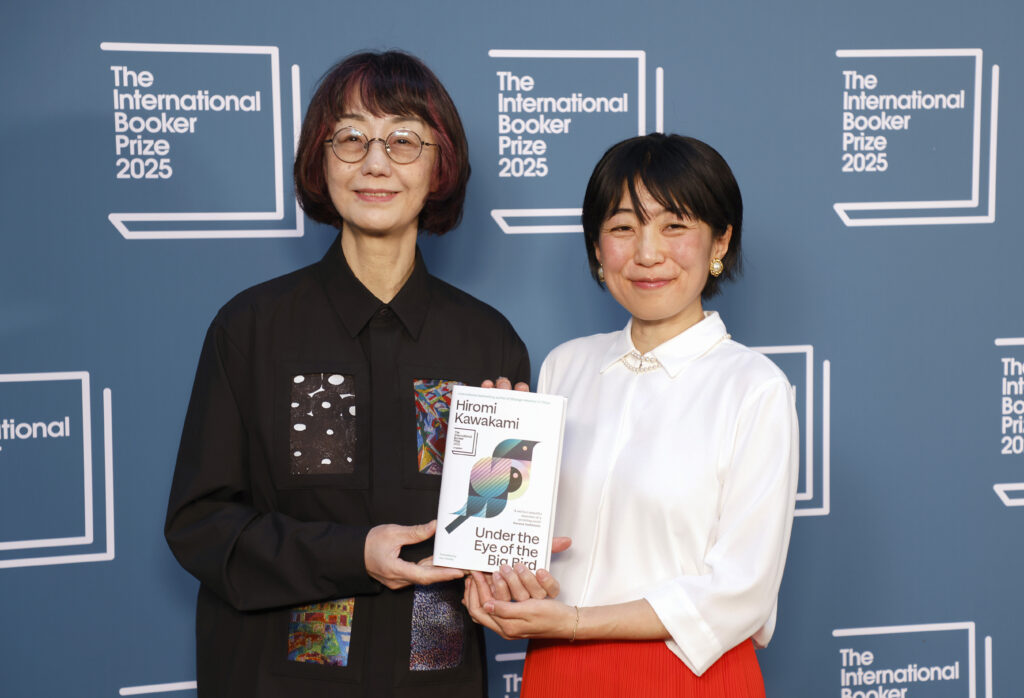
Hiromi Kawakami (川上 弘美, Kawakami Hiromi, born 1958) is one of Japan’s most popular contemporary novelists known for her off-beat fiction, poetry, and literary criticism. She has won numerous Japanese literary awards, including the Akutagawa Prize, the Tanizaki Prize, the Yomiuri Prize, and the Izumi Kyōka Prize for Literature. Her work has been adapted for film, and has been translated into more than 15 languages. In 2025, Under the Eye of the Big Bird, Asa Yoneda’s English translation of this collection, was shortlisted for the International Booker Prize.

Hiromi Kawakami (L) and Asa Yoneda (R) at the International Booker Prize 2025 ceremony, 20 May, Tate Modern, London.

It is incredible that Hiromi Kawakami began writing at the age of thirty-six when she debuted as a short story writer of literary fiction — Kamisama (1994). “Incredible” because nowadays people want to achieve critical milestones before they have reached thirty, but to start a literary career in her mid-thirties is impressive. She has consistently won prestigious literary awards in Japan. It was her rewriting of the first short story “Kamisama” or “God” as a longer piece of speculative fiction that developed into Under the Eye of the Big Bird. She was prompted to write it after the Fukushima Daiichi nuclear disaster (2011). At first, she was unable to write, but after two years she began to develop the story. It took many more years before the book was translated into English by Asa Yoneda and published by Granta in 2025.

Reading Under the Eye of the Big Bird is an unnerving experience. The loosely interconnected short stories, spanning geological eras, discussing the human race, evolution and the survival of the mutants/humans using stem cell technology, and then the appearance of artificial intelligence are eerie. The author began writing this piece of fiction in 2013. Reading it in 2025 feels as if it was written now and will continue to have value in the coming years too. For instance, her chapter on artificial intelligence, reads more like an essay, a ramble explaining AI to her more than to the reader. Yet, she has the knack of making the reader ponder and think while reading a story that at times feels almost absurd. It makes no sense but ultimately, the reader has to give in and accept what is presented as the story.

In 2024, Granta had published her novel The Third Love , translated into the English by Ted Goossen. Again, it is a plot that seems almost unbelievable at first but the reader has to give in to it. Riko, the protagonist, has married her childhood sweetheart but is trapped in the marriage. Then her old friend Mr Takaoka, who offers friendship, love, and an unusual escape: he teaches her the trick of living inside her dreams. It is a story that develops at multiple levels.

Both the novels highlight the ability of Kawakami entering the mind of a woman and depicting her life, sometimes the oppressiveness of it is enhanced by her dull description of the character’s life. It is not easy to explain. The only choice is to experience it. Kawakami is not an easy writer to read. You have to be in that mind space to be able to engage with what she presents on the page. Her writing style that seems to oscillate between fiction and the dry academic essay-style infused into the prose forces the reader to be mentally alert. Perhaps it is a good thing? Who knows?! All that I know is that I am glad I read a couple of her Kawakami’s books. I will not forget them in a hurry.

24 May 2025

“The Story of a Heart: Two Families, One Heart, and the Medical Miracle That Saved a Child’s Life” by Rachel Clarke

The first of our organs to form, the last to die, the heart is both a simple pump and the symbol of all that makes us human: as long as it continues to beat, we hope.

One summer day, nine-year-old Keira suffered catastrophic injuries in a car accident. Though her brain and the rest of her body began to shut down, her heart continued to beat. In an act of extraordinary generosity, Keira’s parents and siblings agreed that she would have wanted to be an organ donor. Meanwhile nine-year-old Max had been hospitalised for nearly a year with a virus that was causing his young heart to fail. When Max’s parents received the call they had been hoping for, they knew it came at a terrible cost to another family.

This is the unforgettable story of how one family’s grief transformed into a lifesaving gift. With tremendous compassion and clarity, Dr Rachel Clarke relates the urgent journey of Keira’s heart and explores the history of the remarkable medical innovations that made it possible, stretching back over a century and involving the knowledge and dedication not just of surgeons but of countless physicians, immunologists, nurses and scientists.

The Story of a Heart is a testament to compassion for the dying, the many ways we honour our loved ones, and the tenacity of love. It has been published by Hachette India.

Dr. Rachel Clarke won the Women’s Prize for Nonfiction 2025. Her book, Story of a Heart: Two Families, One Heart, and the Medical Miracle That Saved a Child’s Life (published by Hachette India) is very well written and extremely moving in parts. She achieves a remarkable balance between telling the account of a heart transplant in two kids (for which one had to lose her life), changing the organ donation law in the UK, and sharing the history of heart transplants — it is fifty years since the South African cardiologist Christiaan Barnard conducted the world’s first human-to-human heart transplant operation.

It was a privilege speaking with Dr. Clarke on TOI Bookmark.

Here is a snippet from the conversation:

I think the heart of good medicine and an essential requirement of every good doctor, is the ability to really listen to your patents, really care about them as human beings. Not just as somebody with a failing liver, failing heart. You need to care about human beings. You need to be curious about their life; their story and you need to attend very very closely to what they say. And actually, a lot of those are traits of a good writer as well and a good journalist, particularly a nonfiction writer.

Also, read an extract from the book on Moneycontrol.

Dr. Rachel Clarke is a palliative care doctor and author of three London Sunday Times bestselling books, including Dear Life, which was shortlisted for the Costa Biography Award, longlisted for the Baillie Gifford Prize, and chosen as a BBC Radio 4 Book of the Week. Prior to medical school, she worked as a broadcast journalist. She writes for many publications, including the New York Times, London Guardian, and the London Sunday Times, and she makes regular television and radio appearances on outlets including the BBC, among others.

23 May 2025

“Rethinking Work : Seismic Changes in the Where, When, and Why” by Rishad Tobaccowala

A sea change is occurring—a change so monumental that it is making us re-invent the traditional ideas of where work is done, when work is done, why work is done, and even what work itself is.

We have a choice. We can either be reactive and struggle to adjust to transformational events on the fly, or we can be proactive and control the narrative—reinventing work to align with the evolving environment. Futurist Rishad Tobaccowala has had a highly successful career because he has anticipated and capitalized on emerging trends. In Rethinking Work, Rishad outlines the reasons why being proactive in this era of unprecedented change is the only way organizations will survive and thrive.  Schools, banks, law firms, startups, medical offices—every sector will be affected by the current or soon-to-be-emerging trends and events that Rishad describes in this invaluable guide.

Learn to thrive in a world where the who, what, why, where, when and how of work will be transformed:

  • Who will people work for?  A growing number of people are choosing to work for themselves while others are opting for greater control over who they work for. This will lead to more options both for employees and employers on how to structure their work.
  • What will organizations look like?  Like nothing in the past.  We will no longer have a single organizational model or design but instead have a wide range of operating styles, structures and sizes.
  • Why will people work?  Two-thirds of workers under 30 are combining different gigs to not only satisfy their financial needs but to their own personal satisfaction and sense of purpose
  • Where will people work? In the metaverse. At home. In morphing offices that bear little resemblance to traditional workspaces. With team members in other countries and customers on other continents.
  • When will people work?  Whenever. The 9-5 workday is already passing as efficiency lessens in importance to innovation, disruption, and agility.
  • How will leadership change? We are evolving to a new type of leadership from management focused to growth, agility and learning focused.

While there are many points to ponder over in this book, it is worth mentioning that it would be advisable to always remember that this book is written within a US context, so take from it whatever you deem fit for your context. The book has been published by HarperCollins Publishers India.

Read an extract from the book on Moneycontrol.

Rishad Tobaccowala

When I was growing up in India my parents took me to book stores every weekend and I became a voracious reader and decided I wanted to be a writer. My parents steered me to mathematics instead and said one day when you have something useful to say you can become a writer.

After a 38 year career in marketing, strategy and change management across the world for the Publicis Groupe and for its many clients I have finally written my first book. Early readers have indicated that yes I have something useful to say and so I hope you will too.

My book aims to help readers feel, think and see differently so they can grow their companies, their teams and themselves in these transformative times. It hopes to be a resource and an operating manual of sorts to thrive in a world where both technology and humanity are key.

Every chapter of my book can be read in any order. Think of it as a Spotify Playlist with a theme about how to integrate the story and the spreadsheet as the spine that runs through the book.

Chapters include 1) How to Upgrade Your Mental Operating System, 2) Why Change Sucks and 3) How to Lead With Soul.

This book is not about marketing but a combination of business insights and hopefully wisdom. To write it I spent two years doing research and combined it with my four decades of learning working across different industries and clients.

I hope you enjoy it and find it helpful and fun.

23 May 2025


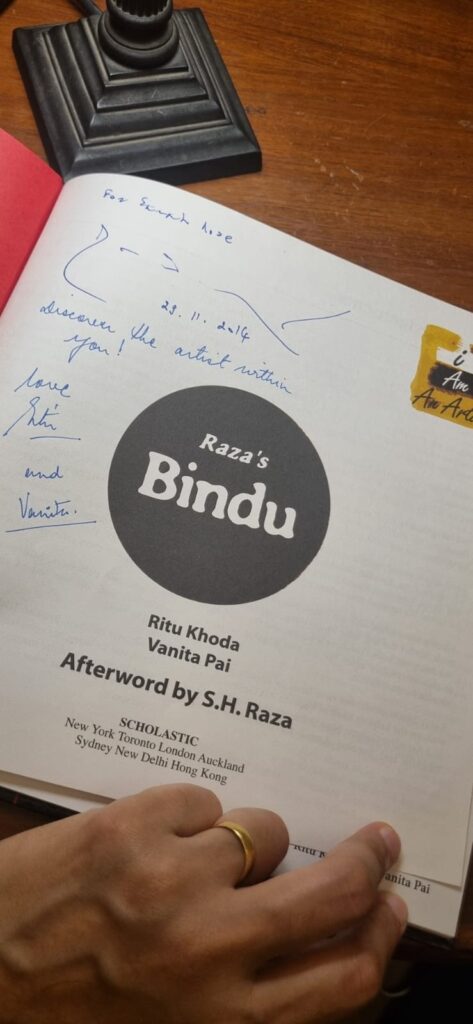
“Raza’s Bindu” by Ritu Khoda and Vanita Pai

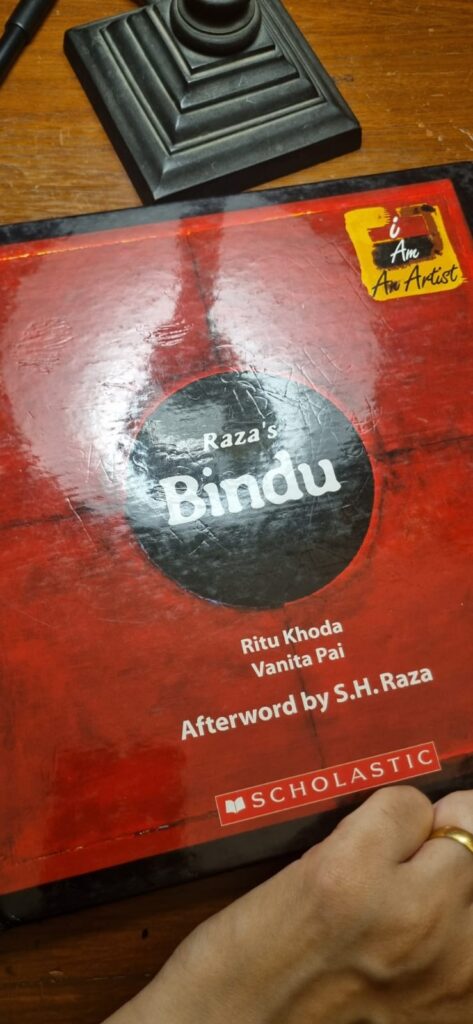
Years ago, 2014 to be precise, when this book was first published by Scholastic India, the late artist S.H.Raza and the authors, Ritu Khoda and Vanita Pai, graciously autographed it for my four-year-old daughter, Sarah Rose. In our personal library, it is one of our most treasured possessions.

A new and updated edition (2016) of a stirring narrative on the life and works of S H Raza, with a afterword by the artist himself. Demystifies Raza’s trademark Bindu and encourages children to introspect on its meaning and significance. Shares insights into Raza’s work through interesting anecdotes, large visuals and stunning illustrations. Also encourages creativity with interactive games and worksheet. Age Group: 7+

23 May 2025

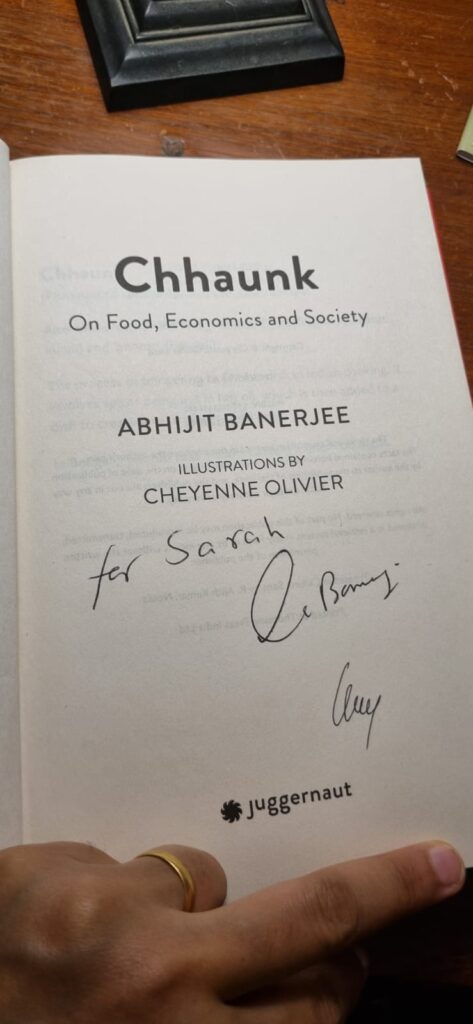
“Chhaunk on Food, Economics and Society” by Abhijit Bannerjee

Chhaunk, oil infused with different spices, lies at the heart of Indian cooking. It is just a few teaspoons, but it finishes a dish and gives it its particular piquancy. The pieces in this delightful book can be seen as a literary chhaunk – a sprinkling of ideas and arguments around the social sciences, which imparts its own distinct flavour.

Part memoir, part cookbook, Chhaunk playfully uses food to talk about economics, society and India, and makes unexpected connections, say, between savings and shami kebab or between women’s liberation and the Bengali vegetable dish of ghanto. It is published by Juggernaut Books.

Abhijit Banerjee, economist and Nobel laureate, loves to cook and feed people, and misses India all the time. This delicious collection of essays – light in style and big on ideas – is his attempt to string the many parts of his eclectic existence together.

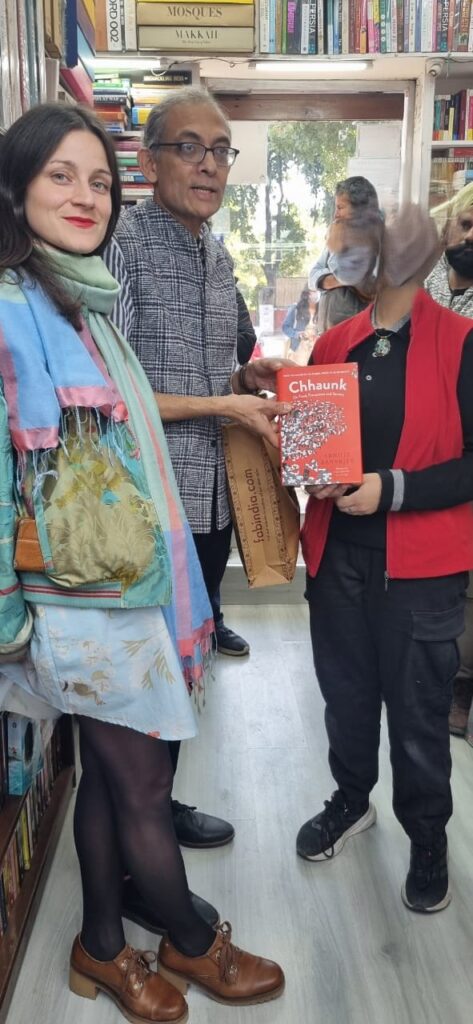
Fourteen-year-old Sarah Rose was very fortunate to have met the Nobel Laureate and illustrator at Bahrisons, Khan Market in December 2024. It was an unexpected but a pleasurable event. Abhijit Bannerjee did say that he usually does not give his consent to be photographed with others but he was willing to make a concession for a teenager who is interested in reading and cooking. Thank you, Sir!

L-R: Cheyenne Olivier, Abhijit Bannerjee, and Sarah Rose

The author was gracious enough to autograph it for Sarah too.

23 May 2025

“Ready, Relevant and Resurgent: A Blueprint for the transformation of India’s Military” by Gen. Anil Chauhan

The Indian Armed Forces stand at the cusp of a profound transformation, in keeping with the changing nature and character of war. With the unwavering pursuit of national interests and the inviolable need for safeguarding the nation’s sovereignty and territorial integrity, the armed forces are taking deliberate and sustained strides towards greater synergy through jointness and Integration.

Faith in indigenous capability development, bolstered by original, innovative and critical thinking abilities is the foundational pillar for progress. The articles in the book intensely deliberate over the need for developing indigenised solutions for India’s problems and lay emphasis on self-reliance and Atmanirbharta as the way forward in defence manufacturing for retaining our strategic autonomy.

Creation of the Department of Military Affairs and the post of the Chief of the Defence Staff is one of the major defence reform undertaken in the recent times. The book highlights the significance of Higher Defence Organisation and the need to adopt a whole-of-nation approach towards effectively harnessing civil-military fusion. It underscores how the Armed Forces are adopting a nuanced consensus-based approach towards the creation of the Integrated Theatre Commands and the subsequent advancements in the processes, doctrines and their warfighting strategies.

True reform can only be ushered by changing the old mindset by way of sharing one`s experiences. It is with this objective, that the author has articulated his vision and thoughts in this book titled Ready, Relevant and Resurgent. The book provides a cogent viewpoint to the readers as to how the Indian Armed Forces are transforming to emerge as a future ready force and their steadfast contributions towards realization of the national vison of becoming ‘Sashakt, Surakhshit, Samridh and Viksit Bharat’ by 2047.

Read the fascinating introduction to this book on Moneycontrol.

General Anil Chauhan, was commissioned into the Sixth Battalion, the Eleventh Gorkha Rifles in Jun 1981. With over 43 years of distinguished military service, the general has held various key appointments across varied operational and terrain profiles including the Command of 3 Corps and Eastern Army besides serving as the Military Advisor to the National Security Council Secretariat (NSCS) before being appointed as the second Chief of Defence Staff (CDS) of the country. The present appointment of CDS, with adjunct responsibilities of Secretary of the Department of Military Affairs, Chairman Chiefs of Staff Committee and the Principal Advisor to the GoI on military matters, has afforded him the opportunity to interact with the brightest minds from India and abroad. General Anil Chauhan has drawn upon his vast experience and inclusive learnings to highlight the transformative reforms that our country and the Armed Forces are presently undergoing.  He lays down an implementable roadmap for the Armed Forces to be effective enablers in the national vision of becoming ‘Sashakt, Surakshit and Viksit Bharat’ by 2047. The present work is expected to contribute towards creating enhanced awareness within the Armed Forces and the nation at large about the Jointness, Integration, Atmanirbharta and Civil – Military fusion initiatives that are being fostered at the highest levels.

23 May 2025

“Gunboy” by Shreyas Rajagopal and “Water Days: A Novel” by Sundar Sarukkai

Twinsies!

Brand new books launched this week — Gunboy and Water Days: A Novel. Both are by second-time fiction authors — Shreyas Rajagopal and Sundar Sarukkai. Fiction. Novels. It is a lovely coincidence that two titles released by separate publishing houses — HarperCollins India and Westland Books — have very similar cover designs. The designers are Haitenlo Semy and Srinivas Bhashyam, respectively.

23 May 2025

Web Analytics Made Easy -
StatCounter