Today, my daughter and I had to run some errands at the local mall. Of course, we had to pop into the local branch of Om Bookshop. Lo, and behold, on the first table, we found this delicious encyclopaedia. How could we not get it? More so, when kid is immersed in music, loves her blues and jazz, and had fallen in love with the book. Btw, we got it at a steal. Well worth it! Despite it having been published in 2007 and the entry on Dave Brubeck shows him as being still alive.
There are plenty of photographs. The bibliography is extremely detailed. Fine list of print publications and websites.
A guide to two musical styles that have fundamentally influenced popular music. Divided into eras from the Early Years, then decade by decade to the Contemporary Era, this title helps you learn about the development of this music from its 19th-century African-American roots onwards. It also includes a section on instruments, and a glossary.
Jeff ‘Tain’ Watts is one of the most in-demand jazz drummers in the world, with several Grammy Awards under his belt. He has played with the Wynton Marsalis Quartet, the Branford Marsalis Quartet, Kenny Garrett’s band, George Benson, Harry Connick Jr., Michael Brecker and many more. He has worked in TV and film, as a musician on the Tonight Show with Jay Leno and playing Rhythm Jones in Spike Lee’s Mo’ Better Blues. Jeff has an extensive discography as sideman and as a leader.
Julia Rolf studied at University College, London and Università degli Studi, Pisa, and works in London as a music editor and writer. Her appreciation of artists such as Elmore James and Robert Johnson led to an enthusiasm for jazz and blues, and this interest found expression through her work on a variety of musical publications. Her recent projects include: Bob Dylan: Highway 61 Revisited and The Rolling Stones: Beggars Banquet, as well as Blues: The Complete Story and Jazz: The Complete Story.
A few years ago, I reached out to investigative journalist Jupinderjit Singh and asked him if he was interested in writing a book on Moosewala. I knew that Jupinderjit wrote regularly and had been following this case regularly. He jumped at the idea. We (I, his literary agent and Jupinderjit, the author) were fortunate that Westland Books published the book in English, Hindi, and Punjabi. This was two years ago.
Earlier in June 2025, to coincide with Moosewala’s birth anniversary (11 June), BBC released on You Tube a documentary that they had made. When the book was first published, Ishleen Kaur, had requested us to send her a copy of the book as she was working on the very same subject.
Here are the links to the two episodes. Jupinderjit features in them too.
Here is the book blurb:
A POWERFUL BOOK THAT DETAILS THE DEATH AND THE SUBSEQUENT INVESTIGATION OF THE MURDER OF ONE OF THE RISING SUPERSTARS OF PUNJABI HIP-HOP. On 29 May 2022, Punjabi rapper Sidhu Moosewala left his haveli in Moosa for a quick ride to his aunt’s house in the neighbouring village. He was never to return home. The singer was ambushed and gunned down by six assailants. He was only twenty-eight. The news of his death spread like wildfire; fans thronged to his village in Mansa district to pay their last respects. Others mourned him on social media. An icon for many, the rebellious young man had also been a controversial figure. There were allegations that he promoted gun culture and violence, and rumours that he had ties with certain gangs. With his sudden and violent death, the questions about his life became louder—as also those around his death. Who had killed Moosewala? Everyone wanted to know. As the police made arrests and the investigation started in earnest, a story began to emerge—one of old enmities, uncomfortable truths, disgruntled youths and the violence that simmers in Punjab, just below the surface of everyday life. In this gripping and fast-paced book, seasoned crime reporter Jupinderjit Singh closely follows the investigation into Moosewala’s death and also offers us glimpses into the man he was behind the mask of celebrity. The story of the slain singer and those behind his murder, this book is also a rumination on the growing unrest in Punjab.
Jupinderjit Singh is an award-winning journalist, specialising in crime reporting for The Tribune in Punjab. He has authored five books two of which have been translated into Hindi. He is known for discovering the lost pistol of Shaheed Bhagat Singh that was used to kill a British police officer in 1928. He was awarded the Prem Bhatia Young Journalist Award in 2005. He is a fellow with the Centre for Science and Environment and a FIDE-rated chess player and coach. He is also a motivational speaker.
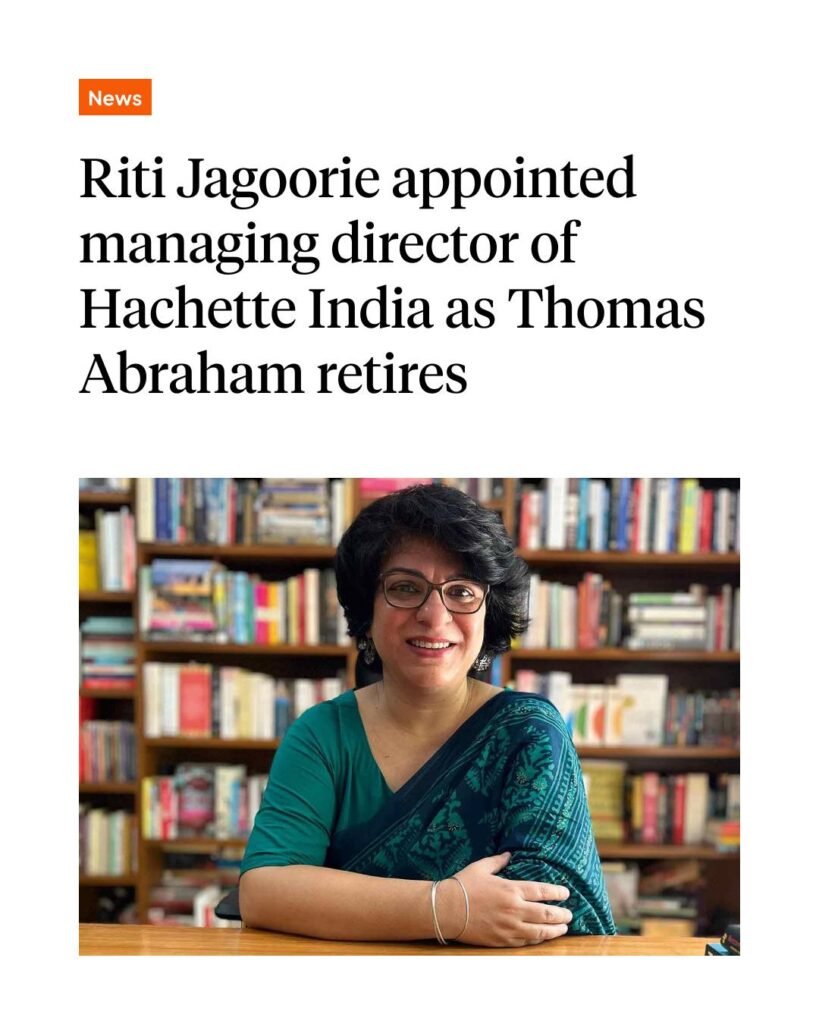
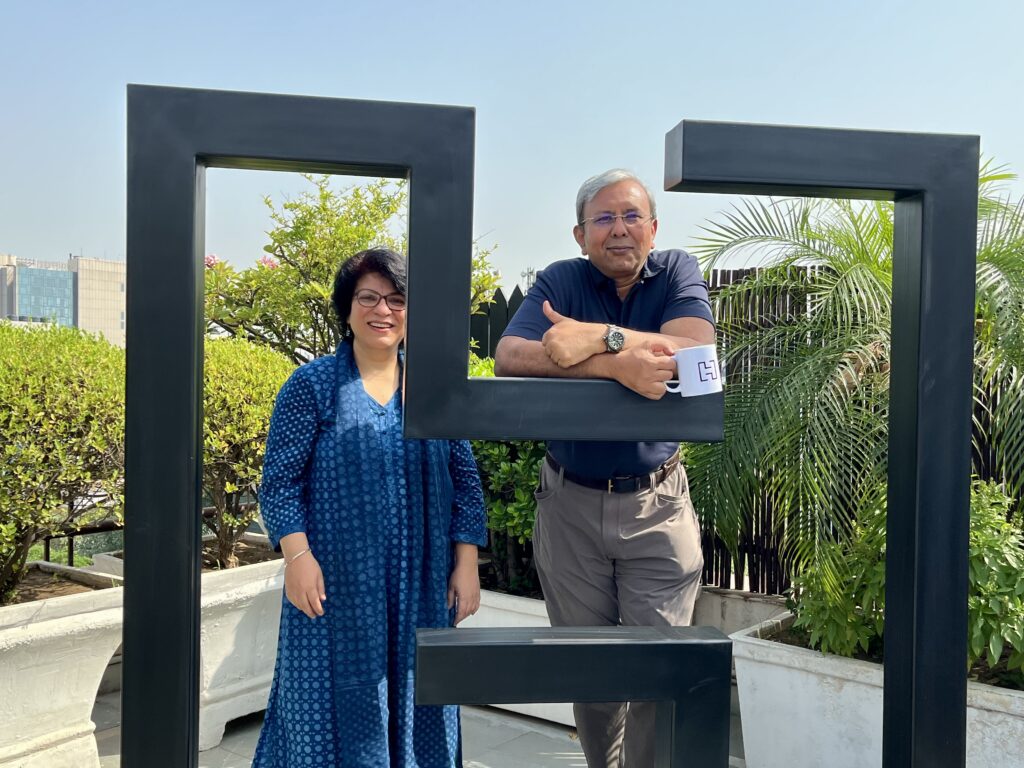
Hachette India announced that its founding Managing Director, Thomas Abraham, who has been instrumental in shaping the company and strengthening its philosophy, market presence and profitable growth for eighteen years has chosen to retire at the company’s retirement age.
Headhunted from his role as CEO & President of Penguin India, Abraham joined Hachette India as MD in 2007, steering the company from an INR 8 crore start-up to an INR 100 crore thriving publishing house; doing so for the second time (he’d earlier taken Penguin from a 30 cr level trebling turnover to the 100 cr bracket) .
Alongside growth, over the past few years Abraham delivered a steady bottom-line of over 15% unequalled by any other trade publishing company on both value and percentage terms. During his tenure, the company set several records for hardback sales on release, including Harry Potter and the Cursed Child and Sachin Tendulkar’s Playing It My Way. While the company’s dominant revenue stream is from its imports, the local divisions publish an eclectic list that includes 100,000 plus sellers Indra Nooyi, Roopa Pai, as well as marquee authors Anuradha Roy, Manjula Padmanabhan, Cricketing legend Sachin Tendulkar, Chess World Champion Viswanathan Anand, Super Chefs Manish Mehrotra and Ritu Dalmia, and Business author Subroto Bagchi among others. Abraham personally curated and reissued a legacy imprint, Yellowbacks (comprising classics of adventure, crime and pulp fiction) in India which will be released in the UK and US at the end of 2025.
‘It’s been a tremendous journey, and I’ve loved every moment of it, but after 25 years of running operating companies, it’s time to step back and read something for pleasure beyond P&Ls and balance sheets. I’m delighted that I’m able to leave at an all-time high for us, and with the talented team we have, I have no doubt it will continue to go higher. This journey would not have been possible without the unstinting support from Richard Kitson, David Shelley, and Charlie King, the wonderful teams at Hachette India and Hachette UK’, said Abraham.
Richard Kitson, Deputy CEO of Hachette UK and Hachette Book Group and Chair of HUK International said: ‘Thomas has been the most amazing MD and colleague since he helped found Hachette India 18 years ago. Since then, the company has grown every year and is now the 3rd largest narrative trade publisher in the country with a brilliant team working there and so many individual successes that he has been responsible for. Thomas is one of the most strategic leaders I’ve had the pleasure to work with as well as being one of the warmest and most generous with his time and knowledge. He also knows more than anyone about such a diverse range of subjects, particularly the Hodder Yellowbacks, Sherlock Holmes and out of copyright authors in general, as well as jazz or classic rock music from the 60s and 70s. He will be hugely missed by us all at Hachette – in India and the wider group – and we wish him a long and happy retirement.’
Following Abraham’s retirement, Riti Jagoorie will step up from her current role as VP of Product & Marketing in January 2026 to lead the business, which has delivered growth of over 12% over the past ten years. Reporting to Charlie King, CEO of Hachette UK International, she will lead the Board at Hachette India.
Jagoorie joined Hachette India in 2008 as one of its first employees and the product manager for Little, Brown & Headline. Her exceptional performance saw her promoted to Head of Product and deliver strong results with UK divisions, including: Little, Brown, which grew from a INR 50 million list in 2008, to INR 350 million in 2024; Hodder from INR 20 million to INR 110 million, and Profile (represented in India by Hachette) from INR 23 million in 2013 to INR 175 million in 2024. She led the marketing and publicity campaign for Indra Nooyi’s My Life in Full, which has sold 140,000 copies since its release in 2021, and she picked and promoted bestsellers like The Devotion of Suspect X, The Silent Patient and The Empire of the Moghul series, to name a few. One of her key strengths has been her ability to work closely with booksellers across the country and curate the immense range of titles published by the Hachette group.
‘I feel so fortunate to be a part of Hachette India and to bring the brilliant books we publish to readers all over the world. It has been such a privilege to work with and learn from someone as incredibly knowledgeable, experienced and inspiring as Thomas. I am grateful to him for hiring me, for always encouraging and guiding me and for trusting me to take this company forward’, said Jagoorie. ‘I am also very thankful to the top leadership at Hachette: David, Richard and Charlie, for this amazing opportunity. Thomas has built a solid business with a great team and a fantastic track record and I am excited to step up and ensure that we honour that legacy and continue to deliver the best results – for our books and our authors’, she added.
Thomas Abraham remarked: ‘Riti has been with the company since it began operations from day one. She’s grown with the company, been absolutely integral to our success, and her contribution has been invaluable. I’m so pleased and proud that she will lead the business. Her instinct for books and her flair for business are exceptional, and I’m in no doubt that she will take the company to new heights.’
Group CEO Charlie King said: ‘I am absolutely delighted that Riti is stepping up to become MD of Hachette India. She has contributed so much to the business over her 17 years with Hachette as an integral member of Thomas Abrahams’ senior team. Riti has razor-sharp commercial instincts, strong editorial judgement, excellent people-skills and – most importantly – an exciting vision for the future of Hachette’s business in India. I am greatly looking forward to working with Riti and the team to continue building on an extraordinary time of growth under Thomas’s leadership.’ About Hachette India
Hachette India is the Indian arm of Hachette UK, which is the second largest trade publishing company in the world, and is itself owned by Hachette Livre, France’s largest publisher and part of the Lagardère Group. The Hachette Group is the oldest trade publisher in the world having celebrated 250 years in 2018.
I absolutely enjoyed reading Tim Wigmore’s book on text cricket. I barely watch the game now but while reading the book, I realised how much I knew. Even if one is unfamiliar with the game or details, this is an absolutely delicious book. Tim Wigmore’s writing is as elegant as the game he writes about. It has been published by Hachette India.
The first narrative history of Test cricket as it nears its 150th birthday, telling the story of how the game has evolved since 1877, told through the moments and personalities that have shaped the format. With a focus on the game and its broader significance alike Tim Wigmore gives Test cricket its historical and social context, whilst reminding us that it’s unrivalled as a fascinating sporting spectacle. Meticulously researched and told with the passion of an award-winning writer, Test Cricket is also illuminated by a series of gripping fresh interviews with more than forty stars of international test cricket.
I interviewed Tim Wigmore for TOI Bookmark. Here is the Spotify link:
Tim Wigmore is the author of Test Cricket: A History, a new narrative history based on dozens of new interviews and years of research. He is also the author of Crickonomics, a Waterstones Sports Book of the Year, and Cricket 2.0: Inside the T20 Revolution, which won the Wisden Book of the Year and Daily Telegraph Cricket Book of the Year in 2020. He is a sports writer for The Daily Telegraph, and has also written for The Economist, The New York Times, ESPNCricinfo and The New Statesman.
When tradition lingers like a faded script, what does it mean to be modern? Harsha V. Dehejia embarks on a profound exploration of modernity, weaving together philosophy, aesthetics, and emotion. He tries to decode the shifting soul of modern Indian art, where the artist is no longer a servant to patron or literature but a seeker of personal truth. In this landscape of artistic liberation, a new Rasa emerges—duhkha, the quiet despair of modernity. Born of solitude, capitalism, and the slow fracturing of old bonds, it stains the canvas with existential urgency and pulses with angst.
Through the works of ten modern Indian artists such as Rabindranath Tagore, Krishen Khanna, Tyeb Mehta, Bhupen Khakhar, Sudhir Patwardhan, Nalini Malani, Atul Dodiya, and more, Dehejia deciphers the symbols of this evolving aesthetic—where past and present collide, where longing and liberation coexist.
Modern Indian art is unbound—free, secular, polychromatic, and fiercely individualistic.
Harsha V. Dehejia has a double doctorate, one in medicine and the other in ancient Indian culture, both from Mumbai University. He is a practising physician and professor of Indic studies, with more than thirty books, four films, and several curated exhibitions to his credit. His main interest is in Indian aesthetics.
I have received a copy of Pulitzer Prize finalist Gayl Jones’s novel The Unicorn Woman. It has been published by Hachette India.
This extraordinary new novel from Pulitzer Prize and National Book Award finalist Gayl Jones follows the witty but perplexing army veteran Buddy Ray Guy as he embodies the fate of Black soldiers who return, not to glory, but to their Jim Crow communities.
A cook and tractor repairman, Buddy was known as Budweiser to his army pals because he’s a wise guy. But underneath that surface, he is a true self-educated intellectual and a classic seeker: looking for religion, looking for meaning, looking for love.
His odyssey takes him not only from his hometown of Lexington, Kentucky to Memphis, Tennessee, but back into his own memories, as he recalls his love affairs in post-war France and his encounters with a dazzling array of almost mythical characters: circus barkers, topiary trimmers, landladies who provide shelter and plenty of advice for their all-Black clientele, proto feminists, bigots, and – most unforgettably – the Unicorn Woman herself.
With her inimitable eye for beauty, tragedy and humour, Jones offers a rich, intriguing exploration of the Black imagination in a time and place of frustration, disappointment, and spiritual hope.
Gayl Jones’s work represents a watershed in American literature. From a literary standpoint, her form is impeccable; from a historical standpoint, she stands at the very cutting edge of understanding the modern world, and as a Black woman writer, her truth-telling, filled with beauty, tragedy, humour, and incisiveness, is unmatched. Jones is a writer’s writer, and her influence is found everywhere — Imani Perry
I have received an advance copy of this book. It is published by HarperCollins India. It is embargoed till 19 June 2025. So, I cannot post an image of the book that I got nor write about it or quote from it. So, here is the Kindle/Amazon link from where you may purchase it. Meanwhile, here is the book blurb. More on this much anticipated book later. And yes, for those who may be curious, Sam is William Dalrymple’s son.
A history of modern South Asia told through five partitions that reshaped it.
As recently as 1928, a vast swathe of Asia–India, Pakistan, Bangladesh, Burma, Nepal, Bhutan, Yemen, Oman, the UAE, Qatar, Bahrain and Kuwait–were bound together under a single imperial banner, an entity known officially as the ‘Indian Empire’, or more simply as the Raj.
It was the British Empire’s crown jewel, a vast dominion stretching from the Red Sea to the jungles of Southeast Asia, home to a quarter of the world’s population and encompassing the largest Hindu, Muslim, Sikh and Zoroastrian communities on the planet. Its people used the Indian rupee, were issued passports stamped ‘Indian Empire’, and were guarded by armies garrisoned forts from the Bab el-Mandab to the Himalayas.
And then, in the space of just fifty years, the Indian Empire shattered. Five partitions tore it apart, carving out new nations, redrawing maps, and leaving behind a legacy of war, exile and division.
Shattered Lands, for the first time, presents the whole story of how the Indian Empire was unmade. How a single, sprawling dominion became twelve modern nations. How maps were redrawn in boardrooms and on battlefields, by politicians in London and revolutionaries in Delhi, by kings in remote palaces and soldiers in trenches.
Its legacies include civil wars in Burma and Sri Lanka, ongoing insurgencies in Kashmir, Baluchistan, Northeast India, and the Rohingya genocide. It is a history of ambition and betrayal, of forgotten wars and unlikely alliances, of borders carved with ink and fire. And, above all, it is the story of how the map of modern Asia was made.
Sam Dalrymple’s stunning narrative is based on deep archival research, previously untranslated private memoirs, and interviews in English, Hindi, Urdu, Bengali, Punjabi, Konyak, Arabic and Burmese. From portraits of the key political players to accounts of those swept up in these wars and mass migrations, Shattered Lands is vivid, compelling, thought-provoking history at its best.
Sam Dalrymple is a Delhi-raised Scottish historian, film-maker and multimedia producer. He graduated from Oxford University as a Persian and Sanskrit scholar. In 2018, he co-founded Project Dastaan, a peace-building initiative that reconnects refugees displaced by the 1947 Partition of India. His debut film, Child of Empire, premiered at the Sundance Film Festival in 2022 and his animated series, Lost Migrations, sold out at the British Film Institute the same year. His work has been published in the New York Times, Spectator and featured in TIME, The New Yorker and TheEconomist. He is a columnist for Architectural Digest and, in 2025, Travel & Leisure named him ‘Champion of the Travel Narrative’. Shattered Lands is his first book.
I received a copy of Raj Khosla: The Authorized Biography, published by Hachette India. It is the definitive biography. I am looking forward to reading it. Meanwhile, here is the book blurb.
The 1940s witnessed the scripting of an origin story that would go down in the books. A young man was signed on by Guru Dutt as assistant director after eager assurances of his competency in Hindi, a white lie that was soon unmasked.
This was Raj Khosla, an aspiring playback singer, eager to get a foot in the door any which way. In a plot twist he would have approved of, he became instead a filmmaker who made a habit of hits, routinely setting the box office on fire.
He made taut thrillers (C.I.D.) , family dramas (Do Raaste) , timeless romances (Do Badan) and action spectacles (Dostana) . Few filmmakers have demonstrated such versatility and command over their craft. He was behind some of Hindi cinema’s most enduring soundtracks, from ‘Lag ja gale’ to ‘Jhumka gira re’ to ‘Jaane kya baat hai’. Yet, Raj’s legacy remains confined to the odd footnote. Through interviews with family, friends and coworkers – including Asha Bhosle, Waheeda Rehman, Mumtaz, Asha Parekh, Sharmila Tagore, Dharmendra, Manoj Kumar, Prem Chopra, Bindu, Mahesh Bhatt and Aamir Khan – this biography addresses this glaring gap in the history of Bollywood. Examining Raj Khosla’s work, it reveals a director and a man who was as talented and sensitive as he was flawed. The result is a tender treatment that lays bare a caring employer,a
Napoleon fanboy, a maudlin soul who wore his heart on his sleeve, a passionate lover of music, and a man who transformed Hindi cinema.
Amborish Roychoudhury is the author of In a Cult of Their Own: Bollywood Beyond Box Office and Sridevi: The South Years. His work has appeared in Hindustan Times, Firstpost and Outlook India, among others. His first book won him a special mention at the 66th National Film Awards. He has served on film festival juries and explores India’s cinematic legacy through his work.
Anita Khosla did her postgraduation in mass media from Sophia College, Mumbai, and went on to pursue a career in journalism, writing for Screen, Filmfare and Eve’s Weekly back in the 1980s. Today, she serves as the proprietor of Raj Khosla Films, is a proud mother and grandmother, and lives in Gurugram.
Uma Khosla Kapur, an alumnus of St. Bede’s College, Simla, is a homemaker, wife and mother, in addition to being a director at Raj Khosla Films. She has inherited her father’s great passion for music, and lives with her husband G.M. Kapur in Kolkata.
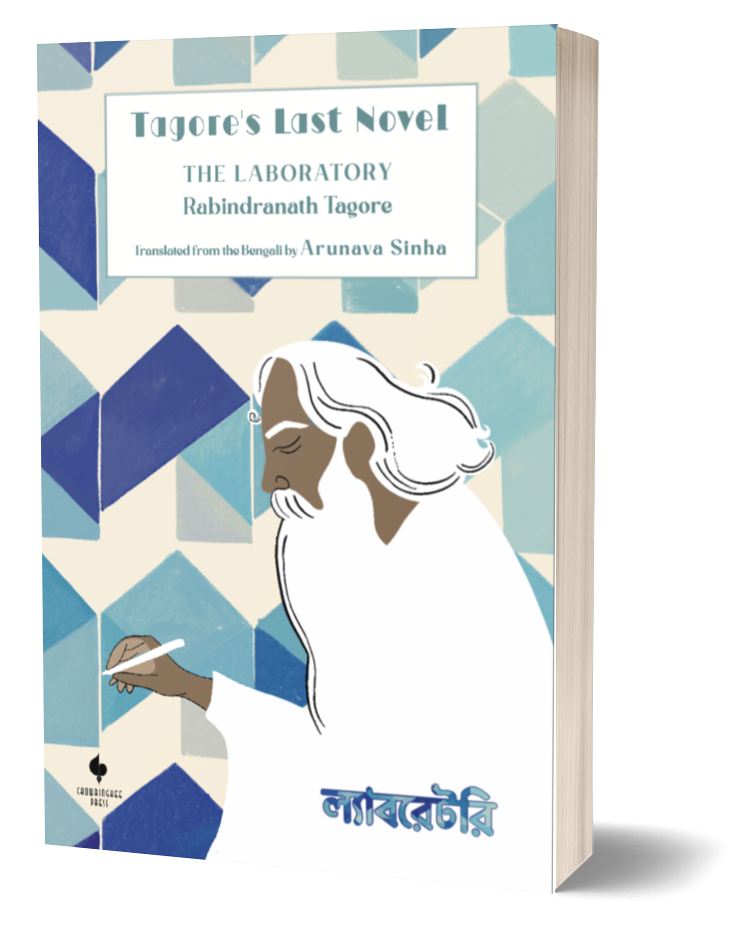
Bengali translator par excellence, Arunava Sinha, is now venturing into publishing. He has launched a publishing imprint called Chowringhee Press via the platform Stck Books. He will be publishing books from India in translation for readers in America and around the world outside India.
The plan is to make available three or four titles a year. These will be a mixed bag of translations, consisting of titles from various Indian languages. To inaugurate the list, Arunava has launched it with a translation of his. The Laboratory, a translation of Rabindranath Tagore’s very last novella, which came out just a few months before his death.
If you’d like to order a copy anywhere in the USA (or anywhere else outside India), please use the link, it will be delivered to your doorstep.
Arunava Sinha is quite the brand ambassador for translations. I remember interviewing him for The Hindu. (‘Leave nothing out, add nothing‘, 11 Oct 2011, The Hindu) From his very first translation, Chowringhee to now, more than a hundred titles later, he has really made an impressive journey. It’s not just about the optics but about the sheer hard work and determination and focus he has put in. It just does not happen overnight. It requires stamina and focus. He has shown it.
Many congratulations and good wishes to Arunava for his new initiative!
‘Absolutely riveting’ Peter Frankopan, author of The Silk Roads ‘Disturbing and enlightening’ Chris Miller, author of Chip War ‘Hugely important’ Rana Foroohar, author of Makers and Takers ‘A once-in-a-generation read’ Robert D. Kaplan, author of Waste Land
As Trump wages a tariff war with China, seeking to boost domestic electronics manufacturing, this book offers an unparalleled insight into why his strategy is embarrassingly naïve.
Apple isn’t just a brand; it’s the world’s most valuable company and creator of the 21st century’s defining product. The iPhone has revolutionized the way we live, work and connect. But Apple is now a victim of its own success, caught in the middle of a new Cold War between two superpowers.
On the brink of bankruptcy in 1996, Apple adopted an outsourcing strategy. By 2003 it was lured to China by the promise of affordable, ubiquitous labour. As the iPod and iPhone transformed Apple’s fortunes, their sophisticated production played a seminal role in financing, training, supervising and supplying Chinese manufacturers – skills Beijing is now weaponizing against the West.
Investigative journalist Patrick McGee draws on 200 interviews with former Apple executives and engineers to reveal how Cupertino’s choice to anchor its supply chain in China has increasingly made it vulnerable to the regime’s whims. Both an insider’s historical account and a cautionary tale, Apple in China is the first history of Apple to go beyond the biographies of its top executives and set the iPhone’s global domination within an increasingly fraught geopolitical context.
Read an extract from the book on Moneycontrol. The book has been published by Simon & Schuster India.
Listen to our conversation on TOI Bookmark* podcast.
Review
‘Apple is more than the world’s greatest company. It is integral to the whole culture of globalisation. Patrick McGee not only narrates the epic history of Apple, but explains how, in effect, it got taken over by China, the world’s greatest illiberal power. To call this book a page-turner is almost to diminish its importance. It is a once-in-a-generation read‘ — Robert D. Kaplan, author of the New York Times bestseller The Revenge of Geography and the forthcoming Waste Land: A World in Permanent Crisis, and Robert Strausz-Hupé Chair in Geopolitics at the Foreign Policy Research Institute
‘Absolutely riveting. An extraordinary story, expertly told – and one that has important implications for Apple, for tech and for global geoeconomics.’ — Peter Frankopan, Professor of Global History at Oxford and author of the bestselling The Silk Roads
‘Deeply researched, disturbing and enlightening, Apple in China reveals how Apple enabled China’s rise, seemingly at the cost of its own future. In these pages we watch as the world’s most profitable company gets outmaneuvered by the world’s most powerful dictator. Using an impressively broad palette, McGee paints a picture of Apple CEO Tim Cook resolutely trying to save costs by placing nearly all of the company’s advanced manufacturing base in Beijing’s grip, only to find it impossible to wriggle free’ — Chris Miller, New York Times bestselling author of Chip War
‘A masterpiece of investigative journalism, replete with revelations. Every iPhone owner will want to read this book, but no Apple employee will risk being seen with it. McGee shows how China played the long game, convincing Apple to invest on an unprecedented scale and, inadvertently, help build its grand authoritarian project. This book is a warning for anyone eager to do business in hostile countries.’ — Geoffrey Cain, author of Samsung Rising and The Perfect Police State, and a former sanctions investigator for the US Congress
‘There is little doubt that Big Tech companies – like the world’s richest and most influential one, Apple – wield as much power as many nation states. But what’s less well known is how these companies are themselves manipulated by the Chinese state for its own economic and political ends. In this hugely important new book, Patrick McGee shows us how Apple’s quest for wealth and power in China may in the end be the undoing both of the company and of America’s quest for technology supremacy’ — Rana Foroohar, Financial Times Global Business Columnist, CNN Global Economic Analyst, and author of Makers and Takers: The Rise of Finance and the Fall of American Business
‘A tour-de-force account of how the world’s most influential company empowered the inexorable rise of the regime that now shapes its – and our – future. Paced like a thriller and spanning the years from before Steve Jobs’s fateful decision to outsource production to more recent times which shine a fresh spotlight on Tim Cook’s careful wooing of Donald Trump, Apple in Chinacaptures every twist and turn of the tech giant’s off-kilter and decidedly off-script relationship with the authoritarian state. What will surprise many is how China ensnared a corporate titan by matching and then surpassing its knack for ruthless efficiency and global dominance’ — Megan Murphy, former Editor in Chief of Bloomberg BusinessWeek
‘A masterful and deeply reported portrayal of how Apple gained China and lost its soul’ — Isaac Stone Fish, author of America Second and CEO of Strategy Risks
Patrick McGee has been a journalist with the Financial Times since 2013, reporting from Hong Kong, Germany, and California. He led the FT’s Apple coverage from 2019 to 2023 and won a San Francisco Press Club Award for his deep dive into Apple’s HR problems. Previously, he was a bond reporter at The Wall Street Journal in New York. He has a Master’s in Global Diplomacy from SOAS, University of London, and a degree in Religious Studies from the University of Toronto. He resides in the Bay Area with his wife and two daughters.
6 June 2025
*TOI Bookmark is a weekly podcast on literature and publishing. TOI is an acronym for the Times of India (TOI) which is the world’s largest newspaper and India’s No. 1 digital news platform with over 3 billion page views per month. The TOI website is one of the most visited news sites in the world with 200 million unique monthly visitors and about 1.6 billion monthly page views. TOI is the world’s largest English newspaper with a daily circulation of more than 4 million copies, across many editions, and is read daily by approximately 13.5 million readers. The podcasts are promoted across all TOI platforms. I have recorded more than 142+ sessions with Jnanpith, Padma Bhushan, and Padma Shree awardees, International Booker Prize winners, Booker Prize winners, Women’s Prize for Fiction, Nobel Laureates, Pulitzer Prize, Stella Prize, AutHer Awards, Erasmus Prize, BAFTA etc. Sometimes the podcast interviews are carried across all editions of the print paper with a QR code embedded in it.
Some of the authors who have been interviewed are: Banu Mushtaq, Deepa Bhashti, Samantha Harvey, Jenny Erpenbeck, Michael Hoffman, Paul Murray, V. V. Ganeshananthan, Hisham Matar, Anita Desai, Amitava Kumar, Hari Kunzro, Venki Ramakishnan, Siddhartha Deb, Elaine Feeney, Manjula Padmanabhan, NYRB Classics editor and founder Edwin Frank, Jonathan Escoffery, Joya Chatterji, Arati Kumar-Rao, Paul Lynch, Dr Kathryn Mannix, Cat Bohannon, Sebastian Barry, Shabnam Minwalla, Paul Harding, Ayobami Adebayo, Pradeep Sebastian, G N Devy, Angela Saini, Manav Kaul, Amitav Ghosh, Damodar Mauzo, Boria Majumdar, Geetanjali Mishra, William Dalrymple, Abdulrazak Gurnah, Dr Rachel Clark, Charlotte Wood, Catherine Chidgey, Andrew Miller, Sam Dalrymple, and Annie Ernaux.