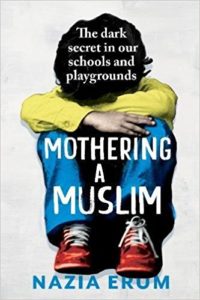
Book Post 37: 20 – 25 May 2019
Book Post 37 includes some of the titles received in the past few weeks.
27 May 2019
Book Post 37 includes some of the titles received in the past few weeks.
27 May 2019


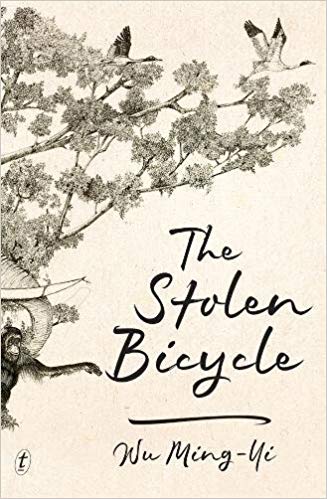


Book Post 36 focuses on childlit and yalit.
20 May 2019


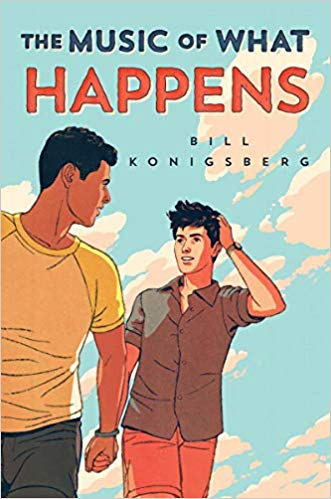


Book Post 35 is being uploaded after a month. It focuses on the trade list. This include some of the titles I have received in the past few weeks.
20 May 2019


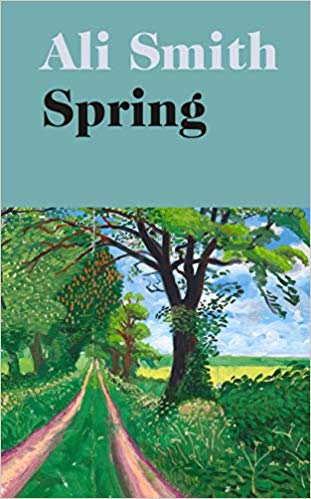
Every week I post some of the books I have received recently. In today’s Book Post 31 included are some of the titles I have received in the past few weeks.
28 March 2019


At the beginning of the week I post some of the books I have received recently. In today’s Book Post 29 included are some of the titles I have received in the past few weeks.
11 March 2019


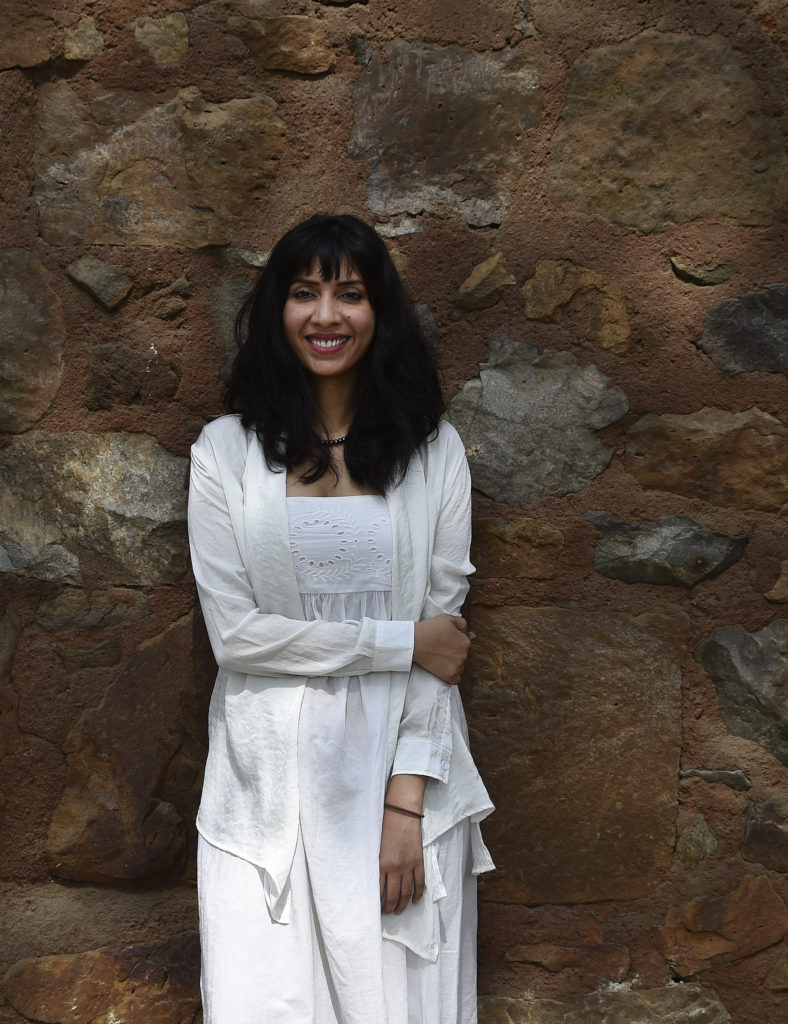
Snigdha Poonam is a journalist with The Hindustan Times (HT) in Delhi. Her work has appeared in Scroll, The Caravan, The Times of India, The New York Times, The Guardian, Granta and The Financial Times. Her article ‘Lady Singham’s Mission Against Love‘ was runner-up in the Bodley Head / Financial Times Essay Prize, 2015. She won the 2017 Journalist of Change award of Bournemouth University for an investigation of student suicides that appeared on Huffington Post ( 1 June 2016). Dreamers is her first book. It won 2018’s Crossword Book Award (Jury) for nonfiction and was listed by various publications, including Financial Times and Hindu, as one of the best books of the year. It was also longlisted for the 2019 PEN/John Kenneth Galbraith Award for Nonfiction ($10,000) announced by PEN America. ( Read an extract published in the literary magazine, Granta: “The Fixer”, 9 Feb 2015).
Dreamers is a collection of essays of reporting from India’s small towns. The people profiled in it are young and ambitious — representative of nearly 50% of India’s 1.3b population born after 1991. They are confident and want to make their dreams happen as soon as possible and not while away their entire lives boxed in by social indicators such as gender, caste, socio-eco class etc. For many of the individuals profiled in Dreamers these are mere notional barriers meant to be broken. They think for themselves rather than be intimidated by traditional rules of social engagement. As Snigdha says the same themes are repeated of “aspiration, self-improvement and anxiety about their place in the world”. The profiles range from that of a young milkman who became a teacher of conversational English and established a coaching centre to that of a young girl who decided to become a feisty student politician, making history with her election to the Allahabad University student council. These extraordinary profiles were written by Snigdha Poonam after shadowing her subjects over some years.
Snigdha Poonam’s trademark is longform reportage which mostly focuses on investigative stories of issues concerning young India. Stories that hurtle you into the heart of the issue, forever creating a sharply etched mental image for the reader of the places and people Snigdha visits and meets, respectively. Stories that she selects would in all likelihood be missed even when they make front page news like that of the little boy murdered in a school. The slightly different peg chosen by her is to follow the story of the bus conductor wrongly accused of the boy’s murder. A story that not only creates empathy for the impoverished family of the bus conductor but also offers an alternative way of looking at the horrific story that many were chattering about. She seeks stories that should be the hallmark of all journalists but only the brave engage in. Some of her astonishing stories that are available online are written hot on the trail of the predominantly young, aggressive, male Hindu pilgrims called Kanwariyas ( HT, 24 July 2017); on the women journalists of Khabar Lahariya, rural India’s first feminist newspaper who speak up for women in a notoriously patriarchal belt ( The Guardian, 30 March 2015), “How the fake-jobs industry scams Indians” ( co-authored with Samarth Bansal, HT, 21 Aug 2017), or on the horrendous clashes that take place over electricity and water in urban pockets ( HT, 30 May 2018).
Here are excerpts of an interview with Snigdha Poonam:
JBR: What prompted this book? Has it been translated?
SP: Starting in 2009-10, I had been writing a series of stories looking at non-urban young Indians’ efforts to adapt to a rapidly changing world. I wrote, for example, about commercial Hindi and Hinglish fiction (OPEN magazine, “The New Heroes of MBA Lit”, 17 Oct 2014), personality development classes ( New York Times, “Developing India’s Personality”, 5 July 2013), and online dating ( Caravan, “Casting the Net”, 1 March 2012). I found the same themes repeating: aspiration, self-improvement and anxiety about their place in the world. In 2014 this led to the idea for a book that would follow the lives of a set of people in small towns: what they want, how they are trying to get there, and what that means for their future and ours.
Dreamers hasn’t yet been translated. It’s out in the US and UK and awaiting publication in China.
JBR: How do you find your stories/subjects?
SP: Other than reading a range of newspapers — Hindi and English, regional and national– I keep an eye out for unusual things everywhere, from SMS spam to wall posters to advertisements nailed to trees. I travel widely across the country for work and let people tell me stories outside of the reporting framework. I also spend a lot of time digging into the lives of strangers on the internet: on Facebook, YouTube, Instagram, TikTok.
JBR: How many stories did you write/ follow in order to publish the few mentioned in Dreamers?
SP: I wrote at least ten profiles. Among those that didn’t make it to the final draft were the stories of an FM star in Ranchi, a crime reporter in Lucknow, and a wedding planner in Ahmedabad. I wanted to prioritise stories that showed the effect of time on the people and their actions, so only those made it into the book.
JBR: Has your writing style evolved after having published this book?
SP: Yes. I am far more receptive to details. I try more consistently to draw out the nuances in people’s characters, politics, and actions. I play much more with the material until I have the right narrative structure for a story.
JBR: What do you think are the qualities of a listener? I find it remarkable how you channel the stories with minimal judgement but then offer an opinion/perspective.
SP: I have no other real interest in life than other people, so I can listen to anyone who is telling me anything, and if you listen to people at such length, you are forced to acknowledge that they are more than just good or bad. People are genuinely complicated, with so many intersecting forces driving their views and actions, and the most interesting stories you can tell about them are in the space between the extremes.
JBR: How do you record your interviews?
SP: I no longer record interviews unless it’s more than one person talking to me. Taking notes keeps me more grounded in the moment. I have a decent shorthand, and I flesh out the whole interaction – from what people said to what I observed – before that day is over.
JBR: Do you in any way feel or become responsible for the people you interview or does everyone move on?
SP: I am more attached to the people in Dreamers than those I meet for regular stories. I talk to them about all kinds of things going on in their lives, from wedding plans to job changes. They, too, ask me about what’s going on with me, my work and my family.
As a journalist, it’s often not people you keep track of but the issue you wrote about. For example, because I wrote an investigative story about job scams, people write to me from across India about having paid someone money for a job they didn’t get. Every once in a while, I have to chase the police in their respective areas to take action.
JBR: Have you ever followed up on these stories?
SP: Not deliberately. I feel exhausted with the issues of young men and want to engage more with women in the upcoming projects.
JBR: Who is your ideal reader? Have any of your subjects in this book read Dreamers?
SP: My ideal reader is curious and patient.
Some of the people featured in Dreamers have read it. One of them presented a copy to a leading politician, another keeps up with its sale at his local bookshop.
24 February 2019
Every Monday I post some of the books I have received in the previous week. This post will be in addition to my regular blog posts and newsletter. Today’s Book Post 25 is after a gap of two weeks as January is an exceedingly busy month with the Jaipur Literature Festival, Jaipur BookMark and related events.
In today’s Book Post 25 included are some of the titles I received in the past few weeks as well as bought at the literature festival and are worth mentioning.
4 February 2019


. Scholastic India ( Hall 7, stalls 76-90) at the ongoing #worldbookfair, #PragatiMaidan, #NewDelhi. It is a stall bustling with crowds which is unsurprising given the fantastic collections of #childlit and #yalit available. Some of the international stock has been made exclusively available for duration if the fair and is NOT available anywhere else. Their selection of fiction and nonfiction international and local titles are worth looking at particularly #Ahimsa, #Horror, #GrasshoppersRun, #Puu, #JalebiJingles and #NoTouch. So are the selection of #gradedreaders, #picturebooks, briliant collection of #graphicnovels and #educational material for schools. Also on sale are fantastic #homelibrary kits for young readers. Besides this magnificent selection are the usual favourites of which no child or #schoollibrary can ever have enough are #GeronimoStilton, #DavPilkey‘s #DogMan, #LizPinchon‘s #TomGates, and #Clifford — perennial favourites!
The #bookfair is on for THREE more days. It concludes on Sunday, 13 Jan 2019.


Every Monday I post some of the books I have received in the previous week. This post will be in addition to my regular blog posts and newsletter.
In today’s Book Post 23 included are some of the titles I received in the past few weeks and are worth mentioning and not necessarily confined to parcels received during the holiday season.


Enjoy reading!
7 January 2019
Lists are subjective. Reading lists are even more difficult to cobble. Today my list consists of the following books. A few days later it may change ever so slightly. But these are the books that have stayed with me over the months.
Tabish Khair’s Night of Happiness
Anuradha Roy All The Lives We Never Lived
Supriya Kelkar Ahimsa
Mark O’Connell’s To Be A Machine
Alejandro Zambra’s My Documents
Gabriela Wiener Sexographies
Ranjit Hoskote Jonahwhale
Ravish Kumar’s The Free Voice: On Democracy, Culture and the Nation
C G Salamander and Samidha Gunjal’s Puu
Khaled Hosseini Sea Prayer
Nazia Erum’s Mothering a Muslim
Jarrett J Krosoczka’s Hey, Kiddo
Henry Eliot’s The Penguin Classics Book
Cordis Paldano The Dwarf, the Girl and the Goat
Mohammed Hanif Red Birds
Neil Gaiman and Chris Riddell Art Matters
T M Krishna Reshaping Art
Alan Lightman In Praise of Wasting Time