Jaya Posts

“First Person” by Richard Flanagan

My review of award winning Australian writer Richard Flanagan’s latest novel First Person was published in The Hindu on Sunday, 4 February 2018. I am also c&p the text below. 

Flanagan examines the art and artifice of autobiography writing

Kif Kehlmann, a writer struggling to write his first book, is approached by his childhood friend Ray to ghost-write a memoir of Ray’s boss. The said boss is Australia’s most notorious conman Siegfried Heidl or Ziggy, who had swindled banks of 700 million dollars. Ziggy is out on bail.

This gives his publisher, Gene Paley of Schlegel Trans-Pacific Publishing, about six weeks to commission a “page-turner” and have it published in time for the trial.

For this Ziggy is to be paid the handsome sum of $250,000 whereas Kif is offered $10,000, with no royalties, to be paid in equal instalments upon submission of the manuscript and the publication of the book. If Kif failed to deliver he would be paid only the termination fee of $500.

Faustian pact

The book is about Kif attempting to get Ziggy to share incidents from his life which he could then convert into a saleable story. This Faustian pact is a soul-sapping task for Kif as Ziggy is evasive or spins incredibly fantastic tales that are impossible to verify.

There are rumours of Ziggy’s links to the CIA in Laos in the early 1970s, of him being hired by NASA to establish a rocket facility in the southern hemisphere, being involved in the deposition of Australian Prime Minister Whitlam and his alleged role in the Allende-Chile affair. Kif’s description of Ziggy is apt: “Even working with him it was hard to see him. I remember he didn’t have much hair and he was of indeterminate age, small, slightly stout, [a] hobgoblin… little sorcerer… From the beginning he was always there and never to be found.”

The novel traces Kif’s growing frustration with his elusive subject. Kif had hoped that the book would be his ticket out of writerly poverty and perhaps fetch him a better publishing contract. While those possibilities seem to recede, his current publisher becomes more and more difficult.

Paley dispels any notion Kif may have had about artistic freedom by mentioning that in France ghost-writers are called Nègres or slaves.

With such limiting conditions, Kif sets to work, inventing where he cannot find facts. He delivers the page-turner within the stipulated time by “learning to distract from the truth by amusing the reader; to flatter the reader by playing on what they believed to be their virtues — their idea of goodness and decency — whilst leading them even further into an alien darkness that was the real world and, perhaps, the real them; and, on occasion, I feared, the real me.”

In the early 1990s, Richard Flanagan had been hired by the fraudster John Friedrich to ghost-write his autobiography in six weeks as he awaited trial for a 300 million dollar fraud. Friedrich died during those six weeks, as does Siegfried in the story.

Writing the self

Although First Person is promoted as a novel, it closely follows Flanagan’s experience of ghost-writing a novel for a criminal. It brings into focus much-debated issues of craftsmanship, of remaining true to one’s art or capitulating to market forces.

Flanagan also questions the premise of autobiography as an art form. Autobiographies are trending now as they go well with the general preference for reality shows and intimate confessions made in the first person.

For Flanagan, an autobiography is a literary selfie.

When Kif dwells on the fine balance between truth and storytelling in an autobiography, he too concludes that “a memoir was a series of selected lies”. Kif is a nom de plume, a short for “keefer” — a substance, especially cannabis, smoked to produce a drowsy state.

Isn’t the reader expected to suspend her disbelief while reading the novel?

First Person; Richard Flanagan, Chatto & Windus, ₹599

Naveen Kishore’s keynote address at Jaipur Book Mark, JLF 2018

Naveen Kishore, founder, Seagull Books — one of the best publishing houses that produces exquisite books in translation. He was invited to deliver the keynote address at the recently concluded Jaipur Book Mark, JLF 2018. It was titles:  ‘Translation rights that which is wrong. It describes the injustices hidden in the dailyness’.

It is a keynote speech worth reading. Naveen Kishore is a publisher who is utterly brilliant but in this speech it is apparent he lives his craft. He plays with words. His theatre life where he specialised in controlling the lights has undoubtedly  influenced his writing. To me the very act of writing for him is like a performance meant to enrich the experience not only for himself but for those who read/listen to him. So when he talks about the role of a publisher facilitating good writers to be heard while underplaying his own voice, I wonder. He definitely underplays it but is also very much in control. It is like the person in charge of lights in the theatre. Critical role. To give the desired effect, atmosphere, experience and impact of performance , the lights are crucial. Likewise with writing, writers, translators, publishers. It’s a creative act which is underpinned by many other considerations and this has to be recognized.

Read the speech.

2 February 2018

Debate: Aniruddhan Vasudevan declines the Sahitya Akademi Translation Prize, 2016 and response by jury member, Githa Hariharan

Aniruddhan Vasudevan, the writer who translated  Perumal Murugan’s Tamil novel  Madhorubagan into English on Monday 29 Jan 2018 declined the Sahitya Akademi Translation Prize, 2016.

Madhorubagan, translated into English as One Part Woman, is the story of a couple from Tiruchengode city in Tamil Nadu who face social discrimination due to their inability to bear a child. The novel had led to outrage from Hindutva groups in 2014. A number of cases were filed in the Madras High Court, but the court quashed them in 2016.

In 2016, when the Sahitya Akademi announced the award to Vasudevan for the English translation of Perumal’s book, opponents filed a plea in the Madras High Court. The court allowed the award ceremony to go ahead, but imposed a stay on the prize for English translation, until further notice.

Kannan Sundaram, of  Kalachuvadu Publications, which published Madhorubagan, told The News Minute on Wednesday that Vasudevan did not want to fight a legal battle. “He also does not want eminent writers like Githa Hariharan, Koyamparambath Satchidanandan [who were the jury for the award] and others being scrutinised.”

“He sees this [the case against the prize] as part of the ongoing problem of hounding Perumal Murugan, and does not want to be a part of it,” Sundaram added.

*****

Githa Hariharan’s Response to Aniruddhan Vasudevan Declining the Sahitya Akademi Prize for Translation

Aniruddhan Vasudevan, who was a recipient of the Sahitya Akademi Prize for Translation 2016, for his translation of Perumal Murugan’s novel, Madhorubhagan, has now written to the Akademi declining the award.

Kongu Kalvi Valarchi Arakattalai, the same group that hounded author Perumal Murugan, also filed a petition in the Madras High Court against his translator, Vasudevan, and the jury that gave him the Sahitya Akademi Award for One Part Woman, the English translation of Madhorubhagan. M Loganathan, who had filed the petition, also alleged that the jury members, in selecting the English translation for the award, were “prejudiced” and “biased.” In December last year, the High Court put an interim stay on the award. The Indian Express quoted the High Court bench’s observation, “…prima facie it appears that the translation is both incorrect and inaccurate.”  Vasudevan, in his letter, stated that he is declining the award as he does not want to start a fresh chapter of controversy around the novel.

Jury Member Githa Hariharan spoke to Newsclick and the Indian Cultural Forum about this development.

What is your response to Aniruddhan Vasudevan declining the Sahitya Academy award?

I wish Vasudevan had not declined the prize. He deserves it. And, in our multilingual country, translation is essential and needs all the support it can get. In this case too, the jury took into consideration the critical function of translation in a multilingual country like ours. As responsible writers and critics, we need to ensure that readers have access to translations of a high quality, particularly of works that we, as well as other critics and scholars, have recognised as an important part of our rich and diverse literary practice. The only considerations before the jury, in this case, were the quality of the translation, and the literary merit of the work being translated.

Why do you think this group filed the petition opposing the Sahitya Akademi Prize for Translation?

This petition is not about the translation prize. It seeks, instead, to raise an issue that has already been dealt with effectively by the Madras High Court in its Judgement delivered on 5/7/2016 on the original publication. The Judgement observed that the writer should continue to “do what he does best”, i.e., write; and that both the writers and his opponents should move on “as citizens of an advancing and vibrant democracy”. In view of this sound advice, raking up the same issue is a waste of the valuable time of our Courts, as well as a mischievous attempt to impede the free practice of imaginative endeavour that sustains our culture with multiple narratives and viewpoints.

In addition to wasting the valuable time of our Courts, who have a considerable load of genuine petitions, this petition undermines the free practice of literature by writers, critics, publishers and readers, by ascribing to itself the role of judging the merit of literary texts. I would like to remind the petitioners of Jawaharlal Nehru’s views on the individual freedom of the writer. “As soon as writing is put in a straight-jacket,” he said, “it is bound to lose and suffer.”  He added, “A State cannot produce good writing. It can provide conditions where good writing can be encouraged.” Any attack on these conditions — of freedom to imagine, write, translate, judge, discuss, and debate — would hinder our citizens from producing and partaking of varied and critical literary perspectives.

What is your response to the accusation in the above petition that the jury was “prejudiced” and “biased” in their selection?

No award norm was breached. The Sahitya Akademi prepared a short list from the books entered for the prize and sent the short list to the jury members. Each member was not aware of who the other jury members were till we met for the final decision. When the jury members met, they had read all the shortlisted books carefully, and prepared notes on the merits of each translation. All ten books were discussed, and there was detailed discussion on those considered prize-worthy. Based on the criteria of a good translation into the English language, the jury members reached a consensus that Aniruddhan Vasudevan’s translation, One Part Woman, deserved the award. The book falls within the eligibility period. It is a complete and unabridged translation, and the quality of both the translation and the novel has been acknowledged by critics, scholars, reviewers, and award juries. The jury members for the Sahitya Akademi prize agreed that this translation achieved the difficult task of rendering a specific cultural context and language into a highly readable translation that sounded “natural” in the target language, something every good translation aspires to. Specific mention was made of the skill with which words, phrases, expressions, and songs that are hard to translate were handled by the translator. In short, our discussion of One Part Woman, as well as our choice of the book as the award winner, was based purely on literary indices, i.e. the literary merits of the translation.

The petition alleges that this is not a “true” translation of the work. May I suggest that debates about the quality of a translation belong in classrooms, seminars and the printed page, and not in petitions or Courts? Debates on literary merits are informed and meaningful when conducted by the community of literary practitioners, students of literature and scholars. Such debates are not based on sentiment.

The translation was chosen for the award in good faith, and for valid reasons, free from any sort of bias. Members of the jury had written earlier about the book, and the attack on the book, in our capacity as writers, reviewers and cultural commentators. I must point out that the three members of this jury are by no means the only people who have written about the “controversy”. Across India, a large number of writers have taken part in protests against the attack on the book and its author Perumal Murugan, not because they were “canvassing” for the book; but because of their deep concern for freedom of expression, essential to any form of literary work. Again, the three members of the jury are not alone in admiring the novel. Reviews, articles in the media, and the large number of readers in India and elsewhere, bear testimony to the interest in the book, as literature, by discriminating readers.

The petition further alleged that the three members of the jury have been acknowledged by Perumal Murugan in the Preface of his novel. First, he has acknowledged only one of the three members, A.R. Venkatachalapathy, as a friend. Second, acknowledgements in a literary work do not imply that those thanked for support are in any way responsible for the actual work. Writing a novel is a solitary task, neither planned nor “conspired” by a group. It is ridiculous to imply that any “conflict of interest” applies to a friend or relative who may be acknowledged by a writer as having provided any sort of support during the lonely period of writing a novel.

Petitions such as these are part of the insidious process of misusing the Courts, in the name of hurt sentiment, to harass writers, critics and artists. My submission to the Court — if the case continues — would be to dismiss this and other similar petitions, and lay down a principle that such harassment is an attack on two of our cherished values: critical thinking and freedom of expression.

Such petitions are frivolous at best; and, at worst, a danger to the practice of the arts, as well as the diversity of opinion and critical thinking guaranteed by our Constitution, and upheld a number of times by our Courts.

2 February 2018 

“Season of Crimson Blossoms” by Abubakar Adam Ibrahim

It occurred to her then that in the final analysis, dreams can be dainty and beautiful, like butterflies, and just as fragile. 

Abubakar Adam Ibrahim’s debut novel Season of Crimson Blossoms is about the love affair of  fifty-five-year-old grandmother and widow Binta Zubairu with a twenty-six-year-year-old local ganster Hassan Reza. They met when Binta stumbled upon Hassan robbing her home. The story is set in conservative Islamic Northern Nigeria where an affair such as this would be frowned upon, let alone the vast age difference between the two. It is complicated further as Hassan Reza reminds Binta of her son who passed away many years ago. Similarly Binta reminds Hassan Reza of his mother! For a while the two are able to keep their affair a secret until it is discovered — it has explosive repurcussions. Not only upon the immediate family but society too. The women at the local madarasa are unforgiving and hostile.

Season of Crimson Blossoms is an extremely powerful book for its sharp etching of Nigerian society. At the same time if plucked out of context these scenarios would probably not be unusual in any other country. It is not necessarily a story about the love affair of a far older women with a man young enough to be her son and the moral implications of it. Not at all! It can also be construed as a commentary upon the extreme conservatism that exists in various pockets of this world.  Within these spaces are to be found individuals with a fiesty spirit and a strong free will who are most often unable to express themselves sufficiently for the presence of the conscience keepers in their homes and communities. It is also fascinating to read how deftly the author creates the story offering different perspectives but the strongest that shines through is that of Binta and it is done ever so gently that it creates empathy for her character in the reader’s mind. The harsh judgement that the women folk at the madarasa pronounce upon Binta hurts and anger’s the reader as much as it does Binta. Life is certainly as fragile as butterflies!

It is no surprise then that this debut novel won the prestigious Nigerian prize for Literature worth $100,000. Abubakar Adam Ibrahim won the prize after defeating 173 other writers including Caine Prize winner Elnathan John for Born on a Tuesday  and past winner Chika Unigwe for  Night Dancer .

Season of Crimson Blossoms is extraordinary. Days after the book is over, one cannot help but think about it constantly.

Abubakar Adam Ibrahim Season of Crimson Blossoms Speaking Tiger, New Delhi, 2017. Pb. pp. 290. Rs. 499.

31 January 2018 

“Notes on a Thesis” and “Mirror, Shoulder, Signal”

Reading translations is always a pleasure particularly for opening new worlds. The storyteller of course has a fabulous story to tell but for it to be conveyed in other language without robbing any of the beauty from the original depends upon the translator’s craftsmanship. In this fabulous interview literary translator Patricia Klobusiczky  says:

The many brilliant literary translators in the German-speaking world all have very different personalities, but I think that what most of them share is a mix of meticulousness and faithfulness to the original and an anarchical craving for freedom. After all, your job is to push to the limit, sound out and — as the case may be — even expand the possibilities of the German language every day. So a combination of manic precision and unbridled playfulness is ideal.

This “manic precision and unbridled playfulness” is exactly what shines through the two translated texts I read — Dorthe Nors’s Mirror, Shoulder, Signal ( translated by Misha Hoekstra) and Tiphaine Riviere’s Notes on a Thesis ( translated by Francesca Barrie).

Dorthe Nors’s Mirror, Shoulder, Signal is a hauntingly beautiful meditation on being a single woman, post-40 in Copenhagen. Sonja is a literary translator but is now dwelling on her future options. The title is borrowed from her driving instructor’s lessons. She is learning to drive herself around the city physically but it works metaphorically too. The story captures wonderfully the self-conscious teetering of Sonja between the person she has been used to or the person she wants to become.

“..sometimes,” whispers Sonja, “things really don’t work out. You see it all the time; how things don’t work out at all. People suddenly maimed, broken, dead, and then things really didn’t work out — or they did, they worked out terribly. Or that nothing you ever dreamed of comes to anything? The continents you wanted to explore turn out to be stripped of resources, drained adn desolate. Stuntedness as far as the eye can see, and you know perfectly well that you should make the journey back to where you came from. That you have to change course and scrape yourself together, but how do you fool yourself that it was better in the place you left? The place you  came from no longer exists, and I think I’ve lost the right to imagine my future.” 

Notes on a Thesis by Tiphaine Riviere is a graphic novel detailing the life of a young teacher who decides to enrol herself for a Ph. D thesis on Franz Kafka. It is a terrific account of how a perfectly balanced individual gets absorbed into her research to such a degree that she turns away from her family, friends and even her boyfriend using her work as an excuse. She is unable to pay many of her bills and relies upon her boyfriend till he too is fed up and calls it quits. She completes her thesis and defends her viva successfully much to the joy of her family. The fundamental question which remains is if her doctorate is relevant and effective. Will it get her a job? It is a terrific book and will resonate well with many!

Delighted that these two books have made it to shortlist of literary prizes. Readers discover books many times via prize shortlists and these two books deserve to be read worldwide. Mirror, Shoulder, Signal was shortlisted for the Man Booker International Prize 2017 and Notes on a Thesis has been shortlisted for the inaugural TA First Translation Prize launched by noted translator Daniel Hahn.

These books are worth reading!

Dorthe Nors’s Mirror, Shoulder, Signal ( translated from the Danish by Misha Hoekstra) Pushkin Press, London, 2017. Pb. pp. 186 

Tiphaine Riviere’s Notes on a Thesis ( translated from French by Francesca Barrie) Jonathan Cape, an imprint of Vintage, London, 2016. Hb. pp. 180

31 January 2018 

“A Time for Madness: Memoir of Partition” Salman Rashid

[ Desh Bhagat Yadgar]…A large property set in sprawling grounds shaded by beautiful spreading treews, the Yadgar comprises a couple of auditoriums, a hostel of some dozen rooms and a busy kitchen. 

The hall commemorates martys of the 1857 upheaval —Mutiny for the British and War of Independence for the people of the subcontinent. Black and white framed images, some of poor resolution, others better, of those heroes and heroines adorn the walls of a ground floor auditorium. There were also a few paintings, presumably of those whose camera image was not available. If I am not wrong, there would be upward of two hundred images in all. And unlike us in Pakistan where we sing only of Islam, the commemoration at Desh Bhagat rests on loyalty to the land. It has nothing to do with one’s creed. 

Mohinder Pratap Sehgal and Pundit Fakir Chand Sangar, my only two links with a part of my family I have never got to know, have gone into the great beyond. My real link with that past is severed. …I am grateful too to Mohinder Pratap for his heartfelt apology when we first met. We need more men like him on both sides of the border, men who have the moral courage to admit they or the generation before them perpetrated. We need also men, particularly in Pakistan, who can admit the errors of the past seven decades and begin to make amends. Only then will there be peace. Only then will we know that we are, after all, brothers.

A Time of Madness is a slim memoir by Pakistan’s leading travel writer. It is about his reverse journey to India to find out more about the place his family left in 1947 — at the time of the partitioning of the sub-continent. It may be a personal journey but it is equally relevant seventy years after Independence to remember that many lives were affected by the 1947 violence. Also there is no point in perpetuating senseless hatred and creating a hostile and vicious atmosphere. It is critical to recognise that ultimately all those living in the sub-continent were once upon a time one nation that was brutally carved up by the exiting colonial rulers as a form of appeasement to the politicians but it was also the culmination of their cruel 19C Divide and Rule Policy which was instituted to create a communal rift amongst Indians. Unfortunately it worked in favour of the local politicians in the 20C to continue with these communal colours that has resulted in the hardened stands of the nations in the 21C. It is all very unfortunate. So it is refreshing to read A Time of Madness that hopes there will be some softening of stands and amends made in the near future.

Not sure if it ever will be but one lives in hope!

Here are two good reviews of the book — The Hindu and The Wire .

Salman Rashid A Time for Madness: Memoir of Partition Aleph Book Company, Delhi, 2017. Pp. 130 pb. Rs 299 

30 January 2017 

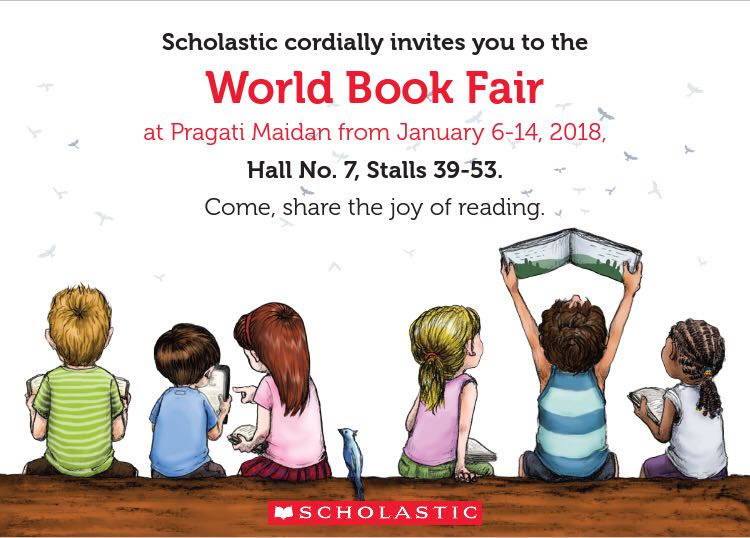
World Book Fair, 6-14 January 2018

Ever since the World Book Fair moved to January instead of the second week of February there has been a tremendous growth in the number of visitors. Year-on-year there are long queues of people waiting patiently to enter the enter the fair grounds at Pragati Maidan. This year the fair was held in only a small area of the exhibition grounds as much of Pragati Maidan has been demolished. It will be a few years before the new buildings are built. Meanwhile the publishers were placed in some halls and tents. The visitors to the fair walked alongside workers in hard hats and enormous Caterpillar diggers shovelling earth to create mountains taller than the exhibition halls. There were potholes in the roads and a general mess everywhere. Yet it did not seem to dampen anyone’s enthusiasm to buy books. As in previous years there were buyers trailing suitcases on wheels to pack in the books they would buy. In fact a senior publisher I met during the fair said that the shift to January has been a boon for them as their sales grow better and better with every year.

The World Book Fair is organised by the National Book Trust. It began in the early 1970s when it was a bi-annual affair before being made an annual feature. It began with the intention of making books accessible and popularising reading. Over the years it has slowly acquired some characteristics of a trade fair with its specific B2B meetings, a Rights Table, panel discussions, an increasing number of international visitors etc. This year the guest of honour was the European Union. The business collaborations that happen unexpectedly at the fair are incredible. Such as this of third-generation publisher Raphael Israel. An Indian Jew who met his Palestinian clients at the fair couple of years. It is now one of the happiest business relationships! 

Yet at the heart of it the book fair remains a B2C fair with visitors coming from around the country to buy books. In India there are bookshops but not enough to cater to the vast multi-lingual population. The presence of online retailers over the past few years has helped foster the reading habit among many especially in tier-2 and tier-3 towns. This was a sentiment expressed by many publishers participating in the fair. This time there were definitely larger number of customers many of whom were browsing through the shelves to discover more for themselves. While browsing online is convenient and helpful, algorithm driven searches do not necessarily help in discovering a variety of books for the readers. This is where the display cases at fairs and bookshops help tremendously.

There were visitors of all ages and even people using walking sticks or in wheel chairs braving the potholes and dust swirling around. It did help greatly that the winter break of schools had been extended due to the excessive chill. So families came to spend their day at the book fair, browsing, buying and having a picnic. Surprisingly the crowds came even during the designated business hours so that by the afternoon it was impossible to walk through the crush of people. Over the weekends the crowds were incredible. Publishers of children’s and young adult literature were delighted with the response. Sales were unprecedented for many whereas others managed to break even. Comments such as this were often overheard: Child telling parent “Don’t say you will buy the book online. Buy it now!” Sales of the trade and academic publishers were brisk as well but some reported poorer sales than last year citing the poor location as the major reason for lack of visitors. The Hindi publishers were satisfied with the response with some saying that the usual growth of sales of 15-20% which is commensurate with the growth of their publishing y-o-y was evident. Interestingly enough this year there was a significant presence of self-publishers. Sadly though this year there was a very low turnout of Indian regional language publishers. Curiously enough the stalls of the few who participated such as the Bengali, Marathi and Urdu publishers, their signboards were written in Hindi!

This was the first time that audio books made their presence felt. For example, the Swedish firm Storytel is partnering with publishers in Hindi, English and Marathi. An audio tower had been placed in the stall of Hindi publishers, Rajkamal Prakashan, where 60 audio books could be sampled. Apart from this there was evidence of newcomers who had put up stalls showcasing their storytelling websites/apps/storycards that had a digital audio version too. These were individual efforts. It was also rumoured that other bigger players could be expected to make an entrance into the Indian publishing ecosystem. Perhaps they will announce their presence at the next world book fair, January 2019?

Undoubtedly the local book market is growing as there are still many first generation buyers of books in India. Despite the vast variety of books on display it was the backlist of most publishers which was moving rapidly. Pan Macmillan India for instance had a corner dedicated to their Macmillan Classics that were very popular. Interestingly the branded authors such as Enid Blyton, Bear Grylls and J. K. Rowling had entire shelves dedicated to their works. At a time when most authors are jostling for space to be seen and heard, these generous displays by publishers for a single author were a testimony to the significance and influence they wield with readers. Obviously the long tail of backlists are good business. Repro is collaborating with Ingram to offer Print On Demand ( POD) services. These work well for those with significant backlists that need to be kept alive for customers but to avoid excessive warehousing costs and tying up cash in stock, it is best to offer POD services to customers. The demand for  a backlist title of a specific publishing house is fulfilled by vendors who use the marketplaces offered by online retailers. The cost of the title purchased is higher than if it had been part of a print run but this arrangement works favourably for everyone concerned.

While browsing through the bookshelves it was not uncommon to notice readers either standing absorbed in reading or sitting peacefully crosslegged on the floor reading through the books they had shortlisted. What was remarkable was how serenely they sat despite the crowds milling around them. If there were displays on tables as at the DK India stall and the regional language stalls, people were standing and reading calmly.


Happily a large number of younger customers thronged the fair and buying. Even though some publishers said that few people haggled for discounts the crowds at the secondhand and remaindered stalls had to be seen. There was such a melee. Books were being sold for as little as 3 for Rs 100! While publishers were not amused at the presence of these remaindered stalls doing brisk business, customers were delighted that for a small amount of money they could buy a pile of books.

All said and done it was a satisfying book fair. Hats off to the National Book Trust team for running it so smoothly and efficiently every year!


30 January 2018 


Interview with Randa Abdel-Fattah, The Mint ( 18 Nov 2017)

My interview with the fabulous Australian writer Randa Abdel-Fattah was published in The Mint on 18 Nov 2017. 

Randa Abdel-Fattah’s debut novel, Does My Head Look Big In This? (2005), is narrated in first person by a teenager, Amal Mohamed Nasrullah Abdel-Hakim, who lives in a trendy suburb of Melbourne. Her parents were born in Bethlehem, studied medicine in Monash University and became Australian citizens. Her father Mohamed is under the “misguided delusion” that he is still young and cool and drives a metallic-red convertible blasting Italian opera or Palestinian folk songs from his car stereo system. Her mother, Jamila, is a dentist who is obsessive about cleanliness and is loud and energetic. The novel is about Amal’s decision to don a hijab as “I feel like my passion and conviction in Islam are bursting inside me and I want to prove to myself that I’m strong enough to wear a badge of my faith”. Her parents are concerned about the reaction it will elicit in public, not least being called a “nappy head”.

It’s a tremendous coming-of-age novel written immediately post 9/11, which has now been re-released in India, given its relevance in our times. The Australia-based, 38-year-old author’s next novel, themed on immigration, The Lines We Cross, will be published in January 2018 by Scholastic India. Edited excerpts from an email interview:

What prompted you to write this book—a chick lit with a twist on religious expression and the importance of choice?

When I wrote Does My Head Look Big In This? and was searching for an agent, I spoke to one agent at length, explaining the basic plot of the novel. After my pitch, she had the audacity to joke: “Is there an honour killing in it?” This was the stock standard narrative space for the Muslim novel and that kind of lazy, dehumanizing genre of writing about Muslim women was what fired me up in the first place to want to write something that challenged such tropes. I wanted to offer readers a feisty, free-spirited adolescent Muslim girl speaking on her own terms and, importantly, delivering a story written by a Muslim female.

It is believed that debut novels tend to be autobiographical. Would it be an accurate statement to make with regard to ‘Does My Head Look Big In This?’ Or is it an amalgamation of stories you have heard as a human rights lawyer?

I actually wrote the first draft when I was a teenager, 15 years old, and it was, at that time, very autobiographical. I was “coming of age” during the first Gulf War (1990-91), at a time when suddenly being Muslim and Arab was no longer an identity description but an accusation. Not only was I dealing with the demonization in the media and political discourse of my Muslim and Arab heritage, but I was also dealing with gendered stereotypes which reduced Muslim women to oppressed and passive victims of faith and culture. That made me want to speak back, and for me writing has always been craft and activism. I returned to the manuscript post 9/11, and realized that the story was even more urgent. So I rewrote the first draft.

How did you decide upon creating the narrator as an Australian-Muslim-Palestinian teen? Did it take some effort to get the nuances right?

That part was easy. I drew on my own life, my experiences navigating multiple identities. The nuance was basically my own lived experience so it was never difficult to do!

It has been 12 years since this book was first published. What are the reactions that you get? Have these changed over time?

It amazes and humbles me that all these years later I still have people reaching out to me about the book to tell me that it was transformative in terms of their understanding of Muslims/Islam. Of all my novels, this has been my most popular work, taught in schools, staged as a play in the US, and currently being adapted into a feature film. My Muslim readers around the world tell me that the novel validates their experiences and empowers them to embrace their faith choices. For the majority of my readers—who are, in fact, not Muslims—I am told that the book has changed their perceptions about Muslims, particularly Muslim women who wear the veil. I still have girls contact me to say they read my book and were inspired to wear hijab or that it gave them that final edge of confidence to go through with their decision. The most touching feedback I’ve received was from a teacher in Canada who told me that on Christmas Eve, an elderly, non-Muslim man was handing out free copies of my book to people passing by a main shopping precinct because, he said, he felt it promoted a message of peace and harmony. It was one of the most beautiful and heart-warming stories I had ever heard.

The issues the book raised immediately after 9/11, about identity, race, immigrants, Islamophobia, are still relevant. Has this book been pivotal in opening conversations about faith, feminism, identity politics and social justice with teenagers?

Indeed it has. When I visit schools and writer festivals, these are the exact topics I address with students, talking to them about how writing can be such a powerful medium for speaking back to injustice, racism, sexism, and how they too can use their writing to navigate these issues.

Has this book been accessed by people across cultures and religions rather than being bracketed as a Muslim book?

Oh yes, definitely. In fact, the majority of my readers are not Muslim. So many of the people who write to me say that the book has helped them through their own identity, family and friendship challenges, and not necessarily from a Muslim perspective.

Does My Head Look Big In This?: By Randa Abdel-Fattah, Scholastic, 353 pages, Rs350.

Does My Head Look Big In This?: By Randa Abdel-Fattah, Scholastic, 353 pages, Rs350.
23 January 2018 

Julia Donaldson in India, Interaction with educators, New Delhi ( 19 January 2018)

Scholastic India organised a FABULOUS interaction led by Julia Donaldson’s with educators,  teachers and  librarians at the India Habitat Centre, New Delhi. It was a technically perfect  masterclass on how  storytelling and  picturebooks can be employed  imaginatively in classrooms, with minimal or NO props, involving all the children, with a little bit of rhythm, song and dance, opening a world of possibilities!

Neeraj Jain, MD, Scholastic India standing in front of a display of Julia Donaldson’s books

Julia Donaldson spoke of her journey from a musician/songwriter making an unexpected foracy in to the world of books and how very fortuitous it turned out. She spoke of her collaboration with Axel Scheffler and other illustrators. She performed some of her better known stories such as  Gruffalo transforming the room of schoolteachers into little children as they sang along with her! She was accompanied on the guitar by her husband Malcolm and a supporting cast that included her publishers from UK and India.


A magical morning!

19 January 2018 

New imprints launched in India

In the past few months new imprints have been announced by publishing houses in India.

The first was Niyogi Books launching  their three imprints — Thornbird for translation ( H S Shivprakash), Olive Turtle for Original Fiction ( Keki Daruwalla) and Paper Missile for Non fiction ( Udaya Narayan Singh).

The second was the translation programme announced by Ratna Sagar led by Dinesh Sinha. They have launched with three titles and have a few more planned in 2018.

The third is the children’s imprint launched by Readomania.

This afternoon Westland ( an Amazon company) announced the launch of a new literary imprint called “Context”. It will include serious, thoughtful, politically engaged fiction and non-fiction, mostly in hardback, by writers from the Indian subcontinent.

And if the rumours are true then there are some more to be announced later this year.

16 January 2018 

Web Analytics Made Easy -
StatCounter