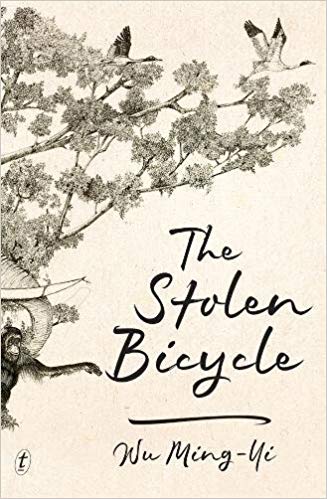
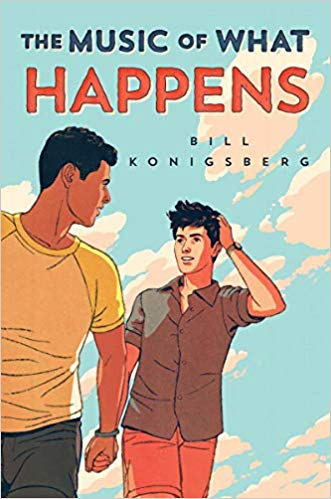
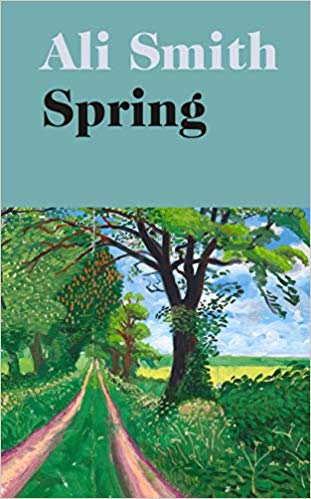
Book Post 36: 21 April – 19 May 2019 / Childlit and Yalit list
Book Post 36 focuses on childlit and yalit.
20 May 2019
Book Post 36 focuses on childlit and yalit.
20 May 2019


Every year the Australia Council for the Arts in partnership with Sydney Writers Festival and Writing NSW organises the prestigious Visiting International Publishers delegation. The list of VIPs alumni is a formidable list of publishing professionals from around the world. According to the website:
Delivered alongside the Sydney Writers’ Festival, the VIPs program supports international publishers, scouts and literary agents to participate in a week-long schedule of business meetings, networking events, industry forums, writers’ festival events, and panel discussions with Australian publishers and agents. The program showcases Australia’s literary talent, and promotes the sale of rights to Australian titles in international markets.
The visiting delegation will immerse themselves in Australia’s unique literary culture, share insights into global publishing trends, strengthen relationships with their Australian counterparts, and expand opportunities for Australian authors overseas.
VIPs is one of the Australia Council’s signature strategic initiatives, and this year marks the 21st anniversary of the program. Since its inception in 1998, the VIPs program has welcomed 270 international guests to Australia, from 28 countries, with more than 300 Australian titles sold into overseas markets through the program.
…
In 2016 and 2017, the Australia Council conducted a five year longitudinal evaluation of the VIPs program from 2011-2016, which included a survey of Australian publishers and agents. The report is now available here.
The evaluation revealed that for every $1 the Australia Council invests in the VIPs program, $5.45 is generated for the Australian literature sector – a 445% return on investment.
The evaluation also revealed:
I am honoured to have been invited to join this delegation later this month. This the 21st delegation being organised and hosted by the Australia Council for the Arts. The biographies of the 2019 visiting delegates is now available online.
Ia Atterholm, Literary Agent – Ia Atterholm Literary Agency, SWEDEN
Faye Bender, Literary Agent – The Book Group, USA
Jaya Bhattacharji Rose – International Publishing Consultant, INDIA
Peter Blackstock, Senior Editor – Grove Atlantic, USA
Simon Boughton, Publishing Director – Norton Young Readers, W.W. Norton & Company, USA
Joanna Cárdenas, Editor – Kokila, Penguin Random House US, USA
Li Kangqin, Senior Acquisition Editor & Rights Manager – Shanghai 99 Readers’ Culture, CHINA
Job Lisman, Editorial Director – Prometheus Publishers, NETHERLANDS
Pamela Malpas, Literary Agent – Jennifer Lyons Literary Agency, USA
Stephen Morrow, Vice President – Dutton, Penguin Random House US, USA
Julia Reuter, Editor – Carlsen Verlag, GERMANY
Rebecca Servadio, Literary Scout – London Literary Scouting, UK
Susan Van Metre, Executive Editorial Director – Walker Books US, Walker Books International, USA

16 April 2019
Best-selling and prize-winning writer of history and fiction Simon Sebag Montefiore ‘s Written in History: Letters that Changed the World is a fantastic addition to his list of publications. It is a selection of correspondences between eminent people at significant moments in history. Matching form for form, Simon Sebag Montefiore’s introduction too is in the form of an epistle addressed to the reader. In it he describes the principle upon which his selection of letters has been arranged. He also gives a crisp and informative account of the various purposes letters have served over the ages. “Some letters were intended to act as publicity, some to remain absolutely secret. Their variety of usage is one of the joys of a collection like this.” This collection consists of letters that are public letters ( like Balfour promises a Jewish homeland), letters that were designed to be copied out and widely distributed in society such as the public letters of great correspondents ( Voltaire and Catherine the Great were enjoyed in literary salons across Europe) or official letters announcing a military victory or defeat. Or letters that were political and military in nature revolving around negotiations or commands and could not be read out in public. For instance Rameses the Great’s disdainful note to the Hittite king Hattusili or Saladin and Richard the Lionheart negotiate to partition the Holy Land. This is a fine selection of letters originally written in cuneiform, on papyrus, then letters written on parchment or vellum, until paper was created in China around 200 BC. Letter writing belonged to all spheres of life. The beauty of letter writing is that nothing beats the immediacy and authenticity of a letter.
Written in History is a splendid anthology. It is a fabulous introduction to different moments in history made ever more delightful by the short notes written by Simon Sebag Montefiore preceding every letter. It is a wonderful, wonderful book which balances the act splendidly between providing information, being sensitive to the correspondents and being a sophisticated performance of a walk through history.
In March 2019, London-based Intelligence Squared’s acclaimed events on great speeches and poetry presented an event based on Letters That Changed The World. Joining the author on stage were No 1 bestselling novelist Kate Mosse. Together they discussed letters by Michelangelo, Catherine the Great, Sarah Bernhardt, Rosa Parks, Nelson Mandela, Virginia Woolf, Alan Turing and Leonard Cohen.
A cast of performers, including Young Vic director Kwame Kwei-Armah, rising star Jade Anouka, Dunkirk actor Jack Lowden, and West End star Tamsin Greig, brought the letters to life on stage.
In January 2019 Simon Sebag Montefiore attended the Jaipur Literature Festival. He gave a splendid public lecture-cum-performance on the Romanovs. Here is a recording of the event where he held the audience spellbound. Much like the reader is with Written in History.
10 April 2019
Every week I post some of the books I have received recently. In today’s Book Post 32 included are some of the titles I have received in the past few weeks.
8 April 2019


Everything that was there between Arkansas and Oklahoma was not there: Geronimo, Hrabal, Stanford, names on tombstones, our future, the lost children, the two missing girls.
All I see in hindsight is the chaos of history repeated, over and over, reenacted, reinterpreted, the world, its fucked-up heart palpitating underneath us, failing, messing up again and again as it winds its way around a sun. And in the middle of it all, tribes, families, people, all beautiful things falling apart, debris, dust, erasure.
Valeria Luiselli’s Lost Children Archive is a modern road novel about a young family moving across states. They are unnamed. For most of the novel the mother is the narrator till it switches to the young boy in the last part. Along the way the narrator is preoccupied with an immigrant mother for whom she helped translate in court and now the mother is trying to get two of her daughters across the border into USA. Unfortunately it goes wrong with the two daughters missing. While on this long drive across the country, the unnamed narrator and her family also witness a group of young children flanked by armed guards being deported. The family watches the little children board a small plane. It is a journey at multiple levels — the actual journey on the road, the journey that the couple are taking in their marriage which is slowly unravelling, the journey their two little children travelling in the back seat are making as step-siblings and as two children transforming into thinking individuals in their own right. This is a book that is the first written originally in English by Valeria Luiselli. It is loosely based upon her experiences as volunteer interpreter for young Central American migrants seeking legal status in the United States.
While Lost Children Archive has been notably longlisted for the Women’s Prize for Fiction 2019 and may even justifiably be shortlisted for it, it may be a long shot if it wins it. The author who is obviously more than moved by the plight of the immigrants in USA has created this incredibly magnificent piece of fiction but unfortunately loses her grip on the art of creating characters and voices when seemingly in empathy she wishes to share the litte boy’s perspective too.
Claire Messud writing in the New York Review of Books says about Valeria Luiselli “Art is an act of transformation: the passage of material through an imaginative crucible, and the creation of something new. That something new must have its own integrity, must be greater than the sum of its parts. Camus’s explorations of the absurd in The Stranger and The Myth of Sisyphus measure the distinction between a novelistic embodiment of human experience and an essayistic distillation of thought. Many elements of Lost Children Archive are extraordinary, and yet the ultimate act of transformation has not occurred. One might of course contend that, in this ghastly time, such a transformation is no longer possible; but Luiselli’s decision to write a novel at all surely affirms otherwise.” ( “At the Border of the Novel“, NYRB, March 21, 2019 issue)
Lost Children Archive is worth reading for the fictional landscape gives space to a critically relevant issue about migrants and their children — more than an editorial or a feature article can ever hope to achieve.
6 April 2019
No, just feeling sad, I said.
Still?
Still? I said. Sometimes I’m so sad I feel like a freak.
That sounds like self-pity unrestrained, he said.
I thought about my language. Indeed he was right. Not only was it immoderate but it was imprecise. How do you compare sadness that takes over like an erupted volcano to sadness that stays inside one, still as a still-born baby? People talk about grief coming and going like waves, but I am not a breakwater, I am not a boat, I am not a statue left on a rocky shore, tested for its endurance.
Let me revise, I said. Sometimes sadness makes me unable to write.
Why write, he said, if you can feel?
What do you mean?
I always imagine writing is for people who don’t want to feel or don’t know how to.
And reading? I asked. Nikolai was a good reader.
For those who do.
For weeks I had not read well. I picked up books and put them down after a page or two, finding little to sustain me. I was writing, though, making up stories to talk with Nikolai. (Where else can we meet but in stories now?)
See my point? he said. You cannot not write. You don’t even mind writing badly.
Because I don’t want to feel sad or I don’t know how to feel sad?
What’s the different? He said. Does a person commit suicide because he doesn’t want to live, or doesn’t know how to live?
I could say nothing.
(p.55-57)
….
Orphan, widow, widower, I thought, but what do you call a parent who’s lost a child, a sibling who’s lost a sibling, a friend who’s lost a friend?
I told you nouns are limited, Nikolai said..
Words are, I said.
(p.114)
Yiyun Li’s novel Where Reasons End is a tender-hearted, very moving, novel that delves into memories and half-finished conversations by the unnamed narrator with her dead child. It is achingly painful to read given that it seems as if the reader is eavesdropping upon very intimate moments between mother and child. Grief takes many forms. This is one. Losing a child but a teenager is terrible. Here the mother hearks back to conversations with her child. Holds on to the few memories she has. When a mother talks to her child, it is as if they cut off everything else in the world and are completely focused upon each other. It is in many ways like the oneness of being that a mother experiences with her child when it is in vitro.It may be hauntingly sad, grief-stricken book, a eulogy to one who took his life. It may mirror to some extent Yiyun Li’s life as her sixteen-year-old son committed suicide. But in an age where parenting and motherhood is spoken of ad nauseum. Motherhood narratives are rapidly becoming a critical genre of literature. Where Reasons Endbelongs very much to this literary space.
Yiyun Li is based in USA and writes in English. In a fabulous New Yorker essay published in January 2017, she explains why she chooses to write in English. Here are some extracts that shed some light on the manner in which she chose to craft her novel Where Reasons End.
Yet language is capable of sinking a mind. One’s thoughts are slavishly bound to language. I used to think that an abyss is a moment of despair becoming interminable; but any moment, even the direst, is bound to end. What’s abysmal is that one’s erratic language closes in on one like quicksand: “You are nothing. You must do anything you can to get rid of this nothingness.” We can kill time, but language kills us. … When we enter a world—a new country, a new school, a party, a family or a class reunion, an army camp, a hospital—we speak the language it requires. The wisdom to adapt is the wisdom to have two languages: the one spoken to others, and the one spoken to oneself. One learns to master the public language not much differently from the way that one acquires a second language: assess the situations, construct sentences with the right words and the correct syntax, catch a mistake if one can avoid it, or else apologize and learn the lesson after a blunder. Fluency in the public language, like fluency in a second language, can be achieved with enough practice.
Perhaps the line between the two is, and should be, fluid; it is never so for me. I often forget, when I write, that English is also used by others. English is my private language. Every word has to be pondered before it becomes a word. I have no doubt—can this be an illusion?—that the conversation I have with myself, however linguistically flawed, is the conversation that I have always wanted, in the exact way I want it to be.
In my relationship with English, in this relationship with the intrinsic distance between a nonnative speaker and an adopted language that makes people look askance, I feel invisible but not estranged. It is the position I believe I always want in life. But with every pursuit there is the danger of crossing a line, from invisibility to erasure.
…
When one thinks in an adopted language, one arranges and rearranges words that are neutral, indifferent even.
When one remembers in an adopted language, there is a dividing line in that remembrance. What came before could be someone else’s life; it might as well be fiction.
…
Often I think that writing is a futile effort; so is reading; so is living. Loneliness is the inability to speak with another in one’s private language. That emptiness is filled with public language or romanticized connections.
Yiyun Li, “To Speak Is to Blunder: Choosing to renounce a mother tongue.” The New Yorker, January 2, 2017, issue.
4 April 2019
Guest post by Dipa Chaudhuri & Puneet Gupta, Co-translators of the Adventures of Asterix in Hindi
Astérix albums have been published in 111 languages and dialects, making it the best-selling comic book series worldwide, with 375 million copies sold to date. The series, popularly known as The Adventures of Asterix, was written by René Goscinny and illustrated by Albert Uderzo and first appeared in the Franco-Belgian comics magazine Pilote, on 29 October 1959.
These satirical comics focus on the adventures of the protagonists Asterix and Obelix, and their village of Gauls, fending off Roman offensives in 50 BC, with the help of a magic potion brewed by the venerable village druid, that temporarily imparts the Gauls superhuman strength. Today, these adventures have been adapted to animated and live action films, video games, theme parks, and more. The first four albums—Gaulwasi Astérix (Asterix the Gaul); Sone ki Darati (Asterix and the Golden Sickle); Astérix aur Gawthwasi (Asterix and the Goths); Astérix Talwarbaz (Asterix the Gladiator)—are now available in Hindi.
Ajay Mago, Publisher, Om Books International, acquired the Hindi translation rights of The Adventures of Asterix from Hachette Livres, France, after nearly 5 years of negotiations that started in 2009 with a blind call at the Frankfurt Book Fair. He just walked into the Hachette Livres stand, hoping to just walk out with the Hindi rights for Asterix, a logical step after having recently acquired the Hindi translation rights for The Adventures of Tintin from Editions Casterman.
Hachette Livres wanted to see a detailed marketing plan for the books in Hindi. They also insisted that the translation be carried out in Hindi from the original comics in French and not from English. Given that I speak French (I have an M.Phil. in French Literature from Université Paris Diderot-Paris 7) and have been Chief Editor, Om Books International, since 2010, Ajay suggested, I come on board. Thereafter, we got on board Puneet Gupta, an advertising professional and a producer of audio visuals, who writes science fiction novels, short stories and humorous poetry in Hindi. A die-hard comics enthusiast since childhood, he has translated the comic series, Tintin, in Hindi, also published by Om Books International. We then had to send Hachette Livres a sample 10-page translation of Album 1 to prove our credentials. After about a month, we received the stamp of approval—the translation was much appreciated with a few changes here and there. Clearly, we were dealing with publishers who needed to be convinced that they were interacting with a team of professionals in India who would do right by the bestselling comic series in the world. The rights were finally granted in 2014.
Given the number of comics in the Asterix ‘canon’, and in the entire series, it was clear that Ajay, Puneet and I were in it for the long haul. To begin with, Puneet and I read up the entire series a few times to get the drift of the constants and the variables. (At the moment, the first four albums are out. Completing the series would take, at the very least, another couple of years.)
It was obvious that we were not dealing with a straightforward narrative and Puneet does not speak French. So I would share with him the multiple meanings of each dialogue/ frame, the wordplays and the etymology as also the distortions in the French originals. I would do that primarily in Hindi with the truly odd recourse to English. (it was a conscious decision taken by both of us to leave English out of the process). Thereafter, both of us would come up with multiple parallel possibilities in Hindi, till we got the context and register right each time. This is amply clear from the revisions on each draft (see scanned examples of handwritten revisions for Gaulwasi Asterix).


At the very outset, we realised translating comics have practical constraints. The first and immediate constraint is fitting the Hindi translation into each speech bubble, despite Hindi being syntactically longer than French also because of the maatras on the top, bottom and the side (in French, the accents are only on the top and bottom).
While the French comics are hand-written, we had to look for a similar font in Hindi that could be typed out on the keyboard. At times, we needed to choose different fonts that would establish the distinct accent with which a Goth would speak for instance (in the English translation, the Gothic font was used for the Goths). The font of the main copy was Kruti Dev 010. Kruti Dev 240 was used for Goths in Asterix Aur Gauthwasi.
Besides the fonts, we had to ensure that each linguistic community spoke with the accents phonetically associated with it. So, the Goths took on harsh and guttural sounds in Hindi. The accent was also a challenge when we were translating the speech of a drunken sod. Besides slurred speech, words altered forms constantly through a series of dialogue to indicate a constantly altered perception of reality as is wont to happen when one is sloshed.
Apart from Asterix and Obelix, the various gods and goddesses, and historical figure like Julius Caesar, Vercingetorix, Cleopatra, whose names remain unchanged, renaming the characters, designations, geographical coordinates was a challenging exercise as each name in French and in Hindi has multiple meanings.
Each language has a set of distinct sounds or onomatopoeia. We had to work our way through the sounds from French to Hindi too, and already have a directory of over 150 onomatopoeia.
For pure visual effect, more so after a vigorous exchange of fisticuffs, sounds in Hindi had to be drawn and manually fitted into many frames without speech bubbles.
As we went along, it became clear that we were translating not only from French to Hindi, but depending on the provenance of the protagonist, we were translating from Latin, and on occasion, German too. This shall only get more complicated as Asterix and Obelix travel out to Britain, Egypt, Corsica, Spain, India, amongst other places, for the distorted nuances in French are likely to be borrowed heavily from the languages spoken in these places. So before translating the nuances into Hindi, we shall have to go into the etymology of the words, the idioms, the phraseology of the region in which the Asterix and Obelix find themselves. Negotiating between different registers of each language to establish the social hierarchy that binds the characters, was part of the task at hand.
The series is replete with French songs, nursery rhymes, ditties, military marches etc. that have often been distorted in the French version itself. That posed the twin challenge of first decoding the original versions and then translating these into Hindi with as many implicit and explicit layers of meanings carried forward.
The comics are also replete with intricate word play, sometimes running through a series of dialogue, and on occasion, through several pages. As the word plays became more complex, finding suitable translations became more challenging; we worked through various options till we stumbled upon that epiphany, that elusive translation which worked well.
Puneet Gupta says “We had to decide on a few guidelines that would be followed in the course of translating the entire series. These included the set of names of the central characters, the Roman garrisons surrounding the village of the Gauls, the various ethnic groups—the Romans, the Germans, the British or the Egyptians, to name a few, all identified with a unique suffix as given to them in the original text. Apart from historical figures such as Vercingetorix, Julius Caesar, Brutus, Cleopatra, etc., all the other character names are puns and mini jokes in themselves. In Sone ki Darati, there is a shifty dealer Lentix, who we translated as Dal-me-kalix.
Barbaric Germans tribes have funny sounding names, ending with a suffix “ic”—Teleferic, Metric, Theoric, Periferic, Choleric and Histeric. According to their mental make-up, we renamed them Atyacharik, Maardhadik, Becharik, Bimarik and Mahamarik. The suffixes particular to linguistic and cultural communities were retained as in the original.
We have also tried to retain the original flavour of many names. The dog, Idefix, or of fixed ideas, was renamed Adiyalix, someone who is doggedly obstinate, and loyal too.Druid Panoramix has become Ojha Aushadhiks. The village of the Gauls, is almost tribal in nature, and the druid is a combination of a medicine man and a witchdoctor, who brews potions with magical powers. Another character Cetautomatix, has been named Svachalit Loharix.
The military terminology was interesting too. Ranks such as Centurion and Decurion had to be suitably translated as well. So after much deliberation over the existing ranks in the Indian military, we took a cue from Senapati, and coined ranks like “Dashpati” for Decurion (a commander of 10 soldiers), and “Shatpati” for Centurion (commander of 100 soldiers) than settle for Major, Colonel etc. For every proverb, popular joke and clever turns of phrase in French, we hunted for a befitting equivalence in Hindi to ensure that the punch, wit and humour of the original were not lost in translation.”
Is the humour in Asterix in consonance with the underpinnings on which the edifice of humour per se reposes? Pretty much yes, so humour at its most irreverent, whether anti-establishment or otherwise, feeds off cultural and ideological superiority, racial, ethnic and linguistic slurs, gender stereo-typing and other devastating premises that go beyond the pale of politically correctness. But most of us play along since there is an unspoken pact between the participants-interlocutors that it is all in jest and good cheer.
The Adventures of Asterix is a comic series with a very significant graphic element, the largely visual slapstick humour is conveyed efficiently through the excellently drawn panels. Whether its our Gaul heroes settling scores with an adversary, with only his teeth or sandals in the speech bubble to speak for the devastating aftermath of the encounter, or the effect Besurtalix’s singing has on everyone, a handful of translated sound effects in the panels suffices to convey the drama and humour.
Literary humour is rather difficult to translate. Fortunately, with the rich repository of words, jokes, proverbs, songs, rhymes, poems, riddles and of popular lore in Hindi, the search was usually crowned with sensible outcomes.
All through, however, it was clear to us that we were not ‘converting’ the comics by translating them into Hindi just as competent translations of the French, Italian and Russian literary masterpieces into English or other languages were meant to ‘communicate’ the narratives instead of ‘converting’ or ‘customising’ them to the cultural construct of the target language. Also, the imposing visuals of Asterix would make it near impossible to ‘Indianise’ the comics. The comics are being translated with the desire to share a cultural experience that is quite unique, different, yet not dissimilar in the gamut of human experiences.
This translation project has been partly sponsored by the PAP Tagore Programme in Paris and locally by the Institut Français en Inde. The idea of embarking on a new narrative in each comic with its fresh round of challenges is interesting for the simple reason that like all great classics, one is forever discovering something new each time we look at a dialogue or frame, and for the joy of decoding the wordplay, the cultural ciphers, and hopefully learning a bit of the art by unravelling the code. We all would have picked up similar linguistic and cultural subversions from the body of James Joyces’ works too.
What stays with us is the great art of writing comics that are important alternative histories that also deride such histories. Asterix is at the end of the day, a great body of satire.
Indians being polyglots, read in multiple languages. A considerable part of post-colonial India and Indians have already been exposed to a plethora of world literature, including comics and cartoons. We have grown up reading Superman, Phantom, Mandrake, Modesty Blaise, Archie comics, Tintin and Asterix alongside Chacha Chaudhry and Deewana (our home-grown version of good old Alfred E Neuman), RK Laxman, Sudhir Dhar, Mario Miranda, and more. Our colonial heritage, now a part of our socio-cultural DNA, is paradoxically a bane and a boon. We do not resist either reading, writing or speaking in the language, supposedly, of the ‘others’ that over time has been embraced as a personalised mode of expression by the ‘I’. There is already a huge readership of Asterix in English in India, a country that has had a very strong tradition of comics not only in English and Hindi, but in several regional languages as well. Asterix in Hindi is not only for the strictly Hindiphone readers, but for comic buffs and collectors, artists, ethnographers, translators, educational institutions across linguistic boundaries, and across India and the world.
(C) Dipa Chaudhuri & Puneet Gupta


3 April 2019