fiction Posts

Interview with Siddhartha Sarma: “I have found no greater joy in life than in the process of writing a story”

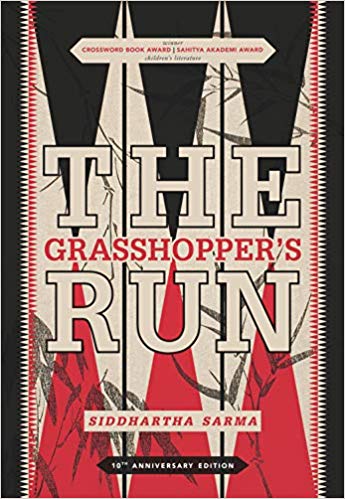
Siddhartha Sarma is a journalist, writer and historian. He has covered insurgency, crime and law in the Northeast and other parts of the country and written for newspapers and magazines as an investigative journalist. His debut novel, The Grasshopper’s Run (Scholastic India, 2009), received the Sahitya Akademi Award for children’s literature in English in 2011 and the Crossword Book Award in 2010. His second novel, Year of the Weeds (Duckbill, 2018) is based on the land rights agitation in the Niyamgiri Hills of Odisha. His latest published work, Carpenters and Kings (Penguin Random House India, 2019) is a history of Western Christianity in India.

  1. Why and how did you get into writing? Where do you find your stories? How long does it take from inception to completion?

A.:  When I was seven, my school was bringing out a commemorative magazine to celebrate an anniversary. I was told anybody could contribute anything they liked for it, so I wrote an approximately 400-word story based on real events. A bit of a tragedy. They printed the story with no edits on the first page, with my name on it. But what I remember now and in the intervening years is not the feeling of seeing my name in print, or of reading my story in printed form, but the joy of writing it, the process of slowly putting things together in my head and of banging it out, over several hours, on my father’s old typewriter, literally sitting on his desk because I was too short to type from the chair. The fear of making a typo (which is such a frustrating experience on a typewriter, unlike on a computer where a typing error is merely an inconvenience). I have found no greater joy in life than in the process of writing a story, of entering or discovering a world, and of narrating it for myself and for any reader I might find. That is how I began writing, and what I still try to do.

I began my career in journalism as a reporter. It is a much-repeated saying in the newsroom that a good reporter never runs out of story ideas. I have never had a problem thinking up story ideas. The problem is deciding which are worth taking up. One does not have this luxury of choice as a reporter, but a writer has to be very selective about which idea she will devote her time and energies to. If my time as a journalist has helped me as a writer in any manner, it is in two: I can be objective in deciding which stories to write and which to shelve, temporarily or permanently. And second: I can be objective in editing my own work. One of the criteria I have for deciding on a story is whether I have the competence to write it. There are many genres that I have a bit of an interest in, but I know I might not be able to execute a story in them very well. Such as fantasy or science fiction.

The complete arc from story idea to research to writing and editing and the final draft depends on the length of the work, its complexity, scope of research and treatment. My first novel, The Grasshopper’s Run, took me a year and half to research and seven months to write. My newest non-fiction book, Carpenters and Kings: Western Christianity and the Idea of India took up nine years of research and eight months of writing. So it varies. But I do seem to spend more time thinking about a story than in actually writing it.

2. Is it only the long form of a novel that appeals to you? Would you ever consider other structures such as short stories or a series arc?

A.: My first work published in a book was a short story, in a humour anthology by Scholastic. Some other commissioned short stories have also been published. But, yes, I find the novel’s longer form more suitable for the kind of stories I have to tell. I have not yet thought of a series of books, although I can’t rule it out in the future. A standalone novel, however, suits the way I want to tell a story for one major reason. While working on a story, I spend a lot of time building the narrative arcs of individual characters. I go back in time, and also forward, into their futures. I create their backgrounds and populate it with other characters and circumstances. Most of these never get written in the final novel, but they do exist. So for me writing a novel is like baking a whole cake and cutting out just a slice of it for publishing. Or creating a tapestry and (again) cutting a slice of it. A short story might give me a much smaller, possibly unsatisfactory slice, while a series might need tough decisions about how many slices to make, or from which part of the cake or tapestry. So far, novels have worked for me.  

3. How much research do you delve into before you begin writing a book? How do you organise your notes? What is your writing routine?

A.: Researching for a book is among the most interesting parts of the writing process for me. Over time, I think I have become a bit more organized in my methodology. The Grasshopper’s Run caused me a lot of anxiety during the research process because I was not accounting for the volume of material I would end up having. For instance, I asked my sources for visual material to base my description of events and topography on, from the China-Burma-India theatre of World War II. I asked for un-curated photographs. I received some 1,800 photos, and most were directly relevant to my research. I had to sift through about 6,000 pages of correspondence and records from that theatre. For Carpenters and Kings, I examined 46 medieval and ancient manuscripts and translated seven of them from Latin because the previous translations were themselves dated. So gathering material is not a problem, particularly in these times. The more difficult part is knowing when to stop researching, or learning to leave out the peripheral or marginally relevant. Otherwise every book becomes a doctoral thesis.

I begin with a basic idea about the plot, in case of non-fiction the general outline of my argument. The notes I take from my research are based on their direct relation to this bare plot or argument. The most directly connected bits of evidence or material gets the highest weightage. Additionally, for fiction, any bit of non-fictional material which can help flesh out a character’s story arc or background (that part of the background which will get written rather than get left on the cutting room floor) also gets priority.

I have no particular routine. My best time is late in the night, but the slow cooking that happens before the physical act of writing can happen at any other time during the day.  

4. How did you decide to write historical fiction set in Nagaland during the Japanese invasion in WWII? And why write it for young adults?

A.: I wanted to base my first novel in the Northeast, as a mark of respect for my homeland. I thought a coming-of-age story during a conflict might work, because I had been asked to write a young adult novel by Sayoni Basu, then editor of Scholastic India. I did not want to base the story during any of the region’s numerous insurgencies, although I have covered them, because the political aspects of those insurgencies were too complex for a novel of the size I had in mind. That left the 1962 war and WWII. The actual fighting in 1962 took place in rather remote places where the human interest aspect did not play out much. WWII was, for my purposes, more suitable.

5. Did winning the 2011 Sahitya Akademi Bal Puraskar and the 2010 Crossword Award for Best Children’s Book for your debut novel The Grasshopper’s Run apart from pleasantly surprising you also put undue pressure on you to excel with your next book?

A.: ‘Pleasant surprise’ is very appropriate. I was surprised and gratified that readers and people who know a lot about children’s and YA literature liked the novel. It was very encouraging, and I met some noted writers afterwards and received valuable advice on writing from them. It was a very pleasant experience.

There has been no pressure. I have always been fortunate in the publishers and editors I have worked with. I just try to work on each story on its own merits, and don’t think much about expectations. The only expectation I have from myself is to write, at each stage, a better story than I have written before. If that happens, I am content. Ultimately, I have to write stories that I would like to read, and re-read.

6. Your second young adult novel, Year of the Weeds, is written nearly a decade later. The plot of the novel is reminiscent of the Niyamgiri movement of the Dongria Kondh Adivasis in Odisha who fought mining company Vedanta’s attempts to exploit their land and emerged victorious. How do you achieve this fine balance between journalistic writing and creating fiction for young adult readers?

A.: Year of the Weeds is indeed based on the Niyamgiri movement and was inspired by it, although the novel ended up containing elements from other similar peoples’ movements, while the workings of the government and companies is based on what I have seen across the country as a reporter. I follow peoples’ movements and Niyamgiri was inspirational and unexpected, so I wanted to commemorate it, even though I suspect it was just a provisional victory. While writing it, I was conscious that my treatment had to be that of a YA novel. However, I have also tried to include in it ideas and insights I have had as a journalist covering different aspects of India, such as how most Indians in the hinterland live, how the government interacts and often exploits or victimizes them, and what the true face of development is in these parts of the country. So, while it remained a YA novel throughout, with the frame of reference being mostly that of the two YA protagonists Korok and Anchita, I also tried to make sure these insights and ideas were properly written into the plot.

Around the time that I began researching for The Grasshopper’s Run, I realised I could not continue as a reporter and simultaneously as a writer of fiction and non-fiction. I was increasingly not content with the limitations (as I saw it) of a reporter, at least in terms of autonomy. I wanted to tell stories which could not be accommodated within my work as a reporter. So I shifted to the desk and have worked as an editor ever since, while writing books. I chose writing at the expense of reporting. I have not regretted it.

7. You have an enthusiastic passion for the Crusades and yet your first narrative nonfiction was Carpenters and Kings: Western Christianity and the Idea of India. Why?

A.: I have studied the Crusades, and my thesis for an M Litt degree was on strategy during the Later Crusades. I find the Crusades very significant in understanding world history in general and European history in particular, because those conflicts sit at the centre of a wide range of connected events, including the Renaissance, the Reformation and the Age of Exploration.

There is a number of good, accessible and recent works on the Crusades by scholars from the West, so I did not intend to write a work of my own, which would not have made any significant contribution to the subject. However, something interesting happened during my research for the thesis, which was a study of three proposals for crusades by scholars in the late thirteenth and early fourteenth centuries. One of these scholars, a Dominican monk, wanted to launch a crusade from India. My supervisor suggested that I could refer to a secondary source on what these Europeans were doing in India in the period before the Age of Exploration. We discovered that there was no work which explained the political history of Western Christianity in India in the pre-colonial period. In December 2017, I realized I had enough material for a book which dealt with this subject, so I wrote Carpenters and Kings. And yes, I did include a brief history of the Crusades in it, and one of the chapters is about the Dominican who wanted a crusade from India, because all these are connected events. What was the Dominican doing in India? Also, much later, what was Vasco da Gama doing here? The answer to both questions is the Crusades.

8. You write young adult literature, travelogues and non-fiction. This is a diverse range of genres. How did this happen?

A.: Each book happened in a specific context and for unique reasons. The Grasshopper’s Run was meant to be a YA novel. While researching it, I travelled in the Northeast and Myanmar, and afterwards wrote a series of emails describing my travels, which I sent to friends. These were read by a publisher, who asked me to expand them into a travelogue, from which East of the Sun (Tranquebar, 2010) happened. Meanwhile, I wrote two books for the popular 103 series by Scholastic, one on great travellers I admire and the other on historical mysteries. And then I wrote Year of the Weeds followed by Carpenters and Kings. I guess one reason why this is an eclectic mix is I follow a story to its natural place and write it accordingly. So we have a situation where, although history is what I am academically suited to writing about, Year of the Weeds is contemporary political fiction. I am comfortable with chasing a story wherever and to whichever genre it leads. I think the only concern for a writer should be whether the story is told well or not. Having said that, I am still learning, so if I discover that I should stick to specific genres, I shall do that.

9. Do the methodologies of research and writing for young adult literature and narrative nonfiction vary?

A.: It is possible that some researchers might have different research methodologies depending on what genre they are planning to write in. I do not have different methodologies. I choose a subject, start reading about it, examine primary and secondary sources, select those sources which are suitable for the story I have in mind, and then sift through the material I obtain.

There are certainly differences in writing YA fiction and narrative nonfiction for general readers, including tone, scope, complexity of ideas, presentation of this complexity. In some ways, like channelling all the research into suitable concepts, narrative nonfiction is more challenging. In several other ways, like writing in a manner which holds the reader’s attention, and creating believable characters and plots, YA literature has its own set of challenges. Both are very rewarding genres to write in.

10. What are the kinds of books you like to read? Any favourites?

A.: I have followed several genres over the years, although now because of demands on my time I have to limit myself to those genres which I have consistently read. Of these, apart from literary fiction, I seem to have read crime and espionage fiction fairly consistently. Fantasy, which I was reading a lot of till some years ago, seems to have dropped off. I do not know if this is a temporary phase.

11. Who are the writers you admire and may have influenced you?

A.: These are among the writers I have liked almost consistently. In literary fiction: Peter Carey, JM Coetzee, Saul Bellow, John Updike, Ernest Hemingway, Graham Greene, Nelson Algren, John Steinbeck. In crime: Dashiell Hammett, Chester Himes, Henning Mankell, Elmore Leonard, PD James, Janwillem van de Wetering. In espionage: John le Carre, John Buchan, Len Deighton.

12. What next? 

A.: Perhaps a dark story. One of the problems with India after 2014 has been we have been affected by the doings of the ideology and the people in power on a daily, personal level. On a daily, personal level, one finds it increasingly difficult to feel joy in most things, or to happily coast along choosing stories to read or tell at a leisurely, whimsical pace. I would have liked to write a story I was working on in 2013, but that will have to wait for some time. At the moment, we need stories that deal with or are related to the situation we have in India, or which go some way towards explaining things. We can’t ignore that. So, perhaps something dark, something angry.

17 August 2019

Book Post 35: 21 April – 19 May 2019 / Trade list

Book Post 35 is being uploaded after a month. It focuses on the trade list. This include some of the titles I have received in the past few weeks.

20 May 2019

“My Father’s Garden” by Hansda Sowvendra Shekhar

…on each trip home, I found my father working unrelentingly in his garden. And under his loving care, it flourished more than ever. A hibiscus tree, which had been falling over on one visit, would be propped up with bamboo staves on the next, covered with pale orange blossoms. The lime and lemon bushes woudl hang heavy with fruit in season. As would the mangoes, guavas, bananas and jackfruits. Before we left our quarters, my father had carefully plucked a litchi sapling from the premises as a memento. That, too, was flourishing. And just behind our kitchen, my mother and aunt cultivated their own little patch of earth. Thick, deep green vines of pui leaves climbed the iron grille of the verandah outside our kitchen. Tusli, dhania and pudina grew lush in the cool space near the tubewell where the water keeps the earth always moist. Birds made their home in our garden. The caws-caws and the chee-chees would start at dawn and wake us up. At dusk, their raucous homecoming would tell us that the day was at an end.

I once read somewhere that the single-minded pursuit of one course over a lifetime can only be justified if one engages in two enterprises — building a garden, or raising a child. I now understand that my father’s garden is truly his child. And this child gives him the happiness and peace of mind that nothing else could ever give him.

Award-winning writer Hansda Sowvendra Shekhar’s My Father’s Garden is narrated in first person by an unnamed medical student (later doctor) and is set in Jharkhand. It is divided into three sections of unequal lengths — Lover, Friend and Father.

“Lover”, set in Jamshedpur, is a self-obsessed, narcissistic, self-centred portrayal of a young medical student for whom sex is liberating, needy and satisfying but it is also self-consuming when he is rejected by all his lovers for heterosexual relationships that are socially acceptable. It pushes the narrator to depression and a suicide attempt when he slashes his wrists only to wake up the next morning to discover the blob of blood congealing near his bed. He returns home to his parents.

“Friend”, set in Pakur, while ostensibly about a colleague Bada Babu — a successful man if measured by his genial generosity, his popularity and his ever welcoming home with a lavish party organised at every festival or birthday. The unnamed narrator becomes a permanent fixture at these parties. Yet “Friend” is also about the socio-economic horrors that plague society, particularly one where most of the locals are gullible, innocent and absolutely ignorant of their rights. There are also easy prey to be economically exploited by the very same person, in this case Bade Babu, who while being politically shrewd turns out to be the the victims’ benevolent benefactor as well. It is illustrated by the horrendous episode of evicting the people from the land where Bade Babu also has built a house, although his did not have a permanent roof. The poor people had invested their savings into buying the land not realising that they had been conned and were actually illegally squatting on government property. Bade Babu’s house is also demolished on the day everyone else’s is but to the narrator’s chagrin he discovers that Bade Babu has secretly managed to build himself quite a magnificent mansion, many times bigger than his present home, and the new place has a permanent roof. Many of those evicted had no one to turn to except Bade Babu for help which he magnanimously promised to provide. It is an age-old vicious cycle that can also be perceived as the Survival of the Fittest.

“Father”, set in Ghatsila, is about the narrator’s return home and witnessing his father’s entry into politics. It is an eye-opening journey of self-discovery not just for the father but for his family too. They watch the father become a trustworthy footsoldier in the Hindu India Party. With this is a brief encapsulation of the political history, the rifts created for political gains between the Adivasis, Santhals etc. The narrator’s grandfather was a prominent Santhal leader and an associate of Jaipal Singh. The father’s political spark probably stems from this inheritance. So he continues to give it his best including running successful campaigns at the ground level allowing unknown candidates to make critical inroads into the voter base and slowly transforming local politics. All the political ambitions that the father may have nursed come to a griding halt the day the father discovers he has been outsmarted by the very same leaders he trusted and hoped would one day support his candidature too. He gives up his political existence. After a period of self-reflection he takes to gardening with enthusiasm. With his nurturing it is vibrant, alive and bursting with health.

The garden as a metaphor is a classic literary trope. Whether it is used knowingly in this manner by Hansda Sowvendra Shekhar is uncertain but it certainly works very well in this story. The garden becomes the paradise everyone yearns for, and it is no less hard work than any other activity one engages on a daily basis. It is equally hard work for it is nurturing life.

And here I have to digress with a personal anecdote to emphasise the significance of a conversation about gardens and political commentary. My grandfather, N. K. Mukarji, was Union Cabinet Secretary when Mrs Indira Gandhi returned as prime minister of India for the first time after Emergency. At the first Union Cabinet meeting held after the new government had been sworn in my grandfather took his place in the room. According to the story he would tell recount all eyes were upon him and Mrs Gandhi rather than the agenda to be discussed. Everyone was watching expectantly to see how Mrs Gandhi would engage with Mr Mukarji given their past. When Mrs Gandhi had wanted to impose the Emergency she knew it could not be done while N. K. Mukarji was the Union Home Secretary. He would never have agreed to sign such an unconstitutional move. In a swift move she moved him to the Civil Aviation Ministry and did exactly what she wanted to. Rest is history. So when they met again a few years later in the cabinet meeting everyone present was naturally curious. Before beginning the meeting Mrs Gandhi had a quiet word with my grandfather which to all those watching seemed as if she had made her peace with Mr Mukarji and thus she very smartly and with all her politcal savviness set the tenor for a new working relationship with her Cabinet Secretary. And what did she discuss? Gardening matters!

My Father’s Garden is in all likelihood part-memoir for there are similarities between the life of the author and the narrator especially that of being a doctor in Jharkhand. But unless otherwise confirmed it is perhaps not wise to attribute too much into the fiction. Nevertheless as with his previous books Hansda Sowvendra Shekhar writes powerfully, borrowing heavily from real experiences, combining it with his remarkable ability of transforming these episodes into fine literary fiction. A fantastic mix of the personal, political and literary always makes for a great story. It also allows for precise detail about the local landscape. The eye for precision makes its presence felt even in the unapologetic use of borrowing phrases from other Indian regional languages such as Bengali and Hindi and letting them flow naturally in the conversations — without italicising them!

My Father’s Garden is a tremendously confident piece of writing and an absolute pleasure to read.

15 February 2019

French Ambassador Alexandre Ziegler explains: An interview with the ambassador about plans for translations of French literature into Indian languages and collaborations at books fairs.

I interviewed the French Ambassador to India, Alexandre Ziegler, at the Jaipur Literature Festival 2019. The interview has been published in the online news portal Scroll. The text of the interview has been c&p below while the original url is here.

What’s brewing between Indian and French publishing? French Ambassador Alexandre Ziegler explains
The Ambassador of France to India, Alexandre Ziegler at the Jaipur Literature Festival 2019.

Alexandre Ziegler, the French Ambassador to India, was at the Jaipur Literature Festival this year to announce the winner of the 2019 Romain Rolland Book Prize. Recognising the best translation of a French title into any Indian language, including English, the Indo-French jury takes into account the quality of the translation and the publication itself while selecting the winner.

The award comes with an invitation to the Paris Book Fair 2019 in March for the publisher of the work and an invitation for the translator to attend a one-month residency in France.

This year, the longlist included essays as well as fiction and a very strong contribution from Indian languages apart from English, with four translations into Malayalam, two into Hindi, and one each into Tamil and Bengali. The winning title was The Life of an Unknown Man by Andrei Makine, published in France by Le Seuil, in India by Kalachuvadu, translated into Tamil by SR Kichenamourty.

Publisher Kannan Sunadaran, Kalachuvadu. Jury member Chinmoy Guha with R. Cheran, poet.
Jury members Annie Montaud, Renuka George, Michèle Albaret

The Romain Rolland Book Prize is just one of the actions of the French Institute in India to support translations of French books in India. It runs the Tagore Publication Assistance Programme and also launched a special training programme for translators this year. The first step was a one-day translation workshop focused on Indian regional languages, which took place on January 22 at the Centre for French and Francophone Studies, Jawaharlal Nehru University, and brought together more than 60 participants from various universities in Delhi. Ros Schwartz, the acclaimed translator, conducted the workshop. The long-term translation programme is part of the roadmap leading up to, on the one hand, the Paris Book Fair 2020, where India will be the focus country, and on the other, the New Delhi Book Fair 2022, where France will be the guest of honour.

Ambassador Alexandre Ziegler and Jaya Bhattacharji Rose, Jaipur Literature Festival, Diggi Palace, 25 January 2019

Ziegler, who has been the Ambassador of France to India since 2016, spoke at the Jaipur Literature Festival about these initiatives. Edited excerpts:

Why was the Romain Rolland Prize instituted and what is its main focus? Does France have similar prizes in other countries too?
The Romain Rolland Book Prize is a translation prize that aims to support publishers and translators involved in the translation of French titles into Indian languages. The purpose is to find the best book and to be able to negotiate for it on best possible terms while also promoting texts in translation. My feeling is that we speak about strategic and economic partnerships, of which both are growing well but we still have to invest more in culture.

In this age of machine translations, we often forget the human touch of a translator is critical. Translators are at the very core of the relationship between books and the world. What we have realised through our interventions is that it is not just texts in English and Hindi but we got very good texts from other languages like Bengali, Marathi, Tamil and Malayalam, too. It makes one realise that languages are very crucial to reaching out to other cultures, not necessarily in entire diversity of language. This is very reassuring for us.

The second Romain Rolland Book Prize is being awarded because of the quality of text. Creating the prize happened organically through the ongoing Tagore programme to recognise translations. We wanted to reinforce the initiative. As a result we are also co-organising a translations workshop with the Jawaharlal Nehru University. The first one happened in January with acclaimed translator Ros Schwartz.

France has an active book trade, bookstores and book fairs. How receptive are the French to literature from India? Recently you released Over & Underground, a joint production between French and Indian writers and illustrators. How successful are such literary experiments? Does the cross-pollination of such cultural experiences help foster bilateral relationships, not necessarily confined to the literary domain?
Translation of the work of Indian authors in France has experienced several waves. Today there is a renewed interest among the French public for Indian authors. The dynamism of Indian publishing, its diversity and India’s international outreach have created a new curiosity for India and its authors and thinkers. The example of Over & Underground shows the combination of creativity between Indian and French authors, poets and illustrators. These co-publications need to be further encouraged and that is what we are working on.

Cross pollination of cultural experiences is exactly what we strive for to strengthen the ties between India and France. Books and other expressions of cultural diplomacy are a significant part of fostering bilateral relations.

What is the size of the French book market ? What are its characteristic features such as which genre sells the most, are print books preferred to ebooks, what is its growth rate etc? Is digital publishing making inroads with French readers?
The French publishing market is worth 4 billion euros, 300 million of which is in e-books. Overall, the French reader prefers printed books but there is a real growth in e-books. For consumer books, it represents only 3% of the market but for the B2B and books on law or medicine, this market reaches 9% with an annual growth of 10%. The e-book is also directly linked to the presence or absence of bookstores. E-books sell better where bookstores are not available.

The time of traditional reading has decreased but a recent survey conducted in November 2018 shows that 69% of the French population is connected: they read online but not necessarily literature! Each day, the French spend an average of 33 minutes on a computer and 52 minutes on a mobile phone. Reading is therefore omnipresent on other platforms but basically there is an attachment to the printed book in France: an average 5000 copies are printed but real successes vary between 200,000 and 300,000 copies. This is the case of [Michel] Houellebecq’s latest book, which will reach 400,000 copies. The trend is also to publish more titles each year. The number of prints is hence lower today than it was ten years ago.

France is known for its robust independent booksellers. Globally independent bookstores are finding it difficult to thrive but not necessarily in France. It is a remarkable success story. Do you have any interesting case study/report to share about how these independent bookstores have managed to continue?
There are about 1,000 independent bookstores in France. All those located in city centres are working well with an annual growth rate of 0.8%. This is a stable figure. Since 1981, the single price of the book has also allowed these bookstores to diversify. 37 countries, including 11 European countries, are currently applying the single price on books.

Recently the French Book Office (FBO) participated in the New Delhi World Book Fair (NDWBF). What was the response from the locals to your participation? Did the FBO gain significant learnings from its presence at the fair? 
The French Institute in India invited four publishers of children’s literature and social sciences, and organised four professional panels. The exchanges between Indian and French publishers were very constructive but the NDWBF is not the ideal place for professional meetings. On the other hand, the invitation of a French author whose work has been translated in India and invited for a dialogue with an Indian author would allow exchanges with a wider audience. But our four publishers were very satisfied with their discovery of the Indian market and the prospects for collaboration in social sciences and children’s literature.

In 2003 I attended the Salon de livre Jeunesse at the invitation of the French government. It was extraordinary to see the throngs of children attending the book fair and buying books. I would be curious to know if the children’s book fair continues to be as popular. If so what are the kinds of books for children and young adults that are trending in France? Would you consider collaborating on projects for children’s and young adult literature with Indian publishers?
The Salon du livre et de la presse jeunesse in Montreuil attracts a large number of visitors each year. In 2018, for the 34th edition, there were no less than 179,000 visitors in 6 days, 4,000 more than in 2017. So I think we can say that children’s publishing is a booming sector in France. The dynamism of publishers and all those involved in books and reading contributes greatly to this success. Access to the fair was free for a good number of visitors and it is a real desire for cultural democratisation. As well as the multitude of actions that take place throughout the country and throughout the year around reading: meetings, workshops, debates, readings, competitions, prizes, etc.

Children’s literature in France is a market that knows how to renew itself, to question itself and, finally, to innovate. Thus, the early childhood segment develops real nuggets with sounds and materials to touch. The album is full of creativity with an incredible diversity of illustrators. The documentary is now close to coffee-table books by offering books that appeal to adults and children alike, whose aesthetics are so neat that it gives one pleasure to open and read them. As for fiction, from its first readings to “young adult” literature, publishers are increasingly perfecting their skills by offering books of high quality, covering all the themes that may interest young readers.

Would you consider instituting a prize similar to the Romain Rolland Book Prize for children’s literature as well?
We are in fact planning to consider children’s books as potential winners of the Romain Rolland Prize. This will be discussed in Jaipur with the jury members.

How well are translations of world literature received in France? How have you fostered and continue to manage a cross-pollination of literary traditions in France and India?
The French market is also influenced by Dan Brown and other Anglo-Saxon authors. But the phenomena of great success such as Elena Ferrante (Italian) or Arundhati Roy also shows that the French readership is open to world literature beyond Anglo-Saxons. This is why we believe that Indian authors have their rightful place in the French market.

Do you have any details that may be shared publicly of a road map planned for the 2020 Paris Book Fair where India is the guest of honour? What are the significant features of such an extraordinary event?
We are hoping to select many writers including children’s and young adult writers, across genres, as well as initiating new translations. We do not want only established writers to be invited to the festival. We would prefer to have a range of outreach programmes too. For instance, conferences, debates, collaborations with libraries, bookstores, universities etc.

What are the events planned at the 2020 Paris Book Fair? Anything exciting that the Indian publishers and readers should be aware of?
The Syndicat National de l’Edition and the National Book Trust have just signed the partnership agreement on 22 January 2019 for Livre Paris 2020. This book fair is a meeting place for the French public and Indian authors. We would like to organise panel discussions between French and Indian authors. For example we could have our two Nobel Prize winners in Economics enter into a dialogue. We also wish to encourage translation of Indian authors who have not yet been translated into French in order to introduce the French public to new young authors from all over the Indian Union. We also hope that this meeting will foster professional exchanges between Indian and French publishers. Several steps are planned. Pre-meetings in March 2019, a breakfast networking at Frankfurt between French and Indian publishers; invitation of French publishers to Jaipur 2020 and a professional training session on publishing that we would like to organise in India at the beginning of 2020. Not to mention the translation training programme that we recently launched with Jawaharlal Nehru University.

3 February 2019

Shubhangi Swarup “Latitudes of Longing”

Former journalist Shubhangi Swarup’s debut novel Latitudes of Longing is a plot spread across a few decades, loosely held together by some characters particularly the scientist Girijia Narain Mathur. The novel is a tramp through different climatic belts and geological formations while firmly remaining within the latitudes that define the subcontinent. It is also a walk through time and political upheavals in India and Burma. While the reader is a mute spectator to the events, it is fairly obvious that a man’s lifespan is just a blip if the forces of Nature are to be considered. The book is divided into four sections with each section focused on a different part of the subcontinent; beginning with the Andaman Islands, then Burma, Nepal and finally, Ladakh. There are a handful of characters but it is Giriraj Narain Mathur who remains a steady presence throughout, even after death. This is a novel which is a mix of fact, fiction and generous dash of magic realism so there are plenty of ghosts, or colonial ghosts as the author loves to refer to them. ( She first researched the colonial ghosts of Andaman islands in 2011.)

On Monday, 22 October 2018, I was in conversation with Shubhangi Swarup at The Bookshop, Jorbagh, New Delhi. Shubhangi Swarup is soft spoken but when it comes to describing the Panagea or the geological formations of the subcontinent she begins to speak animatedly. It excites her knowing that man is just a tiny being in this vast cosmos, geological formations are a testament to how long earth has been around. Or for that matter the landmass called India we take for granted is still in the process of formation with the tectonic plates constantly hitting each other to push the Himalayas higher and higher. Years of being a journalist and an activist have ensured that her first novel has innumerable incidents with plenty of backstories. At the beginning of the evening when being called upon to read an extract from her book, “I am not a performer!” but soon caved in and read a short piece about the drug smuggler in Thamel, Nepal.

Latitudes of Longing has been seven years in the making. While writing the book she also filed several articles and inevitably did stories that would help her travel in the areas she wished to research further for her book. There are portions in the book that seem heavily inspired by folklore. Whether it is the shapeshifting turtle or the appearance of Yeti or even the creation myth that Giriraj churns out to explain to his daughter Devi how she was conceived:

‘Where did you find me, Papa?’ she will ask, mildly annoyed by his grip. ‘Why did you bring me home?’

In conversation with Shubhangi Swarup at The Bookshop, Jor Bagh, New Delhi on 22 October 2018

Girija Prasad will weave a story from the embers of twilight to pacify her. ‘It was a beach just like this, an evening just like this, when your mother and I came across an empty bottle, half-buried in the sand. We opened it to find a note inside: Please put all the ingredients of your dreams in this bottle and shake vigorously. And so we did. Using a prism, I trapped sunlight in the bottle. I closed it with a cork and shook it vigorously for hours. Then your mother opened it. She took a deep breath and exhaled into the bottle. That was your first breath.’ For the ingredients, Girija Prasad will concoct a fantastical list to arrest her wandering imagination: golden sands from the dunes of Rajasthan and white sands from Havelock Island; shreds from the swiftlet’s nest and petals of a fuschia pink rose; a piece of bark from the oldest padauk tree on the islands; ash blessed by the riverbank baba; a crocodile’s tooth, an elephant’s eyelash; and drops of the monsoon mingled with Himalayan snow. 

Shubhangi Swarup’s reliance on folklore and local storytellers who could tell her neverending stories comes through stupendously in the story. Once she met an 8yo shepherd who was legendary in his village for the stories he told, mostly to entertain himself. He is like an intellectual jukebox. According to Shubhangi “You give him the elements you want to hear in a story and he immediately sets off. At some point he has to be told ‘enough’ and he switches off leaving the tale hanging in the air for the next time.” There are moments of pure beauty in the language used that seem to come from some place else, of having withstood time and developed a life of their own and found a place in this story. Whether it is that of the shape-shifting turtle or the Yeti that comes visiting and many other instances.

In her obsessiveness with faultlines and geological formations Shubhangi manages to weave a story across various geographies. In fact many of the episodes in her novel can be directly linked to a story she wrote as a journalist. For this she had a very valid explanation as in that she required to do the research but did not always have the necessary resources to undertake the trip. Being a journalist travelling on a story helped her tremendously. It is no wonder that Latitudes of Longing was on the JCB Prize 2018 shortlist. After this impressive debut many readers will await Shubhangi’s second offering but it will probably be some time in the making as she said “She has nothing on the cards for now. It has been seven years to write this book.”

Till she does opt to write, we will wait.

To buy on Amazon India

Kindle

Hardcover 


26 October 2018

Book Post 2: 15-21 July 2018

Last week I announced that I am going to post every Monday a list of all the book parcels I have received in the past few days. Embedded in the book covers and post will also be links to buy the books on Amazon India. This post will be in addition to my regular blog posts and newsletter.

In today’s Book Post 2 I have included some titles that I received in the past few weeks and are worth mentioning and not necessarily confined to parcels received last week.

Enjoy reading!

23 July 2018

“Less” by Andrew Sean Greer

Arthur Less has been here for three days; he is in New York to interview famous science fiction author H.H.H. Mandern onstage to celebrate the launch of of H. H. H. Mandern’s new novel; in it, he revives his wildly popular Holmesian robot, Peabody. In the world of books, this is front-page news, and a great deal of money is jangling behind the scenes. Money in the voice that called Less out of the blue and asked if he was familiar with the work of H.H.H. Mandern, and if he might be available for an interview. Money in the messages from the publicist instructing Less what questions were absolutely off the table for H.H.H. Mandern (his wife, his daughter, his poorly reviewed poetry collection). Money in the choice of venue, the advertisements plastered all over the Village. Money in the inflatable Peabody battling the wind outside the theater. Money even in the hotel Arthur has been placed in, where he was shown a pile of “complimentary” apples he can feel free to take anytime, day or night, you’re welcome. In a world where most people read one book and that this night will be the glorious kickoff. And they are depending on Arthur Less. 

2018 Pulitzer-prize winning novel Less by Andrew Sean Greer. It is a comedic book about Arthur Less, a white male gay writer, about to hit fifty, who to avoid attending the wedding of his ex-lover decides to accept all the “literary” invitations in his inbox to attend around the world. A surprising win at this year’s Pulitzer award, Less is a delightful novel for its romp through the literary space around the world, attending book launches, panel discussions, literary festivals, workshop retreats, creative writing classes etc. Wait for the superb end!

Andrew Sean Greer was in Italy when he heard he had won the Pulitzer Prize. To confirm the win he called his friend, novelist and former winner of the Pulitzer Prize, Michael Chabon. This is what he posted on Twitter.

In this wonderful interview with Isaac Fitzgerald on AM to DM, Buzzfeed News, Andrew Sean Greer discuss writing of this comedic novel which also happens to set a new benchmark for gay art/queer narratives. Greer says that at first Less was a sad and serious book but taking pity on the character he rewrote it. He admits that events and places the character visits are “totally pilfered from my life, in a kleptomaniac way”.

Less is going to be a book that will be exceedingly difficult to forget. It will stick for years to come. There is something about it that is impossible to shed. It is there forever.

To buy online

Hardback

Paperback

Kindle

Audio CD

Audible

Andrew Sean Greer Less Abacus, an imprint of Little, Brown Book Group, London, 2018. Pb. pp. 265. Rs. 499 

25 June 2018 

Siddhesh Inamdar’s “The Story of a Long-Distance Marriage”

Instead of muddling up so many things in your head, why can’t you simply be with me? Here. In the moment. 

Siddhesh Inamdar’s debut novel The Story of a Long-Distance Marriage is about a young couple, Rohan and Ira. They have been married for a while but have known each other since they were students. Now they are feeling the strain of living apart from each other as Ira is studying in New York and Rohan continues to work in Delhi.

The Story of a Long-Distance Marriage is light fiction where the anxiety felt by the lonely husband about his marriage is compassionately presented. The wife’s point of view is equally sharply sketched even though the reader inhabits Rohan’s mind more than that of Ira. Despite being physically absent from Delhi for large parts of the story it is Ira’s character that comes across far more strongly than Rohan.

It is a simple, often to-be-found tale among young Indian middle class couples and yet there is something rather lovely in the way The Story of a Long-Distance Marriage casts its magic spell. It will be a joy to read what Siddhesh Inamdar spins out next.

Siddhesh Inamdar The Story of a Long-Distance Marriage HarperCollins Publishers, Noida, India, 2018. Pb. pp. 180 Rs 199

19 June 2018 

Marilynne Robinson “When I was a child I read books”


At the church garden fete I got lucky at the secondhand bookstall and bought a pile of books. One of these was Marilynne Robinson’s When I was a child I read books . It was published in 2012 and consists of her essays about literature and faith. She argues that her writing and probably that of others derives from the myriad experiences a writer garners in life. It could be from different aspects such as one’s reading, religious practices, academic discipline etc. In her essay “Freedom of thought” from which the following extract is taken she explores this argument in depth. 

******

There is a great difference, in fiction and in life, between knowing someone and knowing about someone. When a writer knows about his character he is writing for plot. When he knows his character he is writing to explore, to feel reality on a set of nerves somehow not quite his own. Words like “sympathy,” “empathy,” and “compassion” are overworked and overcharged — there is no word for the experience of seeing an embrace at a subway stop or hearing an argument at the next table in a restaurant. Every such instance has its own emotional coloration, which memory retains or heightens, and so the most sidelong, unintended moment becomes a part of what we have seen of the world. Then, I suppose, these moments, as they have seemed to us, constellate themselves into something a little like spirit, a little like a human presence in its mystery and distinctiveness.

Two questions I can’t really answer about fiction aer (1) where it comes from, and (2) why we need it. But that we do create it and also crave it is beyond dispute. There is a tendency, considered highly rational, to reason from a narrow set of interests, say survival and procreation, which are supposed to govern our lives, and then to treat everything that does not fit this model as anomalous clutter, extraneous to what we are and probably best done without. But all we really know about what we are is what we do. There is atendency to fit a tight and awkward carapace of definition over humankind, and to try to trim the living creature to fit a dead shell. The advice I give my students is the same advice I give myself — forget definition, forget assumption, watch. We inhabit, we are part of, a reality for which explanation is much too poor and small. No physicist would dispute this, though he or she might be less ready than I am to have recourse to the old language and call reality miraculous. By my lights, fiction that does not acknowledge this at least tacitly is not true. Why is it possible to speak of fiction as true or false? I have no idea. But if a time comes when I seem not to be making the distinction with some degree of reliability in my own work, I hope someone will be kind enough to let me know.

When I write fiction, I suppose my attempt is to stimulate the integrative work of a mind perceiving and reflecting, drawing upon culture, memory, conscience, belief or assumption, circumstance, fear, and desire — a mind shaping the moment of experience and response and then reshaping them both as narrative, holding one thought against one another for the effect of affinity or contrast, evaluating and rationalizing, feeling compassion, taking offense. These things do happen simultaneously, after all. None of them is active by itself, and none of them is determinative, because there is that mysterious thing the cognitive scientists call self-awareness, the human ability to consider and appraise one’s own thoughts. I suspect this self-awareness is what people used to call the soul.

Modern discourse is not really comfortable with the word “soul,” and in my opinion the loss of of the word has been disabling, not only to religion but to literature and political thought and to every humane pursuit. In contemporary religious circles, souls, if they are mentioned at all, tend to be spoken of as saved or lost,having answered some set of divine expectations or failed to asnwer them, having arrived at some crucial realization or failed to arrive at it. So the soul, the masterpiece of creation, is more or less reduced to a token signifying cosmic acceptance or rejection, having little or nothing to do with that miraculous thing, the felt experience of life, except insofar as life offers distractions or temptations.

(pp. 6-9)

Marilynne Robinson  When I was a child I read books Virago Press, London, 2012. Pp. pgs. 210 

15 February 2018 

New imprints launched in India

In the past few months new imprints have been announced by publishing houses in India.

The first was Niyogi Books launching  their three imprints — Thornbird for translation ( H S Shivprakash), Olive Turtle for Original Fiction ( Keki Daruwalla) and Paper Missile for Non fiction ( Udaya Narayan Singh).

The second was the translation programme announced by Ratna Sagar led by Dinesh Sinha. They have launched with three titles and have a few more planned in 2018.

The third is the children’s imprint launched by Readomania.

This afternoon Westland ( an Amazon company) announced the launch of a new literary imprint called “Context”. It will include serious, thoughtful, politically engaged fiction and non-fiction, mostly in hardback, by writers from the Indian subcontinent.

And if the rumours are true then there are some more to be announced later this year.

16 January 2018 

Web Analytics Made Easy -
StatCounter