Religion Posts

Review article of Philippe Sands trilogy
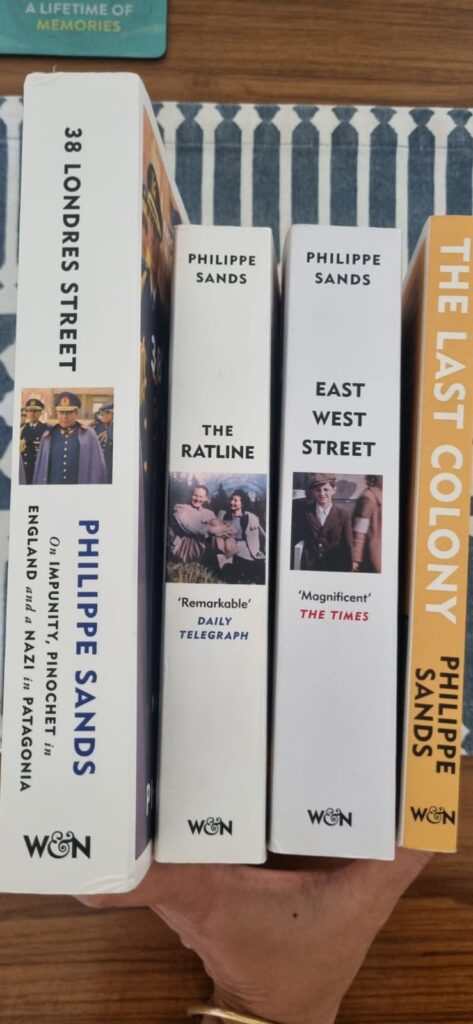
I wrote a review article of Philippe Sands trilogy for Moneycontrol. It was published on 3 Dec 2025.

In 2010, barrister Philippe Sands was invited by the law faculty of a university in the city now known as Lviv, Ukraine, to deliver a public lecture on his work on crimes against humanity and genocide. Lemberg, Lviv, Lvov, and Lwów as it has been known through history are the same place. The name changed according to who commanded the city. It changed hands, no fewer than eight times in the years between 1914 and 1945. Sands had been asked to talk about the cases in which he had been involved, about his academic work on the Nuremberg trials, and about the trials consequences for the modern world. The Nuremberg trials which  laid the groundwork for the human rights movement continues to fascinate Sands.

Philippe Sands KC is Professor of Law at University College London and Visiting Professor of Law at Harvard. He is a practising barrister at 11 Kings Bench Walk (KBW), appears as counsel before the International Court of Justice and other international courts and tribunals and sits as an international arbitrator. He has written multiple books but it is his bestselling oral histories that are considered exceptional. These are: East West Street, The Ratline, and 38, Londres Street. Some of these have won awards such as the Baillie Gifford Prize 2016 for East West Street, The Ratline was converted into a BBC podcast series, and now 38 Londres Street has been optioned for a film  by Felipe Gálvez with Marvel actor Sebastian Stan in the lead. His books have been translated into more than 30 languages.

East West Street is a fascinating investigative narrative about two prominent jurists of the Nuremberg trials — Hersch Lauterpacht and Raphael Lemkin. These international criminal trials held by France, the Soviet Union, the United Kingdom, and the United States against leaders of the defeated Nazi Germany for plotting and carrying out invasions of several countries across Europe and committing atrocities against their citizens in the Second World War. Eighty years ago, on 20 November 1945 and 1 October 1946, the International Military Tribunal (IMT) tried 22 of the most important surviving leaders of Nazi Germany in the political, military, and economic spheres, as well as six German organizations. The purpose of the trials was not only to try the defendants but also to assemble irrefutable evidence of Nazi war crimes. Sands blends history with his memoir, his quest to discover the origins of his maternal family, particularly about his grandfather, Leon Buchholz, who never spoke about his past. This is a book about justice being delivered.  
The Ratline is an investigation into unearthing the truth behind what happened to leading Nazi Baron Otto Gustav von Wächter who died in Rome in 1949. He was a high-ranking Nazi official, an SS officer who participated in the Final Solution extermination of Jews in Europe. During the occupation of Poland by the Germans, he was Governor of Krakow and responsible for the killing of Polish Jews. In The Ratline, Sands meets with Otto van Wächter’s son, Horst. The book is about them, Horst’s favourable stance of his antisemitic parents and engaging in many conversations with Sands over some years including giving him access to his mother, Charlotte Wächter’s papers. It is an extraordinary achievement given that Sands and Wächter did not shift from their stances but continued to maintain a dialogue. This is a book about trying to comprehend why a Nazi criminal escaped justice and why his son continues to be sympathetic for the evil his father unleashed.

38, Londres Street is the concluding part of the trilogy wherein Sands explores the question of another Nazi, Walther Rauff, and his close proximity to the Chilean dictator Augusto Pinochet. Rauff was the SS Commander who was responsible for the infamous Nazi mobile gas vans and later under the Pinochet regime, was associated with the equally dark “refrigerated trucks” that were linked to the disappearance of people who were vocal against the dictator. In this book, Sands in his trademark style, investigates, travels, and unearths evidence regarding this dark period of Chilean and Nazi Germany histories. But it is also Sands documentation of the impunity with which these criminals can get away with justice. Pinochet, for instance, who on medical grounds was granted pardon by the then British Home Secretary Jack Straw, returns to his homeland instead of being deported to Spain as had been requested and whose first act upon reaching the airport tarmac was to stand up from his wheelchair and walk!

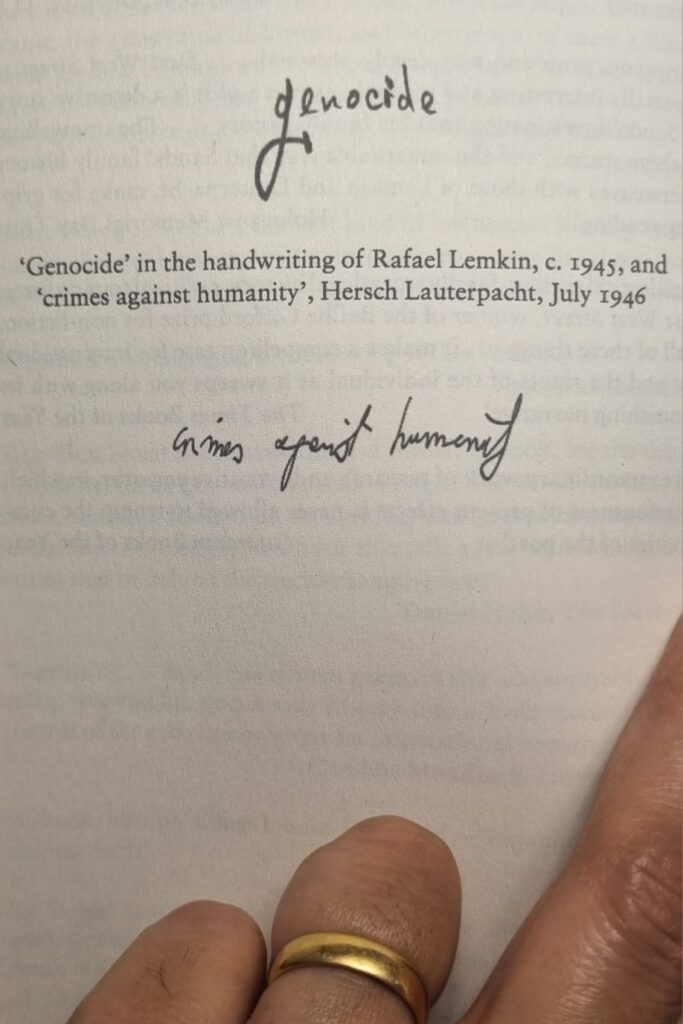
These books designed to be standalone narratives, have inadvertently come to be referred as a “trilogy”. Presumably because the narrative arc governing these three texts is Sands preoccupation with impact of the Nuremberg trials on international justice. More significantly, how did the two definitions coined at this time — “genocide” and “crimes against humanity” — impact contemporary global politics. These are ideas that continue to haunt international law in the twenty-first century. In each book, he explores, questions, and investigates key figures such as Lauterpacht and Lemkin in East West Street, Horst von Wächter in The Ratline and Walther Rauff and Augusto Pinochet in 38 Londres Street. In the texts, Sands uses his legal expertise to present evidence about criminals, jurists, ordinary citizens who are affected by these horrific acts and the idea of justice. The latter is a complicated space to inhabit as Sands narrative determines. For example, justice is meted out to a Nazi criminal like Hans Frank in the Nuremberg trials. Yet, there are those who with impunity escape justice as in the case of Augusto Pinochet and his aide Walther Rauff. Or there are those who inhabit the grey space of not seeing any wrong in acts of genocide particularly in those individuals who perpetrated this. All this despite there being plenty of hard evidence to suggest that these people not only participated but orchestrated the extermination of others. For example, like Otto von Wächter, whose son, Horst von Wächter (Financial Times profile, 2013) who firmly believes that ‘I must find the good in my father. My father was a good man, a liberal who did his best. Others would have been worse’. This is quite unlike Niklas Frank, who when he accompanied Sands to courtroom 600 in Nuremberg, spoke gently and firmly. “This is a happy room, for me, and for the world”. In principle Niklas was against the death penalty but not when it came to his father. And yet, Niklas Frank is the one who introduced Sands to Horst von Wächter. Later, Sands accompanied these two sons of the senior Nazi war criminals as they travelled through Europe to confront the past sins of their fathers. It has been documented in the film called What Our Fathers Did: A Nazi Legacy (2015). 

In the summer of 1998, Sands had been peripherally involved in the negotiations that led to the creation of the International Criminal Court (ICC), at a meeting in Rome, and a few months later he worked on the Pinochet case in London. The former president of Chile had claimed immunity from the English courts for charges of genocide and crimes against humanity laid against him by a Spanish prosecutor, and he had lost. In the years that followed, other cases requiring the courts of international justice, like from the former Yugoslavia and Rwanda soon landed on his desk in London. Others followed, relating to allegations in the Congo, Libya, Afghanistan, Chechnya, Iran, Syria and Lebanon, Sierra Leone, Guantánamo, and Iraq. According to Sands, “The long and sad list reflected the failure of good intentions aired in Nuremberg’s courtroom 600.” He continues:

I became involved in several cases of mass killing. Some were argued as crimes against humanity, the killings of individuals on a large scale, and others gave rise to allegations of genocide, the destruction of groups. These two distinct crimes, with their different emphases on the individual and the group, grew side by side, yet over time genocide emerged in the eyes of many as the crime of crimes, a hierarchy that left a suggestion that the killing of large numbers of people as individuals was somehow less terrible. Occasionally, I would pick up hints about the origins and purposes of the two terms and the connection to arguments first made in courtroom 600. Yet I never inquired too deeply as to what had happened at Nuremberg. I knew how these new crimes had come into being, and how they subsequently developed, but little about the personal stories involved, or how they came to be argued in the case against Hans Frank. Nor did I know the personal circumstances in which Hersch Lauterpacht and Rafael Lemkin developed their distinct ideas.

On a map, Lviv is right in the centre of Europe. It stands at the midpoint of imaginary lines, connecting Riga to Athens, Prague to Kiev, Moscow to Venice. It is the epicentre of the fault lines that divided east from west, north from south. In those days, cities such as these, usually had two main streets, one that ran from north to south, the other from east to west. Lembergstrasse or East West Street in Lviv, is where Sands maternal grandfather Leon Buchholz and extended clan hailed from. Later, many of them, including Sands great-grandmother, lost their lives in the Nazi concentration camps. Leon, his wife, and their young daughter, fortunately managed to escape. Leon on a Polish passport and his wife on an Austrian passport.

East West Street: On the Origins of Genocide and the Crimes Against Humanity is an intricately told story. It is packed with information, as Sands digs deeper and deeper into official and personal archives. Surprisingly, he gets ready access and converses regularly even with the descendants of the Nazis. For example, Niklas Frank, whose father, Hans Frank (“The Butcher of Warsaw”) was one of those on trial at Nuremberg and ultimately sentenced to death. To Philippe Sands amazement as he delved deep into research, it became clear that the Nuremberg jurists, his legal hero Hersch Lauterpacht and Raphael Lemkin, whose work was foundational to the discipline of international criminal law, were from the same city as Leon Buchholz. The lawyers coined and defined “genocide” and “crimes against humanity”. This is a thrilling fact for a barrister to discover; to personally be at the intersection of his legal interests and his family history. It allowed Sands to write an incredible memoir. He masterfully interweaves the biographies of Lauterpacht and Lemkin’s with his Jewish lineage. The result is as spy thriller writer, John le Carré called it: “A monumental achievement: profoundly personal, told with love, anger and great precision.”

In fact, there is this brilliant section (Chapter 119) wherein Sands analyses “genocide” and “crimes against humanity” — the fundamental principles of human rights in international law.

Lauterpacht’s draft made no reference to genocide, or to the Nazis, or Germans as a group, or crimes against Jews or Poles, or indeed crimes against any other groups. Lauterpacht set his back against group identity in the law, whether as victim or perpetrator. Why this approach? He never fully explained it, but it struck me as being connected to what he experienced in Lemberg, on the barricades, observing for himself how one group turned against another. Later he saw firsthand how the law’s desire to protect some groups—as reflected in the Polish Minorities Treaty—could create a sharp backlash. Poorly crafted laws could have unintended consequences, provoking the very wrongs they sought to prevent. I was instinctively sympathetic to Lauterpacht’s view, which was motivated by a desire to reinforce the protection of each individual, irrespective of which group he or she happened to belong to, to limit the potent force of tribalism, not reinforce it. By focusing on the individual, not the group, Lauterpacht wanted to diminish the force of intergroup conflict. It was a rational, enlightened view, and also an idealistic one.

The counterargument was put most strongly by Lemkin. Not opposed to individual rights, he nevertheless believed that an excessive focus on individuals was naive, that it ignored the reality of conflict and violence: individuals were targeted because they were members of a particular group, not because of their individual qualities. For Lemkin, the law must reflect true motive and real intent, the forces that explained why certain individuals —from certain targeted groups—were killed. For Lemkin, the focus on groups was the practical approach.

Despite their common origins, and the shared desire for an effective approach, Lauterpacht and Lemkin were sharply divided as to the solutions they proposed to a big question: How could the law help to prevent mass killing? Protect the individual, says Lauterpacht. Protect the group, says Lemkin.

Unsurprisingly as happens in many family histories, there are many twists and turns. Horst von Wächter’s only child, Magdalena, brought up as a firm Catholic, for many years believed her father’s account of her grandfather and sympathised. But recently married, she was trying to understand the family’s past. Then she heard Philippe Sands podcast series The Ratline (BBC, 2018) and wrote to him saying that she concluded that her grandparents “were very aware of what they did and somehow never regretted it”. It is a burdensome family heritage that she was trying to recover from. She complimented Sands on his podcast series and believed that he had portrayed her father Horst “fairly”. Walter Rauff’s grandson had a similar reaction upon reading 38 Londres Street and wrote to Sands appreciating his profile of his grandfather. There seem to have been no familial repercussions there but a rift has been created between Magdalena and Horst. After coming to terms with her family’s Nazi past, she wrote on her social media page, “My grandfather was a mass murderer”. Her father ordered her to remove it but she refused.

The three books are very similar in structure that they posit two individuals in a setting with Sands being very much in the centre of the action. It is almost as if the lines are blurred between the authorial narrator and the litigator. In every text, Sands presents evidence to the reader as he would be expected to present it in the court before the judges and jurors. This could be in the form of texts, personal correspondence, photographs, archival material, documents, or oral testimonies of the survivors and their descendants. Astonishingly, even though he establishes fairly early on in the trilogy that silence is an act of self-preservation amongst the victims/relatives of genocide such as in the case of his own grandfather; even so, he manages to exhibit immense patience and maintain a dialogue with the individuals he interviews. His professionalism can be gauged in the manner in which he continues his conversations even if he does not agree with the interlocutor as becomes obvious in his discussions with Horst von Wächter. He presents his arguments in his narration but leaves it sufficiently open for the reader to come to their own conclusions. It is in all likelihood a challenging balancing act to perform with the written word, but Sands brings his decades of expertise as a barrister to the words on the page. He does tend to explore background details in excruciating minutiae and insists on placing them within the main narrative, but once the reader familiarises themselves with his writing style, it becomes easier and easier to read. It is almost like reading a thriller. It is impossible to put the books down despite the terrifying details that emerge. It is the truth.

The trilogy tackles subjects that are full of alarmingly violent details that were perpetrated by individuals who firmly believed in their acts. For instance, Rudolf Höss, the commandant of Auschwitz, privately told the US army psychologist Dr. Gilbert at the Nuremberg trials that the dominant attitude at Auschwitz was of total indifference. Any other sentiment “never even occurred to us”. This attitude is apparent in all the Nazis profiled in these books. It is immaterial that Sands is discussing facts from the past as disconcertingly these continue to have ramifications upon the present, in the twenty-first century. Most obviously being that of international law debating on “genocide” and “crimes against humanity”. So, despite 38 Londres Street concluding with an ambiguity that is frustrating, at least in the previous two books — East West Street and The Ratline — the younger generation, Niklas Frank and Magdalena provide hope by acknowledging and rejecting the criminal acts perpetrated by their forbears.

It is magnificent research and methodology that are on display. These compactly told narratives will appeal to younger generations of readers as they wish to know more about these despicable moments in history. More so, for the grey areas that exist in bringing the criminals to justice or for that matter how are these stories inherited, preserved — in memory, family histories, and archives.

Given the short lifespan of books, these bestselling oral histories by Philippe Sands will stand the test of time and sell. They are a must read.

The books have been published by Hachette India.

Jaya Bhattacharji Rose
“Echoes of Eternity: A Journey Through Indian Thought from the Rigveda to the Present” Pavan Varma  

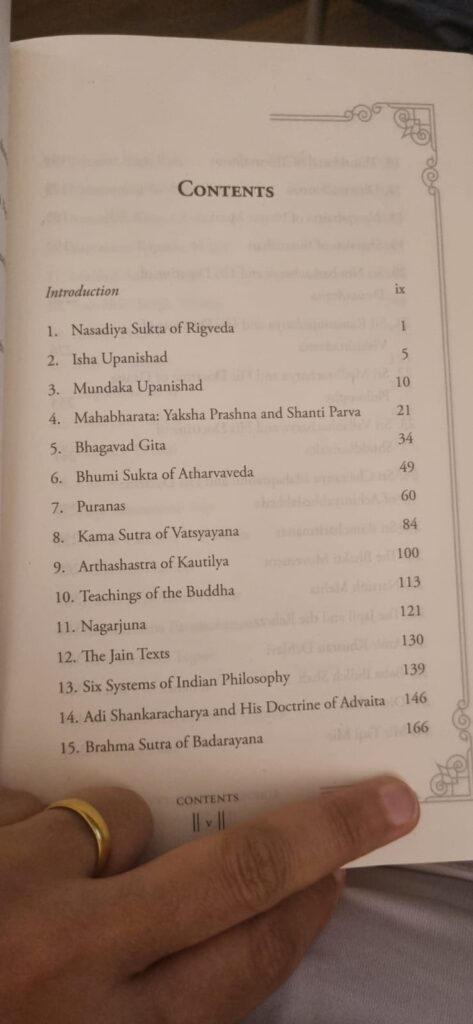
In his fine introduction to the book, Echoes of Eternity, former diplomat, Pavan K. Varma, explains very clearly his methodology for selecting the texts included in this anthology. Also, the reason for putting together this essential book. Here is an excerpt from the opening pages:

India is a civilisation of moulik such — the power of original thought. This faculty has been the bedrock on which the Indian people have survived and flourished since the dawn of time. Other ancient civilisations, such as the Greek, Roman, Persian, Assyrian and even classical Chinese, have long ceased to exist. What makes our civilisation different is a certain ability for cerebral interrogation, discovery and renewal that has bestowed the great stream of Indian ideas with antiquity, continuity, diversity, assimilation and peaks of refinement.

This compendium, or anthology, seeks to capture some of the magnitude of this vast ideational canvas. Its breadth covers a period of 7,000 years at the very least, from the Rigveda, dated circa 3500 to 3000 BCE, to the philosopher Osho, closer to the present. The subjects its includes range from philosophy, metaphysics, religion, values, politics, economics, arts, literature, poetry and aesthetics to social change and renewal. The geographical sweep is as wide, covering the whole of Bharatvarsha, from the Himalays to Kanyakumari, and Dwaraka to Puri and the Northeast. This selection would have been even richer in contenthad the script of the great Indus Valley Civilisation been deciphered, and one can only hope that scholars will succeed one day.

As can be imagined, the greatest challenge in such a task was what to select and what to leave out. Our corpus of thought is so copious that some degree of judicious selectivity had to be exercised. It also required going through tons of literary material in order to decide what the final selection would be. Certainly, there was an element of subjectivity involved in the process and the final decision was mine. I am fully conscious that there will be some who feel that the contents are incomplete, or that certain texts have been excluded which, according to their thinking, need to be there, or that the material is disproportionately focused on some texts, or even on some historical periods, to the neglect of others. I plead guilty to these accusations, since I have already made the disclaimer that a process of selectivity was involved, and that is bound to lead to some exclusions. My only defence is that I was influenced by no extraneous or ulterior agenda, that my intent was entirely benevolent, and it was my genuine attempt to provide a fair sampling of the infinite sparkle of ideas that have gone into the making of our civilisational heritage.

To my mind, even this is a good beginning to introduce readers to our remarkable legacy of thought. Many educated Indians are woefully unaware of its contents, depth and range. They are aware of some important names, and may have read a few texts, but on the whole, there is a regrettable ignorance with regard to the endless river of thought of which there are legatees. For such people, this book, I hope, will serve as an essential primer to undersand the brilliance and continuity of our cerebral evolution, and inform them that the concept of nationhood is underpinned, since time immemorial, not only by a shared geography, but also the generous benediction of application of mind that, like some exquisite weave, binds us all together.

This infusion of knowledge is particularly important for us at this juncture, when we are poised to take our legitimate place at the high table of the world.

p. ix – xi

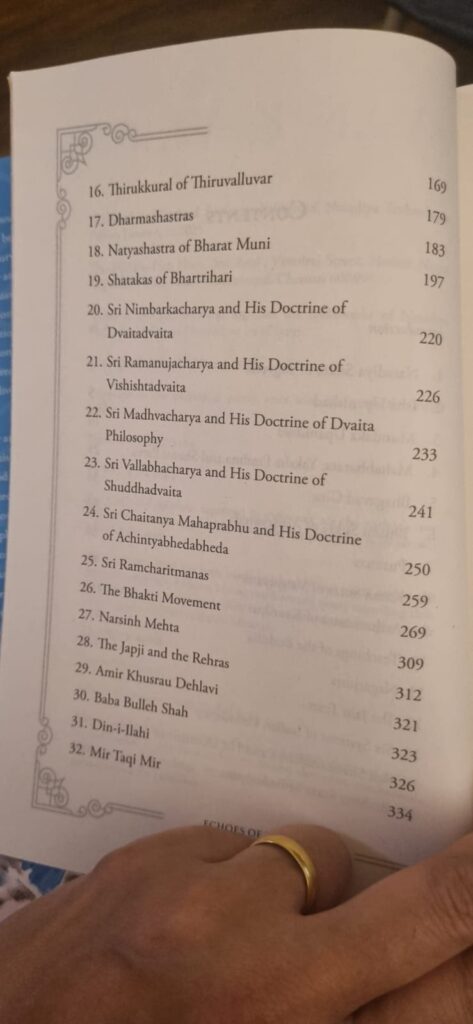
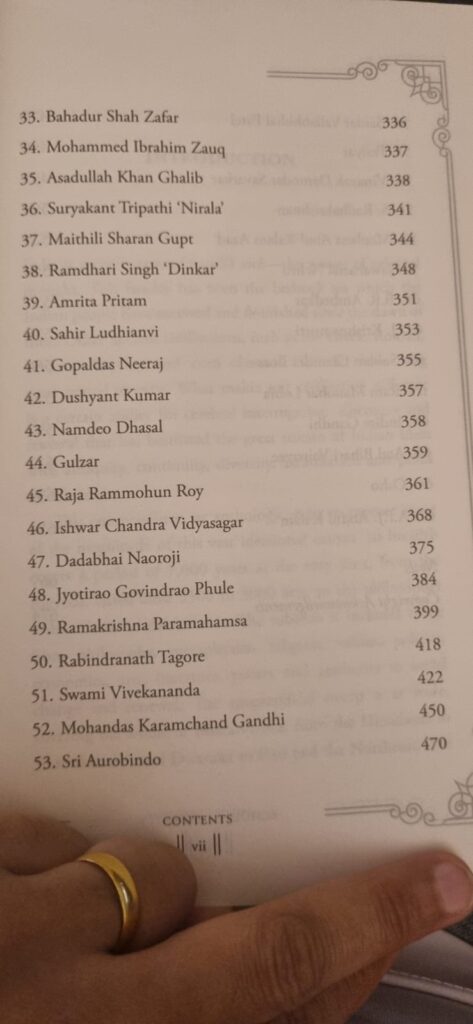
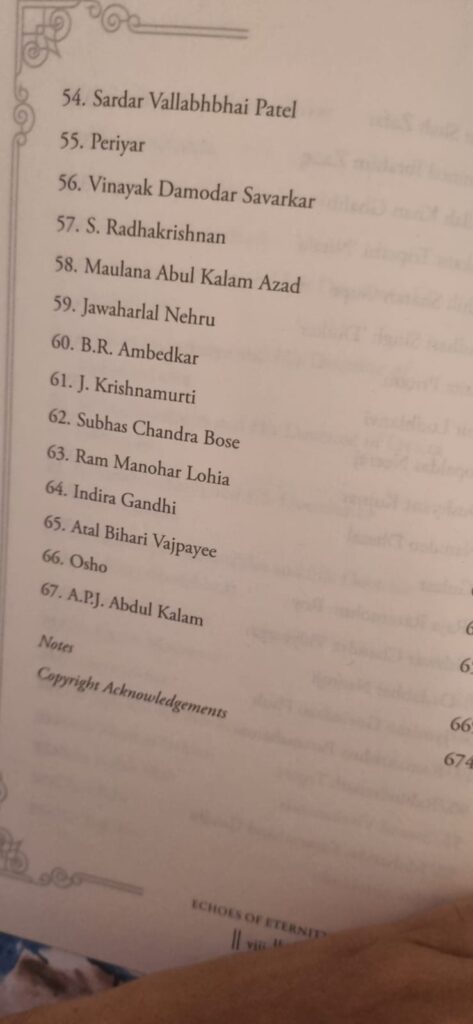
Here are images of the list of contents that are spread across four pages. It will give a sense of the breadth of literary selections included in the volume.

From the ancient Nasadiya Sukta to twentieth-century discussions about caste and nation, this is an anthology of Indian philosophical and political thought that deserves a place on every bookshelf. Wise and diverse, reflective and provocative, each of the pieces in this collection, be it Sanskrit verse, Urdu poetry or a speech in Parliament, belongs to the canon of intellectual thought that defines Indianness.

Echoes of Eternity has its limitations as the author has recognised but it is certainly a good introduction to our rich literary inheritance. It is worth remembering.

10 May 2025

Thich Nhat Hanh, “Touching Peace”

Earlier this month, Aleph Book Company published a slim volume by Thich Nhat Hanh called Touching Peace: Practicing the Art of Minful Living. It offers practical guidance and meditation techniques to practise the art of mindfulness in our daily lives.

Sadly, within days of receiving this book, the Zen Buddhist teacher passed away — Thich Nhat Hanh ( 11 Sept 1926 – 22 Jan 2022). The announcement was made by the International Plum Village Community of Engaged Buddhism.

The Dalai Lama also sent his condolences.

The foreword to Touching Peace is by one of the Buddhist teacher’s distinguished disciples, Shantum Seth.

22 Jan 2022

Essay on Independence Day literature, 15 Aug 2021

15 Aug 2021 is the 74th Independence Day of India. In 1947, the subcontinent gained its independence from the British. On that day, two nations were created — India and Pakistan. So, while there is every reason to celebrate this joyous occasion, it is also remembered for the partitioning of British India and the terrible communal riots and mass migration of people that ensued.

The historic events of 1947 have never been forgotten by those living in India, Pakistan and Bangladesh (in 1947, it was East Pakistan). Within two years of Independence, India got its constitution — the longest written constitution in the world. It is a magnificent document that gave the Indian citizens many rights. India was a fledgling democracy and yet there was much to celebrate this “new India” and the mantra of “self-reliance”. But as Suchitra Vijayan points out in her absolutely stunning book, Midnight’s Borders, that with the three significant pogroms of 1984, 1992 and 2002, much of India’s character changed. In Midnight’s Borders, she spent seven years travelling along India’s borders that had been hastily drawn in the 1940s by Radcliffe. The more she travelled, the clearer it became to her that local history and memory bear no resemblance to the political history of the nation that claims these lands and peoples. A barrister by training, she previously worked for the United Nations war crimes tribunals in Yugoslavia and Rwanda before co-founding the Resettlement Legal Aid Project in Cairo, which gives legal aid to Iraqi refugees. Yet, as her travels along India’s borders proved, that nothing really prepared her for what she encountered. Some of these stories are documented.

The collection of books showcased in the images are a tiny representation of the literature (fiction, nonfiction, and poetry) that is about India’s Independence or as many now like to refer to it as Partition. Lesser and lesser people remember it as “independence” from colonial rule but prefer to commemorate the horrors of partition. While both narratives are true, the increasing emphasis on the division of the subcontinent along communal lines has resulted in many generations perpetuating the hatred and anger for the other. It is now playing out in our daily lives as many of these books bear testimony. It also wades into the exceedingly complicated terrain of the importance of memory, oral histories, subjective/objective perspectives, violence and preservation of stories for future generations — is it meant to be a reminder to not repeat these unforgettable mistakes of the past or do they serve the purpose of stoking more communal flames? No one will ever know the truth but three of the recently published novels — Savie Karnel’s The Nameless God, Chandan Pandey’s Legal Fiction (translated from Hindi into English by Bharatbhooshan Tiwari), and Siddharth Chowdhury’s The Time of the Peacock are sobering reminders of the fallout of our violent history.

Partition has become such an important narrative in Indian / South Asian/ desi literature, especially after the anti-Sikh riots of 1984 which for many recalled the events of 1947, that many new stories are continue to be published on the subject. Take for instance, the young adult novels of Swapna Haddow’s exquisite Torn Apart: The Partition of India and Veera Hirandani’s riveting The Night Diary. Torn Apart is a slim novel. It is focused upon the two young boys, Ibrahim and Amar. It is October 1947. The two young boys are thrown together, in the aftermath of India gaining Independence from the British. It resulted in the partition of the subcontinent into two nations – India and Pakistan. This resulted in terrible bloodshed and what has been considered to be one of the largest migrations of humans in living memory. Ibrahim, a wealthy young Muslim, has been separated from his family after an attack. Lost and alone in Delhi, Ibrahim meets Amar, a street child and a Hindu, and asks for his help to reach Pakistan safely. Swapna Haddow does not spend too much time fretting about families torn apart or relationships being fragile. She shows the violence and ways out of the violence. She does not in any way lighten any blows. The abrupt manner in which the friendship draws to a close at the refugee camp is so realistic. Astonishingly there is no sense of hope offered to the young readers. It is what it is. Even Michael Morpurgo who dishes out very sad books, with there always being one painful twist in the plot, ends his books on positivity. Always hope. But not Swapna. Yet, the lean writing, with not a word out of place is utterly stupendous. And here is my 2018 interview with Veera Hiranandani.  Supriya Kelkar’s second novel, Strong as Fire, Fierce as Flame is not about 1947 but of 1857. The fact that it is listed here is because the novel is set at the time of the Uprising of 1857 when the colonial ruler’s policy of Divide and Rule was evident. Hindu and Muslim soldiers united to revolt against the British rulers. There were strong rumours circulating that the bullets that the soldiers had to bite with their mouths were wrapped in paper greased with cow and pig grease that affected the religious sensibilities of the Hindu and Muslim soldiers, respectively. It caused a massive furore and rapidly spreads from the epicentre in Meerut to towns and villages across India. Supriya Kelkar’s second novel is remarkable too for her insights into British India and creating historical fiction for middle grade readers. Her first novel Ahimsa was fabulous. Her strength is creating these strong adolescent girls as the protagonists and using them as the point of entry into the past. The heroine of this novel is thirteen-year-old Meera. The story opens with her being readied for her departure to her marital home. It was a fairly common practice at the time to encourage child marriage. Her husband Krishna lived in the same village. On the eve of her departure, riots break out and in the violence that ensued Krishna was killed. Meera is terrified that she will be made to commit Sati, the practice of widows burning on their husband’s funeral pyre. Terrified at the prospect, Meera runs away from home. By doing so, she gets involved in a series of events that are linked to the soldiers’ uprising against the colonial rulers.

Some of the stupendous literature published recently that either directly or indirectly focusses upon independence/communal repercussions on modern India include translations of poetry and short stories such as that of Kunwar Narain ( translated by his son, Apurva Narain in No Other World 2008, The Play of Dolls: Stories 2020 & Witnesses of Remembrance: Selected Newer Poems 2021); the anguish about contemporary events movingly expressed by poet  Tishani Doshi in her collection of poems A God at the Door; Farah Bashir‘s memoir about growing up in 1990s Kashmir in Rumours of Spring; and debut writer Sonal Kohli’s disquieting inter-linked short stories House Next to the Factory which are about the post-Partition immigrant experience between 1980-2020 in Delhi. The forthcoming Partition trilogy by Manreet Sodhi Someshwar is definitely something to look out for. The first volume, Lahore is to be released soon but it is a book that will be talked about for years to come. In all likelihood it will be turned into a TV series or a film. It is a triumphant example of historical fiction with a balanced account of historical events and fictional characters that provides insights into the events of 1947. The other two volumes in the trilogy are called Hyderabad and Kashmir. These books have been written after intensive research and it shows. Fortunately, the author wears her knowledge lightly and it is a gripping tale she has to tell. Debut novelist Melody Razak attempted to do something similar with Moth and has been recognised by The Observer as one of the promising novelists of 2021. It too is historical fiction set in and around August 1947.

Journalist M. Rajshekhar’s Despite the State has been included in this list of books as it is a brilliant example of reportage. Rajshekhar spent thirty-three months travelling through six states of India, investigating the deep crisis that affects Indian democracy. He records the distressing account of democratic failure. It is a sobering read given the enthusiasm with which the first government after Independence laid out the blueprint for a planned economy, construction of temples of modern India such as hydropower dams and setting up many schemes for the welfare of its citizens. Rajshekhar shows how much of those dreams have crumbled, the state in many instances has abdicated responsibility, leaving the citizens to fend for themselves. It is a cruel reality. It is precisely why a selection of Aleph Book Company titles have also been displayed. The publishing firm is doing a sterling job of creating relevant literature, looking at history, facts, evidence and preventing the corruption of historical narratives by a single discourse. The titles on display are a minute selection of what has been published in recent years by eminent academics, writers, and social activists.

Unfortunately, is a sad truth that much of the literature that is being published nowadays focusses more and more on the “partition” rather than the euphoria of becoming an independent nation. Literature at the best of times, especially for the young, when based upon historical events should be based on facts with of course the liberty to be creative rather than being biased in their perspective. The communal clashes that erupted after Independence were despicable and their ramifications are being felt more than seven decades later with the resurgence of hate politics and fundamentalism. It is the truth. But we should never forget and certainly not let the younger generations forget, as we move further in time away from 15 August 1947, that the euphoria of winning our Independence from the British was tremendous. We were free. Finally. Stories can be and should be created against the backdrop of Independence and of course the violence that followed thereafter. But the growing emphasis on remembering the violent past, erecting memorials to the victims, setting up Partition museums and war memorials, is one way of forever remembering the injustices of the past. Yet, it is also a clever way of ensuring that the wounds remain raw. Remember but with facts and not with selective memory – that is plain dangerous and perpetuates violence and hatred.

At such a time it is perhaps worth reading humanist and experimental poet and writer the late Kunwar Narain’s “Poetry of Dark Times”.

****

“Poetry of Dark Times”

Remembering Brecht

How should be
the poetry of dark times
like this?

Poets change, poems change,
but dark times
just don’t seem to change.

So much misery
keeps looking for words in artless languages,
keeps wishing that they arise
drop by drop
like vapour from abyssal oceans
collide with mountains
like nimbus clouds
girdle the earth and rain down on it
like tempest thunder lightning . . .


and so let the poetry of dark times inundate
and wash away the dark times.

              and wash away the dark times.

How can the poetry
of dark times
be . . .

Kunwar Narain (1927-2017), translated by Apurva Narain

Note: These are only a sample of books published on Independence/Partition. There are many, many more equally good books being published that have not been included in this post.

“Seva: Sikh secrets on how to be good in the real world” by Jasreen Mayal Khanna

Seva: Sikh secrets on how to be good in the real world by Jasreen Mayal Khanna is a tiny book ( Juggernaut Books). Packs quite a punch. It delves into the heart of what it means to be a Sikh or observe “Sikhi”. The author, Jasreen Mayal Khanna, is a journalist who bore witness to the incredible work her community did during the pandemic. From the free oxygen langars to the free dialysis camps to setting up dispensaries giving free medical advice and medication to patients to distributing free food to the migrants walking home, the Sikhs have been admirable at the constructive support they have offered to the afflicted. It is a selfless service, seva, that many in the community believe in. Khanna is very aware that not everyone in their community has a tendency to do good, they too have their fair share of nasty folks. Having said that, it is obvious that they are driven by their faith to do the good that they do. It is these principles that Khanna decides to investigate. What propels Sikhs in this daily ritual? She identifies them as:

Rule #1: Help Someone Every Day
Rule #2: Embrace Joy
Rule #3: Be Brave
Rule #4: Say Thank You Daily
Rule #5: Learn to Laugh at Yourself
Rule #6: Practise Equality at Home
Rule #7:Work Harder Than You Pray*
Rule #8: Live in Chardi Kala ( “Eternal Positivity”)

Each chapter is a mix of analysis and personal anecdotes with a few interviews with prominent Sikhs. To understand how everyone balances their life and work and finds peace.

During the pandemic, hanging on to messages of hope and being offered positive ways of thinking and changing one’s life, is very welcome. It is a far cry from the positive toxicity that continues to abound on social media platforms. Self-help books like “Seva” are meant to be read, imbibed and shared. It is a philosophy of living that cuts across religious boundaries and affects every individual. To use a cliche, but it works well here, it is an uplifting book.

Read it.

*This is very similar to the Protestant Work Ethic.

1 August 2021

Books discussing being a Muslim

A tiny, tiny drop of the literature being published currently discussing what it means to be a Muslim. Or even bringing up a Muslim child. Or being a lawyer and dealing with cases where identity becomes the crux rather than the major issues, such as xenophobia, at play. Or what it means to be a Muslim when you are also a woman. Then the issues are twice as complicated as they are for men since you are also combatting gender inequality. These are some of the very powerful fiction and nonfiction books, published or about to be released, discussing the fundamental issue of being a Muslim. Ultimately, faith is only one aspect of one’s identity. Creating literature that discusses in detail the multiple acts of microagression and racism that Muslims face on a daily basis, perhaps is one of the constructive ways to combat the prejudices of others. It will help to a certain degree to being understood rather than othered constantly.

Do read these books. If not all, at least a couple.

1 March 2021

Book Post 48: 22-28 Oct 2019

Book Post 48 includes some of the titles received in the past few weeks. Wherever available Amazon’s Kindle widget has been embedded in the blog post. It will allow you to browse through the book before you decide to buy it.

29 Oct 2019

“Krishna in Rhyme”


Krishna in Rhyme is a fabulous retelling of the story of  Krishna by  Kairavi Bharat Ram and  Ananya Mittal, published by  Scholastic India. It is in couplets. Ishan Trivedi’s sumptuous illustrations fit so beautifully with the text, making the reading experience magical. Gift it now. Gift it in Diwali hampers. It is a book for children and adults to read, whether already familiar with the stories or not, is immaterial.

He is always remembered for the fun he had,
For being a playful god, beyond the good and the bad.

He represents the child in us, who enjoys life and is free,
He’s the balance between fun and responsibility.

He taught us that to your fate you are bound,
This idea’s called karma, what goes ’round comes around.

The Gita is perhaps his most famous speech,
In this all about duty and dharma he does teach.

When you do what you must, things will always be okay,
Following your heart will never lead you astray.

We hope this epic story you all have understood,
Remember this forever: evil never beats good.

26 August 2019

Tuesday Reads ( Vol 6&7), 23&30 July 2019

Dear Reader,

This is a double issue as time whizzed by before I knew it, the week was over!

As the book fairs, literature festivals and literary awards season draws near, the number of titles being released into the market increase exponentially. Some of them being the “big titles” that the publishing firms are relying upon. Two of them featured here are two such titles. These are the thrillers — The Flower Girls by Alice Clark-Platts and The Silent Patient by Alex Michaelides.

Alice Clark-Platts, founder of Singapore writers group and a former human rights lawyer, has published her third thriller. The Flower Girls is about the killing of two-year-old girl by two sisters, who are six and ten, respectively. It is a case that had caught the imagination of the media. The older sister had been incarcerated but the younger one had been let off as she was too young to be tried. Instead the police force helped the parents and remaining daughter to assume new identities and start a new life in a different city. Two decades later the case is recalled as another five-year-old girl goes missing. It is an absorbing tale for its details of the murder and trial that seem to defy human imagination. It is as if there is an underlying truth to the horrors a human being is capable of, almost as if it is the transferance to some extent of a lived experience by the author to the page, but not necessarily a replication of any case she has dealt/read. Apart from the horror of the actual crime itself, there are many pertinent issues raised in this novel about the troublesome aspect of incarcerating one so young, arguments for parole, the course of justice and the prejudices people may have that may colour their judgement. The best discovery in this novel is the creation of DC Hillier, almost as if she is the female response to Jack Reacher or a modern reincarnation of Miss Marple. The potent combination of a fine instinct for sniffing out criminals built over many years as a Detective Constable, phenomenal memory, dogged persistence to pursue clues, and a fascination for being first on the crime scene, make DC Hillier a character worth following in the coming years. Her beat will remain unchanged. It will be the small town but there will be plenty of opportunities for stories to occur as tourists visit the seaside. Since The Flower Girls is her first appearance on the literary landscape, DC Hillier will take at least another 2-3 novels before she settles down, but once she does, she will soar!

Rating: 4.5 / 5⭐

Debut novelist Alex Michaelides’s The Silent Patient is already an NYT bestseller. It’s first print run was 200,000. It is a psychothriller that is gripping. It moves swiftly. There are short sentences, crisp dialogue and the length of the chapters match the smart pace of the storytelling. It helps that the author studied English literature at Cambridge University and earned his MA in screenwriting at the American Film Institute in Los Angeles. This professional training has helped create an undeniable page turner. All those who have endorsed the book, such as Lee Child, David Baldacci, Joanne Harris, Stephen Fry, and C. J. Tudor, are absolutely correct in their assessment of it being an excellent, slow-burning psychological thriller. It is about Alicia Berenson who is accused of killing her fashion photographer husband Gabriel. No one knows why she did it since after shooting him in the face she stops talking. After trying to attempt suicide, she is taken into custody and then sent off to asylum called The Grove. The story is narrated by forensic psychotherapist Theo Faber whose opening introduction about himself is that he “was fucked up”. He is offered an appointment at The Grove and becomes Alicia’s therapist. It is a gripping tale undoubtedly and no wonder it has already been sold into 39 territories and is being developed into a major motion picture. Be that as it may, there are details in the story that give it away as amateur work that will go largely unnoticed with most readers. For instance, when Alicia hands over her diary to Theo Faber to read, he says that judging by the handwriting, it was written in a chaotic state of mind, where the writing was barely legible and doodles and drawings taking over some of the pages. Yet, the diary extracts reproduced in the story are beautifully composed with complete sentences, perfect dialogue, smooth narration and build the plot seamlessly. A bit puzzling given how Alicia is known to be of troubled mind. Later too as the plot hurtles to the end, the inexplicable switch in the timelines while acceptable when the reader is in a reading haze, are bothersome details when reflecting upon the story later. It is unfair to the reader for the author to switch timelines as if for convenience to tie up the loose ends in the plot. This is a novel that has possibly been written with a view to adapt it to the screen and the magic has worked. It is to be seen if the subsequent novels of Alex Michaelides will inhabit this dark and depressing world. Whatever the case, Alex Michaelides’s brand of psychothriller, is here to stay and will spawn many versions of it too.

Rating: 3.5/5 ⭐

The third book is a collection of short stories by Indian women writers called Magical Women, edited by Sukanya Venkatraghavan. It is a pleasant enough read if read with zero expectations about reading fantasy stories that take strong imaginative leaps into a magical realm. Most of the stories are pleasant to read. The stories are preoccupied with worries of the real world such as of sexuality, child molestation, infidelity, etc. Two stories that stand out are “Gul” by Shreya Ila Anasuya and “The Rakshasi’s Rose Garden” by Sukanya Venkatraghavan. “Gul” is about a nautch girl during the uprising of 1857 and “The Rakshasi’s Rose Garden” is about child molesters. While most of the stories in the collection have immense potential, they tend to fall flat on their face for the inability of the writers to lift it off the ground with elan. Instead most rely on done-to-death details as pods and strange creatures. When the story is to take an imaginative leap it lands straight into a world that is a mere transplantation of existing reality or the world of mythology. So there is a rave party, a mysterious laboratory, lesbians, etc. There is nothing truly breakaway in Magical Women except for the fact that it is a breakaway collection of talented storytellers who may one day astound the world with their true potential. For now, most of them, are holding back. I wonder why?

Rating: 3.5/5 ⭐

And then there is The Man with the Compound Eyes by Taiwanese author Wu Ming-Yi, translated by Darryl Sterk. An eco-fiction that Tash Aw in his 2013 review in the Guardian referred to it as hard-edged realism meets extravagant fantasy.

It is easy to see why Wu’s English-language publishers compare his latest novel to the work of Murakami and David Mitchell. His writing occupies the space between hard-edged realism and extravagantly detailed fantasy, hovering over the precipice of wild imagination before retreating to minutiae about Taiwanese fauna or whale-hunting. Semi-magical events occur throughout the novel: people and animals behave in mysterious ways without quite knowing why they are doing so; and, in a Murakami-esque touch, there’s even a prominent cat. But beyond these superficial similarities lies an earnest, politically conscious novel, anchored in ecological concerns and Taiwanese identity.

Encapsulating such a rich novel is not easy but suffice to say it that the author’s environmental activism, trash in the sea, concerns about climate change, a deep understanding of environmental disasters, has helped him create an extraordinarily fantastic novel. From the first sentence it immediately transports the reader into this magical world of the imaginary island of Wayo Wayo, created with its own myths and folk legends. Fantastic novel that years after the English translation was made available, it continues to find new readers, with new translations.

Rating: 4/5 ⭐

The final book is Leaving the Witness: Existing a Religion and Finding a Life, a memoir by a former Jehovah Witness, Amber Scorah. It is an account of Amber’s life as a Jehovah Witness, finding a husband from the same community and then travelling across the world to become missionaries in China. Amber knew Mandarin so could speak to the locals. Her grasp of the language improved as she began to communicate more frequently with others. She managed to get a job working on podcasts, at a time when podcasts were barely heard of, and yet her shows became so popular that Apple ranked it amongst the top 10 podcasts of the year. While in China, she befriended many outside the community, even made friends like Jonathan online, but kept it a secret from her husband and their circle as this was considered taboo. Soon she begins to question her proselytising as questions are raised of her regarding her beliefs. She is forced to question her blind faith in the cult. Slowly her marriage disintegrates too. Leaving the Witness reads like her testimony, a reaffirmation of her belief, except not entirely in the manner that her church would have approved. Amber Scorah chooses to leave the community and build a life of her own. It is tough for she has to learn how to make friends, she has to learn simple things like understanding popular culture references in casual conversation, being able to enter and enjoy a social engagement without feeling horribly guilty etc. It ends sadly with the death of her infant son at the daycare centre but it also is a strong testament to others wishing to leave suffocating environments that it is possible to do so and build new lives. It is not easy but it is possible. In fact the book has been placed on O, The Oprah Magazine Summer 2019 Reading List and Trevor Noah invited Amber Scorah to his talk show. It is a good book and deserves all the publicity it can garner.

Rating: 4.5/5 ⭐

Happy Reading!

JAYA

30 July 2019

Book Post 38: 26 May – 8 June 2019

Book Post 38 includes some of the titles received in the past few weeks. Wherever available Amazon’s Kindle widget has been embedded in the blog post. It will allow you to browse through the book before you decide to buy it.

10 June 2019

Web Analytics Made Easy -
StatCounter