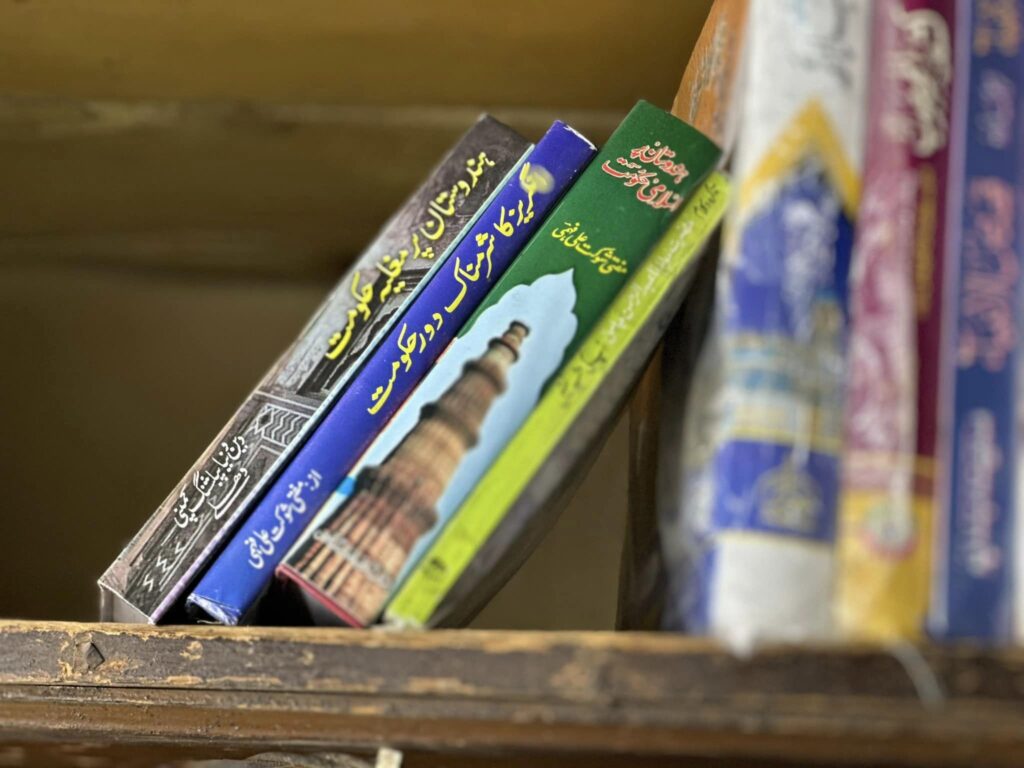
The National Book Trust, India is promoting the New Delhi World Book Fair 2023 on social media in multiple languages. This is the first time in three years that it is being held in person. Dates: 25 Feb – 5 March 2023 Venue: Pragati Maidan 24 Feb 2023
We reflected on our lives as women. We realized that We’d missed our share of freedom — sexual, creative, or any other kind enjoyed by men. We were as shattrteded by the suicide of Gabrielle Russier as by that of a long lost sister, and were enraged by the guile of Pompidou, who quoted a verse by Eluard that nobody understood to avoid saying what he really thought of the case. The Women’s Liberation Movement had arrived in the provinces. “La Torchon Brule” was on the newsstands. We read “The Female Eunuch” by Germaine Greer, “Sexual Politics” by Kate Millet, “Stifled Creation” by Suzanne Horer and Jeanne Socquet with the mkngled excitement and powerlessness one feels on discovering a truth about oneself in a book. Awakened from conjugal torpor, we sat on the ground beneath a poster that read “A woman without a man is like fish without a bicycle” and went back over our lives. We felt capable of cutting ourselves loose from husband and kids, and writing crudely. Once we were home again, our determination faded. Guilt welled up. We could no longer see how to liberate ourselves, how to go about it, or why we should. We convinced ourselves that our man was neither a phallocrat nor a macho. We were torn between discourses, between those that advocated equal rights for the sexes and attacked patriarchy, and those that promoted everything feminjne: periods, breast-feeding, and the making of leek soup. But for the first time, we envisaged our lives as a march towards freedom, which changes a great many things. A feeling common to women was in its way out, that of natural inferiority.
The Years by Annie Ernaux, translated by Tanya Leslie ( Fitzcarraldo Editions)
One Sunday after church, when I was twelve years old, my father and I walked up the sweeping staircase inside the town hall. We were looking for the public library. I was terribly excited, we’d never been there before. We couldn’t hear anything on the other side of the door. All the same my father pushed it open. It was completely quiet in the room, quieter even than in church. The floorboards creaked and there was a strange, musty smell in the air. Perched behind a high desk barring access to the shelves, two men watched us approach. My father let me say: ‘We’d like to borrow some books.’ One of them immediately asked: ‘What books do you want?’ At home it hadn’t occurred to us that we had to prepare a list and reel of titles as easily as if they had been brands of biscuits. They chose the books for us: “Colomba” for me and a “light” novel by Maupassant for my father. We never went back to the library. My mother must have returned the books, maybe when they were overdue.
A Man’s Place Annie Ernaux , Translator is Tanya Leslie
( I posted this on Facebook on 22 Feb 2023. It resulted in a fascinating conversation with Miguel M. Abrahão. )
On 23 Feb 2023, the well-known Delhi chronicler and photographer, Mayank Austen Soofi, created a fabulous Facebook post about Urdu Bazaar. It is within the Walled City of Delhi. With his permission, I am reposting his text and photographs on my blog. Thank you, Mayank!
Urdu Bazar is a terrifyingly congested block of human cacophony and traffic tumult. Tolerated only because it hosts a picturesque part of the Walled City (Jama Masjid gate no. 1), and because of its dozens of kebab shacks (Chunnu Chacha Kakori Kebab’s, etc). Not many are aware that these popular eating joints replaced the once-popular institutions that constituted the spine of Delhi’s literary world—the Urdu bookstores and publishers that gave the bazar its name (according to a version). Today, a Walled City bashinda finds it impossible to name even a single of those extinct landmarks. But reader, you won’t be one of those ignorant citizens. Here’s a list of all the disappeared icons: Azad Kitab Ghar Central Book Depot Chaman Book Depot Deeni Book Depot Ilmi Kitab Ghar Kutub Khana Hamidia Kutub Khana Nazirya Kutub Khana Rashidia Lajpat Rai and Sons Maktaba Akhlaqia Maktaba Burhan Maktaba Ishat ul Quran Maktaba Shah Rah New Taj Company Saji Book Depot Sangam Kitab Ghar Make no mistake, Urdu Bazar is still left with a few bookshops: Kutub Khana Anjuman-Taraqqi-e-Urdu Kutub Khana Azizia Kutub Khana Rahimiya Maktaba Jamia Ltd Markazi Maktaba Islami Madina Book Depot Rizwan Book Depot Indeed, it is the generous gentleman at Maktaba Jamia Ltd who listed out all the extinct bookstores. The unassuming Ali Khusro Zaidi, 68, is the bazar’s longest serving bookstore staffer (see photo). A Sikandrabad native, he has been manning the shop since 1978. “All those bookstores were in existence when I started working in Urdu Bazar.” The man’s Urdu diction is genteel, leisurely paced and melodious. You are tempted to preserve his speaking voice into the mobile phone recorder to replay later on loop. “Urdu ka mahaul waqt ke saath ujadta raha,” he mutters, picking up a receipt booklet. This afternoon, the bookstore is as quiet as a qabar. A 2023 wall calendar is highlighted with an Allama Iqbal verse: Sitaaron se aage jahan aur bhi hain Abhi ishq ke imtihan aur bhi hain. (More worlds exist beyond the stars, More love trials still to surpass.) On enquiring about a framed calligraphy nailed on the shop’s mehrab, Ali Khusro explains “that’s ‘khushamdid,’ meaning welcome.” And this paper scrap with handwritten Urdu on the desk? These are the books ordered for a customer, he says. He reads aloud the list: “Yehudi ki Ladki Urdu Shayari Ka Fanni Irtiqa Urdu Nasra Ka Fanni Irtiqa Sharah-e-Bang-e-Dara Sharah-e-Diwan-e-Ghalib Tamasha Ghar Rasta Band Hain.” The bookstore, since 1949, stands beside the much-loved Tasty Chicken Corner, formerly Maktaba Akhlaqia.
In the week, when it is a year since Russia invaded Ukraine and days after Soros’s controversial remarks about the “democratic revival in India”, here is a book that may be worth reading. It has been endorsed by multiple people, including diplomats, security advisors, think tanks, academics, and journalists. Interesting times we live in when many of us, in our living memory, can remember a freer and a more democratic world. Not this.
Here is the book blurb:
The world is currently experiencing the lowest levels of democracy we have seen in over thirty years. Autocracy is on the rise, and while the cost of autocracy seems evident, it nevertheless remains an attractive option to many.
While leaders like Viktor Orbán disrupt democratic foundations from within, autocrats like Xi Jinping and Vladimir Putin do so from abroad, eroding democratic institutions and values and imperilling democracies that appear increasingly fragile. There are even those who, disillusioned with the current institutions in place, increasingly think authoritarianism can deliver them a better life than democracy has or could.
They’re wrong. Autocracy is not the solution – better democracy is. But we have to make the case for it. We have to combat institutional rot by learning from one another, and, at times, from our rivals. And we have to get our own houses in order. Only then can we effectively stand up for democratic values around the world and defeat the dictators.
UPES is the university where I teach at the School of Modern Media. It has this incredible library that Prabhjot Kaur visited earlier this month. She made this Facebook post recently. As a librarian herself, her generous appreciation of another institutional library is very kind. On this magnificent floor that she has photographed, there is a special corner of books that is named after me. It consists of books and periodicals that I have either donated or recommended. The SOMM management surprised me by instituting the “Jaya Bhattacharji Rose” corner.
The section in my name was very kindly established by Dr Nalin Mehta, Dean and Dr Sanjeev Singh, Associate Dean, School of Modern Media, UPES. It was inaugurated in August 2022 in the presence of the Chief Information Commissioner, Uday Mahurkar and Karthika, Publisher, Westland, a division of Pratilipi.
Chokepoint Capitalism: How big tech and big content captured creative labour markets, and how we’ll win them back by Rebecca Giblon and Cory Doctorow (Scribe Publications) is a must read. Whether you are a digital entrepreneur or a service provider or an employee, or a digital creator and a consumer, this is an essential read. It is incredible on every page, so many pennies drop in understanding the digital world we inhabit. The commercials, the hungry desire of many “digital entrepreneurs” in providing platforms for users, supposedly enabling the creative workers to use these for their individual expression, but the platform owners having the first mover advantage / exploit to use the massive volume of IPR being created in multiple ways. The authors prefer to dwell upon the hourglass-shaped markets, “with customers paying money at one end, suppliers and workers creating value at the other, and a small number of predatory rentiers controlling access in the middle. Creators earn little from the culture they produce not because of platforms per se — even if tech platforms are the major culprits right now — but because their supply chains are colonial by powerful corporations who co-opt most of its value.”
The authors discuss in detail in the first section if the book how big business captured culture, how Amazon took over books, how news got broken, why streaming doesn’t pay, why Spotify wants you to rely on playlists, why seven thousand Hollywood writers fired their agents, why Fortnite sued Apple and about YouTube chokepoints. The second section is entitled “braking anticompetitive wheels” with chapters on ideas lying around, transparency rights, collective action, time limits on copyright contracts, radical interoperability, minimum wages for creative work, collective ownership and uniting against chokepoint capitalism.
Read this book. Use it. Take it to heart. This is one of those big idea books that will appeal to many and will make many creative workers think. Remember content is the oil of the twenty-first century. Sobering thought when digital entrepreneurs realise that there is economic opportunity in every deep dive on the net; it is to the tune of a minimum $1 billion.
Award-winning writer (children’s and adults), thrill-seeker and roof walker, Katherine Rundell, has published another extraordinary book, The Golden Mole ( Faber Books). It is incredibly beautiful to behold and full of razzmataz in its language. It is incredibly informative. Fun facts as students love to say. “Silly” information that promptly gets embedded in one’s head whether you like it or not. For instance, who knew that a greenland shark takes 150 years to reach maturity before it can give birth. Or that in its womb, the strongest foetus develops sharp teeth and consumes its siblings. But once born, its metabolism is so slow that it only requires the nourishment equivalent to that of one and a half chocolate digestives every day! Similarly, a wombat can achieve speeds of up to 40kms/hr for nine seconds at a stretch. Compare this to Usain Bolt’s hundred-metre sprint in 2009, in which he hit a speed of 44.7 kph but maintained it for just 1.61 seconds, suggesting that a wombat could easily outrun him! Or take this: seals have surprise language-learning capacity. Rundell describes Hoover the talking seal in Maine. The golden mole, the animal, that lends its name to the book title is not a mole actually. It is more closely related to the elephant! Then Rundell proceeds to write about the creature and its iridiscence, but it is completely oblivious to it, as it is blind and lives underground.
The Golden Mole is an extraordinary book. It is primarily a collection of Rundell’s essays that were first published in the London Review of Books. These have been compiled and published as this sumptuous edition. It is as beautiful as a Jackie Morris and Robert Macfarlane books on the beauty of nature and its creatures. Rundell attempts to capture the diverse characterstics of these animals, their incredible evolution and really marvel at the beauty of Nature. Her joy and wonderment at seeing the extraordinary in the ordinary is palpable throughout the book. It is the perfect antidote to doom scrolling on the Internet. But be warned, such a crazily fascinating set of animals gathered together in this book makes one want to research these creatures some more on the Internet and that activity becomes a time sink hole.
It is an expensive but oh-so-worth-it book! It is a book that will get passed through generations.
[I wrote this commentary about Katherine Rundell’s Super-Infinite: The Transformations of John Donne on Facebook, the night of the Baillie Gifford award. ]
“Parnell and Pope and their many allies were men who believed that art had rules: that poetry was a monovocal exercise; that there was one poetic voice, and we should stick to it. Years later, when Samuel Johnson compared Donne’s ‘false wit’ withh Pope’s ‘true wit’, it wasn’t a throwaway comment: it was real anxiety that Donne might be nigh-on insane. His work, for Johnson, was improper and ugly and broken — it was ‘produced by a voluntary deviatuon from nature in pursuit of something new or strange’.
But that was exactly it. Donne did not want to sound like other poets. Human experience exceeds our capacity to either explain or express it: Donne knew it, and so he invented new words and new forms to try. He created new rhythms jn poetry: Johnson said that Donne, ‘for not keeping of accent, deserved hanging’. He was an inventor of words, a neologismist. He accounts for the first recorded use in the “Oxford English Dictionary” of around 340 words in the English language. Apprehensible, beauteousness, bystander, criminalise, emancipation, enliven, fecundity, horridness, imbrothelled, jig. (And for those who bristle against the use of ‘disinterested’ to mean ‘not interested’ rather than ‘lacking a vested interest’: Donne was the first to do so, and we must take it up with him.)
He wanted to wear his wit like a knife in his shoe; he wanted it to flash out at unexpected moments. He is at his most scathing writing about originality, and those who would steal the ideas of better men:
But he is worst who, beggarly, doth chaw [ i.e. chew]
Others’ wits’ fruits, and in his ravenous maw
Rawly digested doth those things outspew
As his own things . . .
Donne imagined his own words taken by another. He imagined them chewed up and expelled:
And they’re his own, ’tis true,
For if one eat my meat, though it be known
The meat was mine, the excrement’s his own.
…..
To read Donne is to be told: kill the desire to keep the accent and tone of the time. It is necessary to shake language until it will express our own distinctive hesitations, peculiarities, our own uncertain and never-quite-successful yearning towards beauty. Donne save his most ruthless scorn for those who chew other wits’ fruit’, and shit out platitudes. Language, his poetry tells us, is a set, not of rules, but of possibilities.
***
Katherine Rundell’s “Super-Infinite: The Transformations of John Donne” is a gorgeous biography of the poet. It is meant to be savoured. It is a like the old-fashioned biographies that were detailed but “Super-Infinite” has a very modern feel to it. Btw, the reference to “Super-Infinite” is from a sermon that Donne gave at the poet George Herbert’s mother’s memorial service.
…Magdalen Herbert…a woman who had been his patron and friend. Magdalen, he wrote, would ‘dwell bodily with that righteousness, in these new heavens and new earth, for ever and ever and ever, and infinite and super-infinite forevers’. In a different sermon, he wrote of how he would one day be with God in ‘an infinite, a super-infinite, an unimaginable space, millions of unimaginable spaces in heaven’. He loved to coin formations with the super- prefix: super-edificationa, super-exaltation, suoer-dying, super-universal, super-miraculous. It was part of his bid to invent a language that would reach beyond language, because infinite wasn’t enough: both in heaven, but also hereand now on earth, Donne wanted to know something larger than infinity. It was absurd, grandiloquent, courageous, hungry.
This splendiferous book is on the shortlist for the Baillie Gifford Prize 2022. The winner will be announced tonight, 17 Nov 2022.