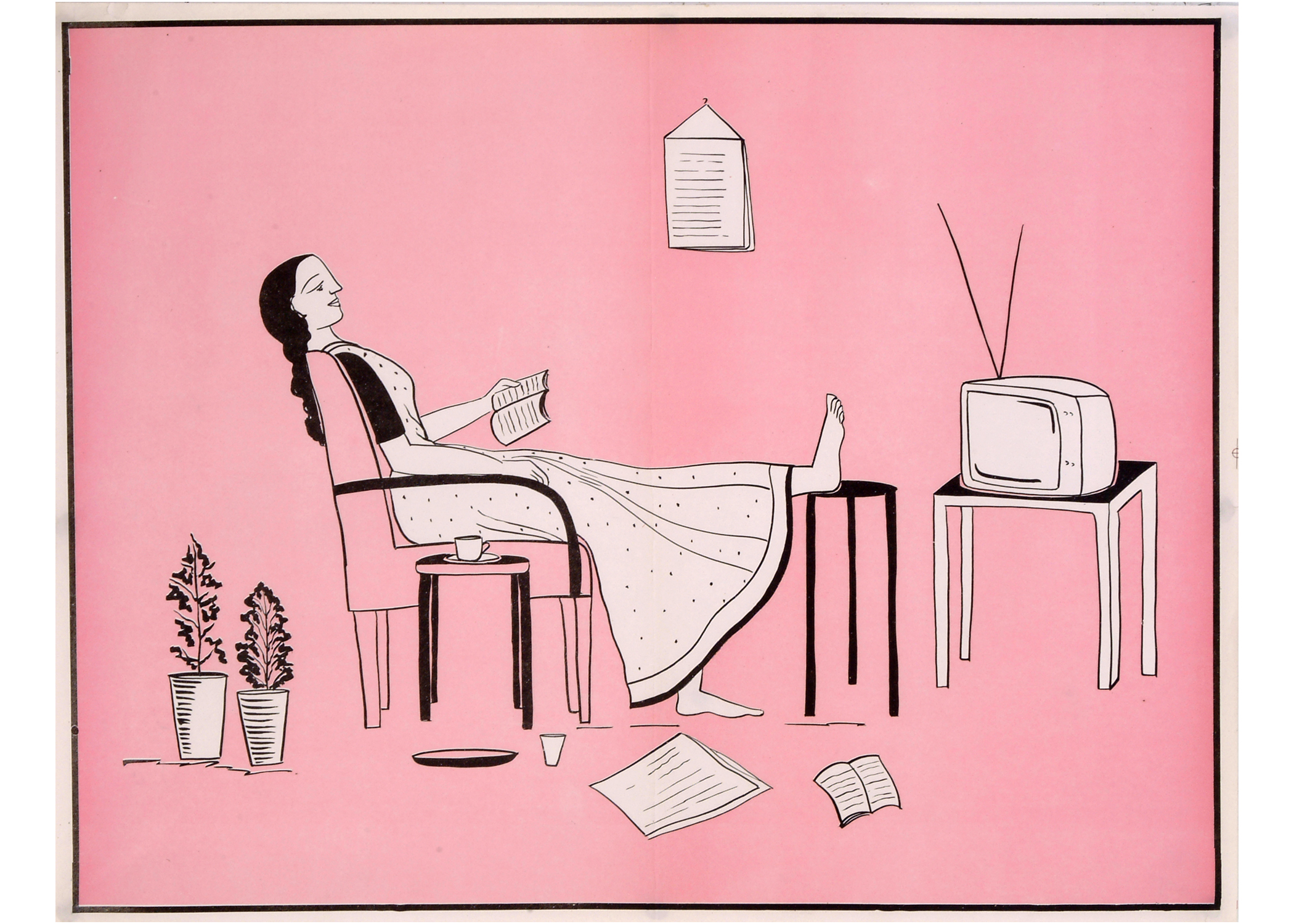
< Love this!> #ShirleyJackson “The #NovelistDisguised As a #Housewife”
Shirley Jackson wrote 17 books while raising four children — and she couldn’t have had a successful career without them
Jackson often complained about the mental calisthenics required to be at once a mother and a writer — the “nagging thoughts” about finishing the laundry or preparing meals that often interrupted her creative work. When she was working on a novel, she once wrote to a friend, she preferred to “lock myself up in my cave for four dogged hours a day, and sneak a minute or so here and there for writing letters and making lunch (‘You will eat vegetable soup again today and like it; Mommy’s beginning chapter three’).” But many writers, especially women writers, learn to derive imaginative energy from their constraints. Alice Munro has said that she began writing short stories because as a young mother she had no time to write novels: “When you are responsible for running a house and taking care of small children, particularly in the days before disposable diapers or ubiquitous automatic washing machines, it’s hard to arrange for large chunks of time.”
Writing in the hours between morning kindergarten and lunch, while a baby napped, or after the children had gone to bed demanded a discipline that came to suit Jackson. She was constantly thinking of stories while cooking, cleaning, or doing just about anything else. “All the time that I am making beds and doing dishes and driving to town for dancing shoes, I am telling myself stories,” she said in one of her lectures. Many of her stories were already virtually finished by the time she managed to sit down at the typewriter. Her friend Kit Foster told of playing Monopoly one evening with Jackson and Hyman when Jackson abruptly withdrew from the game and went into her study, where she banged audibly at her typewriter. Less than an hour later, she emerged with a story that was sent off to her agent the next morning. The idea for “The Lottery” came to her while she was grocery shopping with her daughter Joanne, then age 2. After they came home, she put away the groceries, put the child in her playpen, and wrote the story.
These pictures have been downloaded from Chris Riddell’s personal page on Facebook and shared with his permission.
The Scholastic India released the Kids & Family Reading Report on 2 Sept 2016 also stressed the importance of reading out aloud to children. It makes them into frequent readers. It also discovered that children who are given time for reading in school for independent reading at school are more likely to become readers than those who are not given the time. It also has many added advantages as highlighted in the accompanying graph. The report may be downloaded at: http://scholastic.co.in/readingreport .
Aleph Book Company is delighted to announce that it will be publishing Jeet Thayil’s new novel, The Book of Chocolate Saints, in 2017. This book is a follow-up to his celebrated novel Narcopolis which won the DSC Prize for South Asian Literature 2012 and was a finalist for the Man Booker Prize, the Man Asian Prize and the Commonwealth Prize.
~
In incandescent prose, award-winning novelist Jeet Thayil tells the story of Newton Francis Xavier, blocked poet, serial seducer of young women, reformed alcoholic (but only just), philosopher, recluse, all-round wild man, and India’s greatest living painter. At the age of sixty-six, Xavier, who has been living in New York, is getting ready to return to the land of his birth to stage one final show of his work (accompanied by a mad bacchanal). As we accompany Xavier and his partner and muse Goody on their unsteady, and frequently sidetracked, journey from New York to New Delhi, the venue of the final show, we meet a host of memorable characters—journalists, conmen, alcoholics, addicts, artists, poets, whores, society ladies, thugs—and are also given unforgettable (and sometimes unbearable) insights into love, madness, poetry, sex, painting, saints, death, God and the savagery that fuels all great art.
~
Jeet Thayil was born in Mamalasserie, Kerala, and educated in Bombay, Hong Kong and New York. His first novel Narcopolis won the DSC Prize for South Asian Literature 2012 and was a finalist for the Man Booker Prize, the Man Asian Prize and the Commonwealth Prize. His five poetry collections include Collected Poems, English and These Errors Are Correct, which won the 2013 Sahitya Akademi Award for poetry. He is the editor of 60 Indian Poets and The Bloodaxe Book of Contemporary Indian Poets. Jeet Thayil wrote the libretto for Babur in London, which toured Switzerland and the United Kingdom in 2012.
For further information please contact:
Vasundhara Raj Baigra, Director, Marketing and Publicity, Aleph Book Company
THE THIRST by JO NESBO will be published 4 May 2017
In news that will delight his millions of fans worldwide, Jo Nesbo confirms that his hardboiled Oslo detective Harry Hole will return in his latest novel, THE THIRST, to be published by Harvill Secker in May 2017.
THE THIRST continues the story of #1 bestseller POLICE, Harry Hole’s last outing in 2013, which saw the maverick cop protecting those closest to him from a killer wreaking revenge on the police. THE THIRST will see Harry drawn back to the Oslo police force when a serial killer begins targeting Tinder daters with a signature killing method that leads Harry on the hunt of a nemesis from his past. It is the eleventh instalment in Jo Nesbo’s bestselling crime fiction series, which have sold over 30 million copies worldwide and are published in 50 languages.
Jo Nesbo says: ‘I was always coming back to Harry, he is my soul mate. But it is a dark soul, so it is – as always – both a thrill and a chilling, emotionally exhausting experience. But Harry and the story make it worth the sleepless nights.’
THE THIRST is one of several treats in store next year for the millions of Jo Nesbo and Harry Hole fans. In January 2017, Harvill Secker will publish a 20th anniversary edition of THE BAT, Jo Nesbo’s first Harry Hole novel, with a new introduction by the author. In October 2017, Michael Fassbender will star as Harry Hole in the film adaptation of The Snowman, in which Nesbo’s detective tracks a serial killer murdering unfaithful women and leaving a snowman behind as a calling card. The film will be directed by Tomas Alfredson (Tinker Tailor Soldier Spy, Let the Right One In).
THE THIRST by Jo Nesbo will be published in hardback, ebook and audio book by Harvill Secker in the UK, in a simultaneous English language publication with Knopf in the US and with Random House Canada, all divisions of Penguin Random House.
Liz Foley, Harvill Secker Publishing Director, says: ‘2017 will be the year of Harry Hole! We are delighted to be bringing the millions of Jo Nesbo fans a thrilling new Harry Hole novel in The Thirst and celebrating Harry’s first adventure with our special anniversary edition of The Bat, as well as watching Harry’s first foray onto the big screen with the film adaptation of The Snowman next autumn. It’s going to be brilliant to be back in Harry’s world again.’
Jo Nesbo played football for Norway’s premier league team Molde, but his dream of playing professionally for Spurs was dashed when he tore crucial ligaments in his knee. After military service he attended business school and formed the band Di derre (Them There). Their second album topped the charts in Norway, but he continued working as a financial analyst, crunching numbers during the day and gigging at night. When commissioned by a publisher to write a memoir about life on the road with his band, he instead came up with the plot for his first Harry Hole crime novel, The Bat. He is regarded as one of the world’s leading crime writers, with The Leopard,Phantom, Police and The Son all topping the UK bestseller charts. His books have sold over 30 million copies worldwide and his novels are published in 50 languages.
The Harvill Secker crime list is home to the hottest crime from the coolest countries. Specialising in the very best in international crime fiction, the list includes number one bestselling phenomenon Jo Nesbo, Henning Mankell’s Kurt Wallander series, and four times winner of the CWA Dagger Fred Vargas. Harvill Secker publishes home-grown writers including Denise Mina, whose standalone novel The Long Drop will be published in March 2017, winner of the Harvill Secker Telegraph Crime Writing Competition, Abir Mukherjee, Ruth Ware, whose latest thriller The Woman in Cabin 10 is a Sunday Times Top Ten bestseller, and WHSmith Richard & Judy pick Those We LeftBehind by Stuart Neville.
Harvill Secker is part of the VINTAGE division of Penguin Random House.
For more information please contact:
Shruti Katoch Dhadwal, Senior Manager – Publicity and Marketing
Naipaul’s iconic India books in one volume for the very first time
AN AREA OF DARKNESS
‘Brilliant … tender, lyrical, explosive’ Observer
V.S. Naipaul was twenty-nine when he first visited India. This is his semi-autobiographical account—at once painful and hilarious, but always thoughtful and considered—a revelation both of the country and of himself.
INDIA: A WOUNDED CIVILIZATION
‘A devastating work, but proof that a novelist of Naipaul’s stature can often define problems quicker and more effectively than a team of economists and other experts’ The Times
Prompted by the Emergency of 1975, Naipaul casts a more analytical eye, convinced that India, wounded by a thousand years of foreign rule, has not yet found an ideology of regeneration.
INDIA: A MILLION MUTINIES NOW
‘Indispensable for anyone who wants seriously to come to grips with the experience of India’ New York Times
It is twenty-six years since Naipaul’s first trip to India. Taking an anti-clockwise journey around the metropolises—including Bombay, Madras, Calcutta and Delhi—he focuses on the country’s development since Independence. The author recedes, allowing Indians to tell the stories, and a dynamic oral history of the country emerges.
About the Author
S. Naipaul was born in Trinidad in 1932. He went to England on a scholarship in 1950. After four years at University College, Oxford, he began to write, and since then has followed no other profession. He has published more than twenty books of fiction and non-fiction, including Half a Life, A House for Mr Biswas, A Bend in the River and, most recently, a collection of correspondence, Letters Between a Father and Son, and The Masque of Africa. In 2001, he was awarded the Nobel Prize in Literature.
Please write to Peter Modoli, Publicity Manager for advance copies, reviews and excerpts.
‘Till you take decisions for Rama’s sake and not yours, it will continue to pursue you, Sita. Look at yourself. You are enduring great pain. You think you are enduring for the sake of someone else. You think that you have performed your duty for the sake of someone else. Your courage, your self-confidence …you have surrendered everything to others. What have you saved for yourself?’
‘What is “I”, sister? Who am I?’
Ahalya smiled.
‘The greatest of sages and philosophers have spent their lifetimes in search of an answer to this question. You means you, nothing else. You are not just the wife of Rama. There is something more in you, something that is your own. No one counsels women to find out what that something more is. If men’s pride is in wealth, or valour, or education, or caste-sect, for women it lies in fidelity, motherhood. No one advises women to transcend that pride. Most often, women don’t realize that they are part of the wider world. They limit themselves to an individual, to a household, to a family’s honour. Conquering the ego becomes the goal of spirituality for men. For women, to nourish that ego and to burn themselves to ashes in it becomes the goal. Sita, try to understand who you are, what the goal of your life is. It is not easy at all. But don’t give up. You will discover truth in the end. You have that ability. You haev saved Sri Ramachandra, can’t you save yourself? Don’t grieve over what has already happened. It is all for your own good, and is part of the process of self-realization. Be happy. Observe their lives. You belong to this whole world, not just to Rama.’
( Ahalya in conversation with Sita. p 40-41)
Volga’s Vimukta or The Liberation of Sita is a slim collection of five stories. It has been translated from Telugu by T. Vijay Kumar and C. Vijaysree. ‘Volga’ is the nom de plume for Popuri Lalitha Kumari. These are five interlinked yet independent stories inspired by Valmiki’s Ramayana. In each of them Sita meets the minor characters of Valmiki’s epic — Surpanakha, Renuka, Urmila and Ahalya. With each interaction Sita learns a little more about herself and more importantly about what it means to be a woman, have her own identity rather than it being defined by the presence of a man in her life. As the translators say in their note: “The title story signals Sita’s emergence as the liberated one while the final story, ‘The Shackled’, shows Rama imprisoned in the bondage of Arya Dharma.” According to them Volga’s stories belong to a literary tradition of feminist revisionist myth-making but she takes it further and makes it her own.
Volga does not use re-visioning merely as a strategy to subvert patriarchal structures embedded in mythical texts but also as a means to forge a vision of life in which liberation is total, autonomous and complete. She also creates a community of women by re-presenting myths from alternative points of view, and by networking women across ages and generations. She achieves this through different narrative strategies: giving voice to women characters marginalized in the ‘master narrative’, extending the story of a character beyond its conventional closure; forging female bonds and creating a female collective; and redefining many conventional epistemes including liberation.
In fact reinvention of myths has figured prominently in Indian women’s writing. For instance, Mahashweta Devi’s ‘Dopdi’ and ‘Stanadayani’ ( Bangla), Yashodhara Mishra’s ‘Purana Katha’ ( Odiya), Muppala Ranganayakamma’s Ramayana Visha Vrikham ( Telugu), Sara Joseph’s Ramayana Kathakal ( Malayalam) and Chitra Bannerjee Divakurni’s magnificent Palace of Illusions. Now Volga’s brilliant 2015 Sahitya Akademi award-winning The Liberation of Sita can be added to the list.
Volga was an active member of the Communist Party of India ( ML) but quit it in 1980, frustrated by the party’s patriarchal attitude towards women, she quit left politics and devoted herself to propagate feminism among Telugu readers through her activism and writing. Her favourite genre of writing are the short story and criticism. She has written over fifty books. For many years Volga was at the helm of the brilliant women’s organisation Asmita which is based in Hyderabad. Asmita were in fact responsible for creating the iconic “pink poster” which I fell in love with while curating Zubaan’s “Poster Women” — a visual mapping of the women’s movement in India.
It is commendable that HarperCollins India chose to print the name of the translators on the book cover rather than on the back cover or only inside. Translators names need to be displayed prominently too. A practice that has as yet not been widely adopted by publishers.
The Liberation of Sita is truly Volga at her feminist best. (For once I have to agree with the book blurb! )
Volga The Liberation of Sita ( Translated from the Telugu by T. Vijay Kumar and C. Vijayasree) Harper Perennial, an imprint of HarperCollins Publishers, Noida, India. Pb. pp. 130 Rs. 199
This past month I have spent a while reading literature about mental health. It was sparked off by the publication of the maginificent collection of essays edited by award-winning author, Jerry Pinto. A Book of Light: When a Loved One has a Different Mind consists of essays written by caregivers to mentally-challenged patients. These could be daughter, mother, son, father or even a close friend. All the essays are written by a caregiver who is also part of the immediate family so has witnessed the painful deterioration of the loved one. Some of the essays like Nirpuma Dutt on her adopted daughter though written using the literary device of an omniscient narrator is one of the most chilling and moving contributions. Every single essay stands out for the grief caused but also for the time and effort required in the caregiving which was mostly offered uncomplaingly and with total dedication. Amandeep Sandhu’s essay about his mother which I first read in draft many years ago continues to be powerful once published years later. As if this caregiving was meant to be. This was the truth. Jerry Pinto who won the Windham-Campbell prize in 2016 has been writing for years made his mark as a literary fiction writer with the splendid novel, Em and Hoom. A thinly disguised fictional account about his mother who remained in poor mental health for most of her life. It was twenty-six years in the making. Despite the vast variety of literature across genres and now his forays into translations, Jerry Pinto is at his best when writing about mental afflictions. There is a certain tenderness and sensitive understanding that seeps through his essays as it does in the introduction to this book and his curation of the essays.
Having read this splendid volume in one sitting I found some more books to read. For instance, Matt Haig’s powerful autobiography Reasons to Stay Alive. It is about his leading a perfectly normal life except to develop acute depression and have a nervous breakdown in his early twenties. He even attempted suicide but then slowly recovered with the help of his then-girlfriend and now wife, Andrea, and his parents. Today, he is a successful author for children and adults and is a social media influencer ( @matthaig1) .
When you are trapped inside something that feels so unreal, you look for anything that gives you a sense of your bearings. I craved knowledge. I craved facts. I searched for them like lifebuoys in the sea. …Things that occur in the mind can often be hidden. Indeed when I first became ill I spent a lot of energy on looking normal. People often only know someone is suffering if they tell them, and with depression that doesn’t always happen, especially if you are male ( more on that later).
Then I discovered bestselling author Jenny Lawson’s Furiously Happy that explores her lifelong battle with mental illness. It is written at a pitch that can get disconcertingly high, it is not easy trying to keep pace with the ups and lows in her life which are surpringly palpable in the text as well. But what truly shines through is the struggle of managing daily life and yet how determined she is. Simple things are daunting but the unimaginable fear she experienced when recording her audiobook turned her into a nervous wreck. So she finally turned to her friend, Neil Gaiman, for advice and this is what he texted her: “Pretend you’re good at it.” She took his advice to heart and shone.
Reasons to Stay Alive and Furiously Happy are two books written from the perspective of people who struggle with mental ill-health but have had the courage to write about it too. Offer an opinion that does not consider them over sensitive, peculiar and odd.
And then I read Oliver Sacks absolutely stupendous memoir On the Move. It was first published in April 2015 a few weeks before he succumbed to cancer on 30 August 2015, exactly a year ago today. In fine literary form it reflects upon a richly memorable life that spans eight decades focusing on his fascination with neurology, science, music, literature and his strong links with his family. Oliver Sacks came from a family of doctors where even his mother was a renowned surgeon. His father and two elder brothers were general practitioners but Oliver Sacks decided to become a neurologist. What is extraordinary is his recognition that when he began medical school in the mid-1950s there seemed to be an unbridgeable gap between neurophysiology and the actualities of how patients experienced neurological disorders. Neurology continued to follow the clinico-anatomical method set by Broca a century earlier, locating areas of damage in the brain and correlating these with symptoms; thus speech disturbances were correlated with damage to Broca’s speech area, paralysis with damage to motor areas, and so on. But by the mid-1980s scientists like Gerald M. Edelman were stating boldly that “We are at the beginning of the neuroscience revolution.” Having witnessed, documented and analysed significant neurological milestones writing about them in medical journals and popular magazines made him famous. It probably also helped recognise to some degree that mental ailments need to be discussed. Mentally ill patients are not pariah. Having firsthand experience of looking after a schizophrenic brother and extremely fond of a simple-minded aunt, a treasured member of their household he had a warm and sensitive generosity evident in the way he dealt with his patients too. More importantly he had a sense of history and an understanding to document what he experienced and analyse it. A rich and influential legacy he left on the way mentally-ill patients are perceived and how they can also learn to manage themselves. But at least he with his passion for neurological science made it possible for mental health to be made visible in public discourse. Otherwise how else would a well-known scientist and Pulitzer-award winner Siddhartha Mukherjee begin his fascinating account of the gene with a very personal account of his schizophrenic uncle?
Jerry Pinto ( Ed.) A Book of Light: When a Loved One Has a Different Mind Speaking Tiger, Delhi, 2016. Hb. Pp.180. Rs. 399
Matt Haig Reasons to Stay Alive Canongate, London, 2016. Pb. Pp. 270 Rs 499
Jenny Lawson Furiously Happy: A Funny Book About Horrible Things Picador, an imprint of Pan Macmillan, London, 2016. Pb. Pp. 330 Rs 450
Oliver Sacks On the Move: A Life Picador, London, 2015. Pb. Pp. Rs 499
Timothy has come to resurrect Perran. He has come to destroy Perran’s house, to erase his memory. He’s come because that’s what upcountry folk do, to replace the drudgery of the city with that of the coast. He has come to save them from themselves, or to hold up a mirror to them and they will see themselves reflected back in all their faults and backwardness. He has come to change them, to impose himself on them, to lead them or to fade into their shadows.
The Many is Wyl Menmuir’s debut novel which has been longlisted for the ManBooker Prize 2016. It is a slim novel based in a fishing village in north Cornwall. It revolves around two men — Ethan and Timothy. Ethan is a local and Timothy Buchannan is from the city. They form an unlikely pair and yet seem to spend a lot of their time together — idling, talking and fishing. They are seemingly bound by the fisherman Perran who had disappeared mysteriously some years earlier — Timothy questioning Perran’s disappearance and Ethan reticent about sharing any information about a man he was close to. In fact it is Perran’s abandoned cottage and its spoilt contents which is bought by Timothy when he visits the village much to the local villagers surprise, distaste and discomfort. There is a sense of despair hovering in the air, with the stench of death literally personified by the wasted fish caught in the polluted waters. There is desperation amongst the villagers in trying to eke out an existence by farming the sea for fresh produce which is rarely forthcoming. Whatever little money is to be made is dependant very heavily on the price set by Clem on behalf of the fishermen. The catch is inevitably sold to a mysterious group of people who stand a little away from the beach fixing a price with Clem. It is never very clear what they intend on doing with the poor catch, probably recycle it for the pharmaceutical industry but it is a paltry income welcomed by the locals since that is all they have access to.
While reading The Many there are many thoughts unleashed particularly about the slowly decaying lifestyle of a fishing village, the increasing dominance of city ways and yet the inexplicable power ( and cruelty) of Nature and its complicated relationship with Man. It manifests itself in this novel in many ways particularly in the mysterious fevers that plague Timothy and his hallucinations blurring the line between reality and fiction. Yet when reading the novel it all seems so plausible that it is impossible to query it.
This is a novel that has to be read at one go but one of those rare stories that once you have reached the end you start reading it all over again. There are moments one has to pause and wonder if it is reminiscent of similar writing in the past and then realise it would be unfair to compare The Many to any other writing. Wyl Menmuir’s style is wholly original, it grips one with its exquisitely chiselled style to create a stunningly beautiful and memorable novel much like the Cornish coast is. As with most longlists that put the spotlight on new voices and new styles of writing, the Man Booker judges have been correct in highlighting the debut novel of Wyl Menmuir. Whether he makes it to the shortlist or not is immaterial for now. This is a writer worth looking out for in the future. He is a confident storyteller who is aware of what it takes to be a master craftsman.
The Many is a debut novel with an earthiness to it and yet something so slippery and mysterious, with an almost magical quality to it.
Read it.
Wyl Menmuir The Many Salt Publishing, Norfolk, 2016. Pb. pp. 148
9 August 2016
*Book sent by the publisher, Chris Hamilton- Emery
Deborah Smith (left), translator of the winning book, The Vegetarian, with author Han Kang at the Man Booker International Prize in London. Photograph: Jeff Spicer/Getty Images. ( Taken from the Internet)
She was crouching, still wearing her nightclothes, her dishevelled, tangled hair a shapeless mass around her face. Around her, the kitchen floor was covered with plastic bags and airtight containers, scattered all over so that there was nowhere I could put my feet without treading on them. Beef for shab-shabu, belly pork, two sides of black beef shin, some squid in a vacuum-packed bag, sliced eel that my mother-in-law had sent us form the countryside ages ago, dried croaker tied with yellow string, unopened packs of frozen dumplings and endless bundles of unidentified stuff dragged from the depths of the fridge. There was a rustling sound; my wife was busy putting the things around her one by one into black rubbish bags. …She kept on putting the parcels of meat into the rubbish bags, seemingly no more aware of my existence than she had been last night. Beef and pork, pieces of chicken, at least 200,000 –won of saltwater eel.
The Vegetarian or Chaesikjuuija by Han Kang was published in Korean in 2007. The Vegetarian is about Yeong-hye who decides to become a vegetarian. She is discovered by her husband quietly and methodically removing all the meat products from their refrigerator and putting them into garbage bags. A horrifying proposition as her father points out, “It’s preposterous, everyone eats meat!” Yeong-hye is reserved and rarely speaks even to her husband. She prefers to remain confined to a room in their apartment reading and reflecting. After deciding to turn vegetarian despite being more than a competent cook she inexplicably imposes the dietary restriction on her husband too. He seeks assistance from his in-laws in the hope they will be able to get some sense in to their daughter but to no avail. Slowly the mental well-being of Yeong-hye deteriorates when she begins to believe that she is photosynthesising like a plant and has to be institutionalised.
The Vegetarian sub-heading declares it to be a novel. But the published version consists of three interlinked stories told from three different points-of-view: Yeon-hye’s husband, brother-in-law and sister. While they tell the story there are marginal overlaps of the narrative but slowly and steadily the plot does move ahead in time. It covers the time from the moment Yeon-hye decides to turn vegetarian to her institutionalisation, abandoned by her husband, returns to society to live alone albeit under the supervision of her sister and then back again in an institution. During the course of this time supposedly in the name of an art installation she agrees to her brother-in-law’s suggestion to have her body covered in paint and then filmed having sex with him only to be discovered by her sister. Despite the betrayal by her sister, In-hye, does not stop caring for Yeon-hye and regularly visits her, “despite the probing gazes, that mix of suspicion, caution, repugnance, and curiousity” that she encounters from her fellow passengers en route to Ch’ukseong Psychiatric Hospital, Maseok.
It was first published as three separate “novelettes” and then compiled into a “novel” as described on the copyright page of the English edition. This is how it was published in English too in 2015. An early version of the story that developed into The Vegetarian can be read on the Granta website:http://granta.com/the-fruit-of-my-woman/ . This curiously mesmerising example of a contemporary magic realism novel went on to win the Man Booker International Prize, the first after it had been combined with the Independent Prize for Foreign Fiction. Han Kang beat other powerful contenders such as Nobel prize winner Orhan Pamuk, Elena Ferrante and Kenzaburō Ōe. From this year the prize is now awarded to a single foreign novel translated into English, the money involved—£50,000 ($72,000)—being shared equally by author and translator. Till the win Han Kang and Deborah Smith were little known in international literary circles. Interestingly enough translating this book was one of Deborah Smith’s first professional attempts and she literally struck gold. She has said many times on social media since the win that she was translating the book while learning Korean. It was pure luck that this particular book went on to achieve international acclaim. In an interview, Smith explains how, having completed a degree in English literature, she decided to become a translator. Monolingual until then, she chose Korean “pragmatically,” because she had heard there was a lively literary scene in Korea and far fewer translators than for European languages. But she also very graciously acknowledged in an article how publishing is an industry and translation is a community – “nobody’s in it for the money, largely because there usually isn’t any”. (http://www.irishtimes.com/culture/books/deborah-smith-publishing-is-an-industry-but-translation-is-a-community-1.2688760) She herself proposed The Vegetarian to an English publisher who accepted it. It is the first novel she has translated. Yet there has been criticism regarding the quality of translation from critics such as Tim Parks who refers to them as “translation niggles”. (http://www.nybooks.com/daily/2016/06/20/raw-and-cooked-translation-why-the-vegetarian-wins/ )
For someone so passionate about the translated literature it is apt Smith has inaugurated her independent publishing press, Tilted Axis Press, with Bengali writer Sangeeta Bandhopadhyay’s Panty, translated by Arunava Sinha. To commemorate Women in Translation Month* (#WITMonth ) observed in August, Deborah Smith published the second title, a South Korean novel One Hundred Shadows by Hwang Jungeun, translated by Jung Yewon.
(My article on Perumal Murugan and the magnificent judgement delivered by Madras High Court Chief Justice Sanjay Kishen Kaul on 5 July 2016. It was published on the wonderful European literary website Bookwitty.com on 2 August 2016. Here is the original url: https://bookwitty.com/text/tamil-author-perumal-murugan-stands-tall/579a0b24acd0d01df04c6447 . As an addendum to the published article I am adding three very significant quotes provided by eminent historian Romila Thapar, lawyer Lawrence Liang and Prof. Venkatachalapathy. Unfortunately due to lack of space these could not accommodated in the original article. Read on.)
Last July the Madras High Court made a landmark judgement about a book that was under threat of censorship. This had led to its author leaving his home and ceasing to write. At the judgement, Chief Justice Sanjay Kishen Kaul stated: “the choice to read is always with the reader. If you do not like a book, throw it away. There is no compulsion to read a book…the right to write is unhindered.” Using Biblical imagery he continued: “Let the author be resurrected for what he is best at, to write.”
It was the end of a two-year trial that was a sobering reminder of how easy it is to conduct a witch-hunt in modern times.
The author in question is the award-winning Perumal Murugan and the book is Madhorubhagan or One Part Woman, ( published by Kalachuvadu) set about a century ago in Tiruchengode, in the southern Indian state of Tamil Nadu. Murugan, a teacher at the local government college, has a doctorate in Tamil Literature and is a highly respected chronicler on the Kongu region. One Part Woman is the story about Kali and Ponna, a childless peasant couple. It is an open secret that families on both sides are encouraging Kali to marry a second time, an idea he is deeply unhappy about. Meanwhile Ponna is persuaded by her family to participate in the Vaikasi Visakam chariot festival misleading her into believing that Kali would approve.
When the English translation by Anirrudhan Vasudevan was published, a growing buzz ensued because the crux of the novel focuses on a local practice that allowed for childless couples to participate in a carnivalesque gathering and on the 14th night have consensual sex with anyone under the cover of darkness. Children conceived on this night were considered to besami kodutha pillai or God-given children. This ancient tradition apparently had social sanction.
Ironically, the backlash against the novel began four years after it had been published in Tamil, demonstrating the impact a translation can make. It was the publication of the English edition that concerned the petitioners more for “a foreigner or people from other places who read this novelized history get a wrong notion that Tamil culture is lascivious and that a sexual orgy festival as portrayed in fact takes place in Arthanareeswarar Temple. The novel is thus alleged to be offensive and scandalous, and unless curtailed, would lead future generations to think that the events narrated in the novel are true.”
In late 2014 Murugan had just returned from a literary retreat in Bangalore where he had gone to work on the sequels to One Part Woman. A nightmare was to begin for him: abusive anonymous callers harassed him over the phone, accusing him of being a Christian, anti-Hindu, and anti-Kongu Vellar. A few days later, copies of One Part Woman were burned. Despite lodging a complaint with the police on the night of the book-burning incident, no action was taken. Muragan even issued a long clarification the next day explaining his art and promising to revise his text in all future editions and to scrub out all references to Tiruchengode.
But Hindu fundamentalists remained furious, arguing that Tiruchengode is a historical temple town and that writing about real places “relating it with unreal sexual orgy” is disrespectful to women, suggesting they are prostitutes. A ban of the novel was thus sought on three primary grounds: obscenity, defamation, and that it was derogatory and hurtful to the religious sentiments of the Hindus. A court case was filed against the author. Murugan fled with his family to Madras from where he issued his now famous “obituary”.
The case was then fought for more than a year in the Madras High Court.
In AR Venkatachalapathy’s article “Who Killed Perumal Murugan?” included in Words Matter: Writings Against Silence, an anthology on censorship and free speech edited by renowned poet K Satchidanandan, he writes that from a modern perspective Muragan’s description in One Part Woman of conceiving children may be considered exotic or even immoral but “Such practices are by no means unique. Any anthropologist would attest to similar practices in many pre modern societies with no access to assisted conception. Classical Hindu traditions refer to this practice as niyoga—it’s even termed niyoga dharma, an indication of its religious sanction.”
The recent Madras High Court judgement also documents how the hate campaign against Murugan included circulating eight pages extracted from the novel without any context. Furthermore, it lists sufficient literary evidence to prove many elements of One Part Woman are based upon folklore and older.
After the case was ruled in his favour, Murugan applied for a transfer back to the college where he had been teaching. And within three weeks his short story, Neer Vilayattu (The Well), newly translated by N Kalyan Raman was released for free by Juggernaut Books on their app.
Of the outcome, journalist and Chair of Writers in Prison Committee, PEN International, Salil Tripathi concluded: “The judgment is terrific in stating clearly what common sense should have dictated all along. This isn’t surprising; after all Sanjay Kishen Kaul had written the wonderful judgment defending the late M.F. Husain’s right to paint. That judgment, and this, together are part of India’s jurisprudence defending the right of any creative person to imagine and create art. After all, art challenges our thinking and may even offend; the way to deal with it is to respond by countering it through argument, through expression (and not violence or intimidation), and even by choosing to avoid seeing it or reading that book. What Husain experienced in his last years was tragic; it is good that Perumal Murugan has received justice – it is now for the state to defend his right to express himself freely.”
Perumal Murugan’s large-hearted response to the judgement was “I will get up. It is just that my mind wishes to spend a little time in the joy of this moment. My thanks to friends who stood by me. My thanks also to friends who stood against me.”
***
Here are what some of the eminent academics, lawyers, historians and journalists I spoke to said. The following quotes could not be accommodated in the original article but I have reproduced them for their significance.
Emeritus Professor of History at the Jawaharlal Nehru University, a Fellow of the British Academy and a recipient of the prestigious Kluge Prize of the US Library of Congress, Romila Thapar said “It was a good judgement in support of the right to freedom of expression for writers. It can also be quoted as a precedent in future cases involving attempts to silence writers. As has been pointed out by others, we as citizens must also create public opinion in support of free speech and not leave its defence only to the judiciary.
Prof Venkatachalapathy wrote“… it’s also worrying how everything hinges on the judge. A reactionary judge could have, in the same legal language, upheld all the charges against Perumal Murugan.” He went on to caution that non-state actors who enforce censorship do not respect such judgement so “while such judgments strengthen democratic and liberal forces we need to keep vigil.”
Lawrence Liang adds:
So I see the judgment as belonging to a series of very good high court judgments (some of which are also cited in the PM judgment) including the Husain judgment by Sanjay Kaul, Justice Muralidhar’s judgment in the Kabir case (Srishti Design School)- all of which provide relief in the specific instance, while laying out a wider jurisprudence of free speech for future cases. The reason I point out to the fact that this is a high court decision is that we often rely only on Supreme court decisions (by nature of their binding value) and often in the terrain of free speech, a lot of the SC judgments were laid down in the fifties and sixties. Further they were large benches which makes them difficult to overrule, so lower courts have to maouevere their way around the thicket of bad precedents.
In the specific case of the PM judgment
1. The court dismisses the argument of causing offensive to communities and explicitly states that any kind of contrarian opinion is met with the accusation that it offends
2. The court recognises the chilling effects principle (laid down in Shreya Singhal) by acknowledging harassment of writers as a threat to free speech
3. The court uses the idea contemporary community standards in concluding that the work is not obscene
For all the reasons cited above, it is a very welcome addition to free speech jurisprudence, and had there not been relief in a case like Perumal’s where an author was driven to the point of relinquishing writing, it would have been both a legal as well as grave literary injustice if the courts did not respond in adequate measure.

 < Love this!> #ShirleyJackson “The #NovelistDisguised As a #Housewife”
 to bed demanded a discipline that came to suit Jackson. She was constantly thinking of stories while cooking, cleaning, or doing just about anything else. “All the time that I am making beds and doing dishes and driving to town for dancing shoes, I am telling myself stories,” she said in one of her lectures. Many of her stories were already virtually finished by the time she managed to sit down at the typewriter. Her friend Kit Foster told of playing Monopoly one evening with Jackson and Hyman when Jackson abruptly withdrew from the game and went into her study, where she banged audibly at her typewriter. Less than an hour later, she emerged with a story that was sent off to her agent the next morning. The idea for “The Lottery” came to her while she was grocery shopping with her daughter Joanne, then age 2. After they came home, she put away the groceries, put the child in her playpen, and wrote the story.