Westland Books Posts

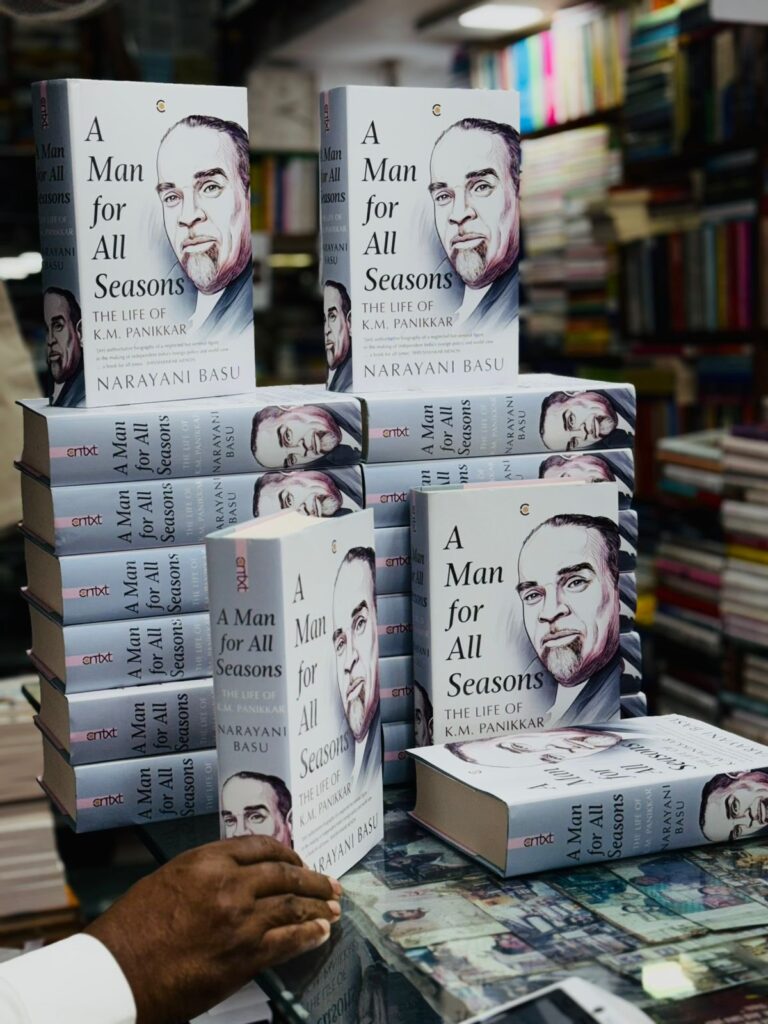
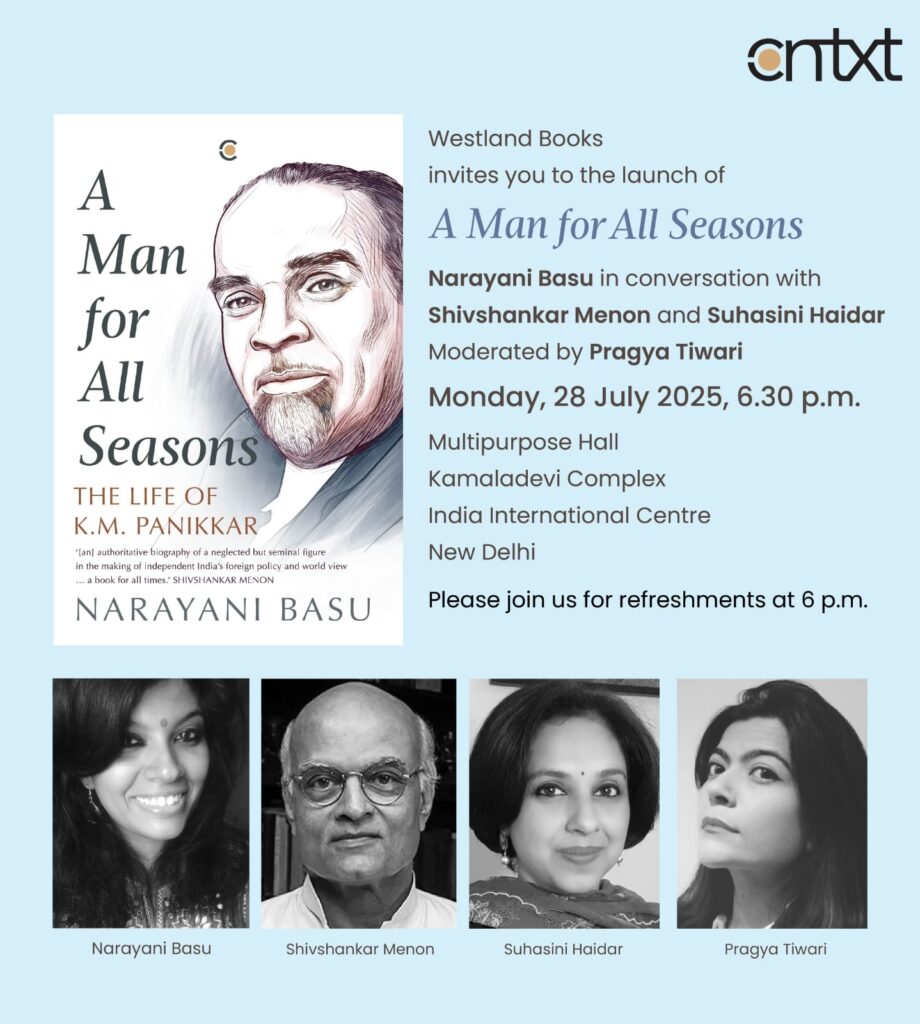
“A Man For All Seasons: The Life Of K.M. Panikkar” by Narayani Basu

A Man for All Seasons (published by Westland Books) has been a few years in the making. Biographies are not easy to write, especially if you want to stay clear of writing a hagiography. Also, not too dry, by focussing only on facts and step by step details. It could not have been easy to write but it is always interesting to read what a biographer thinks is important vis-a-vis historical details. How do they go back in the past to recreate a life? Is it focussing on the life that the person led in their time or is it to be written from the perspective of present day India with a view on the modern reader’s appetite? Which is it to be? Tough act. Nevertheless, Narayani Basu manages to find the right balance.
From Twitter

Book blurb

AN UNFLINCHING LOOK AT ONE OF INDIA’S MOST FASCINATING FIGURES—THE PUBLIC INTELLECTUAL AND DIPLOMAT WHO HELPED SHAPE A POST-COLONIAL INDIA.
K.M. Panikkar was a multifaceted man, one of India’s first public intellectuals as India won its independence. His imprint is all over India’s colonial and post-colonial history: from constitutional reform in the princely states, where he was a strong advocate for India’s current federal model to charting India’s maritime policy as a free country. He believed in an essential Hindu culture that held his land together, yet he was a committed secularist. He was Gandhi’s emissary and the founder of the Hindustan Times. He was independent India’s first and most controversial ambassador to both Nationalist China and the People’s Republic of China. He was Nehru’s man in Cairo and France and a member of the States Reorganisation Commission. He had enemies in the CIA as well as in India’s own Ministry of External Affairs. He frustrated his admirers as much as he provoked their reluctant respect.

From the British Raj to the Constituent Assembly, across two world wars and an ensuing Cold War, K.M. Panikkar was India’s go-to man in all seasons.

Through it all, he never stopped writing—on Indian identity, nationalism, history and foreign policy—material that remains as relevant today as it was seven decades ago.

Yet, about the man himself, strangely little is known. In A Man for All Seasons, Narayani Basu bridges that gap. Drawing on Panikkar’s formidable body of work, as well as on archival material from India to England, from Paris to China, and from Israel to the United Nations, as well as on first-time interviews with Panikkar’s family, Basu presents a vivid, irresistibly engaging portrait of this most enigmatic of India’s founding fathers. Featuring a formidable cast of characters—from Jawaharlal Nehru, Mahatma Gandhi and Sardar Patel to Zhou Enlai, Chairman Mao and Gamal Abdel Nasser—A Man for All Seasons is as much a sweeping history of a young India finding its place in the world as it is the story of a man who was impossible to ignore then and remains so now.

Narayani Basu is the bestselling author of V.P. Menon: The Unsung Architect of Modern India (2020) and Allegiance: Azaadi & the End of Empire (2022). A historian and foreign policy analyst, her current area of interest focuses on the less known but key players in the story of Indian independence. She lives in New Delhi. This is her third book.

27 July 2025
“The Time Energy Toolkit: Design Your Life, One Day at a Time” by Apekshit Khare

Many of the self-help books that are available in the local book market are created overseas. The drops of wisdom that they are share are fine and commonsensical, but the case studies and scenarios most oft are not. They are mostly applicable for situations abroad. The Time Energy Toolkit: Design your life, one day at a time has much the same kind of wise words to share as it’s international counterparts, but it’s differentiating factor is the sharing of desi scenarios. This is critical. Understanding the local context, especially the work/corporate culture, then Apekshit Khare is able to guide the reader in fine tuning their behavioural practices to manage their time energy better.

There are plenty of tables and worksheets provided via a QR Code printed at the end of the book.

Ultimately, it is a very corporate/business handbook but it’s written in an accessible style.

Try using the book. See if it makes a difference to you.

It is published by Westland Books.

21 June 2025

“Who Killed Moosewala?” by Jupinderjit Singh

A few years ago, I reached out to investigative journalist Jupinderjit Singh and asked him if he was interested in writing a book on Moosewala. I knew that Jupinderjit wrote regularly and had been following this case regularly. He jumped at the idea. We (I, his literary agent and Jupinderjit, the author) were fortunate that Westland Books published the book in English, Hindi, and Punjabi. This was two years ago.

Earlier in June 2025, to coincide with Moosewala’s birth anniversary (11 June), BBC released on You Tube a documentary that they had made. When the book was first published, Ishleen Kaur, had requested us to send her a copy of the book as she was working on the very same subject.

Here are the links to the two episodes. Jupinderjit features in them too.

Here is the book blurb:

A POWERFUL BOOK THAT DETAILS THE DEATH AND THE SUBSEQUENT INVESTIGATION OF THE MURDER OF ONE OF THE RISING SUPERSTARS OF PUNJABI HIP-HOP.
On 29 May 2022, Punjabi rapper Sidhu Moosewala left his haveli in Moosa for a quick ride to his aunt’s house in the neighbouring village. He was never to return home. The singer was ambushed and gunned down by six assailants. He was only twenty-eight.
The news of his death spread like wildfire; fans thronged to his village in Mansa district to pay their last respects. Others mourned him on social media. An icon for many, the rebellious young man had also been a controversial figure. There were allegations that he promoted gun culture and violence, and rumours that he had ties with certain gangs. With his sudden and violent death, the questions about his life became louder—as also those around his death. Who had killed Moosewala? Everyone wanted to know.
As the police made arrests and the investigation started in earnest, a story began to emerge—one of old enmities, uncomfortable truths, disgruntled youths and the violence that simmers in Punjab, just below the surface of everyday life. In this gripping and fast-paced book, seasoned crime reporter Jupinderjit Singh closely follows the investigation into Moosewala’s death and also offers us glimpses into the man he was behind the mask of celebrity. The story of the slain singer and those behind his murder, this book is also a rumination on the growing unrest in Punjab.

Jupinderjit Singh is an award-winning journalist, specialising in crime reporting for The Tribune in Punjab. He has authored five books two of which have been translated into Hindi. He is known for discovering the lost pistol of Shaheed Bhagat Singh that was used to kill a British police officer in 1928. He was awarded the Prem Bhatia Young Journalist Award in 2005. He is a fellow with the Centre for Science and Environment and a FIDE-rated chess player and coach. He is also a motivational speaker.

13 June 2025

“Gunboy” by Shreyas Rajagopal and “Water Days: A Novel” by Sundar Sarukkai

Twinsies!

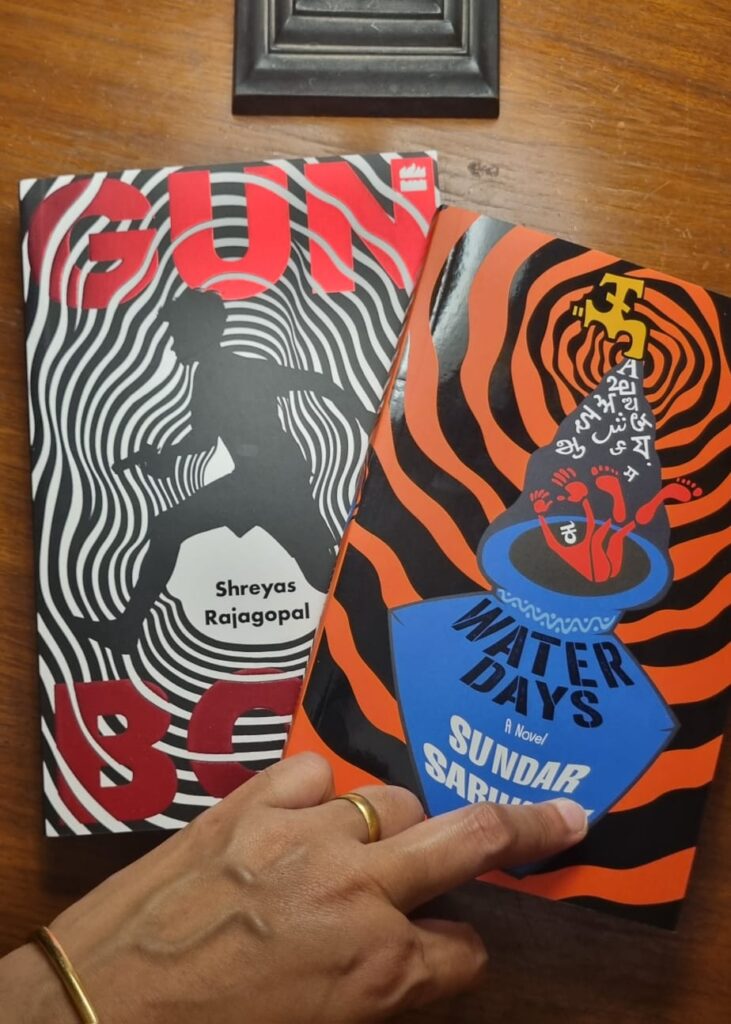
Brand new books launched this week — Gunboy and Water Days: A Novel. Both are by second-time fiction authors — Shreyas Rajagopal and Sundar Sarukkai. Fiction. Novels. It is a lovely coincidence that two titles released by separate publishing houses — HarperCollins India and Westland Books — have very similar cover designs. The designers are Haitenlo Semy and Srinivas Bhashyam, respectively.

23 May 2025

The Stoic Philosophy series by Westland Books

The centuries-old philosophy of the Stoics holds the key to navigating our modern world. With its practices for staying calm under pressure, making ethical decisions and navigating challenges, Stoicism offers a practical framework for cultivating calmness and positivity in a complex world.

One of the greatest of the Stoics is Lucius Annaeus Seneca, whose writings explore the importance of ethics, resilience and virtue. His work lays the foundations of the Stoic way of life. Using curated quotations from Seneca’s work, and supplemented with helpful commentary, authors Jana Capri and Charan Díaz formulate seventy-nine questions that cover a range of universal concerns. Stay Calm with Seneca is a thoughtful and wise companion through the twists and turns of modern life.

Renowned as the last great Stoic philosopher, Marcus Aurelius is best known for his work Meditations, which grounds his philosophy in self-reflection, rationality, personal virtue, inner strength and an unbiased perspective to living a fulfilling life.

In Stay Positive with Marcus Aurelius, authors Jana Capri and Charan Díaz explores seventy-nine questions and scenarios that deal with both philosophical and practical concerns that people face—ethical dilemmas, existential inquiries, self-improvement prompts and reflective queries. Based on Meditations, the answers are adapted to the modern world and are accompanied by thoughtful reflections that help you remain positive amidst life’s upheavals.

Of late, book compilations of the Stoics by various publishers in India and globally are selling like hotcakes. All of a sudden, Stoic philosophy is back in vogue. It does not seem to matter how many publishers create texts of the stoic philosophers or in which format, they will sell. It is understandable. There is wisdom and practical sense. Westland Books newly launched “The Stoic Philosophy Series” falls into this category. Handy, decent size hardbacks, easy to hold and flip through, with wide margins for scribbling notes, and perhaps, adding a few more questions to those asked, these are worth keeping or even gifting.

Try them.

23 May 2025

Godrej DEI Lab and Westland Books Launch ‘Queer Directions’, an LGBTQIA+ Publishing Imprint (Press Release)

~ To launch six titles this year in non-fiction, poetry and more

Mumbai, 14 May 2025: Godrej DEI Lab, the diversity and inclusion initiative of the Godrej Industries Group and Westland Books, today announced the launch of “Queer Directions” (QD) – a new publishing imprint dedicated to amplifying LGBTQIA+ voices across genres spanning non-fiction, poetry, and eventually, fiction. With plans to launch six compelling titles this year, the collaboration signals a deep commitment to inclusive storytelling and representation. 

At its core, Queer Directions will celebrate queer expression, identity, and lived experiences. From insightful memoirs to imaginative narratives for younger readers, Queer Directions aims to build an ever-expanding bridge between queer creators and readers everywhere.

Parmesh Shahani, Head of Godrej DEI Lab and author of Queeristan, will serve as Series Editor for Queer Directions. Shahani said, “The idea is to build a bridge, not a border. At a time when queer rights are being challenged across the world, this imprint stands as both an act of solidarity and a space to nurture fresh, authentic voices from within the LGBTQIA+ communities. It will showcase the rich diversity of queer lives to straight allies and non-queer readers.”

Westland Books, which has steadily built a credible LGBTQIA+ list over the years – from Queeristan to recent acclaimed fiction by Unmana and Santanu Bhattacharya – now takes a bold step forward with this focused publishing programme.

It has been a long-cherished hope that someday we would be able to launch a thoughtful, inclusive and truly intersectional imprint that is focused on discovering and nurturing new voices in the LGBTQIA+ space. Queer Directions is that,” said Karthika V.K., Publisher at Westland Books. “‘And we couldn’t have found more supportive and engaged partners than Godrej DEI Lab and series editor Parmesh Shahani to help shape and enhance the impact of all that we publish in QD.

With the launch of Queer Directions, the Godrej Industries Group reaffirms its continued investment in social equity and inclusion. The imprint, as a creative endeavour, will be a testament to the power of partnerships in shaping inclusive narratives and imagining progress for all.

About the Godrej DEi Lab

The Godrej DEI Lab empowers inclusion ecosystems both within and outside the Godrej Industries Group.

www.godrejdeilab.com

About Godrej Industries Group

Godrej Industries Ltd. is the holding company of the Godrej Industries Group (GIG). We are privileged to serve over 1.1 billion consumers globally through our businesses with market leadership positions in the consumer products, real estate, agriculture, financial services and chemicals industries.

About Westland Books

Westland Books is an award-winning Indian publisher with a diverse and exciting range
of books from popular and literary fiction to business, politics, biography, spirituality,
popular science, health, and self-help. Its key publishing imprints include Context,
which publishes award-winning literary fiction and non-fiction; Ekadā, which publishes
the best of contemporary writing in Indian languages and in translation; Tranquebar,
home to the best new fiction from the Indian subcontinent; the eponymous Westland
Sport, Westland Business and Red Panda, which publishes a range of books for children of different ages.

20 May 2025

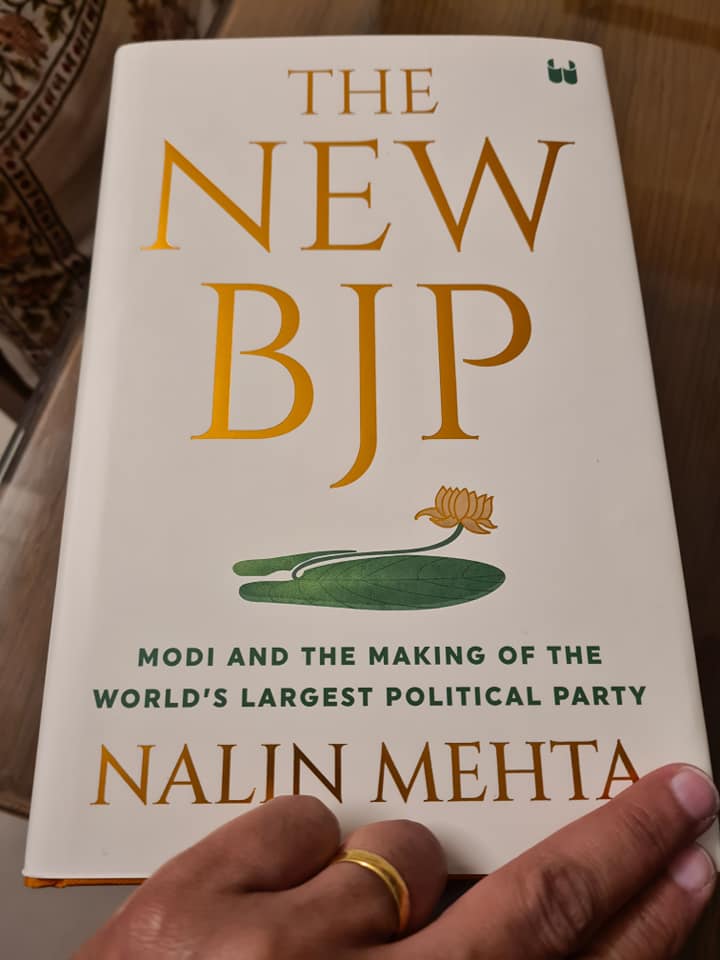
“The New BJP: Modi and the Making of the World’s Largest Party” by Nalin Mehta

A little before the covid pandemic hit us hard, Nalin and I met to discuss his new manuscript. He mentioned that he was writing it on the Bharatiya Janata Party that was at the time, in its first term in office in the Indian government. We discussed the pros and cons of writing this book. Both of us knew that it had to be entirely factual, accurate, non-partisan, data rich, and with a detailed analysis. Nalin, as he well documents in his book, stuck to facts, empirical evidence, archival research, incredible number of interviews, on-the-road conversations and much much more. All the information collated for the purposes of this text were in the public domain. Nothing was gleaned from off-the-record documentation or conversations. The manuscript went through many iterations. Once completed, then it was legally vetted, not once, but twice by a team of lawyers. The legal team issued a letter on their official letterhead confirming that everything was accurate and above board. It was an exercise that kept both of us, Nalin and me, busy through the pandemic. Many times we were confronted by what we encountered in terms of data and research analysis, but after many checks, if the evidence still stood as is, we accepted. This was not easy to do given that the surround noise would always point to something else. After a while, it was only a matter of belief in the work that we were doing that propelled us forward. The New BJP was published on 3 Jan 2022. Since then, it continues to sell by all accounts. The number of people who have met Nalin and told him that his book is superb is impossible to tell. The book has been published in English ( Westland Books), Punjabi (Rethink Publishers) and Marathi (Mehta Publishing House).

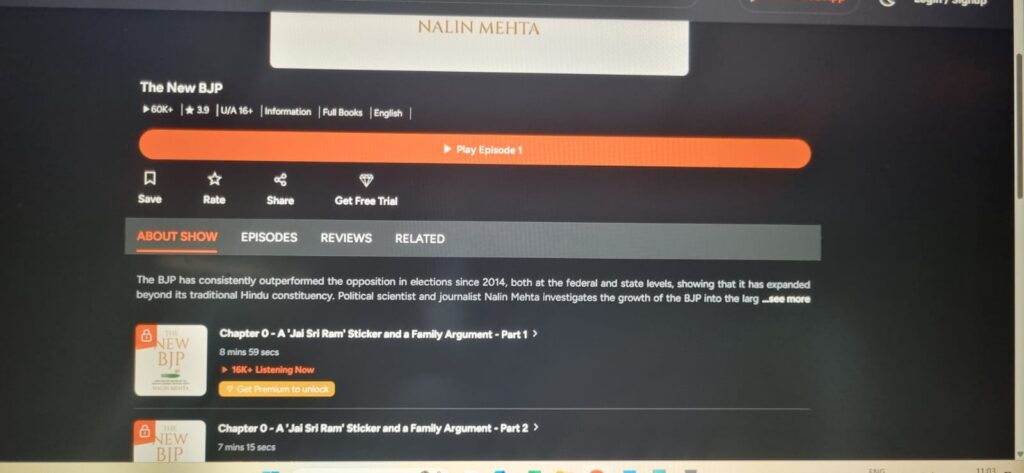
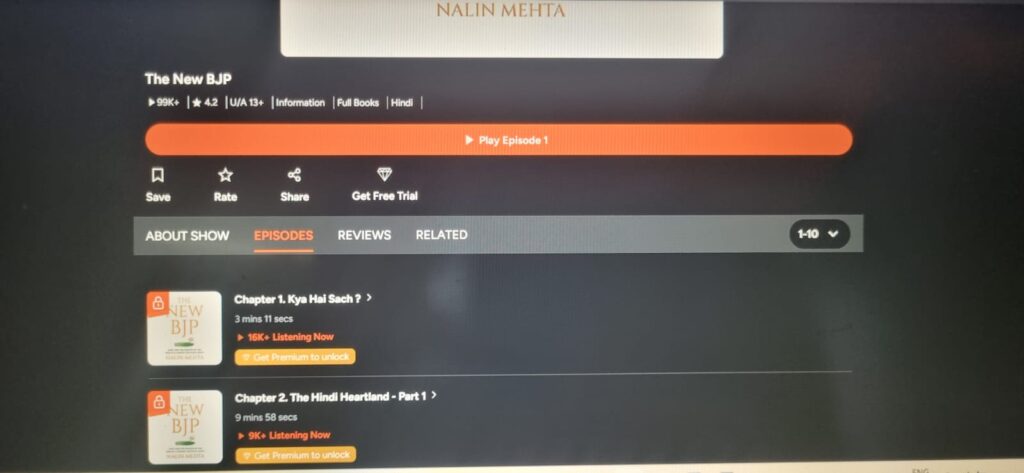
The audio version, released by KUKU FM, is available in English and Hindi. In fact, today, while checking the KUKU FM website, I discovered to my delight, three and a half years on since the book was first published, there are literally thousands of listeners plugged in to the Hindi and English audio books. Quite remarkable! Here are the screenshots from today (12 May 2025).

Kuku FM, English, The New BJP
Kuku FM, Hindi, The New BJP

This book has changed the political discourse in India. Moreover, if reports are to be believed, it is now an essential read for all diplomats and international journalists being sent to India. Even amongst politicians, across the spectrum, it is a must read. Apart from this, lay readers, journalists, academics, researchers, students et al are reading it. As a backhand compliment, we have even come across sections of it being pirated and circulated on WhatsApp. There is a story before a book comes into existence and there is a story afterwards. The New BJP has many anecdotes around it that continue to grow with every passing year.

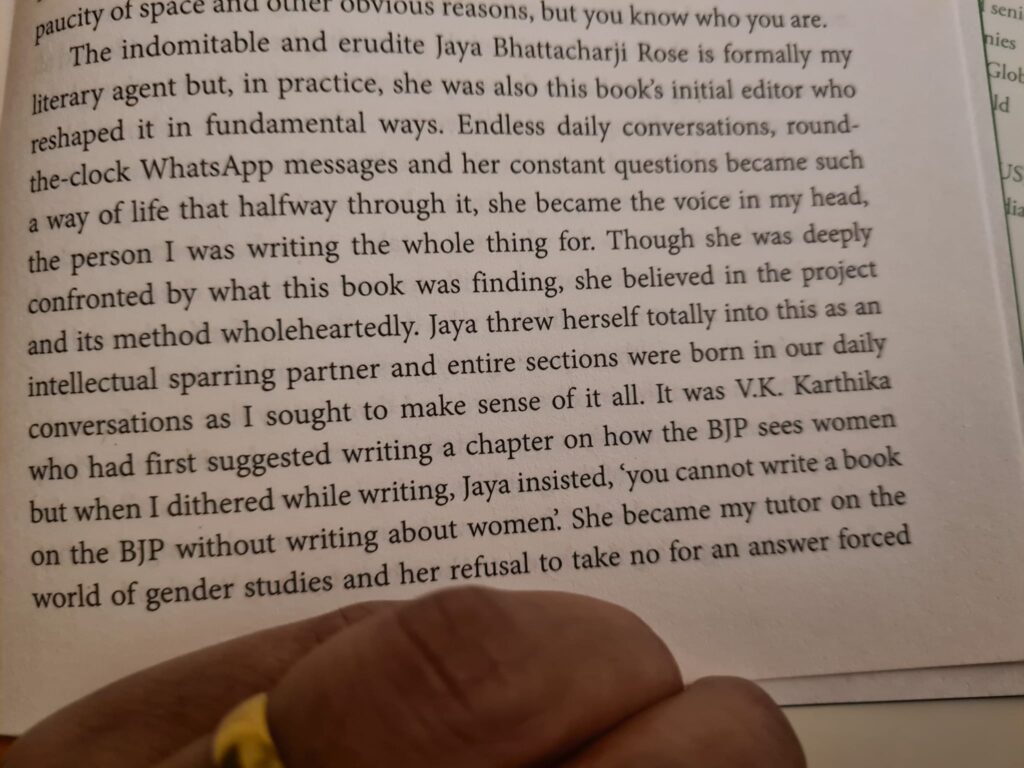
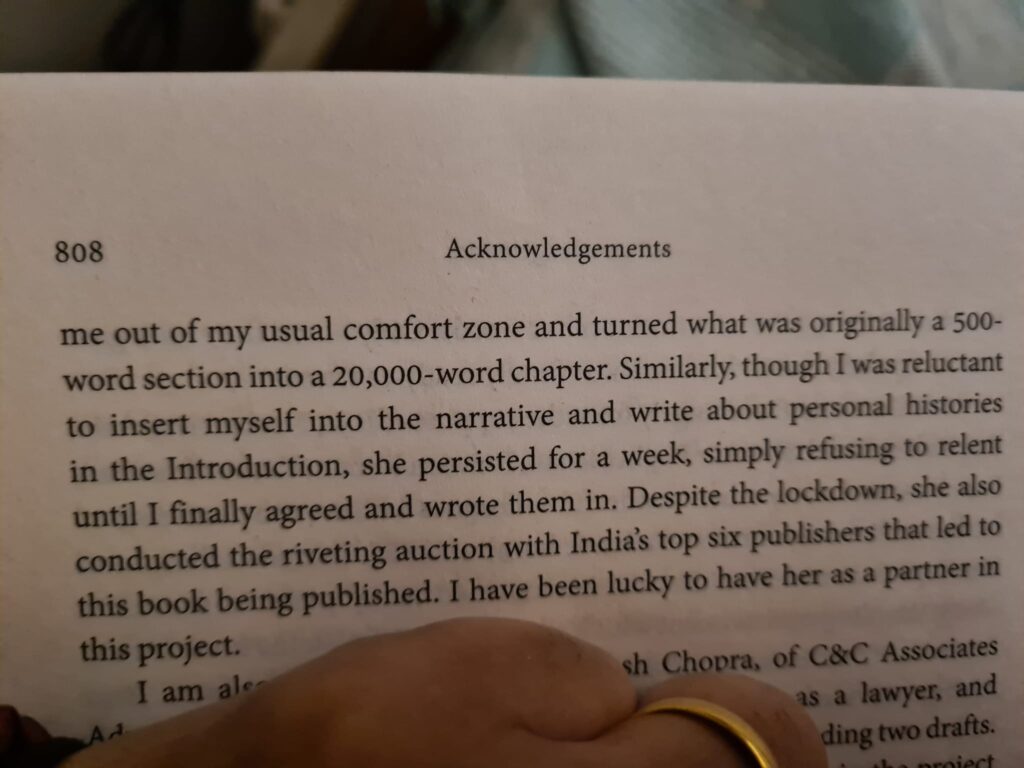
Meanwhile, I am sharing the very kind and generous words Nalin had to say in his acknowledgement:

The indomitable and erudite Jaya Bhattacharji Rose formally my literary agent but, in practice, she was also this book’s editor who reshaped it in fundamental ways. Endless daily conversatrions, round-the-clock WhatsApp messages and her constant questions became such a way of life that halfway through it, she became the voice in my head, the person I was writing the whole thing for. Though she was deeply confronted by what this book was finding, she believed in the project and its method wholeheartedly. Jaya threw herself totally into this as an intellectual sparring partner and entire sections were born in our daily conversations as I sought to make sense of it all. It was V. K. Karthika who had first suggested writing a chapter on how the BJP sees women but when I dithered while writing, Jaya insisted, ‘you cannot write a book on the BJP without writing about women.’ She became my tutor on the world of gender studies and her refusal to take no for an answer forced me out of my usual comfort zone and turned what was orignally a 500-word section intoa 20,000-word chapter. Similiarly, though I was reluctant to insert myself into the narrative and write about personal histories in the Introduction, she persisted for a week, simply refusing to relent until I finally agreed and wrote them in. Despite the lockdown, she also conducted the riveting auction with India’s top six publishers that led to this book being published. I have been lucky to have her as a partner in this project.

The New BJP is an extraordinary book and it is worth reading, whether you agree with the party’s ideologies or not. It is seminal. It will be talked about and referred to for a long, long time to come.

12 May 2025

“Echoes of Eternity: A Journey Through Indian Thought from the Rigveda to the Present” Pavan Varma  

In his fine introduction to the book, Echoes of Eternity, former diplomat, Pavan K. Varma, explains very clearly his methodology for selecting the texts included in this anthology. Also, the reason for putting together this essential book. Here is an excerpt from the opening pages:

India is a civilisation of moulik such — the power of original thought. This faculty has been the bedrock on which the Indian people have survived and flourished since the dawn of time. Other ancient civilisations, such as the Greek, Roman, Persian, Assyrian and even classical Chinese, have long ceased to exist. What makes our civilisation different is a certain ability for cerebral interrogation, discovery and renewal that has bestowed the great stream of Indian ideas with antiquity, continuity, diversity, assimilation and peaks of refinement.

This compendium, or anthology, seeks to capture some of the magnitude of this vast ideational canvas. Its breadth covers a period of 7,000 years at the very least, from the Rigveda, dated circa 3500 to 3000 BCE, to the philosopher Osho, closer to the present. The subjects its includes range from philosophy, metaphysics, religion, values, politics, economics, arts, literature, poetry and aesthetics to social change and renewal. The geographical sweep is as wide, covering the whole of Bharatvarsha, from the Himalays to Kanyakumari, and Dwaraka to Puri and the Northeast. This selection would have been even richer in contenthad the script of the great Indus Valley Civilisation been deciphered, and one can only hope that scholars will succeed one day.

As can be imagined, the greatest challenge in such a task was what to select and what to leave out. Our corpus of thought is so copious that some degree of judicious selectivity had to be exercised. It also required going through tons of literary material in order to decide what the final selection would be. Certainly, there was an element of subjectivity involved in the process and the final decision was mine. I am fully conscious that there will be some who feel that the contents are incomplete, or that certain texts have been excluded which, according to their thinking, need to be there, or that the material is disproportionately focused on some texts, or even on some historical periods, to the neglect of others. I plead guilty to these accusations, since I have already made the disclaimer that a process of selectivity was involved, and that is bound to lead to some exclusions. My only defence is that I was influenced by no extraneous or ulterior agenda, that my intent was entirely benevolent, and it was my genuine attempt to provide a fair sampling of the infinite sparkle of ideas that have gone into the making of our civilisational heritage.

To my mind, even this is a good beginning to introduce readers to our remarkable legacy of thought. Many educated Indians are woefully unaware of its contents, depth and range. They are aware of some important names, and may have read a few texts, but on the whole, there is a regrettable ignorance with regard to the endless river of thought of which there are legatees. For such people, this book, I hope, will serve as an essential primer to undersand the brilliance and continuity of our cerebral evolution, and inform them that the concept of nationhood is underpinned, since time immemorial, not only by a shared geography, but also the generous benediction of application of mind that, like some exquisite weave, binds us all together.

This infusion of knowledge is particularly important for us at this juncture, when we are poised to take our legitimate place at the high table of the world.

p. ix – xi

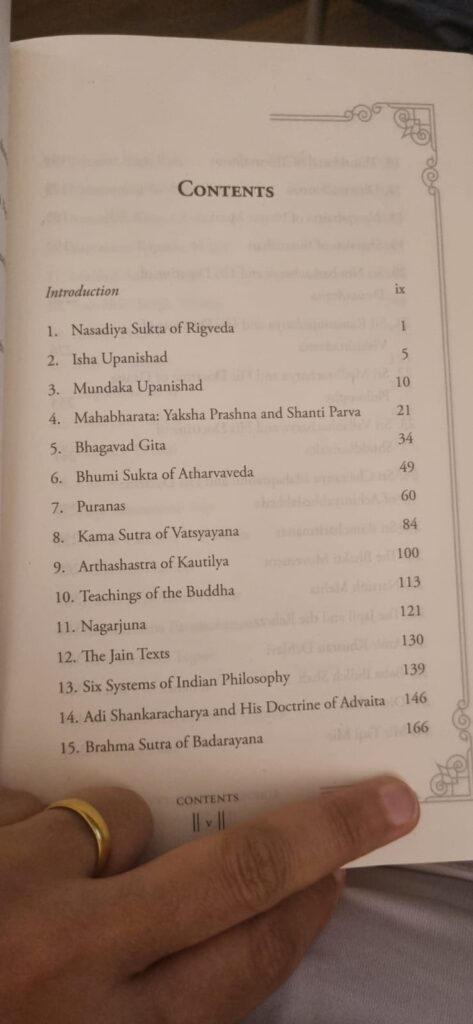
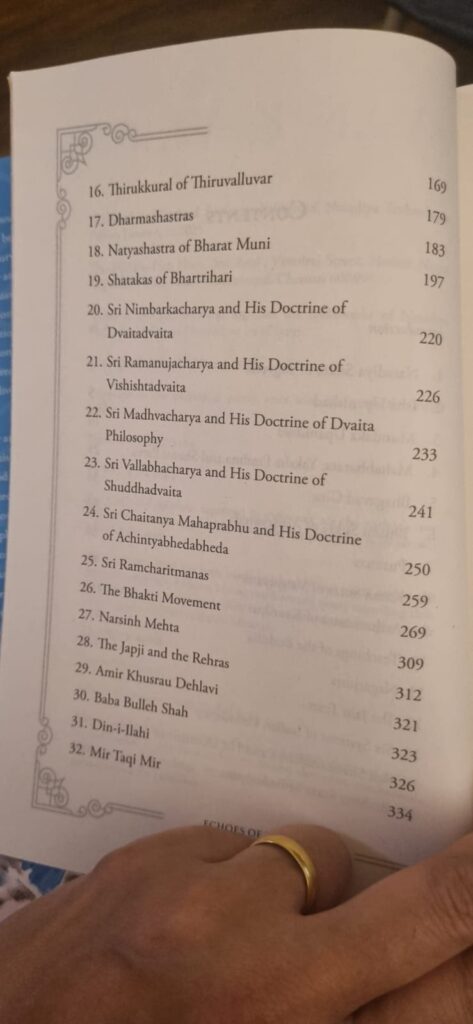
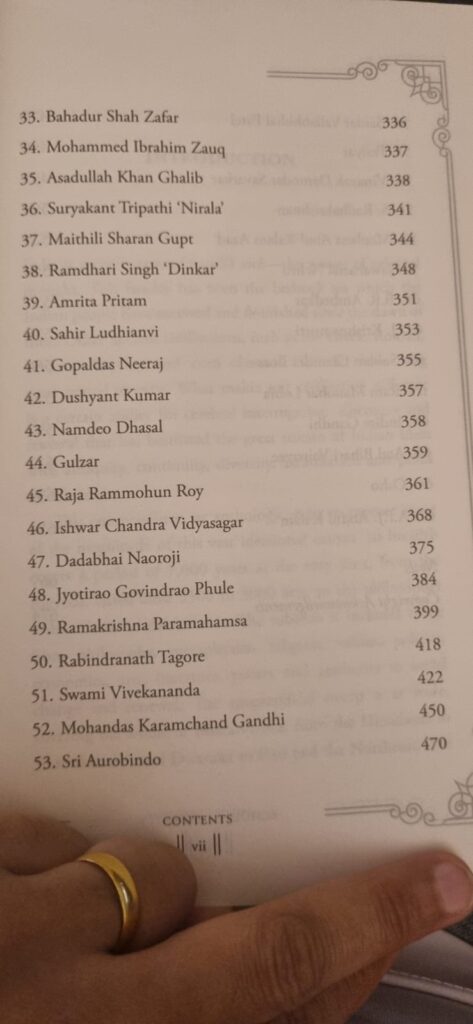
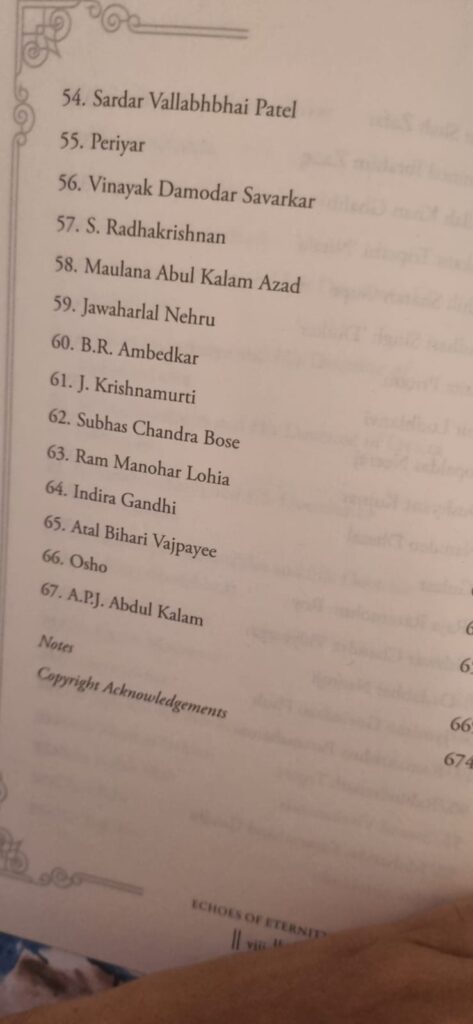
Here are images of the list of contents that are spread across four pages. It will give a sense of the breadth of literary selections included in the volume.

From the ancient Nasadiya Sukta to twentieth-century discussions about caste and nation, this is an anthology of Indian philosophical and political thought that deserves a place on every bookshelf. Wise and diverse, reflective and provocative, each of the pieces in this collection, be it Sanskrit verse, Urdu poetry or a speech in Parliament, belongs to the canon of intellectual thought that defines Indianness.

Echoes of Eternity has its limitations as the author has recognised but it is certainly a good introduction to our rich literary inheritance. It is worth remembering.

10 May 2025

“Qabar” by K. R. Meera

Qabar or grave, is a novella by award-winning writer K. R. Meera ( published by Westland Books). It is a curious story. Is it possible to share the story briefly. No. Suffice to say that the dark parallels drawn between a woman’s existence and that of a Muslim in a very patriarchal and Hindu-dominated society, respectively, are very disconcerting. For the characters, it is akin to being dead while alive, confined to their qabar. Resorting to elements of magic realism or preying upon classic myths of witches and djinns, does not in any way ease the reader while trying to comprehend Qabar. The competent translation by journalist/author, Nisha Susan is very good. She achieves the balancing act by slipping in Malayalam words into the English translation without making the text jarring to read.

Qabar is a pleasure to read.

19 Jan 2022

Anjali Joseph, “Keeping in Touch”

Award-winning writer Anjali Joseph’s Keeping in Touch ( Context, Westland/Amazon) is about Keteki and Ved Ved, both of whom are in their late thirties. (Ved is Ved twice over as the first Ved is the title for a doctor. The second is his name meaning “knowledge”.) They met at the airport while waiting for their respective flights. Coincidentally, one of the projects that Ved is assessing in India for a potential investment has a manufacturing plant in Upper Assam, very conveniently it is close to Keteki’s ancestral home in Jorhat. After a one night stand, Keteki heads off to Guwahati and Ved to London. They exchange phone numbers. Ketkei is a designer. Ved is a venture capitalist. They come across as mildly bored, disengaged with their world, their professional commitments are completed more than successfully but they remain dissatisfed, they seem to be unaffected by anything that happens around them and are always available for a party with like-minded souls. They seem to live lives that would be the envy of many — parties organised at the drop of a hat, jet setting between the UK and India as and when they feel like it, travelling within India upon a whim, an ease that is available to the single and unattached, without any other responsibilities. Even having sex seems to be a “time pass” activity. Yet, slowly and steadily, via text messages, unexpected as well as planned meetings in London, Guwahati and Jorhat, Keteki and Ved begin to get to know each other. It is almost as if they are behaving like teenagers, who are infatuated with each other, but for some reason are unable to express it clearly in words to each other. Although to be fair, Ved does say to Keteki’s uncle that he would like to spend the rest of his life with his niece. Keteki and Ved keep in touch but are unable to make a commitment until Ved decides to quit his job in London, puts his flat on rent and moves to Guwahati to be closer to Keteki. She too has for the moment moved base to the city to be with her aunt.

Anjali Joseph excels in these middle class stories. It is almost as if it is in the spirit of Jane Austen, to polish the two inches of ivory. There is the hustle bustle of the outside world in terms of social engagements and conversations, much of it polite chatter. But the focus of the story remains firmly upon the two main characters. The desis in Keeping in Touch are equally at ease in India or abroad. They have the mobility and grace to move in diverse social circles. Interestingly, this novel is probably a fine example of a new brand of diasporic literature that blends the cultures of the two lands deftly and unapologetically. It is evident in little details such as the use of Assamese words in the course of conversation or to describe dishes. Thankfully not once are these italicised in the text or over explained. Instead they are placed as they are meant to be on the page and the reader has to accept them.

As always, Saurabh Garge’s cover design is perfect. The lone, empty boat, marooned on the river bank is a symbolic image for the two lovers described in the story. It is intriguing. For those wishing to pick up a book based upon its cover, well they are in for a satisfying read.

Keeping in Touch is a very old-fashioned love story in a modern setting. It is beautifully told. It is impossible to put down. It lingers with you long after the book is over.

Read it.

18 June 2021

Web Analytics Made Easy -
StatCounter