Viking Posts

The Booker Prize 2025 longlist
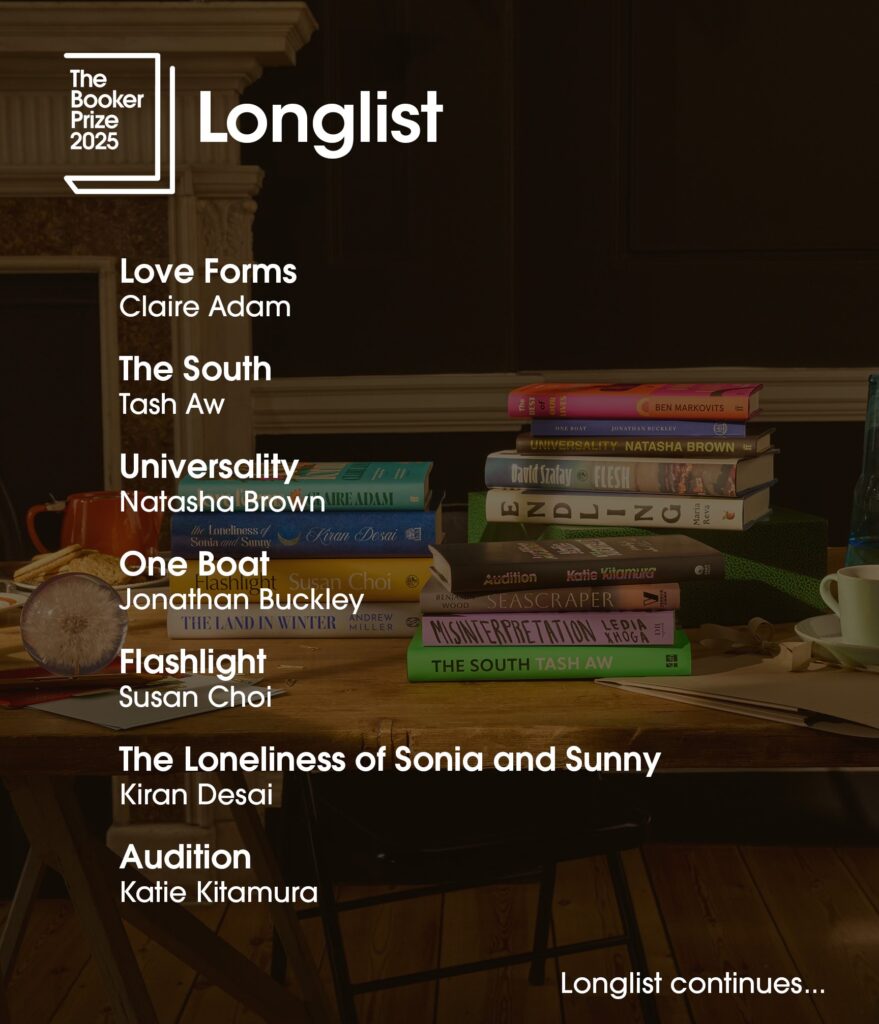
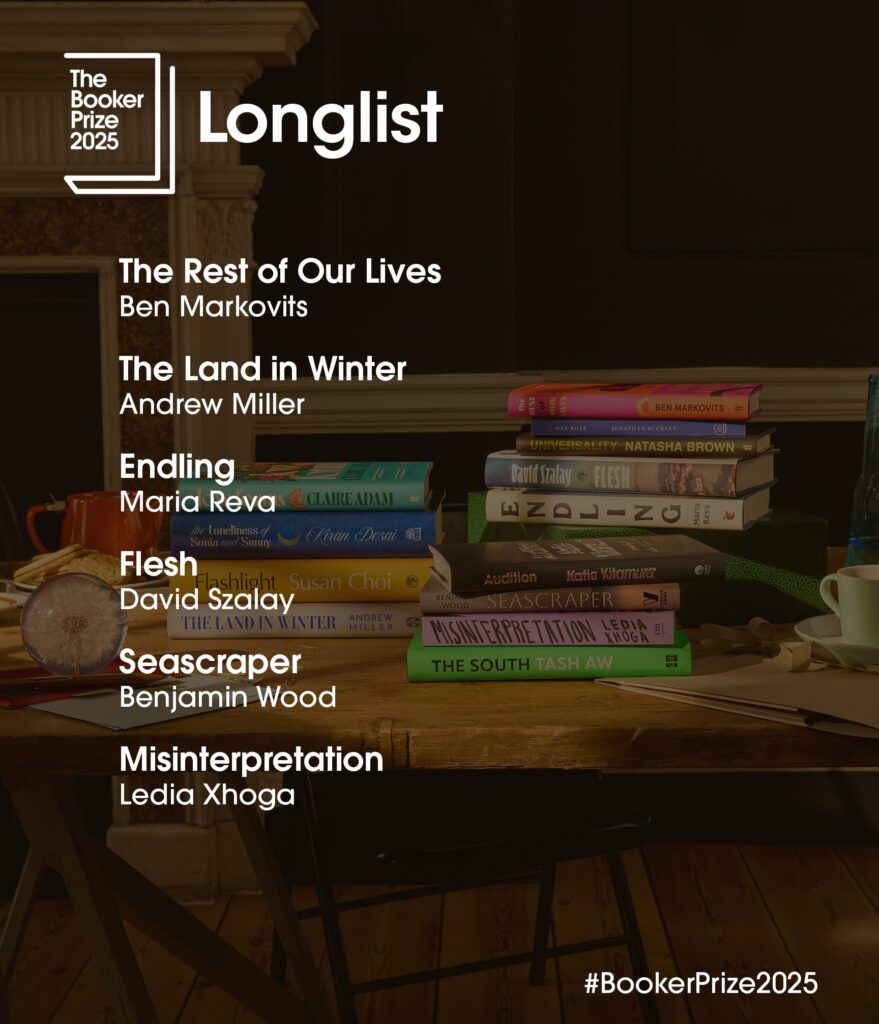
The full Booker Prize 2025 longlist, including author nationality, is:

– Love Forms (Faber) by Claire Adam (Trinidadian)

– The South (4th Estate) by Tash Aw (Malaysian)

– Universality (Faber) by Natasha Brown (British)

– One Boat (Fitzcarraldo Editions) by Jonathan Buckley (British)

– Flashlight (Jonathan Cape) by Susan Choi (American)

– The Loneliness of Sonia and Sunny (Hamish Hamilton) by Kiran Desai (Indian)

– Audition (Fern Press) by Katie Kitamura (American)

– The Rest of Our Lives (Faber) by Ben Markovits (American)

– The Land in Winter (Sceptre) by Andrew Miller (British)

– Endling (Virago) by Maria Reva (Canadian-Ukrainian)

– Flesh (Jonathan Cape) by David Szalay (Hungarian-British)

– Seascraper (Viking) by Benjamin Wood (British)

– Misinterpretation (Daunt Books Originals) by Ledia Xhoga (Albanian-American)

Discover the full list: https://thebookerprizes.com/bp2025
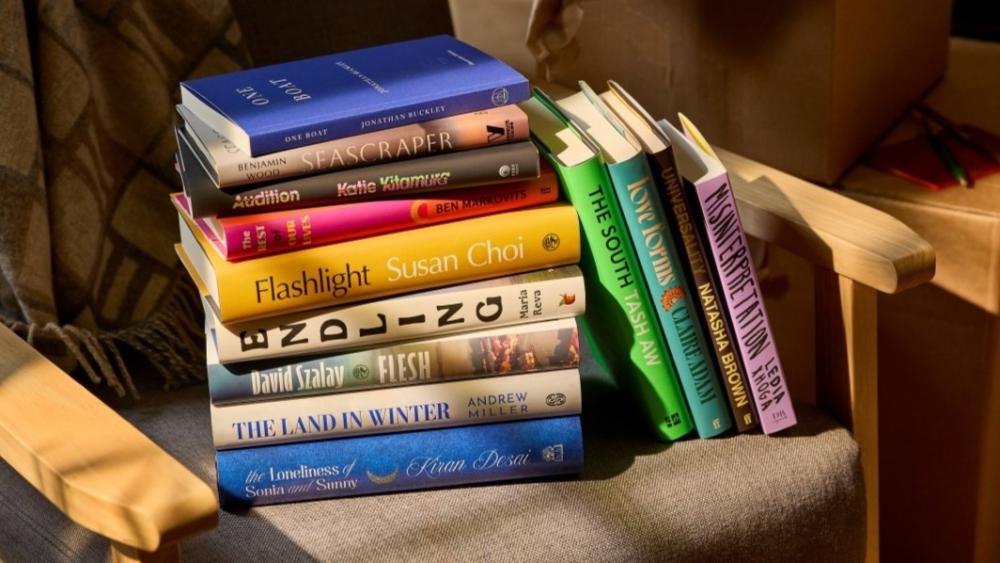
The longlist has been selected by the 2025 judging panel, chaired by critically acclaimed writer and 1993 Booker Prize winner Roddy Doyle

Doyle, who is the first Booker Prize winner to chair the panel, is joined by Booker Prize-longlisted novelist Ayọ̀bámi Adébáyọ̀; award-winning actor, producer and publisher Sarah Jessica Parker; writer, broadcaster and literary critic Chris Power; and New York Times bestselling and Booker Prize-longlisted author Kiley Reid

This year’s selection, which was chosen from 153 submissions, celebrates the best works of long-form fiction by writers of any nationality, written in English and published in the UK and/or Ireland between 1 October 2024 and 30 September 2025.

For the first time, the shortlist of six books will be announced at a public event, to be held at Southbank Centre’s Royal Festival Hall in London on Tuesday, 23 September 2025. The six shortlisted authors will each receive £2,500 and a specially bound edition of their book. The announcement of the winning book  will take place on Monday, 10 November 2025 at a ceremony at Old Billingsgate in London. The announcement will be livestreamed on the Booker Prizes’ channels. The winner receives £50,000.

The ‘Booker Dozen’ features five British authors, while also encapsulating a vast range of global experiences. The 13 novels transport readers to a farm in southern Malaysia, a Hungarian housing estate and a small coastal town in Greece. They shine a light on the lives of Koreans in postcolonial Japan, a homesick Indian in snowy Vermont, a Kosovar torture survivor living in New York, a shrimp fisherman in the north of England, a mother’s search for a child given up for adoption in Venezuela and even endangered snails in contemporary Ukraine. They reimagine the great American road trip as a slow-burning mid-life crisis and take us into the heart of the UK’s coldest winter. 

The judges’ selection features: 

  • Authors representing nine nationalities across four continents, with UK authors securing the highest number of nominations  
  • Kiran Desai, who is nominated 19 years after her previous book won the Booker Prize 
  • Tash Aw, longlisted for a third time, who could become the first Malaysian winner 
  • Past shortlistees Andrew Miller and David Szalay  
  • Two debut novelists among nine authors who appear on the Booker Prize longlist for the first time 
  • The first novel from an opera librettist and the 12th from a former professional basketball player 
  • A book that first garnered acclaim as a short story, and one that is the first in a proposed quartet 
  • Three titles from independent publisher Faber and a first Booker longlisting for Fitzcarraldo Editions, to add to its 16 International Booker Prize nominations  
  • Novels that are ‘alive with great characters and narrative surprises’ which ‘examine the past and poke at our shaky present’, according to Roddy Doyle, Chair of the 2025 judges  

This is a fabulous longlist with so much to discover. I am truly delighted at the coincidence that last week I had interviewed Andrew Miller on his fabulous book The Land in Winter for TOI Bookmark.

29 July 2025

Elizabeth Strout “Anything is Possible”

It seemed the older he grew–and he had grown old—the more he understood that he would not understand this confusing contest between good and evil, and that maybe people were not meant to understand things here on earth.

… 

She came to understand that people had to decide, really, how they were going to live. 

Elizabeth Strout’s Anything is Possible is an exquisitely written novel about rural, dusty Amgash, Illinois. It is about the people of the town Lucy Barton had left behind when she moved to New York to become a successful writer. Lucy is the heroine of Strout’s equally well-told novel My Name is Lucy Barton. In Amgash as like any other settlement, irrespective of whether it is a small town or a big city, there is great diversity across the socio-economic spectrum. There are people like Lucy’s siblings all of whom grew up in abject poverty and somehow managed a decent life as grownups. Since rarely do these people move out of Amgash, the past just as the present of the townspeople is an open book. It is claustrophobic and debilitating as it does not allow individuals to grow. The shadow of the past always looms large. This is precisely the reason why Lucy Barton fled. Despite this people continue to live in Amgash making adjustments to their lifestyles with growing old age and some are even successful in their social mobility.

This was a matter of different cultures, Dottie knew that, although she felt it had taken her many years to learn this. She thought that this matter of different cultures was a fact that got lost in the country these days. And culture included class, which of course nobody ever talked about in this country, because it wasn’t polite, but Dottie also thought people didn’t talk about class because they didn’t really understand what it was.

In Anything is Possible Lucy Barton is on a book tour in Chicago and decides to return to Amgash after seventeen years to meet her siblings. Unfortunately the flood of unpleasant childhood memories hits her as soon as she enters her parents cottage. She has a panic attack and decides to return immediately to Chicago. In the interim she has had smattering of conversations with her siblings who have updated her on the lives of people they knew as kids. None of the people have had a predictable lifestyle and it is certainly stranger than the fiction Lucy Barton possibly writes. For instance her distant cousin Abel who along with his sister Dottie would sometimes be found scavenging for scraps of food in a dumpster went on to become one of the richest men in Chicago. This story was the least sad of all that are shared. On the surface of it Amgash inhabitants were living the typical homely small-town-American lives you would expect them to have except there was a murkier underbelly to this. But as Abel Blaine realises it is possible to live the American Dream and improve on one’s status just as Lucy and he did—-“Anything was possible for anyone”.

Elizabeth Strout is known for deftly creating these fictional landscapes that are as finely detailed as a miniature painting. The characters, their personality traits, their lives and the umpteen cultural references are so well packed in the sparingly told narratives that they continue to be with one for a long time after the book is closed. She conjures up the scenes so minutely and exactly that it is crystal clear in mind’s eye. It is not surprising that Elizabeth Strout’s Anything is Possible was on President Obama’s list of favourite books of 2017. Anything is Possible is on the Rathbones Folio Prize shortlist 2018.

Two legendary women writers have endorsed these books and truer words were never said:

Hilary Mantel on My Name is Lucy Barton: “Writing of this quality comes from a commitment to listening, from a perfect attunement to the human condition, from an attention to reality so exact that it goes beyond a skill and becomes a virtue.’

Ann Patchett on Anything is Possible: “Strout proves to us again and again that where she’s concerned, anything is possible. This book, this writer, are magnificent.”

Elizabeth Strout Anything is Possible Viking, an imprint of Penguin Random House, London, 2017. Hb. pp. 260 Rs 599

Elizabeth Strout My Name is Lucy Barton Viking, an imprint of Penguin Random House, London, 2016. Hb. pp. 200 Rs 699

28 March 2018 


Ruskin Bond

Last year I spotted Ruskin Bond at a literary festival but it was impossible to see him clearly. It was also the first time I saw an author in India encircled by large security men, more like bouncers seen outside clubs. They not only towered over Ruskin Bond but were very well built and were an extraordinary sight to behold. A testimony too the fan following Ruskin Bond has in India. He needed protection from his fans. Children flocked to him in droves. Parents prostrated themselves in front of the literary festival oragnisers to allow their children into the hall even though it was filled to capacity. Astounding indeed when you realise that Ruskin Bond prefers his solitude, tucked away up in his beloved hill town of Mussorie.

On 19 May 2017, Ruskin Bond turns 83. To celebrate it his publishers have scheduled a bunch of publications. Puffin India has released Looking for the Rainbow — a memoir he has written for young readers describing the time he spent with his father in Delhi. It was during the second world war. His father was with the Royal Air Force ( RAF), stationed at Delhi. Ruskin Bond’s parents were divorced and his mother was about to get married for the second time. His father decided Ruskin Bond could stay with him for a year in Delhi where he had some rooms rented — at first off Humayun Road and then later nearer to Connaught Place. Ruskin Bond remembers this time spent in Delhi fondly even later when he was sent off to boarding school in Simla. In fact decades later he recalls with a hint of sadness that Mr Priestly, his teacher, did not approve of young Ruskin poring over his dad’s letters so suggested he keep them away for safekeeping. At end of term when Ruskin Bond went to ask for his letters his teacher was clueless. Now in his eighties forgiving and generous as is his want Ruskin Bond remarks that Mr Priestly probably “meant well” but all that remains of that pile of letters is the one that the young boy spirited away — and still retains all these years later. Looking for Rainbow is a beautiful edition made richer by Mihir Joglekar’s illustrations.

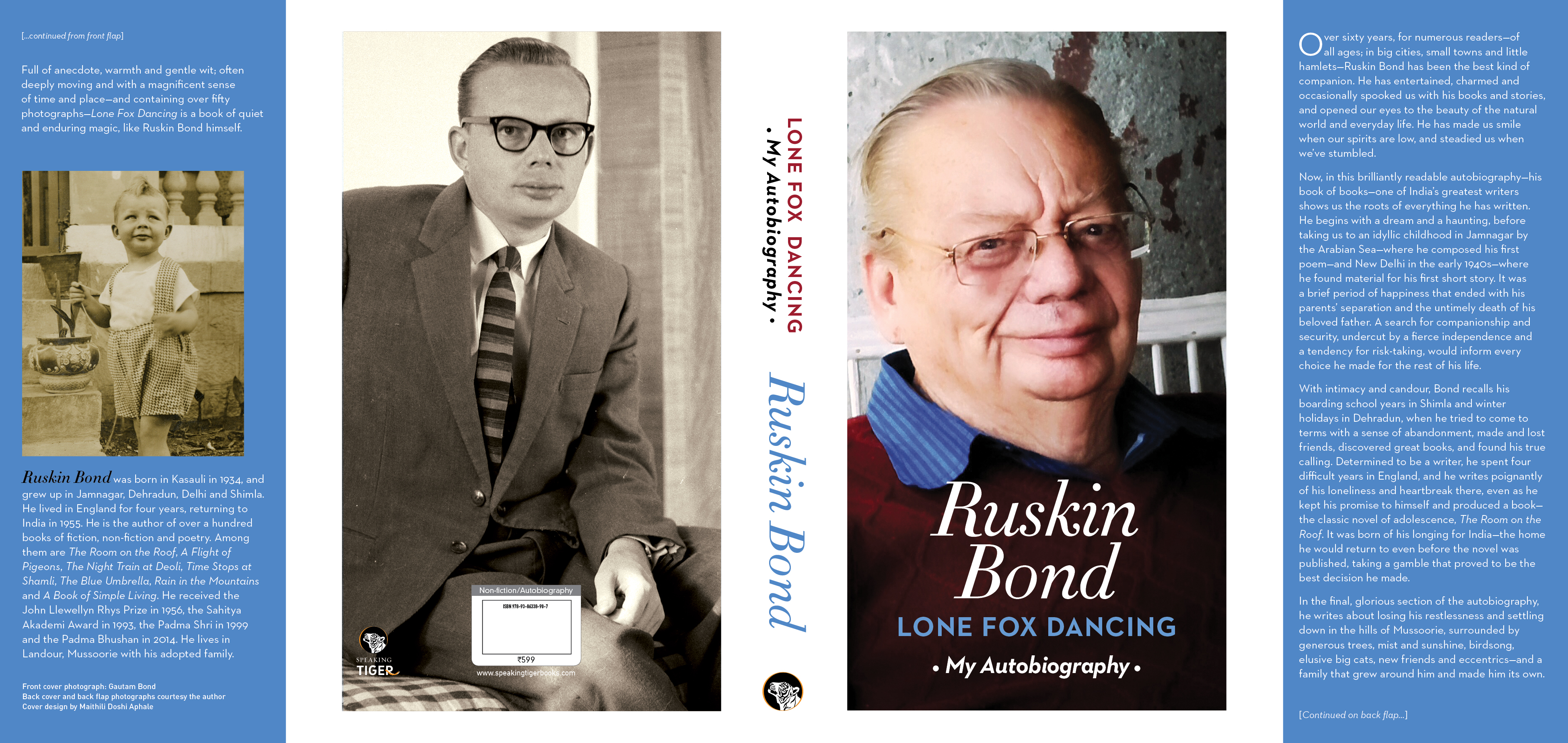
Looking for Rainbow serves as a wonderful introduction and is probably the slim pickings of the larger project memoir Ruskin Bond will eventually publish with Speaking Tiger Books. It is as his publisher, Ravi Singh, told me the longest book Ruskin Bond has ever written — nearly a 100,000 words. It is “hugely readable. Moving, too, in parts.” Lone Fox Dancing is scheduled for June 2017. Earlier this year Scholastic India released a biography of his written by Shamim Padamsee in their Great Lives series.


His long-standing publisher, Rupa, with whom Ruskin Bond has a special relationship for decades now has also brought out two volumes of his works. The Wise Parrot is a collection of folktales retold by Ruskin Bond. He says in the introduction:

I may be no Scherazade, and that is a relief, for it would be rather difficult for me to think of stories knowing my head may be chopped off the next day, yet I have found some ancient legends that are as enthralling as hers and presented them here. There are creatures who have lived in our collective imaginations for ages. There are stories of wit and stories of immense stupidity. And in all this, what shines forth is the power of human imagination that has thrived for millions of years. From the first cave paintings, to today’s novels, the thrill of telling a story has never died down. And here’s wishing that it may live long, bringing people, animals, fairies and ghosts to life forever. 

The Elephant and the Cassowary is an anthology of his favourite stories about wild animals and birds and the jungle. The title story is a perennial favourite and is utterly delightful. A master storyteller and a voracious reader like Ruskin Bond when become a brand name like no other have the luxury of also being tastemakers. As well-known prolific scifi writer and anthologist Isaac Asimov says in his splendid memoir I.Asimov : [An anthology] performs the same function as a collection does, bringing to the reader stories he may be glad to have a chance to read again or stories he may have missed altogether. New readers are able to read the more notable stories of the past.” Another anthology that Ruskin Bond has put together and is being released this week  by Viking, an imprint of Penguin, is Confessions of a Book Lover. Both these anthologies between them contain previously published works by writers such as Rudyard Kipling, F.W. Champion, Henry Astebury Leveson, Joseph Conrad, Laurence Sterne, H.G. Wells, William Saroyan, Stacy Aumonier, and J.B. Priestley. Anthologies are a splendid way to discover new material even though some people think otherwise. Ruskin Bond has it right with these two eclectic anthologies. They jump centuries but the underlying principle of a good story is what matters. It is no wonder then to discover the delightful publishing connection between legendary publisher Diana Athill and Ruskin Bond. She gave him his first break as a writer while still at Andre Deutsch. She certainly knew how to spot talent!

Happy birthday, Mr Bond!

17 May 2017 


Dharamvir Bharti, ” Chander & Sudha”, translated by Poonam Saxena

Poonam Saxena reading "Chander & Sudha".

Poonam Saxena reading “Chander & Sudha”.

When he could school his mind to stay calm, when he could endure everything with a smile, why couldn’t Sudha? He was the one who, with his every breath, had fashioned Sudha into what she was. He had, bit by bit, constructed her, polished her, embellished her. She was his work, his creation. How, then, could she exhibit his weakness? ( p.143)

The house shone like silk. But within every ball of bright, colourful silk there is always a little silkworm–sad, silent, holding its breath, waiting every second for its imminent death. In the middle of all the hectic activity, the preparations, the excitement, there was one person whose lifebreath seemed to be ebbing away, whose eyes were slowly losing their sheen and mischievous sparkle, whose heart was emptying itself of all joy and happiness — Sudha. ( p.161)

Dharamvir Bharti’s popular novel Gunahon ka Devta or Chander & Sudha has been translated into English by prominent journalist Poonam Saxena. It is a story set in Allahabad, Uttar Pradesh in the 1940s.  Sudha is the daughter of Dr Shukla and Chander is his student. Chander spends a lot of time at his teacher’s home, practically lives in it and moves in after Sudha gets married and leaves.  Chander & Sudha is a “love story” more than a romance, told ever so lovingly by the 23-year-old Dharamvir Bharti. The gentleness with which it is recounted is absorbing to read, never dull; all though the storytelling and the ending is reminiscent of Bollywood films of the 1950s. Nor does the language sound stilted even though Chander is prone to intense self-reflection and being privy to a lovestruck Romeo can get quite painful to read if not written about deftly–probably a large part of the credit for a readable story goes to the translator, Poonam Saxena.

Chander & Sudha is a novel which will probably make it to the longlist, even the shortlist, for any award instituted for translated literature in India. It is a book that tends to occupy one’s mind for a long time after it is over. Time well spent.

I am posting excerpts of an email interview conducted with Poonam Saxena earlier this week.

1 What are the sales figures of this novel in Hindi? You say it is still in print and selling well. Who is the publisher?

I don’t have any exact sales figures for the novel but I do know that it was written in 1949 and has never been out of print. I have two copies with me. One is a 20th reprint 1986 hardcover that was first published by Bharatiya Jnanpith in 1959. (I don’t know who the earlier publisher was). Then I have a paperback copy also printed by Bharatiya Jnanpith in 2014 which is the 70th reprint. Hardcover + paperback from 1949 to today — I don’t even know how many copies it must have sold, but the numbers must be huge. I do know it is widely considered to be Hindi’s biggest bestseller.

2 Was the author only 23-years-old when he wrote it? Does it not make him similar to the young authors we have today, who commercially success — Ravinder Singh, Durjoy Dutta etc?

In Hindi and Urdu writing, many authors did finish very successful works when they were very young. For example, Rajendra Yadav wrote Sara Akash at 21, Sahir Ludhianvi wrote Talkhiyan at 22.

3 What was the purpose of your translations when you began it — be true to the source text or reader friendly to a modern reader?

My translation is not literal. It is not true to the text in the sense that I haven’t translated every single line as it is written in Hindi. The idea was to be true to the characters, emotions and feelings in the book and to make it work as a novel in English. I didn’t want it to sound stilted. I kept some things in mind — for example, the book is written in 1949, so I tried to avoid casual, modern words and terms like ‘stressed’ or ‘hassled.’ (I also felt that people hardly write great love stories any more — but here was one which still touched your heart even though it was written so many years ago. It needed to be translated.

I didn’t skip over passages, I didn’t omit chunks. I retained what the writer had said – the metaphors he had used (for example, the temple, the oil lamp – these are the images he has used throughout the book when writing about Chander and Sudha’s love). There are long passages of reflection, philosophy, all of which I have retained. I have tried to keep them as true to the book but at the same time I have tried to make them work in English. Also, just to give you another small example, there is a long passage early in the book when Chander is wandering about in Beritie’s rose garden, where there is a detailed description of flowers. I could have cut that passage but I didn’t. I kept it. On the whole I tried to be true to the writer’s voice and way of expression while making it fluid when translated into English.

4 Why did you change the title of the novel from Gunahon Ka Devta to Chander and Sudha? What would you have translated Gunahon ka Devta as? Isn’t the title in Hindi far more apt than the one chosen by you for the English translation?

The Hindi title is absolutely beautiful. Gunahon Ka Devta is an incomparable title. But when you translate it in a literal way, it becomes ‘Lord of Sins’ or ‘God of Sins’, which doesn’t sound right at all. My editor and I went through about 20 titles and somehow none sounded okay. We finally settled on Chander & Sudha because really the book is also a great love story. I guess there was some inspiration from titles like Romeo & Juliet which are based on the two lead characters’ names.

5 How old were you when you first read this novel and fell in love with it?

I first read the novel in my twenties and fell in love with it.

6 The article you wrote in Scroll ( 15 March 2015,  http://scroll.in/article/713676/why-a-66-year-old-hindi-love-story-needed-to-be-translated-into-english ) was adapted from the afterword published in the book, was it not?

Yes it was. They wanted the piece quickly, literally overnight. They were okay with an extract from the Afterword too, but I adapted it and sent it. The Afterword as it is gives out the whole story, so obviously I didn’t want that.

Dharamvir Bharti Chander & Sudha ( Translated by Poonam Saxena) Viking, Penguin Group, Gurgaon, India, 2015. Hb. pp. 330. Rs. 499

21 March 2015

Parvati Sharma, “Close to Home”

Close-to-Home-front-CoverOver time, as she began to frequent queer groups and become embroiled in queer debates, she was forced to admit that such daydreams were bourgeois, the notion of romantic love was inherently heterosexist and the aspiration to family wasn’t just politically regressive but also rather embarrassingly old-fashioned. Besides if gay people aspired to the lives of straight people then, quite logically, gay people would soon be compelled to proscribe themselves.  (p.18)

Parvati Sharma’s second book, Close to Home, co-published by Zubaan and Penguin Books, is about Mrinalini Singh and the three people in her orbit –her husband Siddhartha, her old roommate Jahanara and her upstairs tenant Brajeshwar Jha. Both Mrinalini and Brajeshwar are aspiring authors, their struggle to search for stories and hoping it is published. This is a tale about the classic tussle between old friends/husband over a friend/wife and the expectations of a woman in modern Indian society. Does she conform and run her household in a clockwork manner or does she assert herself for her independent growth and fulfillment? Will it rock the boat? It is a novel that is mostly driven by dialogue, but it is observed well and sharply etched by Parvati Sharma in crisp prose—whether you agree with the arguments encased or not.

Parvati Sharma Close to Home Zubaan with Viking/Penguin, New Delhi, 2014. Hb. pp 208. Rs. 399 

The Testament of Mary, Colm Toibin

The Testament of Mary, Colm Toibin

The Testament of Mary, Colm ToibinAt a little over a 100 pages The Testament of Mary is the slimmest novel on the ManBooker Prize shortlist. In this novella Mary, mother of Jesus Christ, narrates in first person the events leading up to the crucifixion of her son. She recounts the story in her old age to two people, whom she refers to as “Guardians”, but were probably those who were recording the events marking the life of Jesus. These testaments were to be later compiled into a text. All though in the Bible the only four gospels are by men – Matthew, Mark, Luke and John. No women.

The Testament of Mary is a novel that has been adapted from the play of the same name, written by Colm Toibin. It was nominated for a Tony Award Best Play,  Best Actress, Best Sound Design of a Play, and Best Lighting Design of a Play. Even two thousand years or so after the Bible was created and nearly seventy years after the Gnostic gospels were discovered ( in which there was a script by Mary Magdalene ) it is rare to find a woman’s testimony on the events surrounding Jesus Christ. ( Recently there have been attempts to create a feminist Bible as by the German evangelicals and the new version of the Bible being translated by the NIV Committee on Bible translation is gender sensitive too. ) So Colm Toibin’s attempt at writing this testimony is significant within theological traditions and literary fiction. To create a woman character who speaks at length, it is like a monologue, but remains an observer. The story works dramatically and it is not necessary to be familiar with the events in the Bible to understand or even appreciate this novella. Yet I was left wondering at when Mary witnesses the crucifixion of her son on the cross, she continues to recount the events in the first person, whereas if a woman ever tries to record a traumatic incident in her life, she is only able to do so in the third person. It is a dramatic shift that occurs. So it is curious that Colm Toibin retained the first person narrative even for this section–maybe it worked well on stage? ( Passages on p.76-77.)

Recently it was announced that  actor Meryl Streep would be doing the audio version — http://shelf-life.ew.com/2013/09/10/meryl-streep-testament-of-mary-audio-clip/ .This is a good example of literary fiction. It will be read and it will be discussed over time. But whether it wins the ManBookers Prize on 15 Oct 2013 remains to be seen.

Colm Toibin The Testament of Mary Viking, Penguin Books, London, 2012. Pb. pp. 108 Rs. 299

9 Oct 2013 

Chitra Banerjee Divakurni “Oleander Girl”

Chitra Banerjee Divakurni “Oleander Girl”


Chitra Bannerjee Divakurni

Chitra Bannerjee Divakurni

Oleander Girl. Chitra Banerjee Divakurni’s latest novel. It is about Korbi, who was orphaned at birth and is brought up by her maternal grandparents in Calcutta. She is a bhodra Bengali, while studying in college meets Rajat, a rich young man. (His parents own a very well known art gallery in the city and in New York.) They are engaged and to be married soon. It all seems to be moving correctly when Korobi’s life is suddenly thrown out of gear. She chooses to investigate her past since she would like to begin her married life knowing the truth. It involves her travelling to America soon after her engagement. A move that does not go down very well with her immediate family but she is determined. Korobi or Oleander (as she is named after the flower) is true to her name– “beautiful but also tough. Also knows how to protect herself from predators.”

Oleander Girl is a very readable novel. At the superficial level it is a love story with its moments of heartache. It is gently and charmingly told by Chitra Banerjee Divakurni. It is set against the backdrop of the Godhra riots and the events of 9/11. Frighteningly these events have an immediate impact on even bhodra families like that of Korobi. These unpleasant events also unmask the prejudices that exist in individuals too. It is an intricate web woven by the author and done without making it seem complicated.

A characteristic trait of all of Chitra Banerjee Divakurni’s novels are the number of women characters she has. The protagonist is always a woman but she is surrounded by women of all shades. Incredibly the author manages to make every girl and woman in the book a strong personality. They are memorable. In Oleander Girl, there is the grandmother Sarojini, Rajat’s mother, his younger sister Pia and Seema Mitra in NYC. Also not forgetting the late Anu Roy, Korobi’s mother. To put it blandly these are women who struggle, make their choices and survive the consequences. But the joy in reading the novel lies in understanding these women better. I am not surprised that Chitra Banerjee Divakurni writes the way she does. Some years ago when I met her she told me of her involvement with Maitri. http://www.friendsofbooks.com/blog/evening-with-chitra-banerjee-divakaruni )

In 1991, Chitra co-founded Maitri (http://www.maitri.org/ ). It is an NGO based in the San Francisco Bay area that helps battered women of South Asian origin. I asked Chitra if her experience at Maitri had in any way influenced her storytelling and the choice of prose. It seems that Chitra first began writing and publishing poetry, but after four years of working at Maitri, she published her first collection of short stories, Arranged Marriage. In fact, one of the stories in it is based on a true incident and so are some of the sketches in the later books. She also realized that writing prose was a far easier medium to communicate and tells stories than poetry. Yet, the rhythm, discipline and diction of poetry did and continues to influence her prose.

Oleander Girl is a must read. Junot Diaz calls Chitra Banerjee Divakurni “A brilliant storyteller”, which she is.

Chitra Banerjee Divakurni Oleander Girl Viking, Penguin Books India, New Delhi, 2013. Hb. pp. 290 Rs. 499


Taiye Selasi, “Ghana Must Go”

Taiye Selasi, “Ghana Must Go”

Ghana Must Go

Kweku dies barefoot on a Sunday before sunrise, his slippers by the doorway to the bedroom like dogs. At the moment he is on the threshold between sunroom and garden considering whether to go back to get them. He won’t. His second wife Ama is asleep in that bedroom, her lips parted loosely, her brow lightly furrowed, her cheek hotly seeking some cool patch of pillow, and he doesn’t want to wake her.
Ghana Must Go

There is a moment in reading, when you need to put down the book and take a deep sigh and say, “Wow”. This is new. Not necessarily the plot, but the style, the ease with which the writer flits through countries, social and economic milieus, without sounding trite. Plus the style of writing is so refreshing. There are no apologies made about references from other cultures and languages. They are used as lightly and easily as if they are going to be understood by a new generation of readers — the Facebook generation. A bunch of youngsters who are very well-informed and reading voraciously. Understand different cultures and know how to navigate their way through. Ghana Must Go falls in that category.

The title is borrowed from the phrase “Ghana Must Go”, a slogan that was popular in 1983 when Ghananian were expelled from Lagos. This is a story about a family of immigrants based in America. Folasadé Savage (Fola) leaves Lagos for Pennsylvania to study law, but meets her future husband and brilliant surgeon, the Ghanaian husband, Kweku Sai. Fola abandons her professional aspirations to raise their four children. But after losing his job at the hospital under unsavoury circumstances, Kweku abandons them all and returns to Ghana. The family splinters and regroups when the news of Kweku’s death in Accra brings them all together. It is a story that has to be read, to be experienced. It is a bittersweet story that will stay with you for a while.

Taiye Selasi was born in London of Nigerian and Ghanaian parents, and raised in Massachusetts, now lives in Italy. Earlier this year she was one of the twenty recognised as Britian’s upcoming novelists. It is an award that is well-deserved. The other two pieces of writing by Taiye Selasi that I enjoyed are “Driver” in Granta: Best of Young British Novelists and her essay “Bye-Bye Barbar” ( http://thelip.robertsharp.co.uk/?p=76 ). The latter is on being a cultural hybrid or an Afropolitan. This is what she says:

the newest generation of African emigrants, coming soon or collected already at a law firm/chem lab/jazz lounge near you. You’ll know us by our funny blend of London fashion, New York jargon, African ethics, and academic successes. Some of us are ethnic mixes, e.g. Ghanaian and Canadian, Nigerian and Swiss; others merely cultural mutts: American accent, European affect, African ethos. Most of us are multilingual: in addition to English and a Romantic or two, we understand some indigenous tongue and speak a few urban vernaculars. There is at least one place on The African Continent to which we tie our sense of self: be it a nation-state (Ethiopia), a city (Ibadan), or an auntie’s kitchen. Then there’s the G8 city or two (or three) that we know like the backs of our hands, and the various institutions that know us for our famed focus. We are Afropolitans: not citizens, but Africans of the world.

It isn’t hard to trace our genealogy. Starting in the 60’s, the young, gifted and broke left Africa in pursuit of higher education and happiness abroad. A study conducted in 1999 estimated that between 1960 and 1975 around 27,000 highly skilled Africans left the Continent for the West. Between 1975 and 1984, the number shot to 40,000 and then doubled again by 1987, representing about 30% of Africa’s highly skilled manpower. Unsurprisingly, the most popular destinations for these emigrants included Canada, Britain, and the United States; but Cold War politics produced unlikely scholarship opportunities in Eastern Bloc countries like Poland, as well.”

Trust me when I say. Read Ghana Must Go. ( Possess the printed book for the fabulous cover design.)

Taiye Selasi Ghana Must Go Viking, an imprint of Penguin Books, New Delhi. 2013. Pb. pp. 320 Rs. 499

Habib Tanvir: Memoir, translated from Urdu by Mahmood Farooqui

Habib Tanvir: Memoir, translated from Urdu by Mahmood Farooqui

Habib Tanvir
He had little time for the polished spic-and-span, design-heavy theatre that was being produced in the capitals of the country. Long before Jerzy Grotowski or Peter Brook came along there was Brecht, emphasizing the primacy of the actor on the stage and Habib Tanvir’s theatre was all about his actors. They were-are, rather- amazing actors. Completely at home at Raipur or Delhi or Edinburgh. They are intensely physical and mobile on stage, athletic, even acrobatic, and tremendous singers withal. Their comic timing is not easily surpassed by any group of actors in India, yet they can transform into great tragedians within minutes. They speak Chhatisgarhi which is not always understood verbatim but they will speak it with elan, regardless of which corner of the world they find themselves in.

(Extract from p. xlvii Habib Tanvir Memoirs )

Habib Tanvir began writing his memoir when he was past eighty in 2006. Despite being fluent in English, he chose to write in Urdu. He had planned a three volume memoir called Matmaili Chadariya (Dusty Sheet), but he was unable to complete it. He died in 2009. The Memoir published dwells upon his childhood in Raipur, then Central Provinces and now Chattisgarh; his trip to England to gain training in theatre (1955) and his discovery of the Brechtian style of theatre. All though prior to his departure he had already written and directed Agra Bazaar ( 1954) where he had used the locals from Okhla in the play. He returned (after having abandoned his training) to India and established Naya Theatre, and continued to be closely linked to it for more than fifty years. Now it is managed by his daughter, Nageena. He won many awards and was even nominated to the Rajya Sabha in 1972. His plays were powerful, with a Chattisgarhi folk element, till then unheard of, became his signature. Also an influence of Brecht and his upbringing in Raipur.

The memoirs have now been translated into English by Mahmood Farooqui. He has also written a detailed and a fabulous introduction that details the theatre movement in India, documents the seminal influences on Habib Tanvir and his plays, the politics and of course the Chattisgarhi kind of performance. The essay that Mahmood Farooqui writes is formidable in the amount of knowledge and information it packs in about the different forms of theatre, singing, folk theatre etc. Given how dense the essay is with information, it does not seem so to be so since he wears his knowledge lightly. (Thank heavens for scholars like him!) I suspect that being one of the key performers of Dastangoi has helped polish and refine the skills that he learnt as a historian. There is something that seeps through the text of being a performer and a practitioner at the same time. Love it!

I find reading memoirs a revelatory exercise. Not necessarily about the life being unveiled or the people the author met, but its always an insight into what the person chooses to reveal. Habib Tanvir does not write about theatre / IPTA as much as you would have wanted/expected him to. His freewheeling and surprisingly chronological account of his life is charming. ( A trait not necessarily associated with women memoirists, who tend to meander.) With such ease he pulls you into his life, introduce a multitude of characters without making your head spin. Given that he began writing these memoirs at the age of 81+, it is surprising at the amount of detail he has retained. He is a good storyteller with a phenomenal memory. I have been discussing this book with my friend and noted theatre actor Sudhanva Deshpande. ( He knew Habib Tanvir well and made a short documentary on him too.) Sudhanva prefers to call the memoir a “confession”. Whereas I have been reveling in the marvelous storytelling and evoking a time in Indian history that has disappeared forever. Reading the memoirs also resounded on a personal note for me. Suddenly my mother-in-law’s penchant for breaking into song and dance, singing folk songs and rattling off in Chattisgarhi made so much sense. It was obviously part of the social fabric. She too grew up in Raipur in the 1930s and 40s. A period that is dwelt upon in detail in the book.

This is book that I would heartily recommend. Read it for the period in Indian history that is not always told in history books. Read it for the experience of reading a memoir of a noted performer. Even the act of writing this memoir, is a performance. (He makes the “characters” come alive by recalling tiny details about dress, their deportment, emotions etc.) Read it for the translation. A work of art, this is.
Habib Tanvir, IHC, 28 May 2013
Habib Tanvir – Memoirs will be released in New Delhi on May 28. At the launch (which is by invitation), Tanvir’s daughter is expected to sing some of the songs that lent her father’s theatre – Naya Theatre. It is to be followed the day after by a performance (open for all) at May Day Cafe.

Jan Natya Manch

Some links about Habib Tanvir:

A film on YouTube Gaon Ke Naon Theatre Mor Naon Habib (English) by Sanjay Maharishi / Sudhanva Deshpande. India
http://www.youtube.com/watch?v=d4mmm846o24

Sudhanva Deshpande’s obituary for Habib Tanvir ( 3 July 2009) http://www.hindu.com/fline/fl2613/stories/20090703261310900.htm . I am also looking forward to reading his forthcoming review of the book in Caravan.

Habib Tanvir: Memoirs Translated from the Urdu with an introduction by Mahmood Farooqui. Penguin/ Viking New Delhi, 2013. Hb. pp.348 Rs. 599

Khushwant Singh. Two books. Two publishing houses – Penguin and Aleph

Khushwant Singh. Two books. Two publishing houses – Penguin and Aleph


Khushwant Singh. Two books published in quick succession by two publishing houses. Both books have been written when, “according to traditional Hindu belief, in the fourth and final stage of life, sanyaas. …At ninety-eight, I count myself lucky that I still enjoy my single malt whiskey at seven every evening. I relish tasty food, and look forward to hearing the latest gossip and scandal. I tell people who drop in to see me, ‘If you have nothing nice to say about anyone, come and sit beside me.’ I retain my curiosity about the world around me; I enjoy the company of beautiful women; I take joy in poetry and literature, and in watching nature… I have slowed down considerably in the past year. I tire more easily, and have grown quite deaf. These days I often remove my hearing aid…and I find myself relishing the silence that deafness brings. As I sit enveloped in silence, I often look on my life, thinking about what has enriched it…My life has had its ups and downs, but I’ve lived it fully, and I think I have learnt its lessons.”

Khushwantnama is a collection of reflections. Honest, Straightforward. Crisp. Acerbic. Tongue-in-cheek. Ruthless. The essays range from being a “Dilliwala”, the importance of Gandhi, what religion means to Khushwant Singh ( ” It is not God who created us, but we who created God. I am an agnostic. However, one does not have to believe in God to concede that prayer has power.”), on writing, on watching nature, on poetry especially Urdu poetry and Ghalib. The essays I have read over and over again have to be on the business of writing, what it takes to be a writer and dealing with death.

In his reflections upon writing and dealing with publishers, Khushwant Singh does not mince any words. Having written many books, his experience was that he never had any trouble finding a good publisher. But now “the whole business resembles a whorehouse. Publishers can be compared to brothel keepers; literary agents to bharooahs (pimps) who find eligible girls and fix rates of payment; writers can be likened to women in the profession. Newcomers are naya maal ( virgins) who draw the biggest fees for being deflowered. Advance royalties being these days run up to Rs 50 lakh, sometimes even before a word of the projected work has been written. Advances offered to authors in India are often higher than those offered in America or England or in any other European country. But they are offered only for works in English, not for works in our regional languages.”

And his advice on what it takes to be a writer. “Along with hard work, read whatever you can– whether it’s the classics or fairy tales or even nonsense verse. Reading will make you capable of distinguishing between bad and good writing. There is no substitute for reading. This is also the only thing that expands your vocabulary.”

This has to be read along with The Freethinker’s Prayer Book a collection of quotes that he gathered from his reading and many visitors. He maintained many notebooks. The best of these have been published in this beautiful volume. Quite literally from the cover onwards with its Sanjhi artwork of the tree of life to the text within. It is a book that you will want to dip in often.

In Swahili there is a saying that when a person dies it is equivalent to the loss of a library. These books exemplify that it certainly holds true for Khushwant Singh. I have enjoyed reading these books and keep them on my writing desk. Buy these books as companion volumes.

Khushwant Singh Khushwantnama: The Lessons of my Life Viking, Penguin, New Delhi, 2013. Hb. pp. 190 Rs. 399

Khushwant Singh The Freethinker’s Prayer Book and some words to live by Aleph, New Delhi, 2013. Hb. pp. 190. Rs. 495

Web Analytics Made Easy -
StatCounter