Interview with Siddhartha Sarma: “I have found no greater joy in life than in the process of writing a story”

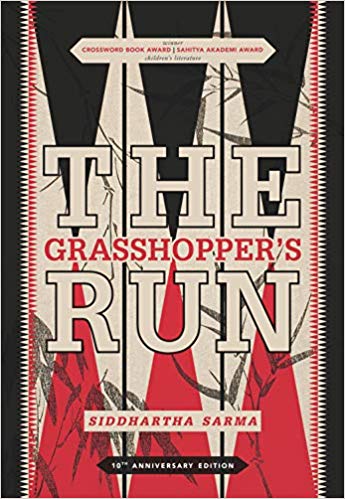
Siddhartha Sarma is a journalist, writer and historian. He has covered insurgency, crime and law in the Northeast and other parts of the country and written for newspapers and magazines as an investigative journalist. His debut novel, The Grasshopper’s Run (Scholastic India, 2009), received the Sahitya Akademi Award for children’s literature in English in 2011 and the Crossword Book Award in 2010. His second novel, Year of the Weeds (Duckbill, 2018) is based on the land rights agitation in the Niyamgiri Hills of Odisha. His latest published work, Carpenters and Kings (Penguin Random House India, 2019) is a history of Western Christianity in India.
- Why and how did you get into writing? Where do you find your stories? How long does it take from inception to completion?
A.: When I was seven, my school was bringing out a commemorative magazine to celebrate an anniversary. I was told anybody could contribute anything they liked for it, so I wrote an approximately 400-word story based on real events. A bit of a tragedy. They printed the story with no edits on the first page, with my name on it. But what I remember now and in the intervening years is not the feeling of seeing my name in print, or of reading my story in printed form, but the joy of writing it, the process of slowly putting things together in my head and of banging it out, over several hours, on my father’s old typewriter, literally sitting on his desk because I was too short to type from the chair. The fear of making a typo (which is such a frustrating experience on a typewriter, unlike on a computer where a typing error is merely an inconvenience). I have found no greater joy in life than in the process of writing a story, of entering or discovering a world, and of narrating it for myself and for any reader I might find. That is how I began writing, and what I still try to do.
I began my career in journalism as a reporter. It is a much-repeated saying in the newsroom that a good reporter never runs out of story ideas. I have never had a problem thinking up story ideas. The problem is deciding which are worth taking up. One does not have this luxury of choice as a reporter, but a writer has to be very selective about which idea she will devote her time and energies to. If my time as a journalist has helped me as a writer in any manner, it is in two: I can be objective in deciding which stories to write and which to shelve, temporarily or permanently. And second: I can be objective in editing my own work. One of the criteria I have for deciding on a story is whether I have the competence to write it. There are many genres that I have a bit of an interest in, but I know I might not be able to execute a story in them very well. Such as fantasy or science fiction.
The complete arc from story idea to research to writing and editing and the final draft depends on the length of the work, its complexity, scope of research and treatment. My first novel, The Grasshopper’s Run, took me a year and half to research and seven months to write. My newest non-fiction book, Carpenters and Kings: Western Christianity and the Idea of India took up nine years of research and eight months of writing. So it varies. But I do seem to spend more time thinking about a story than in actually writing it.
2. Is it only the long form of a novel that appeals to you? Would you ever consider other structures such as short stories or a series arc?
A.: My first work published in a book was a short story, in a humour anthology by Scholastic. Some other commissioned short stories have also been published. But, yes, I find the novel’s longer form more suitable for the kind of stories I have to tell. I have not yet thought of a series of books, although I can’t rule it out in the future. A standalone novel, however, suits the way I want to tell a story for one major reason. While working on a story, I spend a lot of time building the narrative arcs of individual characters. I go back in time, and also forward, into their futures. I create their backgrounds and populate it with other characters and circumstances. Most of these never get written in the final novel, but they do exist. So for me writing a novel is like baking a whole cake and cutting out just a slice of it for publishing. Or creating a tapestry and (again) cutting a slice of it. A short story might give me a much smaller, possibly unsatisfactory slice, while a series might need tough decisions about how many slices to make, or from which part of the cake or tapestry. So far, novels have worked for me.
3. How much research do you delve into before you begin writing a book? How do you organise your notes? What is your writing routine?
A.: Researching for a book is among the most interesting parts of the writing process for me. Over time, I think I have become a bit more organized in my methodology. The Grasshopper’s Run caused me a lot of anxiety during the research process because I was not accounting for the volume of material I would end up having. For instance, I asked my sources for visual material to base my description of events and topography on, from the China-Burma-India theatre of World War II. I asked for un-curated photographs. I received some 1,800 photos, and most were directly relevant to my research. I had to sift through about 6,000 pages of correspondence and records from that theatre. For Carpenters and Kings, I examined 46 medieval and ancient manuscripts and translated seven of them from Latin because the previous translations were themselves dated. So gathering material is not a problem, particularly in these times. The more difficult part is knowing when to stop researching, or learning to leave out the peripheral or marginally relevant. Otherwise every book becomes a doctoral thesis.
I begin with a basic idea about the plot, in case of non-fiction the general outline of my argument. The notes I take from my research are based on their direct relation to this bare plot or argument. The most directly connected bits of evidence or material gets the highest weightage. Additionally, for fiction, any bit of non-fictional material which can help flesh out a character’s story arc or background (that part of the background which will get written rather than get left on the cutting room floor) also gets priority.
I have no particular routine. My best time is late in the night, but the slow cooking that happens before the physical act of writing can happen at any other time during the day.
4. How did you decide to write historical fiction set in Nagaland during the Japanese invasion in WWII? And why write it for young adults?
A.: I wanted to base my first novel in the Northeast, as a mark of respect for my homeland. I thought a coming-of-age story during a conflict might work, because I had been asked to write a young adult novel by Sayoni Basu, then editor of Scholastic India. I did not want to base the story during any of the region’s numerous insurgencies, although I have covered them, because the political aspects of those insurgencies were too complex for a novel of the size I had in mind. That left the 1962 war and WWII. The actual fighting in 1962 took place in rather remote places where the human interest aspect did not play out much. WWII was, for my purposes, more suitable.
5. Did winning the 2011 Sahitya Akademi Bal Puraskar and the 2010 Crossword Award for Best Children’s Book for your debut novel The Grasshopper’s Run apart from pleasantly surprising you also put undue pressure on you to excel with your next book?
A.: ‘Pleasant surprise’ is very appropriate. I was surprised and gratified that readers and people who know a lot about children’s and YA literature liked the novel. It was very encouraging, and I met some noted writers afterwards and received valuable advice on writing from them. It was a very pleasant experience.
There has been no pressure. I have always been fortunate in the publishers and editors I have worked with. I just try to work on each story on its own merits, and don’t think much about expectations. The only expectation I have from myself is to write, at each stage, a better story than I have written before. If that happens, I am content. Ultimately, I have to write stories that I would like to read, and re-read.
6. Your second young adult novel, Year of the Weeds, is written nearly a decade later. The plot of the novel is reminiscent of the Niyamgiri movement of the Dongria Kondh Adivasis in Odisha who fought mining company Vedanta’s attempts to exploit their land and emerged victorious. How do you achieve this fine balance between journalistic writing and creating fiction for young adult readers?
A.: Year of the Weeds is indeed based on the Niyamgiri movement and was inspired by it, although the novel ended up containing elements from other similar peoples’ movements, while the workings of the government and companies is based on what I have seen across the country as a reporter. I follow peoples’ movements and Niyamgiri was inspirational and unexpected, so I wanted to commemorate it, even though I suspect it was just a provisional victory. While writing it, I was conscious that my treatment had to be that of a YA novel. However, I have also tried to include in it ideas and insights I have had as a journalist covering different aspects of India, such as how most Indians in the hinterland live, how the government interacts and often exploits or victimizes them, and what the true face of development is in these parts of the country. So, while it remained a YA novel throughout, with the frame of reference being mostly that of the two YA protagonists Korok and Anchita, I also tried to make sure these insights and ideas were properly written into the plot.
Around the time that I began researching for The Grasshopper’s Run, I realised I could not continue as a reporter and simultaneously as a writer of fiction and non-fiction. I was increasingly not content with the limitations (as I saw it) of a reporter, at least in terms of autonomy. I wanted to tell stories which could not be accommodated within my work as a reporter. So I shifted to the desk and have worked as an editor ever since, while writing books. I chose writing at the expense of reporting. I have not regretted it.
7. You have an enthusiastic passion for the Crusades and yet your first narrative nonfiction was Carpenters and Kings: Western Christianity and the Idea of India. Why?
A.: I have studied the Crusades, and my thesis for an M Litt degree was on strategy during the Later Crusades. I find the Crusades very significant in understanding world history in general and European history in particular, because those conflicts sit at the centre of a wide range of connected events, including the Renaissance, the Reformation and the Age of Exploration.
There is a number of good, accessible and recent works on the Crusades by scholars from the West, so I did not intend to write a work of my own, which would not have made any significant contribution to the subject. However, something interesting happened during my research for the thesis, which was a study of three proposals for crusades by scholars in the late thirteenth and early fourteenth centuries. One of these scholars, a Dominican monk, wanted to launch a crusade from India. My supervisor suggested that I could refer to a secondary source on what these Europeans were doing in India in the period before the Age of Exploration. We discovered that there was no work which explained the political history of Western Christianity in India in the pre-colonial period. In December 2017, I realized I had enough material for a book which dealt with this subject, so I wrote Carpenters and Kings. And yes, I did include a brief history of the Crusades in it, and one of the chapters is about the Dominican who wanted a crusade from India, because all these are connected events. What was the Dominican doing in India? Also, much later, what was Vasco da Gama doing here? The answer to both questions is the Crusades.
8. You write young adult literature, travelogues and non-fiction. This is a diverse range of genres. How did this happen?
A.: Each book happened in a specific context and for unique reasons. The Grasshopper’s Run was meant to be a YA novel. While researching it, I travelled in the Northeast and Myanmar, and afterwards wrote a series of emails describing my travels, which I sent to friends. These were read by a publisher, who asked me to expand them into a travelogue, from which East of the Sun (Tranquebar, 2010) happened. Meanwhile, I wrote two books for the popular 103 series by Scholastic, one on great travellers I admire and the other on historical mysteries. And then I wrote Year of the Weeds followed by Carpenters and Kings. I guess one reason why this is an eclectic mix is I follow a story to its natural place and write it accordingly. So we have a situation where, although history is what I am academically suited to writing about, Year of the Weeds is contemporary political fiction. I am comfortable with chasing a story wherever and to whichever genre it leads. I think the only concern for a writer should be whether the story is told well or not. Having said that, I am still learning, so if I discover that I should stick to specific genres, I shall do that.
9. Do the methodologies of research and writing for young adult literature and narrative nonfiction vary?
A.: It is possible that some researchers might have different research methodologies depending on what genre they are planning to write in. I do not have different methodologies. I choose a subject, start reading about it, examine primary and secondary sources, select those sources which are suitable for the story I have in mind, and then sift through the material I obtain.
There are certainly differences in writing YA fiction and narrative nonfiction for general readers, including tone, scope, complexity of ideas, presentation of this complexity. In some ways, like channelling all the research into suitable concepts, narrative nonfiction is more challenging. In several other ways, like writing in a manner which holds the reader’s attention, and creating believable characters and plots, YA literature has its own set of challenges. Both are very rewarding genres to write in.
10. What are the kinds of books you like to read? Any favourites?
A.: I have followed several genres over the years, although now because of demands on my time I have to limit myself to those genres which I have consistently read. Of these, apart from literary fiction, I seem to have read crime and espionage fiction fairly consistently. Fantasy, which I was reading a lot of till some years ago, seems to have dropped off. I do not know if this is a temporary phase.
11. Who are the writers you admire and may have influenced you?
A.: These are among the writers I have liked almost consistently. In literary fiction: Peter Carey, JM Coetzee, Saul Bellow, John Updike, Ernest Hemingway, Graham Greene, Nelson Algren, John Steinbeck. In crime: Dashiell Hammett, Chester Himes, Henning Mankell, Elmore Leonard, PD James, Janwillem van de Wetering. In espionage: John le Carre, John Buchan, Len Deighton.
12. What next?
A.: Perhaps a dark story. One of the problems with India after 2014 has been we have been affected by the doings of the ideology and the people in power on a daily, personal level. On a daily, personal level, one finds it increasingly difficult to feel joy in most things, or to happily coast along choosing stories to read or tell at a leisurely, whimsical pace. I would have liked to write a story I was working on in 2013, but that will have to wait for some time. At the moment, we need stories that deal with or are related to the situation we have in India, or which go some way towards explaining things. We can’t ignore that. So, perhaps something dark, something angry.
17 August 2019