
Book Post 29: 3-9 March 2019
At the beginning of the week I post some of the books I have received recently. In today’s Book Post 29 included are some of the titles I have received in the past few weeks.
11 March 2019
At the beginning of the week I post some of the books I have received recently. In today’s Book Post 29 included are some of the titles I have received in the past few weeks.
11 March 2019


Last week I announced that I am going to post every Monday a list of all the book parcels I have received in the past few days. Embedded in the book covers and post will also be links to buy the books on Amazon India. This post will be in addition to my regular blog posts and newsletter.
In today’s Book Post 2 I have included some titles that I received in the past few weeks and are worth mentioning and not necessarily confined to parcels received last week.
Enjoy reading!
23 July 2018


For some peculiar reason poetry is quoted and used extensively everywhere but rarely does it get a regular space in a publishing house. It is often said poetry is too complicated to publish and to sell. It is subjective. Also many customers prefer to read poetry at the store and put the book back on the shelf. For many poets in India, self-publishing their poems has been popular. For generations of poets the go-to place was Writers Workshop begun by
  the late P. Lal. Some of the poets published by Writers Workshop included Vikram Seth, Agha Shahid Ali, Adil Jussawalla, Arun Kolatkar, Arvind Krishna Mehrotra, Jayanta Mahapatra, Keki Daruwalla, Kamala Das, Meena Alexander, Nissim Ezekiel, and Ruskin Bond. Some of the other publishing houses published occasional volumes of poetry too.
Of late the practice has continued. Only the rare volume or two is published. Aleph Book Company has published  some fine volumes of poetry which has included translations ( Mirabai and Tirukkal) and contemporary poets such as Jeet Thayil, Sridala Swami and Vikram Seth. Some years ago Harper Collins India published The HarperCollins Book Of English Poetry (ed. Sudeep Sen) and recently the excellent collection of poems by Tishani Doshi Girls are Coming Out of the Woods. Also that of Sharanya Manivannan ‘s The Altar of the Only World which is considered as well to be a very good volume. Penguin Random House India has a reputation for publishing good
  volumes of poetry particularly of established poets such as 60 Indian Poets edited by Jeet Thayil. A volume to look forward to in 2018 will be Ranjit Hoskote’s Jonahwhale . The feminist publishing house Zubaan books published a fascinating experimental volume Andal: The Autobiography of a Goddess edited and translated by Priya Sarukkai Chhabra and Ravi Shankar.
Speaking Tiger Books has begun to actively publish poetry — at least far more frequently  than the other firms. In the past few months
  alone some of their titles include Rohinton Daruwala’s The Sand Libraries of Timbuktu: Poems ; Manohar Shetty’s Full Disclosure: New and Collected Poems (1981-2017) ;
  C.P. Surendran’s Available Light: New and Collected Poems ; Guru T. Ladakhi’s Monk on a Hill: Poems ;
  Ralph Russell’s translations and edited by Marion Molteno A Thousand Yearnings: A Book of Urdu Poetry & Prose ; Ruskin Bond’s I Was the Wind Last Night: New and Collected Poems ; Michael
  Creighton’s New Delhi Love Songs: Poems . Later this year the Sahitya Akademi is publishing what looks to be a promising collection of poetry by “younger Indians”, edited and selected by noted poet Sudeep Sen.
 Having said that the self-publishing initiatives still continue. For instance a young poet and writer ( and journalist) Debyajyoti Sarma launched the i, write, imprint, press to publish poetry. Some of the poets published ( apart from him) include noted playwright Ramu Ramanathan, Uttaran Das Gupta, Sananta Tanty and Paresh Tiwari.
Now there are more opportunities for poets to publish in literary magazines as well. For instance well-known poet  Sampurna Chattarji has been appointed the poetry editor of IQ magazine and is looking for submissions and hoping to be read as well! She writes about it on her blog. Another active space for poets is Poetry at Sangam which is edited by Priya Sarukkai Chhabra. It showcases poetry in English and translations as well as essays on poetics and news of new releases. Another vibrant space for poetry especially Urdu is the Jashn-e-Rekhta festival.

There are plenty more initiatives in other local languages, meet ups, open  mike sessions etc where poets can recite/perform their work. In the past decade there has been a noticeable increase in these events whether informal groups that meet at local parks or coffee shops to more formal settings as a curated evening.
Undoubtedly poets and their poetry is thriving, just more publishers are needed to publish the poets.
6 January 2018
 On 1 July 2017 the Government of India replaced the existing tax system with Goods and Services Tax or GST. I wrote in Scroll the impact this new tax will have on the publishing industry. My article was published on 8 July 2017. The text is c&p below.
Update ( 8 July 2017): At the time of writing the GST for author’s royalties was 18% and that of printing was 5%. Subsequently after the article was published reliable sources said these figures had been revised. The GST on author’s royalties had been reduced to 12% and that of printing increased to 12%. This is a situation which is in flux and the numbers have to be constantly monitored on Government of India notifications before the new taxation system stabilizes.
On the face of it, the fact that no Goods and Services Tax has been imposed on books – there was no excise either earlier – should have been good news for publishers and readers alike. The new tax system, which replaces the older, multi-layered version, envisages zero GST on books of all kinds. However, there’s a catch.
While books attract no GST, many of the components of a book do. All along the value chain, from paper to printing to author royalties, GST payments have kicked in from July 1 onwards, which means that the cost of putting together a book will now be higher. Ananth Padmanabhan, CEO, HarperCollins India said, “GST does have an impact on input costs.”
And, to maintain their margins – which have already been under pressure – publishers may have no choice but to increase prices. With most individual titles – barring textbooks and mass market bestsellers – already seeing dwindling sales, higher prices are not welcome right now.
Why prices will rise
What goes into a book? The intellectual property comes from the writer, in the form of the manuscript. The physical components include paper, ink, glue, etc., required for printing and binding a book. And the services are in the form of printing and delivery to the publisher’s warehouse. Now, with GST slapped on each of these components, the paper-supplies and the printer, for instance, will add this tax to their cost. In other words, it will be the publisher, who buys the products or the service from them, who will have to foot this additional expense.
The publishing industry uses the services of freelance experts for many aspects of editing and production – copy-editing, proofreading, type-setting, cover design, illustrations, and so on – all of whom will now have to pay 18% GST instead of 15% service tax. Since they will pass this cost on to the publisher, the expenses will rise further.
Explained Manas Saikia, co-founder, Speaking Tiger Books, “There is an 18% GST on all service providers. If they are registered under GST then they will charge it with their bills. If they are not registered, then there will be a reverse tax charge so the publisher will pay. The exact cost increase will vary and I would say production, pre-press, and royalty costs will go up by 5% to 6% in total.”
But why will publishers not get the same benefit that other industries will get? As with the older Value Added Tax, the GST also includes the concept of Input Tax Credits (ITC). Put simply, this means that the seller of the final product has to pay GST at the prevailing rate, but can claim credits on all the GST already paid by his suppliers. In this scenario, the publisher would have been able to claim ITC on the GST paid its suppliers – had there been a GST on the books it’s selling.
However, since there is no GST on books, the question of claiming such credits does not arise. So, the publisher will find their costs increasing because of the GST paid by its suppliers, which range from 12% on paper to 18% on printing. Said Thomas Abraham, CEO, Hachette India: “Printers have told us that there is a 5% plus increase in material cost due to GST.”
The impact on royalties
Royalties are the payment that a publisher makes to the writer of a book. It is usually calculated as a percentage of the cover price of the book – usually between 7.5% and 15%, depending on the stature of the writer, the format of the book, and the number of copies sold. This form of payment means that the author’s earnings are proportionate to the number of copies sold. However, some royalties are usually paid as an advance, to be adjusted against actual earnings later. But since publishers do no ask writers to return their advance even if they have not sold enough copies to justify that advance in the first place, this first tranche is thus a sunken cost.
Now, for the first, royalties have come under the indirect tax ambit, attracting a GST of 18%, versus zero earlier. So, an advance royalty to an author of, say, Rs 1 lakh, will now mean a tax payment of Rs 18,000. Who will pay this? As things stand, publishers are preparing to foot this cost as well, using a mechanism called reverse tax, paying the tax on the writer’s behalf as the writer may not have registered for GST.
Another option for publishers as they struggle to contain costs might be to reduce royalty payments to offset the 18% additional tax. That would be bad news for writers – but it may not be a strategy that any publisher will adopt willingly.
Summed up Abraham, “As it appears now, books are poised to become more expensive. Ironic for a category that has been kept ‘GST exempt’, but all the raw materials that make up books have gone up. So publishers may be left with no choice, but to pass on the inflationary increase from GST. Something the government may need to look into, if it kept books exempted so that prices could be held.” Added Neeraj Jain, Managing Director, Scholastic India, echoing a more optimistic view, “It’s difficult to measure the impact of GST on the publishing industry immediately. It is best to wait and watch.”
7 July 2017
 On 12 February 2016, the elected president of the Jawaharlal Nehru University Students’ Union ( JNUSU) , Kanhaiya Kumar, was picked up by the police from the campus. The arrest of two more students followed. During the three weeks that the arrested students, including Kanhaiya Kumar, remained in jail before securing bail, the JNUSU president, teachers and media persons faced physical attacks and intimidation at the court premises, even in the presence of the police. All this was perpetuated in the name of ‘nationalism’.
…With each passing day, more and more citizens came out to ‘Stand with JNU’ to defend the ‘freedom of expression’ and ‘autonomy of academic institutions’. These two became the rallying points for the protest movement that continues in one form or the other.
( From the Acknowledgements to the book)
What the Nation Really Needs to Know: The JNU Nationalism Lectures consists of the set of public lectures  organised by the JNU Teachers Association (JNUTA) on various perspectives on nationalism and on different meanings of freedom to defend the heterogenous intellectual tradition that is today under threat. Hundreds of students and teachers from different disciplines gathered in the evening at the protest site, called Freedom Square, to listen to scientists, philosophers and social scientists speaking on issues of nationalism, academic autonomy and freedom of speech. Some of the contributors were Shashi Tharoor, Prabhat Patnaik, Gopal Guru, Achin Vanaik, Tanika Sarkar, Lawrence Liang, A. Mangai, G. Arunima, Nivedita Menon, Suvir Kaul, Jayati Ghosh et al.
 The lectures were uploaded on YouTube and the transcripts were published by HarperCollins India. Interestingly the lectures were printed as they were delivered — in English or Hindi. Also for a seminal collection such as this the paperback is reasonably priced at Rs 299 making it within accessible reach of many readers. There are many fascinating lecturers. One of those invited was eminent historian and founder members of JNU — Prof. Romila Thapar. She spoke on ” The Past as Seen as Ideologies Claiming to be a Nationalist” ( 6 March 2016).
Here is an extract:
…the reading and interpretation of the past requires a trained understanding of the sources and a sensitivity to understanding what has been written. The political requirements of today cannot be imposed on the history of the past. To maintain a generalized statement that the period of the last thousand years was one of the victimization and enslavement of the Hindus by the Muslims is historically unacceptable. This kind of generalization feeds communal nationalism. That is why I am cautioning against it. Unfounded generalizations have to be replaced by analytical history.
At the time of Independence and soon after ( when none of you were born!), we had no problems defining nationalism and the definition was widely accepted. Nationalism meant declaring every Indian as an equal citizen of India and upholding the rights of every citizen to that equality. Today, efforts are being made to obfuscate it. Nationalism draws on reliable history and not on the contorted history that feeds communal ideologies. Reliable history demands critical enquiry which, as we all know, is essential to the advancement of knowledge. It is expected of a university to critically enquire into what publicly may be claimed. Nationalism gives an identity to the citizen. The citizen is pre-eminent but no citizen or group of citizens can claim superiority over others as citizens, irrespective of what may be the basis of the claim. Citizenship is founded on the equality of all and the equal rights of all. Incisive debates on this are part of the nationalist enterprise, and this is an ongoing enterprise in the relationship between history and nationalism. Universities are the obvious places for such debates. We in India have had a head start due to our Constitution and with our commitment to making the nation a secular democracy. This is what we are committed to as Indians and what we are committed to when we became independent, and this commitment has to continue as the hallmark of our nationalism.
This is a fascinating anthology which will be a keeper. Amazon India has termed it as a “bestseller” but at the time of writing print editions of the book were unavailable on the website. Anyhow it is worth possessing and mulling over the lectures delivered. Ideas can only begat more ideas — for better or for worse, only time will tell.
12 March 2017
 Today the Hindu carries a front page photograph of a woman devotee at devotional gathering on the outskirts of Thiruvananthapuram. This is for Attukal Amma or the people’s Goddess as she is popularly known. According to Lekshmy Rajeev who has written an illustrated book ( HarperCollins India) on the goddess Attukal Amma is Bhadrakali, the all-pervading and protecting Mother.
The book blurb says:
Legend has it that the Goddess chose the spot at Attukal, near Thiruvananthapuram, for an abode. Millions of women devotees the world over repose their unalloyed love and trust in Attukal Amma, and they throng Attukal during the annual Pongala festival. Attukal Amma: The Goddess of Millions familiarizes the reader with the Bhadrakali cult in Kerala and provides a ringside view of the Pongala festival and the various rituals associated with it, even as it raises doubts about the authenticity of the myth of Kannagi, the heroine of Chilapathikaram, associated with the temple. The pages of this book are interspersed with rare photographs and paintings, some of them depicting candid moments of the awe-inspiring rituals of the worship of Goddess Bhadrakali. It introduces the reader to the esoteric world of rites and rituals of daily worship at the temple.
The book can be bought on Amazon.
12 March 2017
‘Till you take decisions for Rama’s sake and not yours, it will continue to pursue you, Sita. Look at yourself. You are enduring great pain. You think you are enduring for the sake of someone else. You think that you have performed your duty for the sake of someone else. Your courage, your self-confidence …you have surrendered everything to others. What have you saved for yourself?’
‘What is “I”, sister? Who am I?’
Ahalya smiled.
‘The greatest of sages and philosophers have spent their lifetimes in search of an answer to this question. You means you, nothing else. You are not just the wife of Rama. There is something more in you, something that is your own. No one counsels women to find out what that something more is. If men’s pride is in wealth, or valour, or education, or caste-sect, for women it lies in fidelity, motherhood. No one advises women to transcend that pride. Most often, women don’t realize that they are part of the wider world. They limit themselves to an individual, to a household, to a family’s honour. Conquering the ego becomes the goal of spirituality for men. For women, to nourish that ego and to burn themselves to ashes in it becomes the goal. Sita, try to understand who you are, what the goal of your life is. It is not easy at all. But don’t give up. You will discover truth in the end. You have that ability. You haev saved Sri Ramachandra, can’t you save yourself? Don’t grieve over what has already happened. It is all for your own good, and is part of the process of self-realization. Be happy. Observe their lives. You belong to this whole world, not just to Rama.’
( Ahalya in conversation with Sita. p 40-41)
Volga’s Vimukta or The Liberation of Sita is a slim collection of five stories. It has been translated from Telugu by T. Vijay Kumar and C. Vijaysree. ‘Volga’ is the nom de plume for Popuri Lalitha Kumari. These are five interlinked yet independent stories inspired by Valmiki’s Ramayana. In each of them Sita meets the minor characters of Valmiki’s epic — Surpanakha, Renuka, Urmila and Ahalya. With each interaction Sita learns a little more about herself and more importantly about what it means to be a woman, have her own identity rather than it being defined by the presence of a man in her life. As the translators say in their note: “The title story signals Sita’s emergence as the liberated one while the final story, ‘The Shackled’, shows Rama imprisoned in the bondage of Arya Dharma.” According to them Volga’s stories belong to a literary tradition of feminist revisionist myth-making but she takes it further and makes it her own.
Volga does not use re-visioning merely as a strategy to subvert patriarchal structures embedded in mythical texts but also as a means to forge a vision of life in which liberation is total, autonomous and complete. She also creates a community of women by re-presenting myths from alternative points of view, and by networking women across ages and generations. She achieves this through different narrative strategies: giving voice to women characters marginalized in the ‘master narrative’, extending the story of a character beyond its conventional closure; forging female bonds and creating a female collective; and redefining many conventional epistemes including liberation.
In fact reinvention of myths has figured prominently in Indian women’s writing. For instance, Mahashweta Devi’s ‘Dopdi’ and ‘Stanadayani’ ( Bangla), Yashodhara Mishra’s ‘Purana Katha’ ( Odiya), Muppala Ranganayakamma’s Ramayana Visha Vrikham ( Telugu), Sara Joseph’s Ramayana Kathakal ( Malayalam) and Chitra Bannerjee Divakurni’s magnificent Palace of Illusions. Now Volga’s brilliant 2015 Sahitya Akademi award-winning The Liberation of Sita can be added to the list.
Volga was an active member of the Communist Party of India ( ML) but quit it in 1980, frustrated by the party’s 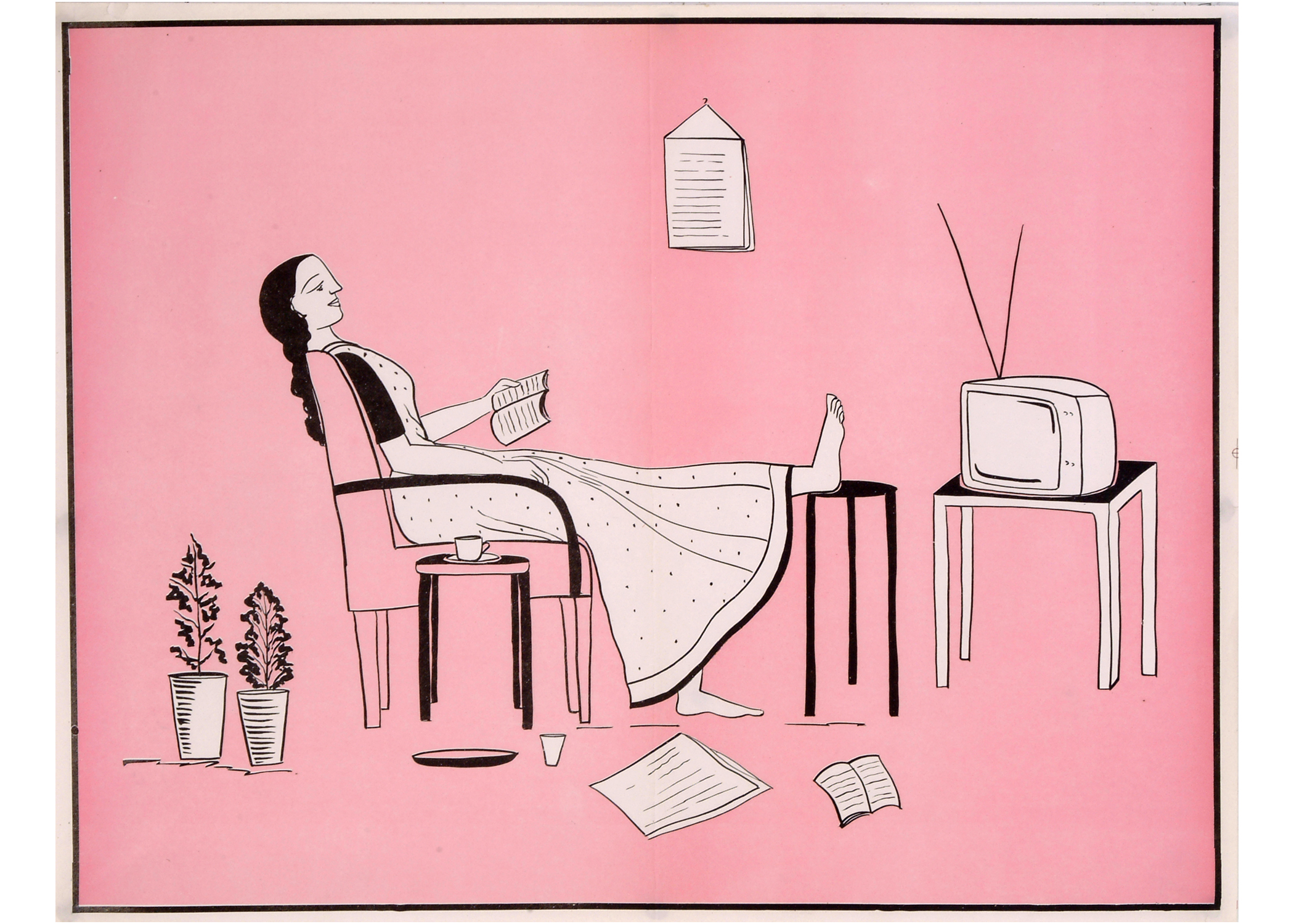 patriarchal attitude towards women, she quit left politics and devoted herself to propagate feminism among Telugu readers through her activism and writing. Her favourite genre of writing are the short story and criticism. She has written over fifty books. For many years Volga was at the helm of the brilliant women’s organisation Asmita which is based in Hyderabad. Asmita were in fact responsible for creating the iconic “pink poster” which I fell in love with while curating Zubaan’s “Poster Women” — a visual mapping of the women’s movement in India.
It is commendable that HarperCollins India chose to print the name of the translators on the book cover rather than on the back cover or only inside. Translators names need to be displayed prominently too. A practice that has as yet not been widely adopted by publishers.
The Liberation of Sita is truly Volga at her feminist best. (For once I have to agree with the book blurb! )
Volga The Liberation of Sita ( Translated from the Telugu by T. Vijay Kumar and C. Vijayasree) Harper Perennial, an imprint of HarperCollins Publishers, Noida, India. Pb. pp. 130 Rs. 199
31 August 2016