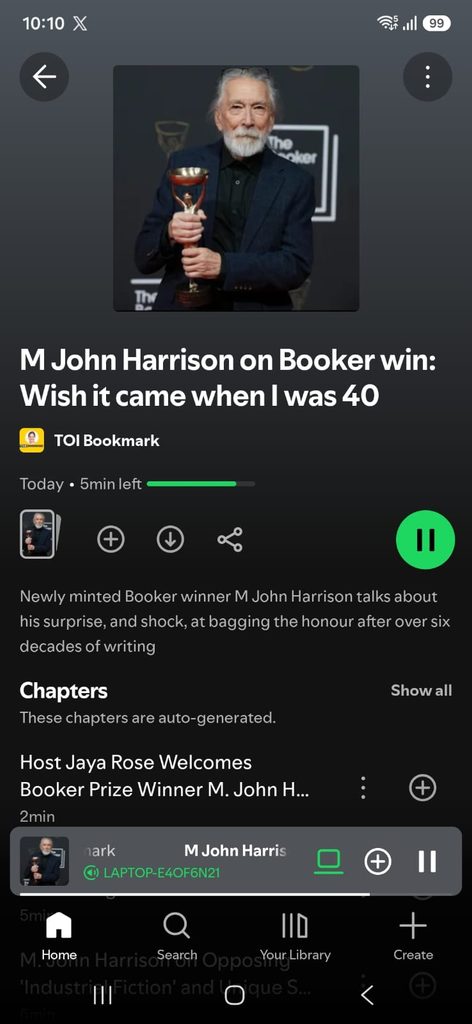
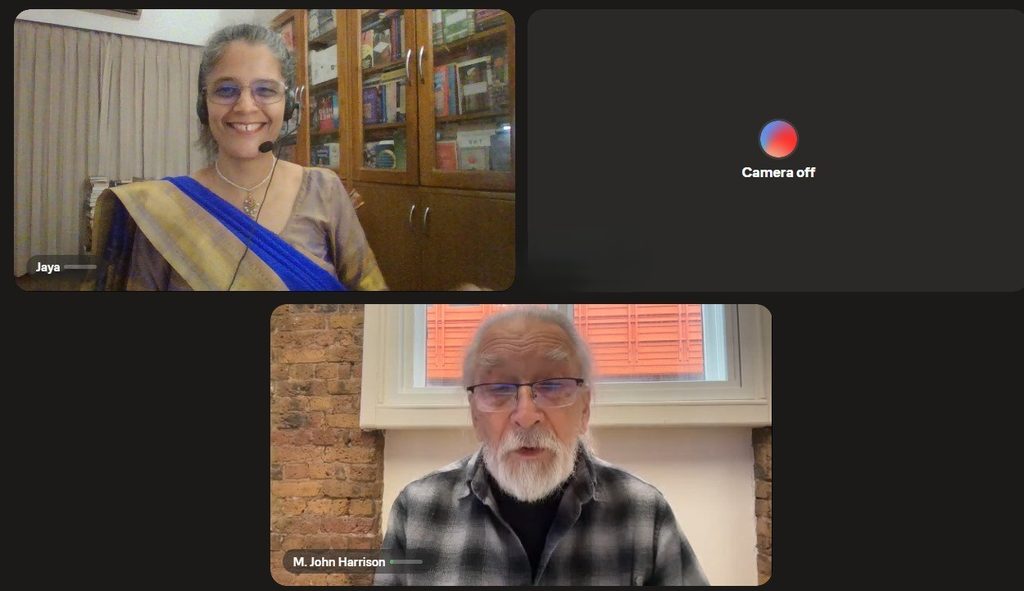
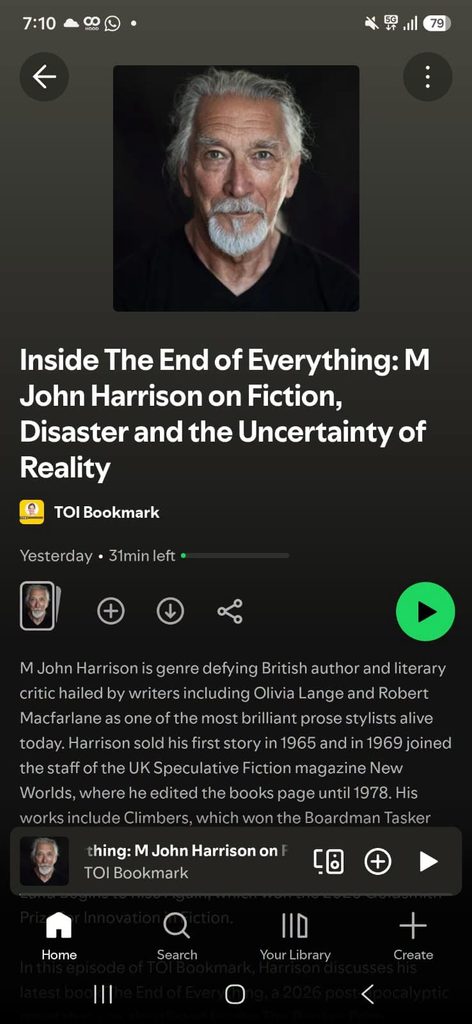
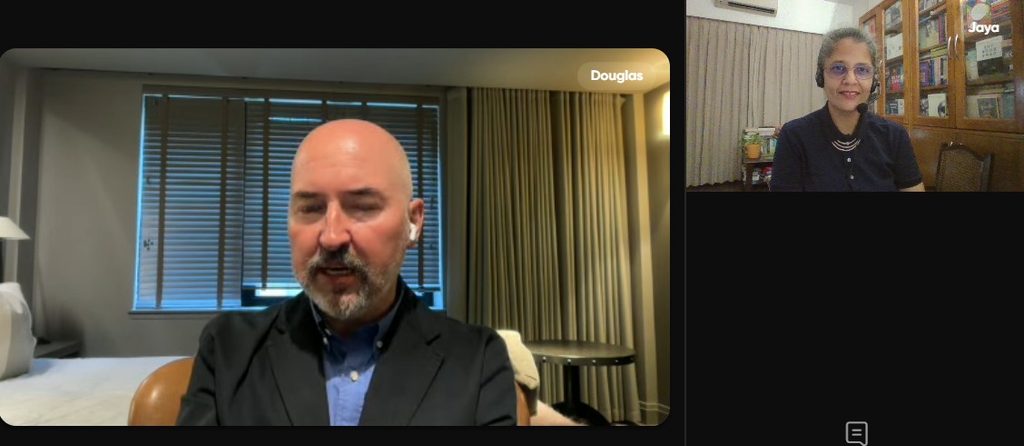
Newly minted Booker Prize 2026 winner, 81-year-old, M. John Harrison and I chatted on the TOI Bookmark* podcast about his novel, The End of Everything within hours of him having won the prize.
Here is the link on Spotify:
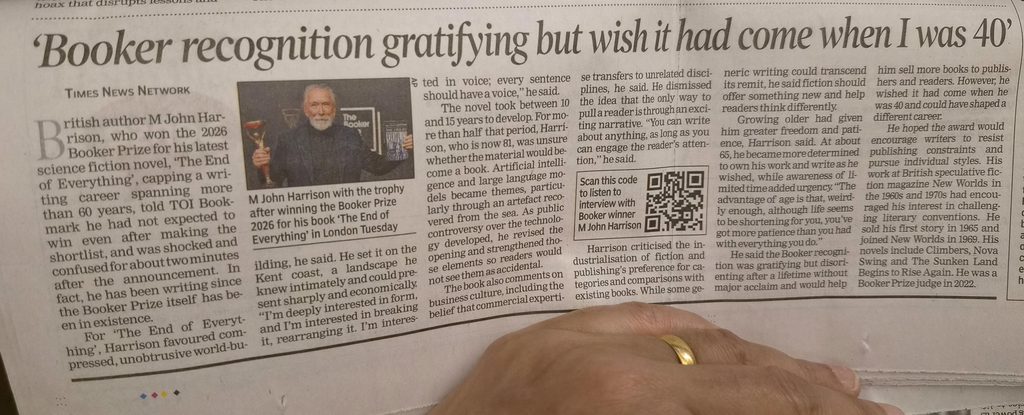
Today, on 12 Nov 2026, an account of the interview was carried in the print edition of The Times of India.
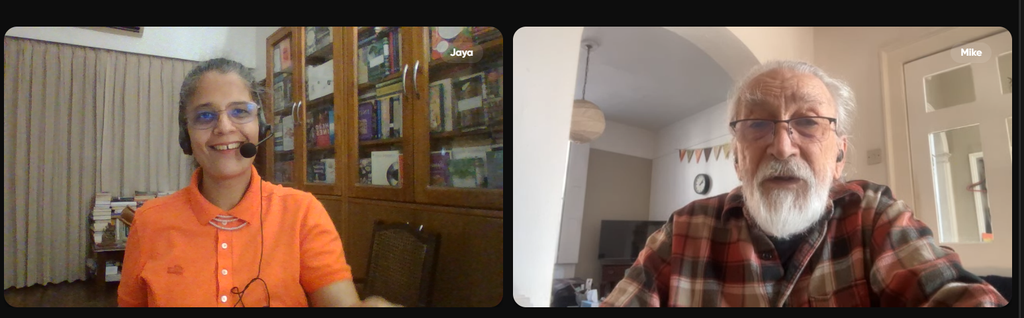
Coincidentally, I had spoken to M. John Harrison in September when he had been longlisted for the prize. The Spotify link:
The book is published by Serpent’s Tail and is distributed in India by Hachette India.
12 Nov 2026
*TOI Bookmark is a weekly podcast on literature and publishing. TOI is an acronym for the Times of India (TOI) which is the world’s largest newspaper and India’s No. 1 digital news platform with over 3 billion page views per month. The TOI website is one of the most visited news sites in the world with 200 million unique monthly visitors and about 1.6 billion monthly page views. TOI is the world’s largest English newspaper with a daily circulation of more than 4 million copies, across many editions, and is read daily by approximately 13.5 million readers. The podcasts are promoted across all TOI platforms. I have recorded more than 214+ sessions with Jnanpith, Padma Bhushan, and Padma Shree awardees, International Booker Prize winners, Booker Prize winners, Women’s Prize for Fiction, Nobel Laureates, Pulitzer Prize, Stella Prize, AutHer Awards, Erasmus Prize, BAFTA, Turing Prize, Magsaysay Prize etc. Sometimes the podcast interviews are carried across all editions of the print paper with a QR code embedded in it.
Some of the authors who have been interviewed are: M. John Harrison, Yáng Shuāng-zǐ & Lin King, David Szalay, Banu Mushtaq, Deepa Bhashti, Samantha Harvey, Jenny Erpenbeck, Michael Hoffman, Paul Murray, V. V. Ganeshananthan, Hisham Matar, Anita Desai, Amitava Kumar, Hari Kunzro, Venki Ramakishnan, Siddhartha Deb, Elaine Feeney, Manjula Padmanabhan, Edwin Frank, Jonathan Escoffery, Joya Chatterji, Arati Kumar-Rao, Paul Lynch, Dr Kathryn Mannix, Cat Bohannon, Sebastian Barry, Shabnam Minwalla, Paul Harding, Ayobami Adebayo, Pradeep Sebastian, G N Devy, Angela Saini, Manav Kaul, Amitav Ghosh, Viet Thanh Nguyen, Damodar Mauzo, Geetanjali Mishra, William Dalrymple, Sanjoy Roy, Abdulrazak Gurnah, Andrew Miller, Catherine Chidgey, Dr Rachel Clarke, Charlotte Wood, Megha Majumdar, Kiran Desai, Ken Follett, Philippe Sands, Victoria Bateman, Anuradha Roy, Sir Tim Berners-Lee, Danny Rensch, Anne Beate Hovind, Lyse Doucet, Tayari Jones and Annie Ernaux.
Phillip Tennent makes his living at the tideline, collecting artefacts that wash up from the Channel. It’s been years since the crisis changed everything, but its exact nature remains obscure. Government barely functions, the seas are full of new creatures, Europe has been mislaid. It feels like the end.
Now Phillip has fished out of the water an object he can’t keep. A creature that keeps changing. An artefact he must take inland, before it destroys everything he thinks he knows. The End of Everything is a slyly satirical and unsettling post-apocalyptic adventure into the limits of human understanding from the peerless master of contemporary fiction.
M. John Harrison has been publishing since 1965 although he began writing as a teenager in the 1950s He is a legend especially in the world of speculative fiction. At the age of 82, he is the oldest writer to have been shortlisted for The Booker Prizes 2026 for “The End of Everything” (published by Hachette India). The winner will be announced on 9 Nov 2026. It is a slim novel but it leaves one reeling with the immense possibilities that may exist in humanity’s future. The aliens, iGheti, walking around the community in a near-future south-east England are “monstrously sized, extremely powerful and strange lifeforms” of unknown origin and uncertain purpose. The protagonist, Philip Tennent, lives with his aunt Marnie in the coastal town of Dalston-on-Sea and ekes out a living by collecting – and endeavouring to sell – iGhetti “artefacts” that wash up on the shore. One particular artefact he finds has the potential to change their lives for ever.
It was a pleasure speaking on the TOI Bookmark* podcast with M. John Harrison regarding The End of Everything. This book really makes you think.
M. John Harrison, a genre-defying British author and literary critic. Harrison has been hailed by writers including Olivia Laing, Robert MacFarlane and Neil Gaiman as one of the most brilliant prose stylists alive today. He sold his first story in 1965, and in 1969 joined the staff of the UK speculative fiction magazine New Worlds, where he edited the books pages until 1978.
His novels include Climbers, which won the Boardman Tasker Prize for Mountain Literature in 1989; Nova Swing, which won the Arthur C. Clarke Award in 2007; and The Sunken Land Begins to Rise Again, which won the 2020 Goldsmiths Prize for innovation in fiction. A collection of short stories, You Should Come With Me Now, was published in 2017, and a volume of selected stories written between 1970 and 2020 was published under the title Settling the World.
He has reviewed a broad spread of fiction for the TLS, the Telegraph, the Guardian and the New York Times; co-authored a quartet of fantasy novels about talking cats; and ghostwritten on behalf of a legendary British rock climber. He was a judge of the Booker Prize 2022.
I had the good fortunate of interviewing him in early September. He was shortlisted for The Booker Prize the following week.
Here is the Spotify link:
8 Nov 2026
*TOI Bookmark is a weekly podcast on literature and publishing. TOI is an acronym for the Times of India (TOI) which is the world’s largest newspaper and India’s No. 1 digital news platform with over 3 billion page views per month. The TOI website is one of the most visited news sites in the world with 200 million unique monthly visitors and about 1.6 billion monthly page views. TOI is the world’s largest English newspaper with a daily circulation of more than 4 million copies, across many editions, and is read daily by approximately 13.5 million readers. The podcasts are promoted across all TOI platforms. I have recorded more than 214+ sessions with Jnanpith, Padma Bhushan, and Padma Shree awardees, International Booker Prize winners, Booker Prize winners, Women’s Prize for Fiction, Nobel Laureates, Pulitzer Prize, Stella Prize, AutHer Awards, Erasmus Prize, BAFTA, Turing Prize, Magsaysay Prize etc. Sometimes the podcast interviews are carried across all editions of the print paper with a QR code embedded in it.
Some of the authors who have been interviewed are: Yáng Shuāng-zǐ & Lin King, David Szalay, Banu Mushtaq, Deepa Bhashti, Samantha Harvey, Jenny Erpenbeck, Michael Hoffman, Paul Murray, V. V. Ganeshananthan, Hisham Matar, Anita Desai, Amitava Kumar, Hari Kunzro, Venki Ramakishnan, Siddhartha Deb, Elaine Feeney, Manjula Padmanabhan, Edwin Frank, Jonathan Escoffery, Joya Chatterji, Arati Kumar-Rao, Paul Lynch, Dr Kathryn Mannix, Cat Bohannon, Sebastian Barry, Shabnam Minwalla, Paul Harding, Ayobami Adebayo, Pradeep Sebastian, G N Devy, Angela Saini, Manav Kaul, Amitav Ghosh, Viet Thanh Nguyen, Damodar Mauzo, Geetanjali Mishra, William Dalrymple, Sanjoy Roy, Abdulrazak Gurnah, Andrew Miller, Catherine Chidgey, Dr Rachel Clarke, Charlotte Wood, Megha Majumdar, Kiran Desai, Ken Follett, Philippe Sands, Victoria Bateman, Anuradha Roy, Sir Tim Berners-Lee, Danny Rensch, Anne Beate Hovind, Tayari Jones, Lyse Doucet, M. John Harrison, Luke Kennard, and Annie Ernaux.
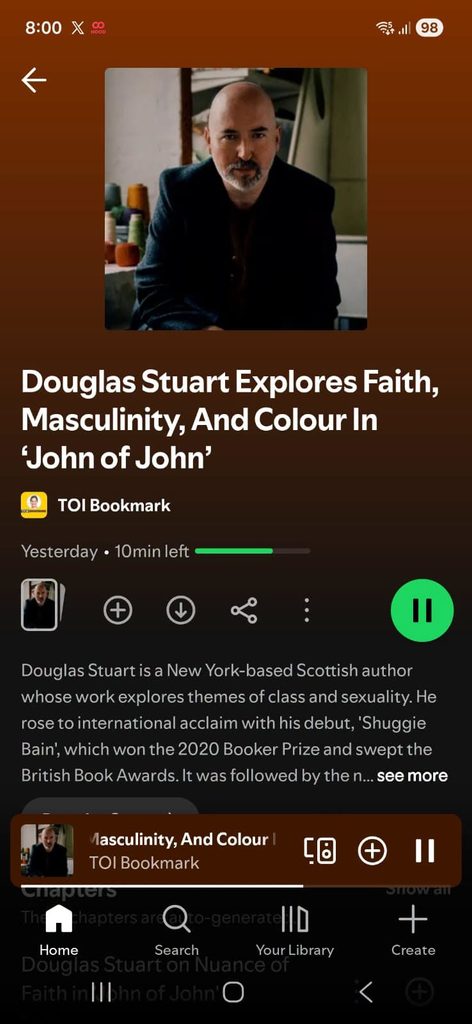
Ever since Douglas Stuart burst upon the literary scene, I have been a huge fan. He writes exceptionally well. So, I was delighted when an opportunity to interview him for the TOI Bookmark* podcast presented itself. Overjoyed is more like it. John of Johns is an outstanding novel. So, to be able to interview the author immediately after having finished it, is a dream come true. We recorded this episode on 19 May 2026. It is published by Pan Macmillan India.
On 7 Nov 2026, Douglas Stuart made history with Waterstones Scottish Book of the Year win by having won it twice. His latest novel, John of John, has claimed the honour six years after his debut, Shuggie Bain, won the same prize in 2020. Now to discover on Monday 9 nov 2026 if he has achieved the same success with The Booker Prize 2026.
I am not even going to try and explain what the novel is about or analyse it. Read it for yourself. Here is a snippet from our conversation:
“I never believe the idea that people of faith are not human first. We are all human and we are all struggling. Whether it is on a moral scale or just on an idea what is life about and why are we here? So, as to paint the nuance of that is part of the idea why I wanted to write the book to really humanise. The modern world looks at the people of faith as if they are a trope or a cliché or just one type of thing. I think novels are a wonderful way to portray, better than painting a portrait, better than cinema, not only do you have the surface and the aesthetic, but you also have the interiority, the moral layer, the historical layer, the desire, the sexual, you have all of it. You can move in temporal directions that you cannot in other forms of capturing human life.”
Listen to it on Spotify:
It is available on Spotify:
From the book blurb:
Out of money and with little to show for his art school education, John-Calum Macleod takes the ferry home to the island of Harris to find that not much has changed except for him. In the windswept croft where he grew up, Cal resumes his old life, caught between the two poles of his childhood: his father John, a sheep farmer, weaver, and pillar of their local Presbyterian church, and his Glaswegian grandmother Ella, who has kept a faltering peace with her son-in-law for decades.
While Cal wonders if any lonely men might be found on the barren hillsides of home, John is dismayed by his son’s long hair and how he seems unwilling to be Saved. As the seasons pass, everything is poised to change as the threads holding together the fragile community become increasingly entangled.
This is a novel worth reading!
8 Nov 2026
*TOI Bookmark is a weekly podcast on literature and publishing. TOI is an acronym for the Times of India (TOI) which is the world’s largest newspaper and India’s No. 1 digital news platform with over 3 billion page views per month. The TOI website is one of the most visited news sites in the world with 200 million unique monthly visitors and about 1.6 billion monthly page views. TOI is the world’s largest English newspaper with a daily circulation of more than 4 million copies, across many editions, and is read daily by approximately 13.5 million readers. The podcasts are promoted across all TOI platforms. I have recorded more than 214+ sessions with Jnanpith, Padma Bhushan, and Padma Shree awardees, International Booker Prize winners, Booker Prize winners, Women’s Prize for Fiction, Nobel Laureates, Pulitzer Prize, Stella Prize, AutHer Awards, Erasmus Prize, BAFTA, Turing Prize, Magsaysay Prize etc. Sometimes the podcast interviews are carried across all editions of the print paper with a QR code embedded in it.
Some of the authors who have been interviewed are: Yáng Shuāng-zǐ & Lin King, David Szalay, Banu Mushtaq, Deepa Bhashti, Samantha Harvey, Jenny Erpenbeck, Michael Hoffman, Paul Murray, V. V. Ganeshananthan, Hisham Matar, Anita Desai, Amitava Kumar, Hari Kunzro, Venki Ramakishnan, Siddhartha Deb, Elaine Feeney, Manjula Padmanabhan, Edwin Frank, Jonathan Escoffery, Joya Chatterji, Arati Kumar-Rao, Paul Lynch, Dr Kathryn Mannix, Cat Bohannon, Sebastian Barry, Shabnam Minwalla, Paul Harding, Ayobami Adebayo, Pradeep Sebastian, G N Devy, Angela Saini, Manav Kaul, Amitav Ghosh, Viet Thanh Nguyen, Damodar Mauzo, Geetanjali Mishra, William Dalrymple, Sanjoy Roy, Abdulrazak Gurnah, Andrew Miller, Catherine Chidgey, Dr Rachel Clarke, Charlotte Wood, Megha Majumdar, Kiran Desai, Ken Follett, Philippe Sands, Victoria Bateman, Anuradha Roy, Sir Tim Berners-Lee, Danny Rensch, Anne Beate Hovind, Tayari Jones, Lyse Doucet, M. John Harrison, Luke Kennard, and Annie Ernaux.
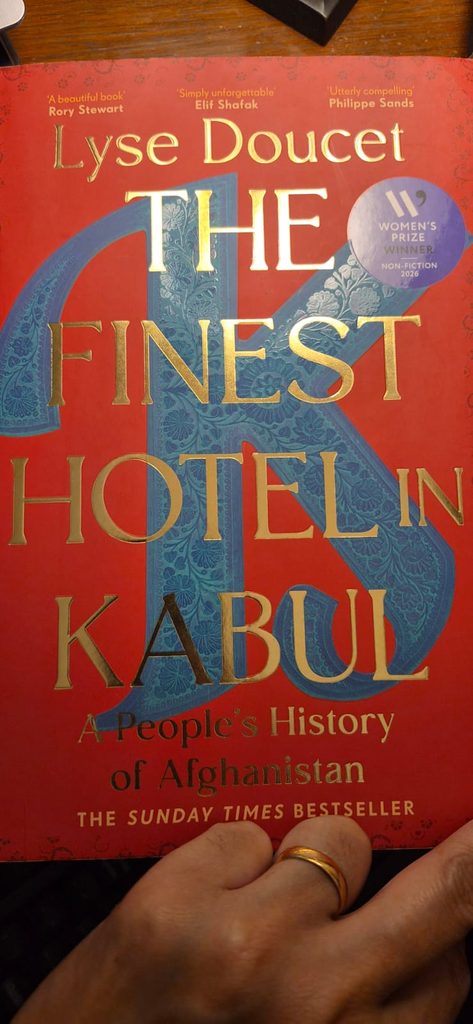
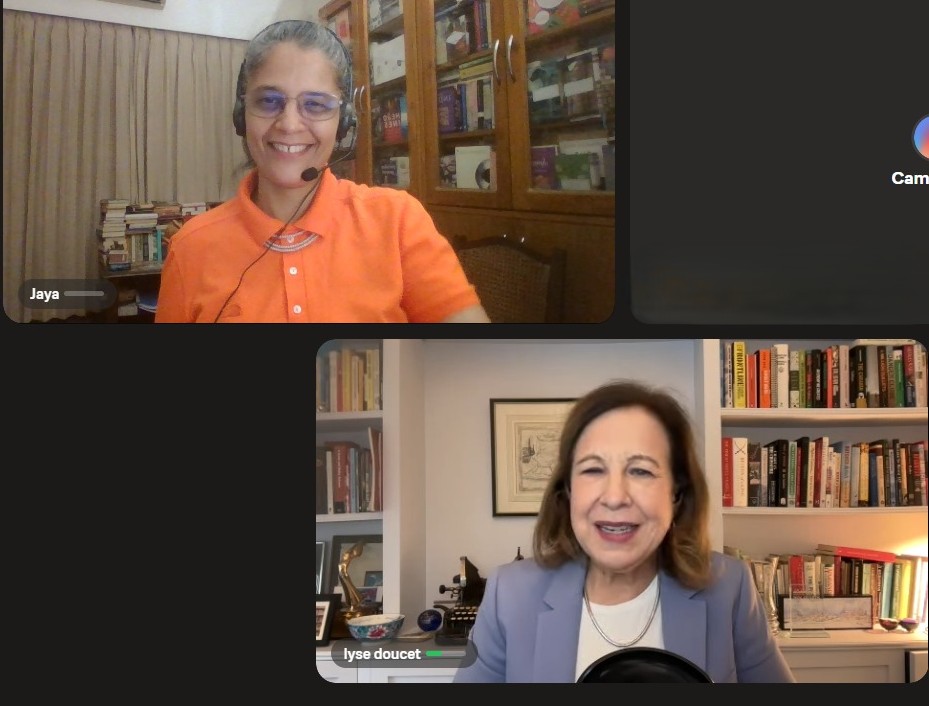
Lyse Doucet is known worldwide as the Chief International Correspondent and senior presenter for the BBC — radio and television. She is an award-winning journalist and now as debut writer too. She won the Women’s Prize for Nonfiction 2026 for her fabulous book The Finest Hotel in Kabul: A People’s History of Afghanistan.
The Finest Hotel in Kabul is an incredible history of Afghanistan of approximately five decades. As Lyse says that “In my lifetime, Afghanistan has been a kingdom, a republic, an Islamic emirate — these changes tell us a story.” She maps the transformations in society via her profiles of individuals, and yet it is a “polyphonic” narrative nonfiction. She delves into the past, she resurrects influential people like the singer Ahmad Zahir and many others. She covers the length and breadth of society. It is incredibly difficult to distil the book into a few lines except to say that it is an accessible account of a nation that has lived and is living through turbulent times. Philippe Sands has justifiably said that it is “utterly compelling” and Elif Shafak has called it “simply unforgettable”. Lyse has been visiting Kabul since 1988. Her familiarity with the people, the terrain, the intricate politics, the understanding of the histories of the politics, the politicians, the warlords etc comes through with a lot of humility, depth, empathy and the desire to channel her multiple experiences and share it with the world. It is truly worth reading.
A few days ago, I had the honour and privilege to interview Lyse Doucet for the TOI Bookmark* podcast. I will upload the Spotify link to the interview once it is available. She is an extremely busy journalist but had the grace to make time for us to record an episode of the podcast. More so, when she is no longer promoting her book or recording any podcasts.
7 Nov 2026
*TOI Bookmark is a weekly podcast on literature and publishing. TOI is an acronym for the Times of India (TOI) which is the world’s largest newspaper and India’s No. 1 digital news platform with over 3 billion page views per month. The TOI website is one of the most visited news sites in the world with 200 million unique monthly visitors and about 1.6 billion monthly page views. TOI is the world’s largest English newspaper with a daily circulation of more than 4 million copies, across many editions, and is read daily by approximately 13.5 million readers. The podcasts are promoted across all TOI platforms. I have recorded more than 214+ sessions with Jnanpith, Padma Bhushan, and Padma Shree awardees, International Booker Prize winners, Booker Prize winners, Women’s Prize for Fiction, Nobel Laureates, Pulitzer Prize, Stella Prize, AutHer Awards, Erasmus Prize, BAFTA, Turing Prize, Magsaysay Prize etc. Sometimes the podcast interviews are carried across all editions of the print paper with a QR code embedded in it.
Some of the authors who have been interviewed are: Yáng Shuāng-zǐ & Lin King, David Szalay, Banu Mushtaq, Deepa Bhashti, Samantha Harvey, Jenny Erpenbeck, Michael Hoffman, Paul Murray, V. V. Ganeshananthan, Hisham Matar, Anita Desai, Amitava Kumar, Hari Kunzro, Venki Ramakishnan, Siddhartha Deb, Elaine Feeney, Manjula Padmanabhan, Edwin Frank, Jonathan Escoffery, Joya Chatterji, Arati Kumar-Rao, Paul Lynch, Dr Kathryn Mannix, Cat Bohannon, Sebastian Barry, Shabnam Minwalla, Paul Harding, Ayobami Adebayo, Pradeep Sebastian, G N Devy, Angela Saini, Manav Kaul, Amitav Ghosh, Viet Thanh Nguyen, Damodar Mauzo, Geetanjali Mishra, William Dalrymple, Sanjoy Roy, Abdulrazak Gurnah, Andrew Miller, Catherine Chidgey, Dr Rachel Clarke, Charlotte Wood, Megha Majumdar, Kiran Desai, Ken Follett, Philippe Sands, Victoria Bateman, Anuradha Roy, Sir Tim Berners-Lee, Danny Rensch, Anne Beate Hovind, Tayari Jones, Lyse Doucet, M. John Harrison, Luke Kennard, and Annie Ernaux.
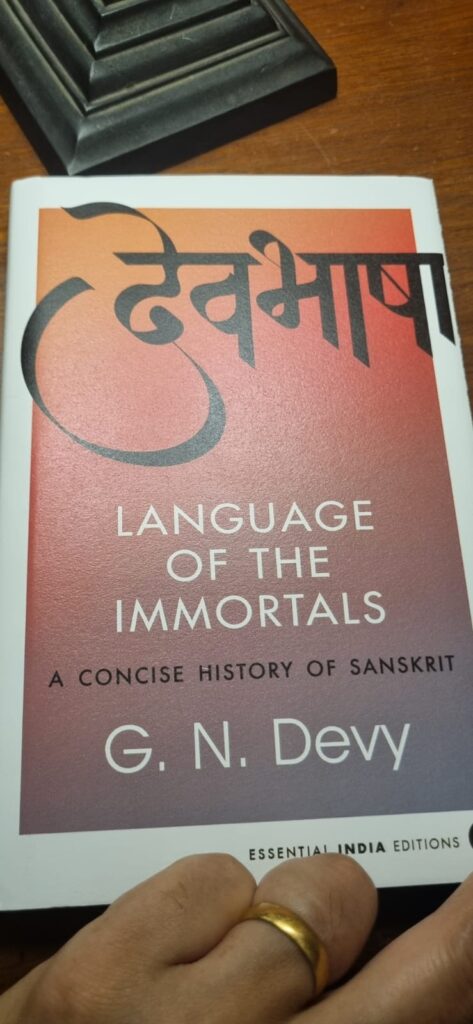
Sanskrit has long been celebrated as one of the building blocks of Indian civilization, and is venerated in temples, scriptures, and classical literature. In Language of the Immortals, renowned scholar and critic G. N. Devy uncovers the astounding paradox of Sanskrit—an ancient language that shaped Indian thought, philosophy, and identity for millennia, yet was never truly a language of the people.
With rigorous scholarship, Devy dismantles enduring myths and offers a revealing commentary on Sanskrit’s historical and cultural trajectory. He shows how it achieved unsurpassed prestige not through conquest or commerce, but sheer intellectual brilliance. He explores the way in which Sanskrit shaped intellectual life across centuries, influenced cultures beyond India, and maintained its prestige through the oral tradition and spiritual symbolism rather than the patronage of the state.
This concise yet profound work reimagines what it means for a language to live on—long after it has ceased to be spoken.
G. N. Devy is currently the Senior Professor of Eminence and Director, School of Civilization, Somaiya Vidyavihar University and was previously the Obaid Siddiqi Chair Professor at the National Centre for Biological Sciences, and Director, Adivasi Academy, Tejgadh, and Professor of English at the Maharaja Sayajirao University of Baroda. He led the People’s Linguistic Survey of India (PLSI), a comprehensive documentation of all living Indian languages, forming a fifty-volume PLSI Series. He has received several awards for his writing as well as for his community work, including the Padma Shri, Prince Claus Award, and Linguapax Award. His English publications include After Amnesia, Of Many Heroes, Painted Words, Nomad Called Thief, The Question of Silence, Countering Violence, The Crisis Within: On Knowledge and Education in India, Mahabharata: The Epic and the Nation, and India: A Linguistic Civilization. He is the co-editor (with Ravi Korisettar and Tony Joseph) of The Indians: Histories of a Civilization.
Nepali writer Weena Pun’s writings have appeared in Himal Southasian, the Kathmandu Post, The Record, “House of Snow: An Anthology of the Greatest Writing About Nepal”, and elsewhere. She is a graduate of Stanford University and the MFA Program in Creative Writing at Cornell University. Her debut novel “Kanchhi” is published by Hachette India.
It was a pleasure speaking with Weena Pun on TOI Bookmark.
Here is a snippet of our conversation:
“…it was not easy. It took me a lot of drafts to make it seem like the scenes wrote themselves. Language was a problem. If I had to write a dialect, I would write it in Nepali first in longhand, then I would later translate it and then go back and edit it to ensure that they flowed well. “
Spotify link is given below.
Book blurb
In the misty foothills of Torikhola, Kanchhi, the only child of her mother, Maiju, refuses to play by the stifling rules of her hamlet. She befriends boys, writes letters to them, and opposes the shame imposed on her swelling ambitions and curiosity. There is a life beyond the forlorn valleys and gorges, and Kanchhi is intrigued by the possibilities. One cold November morning she leaves home – with two bags and some millet bread Maiju prepares for her. That, however, is the last anybody sees of her.
Now, a decade after Kanchhi’s puzzling disappearance, echoes of her defiance grow thin. Life has moved on. For one, the civil war has arrived at the hamlet’s doorstep. And yet, much has remained still. Maiju lights a lamp in front of the gods and feverishly prays for her daughter’s return. And the villagers, uncertain of what befell Kanchhi, continue to debate. Did she run off, chasing the highs and lights of the big city? Or did the cruelties of the ongoing civil war engulf her whole?
In this impressively sure-footed debut, Weena Pun brings to life the political and social tremors stirring the valleys of Nepal at the turn of the millennium, as well as the tenacious, tragedy-riven women of the time. A delicate and finely wrought saga, Kanchhi is an intimate exploration of vulnerable girlhood in turbulent territories.
***
TOI Bookmark is a weekly podcast on literature and publishing. TOI is an acronym for the Times of India (TOI) which is the world’s largest newspaper and India’s No. 1 digital news platform with over 3 billion page views per month. The TOI website is one of the most visited news sites in the world with 200 million unique monthly visitors and about 1.6 billion monthly page views. TOI is the world’s largest English newspaper with a daily circulation of more than 4 million copies, across many editions, and is read daily by approximately 13.5 million readers. The podcasts are promoted across all TOI platforms. I have recorded more than 145+ sessions with Jnanpith, Padma Bhushan, and Padma Shree awardees, International Booker Prize winners, Booker Prize winners, Women’s Prize for Fiction, Nobel Laureates, Pulitzer Prize, Stella Prize, AutHer Awards, Erasmus Prize, BAFTA etc.
Some of the authors who have been interviewed are: Banu Mushtaq, Deepa Bhashti, Samantha Harvey, Jenny Erpenbeck, Michael Hoffman, Paul Murray, V. V. Ganeshananthan, Hisham Matar, Anita Desai, Amitava Kumar, Hari Kunzro, Venki Ramakishnan, Siddhartha Deb, Elaine Feeney, Manjula Padmanabhan, Edwin Frank, Jonathan Escoffery, Joya Chatterji, Arati Kumar-Rao, Paul Lynch, Dr Kathryn Mannix, Cat Bohannon, Sebastian Barry, Shabnam Minwalla, Paul Harding, Ayobami Adebayo, Pradeep Sebastian, G N Devy, Angela Saini, Manav Kaul, Amitav Ghosh, Damodar Mauzo, Boria Majumdar, Geetanjali Mishra, William Dalrymple, Abdulrazak Gurnah, Andrew Miller, Dr Rachel Clarke, and Annie Ernaux.
Kavitha Rao is a London-based author and journalist. Her work has appeared in the Guardian, New York Times, South China Morning Post, Mint, The Hindu and various other publications. She is the bestselling author of Lady Doctors. Spies, Lies and Allies is her latest books and is published by Westland Books.
We spoke on TOI Bookmark regarding her Spies, Lies and Allies. Here is a snippet:
Well, you just sink yourself in it. I mean when you are writing historical fiction this book is curious because as you pointed out, it has won a couple of prizes for historical fiction and both those prizes have a rule which is that it has got to be set sixty years before the date of publication. So, we were just kind of over a line. I don’t claim to be an expert, there is a lot of smoke and mirror involved, you try to get a feel and a sense of what it might have been. So yes it is research, reading, and the kind of stuff a scholar might recognise, but we are not scholars.
TOI Bookmark is a weekly podcast on literature and publishing. TOI is an acronym for the Times of India (TOI) which is the world’s largest newspaper and India’s No. 1 digital news platform with over 3 billion page views per month. The TOI website is one of the most visited news sites in the world with 200 million unique monthly visitors and about 1.6 billion monthly page views. TOI is the world’s largest English newspaper with a daily circulation of more than 4 million copies, across many editions, and is read daily by approximately 13.5 million readers. The podcasts are promoted across all TOI platforms. I have recorded more than 145+ sessions with Jnanpith, Padma Bhushan, and Padma Shree awardees, International Booker Prize winners, Booker Prize winners, Women’s Prize for Fiction, Nobel Laureates, Pulitzer Prize, Stella Prize, AutHer Awards, Erasmus Prize, BAFTA etc. Sometimes the podcast interviews are carried across all editions of the print paper with a QR code embedded in it.
Some of the authors who have been interviewed are: Banu Mushtaq, Deepa Bhashti, Samantha Harvey, Jenny Erpenbeck, Michael Hoffman, Paul Murray, V. V. Ganeshananthan, Hisham Matar, Anita Desai, Amitava Kumar, Hari Kunzro, Venki Ramakishnan, Siddhartha Deb, Elaine Feeney, Manjula Padmanabhan, NYRB Classics editor and founder Edwin Frank, Jonathan Escoffery, Joya Chatterji, Arati Kumar-Rao, Paul Lynch, Dr Kathryn Mannix, Cat Bohannon, Sebastian Barry, Shabnam Minwalla, Paul Harding, Ayobami Adebayo, Pradeep Sebastian, G N Devy, Angela Saini, Manav Kaul, Amitav Ghosh, Damodar Mauzo, Boria Majumdar, Geetanjali Mishra, William Dalrymple, Abdulrazak Gurnah, Dr Rachel Clarke, Charlotte Wood, Catherine Chidgey, Andrew Miller, Sam Dalrymple, and Annie Ernaux.
Andrew Miller is longlisted for The Booker Prize 2025. His novel, “The Land in Winter”, is a gorgeous historical fiction set in the terrible winter of 1962/63. It has already won the Walter Scott Prize for Historical Fiction 2025 and Winston Graham Historical Prize 2025.
I have always enjoyed reading his novels. So, it was a privilege to converse with him. A freewheeling conversation about historical fiction and writing.
Here is a snippet:
“Well, you just sink yourself in it. I mean when you are writing historical fiction this book is curious because as you pointed out, it has won a couple of prizes for historical fiction and both those prizes have a rule which is that it has got to be set sixty years before the date of publication. So, we were just kind of over a line. I don’t claim to be an expert, there is a lot of smoke and mirror involved, you try to get a feel and a sense of what it might have been. So yes it is research, reading, and the kind of stuff a scholar might recognise, but we are not scholars.”
We recorded this TOI Bookmark episode a few days before his longlisting for The Booker Prize was announced.
TOI Bookmark is a weekly podcast on literature and publishing. TOI is an acronym for the Times of India (TOI) which is the world’s largest newspaper and India’s No. 1 digital news platform with over 3 billion page views per month. The TOI website is one of the most visited news sites in the world with 200 million unique monthly visitors and about 1.6 billion monthly page views. TOI is the world’s largest English newspaper with a daily circulation of more than 4 million copies, across many editions, and is read daily by approximately 13.5 million readers. The podcasts are promoted across all TOI platforms. I have recorded more than 142+ sessions with Jnanpith, Padma Bhushan, and Padma Shree awardees, International Booker Prize winners, Booker Prize winners, Women’s Prize for Fiction, Nobel Laureates, Pulitzer Prize, Stella Prize, AutHer Awards, Erasmus Prize, BAFTA etc. Sometimes the podcast interviews are carried across all editions of the print paper with a QR code embedded in it.
Some of the authors who have been interviewed are: Banu Mushtaq, Deepa Bhashti, Samantha Harvey, Jenny Erpenbeck, Michael Hoffman, Paul Murray, V. V. Ganeshananthan, Hisham Matar, Anita Desai, Amitava Kumar, Hari Kunzro, Venki Ramakishnan, Siddhartha Deb, Elaine Feeney, Manjula Padmanabhan, NYRB Classics editor and founder Edwin Frank, Jonathan Escoffery, Joya Chatterji, Arati Kumar-Rao, Paul Lynch, Dr Kathryn Mannix, Cat Bohannon, Sebastian Barry, Shabnam Minwalla, Paul Harding, Ayobami Adebayo, Pradeep Sebastian, G N Devy, Angela Saini, Manav Kaul, Amitav Ghosh, Damodar Mauzo, Boria Majumdar, Geetanjali Mishra, William Dalrymple, Abdulrazak Gurnah, Dr Rachel Clark, Charlotte Wood, Catherine Chidgey, Andrew Miller, Sam Dalrymple, and Annie Ernaux.
A history of modern South Asia told through five partitions that reshaped it.
As recently as 1928, a vast swathe of Asia–India, Pakistan, Bangladesh, Burma, Nepal, Bhutan, Yemen, Oman, the UAE, Qatar, Bahrain and Kuwait–were bound together under a single imperial banner, an entity known officially as the ‘Indian Empire’, or more simply as the Raj.
It was the British Empire’s crown jewel, a vast dominion stretching from the Red Sea to the jungles of Southeast Asia, home to a quarter of the world’s population and encompassing the largest Hindu, Muslim, Sikh and Zoroastrian communities on the planet. Its people used the Indian rupee, were issued passports stamped ‘Indian Empire’, and were guarded by armies garrisoned forts from the Bab el-Mandab to the Himalayas.
And then, in the space of just fifty years, the Indian Empire shattered. Five partitions tore it apart, carving out new nations, redrawing maps, and leaving behind a legacy of war, exile and division.
Shattered Lands, for the first time, presents the whole story of how the Indian Empire was unmade. How a single, sprawling dominion became twelve modern nations. How maps were redrawn in boardrooms and on battlefields, by politicians in London and revolutionaries in Delhi, by kings in remote palaces and soldiers in trenches.
Its legacies include civil wars in Burma and Sri Lanka, ongoing insurgencies in Kashmir, Baluchistan, Northeast India, and the Rohingya genocide. It is a history of ambition and betrayal, of forgotten wars and unlikely alliances, of borders carved with ink and fire. And, above all, it is the story of how the map of modern Asia was made.
Sam Dalrymple’s book is based on research that includes previously untranslated private memoirs, and interviews in English, Hindi, Urdu, Bengali, Punjabi, Konyak, Arabic and Burmese. From portraits of the key political players to accounts of those swept up in these wars and mass migrations, including common people, Shattered Lands is an attempt to revisit a pivotal moment in the Indian subcontinent’s history. Ideally it should be remembered as a moment of independence from the British colonial power but increasingly, particularly, post-1984*, it is remembered as “Partition”. Whichever way it is seen, the fact remains that this is a time that has had a massive impact on the nations it spawned. If modern generations remembered it as a moment of independence, then the hope, joy and being self-reliant would be a legacy. Constantly remembering it as a moment of partition ( a truth understandably), continues to stoke the mills of hatred, othering, and communalism, across generations, instilling prejudices that are inherited but are now manifesting themselves in a monstrously virulent form. The judicious choice of words, particularly when put on paper, and how we choose to remember has a long term impact and should be selected with care. Nevertheless, Shattered Lands : Five Partitions and the Making of Modern Asia is a must read. It is published by HarperCollins India.
I interviewed him for TOI Bookmark**. There is always so much to learn from these conversations that we record for TOI Bookmark. Sam Dalrymple is a new voice that has burst upon the scene with his debut non-fiction Shattered Lands: : Five Partitions and the Making of Modern Asia. It is published by HarperCollins India. In less than a month of its release on 19 June 2025, it has created a stir globally.
This was the first audio podcast that Sam Dalrymple recorded for his book. We had a freewheeling conversation about his book, his research methodology and the early reception to his book.
Here is a snippet from the conversation:
So, the story I wanted to tell is the story of how 100 years ago today India encompassed not just India and Pakistan as we know today but also encompassed twelve nation states. You have got Yemen, Oman, the UAE, Bahrain, Qatar, Kuwait, India, Pakistan, Bangladesh, Nepal, Bhutan, and Myanmar. And the idea that this was just the whole of India for British administered purposes. You have very real consequences of all these people being given Indian passports and invited into the Indian Army etc. Such that in the 1920s, you have many Burmese politicians are Indian nationalists, as are Yemeni politicians. You have Yemenis considering themselves as Indians which is a thing that we have completely forgotten.
Here is the episode of TOI Bookmark on Spotify:
Sam Dalrymple is a Delhi-raised Scottish historian, film-maker and multimedia producer. He graduated from Oxford University as a Persian and Sanskrit scholar. In 2018, he co-founded Project Dastaan, a peace-building initiative that reconnects refugees displaced by the 1947 Partition of India. His debut film, Child of Empire, premiered at the Sundance Film Festival in 2022 and his animated series, Lost Migrations, sold out at the British Film Institute the same year. His work has been published in the New York Times, Spectator and featured in TIME, The New Yorker and The Economist. He is a columnist for Architectural Digest and, in 2025, Travel & Leisure named him ‘Champion of the Travel Narrative’. Shattered Lands is his first book.
16 July 2025
*1984 is a significant year in modern Indian history as on 31 Oct 1984, the then prime minister, Indira Gandhi was shot dead by her security guards. It resulted in the worst communal riots that many parts of the country, especially the capital Delhi had witnessed. Many Sikhs were killed. The violence was unimaginable. The flag marches. The silence. The pieces of burnt paper fluttering down quietly on to roof tops and terraces while one could hear mobs on the rampage in the distance. Everywhere that one looked, there was only smoke spiralling upwards to be seen. It was a mere thirty-seven years after Indian independence achieved on 15 August 1947. So, there were still many living who remembered the events of 1947. Coincidentally, at this time, the state television, Doordarshan, broadcast the TV adapatation of Bhisham Sahni’s classic Tamas. The concatenation of events was ghastly. At the time, in the camps set up for the victims fleeing the mobs or whose homes and families had been destroyed in the violence, suddenly memories of the trauma of partition came out. These were recorded by many, many organisations and individuals. It was very new. It was being documented for the first time. It made sense to do so. Probably no one realised the long term consequences of entrapping history to a word and the way it should be viewed in one sense at the cost of another instead of as a balanced perspective. Now, 1947 is mostly remembered as “Partition” and not “Independence”. Sad, but true.
** TOI Bookmark is a weekly podcast on literature and publishing. TOI is an acronym for the Times of India (TOI) which is the world’s largest newspaper and India’s No. 1 digital news platform with over 3 billion page views per month. The TOI website is one of the most visited news sites in the world with 200 million unique monthly visitors and about 1.6 billion monthly page views. TOI is the world’s largest English newspaper with a daily circulation of more than 4 million copies, across many editions, and is read daily by approximately 13.5 million readers. The podcasts are promoted across all TOI platforms. Till date, I have recorded more than 138+ sessions with Jnanpith, Padma Bhushan, and Padma Shree awardees, International Booker Prize winners, Booker Prize winners, Women’s Prize for Fiction and Non-fiction, Nobel Laureates, Pulitzer Prize, Stella Prize, AutHer Awards, Erasmus Prize, BAFTA etc. Sometimes the podcast interviews are carried across all editions of the print paper with a QR code embedded in it.
Some of the authors who have been interviewed are: Banu Mushtaq, Deepa Bhashti, Samantha Harvey, Jenny Erpenbeck, Michael Hoffman, Paul Murray, V. V. Ganeshananthan, Hisham Matar, Anita Desai, Amitava Kumar, Hari Kunzro, Venki Ramakishnan, Siddhartha Deb, Elaine Feeney, Manjula Padmanabhan, NYRB Classics editor and founder Edwin Frank, Jonathan Escoffery, Joya Chatterji, Arati Kumar-Rao, Paul Lynch, Dr Kathryn Mannix, Cat Bohannon, Sebastian Barry, Shabnam Minwalla, Paul Harding, Ayobami Adebayo, Pradeep Sebastian, G N Devy, Angela Saini, Manav Kaul, Amitav Ghosh, Damodar Mauzo, Boria Majumdar, Geetanjali Mishra, Viet Thanh Nguyen, William Dalrymple, Abdulrazak Gurnah, and Annie Ernaux.
Murzban Shroff is a Mumbai-based writer. He has published his fiction with over 75 literary journals in the U.S. and UK. His stories have appeared in innumerable literary journals such as The Gettysburg Review, The Minnesota Review, The Saturday Evening Post, Chicago Tribune, LitMag, Manoa, and World Literature Today. He is the recipient of the John Gilgun Fiction Award and the Bacopa Review Fiction Award. He holds seven Pushcart Prize nominations, among the most honoured short story prizes in the U.S.
His story collection, Breathless in Bombay, was shortlisted for the Commonwealth Writers’ Prize in the best debut category from Europe and South Asia, and rated by the Guardian as among the ten best Mumbai books. His novel, Waiting for Jonathan Koshy, was a finalist for the Horatio Nelson Fiction Prize and has been published in India, China, and the U.S. His India collection, Third Eye Rising, featured on the Esquire list of Best Books of 2021.
Shroff’s latest book, Muses Over Mumbai, a collection of 17 full-length stories, has received glowing endorsements from male writers such as Salman Rushdie, Jonathan Franzen, Robert Olen Butler, Ben Fountain, Amit Chaudhuri, and Jeet Thayil. It is published by Bloomsbury India.
I interviewed him on TOI Bookmark. Here is a snippet from the conversation:
I reserve the short story form for my issue-based fiction because I feel that when I am covering a territory like Mumbai, it is very difficult to have an overarching theme and weave it into a single piece of work. I feel Mumbai works best as a polyphony of class and cultures. There are multiple issues working at multiple levels; how do you best represent the diversity. Let me expand a bit on that, Jaya. If you look at Muses of Mumbai it has seventeen stories, out of which two are almost novellas, which means that they are about 15-17,000 words. Now each story is completely different from the other, not only in terms of subject matter and characters but also socio-economics and in terms of writing styles. Some I have used elements like memoir writing, used elements like essay, like whimsy. So the styles themselves represent the diversity and that is why I think the short story form works marvellously because short story is a marvellously promiscuous form of writing.
Listen to it on Spotify:
TOI Bookmark is a weekly podcast on literature and publishing. TOI is an acronym for the Times of India (TOI) which is the world’s largest newspaper and India’s No. 1 digital news platform with over 3 billion page views per month. The TOI website is one of the most visited news sites in the world with 200 million unique monthly visitors and about 1.6 billion monthly page views. TOI is the world’s largest English newspaper with a daily circulation of more than 4 million copies, across many editions, and is read daily by approximately 13.5 million readers. The podcasts are promoted across all TOI platforms. Till date, I have recorded more than 138+ sessions with Jnanpith, Padma Bhushan, and Padma Shree awardees, International Booker Prize winners, Booker Prize winners, Women’s Prize for Fiction and Non-fiction, Nobel Laureates, Pulitzer Prize, Stella Prize, AutHer Awards, Erasmus Prize, BAFTA etc. Sometimes the podcast interviews are carried across all editions of the print paper with a QR code embedded in it.
Some of the authors who have been interviewed are: Banu Mushtaq, Deepa Bhashti, Samantha Harvey, Jenny Erpenbeck, Michael Hoffman, Paul Murray, V. V. Ganeshananthan, Hisham Matar, Anita Desai, Amitava Kumar, Hari Kunzro, Venki Ramakishnan, Siddhartha Deb, Elaine Feeney, Manjula Padmanabhan, NYRB Classics editor and founder Edwin Frank, Jonathan Escoffery, Joya Chatterji, Arati Kumar-Rao, Paul Lynch, Dr Kathryn Mannix, Cat Bohannon, Sebastian Barry, Shabnam Minwalla, Paul Harding, Ayobami Adebayo, Pradeep Sebastian, G N Devy, Angela Saini, Manav Kaul, Amitav Ghosh, Damodar Mauzo, Boria Majumdar, Geetanjali Mishra, Viet Thanh Nguyen, William Dalrymple, Abdulrazak Gurnah, and Annie Ernaux.