Non-fiction Posts

Nicolas Henin “Jihad Academy: The Rise of Islamic State”

Jihad AcademyTo prevent radicalisation, rather than putting imams on Arab dictators’s payrolls, we could seek to channel the goodwill of all those (Muslims and others) who are shocked by crimes committed in Syria and who simply wonder: ‘How can I help?’ We could devise some sort of ‘legal jihad’ to stop more young people ending up in the clutches of terrorists. We could promote humanitarian, social and other types of engagement. As far as I know, no such programme exists.

In addition, such an initiative would allow Muslims to reclaim the term ‘jihad’, which has been corrupted by extremists and hijacked by the Western media. Jihad– and this is something that we tend to forget–was initially one of Islam’s most beautiful concepts. It is the effort, exerted on and for oneself, with the aim of becoming better, improving one’s life and striving for a fairer world. 

Our young people, whom we often describe as lacking values, of being individualistic and materialistic, deserve opportunities to commit themselves to something better than criminal gangs. ( p.135)

Frenchman Nicolas Henin is a former ISIS hostage. He was captured in June 2013 and spent ten months in captivity with James Foley and others who were beheaded soon after Henin was released. His book Jihad Academy: The Rise of Islamic State is a slim, hard-hitting and alarming account of the rise of ISIS. It documents the systematic rise of terror, the rise of Islamic State and how “the radicalisation of the revolution has proceeded in tandem with the hardening of Bashar al-Assad’s personality” ( p.41)

Here is a man who was an ISIS captive. He has not succumbed to the Stockholm Syndrome. Nicolas Henin is a thorough professional journalist. He is very familiar with the Middle East having worked in the region as a freelance journalist for more than a decade.  Like the Jesuit priest, Paolo Dall’Oglio, who negotiated his freedom Nicolas Henin too has ‘Syria in his heart’.  It is hard to even begin to imagine what Henin is going through mentally more so with the knowledge that Paolo Dall’Oglio has been abducted by the Islamic State and is still missing. Yet he has had the presence of mind to write this clear account — Jihad Academy.

After the horrendous attacks in Paris on 13 November 2015 when more than a 100 people were gunned down, Nicolas Henin wrote this scathing essay in The Guardian: “I was held hostage by Isis. They fear our unity more than our airstrikes” ( 16 November 2015. http://www.theguardian.com/commentisfree/2015/nov/16/isis-bombs-hostage-syria-islamic-state-paris-attacks )

What is even more terrifying than reading Jihad Academy is the realisation that this is not the first time such terror has been unleashed. The lessons learned from the past are that man-made monsters can easily be created but once in existence these human monsters can unleash an unimaginable horror on their own race.

Jihad Academy has to be read. It is a memoir with a difference. A firsthand account with a sharp and acute understanding of the Islamic State.

Nicolas Henin ( Former ISIS Hostage) Jihad Academy: The Rise of Islamic State Translated from French by Martin Makinson. Bloomsbury, London, 2015. Hb. pp. 150 Rs 399

Armand Marie Leroi “The Lagoon: How Aristotle Invented Science”

The LagoonAward-winning The Lagoon: How Aristotle Invented Science by biologist Armand Marie Leroi ( http://www.armandmarieleroi.com/ ) is an absorbing commentary on Aristotle’s Historia animalium of Enquiries into Animals. Examining the text twenty-three centuries after it was written, Armand Marie Leroi discovers many similarities in the way the two scientists approach their discipline, dissections and even in their methodologies. Of course there are many variations too. Yet this is a fascinating book. To be dipped into. To savour. To understand. To experience. To share.

This book is an exploration of the source: the beautiful scientific works that Aristotle wrote, and taught, at the Lyceum. Beautiful, but enigmatic too, for the very terms of his thought are so remote from us that they are hard to understand. He requires translation: not merely in English, but into the language of modern science. That, of course, is a perilous enterprise: the risk of mistranslating him, of attributing to him ideas that they could not possibly have had, is always there. 

The perils are particularly great when the translator is a scientist. As a breed we make poor historians. We frankly lack the historical temper, the Rankean imperative to understand the past in its own right. Preoccupied with our own theories, we are inclined to see them in whatever we read. …obvious to any scientist, if not to all historians, that science is cumulative, that we do have predecessors and that we should like to know who they were and what they knew.” ( p.9)

The Lagoon is profusely illustrated with line drawings. It is amazing to read about the number of animals Aristotle was familiar with. Apparently his student, Alexander the Great, collected and acquired biological specimens whenever he went abroad for his teacher. So Aristotle’s knowledge and understanding of flora and fauna was not confined to those found around the Aegean Sea but far beyond. For instance he was even familiar with an Indian Rhinoceros, hippopotamus and mongoose, biological specimens that are not found locally in Greece.

This book is so elegantly written. It can be read from any point and enjoyed immensely. Reading it from cover-to-cover may become a tad tedious for a layperson but the beauty lies in the ability of Armand Marie Leroi making the science readable. It is packed with information, details and innumerable tiny connections between the past to the present — an admirable feat given that there are a mere twenty-three centuries separating the two scientists.

Given how many giant strides digital publishing has taken in recent years, it would not be a bad idea to have this book converted into an interactive edition for an ereader with tiny movies, snippets of documentaries and 3D images embedded in the text. Maybe something like this full-length interactive book for the iPad that software developer Mike Matas demonstrated at a TED Talk some years ago, March 2011. https://www.ted.com/talks/mike_matas?language=en

The Lagoon is a keeper. A must for personal and institutional collections. I would be delighted if this text could be converted into a Michael Wood-like documentary series for television and the Internet.

Armand Marie Leroi The Lagoon: How Aristotle Invented Science Bloomsbury, London, 2015. Pb. pp.500 Rs499

( with translations from the Greek by Simon MacPherson and original illustrations by David Koutsogiannopoulos ) 

Siddhartha Mukherjee, “The Laws of Medicine”

The-Laws-of-Medicine-216x300

Siddhartha Mukherjee is a thinking medical practitioner who is constantly researching, evaluating, placing within historical context and evolving his engagement with medicine. Every time you listen to him deliver a public lecture ( https://jayabhattacharjirose.com/siddharth-mukherjee-27-april-2014/ ) or read his books  ( The Emperor of All Maladies: The biography of Cancer), he makes his discipline accessible.   It is not confined to some hallow portals of obscure terms. Siddhartha Mukherjee like Atul Gawande, Abraham Varghese and Preeti Rebecca John are a minority in their fraternity. They work every day in their hospitals but they are also able to look at their discipline in an objective manner and comment upon it.  More importantly they are bringing the discourse about health into the very middle of society.

Siddhartha Mukherjee’s latest book The Laws of Medicine is part of the TED Talks imprint published by Simon & Schuster. The concept is very simple. TED Talk books take off from where the public lecture concluded. So The Laws of Medicine is a continuation of the TED Talk Siddhartha Mukherjee delivered in March 2015. “Soon we’ll cure diseases with a cell, not a pill” TED Talks, March 2015 and here is the link to the interactive transcript http://bit.ly/1O0AcPn

Listen to it. Also read the book if you can. As the author says, “This book is about information, imperfection, uncertainty, and the future of medicine.” But it is also much more. It is about the human being forever being on alert, looking for information and details everywhere and not becoming complacent, letting machines, technology and others do the thinking for you. The brain continues to be important. Apply it to any discipline.

Siddhartha Mukherjee The Laws of Medicine: Field Notes from an Uncertain Science Simon & Schuster, London, 2015. Hb. pp.80 Rs 299

25 Oct 2015 

Hanif Kureishi “Love + Hate”

Love + HateThe cultural collisions he [Powell] was afraid of are the affirmative side of globalisation. People do not love one another because they are ‘the same’, and they don’t always kill one another because they are different. Where indeed, does difference begin? Why would it begin with race or colour?

Racism is the lowest form of snobbery. Its language mutates: not long ago the word ‘immigrant’ became an insult, a stand-in for ‘Paki’ or ‘nigger’. We remain an obstruction to ‘unity’, and people like Powell, men of ressentiment, with their omens and desire to humiliate , will return repeatedly to divide and create difference. The neo-liberal experiment that began in the eighties uses racism as a vicious entertainment, as a sideshow, while the wealthy continue to accumulate. But we are all migrants from somewhere, and if we remember that, we could all go somewhere — together. ( p.166-7)

Hanif Kureishi’s latest book Love + Hate is a wonderful blend of essays, commentaries and some fiction. It marks a period of time wafting in and out of his life. The theme of the immigrant that is evident through much of his writing is noticeable here too. The publication of Love + Hate takes significant proportions given the media coverage about refugees fleeing conflict zones, economic crisis globally and the astounding reaction to this humanitarian crisis by some nation states. The concluding essay, “A Theft: My Con Man” is a deeply personal one. It is an account of Hanif Kureishi’s life savings being stolen by a con artist. I still remember the number of Facebook posts he posted the day he discovered the theft. Naturally he was distressed at discovering the loss. But this essay is a little calmer than the facebook posts since it was written a little later, when the author had had time to reflect, but it does not take anything away from the shockingly painful experience.

Read this anthology. It is an excellent commentary and a sobering reminder on what we are witnessing today has happened before. The horror is no less.

Hanif Kureishi Love + Hate: Stories and Essays Faber & Faber, London, 2015. Pb. pp. 220 Rs 799 

8 October 2015 

Laurie Penny “Unspeakable Things: Sex, Lies and Revolution”

Book cover‘Neoliberalism’ refers to the attempt to reorganise society and the state on the basis of an ideal of ‘the market’. Neoliberalism proclaims the logic of business and money is the best determinant of human happiness. …

Neoliberalism is an attempt to build a ‘Machinery of Freedom’, in the words of David Friedman, in which human beings are economic creatures first and foremost. Everything we do should be about ‘maximising utility’, whether it’s in a relationship, in a job, or in social situations. The self is just an entrepreneurial project. The body is just human capital, a set of resources — whether the brain, the breasts or the biceps — which can be put to work generating an income stream. 

This affects everyone — but women most of all. Women are most likely than men to perform labour that is socially necessary but low waged or unwaged, and more likely to need public services and welfare. In this nominally freer and more equal world, most women end up doing more work, for less reward, and feeling pressured to conform more closely to gender norms. 

Neoliberalism, while extolling the ‘career woman’, reviles poor women, women of colour, sex workers and single mothers as hopeless dependants, sluts and thieves. That’s why the ‘career woman’ is a neoliberal hero: she triumphs on the market’s own terms without overturning any hierarchies. …

Neoliberalism colonises our dreams. It cannibalises our ideals of freedom and regurgitates them as strategies of social control. 


Laurie Penny is a feisty twenty-seven-year-old who blogs extensively, has been shortlisted for the George Orwell Laurie Pennyprize and written four books in less than five years. She lives and breathes her feminism. She rightly points out that feminism is evolving and has moved on in some senses from what the pioneering feminists like Gloria Steinem and Germaine Greer wrote about. Today the movement is not necessarily about giving equal rights to one gender, ie women, but also recognising the importance of including men in the dialogue. It is also engaging with the gender under neoliberalism.  Patriarchal norms and structures continue to be very deeply embedded in social and cultural systems across the world. Having said that, it is not fair to assume that all men subscribe to the patriarchal ways of functioning. She writes with passion and has the guts to be outspoken. But she writes emotionally merging many personal narratives with her professional commentary. No harm done in bringing these two aspects of her life together but it weakens the argument of the book and making it overwhelming to read since it is not very clear where the chapters are heading to. Yet, this is a book which will be read for a long time to come.

If Laurie Penny continues to write and publish at this furious pace, creating a body of work on feminism, over time it will prove to be excellent resource material for mapping the evolution of feminism and its discourses at a point in history. For once here is a feminist, a woman, who is able to take out time and write in real time, record and create an archive of material for posterity. Otherwise a regular failing of women activists is their inability to record in words their actions and thoughts. Instead it is passed on orally from older women activists/feminists/academics to the younger generation. A sad truth. The little documentation that is available as publications ( books/films/audio clips/posters/handicrafts) is a mere drop in the phenomenal work that has been achieved or is done continuously. I LOVE the outrageous bubblegum pink cover. The many layers to the illustration of a black nib of a fountain pen ink. See it for what it is or for a sexually explicit drawing of a woman’s uterus/vagina. I truly love the boldness of the cover design.

Here is a wonderful review of the book: Gaby Hinsliff, “Unspeakable Things: Sex, Lies and Revolution by Laurie Penny – review” , 4 July 2014, The Guardian . ( http://www.theguardian.com/books/2014/jul/09/unspeakable-things-laurie-penny-review )

Read this book along with the following recent publications:

Nivedita Menon Seeing Like a Feminist  Zubaan, New Delhi, 2013.

Kate Bollick Spinster: Making a Life of One’s Own Corsair, New York, 2015.

Shereen El Feki Sex and the Citadel: Intimate Life in a Changing Arab World Vintage, London, 2014.

Rafia Zakaria The Upstairs Wife : An Intimate History of Pakistan (English) Beacon Press, 2015.

Laurie Penny Unspeakable Things: Sex, Lies and Revolution Bloomsbury Paperbacks, London, 2015. Pb. pp. 270 Rs 299 

14 September 2015 

Penguin Classics from Penguin Random House India ( 8 Sept 2015)

This is a fabulous catalogue of books. Many of them are being reissued, many are translations commissioned for the first time and some are award-winning books. They have been rejacketed splendidly. A collection worth reading, dipping into, owning in personal and library collections. I am copy-pasting the catalogue with some of the beautiful book covers. For more information please contact Ambar Sahil Chatterjee, Associate Commissioning Editor, Penguin Random House India. 

Penguin_Group-logo-311DF536C6-seeklogo.com

PENGUIN CLASSICS

MODERN CLASSICS
Bengali

BENGALI
CHATTOPADHYAY, SARATCHANDRA
The Final Question
Translated by Dept of English, Jadavpur University
9780143067788 • 392 • `399 • B/PB • World
Srikanta
Translated by Aruna Chakravarthi
9780143066477 • 504 • `499 • B/PB • World
DAS, JIBANANANDA Selected Poems
Translated by C. Das Gupta
9780143100263 • 104 • `199 • B/PB • World
MITRA, PREMENDRA Mosquito and Other Stories
Translated by Amlan Das Gupta
9780143063902 • 192 • `200 • B/PB • World
PARASHURAM Selected Stories
Translated by Sukanto Chaudhuri and Palash Baran Pal
9780143062202 • 324 • `299 • B/PB • World
RAY, SATYAJIT Indigo: Selected Stories
Translated by Indrani Majumdar
9780143068099 • 264 • `350 • B/PB • World
TAGORE, RABINDRANATH
‘A towering figure in the millennium-old literature of Bengal’ New York Review of Books
‘Not only an immensely versatile poet; he was also a great short story writer, novelist, [and] essayist’ Amartya Sen
Farewell Song
Translated by Radha Chakravarthy
978014341632 • 162 • `199 • B/PB • World except US

Gitanjali
Translated by William Radice
9780143419563 • 344 • `399 • B/PB • World
Gora
Translated by Radha Chakravarthy
9780143065838 • 544 • `499 • B/PB • World
He (Shey)
Translated by Aparna Chaudhuri
9780143102090 • 176 • `250 • B/PB • World
Home and the World
Translated by Sreejata Guha
9780143031413 • 240 • `350 • B/PB • World
Letters from a Young Poet: 1887-1895
Translated by Rosinka Chaudhuri
9780143415763 • 364 • `499 • B/PB • World
Postmaster: Selected Stories
Translated by William Radice
9780140188547 • 322 • `350 • B/PB • Indian Subcontinent only
Selected Poems
Translated by William Radice
9780140183665 • 208 • `299 • B/PB • Indian Subcontinent only
English

ALI, AGHA SHAHID The Country Without a Post Office
9780143420736 • 104 • `250 • B/PB • Indian Subcontinent only

ANAND, MULK RAJ
Coolie
9780140186802 • 208 • `299 • B/PB • Indian Subcontinent only
Seven Summers
9780144000180 • 256 • `250 • B/PB • World
Untouchable
9780143027805 • 160 • `200 • B/PB • Indian Subcontinent only
DAS, KAMALA Selected Poems
Edited with an introduction by Devindra Kohli
9780143421047 • 328 • `399 • B/PB • World
HOSAIN, ATTIA Sunlight on a Broken Column
9780143066484 • 336 • `399 • B/PB • Indian Subcontinent and
Singapore only
MARKANDAYA, KAMALA Nectar in a Sieve
9780143066576 • 200 • `250 • B/PB • Indian Subcontinent and
Singapore only
MEHROTRA, ARVIND KRISHNA Collected Poems: 1969-2014
Introduction by Amit Chaudhuri
9780143420842 • 336 • `399 • B/PB • Indian Subcontinent only
MEHTA, VED
Daddyji
9780143421030 • 232 • `399 • B/PB • Indian Subcontinent only
Face to Face: An Autobiography
9780143420767 • 328 • `499 • B/PB • Indian Subcontinent only
Mahatma Gandhi and His Apostles
9780143421023 • 312 • `399 • B/PB • Indian Subcontinent only
Portrait of India
9780143422303 • 640 • `699 • B/PB • Indian Subcontinent only
MORAES, DOM Selected Poems: 1954-2004
Edited with an introduction by Ranjit Hoskote
9780143418320 • 368 • `499 • B/PB • Indian Subcontinent and
Singapore only

NARAYAN, R.K.
‘A first-rate storyteller’ New Yorker
The Guide
Introduction by Pico Iyer
9780143414988 • 224 • `299 • B/PB • Indian Subcontinent only
The Man-eater of Malgudi
Introduction by Pico Iyer
9780143414964 • 216 • `225 • B/PB • Indian Subcontinent only
The Vendor of Sweets
Introduction by Pico Iyer
9780143414971 • 176 • `250 • B/PB • Indian Subcontinent only
Waiting for the Mahatma
Introduction by Pico Iyer
9780143414995 • 224 • `225 • B/PB • Indian Subcontinent only
NEHRU, JAWAHARLAL The Discovery of India
9780143031031 • 656 • `650 • B/PB • Indian Subcontinent and
Singapore only
‘Gives an understanding of the glorious intellectual and spiritual
tradition of [a] great country’ Albert Einstein
RAMANUJAN, A.K. Folktales from India
9780143066439 • 456 • `499 • Demy/PB • India only
RAO, RAJA
‘A pathbreaker of Indian writing in English’ Guardian
The Cat and Shakespeare
Introduction by R. Parthasarathy
9780143422327 • 240 • `299 • B/PB • World except North America
Collected Stories
Introduction by R. Parthasarathy
9780143422310 • 240 • `299 • B/PB • World except North America

Kanthapura
Introduction by R. Parthasarathy
9780143422341 • 240 • `299 • B/PB • World except North America
The Serpent and the Rope
Introduction by R. Parthasarathy
9780143422334 • 400 • `499 • B/PB • World except North America
TAGORE, RABINDRANATH Nationalism
Introduction by Ramachandra Guha
9780143064671 • 164 • `250 • B/PB • World

Hindi

ASHK, UPENDRANATH
Falling Walls
Translated by Daisy Rockwell
9780143423690 • 440 • `599 • Demy/PB • Indian Subcontinent only
Hats and Doctors
Translated by Daisy Rockwell
9780143417187 • 240 • `299 • B/PB • World except North America
JAINENDRA The Resignation: Tyagpatra
Translated by Rohini Chowdhury
Introduction by Mridula Garg
9780143415244 • 200 • `250 • B/PB • World
KAMLESHWAR Partitions
Translated by Ameena Kazi Ansari
9780143063704 • 384 • `350 • B/PB • World

PREMCHAND
‘One of the subcontinent’s best loved writers’ The Hindu
The Co-wife and Other Stories
Translated by Ruth Vanita
9780143101727 • 304 • `350 • B/PB • World
Playground: Rangbhoomi
Translated by Manju Jain
9780143102113 • 692 • `599 • Demy/PB • World
RAKESH, MOHAN One Day in the Season of Rain
Translated by Aparna Dharwadker and Vinay Dharwadker
9780670088027 • 288 • `499 • B/HB • World
SAHNI, BHISHAM
‘His literary merits—sharp wit, gentle irony, all-pervasive humour, penetrating
insight into character, mastery as raconteur, and profound grasp of the yearnings
of the human heart’ Outlook
Today’s Pasts: A Memoir
Translated by Snehal Shinghavi
9780670086665 • 300 • `499 • B/HB • World
Basanti
Translated by Shveta Sarda
9780143419815 • 220 • `299 • B/PB • World
Mansion
Translated by Shveta Sarda
9780143419822 • 352 • `399 • B/PB • World
Middle India
Translated by Gillian Wright
9780143066460 • 256 • `350 • B/PB • World
Boyhood
Translated by Anna Khanna
9780143420071 • 240 • `299 • B/PB • Indian Subcontinent except Bhutan
Tamas
Translated by the author
9780143063681 • 360 • `399 • B/PB • World

Tamas
Translated by Daisy Rockwell
9780670088058 • 360 • `499 • B/HB • Indian Subcontinent only
SHUKLA, SHRILAL Raag Darbari
Translated by Gillian Wright
9780143418894 • 360 • `399 • B/PB • World
‘If fiction is the moral history of our time, Shrilal Shukla chronicled
it with a poignancy never seen before’ Frontline
VAID, KRISHNA BALDEV
‘A stalwart of Hindi literature’ The Hindu
The Broken Mirror
Translated by Charles Sparrows and the author
9780143419785 • 420 • `499 • B/PB • Indian Subcontinent only
The Sculptor in Exile
Translated by the author
9780143419808 • 296 • `399 • B/PB • World
Steps in Darkness
Translated by the author
9780143419792 • 184 • `299 • B/PB • World
VERMA, NIRMAL
‘A uniquely tender sensibility’ Amitav Ghosh
Days of Longing
Translated by Krishna Baldev Vaid
9780143419143 • 232 • `299 • B/PB • Indian Subcontinent only
A Rag Called Happiness
Translated by Kuldip Singh
9780143420033 • 192 • `299 • B/PB • Indian Subcontinent only

The Red Tin Roof
Translated by Kuldip Singh
9780143420019 • 240 • `299 • B/PB • Indian Subcontinent only
YADAV, RAJENDRA Strangers on a Roof
Translated by Ruth Vanita
9780143423829 • 264 • `299 • B/PB • World
YASHPAL
Divya
Translated by Anand
9780143103127 • 304 • `299 • B/PB • World
This Is Not That Dawn: Jhootha Sach
Translated by Anand
Introduction by Harish Trivedi
9780143103134 • 1119 • `799 • Demy/PB • World

Malayalam

DAS, KAMALA
‘A rebel who defied categorisation’ The Times
Childhood in Malabar
Translated by Gita Krishnankutty
9780143068358 • 224 • `299 • B/PB • World
VIJAYAN, O.V. The Legends of Khasak
Translated by the author
9780143063674 • 216 • `250 • B/PB • World

Oriya


TAMIL
NAGARAJAN, G. Tomorrow Is One More Day
Translated by A. Julie and Abbie Ziffren
9780143414124 • 128 • `199 • B/PB • Indian Subcontinent,
Singapore and Malaysia only
RAMASWAMY, SUNDARA
One of the most versatile and innovative of Tamil writers, a great modernist
and a dazzling stylist
Children, Women, Men
Translated by Lakshmi Holmstrom
9780143420149 • 552 • `499 • B/PB • Indian Subcontinent only
Winner of the Crossword Prize for Translation 2014
Tamarind History
Translated by Blake Wentworth
9780143065616 • 220 • `299 • B/PB • Indian Subcontinent only
Waves
Translated by Lakshmi Holmstrom and Gomathi Narayanan
9780143420156 • 200 • `299 • B/PB • Indian Subcontinent only
22
TELUGU
CHASO Doll’s Wedding and Other Stories
Translated by David Shulman and Velcheru Narayana Rao
9780143068686 • 216 • `299 • B/PB • World
URDU
ALI, AHMED; MAHMUD-UZ-ZAFAR; JAHAN, RASHID
AND ZAHEER, SAJJAD Angaaray
Translated by Snehal Shingavi
9780670087174 • 208 • `499 • B/HB • World
The iconic book that changed the rules of Urdu literature
CHUGTAI, ISMAT
‘Urdu’s most courageous and controversial woman writer’ Sunday Herald
A Life in Words: Memoirs
Translated by M. Asaduddin
9780143420316 • 312 • `399 • B/PB • World
Winner of the Crossword Prize for Translation 2013
Lifting the Veil: Selected Stories
Translated by M. Asaduddin
9780143066453 • 288 • `350 • B/PB • Indian Subcontinent only
Winner of the Sahitya Akademi Award for Translation 2004
IKRAMULLAH Regret: Two Novellas
Translated by Faruq Hassan and Muhammad Umar Memon
9780143423126 • 264 • `299 • B/PB • Indian Subcontinent only
25
IQBAL Taking Issue and Allah’s Answer
Translated by Mustansir Dalvi
9780143416852 • 184 • `299 • B/PB • World
MANTO, SAADAT HASAN
‘The undisputed master of the modern Indian short story’ Salman Rushdie
Bitter Fruit: The Very Best of Saadat Hasan Manto
Translated by Khalid Hasan
9780143102175 • 736 • `650 • Demy/PB • World
Kingdom’s End: Selected Stories
Translated by Khalid Hasan
97801434102182 • 240 • `399 • B/PB • World
Mottled Dawn: Fifty Sketches and Stories of Partition
Translated by Khalid Hasan
Introduction by Daniyal Mueenuddin
9780143418313 • 214 • `299 • B/PB • World
My Name Is Radha: The Essential Manto
Translated by Muhammad Umar Memon
9780670086900 • 340 • `599 • Royal/HB • Indian Subcontinent only
Stars from Another Sky
Translated by Khalid Hasan
Introduction by Jerry Pinto
9780143415367 • 200 • `350 • B/PB • World
MAZOOM, REZA RAHI A Village Divided
Translated by Gillian Wright
9780143063667 • 395 • `395 • B/PB • World
NAIYER, MASUD
‘A poet’s storyteller’ Agha Shahid Ali
Collected Stories
Translated by Muhammad Umar Memon
TBC • 600 • Royal/HB • `899 • World
The Occult
Translated by Muhammad Umar Memon
9780670086993 • 240 • `399 • B/HB • South Asia except Pakistan

BLACK CLASSICS

BENGALI
CHAKRAVARTI, KAVIKANKAN MUKUNDARAM Chandimangal Translated by Edward M. Yazijian
9780143422181 • 360 • `399 • B/PB • World
DUTT, MICHAEL MADHUSUDAN The Poem of the Killing of Meghnad: Meghnādbadh kābya
Translated by William Radice
9780143414131 • 552 • `499 • B/PB • World
HOSSAIN, ROKEYA SAKHAWAT Sultana’s Dream and Padmarag Translated by Barnita Bagchi
9780144000036 • 228 • `250 • B/PB • World
A feminist utopian cult classic
ENGLISH
CHATTOPADHYAY, BANKIM CHANDRA Rajmohan’s Wife
Introduction by Meenakshi Mukherjee
9780143067436 • 168 • `250 • B/PB • World
FRENCH
DUTT, TORU Diary of Mademoiselle D’Arvers
9780143032557 • 168 • `200 • B/PB • World
32 33
GUJARATI
ANANDGHAN It’s a City-showman’s Show!: Transcendental Songs of Anandghan
Translated by Imre Bangha and Richard Fynes
9780143415558 • 168 • `299 • B/PB • World except North America
and Australia
HINDI
BANARASIDAS Ardhakathanak: A Half Story
Translated by Rohini Chowdhury
Introduction by Rupert Snell
9780143100546 • 360 • `399 • B/PB • World
The first autobiography in the Indian literary tradition
KABIR Kabir: The Weaver’s Songs
Translated by Vinay Dharwadker
9780143029687 • 328 • `399 • B/PB • World
Winner of the Sahitya Akademi English Translation Award 2007
KANNADA
I Keep Vigil of Rudra: The Vachanas
Translated with an introduction by H.S. Shivaprakash
9780143063575 • 262 • `299 • B/PB • World
Speaking of Siva
Translated by A.K. Ramanujan
9780140442700 • 200 • `250 • B/PB • India only
KASHMIRI
DĚD, LAL I, Lalla: The Poems of Lal Děd
Translated by Ranjit Hoskote
9780143420781 • 328 • `299 • B/PB • World
Winner of the Sahitya Akademi English Translation Award 2013
MALAYALAM
PUNTANAM AND MELPATTUR Two Measures of Bhakti
Translated by Vijay Nambisan
9780143064480 • 108 • `150 • B/PB • Indian Subcontinent and
Singapore only
PALI
Jatakas, The: Birth Stories of the Bodhisatta
Translated by Sarah Shaw
9780144001477 • 408 • `399 • B/PB • World

PERSIAN
GHANI, TAHIR The Captured Gazelle: The Poems of Ghani Kashmiri
Translated by Mufti Mudasir Farooqi and Nusrat Bazaz
9780143415626 • 280 • `399 • B/PB • World
KHUSRAU, AMIR In the Bazaar of Love: The Selected Poetry of Amir Khusrau Translated by Paul E. Losensky and Sunil Sharma
9780143420798 • 224 • `299 • B/PB • World
A comprehensive selection from one of the best-loved and most accomplished poets of the subcontinent
PRAKRIT
The Absent Traveller: Prakit Love Poetry from the Gathasaptasati of Satavahana Hala Translated by Arvind Krishna Mehrotra
9780143100805 • 120 • `199 • B/PB • World
‘Witty, terse, spare, memorable’ A.K. Ramanujan
Circle of Six Seasons: A Selection from Old Tamil, Prakrit and Sanskrit Poetry Translated by Martha Ann Selby
9780141007724 • 200 • `250 • B/PB • World
Forest of Thieves and the Magic Garden
Translated by Phyllis Granoff
9780140437225 • 384 • `399 • B/PB • Indian Subcontinent only

SANSKRIT
BANA Kadambari
Translated by Padmini Rajappa
9780143064664 • 424 • `399 • B/PB • World
Winner of the Sahitya Akademi English Translation Award 2014
Bhagavad Gita, The
Translated by Juan Mascaro
9780140441215 • 128 • `250 • B/PB • Indian Subcontinent only
BHASA The Shattered Thigh and Other Plays
Translated by A.N.D. Haksar
9780143104308 • 160 • `250 • B/PB • World
DANDIN Tales of the Ten Princes: Dasa Kumara Charitam
Translated by A.N.D. Haksar
9780143104223 • 218 • `250 • B/PB • World
Hindu Myths
Translated by Wendy Doniger
9780144000111 • 357 • `399 • B/PB • Indian Subcontinent only
KALIDASA
The greatest poet of the Sanskrit language
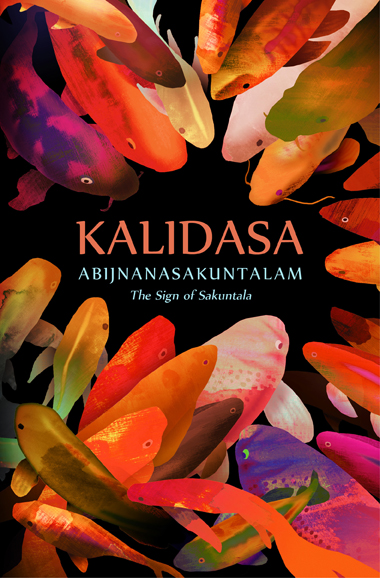
Abhijnanashakuntalam: The Recognition of Shakuntala
Translated by Vinay Dharwadker
9780670087464 • 300 • `399 • B/HB • World
Kumarasambhavam: The Origin of the Young God
Translated by Hank Heifetz
9780143424079 • 240 • `399 • B/PB • World
The Loom of Time
Translated by Chandra Rajan
9780144000784 • 344 • `399 • B/PB • Indian Subcontinent only

Malavikagnimitram: The Dancer and the King
Translated by Srinivas Reddy
9780143424086 • 176 • `399 • B/PB • World
Raghuvamsam: The Line of Raghu
Translated by A.N.D. Haksar
9780670087105 • 208 • `399 • B/HB • World
KAUTILYA The Arthashastra
Translated by L.N. Rangarajan
9780140446036 • 872 • `650 • Demy/PB • World
The pre-eminent manual on statecraft
KSHEMENDRA
The Courtesan’s Keeper: Samaya Matrika
Translated by A.N.D. Haksar
9780143421474 • 200 • `299 • B/PB • World
Three Satires from Ancient Kashmir
Translated by A.N.D. Haksar
9780143063230 • 184 • `250 • B/PB • World
MALLA, KALYANA Suleiman Charitra
Translated by A.N.D. Haksar
9780143420590 • 144 • `250 • B/PB • World
MANU Laws of Manu
Translated by Wendy Doniger and Brian K. Smith
9780140445404 • 368 • `450 • B/PB • India only
NARAYANA Hitopadesa
Translated by A.N.D. Haksar
9780144000791 • 260 • `299 • B/PB • Indian Subcontinent only
PATANJALI Patanjali’s Yoga Sutra
Translated by Shyam Ranganathan
9780143102199 • 336 • `399 • B/PB • Commonwealth countries and South Asia only
The foundational text for the practice of yoga

Rig Veda
Translated by Wendy Doniger
9780140444025 • 344 • `399 • B/PB • Indian Subcontinent only
SANKARA The Roots of Vedanta
Translated by Sudhakshina Rangaswami
9780143064459 • 480 • `499 • B/PB • World
ŚARMA, VISNU The Panćatantra
Translated by Chandra Rajan
9780144000715 • 512 • `499 • B/PB • Indian Subcontinent only
Seduction of Shiva, The: Tales of Life and Love
Translated by A.N.D. Haksar
9780143415404 • 256 • `399 • B/PB • World
Simhasana Dvatrimsika: Thirty-Two Tales
Translated by A.N.D. Haskar
9780140447484 • 216 • `250 • B/PB • World
SIVADASA The Five and Twenty Tales of the Genie
Translated by Chandra Rajan
9780144000456 • 336 • `299 • B/PB • Indian Subcontinent only
SOMADEVA Tales from the Kathasaritasagara
Translated by Arshia Sattar
9780140247213 • 264 • `350 • B/PB • World
Subhashitavali: An Anthology of Comic, Erotic and other Verse
Translated by A.N.D. Haksar
9780143101369 • 208 • `250 • B/PB • World
TRYAMBKAYAJVAN The Perfect Wife: Stridharmapaddhati
Translated by Julia Leslie
9780140435986 • 392 • `375 • B/PB • World

Upanisads, The
Translated by Valerie J. Roebuck
9780140447491 • 503 • `499 • B/PB • Indian Subcontinent only
VALMIKI Ramayana
Translated by Arshia Sattar
9780140298666 • 696 • `699 • B/PB • World
A brilliant, beloved translation of the great Indian great epic
VATSYAYANA
Kama Sutra: A Guide to the Art of Pleasure
Translated by A.N.D. Haksar
9780670085637 • 240 • `450 • B/PB • Indian Subcontinent only
Kama Sutra of Vatsyayana
Translated by Richard Burton
9780143066446 • 258 • `350 • B/PB • World
TAMIL
Extraordinary Child
Translated by Paula Richman
9780143063179 • 312 • `375 • B/PB • Indian Subcontinent and
UK only
ILANGO Cilappatikaram: The Tale of an Anklet
Translated by R. Parthasarathy
9780143031963 • 440 • `450 • Demy/PB • Indian Subcontinent only
Winner of the Sahitya Akademi English Translation Award 1995
KAMBAN The Kamba Ramayana
Translated by P.S. Sundaram
9780143028154 • 464 • `450 • B/PB • World
Love Stands Alone: Selections from Tamil Sangam Poetry
Translated by M.L. Thangappa
Introduction by A.R. Venkatachalapathy
9780143103974 • 256 • `299 • B/PB • World
Winner of the Sahitya Akademi English Translation Award 2012
River Speaks,The: The Vaiyai Poems from the Paripatal
Translated by V.N. Muthukumar and Elizabeth Rani Segran
9780143415077 • 182 • `250 • B/PB • World except North America

NAMMĀLVĀR
A Hundred Measures of Time: Tiruviruttam Translated by Archana Venkatesan
9780143066378 • 280 • `399 • B/PB • World
Hymns for the Drowning Translated by A.K. Ramanujan
9780144000104 • 175 • `250 • B/PB • World
Red Lilies and Frightened Birds: Muttollayiram Translated by M.L. Thangappa
Introduction by A.R. Venkatachalapathy
9780143064855 • 240 • `299 • B/PB • World
TIRUVALLUVAR Kural
Translated by P.S. Sundaram
9780144000098 • 168 • `250 • B/PB • World
TELUGU
APPARAO, GURAJADA Girls for Sale: Kanyasulkam Translated by Velcheru Narayana Rao
9780143066880 • 366 • `350 • B/PB • Indian Subcontinent only
KRISHNADEVARAYA, SRI The Giver of the Worn Garland: Amuktamalyada Translated by Srinivas Reddy
9780143065456 • 264 • `250 • B/PB • World
A masterpiece by the sixteenth-century emperor Krishnadevaraya
of Vijayanagaram

MUDDUPALANI The Appeasement of Radhika
Translated by Sandhya Mulchandani
9780143417484 • 200 • `250 • B/PB • World
TURKISH
BABUR Babur Nama
Translated by Annette Beveridge
Selected with an introduction by Dilip Hiro
9780144001491 • 385 • `450 • B/PB • World
URDU
AMMAN, MIR A Tale of Four Dervishes
Translated by Mohammed Zakir
9780140245738 • 158 • `199 • B/PB • Indian Subcontinent only
Tilism-e-Hoshruba: The Enchantment of the Senses
Translated by Shahnaz Aijazuddin
9780143102724 • 924 • `699 • Demy/PB • World
The world’s first magical fantasy epic


MISCELLANEOUS CLASSICS

ARABIC
Quran
Translated by Tarif Khalidi
9780670084173 • 560 • `599 • B/HB • Indian Subcontinent only
BENGALI
CHATTOPADHYAY, SARATCHANDRA Classic Saratchandra 9780144000142 • 816 • `699 • Demy/PB • World
TAGORE, RABINDRANATH Classic Rabindranath Tagore 9780143416326 • 1136 • `599 • Demy/PB • World
TAGORE, RABINDRANATH I Won’t Let You Go: Selected Poems Translated by Ketaki Kushari Dyson
9780143416142 • 320 • `450 • Demy/PB • Indian Subcontinent and
Singapore only
ENGLISH
ANAND, MULK RAJ Classic Mulk Raj Anand
Edited with an introduction by Saros Coswajee
9780143422402 • 728 • `599 • Demy/PB • Indian Subcontinent only
AUSTEN, JANE Classic Jane Austen
9780143068594 • 1336 • `550 • Demy/PB • World
52 53
CARROLL, LEWIS Classic Lewis Carroll
9780143068617 • 1176 • `599 • Demy/PB • World
DOYLE, SIR ARTHUR CONAN Classic Sherlock Holmes
9780143068600 • 1128 • `599 • Demy/PB • World
NARAYAN, R.K. Indian Epics Retold
9780140255645 • 630 • `599 • B/PB • Indian Subcontinent and
Singapore only
SANSKRIT
Bhagavad Gita, The
Translated by Juan Mascaro
9780670084166 • 124 • `350 • B/HB • Indian Subcontinent only
Mahabharata, The Volumes 1-10
Translated by Bibek Debroy
9780143424789 • `4999 • Demy/PB • World
The greatest story ever told, now in its definitive translation
‘Debroy’s lucid and nuanced retelling of the original makes
the masterpiece even more enjoyably accessible’ Open
‘Excellent . . . A pleasure to read’ Tribune
Volume 1
9780143425144 • 536 • `499 • Demy/PB • World
Volume 2
9780143425151 • 528 • `499 • Demy/PB • World
Volume 3
9780143425168 • 648 • `499 • Demy/PB • World
Volume 4
9780143425175 • 624 • `499 • Demy/PB • World
Volume 5
9780143425182 • 632 • `499 • Demy/PB • World
Volume 6
9780143425199 • 560 • `499 • Demy/PB • World
Volume 7
9780143425205 • 600 • `499 • Demy/PB • World
Volume 8
9780143425212 • 752 • `499 • Demy/PB • World
Volume 9
9780143425229 • 760 • `499 • Demy/PB • World
Volume 10
9780143425236 • 726 • `499 • Demy/PB • World
VALMIKI Ramayana
Translated by Arshia Sattar
9780670084180 • 696 • `699 • B/HB • World


For more information please contact:

Ambar Sahil Chatterjee ( achatterjee@penguinrandomhouse.in )

Associate Commissioning Editor

Penguin Books India

Penguin Random HousePRH logo


ABIJNANASAKUNTALAM_WEB


A HUNDRED MEASURES OF TIME_web

THE CAT AND SHAKESPEARE_webANGAARAY_web (1)


MY NAME IS RADHA_web (2)

Twinkle Khanna and Brigid Keenan

MRS FUNNYBONES_webI have had immense good fortune of reading Twinkle Khanna’s Mrs Funnybones and Brigid Keenan’s Packing Up back-to-back.

Mrs Funnybones is Twinkle Khanna’s debut as an author. It is based upon her immensely popular and delightfully irreverent column of the same name published in Mumbai newspaper, DNA. It is a sharp, witty and tongue-in-cheek commentary on the many roles a modern woman fulfils — career woman, housekeeper, mother, wife, counsellor, daughter, daughter-in-law, accountant, Man Friday etc. Many would be sceptical that a famous star like Twinkle Khanna is able to write on her own without the assistance of a ghost writer, but there is an authenticity about the book which rings true. I would not term it as “chick lit” but many would view it so. It is hard to put one’s finger on it but reading it from cover-to-cover followed by listening to her at the book launch convince one about Mrs Funnybones being wholly original. Twinkle Khanna had been an actress but is a more accomplished interior designer, voracious reader especially of scifi literature and if her friends at the book launch are to be believed, always known for her wit.

A sample of her writing on her observations on Karva Chauth, an annual ritual in the Hindu calendar when north Indian women fast for the day, ostensibly for seeking better health of their husbands. The day ends with the wife looking at the reflection of the moon through a sieve to secure the lunar deity’s blessings, then she turns to her husband and views his face indirectly in the same manner. This is what Twinkle Khanna has to say:

We Indians are a strange race; we send MOM to Mars, but listen to mom-in-law and look for the moon. One of the better qualities we possess is that most of us will follow traditions and rituals as long as they do not demean or harm us, or cause us to do the same to another, while making our elders happy. We simply do it rather than prove a point as to how liberated and independent we truly are. Perhaps, this is how we harmoniously hold our large families together as we celebrate different aspects of our lives.  ( p.101)

Here is a link to the star-studded book launch organised earlier this week in Mumbai. The conversation with Karan Johar, Aamir Khan, etc are worth watching. Apparently her husband, the mega-Bollywood star, Akshay Kumar reads every single word she spins out and is her first editor. In recent times as mentioned in the YouTube link, he has gently advised her to not use the word “Pakistan” on a few occasions.


Brigid Keenan’s Packing Up she suggests falls into the category of “decreplit” or books written by older Packing Upwomen. Packing Up is a hilarious account of her travels as a diplomat’s wife, retirement and grandmotherhood. When she is not mending her tarantula ( seriously! a souvenir collected in Trinidad, after her husband squashed it), Brigid Keenan’s keen eye observes life around her whether it is in Kazakhstan, Azerbaijan, Suffolk, London, Brussels, Jaipur or Sri Lanka. She is one of the co-founders of the Palestinian Festival of Literature. Whatever she does, it is with passion.

With both these women writers it is the frank honesty with which they write, the ability to laugh at themselves and gaily comment on the world around them. The facetiousness with which they seemingly write, garbs the brutal and sharp understanding of reality they have. Mrs Funnybones and Packing Up are excellent examples of using one’s wit with panache.

These books are a must buy.

Twinkle Khanna Mrs Funnybones Penguin Books, Gurgaon, India, 2015. Pb. pp. 240 Rs. 299

Brigid Keenan Packing Up: Further Adventures of a Trailing Spouse Bloomsbury, London, 2014. Pb. pp. 320 Rs 399

21 August 2015

Literati – “The library as social experience” ( 16 August 2015)

jaya_bhattacharji-300x300My monthly column, Literati, in the Hindu Literary Review was published online ( 15 August 2015) and will be in print ( 16 August 2015). Here is the url http://www.thehindu.com/books/literary-review/jaya-bhattacharji-rose-on-the-relevance-of-libraries-today/article7539673.ece#. I am also c&p the text below. 

Buying books the traditional way is a cherished subjective experience, heavily dependent on the curating abilities of the book buyer.

My five-year-old daughter asked me, “Why can’t libraries be like bookshops? If we like a book, why must we return it to the library? Why can we not buy and keep it?” I was stumped. It was a perceptive observation.

***

“You either see it or you don’t” was an eccentric American Dennis Severs’ mantra,who converted his Georgian home in London into a time capsule with pieces collected from the 17th century till Edwardian times. Brian Selznick’s absolutely ‘scrumdiddlyumptious’ forthcoming book, The Marvels, is heavily inspired by Dennis Severs’ imaginative lifestyle. To my mind, this mantra aptly marks the rapid disappearance of brick-and-mortar bookstores and at the same time provides a possible solution for their survival.

In Delhi, two iconic bookshops — Fact & Fiction and Galgotia — are closing. There are many factors responsible globally for closure of bookstores, such as rising rents, fewer customers and an increasing use of e-readers like Kindle, iPads and smartphones. Buying books the traditional way is a cherished subjective experience, heavily dependent on the curating abilities of the book buyer. Obviously, a regular customer is wistful at the announcement of their favourite bookstore closing. On the other hand, online retailers have to innovate, evolve and work constantly at providing customer satisfaction without ever knowing who is buying from their portal.

For most readers, it is like being in a dream spell. Having read about a book, many readers want instant gratification and engage in impulsive buying, usually possible only with online retail. It is a human behaviour that has evolved with access to the Internet 24×7 for more than a generation.

Recently, I read a bunch of absolutely delightful titles from the TED Books that take off from where TED talks leave off, such as Pico Iyer’s The Art of Stillness, Chip Kidd’s Judge This and Chimamanda Ngozi Adichie’s We Should all be Feminists. I also read a devastatingly moving novel, The Blue between Sky and Water, by Palestinian writer Susan Abulhawa; a delightful anthology, The Pleasure of Reading,edited by Antonia Fraser; and an excellent collection of commentaries, Nehru’s India, edited by Nayantara Sahgal. War novel Escape from Baghdad! by Bangladeshi Saad Hossain and The Word at War made it to the list. When I discuss these books animatedly with friends, many automatically order these online. This change in human behaviour has affected the lifeline of bookstores.

In a possible model for a bookstore of the future, non-profit Pioneer Works in Red Hook, U.S., opened a ‘remarkably small’ bookstore. It stocks new and used books, local zines, lit mags, children’s books conveniently located at their height and a modest wall spotlighting a rotating small press. Also, the shop clerk assures customers that if they do not find the book title they are looking for, he will order it for them.

Then there is Trilogy in Mumbai, founded by Meethil Momaya and Ahalya Naidu in December 2014. It houses a library and a bookstore; though they are under the same roof they do not share shelf space. Titles are available in Hindi, English and Marathi. The library functions like any old-school library and the bookstore works like (almost) any other bookstore in the world. The very idea of having a bookstore and a library together in the same place without a wall dividing the two was to allow members the freedom to read books without owning them (library) and when they love a book they would like to own, they always have the option of buying it (bookstore). There is a symbiotic relationship between the two spaces. Borrowers very often want to buy the book they have either issued or find in the library. If it is available in the bookstore they can buy it immediately.

There is also the model that legislator Dr. T.M. Thomas Isaac has suggested in Kerala wherein libraries turn into centres for students to gather and study together in the evenings.

These examples illustrate a recommendation made at the Indian Public Libraries Conference 2015 held on March 17-19, 2015 in New Delhi. Recommendation on refurbishment of public libraries, point 8f, states, “Facilities in public libraries should include, ‘multi-purpose social space’ for use by the community extending services beyond the provision of reading facilities.”

Paul X. McCarthy, in Online Gravity: The Unseen Force Driving the Way You Live, Earn, and Learn, illustrates how a new set of economic rules, very different from those in the physical world, are governing businesses. According to him, one of the fundamental consequences of gravity-giant formation is the way in which it is influencing the shape of products, companies and ultimately the whole economy online. But I wonder if the cross-filtering and influencing of experiences across mediums has not already begun? What is the future of libraries and bookstores if they don’t evolve by catering to community demands and expectations? Libraries and bookstores die because they fail to fulfil this. Reading may be a personal experience, but libraries and bookstores are social experiences. Somewhere the customised experiences of individuals increasingly created by blending digital and real services have begun to spill over into the physical world.

15 August 2015

Literati – “The Critic” ( 19 July 2015)

jaya_bhattacharji-300x300My monthly column, Literati, in the Hindu Literary Review was published online ( 18 July 2015) and was in print ( 19 July 2015). Here is the http://www.thehindu.com/books/literary-review/jaya-bhattacharji-rose-on-the-world-of-books/article7429521.ece. I am also c&p the text below. 

In a column on January 11, 2015, The New York Times published Michiko Kakutani’s review of Harper Lee’s much-awaited Go Set A Watchman(@GSAWatchmanBook ) — on the front page, no less. There have been energetic nitpicking conversations about this review. But the truth is that any space given by a mainstream newspaper to a book review is unusual. For, despite the 50-year gap between To Kill a Mockingbird and Go Set A Watchman, the latter has a two million print run. Lee’s resurrection of Atticus Finch has excited readers. According to Bloomberg, US, “it is the most pre-ordered book in her publisher’s history.” (July 9, 2015, http://bloom.bg/1HXxgij )

This pre-publication hype is any writer’s publicity dream. Space for reviewing books in print media is fast dwindling while rapidly gaining momentum on social media, prompting many writers to be creative in getting their books discovered. Popular writer, Ravi Subramanian has launched an app to help promote his books. Booksellers too have to be innovative — curating literary engagements or as the portly owner of Haji Suleiman and Sons tells Hafiz in Anis Shivani’s lengthy debut novel, Karachi Raj “Shelving is an art. Mixing the old and the new on the same subject is more important than getting the alphabetical order just right.”

An important part of the publishing ecosystem is the critic. The few well-read critics like James Wood, Amitava Kumar, Tim Parks and John Freeman are known and greatly valued for their honest, straightforward and informed observations. Whether in print or virtual space, by critics or others (publishing professionals use their Facebook walls to air frank opinions), a good review should generate conversation. Recently, Daniel Menaker — writer and former Editor-in-Chief, Random House Publishing Group — said of the new Harper Lee novel : “Here’s the thing: it is natural and inevitable for readers and experts to compare these two Harper Lee books to each other. But the comparisons have absolutely nothing to do with the quality of each book. They are two different objects. You can get historical perspective about an artist by comparing an early landscape to a late one, but the value of both remains entirely independent of their relation to each other. Rembrandt’s series of self-portraits is an excellent source of historical, biographical comparison, but as works of art they must be judged on their own merits. [Alexander] Alter’s piece in The Times is where it should be — outside the review arena. Kakutani’s “review” should have given no more than a nod to TKAM in discussing GSAW, if you ask me. The rest of the review would have been actually more useful if it had addressed the merits and problems with GSAW on its own terms. Seems to me.” (Quote reproduced with permission.)

With this, Menakar sparked off a crackling literary conversation about the merits of reviewing. To be a professional critic is never painless. It is particularly tough when the critic is an integral part of the literary set of concerned editors, publishers and authors; some of whom have acquired demi-god status. Thus Shamsar Rahman Faruqui’s The Mirror of Beauty and The Sun that Rose from the Earth, and Amitav Ghosh’s Flood of Fire, which are rich longwinded tapestries of the past, have had reasonably good sales and glowing critical acclaim. In his Afterword to Mantonama, Saadat Hasan Manto declares: “know-it-all pundits” can have a powerful impact on an author, but solace lies in realising that “literature…is a self-existent entity. …Literature is as alive and exuberant today as it was before it was discovered.” (My Name is Radha: The Essential Manto, translated by Muhammad Umar Memon.)

In ‘Bad News’, an essay in his splendid book, Lunch with a Bigot, Amitava Kumar sums it: “With all their beauty and artifice, novels often hide the ordinary grit of reality. …It is the irrepressible bubbling-up of the everyday, not the unbending demand of a rigid aesthetic, that makes a novel satisfying, that connects it to life.” Saikat Mazumdar’s exquisite The Firebird and K. R. Meera’s disturbing novella And Slowly Forgetting that Tree (translated from Malayalam by J. Devika) are fine examples of such satisfying literature.

15 August 2015 

Alex Bellos, “Alex Through the Looking Glass”

9781408845721I spent the better part of a morning reading bestselling author Alex Bellos’s absolutely delightful book Alex Through the Looking Glass: How Life Reflects Numbers, and Numbers Reflect Life. ( The American edition is called The Grapes of Math.) He uses anecdotes and examples from real life but neatly dovetails it with the history of modern mathematics, interweaving it with accounts of legendary mathematicians. Some of the text is very technical but is still accessible. This book is written for the layperson, not a specialist. But golly, this man is informative. I love the way he has strung together maths trivia with crucial bits of knowledge effortlessly. I admire the way he talk about eminent mathematicians as if they were his buddies but very respectfully places them in context. It could be Newton, Leibniz, Archimedes, Brahmagupta et al. He makes you chuckle when making reference’s to Euclid’s Elements reads like a recipe book.

And then I discovered this tweet. The book has been shortlisted for an award.

Alex Bellos (@alexbellos) tweeted at 3:22 PM on Wed, Aug 05, 2015:
Thrilled to make @royalsociety Winton Prize shortlist w @matthewcobb @WanderingGaia @jimalkhalili @jonmbutterworth +https://t.co/5y2aKNm7VP
(https://twitter.com/alexbellos/status/628866049467940864?s=03)

His previous book, Alex’s Adventures in Numberland was shortlisted for the BBC Samuel Johnson Prize. Alex Bellos writes a blog for The Guardian. http://www.theguardian.com/profile/alexbellos It is worth browsing through. He makes maths fun!

He helps rearrange one’s muddled significance and timeline of eminent mathematicians through the ages but contextualises them very well, it won’t be easy to dismiss as “boring maths”.  For instance, “Thales is ..the first person to have a specific mathematical discovery named after him: Thale’s Theorem, which states that the triangle inscribed inside a semicircle has a right angle. He also used his deductive powers to predict the solar eclipse of 585 BCE, and improve after a few bad years. He bought all the olive presses he could at rock bottom prices and when the upturn came he got rich. A century later, the comic playwright Aristophanes made fun of the great sage by having him fall in a ditch because he was lost in thought, gazing at the sky. Thales is not just remembered as history’s first mathematician and philosopher, but also as history’s first absent-minded professor.” (p.59)

Or the story about The Scottish Book

Between the First and Second World Wars, a clique of mathematicians in Lwow, Poland, met regularly in a coffee shop, the Scottish Cafe, to discuss mathematical morsels such as the pancake theorem. Hugo Steinhaus, a principal member of the group, wondered whether the theorem could be extended into three dimensions. ‘Can we place a piece of ham under a meat cutter so that meat, bone and fat are cut in halves?’ he asked. His friend Stefan Banach proved that such a cut is possible, using a theorem attributed to two others in a group, Stanislaw Ulam and Karol Borsuk. Banach’s result has subsequently been popularized as the ‘ham sandwich theorem’, because it is equivalent to stating that one can divide a ham sandwich in two with a single slice that cuts each slice of bread and the ham into two equal sizes, no matter how each piece is positioned and whatever is shape.

The mathematicians who gathered in the Scottish Cafe kept a thick notebook of all the questions they asked each other, which they entrusted to the care of the head waiter when they went home. Eventually known as The Scottish Book, it is a unique collaborative work, and not just because of how it was written. ( It was never published as a book, but some of its problems appeared later in journals.) 

(p.236-7)

Ulam later joined the Manhattan Project.

I would strongly recommend buying this book. It is the kind of nonfiction book you dip into and come away feeling time has been well spent. It would also be a useful addition to the reference section of a library, particularly of schools.

Alex Bellos Alex Through the Looking Glass: How Life Reflects Numbers, and Numbers Reflect Life Bloomsbury, London, 2014, rpt 2015. Pb. pp. 340 Rs 399.

13 August 2015 

Web Analytics Made Easy -
StatCounter