We gave this beauteous book to our daughter as a Christmas present. She loved it. Squealed with delight. She loves poetry. She loves painting. She loves nature. This is a splendidly elegant and quiet mix of all the elements. It gives one immense pleasure, peace and happiness reading it.
For me, the poem and gorgeous illustration of a daisy chain brought back memories of my childhood. My mother had taken my twin and me to the hill station Dalhousie. She had been instructed by my grandfather to pack up his childhood home, Snowdon and Shantikunj, as his mother had recently passed away. It was a bittersweet experience but mum made it memorable by taking us for long walks through the forest, instructing us to keep the doors bolted at night in case the panthers arrived and of course waiting out the tremendous racket the langoor raid created on our tin roofs. A particularly precious memory was seeing mum get very excited when she came across a patch of daisies by the road winding through through forest. So we plonked ourselves in the grassy-daisy patch, by the roadside and strung daisy chains, while madly waving to passers by. It was a fun, fun day.
Jackie Morris and Robert Macfarlane have the incredible gift of making magic together. In their own right they are astonishingly talented souls but together their creativity sparkles and this shines in The Lost Spells ( Hamish Hamilton). They are also very fortunate in their publishers being very generous and supportive in the book production. Little details beginning with the gold foiling on the cover to the richness of colours used, pocket size of the book that is unheard of nowadays as it is not an economically viable size to produce, the gold bookmark stitched into the spine and the sumptuous spread of illustrations is an utter delight to behold.
It is such a precious book at all times but particularly during the pandemic. We could do with such moments of joy!
On 3 January 2021, I wrote about the wonderful books expected to be published in 2021. Here are the original links in the Asian Age and Deccan Chronicle. Given below is the longer version of the article.
****
The Covid-19 pandemic has disrupted innumerable sectors – publishing is no exception. One of the major fallouts has been the front lists where commissioning editors are circumspect about whom to commission and what subjects to explore; it is not said explicitly but it is apparent while scanning 2021 book catalogues that there has been a shift. Tried and tested subjects such as politics, memoir/biographies and narrative non-fiction exist but there is a definite presence of essayists and nature writing. The top 1% of successful literary and commercial fiction authors — internationally and locally—are back with new books. Interestingly there is a large variety of debut authors, from newcomers to well-known nonfiction writers becoming novelists such as Ira Mukhoty Jayal, Krupa Ge and Tavleen Singh. Historical fiction is a robust category with trilogies and quartets being announced by writers like Jerry Pinto and Madhulika Liddle. Surprisingly celebrity publishing and Mind, Body Spirit (MBS) that are constant sellers are not as prominent as they were in the recent past.
During the pandemic, it is a wise decision by publishers to ensure that successful authors constitute a chunk of their front lists. Hence, in non-fiction, there is Shashi Tharoor’s Pride, Prejudice & Punditry: The Essential Shashi Tharoor consists of essays and fiction; Salman Rushdie’s Languages of Truth has newly collected, revised and expanded non-fiction from the past two decades, many of which have never been published before; Ruskin Bond’s It’s a Wonderful Life: Roads to Happiness that calls for small joys to be found in everyday living even in times of extreme stress; A Functioning Anarchy (Eds. Srinath Raghavan and Nandini Sundar) a collection of essays by world-renowned historians, lawyers, scientists and journalists sparked by Ramachandra Guha’s work; Nayantara Sahgal’s The Unmaking of India: Articles and Speeches & Encounter with Kiran contains articles, talks, essays that discuss the “unmaking” of India, where freedom, liberty and equality are replaced by religious bigotry, communal politics, a ‘’tame’’ media and all the accompanying dangers of majoritarian rule and Eric Hobsbawm’s On Nationalism that is considered to be an insightful and enlightening collection of the historian’s writing on the subject of nationalism.
Non-fiction sells consistently especially on politics, history, business, self-help, memoirs/biographies etc. Some of the exciting titles scheduled are historian Upinder Singh’s Ancient India: Culture of Contradictions ; Amit Varma’s podcasts converted into four books, collectively known as The Seen and the Unseen; Amitav Ghosh’s The Nutmeg’s Curse: A Parable for a Planet is about conquest and exploitation and geopolitical hierarchy; Manu Pillai’s The World of Raja Ravi Varma: Princes and Patrons describes the portraits of the Maharajahs stood up to the Raj and developed visions of modernity that were deeply Indian in nature, and women who defied norms as well as colonial expectations; City of Gated Walls: The Map of Shahajahanabad by Swapna Liddle is a reproduction of that map created in Bahadur Shah Zafar’s time by a mapmaker, working in 1846, who painstakingly depicted important buildings, streets, and landmarks, providing a wealth of information about the city as it had evolved up to that time. In Search of the Divine: Living Practices of Sufism in India by Rana Safvi, is a unique treatise on the core of Sufi beliefs. Some others that are eagerly awaited include 1946: The Indian Naval Uprising that Shook the Empire by Pramod Kapoor; The Gujaratis: A Portrait of a Community by Salil Tripathi; Congress Radio by Usha Thakkar about the establishment of the underground radio by Usha Mehta during the Quit India Movement; Aparna Vaidik’s Revolutionaries on Trial: Sedition, Betrayal, and Martyrdom uses a variety of sources to reconstruct a dramatic period in India’s struggle for Independence; and Angellica Aribam and Akash Satyawali’s The Fifteen: The Women Who Shaped the Constitution of India. Rupa Gupta and Gautam Gupta’s Lifting the Veil from India’s Past is about the Archaeological Survey of India. In Language of Remembering: Generational Memories of the Partition, Aanchal Malhotra shifts attention to the post-memory generation – how the generations that have not witnessed Partition engage with its history. Yashaswini Chandra The Tale of the Horse: A History of India on Horseback is a tale of migration and permanent intermingling whereas Winged Stallions and Wicked Mares: The Horse in Indian Myth and History by Wendy Doniger examines the horse’s significance throughout Indian history and culture even though the animal is not indigenous to India. Voices from the Lost Horizon is a collection of a number of folk tales and songs of the Great Andamanese that represent the first-ever collection rendered to Prof. Anvita Abbi and her team by the Great Andamanese people in local settings. The compilation comes with audio and video recordings of the stories and songs to retain the originality and orality of the narratives. In Fellowship of Rivals by Manjit Kumar that tells the story of the first great Scientific Revolution, and how a small group of individuals – including Isaac Newton, Robert Hooke and Christopher Wren – produced an explosion of knowledge unrivalled in the history of western civilisation. Pranay Lal’s Virus is a deep dive into its origin and evolution and his The Cretaceous is meant for younger readers. Anjana Chattopadhyay discusses Women Scientists in India: Lives, Struggles and Achievements.
Militant Piety and Lines of Control: The Lethal Literature of the Lashkar-e-Taiba edited by C. Christine Fair and translated by Safina Ustaad is the first scholarly effort to curate a sample of LeT’s Urdu-language publications and then translate them into English for the scholarly community studying this group and related organizations. The Muslim Problem by Tawseef Khan gets to the heart of Islamophobia and is a compelling mix of journalistic investigation, historical analysis and memoir, full of research and interviews. Tawseef Khan is a solicitor specialising in Immigration and Asylum Law and a human rights activist. In Project 39 are deeply personal stories that emerged from interviews conducted with death-row prisoners and their families. These were collected by Jahnavi Mishra and Project 39A, a research and litigation centre based out of National Law University, Delhi. is awaited as is India’s First Dictatorship: The Emergency, 1975-77 by Christophe Jaffrelot and Pratinav Anil that draws upon a trove of new sources. From the bestselling military historian, Shiv Kunal Verma’s 1965: A Western Sunrise is the definitive account of the 1965 war between India and Pakistan. Meanwhile Samira Shackle’s debut Karachi Vice is considered to be a fast-paced journey around Karachi in the company of those who know the city inside out. Some others that are expected: When the Mask Came off: A People’s History of Cruelty and Compassion in Times of Covid19 Lockdown, edited by Harsh Mander, Natasha Badhwar and Anirban Bhattacharya; Jana Gana Mana by musician-activist T.M. Krishna who through the idea of ‘national symbols’, examines the idea of citizenship and belonging, while also investigating and problematising the symbol itself. Graphic narratives such as Azaadi: A Biography of Bhagat Singh by Ikroop Sandhu; Shaheen Bagh: A Graphic Book by Ita Mehrotra and Incantations over Water by Sharanya Manivannan.
Nature writing is proving to be a well-defined genre as well. The titles to look out for are The Bera Bond which is about Sundeep Bhutoria’s startling discovery of a little-known leopard colony in the forests of Rajasthan where the big cats live harmoniously with humans. The Braided River: A Journey Along the Brahmaputra, journalist Samrat Choudhury sets out to follow the river’s braided course from the edge of Tibet where it enters India down to where it meets the Ganga at a spot marked by the biggest red-light district in Bangladesh. Award-winning wildlife conservationistNeha Sinha’s Wild and Wilful is about fifteen iconic Indian species in need of conservation and heart. Earth’s Incredible Oceans by Dorling Kindersley is a must-have encyclopaedia. Waiting for Turtles by Pankaj Sekhsaria, illustrated by Vipin Sketchplore is a gorgeous picture book sensitising children to the urgency to save turtles. Scientist-cum-author Sukanya Datta’s Animal Architects is about the homes that animals build and are in themselves architectural wonders. The Heartbeat of Trees by Peter Wollehben (translated by Jane Billinghurst), reveals the profound interactions humans can have with nature, exploring the language of the forest and the consciousness of plants. Worryingly climate change can wreak havoc to these ecosystems. Hence the relevance of environmental activist Vandana Shiva and Shreya Jani Slow Living: What You Can Do About Climate Change. Bill Gates too has a forthcoming book on How to Avoid a Climate Disaster.
Memoirs have always proven to be popular. Some of the prominent ones are MK Gandhi’s Restless as Mercury: My Life as a Young Man; the celebrated Hindi writer Swadesh Deepak I Haven’t Seen Mandu, translated by Jerry Pinto is a most revealing and powerful first-person accounts of mental illness; Feisal Alkazi’s Enter Stage Right: The Alkazi / Padamsee Family Memoir; Gulzar’s Actually… I Met Them: A Memoir, Vir Sanghvi by journalist Vir Sanghvi; Bollywood actors Neena Gupta, Deepti Naval and Priyanka Chopra Jonas have written Sach Kahun Toh, A Country Called Childhood: A Memoir and Unfinished: A Memoir respectively but the big one will be Hollywood actress Sharon Stone’s The Beauty of Living Twice; screenwriter Nikesh Shukla’s Brown Baby explores themes of racism, feminism, parenting and our shifting ideas of home; publisher Ritu Menon’s ADDRESS BOOK: A Publishing Memoir in the Time of COVID; Kobad Ghandy’s Fractured Freedom: A Prison Memoir gives an insight into his decade-long journey of arrests and time in prisons across India; Dead Men Tell Tales by forensics expert Dr B. Umadathan (translated from Malayalam by Priya K. Nair) is the riveting memoir of Sherlock Holmes of Kerala. Former cricketer and commentator and current head coach of the Indian national cricket team Ravi Shastri’s memoir written with Ayaz Memon.
Biographies whether authoritative or not are hugely popular such as Yasser Usman’s Guru Dutt: An Unfinished Story; Kaveree Bamzai’s The Three Khans about Aamir Khan, Salman Khan and Shah Rukh Khan; Gautam Chintamani Vinod Khanna: A Biography; Zohra! – A Biography in Four Acts by Ritu Menon about thespian Zohra Sehgal; Francis Wilson’s biography of DH Lawrence called Burning Man; Adi Prakash’s Umar Khalid: Beyond the Anti-national is the story of Umar Khalid is the story of media fairness and it is the story of student politics and of growing up Muslim in India. Also expected are the Hindi writer and the first real standard-bearer of the Nayi Kahani movement Nirmal Verma: A Biography by Vineet Gill and The Master: The Brilliant Career of Roger Federer by Christopher Clarey.
Business books are another category of nonfiction books that sell perennially. Investigative journalist Josy Joseph’s The Business of Terror explores the militancy theatre as a flourishing, multi-faceted business enterprise in India where most of its actors are beneficiaries of it. Technology journalist Jayadevan P.K. writes about Xiaomi: How a Start-up Disrupted the Market and Created a Cult Following that in less than a decade, has gone from being a Chinese start-up to a global player in the smartphone market. Munaf Kapadia with Zahabia Rajkotwala writes in How I Quit Google to Sell Samosas: Adventures with the Bohri Kitchen how he had grown a weekend pop-up at his Cuffe Parade home—The Bohri Kitchen—into an F&B start-up with a Rs 4 crore turnover, and was catering to Bombay’s biggest celebrities. Liftoff: Elon Musk and the Desperate Early Days That Launched by Eric Berger is the dramatic inside story of the first four historic flights that launched SpaceX—and Elon Musk—from a shaky startup into the world’s leading edge rocket company. Tata: The Global Corporation That Built Indian Capitalism by Mircea Raianu is a eye-opening portrait of global capitalism spanning 150 years, told through the history of the Tata corporation. Forgotten Brands: Fresh Marketing Lessons by Ramya Ramamurthy is about colonial Indian brands (both home-grown and foreign) were produced, distributed and marketed between 1847 and 1947. Finally, House of Pain by Patrick Radden Keefe is the story of the Sackler Dynasty, Purdue Pharma, and their involvement in the opiod crisis that has created millions of addicts, even as it generated billions of dollars in profit.
Another popular nonfiction category are cookery books. So, it is no surprise then that practically every publisher has at least one book in the pipeline. Beginning with Sunita Kohli who has collected recipes from celebrities in From the Tables of My Friends; Winner of Nobel Prize in Economics (2019) Abhijit Banerjee’s cookbook; History Dishtory: Adventures and Recipes from the Past by Ranjini Rao and Ruchira Ramanujam and Indian Street food by Rocky Singh and Mayur Sharma. Chitrita Banerji’s A Taste of My Life is both the story of life as an immigrant food writer as well as a story of immigration, belonging, nostalgia, and history, through the lens of food. Rasa: The Story of India in 100 dishes by Shubhra Chatterji is a culinary history of India and the intersection of culture and cuisine told in the most enthralling stories behind a hundred dishes.
Across the board, literary fiction stalwarts return in 2021 with promising new stories. Chitra Bannerjee Divakurni’s novel The Last Queen is an exquisite love story about Maharaja Ranjit’s Singh’s last queen, a commoner, Jindan Kaur; Amitav Ghosh’s Jungle Nama: A Story of the Sundarban, a verse adaptation of the timeless legend of Bon Bibi and Dokkhin Rai that also evokes the wonder of the Sundarban through its poetry, accompanied by stunning artwork by the renowned artist Salman Toor. Asoca by I. Allan Sealy is an imagined memoir of Ashoka The Great; Hussain S. Zaidi’s The Black Orphan centres on Asiya, Osama Bin Laden’s protégé and foster daughter; Anuja Chauhan returns with a grisly titled Club You to Death as does Padma Shri Temsula Ao with six short stories in The Tombstone in My Garden; writers of young adult fiction like Deepa Agarwal’s Kashmir! Kashmir! and Paro Anand’s short stories Unmasked based on the challenges faced by migrants during the lockdown. Annie Zaidi’s novel, One of Them is about people who live on the margins of a big city, and Amitava Kumar A Time Outside This Time is about fake news, memory, and how truth gives way to fiction. The Loves of Yuri by Jerry Pinto is a funny, heart breaking, unforgettable novel about friendship and first loves and the great city of Bombay. Set in the 1980s, this is the first in a trilogy of novels that trace the emotional and intellectual journey of the protagonist, Yuri, from early adolescence to late youth. Nobel Prize winnersKazuo Ishiguro and Orhan Pamuk’s novels Klara And The Sun and Nights of Plague, respectively are hugely anticipated as is the mind bending new collection of short stories First Person Singular by Haruki Murakami. Pulitzer Prize-winners Jhumpa Lahiri, Viet Thanh Nguyen and Colson Whitehead’s novels are called Whereabouts, The Committed and Harlem Shuffle. This is the first novel Lahiri has written in Italian and translated into English. Tahmima Anam’s, already much-talked-about, The Start-Up Wife is considered gripping, witty and razor-sharp, a blistering novel about dreaming big, speaking up and fighting to be where you belong. Second-time novelists who had glittering starts to their literary careers like Anuk Arudpragasam, Sunjeev Sahota and Elizabeth Macneal return with In Search of the Distance, China Room, and Carnival of Wonder respectively.
The debut writers making their mark are Maithreyi Kapoor Sylvia’s Distant Avuncular Ends by experimenting with the form of a novel. Poet Kynpham Sing Nongkynrih’s novel Funeral Nights, where the absurd and the sublime all freely mix,is a history of the Khasis. Krupa Ge’s One Hundred Autumns is set in an era of strict Brahmanical orthodoxy and social mores that sought to bind all women into submission and against the backdrop of the Dravidian movement. Ira Mukhoty Jayal’s Song of Draupadi is a vivid and imaginative novel revolving around the epic figure of Draupadi. Raza Mir’s Murder at the Mushaira: A Novel is a cracking murder mystery & literary novel. Filmmaker Devashish Makhija’s Oonga, a powerful novel that transitions from a film and sits deep in the clash between adivasis, naxalites, the CRPF and a rapacious mining company; Simran Dhir’s Best Intentions, centred on two families in Delhi; Fahad Shah’s The Unnamed, a searing novel set in Kashmir; and Bollywood insider Mushtaq Sheikh’s sizzling Bollywood Biwis. Some of the others to watch out for are Rucha Chitrodia It’s also about Mynah, Zakiya Dalila Harris’s The Other Black Girl, Rijula Das’s A Death in Shonagachhi,journalists Anindita Ghose’s The Illuminated: A Novel and Tavleen Singh’s Everything Breaks.
Historical fiction is a well-defined niche with The Grand Anicut by Veena Muthuraman, set in Southern India, first century, with the Pandyas conquered, the Cheras all but vanquished, and the attention of the king of the north fixed on other lands, Tamilakam flourishes under Chola rule. The first book of Madhulika Liddle’s Delhi quartet — The Garden of Heaven is planned. It is a story playing out against a backdrop of Delhi, stretching from the end of the twelfth century (when Delhi first came under the rule of Sultans) till 1947. Shubendra’s Sultan: The Legend of Hyder Ali, set in the eighteenth century, is the astonishing tale of an ordinary boy from Mysore who became one of the greatest rulers of India. Tarana Khan’s The Begum and the Dastan although set in the late nineteenth century, in the fictional town of Sherpur, is a work based on real events. A despotic Nawab abducts a married woman, Feroza, and marries her against her wishes. Feroza must now negotiate her new life in the zenana with the other wives and concubines of the Nawab. Digonta Bordoloi’s Second World War Sandwich is a thrilling action-packed novel set in Nagaland during the Second World War, when the Nagas resisted the incursion of the Japanese troops into Northeast India. The Paris Library by Janet Skeslien Charles is inspired by the true story of the librarians who risked their lives during the Nazis’ war on words. Melody Razak’s Moth is a heart-rending story of a Brahmin family living in 1940s Delhi during India’s Independence and subsequent Partition. A Net for Small Fishes by Lucy Jago, explores the twisting corridors of power and with the friendship of two women at its heart, it is an exhilarating dive into the pitch-dark waters of the Jacobean court.
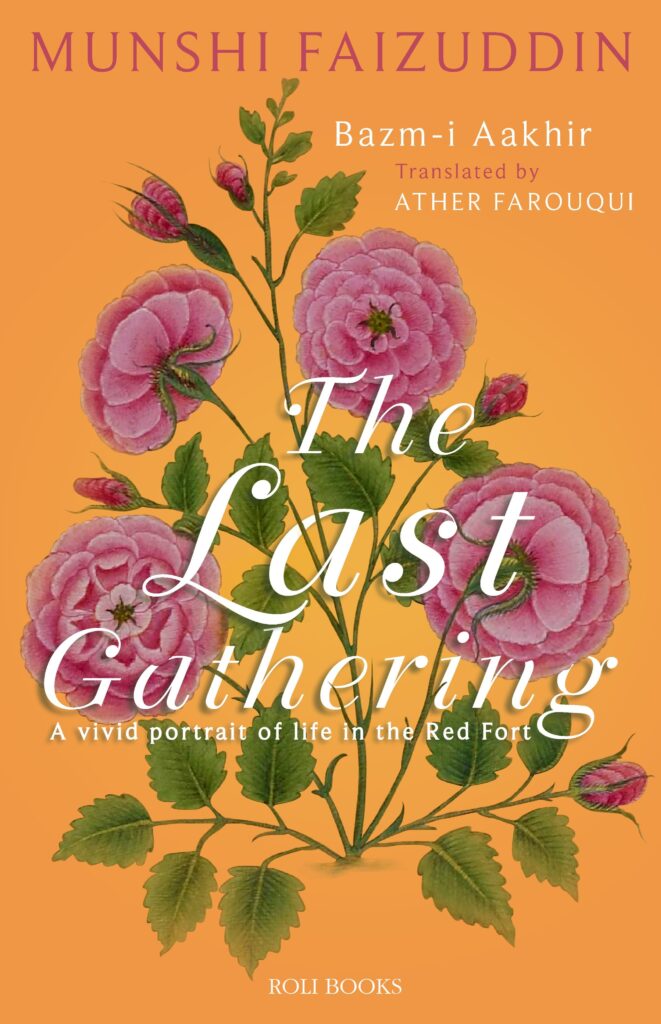
Some of the noteworthy translations expected are Ambai’s short stories A Red-Necked Green Bird, translated from Tamil by GJV Prasad; the Bengali classic, Manada Devi’s An Educated Woman in Prostitution: A Memoir of Lust, Exploitation, Deceit (Calcutta,1929), translated by Arunava Sinha; Amrita Pritam’s Pinjar or The Cage, translated from Punjabi by Rita Banerji, was written in 1950, and was the very first to approach Partition and its aftermath through the eyes of a woman; Kaajal Oza Vaidya’s Krishnayan, gives glimpses into Krishna’s last moments on earth, translated from Gujarati by Subha Pande and The Last Gathering: A vivid portrait of life in the Red Fort by Munshi Faizuddin, translated by Ather Farooqui. It was first published in 1885, Bazm-i Aakhir, or The Last Assembly and is a rich and lively account of life in the royal court of the last Mughal emperor in Red Fort, Bahadur Shah Zafar.
So many frills, thrills and spills! Reading good literature will help survive this pandemic.
Mental health and related topics are at the best of times taboo subjects in India. To discuss openly about depression amongst teenagers/adolescents is unthinkable. In a country where being in therapy is still a hush-hush topic, to commission and publish a book on the topic is bold and that too in an experimental form — an illustrated memoir in rhyme. C is for Cat, D is for Depression( Scholastic India, 2020) is a much needed book for young adults in helping to break barriers about mental health and make it a socially acceptable topic to discuss openly and without any stigma.
Kairavi Bharat Ram is a young published author who is known for her previous books in rhyme — Ramayana and Krishna. Those were retellings of Hindu epics. But this is the first time she has told a story about her personal experience of battling depression as an adolescent. It is a powerful testimony to the challenges she faced. It is a vivid description of all that a patient afflicted by depression experiences and is unable to always share clearly. At the same time, it is a gentle request to caregivers of such individuals to be patient and offer a caring hand whenever required. She also equally gently plots out methods in which the person themselves or those around them can help an individual come to terms with depression and related mental health issues.
This is a precious book. A conversation starter and a handy tool for anyone interested in mental health. It should become an essential requirement in every classroom and school library.
Hopefully this will lay the foundation for a strong and well-defined yalit list on mental health in India/South Asia. Kudos to Scholastic India for publishing this book!
Priya Kuriyan’s illustrations for the text are out of this world. They complement the text well but also provide a narrative of their own to pull the reader in. While the drawings illustrate the text as beautifully and precisely as would be seen in a children’s picture book, the sophistication of the artwork is in keeping with some of the best international artists. Her eye for detail is astonishing. Her work as an illustrator begins from the cover, includes the endpapers and then the main text. To open the book and see the black endpaper that transforms brilliantly into a bright yellow at the end of the book is just one tiny detail that makes this book an extraordinary triumph. I had questions buzzing in my head for Priya while reading the book, so here is a lightly edited version of the interview conducted over email.
Priya Kuriyan is a children’s book writer-illustrator, comics maker and chronic doodler. She has directed educational films for the Sesame street show (India) and the Children’s Film Society of India (CFSI) and has illustrated numerous children’s books for various Indian publishers. She lives and works in the city of Bangalore and in her spare time makes funny caricatures of its residents.
How did you approach this project? What was your initial reaction upon reading the text?
I first received the manuscript from the editor and went over it a couple of times trying to really get a sense of the genre. From the start, I was sure that though there are aspects of depression and mental health that are universal, (having had experiences with it myself and read up a fair bit) this was a very personal account of Kairavi’s experience with it. Therefore, I knew I would have to consult her at every stage of creating the book and that I wanted her voice to take centre stage. She had used metaphors in her poetry that I realised could translate very well into strong and evocative visuals that lead you into the mind of someone who is suffering so I knew that these strong full page illustration spreads would do justice to the text.
I had sent a few images from the early pages as samples to Kairavi and though she liked them a lot, she did rightfully ask me also to keep in mind that ultimately the book was also about hope.
2. How long did this project take to complete?
The manuscript was sent to me sometime in July last year and I had my first conversation with Kairavi in February this year over Skype. I worked on the project in bits and parts since then, but the serious work really started in April and was done by the end of June.
3. What was the initial concept note for the illustrations? Or did Kairavi and you have separate notes/ ideas that you then merged?
There was no initial concept note for the illustrations, but what I requested Kairavi after I had that first conversation with her was to pen down some words next to her lines as to what she saw when she wrote those words; not for every line, but at least for a few. Those did give me some cues that I could expand on. I would then send Kairavi rough drawings of my interpretations of those lines and she would then write back to tell me if it complemented the feelings that she intended to convey through her poetry
4. Your artwork is synonymous with light, freshness, primary colours etc. So how challenging was it to work with such dark colours, panel after panel?
Well, I think in my personal time where I don’t have to work on a client project, I do experiment with other kinds of media and genres. So, I didn’t really find the colour palette a challenge. I think most people have seen the work that I have done in the children’s book space (which I really enjoy being in), and then, one continues to get assigned work of the same kind based on what you’ve done before. I like and enjoy breaking away from my typical style from time to time.
5. Do you illustrate on the computer or do you use other mediums and then transfer the scans to the computer?
Most of the time I work analog first – scan my artworks, do some touch ups on an appropriate software and send digital files to the publisher. In this case I used dry pastels and charcoal for my original artworks.
6. If you had to write a note about creating the artwork for this story, what would you write?
That the illustrations should immerse you into a journey of a person trapped within their own mind, who is reintroduced to the idea of hope and ultimately releases himself/herself.
7. With this particular book, I feel that you have broken many of your creative boundaries and pushed yourself in a space that is new. I do not mean in that you are an over-reacher but as someone who has leapt into a new phase of creativity. Do you think this project changed you in any way? If so, what?
Hmm..It’s definitely a genre that I had not worked on before in the children’s book category. A lot of the work I do for adults (comics/ book covers etc) has tended to fall into a more serious (in the literal sense of the word) way. So, I’m not certain at the moment whether this has changed my work in a dramatic way. I think what I do with the next couple of projects that come my way will be what answers that question.
8. Which of these illustrations is your “favourite” of the book? Which of these illustrations has developed the furthest from the initial sketch? And why?
I think the one where the girl is tied to this black figure. I like the metaphor or the paradox of trying to release yourself from the person that you don’t know or recognise and yet knowing that person is you. I think that line really spoke to me. The illustrations that changed the most from the initial drawings were perhaps some of the earlier spreads. I think they were much darker and I later realised that the darkness must creep in gradually just as the light creeps in gradually into the latter part of the book.
9. What do you think is the relationship between illustrations and text? How does it vary depending upon the type of book it is — picture book, illustrated storybook, illustrations accompanying a story, chapter book, comics/graphic novels, novels etc.
The word and the text are entwined twins. I think in the case of picture books an illustrator anchors oneself on the text and is an equal partner when it comes to telling the story along with the writer. How long the rope needs to be, is the critical decision that the illustrator takes. It does vary vastly depending on each type of book. As far as possible, the illustrations that accompany any kind of format, should ideally not be a direct representation of what is in the text. It can bring further context to the story by adding more details that are not necessarily present in the text. In the case of comics, one has to also keep in mind that the page is being viewed panel by panel and also as a whole. So, text and image is intertwined differently out there.
10. What do you think are the fundamental guidelines an author should keep in mind while creating a concept note for an illustrator?
A clear idea of the context within which the book is set. Who the book is aimed at. Any image references that are essential to the research or details of the book. Having said that, it is always best if the author is generous enough or trusting enough to let the illustrator bring in his or her own voice to the book.
11. When did you discover your love for illustrations? What is your favourite medium for creating art? What is the medium you prefer to use while illustrating texts?
I love exploring different mediums and changing them depending on the book I’m working on. Needless to say stationary stores are the only stores I enjoy being in apart from bookstores.
I used to love drawing as a kid and also story books. I ultimately ended up studying animation in design school and as part of the course, we had illustration as a module. I really enjoyed it and perhaps that was when I considered that this could perhaps be something I could take up later. It was however a something I imagined I’d be doing on the side. I think I started taking children’s books seriously only after my 3rd or 4th book was published. There are no colleges that teach Illustration specifically in India and I think there’s a bit of a lacunae there since a lot of illustrators just by instinctively finding their way into a career in Illustration.
I don’t think I have a favourite medium as such. Though I work with watercolours quite a bit. I choose mediums depending on the nature/genre of the book. And I like exploring different techniques. At the moment, I’m inclined to say that graphite pencils are my favourite, but that might change in a few months from now.
12. Who are your favourite illustrators and who has influenced you the most
My favourite illustrators are Shaun Tan, David Weisner, Emily Gravett, Atanu Roy, Oliver Jeffers, Jon Klassen, Mickey Patel. All the illustrators of Target magazine that had a huge influence in my childhood namely Atanu Roy, Jayanto Banerji, Sudhaswatta Basu, and Ajit Ninan.
Writing from the north east of India has always had an interesting texture to it. It is distinct. Although the “north east” is clubbed as one region, the variations that exist in the seven states constituting this region are mind-boggling. Much of the writing that is available from this region is a combination of original writing in English and some in translation. Unlike writing in other parts of the Indian subcontinent where there are very distinct literary traditions in the regional languages and those who opt to write in English, this is not always true for the writing emanating from North East India. To illustrate. Writing in other Indian regional languages has a very distinct local cultural feel to it with preoccupations that are understandably of the region. Also the writing is very clear about the local literary traditions. So much of this gets translated as is in to English. When some of these regional writers opt to write in English then they infuse some of their writing with a regional flavour but only mildly so. This is where the differences creep in with the Indian writing in English emulating more of the rules and traditions of the borrowed English literary traditions rather than being confident of their own traditions infusing the English space. Interestingly these distinctions are not visible in these two marvellous collections of writings — The Many That I Am: Writings from Nagaland (Ed. Anungla Zoe Longkumar) and Crafting the Word: Writings from Manipur (Ed. Thingnam Anjulika Samom). These are collections of writings — fiction, essays, poems, illustrations, comic strip — by women from the north east of India. It is not possible to gauge from the tenor of writing which of the contributions is a translation or an original article in English. All the contributions, irrespective of whether a translation or written originally in English, focus upon their local landscape and culture. There is a calm confidence about narrating incidents of the transformation of their society from tribal customs such as head-hunting to becoming Baptists as in The Many That I Am. (“Cut off” by Vishu Rita Krocha) The volume of writings from Manipur throws the spotlight on recent decades of activism by women and many of them being at the forefront of the armed conflict that has plagued the state. The nature of contributions in Crafting the Word is a little more languid and gentler as compared to The Many That I Am which is puzzling; given that Crafting the Word arose out a women’s literary group called Leikol founded in 2001 and so had more time to hone their writing skills. Be that as it may, there is a quiet maturity to the style of writing even if it is not at par with the punchiness seen in most of the pieces included in The Many That I Am.
Zubaan is a legendary feminist press. It is known for its fundamental work on literature by women. Sometimes the contribution of women is expressed in myriad ways. Fiction is a powerful literary form to highlight the position of women and to express their innermost feelings. Many of the stories included in these two volumes achieve this beautifully. The hard labour that women put in to keep their households going as in “Vili’s Runaway Son” by Abokali Jimomi, “Martha’s Mother” by Hekali Zhimomi, and “As Spring Arrived” by Kshetrimayum Subadani ( Translated from Manipuri by Sapam Sweetie) and in many cases helping the next generation fulfil their dreams as in “My Mother’s Daughter” by Neikehienuo Mepfhuo. The essays in these volumes vary from memoirs to fascinating account of the flourishing of women’s writing in Manipur ( “The Journey of Women’s Writing in Manipuri Literature” by Nahakpam Aruna) to how readers access literature — the “outbooks” or the books apart from the Bible and the school textbooks, in a lovely essay by Narola Changkija ( “Outbooks: A Personal Essay, September 2018). An essay in which she reflects upon how her mother banned all outbooks in the home but her father, a police officer, on his travels would fulful his daughter’s wish and buy her the books she desired.
What matters is that his reverence for the written word was catholic, in the very best sense of the term. Literary or pulp fiction, any ‘outbook’ was evaluated and read and appreciated for its unique self. I like to think I have, finally, developed a similar catholic patience towards books, and life, and other human beings. At least, I hope I’ve learned how to value the things worth valuing and let the rest be.
Another one is a poem “Secret Library” by Dzuvinguno Dorothy Chase in a section entitled “What Time Told Me in 2018”.
The Many That I Am is a very powerful collection. It is best read from cover to cover. Impossible to dip in to without wanting to read one more and one more and one more. Here is an example of a performance poem. Timely words. Much to dissect here. Perhaps best left as is to be read, to reflect, to share and to perform widely.
It is challenging to succintly conclude about the magnificently magical power that lies within these two collections. It creeps upon the reader to leave a delicious sense of sisterhood and belonging, an empowering feeling to know that one is not alone in the daily grind of being a woman in a society still governed and defined by patriarchal norms. It is a fantastic feeling to come to the last page of the book and discover the comic strip shown. The joy of finding in pictures the exhilarating feeling of surmouning all those metaphorical mountains and emotional claptrap that is used by many to keep women from achieving.
Buy these volumes. Read them. Share them with not just the converted but a wider audience. Appreciate the writings for themselves. The “-isms” will follow, if they have to.
I met award-winning picture book author and illustrator Ruth Paul at the residence of the New Zealand High Commissioner on 4 Dec 2019 for a tête-à-tête. It was such a pleasure meeting Ruth Paul! I had read a clutch of her marvellous picture books, each with its own distinctive style. I had also heard about Ruth from the legendary children’s writer Gavin Bishop. Befittingly we met in the Sunshine Drawing Room as a distinctive characteristic of Ruth Paul’s picture books is her fondness for light and the manner in which she plays with it in her illustrations. It is fascinating to immerse oneself in the artwork.
Ruth Paul and Jaya Bhattacharji Rose in conversation. Picture taken by Arpita Basu.
Ruth Paul has written and illustrated over 20 picture book titles and is a recent recipient of a New Zealand Arts Foundation Laureate Award (August 2019).
I Am Jellyfish recently won the 2018 award for Best
Picture Book at the New Zealand Book Awards for Children and Young Adults. Mini Whinny: Happy Birthday to Me! illustrated by Ruth and written by
Stacy Gregg is shortlisted for the Best Picture Book Award, 2019. The King’s Bubbles won the Children’s
Choice picture book award in 2008, and five of her books have made the
Storylines Notable Book List over the years.
Stomp was a finalist in the NZ
Post Book Awards 2012, and Bad Dog Flash was
selected for the US Kid’s Indie Next List in 2014. Her books have sold in New
Zealand, Australia, USA, Canada, the UK, China and Korea, with translations in 5
languages. Cookie Boo! Is her first
book to be initially published in the USA, with a Harper Collins USA release in
summer 2020. Ruth’s poetry is included in
A Treasury of NZ Poems for Children, Penguin
Random House NZ 2014. Her original picture book illustrations have contributed
to touring exhibitions for Painted Stories (previously Te Tai Tamariki Trust)
and two are held in the Mazza Collection at the University of Findlay, Ohio.
Ruth lives in an off-grid,
straw-bale house on a farm just outside Wellington, New Zealand. As well as
writing and illustrating children’s picture books, Ruth has worked as a costume
illustrator for Peter Jackson movies. She has two teenaged sons and is actively
involved in her local community, having previously chaired her local Community
Board and School Board of Trustees. Over the years, Ruth achieved a Bachelor of
Arts majoring in English and History from Victoria University, a Diploma in
Visual Communication Design from Wellington Polytech (now Massey University),
and most of a law degree.
Ruth says every new book is a
challenge and presents the opportunity to get better at the craft she
wholeheartedly loves.
***
How do you prefer to introduce yourself
as — picture book author / author-illustrator / illustrator? Which came first
— illustrator or author? And if it is “illustrator” then when did
the transition to “author-illustrator” happen?
I call myself a picture book author and illustrator. A child once called me an “author and alligator”, but my teeth are not so big. I studied design and worked as a commercial illustrator first, illustrating books for a couple of other writers, then eventually wrote my own books. It is more common for author/illustrators to start as illustrators as this appears to be the more time-consuming craft to learn. Now that I do both, however, I’m not so sure.
2. When you envision a picture book — do you write first or do you create illustrations or do both the processes work in tandem?
It used to be that I started with words then added mages later, now it’s more a tandem process. Overall, I try to get a “concept” working first. I see (or wish for) a perfectly formed concept and story – both words and pictures – then I slowly destroy this perfect imagining as I put pen to paper and try to wrestle it into reality. The challenge is to preserve the magic of the story during this process.
3. What are the mediums you prefer to use for illustrations? Do you preserve your art work? Do you rely on digital tools to assist in your illustrations and text design?
I work and have worked in multiple mediums, traditional and digital. Having many techniques available is one of the advantages of previously attending art school. I change my style and technique depending on the needs of the book. Plus, illustrating a 32-page picture book is a big undertaking so I can get bored using the same technique twice in a row. Sometimes I use Photoshop and a Cintiq tablet to draw and I find that digital illustration almost replicates the real mediums and processes now so there’s less of a divide than people think. Whatever medium you use, you still have to be able to draw and compose, to have a sense of colour and communication. I try to change between computer and traditional forms just so I don’t get too reliant on one. I will say that generally publishers prefer me to supply my artwork digitally as opposed to hard-copy now, so that is a cost that needs to considered at the outset.
4. When you embark on a new book project, do you leave book production details to your editors or do you like to be involved in them as well?
I always plan images around words on the page, so I inevitably design the type layout as I go. However, as I use every last minute before book goes to production to work on the images, I leave the typography and final design to the publisher. I am usually always consulted on the final look of things, though often there is little you can change given time constraints. Publishers are very particular about the typefaces they use and you have to give their designers some room to work also.
5. Do your books get translated? If so what are the pros and cons of having picture books translated?
I love seeing my books in translation, but only having one language I usually have no idea what they read like! As some of my stories are in complex rhyme, I can’t imagine they work in any other language. My guess is that the substance not subtlety of the text is translated, for instance, in one of my books a sentence saying “Jump over the hump” in English, with a picture of dinosaurs jumping over tortoises, is (I am told) translated as “Jump over the turtles”. A little less fun, but it does the job.
6. How do you remain so enthusiastic and fresh about storytelling, appealing to a child’s imagination? Do you create picture books with your target audience in mind or is it yourself?
I am an adult writing for the child in myself. Fortunately, the audience for picture books this is both the adult-reader and the child so it shouldn’t be a problem. I myself am easily bored, so I guess that’s where I start when telling a story.
7. What are the essential elements of a picture book? Do you think children’s literature needs to be didactic? Is there a difference in creating picture books for the school market as opposed to those created for leisure reading?
Like most things, I can tell you
what a picture book shouldn’t be more easily that telling you what it should
be. A picture book shouldn’t be boring, ugly, preachy or mean. It should be
intriguing, satisfying and a joy to hold. Obviously books for the school market
have to be educationally correct, whereas a trade picture book need only appeal
to the buyer’s taste. And we all know it is easier to sell a child chips rather
than salad.
I don’t mind books with a message to convey as long as the message is held safely within the story and is not beating it to death with a club. I do like books that leave you with a good “feeling” of some kind, be it safety, quietness or a thought to chew over. I don’t like books that leave a child worried, fearful or over-stuffed.
8. Your sense of perspective especially in the double page spread illustrations is incredible. These seem to have slowly transformed to become the centre point of your later picture books such as The King’s Bubble and I am a Jellyfish. Do you envision your picture books as one long spread or do you see them as a 32-page book at gestation itself?
I am a big fan of the double-page spread. It is a big painting or image with everything in it and I guess I like the logic of a single proposition that conveys all the necessary information. But sometimes vignettes are necessary to explain all the action of a story. The King’s Bubbles was my third book, I Am Jellyfish my sixteenth, but they share a personal sentiment and immersive style even though technically quite different. So I think your question relates to “flow”. I want the child to climb into the world of the book, and I work to make the flow of the page-turn seamless and logical so the spell of that world is not abruptly broken. So – a bit of both?
9. What are the kinds of questions children and adults ask of you? Have you had diverse reactions to the same story?
My favourite question ever was
asked at a school in Delhi just recently. It was “If you could live inside one
of your books, which one would it be?”. I had to really think about the answer
to that. I love that younger kids always want to tell me something about
themselves, rather than ask me questions. I will say “Do you have any questions
about writing a story or drawing pictures? A question is something where you
want to know something from me, and I answer”. Then all the hands will go up
and the first questions are inevitably “I know a story!” or “I’ve got a dog!”
etc. Cute.
Certain books are for certain audiences. I have picture books that are rollicking good yarns to recite or act out with kids, and some that are for one child only while cuddled up and quiet. There is a book for every situation so the trick is not doing a quiet introspective story with a group of 80 school kids, and vice versa.
10. How much research do your picture books require?
Enough to know you’re not wrong. Enough to know there’s a sound basis for your idea. Enough not to overthink and kill the idea. Enough to add flavour and nuance to the story. Reading everything and anything around your subject always helps to not inadvertently repeat what’s been done before and also to add seasoning.
11. What are the kinds of art forms that you appreciate? Which of these do you think work well in children’s literature or would that be immaterial as long as the illustrator is appealing to the reader’s aesthetic sensibility?
I like folk art because it is not elite, is often telling a story and frequently appeals to a child-like sensibility. I love everything in any art from that blows-my-mind – the extraordinary building, the tiny piece of lace, the kids talent show. I am omnivorous when it comes to art and craft and only know that the older I get the less frequently I am ‘moved’, but when I am, the most surprising things will reduce me to tears. I recently cried during a hip-hop performance, and also when looking at a young girls drawing of a monster. I am moved when I see the feeling – be it vulnerability, bravery, fear, love, joy or sorrow in art. Good art can do that.
12. Who are the artists, illustrators and writers that have influenced you?
Now there’s big question. The answer is in the multitudes and the top of the list rotates from year to year with my changing taste. To narrow it down to children’s authors and illustrators, from New Zealand I love the work of the pre-eminents Gavin Bishop and Lynley Dodd; from everywhere else there’s Emma Chichester Clarke, Roger Duvosin, the Provensons, Brian Wildsmith, Freya Blackwood, Etienne Delessert, Brendan Wenzel, Ayano Imai, Sophie Blackall … there is just so many! I can’t answer this properly!
13 December 2019
List of Ruth Paul’s books:
Trade Books:
The Animal Undie Ball Scholastic 2004
The Little White Lie Scholastic 2005
The King’s Bubbles Scholastic 2007
Superpotamus Scholastic 2008
Two Little Pirates Scholastic 2010
Stomp! Scholastic 2011
Hedgehog’s Magic Tricks Walker Books 2012
Red Panda’s Toffee
Apples
Walker Books 2013
Bad Dog Flash Scholastic 2013
My Dinosaur Dad Scholastic 2014
Rabbit’s Hide and Seek Walker Books 2014
Go Home Flash Scholastic 2014
Bye-Bye Grumpy Fly Scholastic 2015
What’s the Time
Dinosaur?
Scholastic 2015
My Meerkat Mum Scholastic 2017
I Am Jellyfish Penguin Random House
2018
Little Hector and the
Big Blue Whale Penguin
Random House 2018
Mini Whinny, Happy
Birthday to Me!
by Stacy Gregg, illustrated by Ruth Paul, Scholastic NZ 2018
Upcoming Trade Books:
Little Hector and the
Big Idea Penguin
Random House 2019
Mini Whinny: Goody Four
Shoes by
Stacy Gregg, ill. by Ruth Paul,Scholastic
2019
Cookie Boo! Harper Collins USA 2020
Little Hector Meets Maui Penguin Random House
2020.
Mini Whinny: Bad Day at the OK Corral by Stacy Gregg, ill. by Ruth Paul, Scholastic 2020.
Book Post 51 includes some of the titles received in the past few weeks. Wherever available Amazon’s Kindle widget has been embedded in the blog post. It will allow you to browse through the book before you decide to buy it.
Book Post 50 includes some of the titles received in the past few weeks. Wherever available Amazon’s Kindle widget has been embedded in the blog post. It will allow you to browse through the book before you decide to buy it.
There is a sudden deluge of books being released to coincide with the
ongoing Frankfurt Book Fair, the mecca of publishing and of course, as a run-up
to Christmas/ gifts. Some of the big name releases that have happened in recent
weeks have been Ann Patchett’s incredibly stunning The Dutch House and
Jio Talentino’s absorbing collection of essays called Trick Mirror. There have been other books too like Melinda Gates The Moment of Lift, Candace Bushnell’s Is there still sex in the city? Or the
absorbing but light biography of The
Mountbattens: Their Lives and Loves by Andrew Lownie.
Ann Patchett’s The Dutch House is such
a beautiful book that it is impossible to describe. I read it weeks ago but
could not bring myself to spoil the heartbreakingly fabulous experience of
reading it. It is historical fiction for it is set at the time of the second
world war in Philadelphia. It is about two siblings –Danny and Maeve– whose
father, Cyril Conroy, a landlord, made it supremely rich through sheer hard
work and wise investments. As a result he was able to haul his family out of
impoverished circumstances to buy a magnificent house with its contents built
by Dutch immigrants – the VanHoebeek. It is an unsettling experience for their
mother who soon abandons their family to mysteriously vanish from their lives. It
is said she left for India. Meanwhile Cyril Conroy marries again. This time a
woman with two daughters. The stepmother in true fairy story style banishes the
children from the home once Cyril dies unexpectedly. Maeve and Danny learn to
fend for themselves. Slowly putting their lives back together. Years later they
reflect upon their childhood. As Ann Patchett points out in an interview with The
Guardian that we are embarrassed by grief, and The Dutch House is multi-layered because of the varieties of grief
it addresses. Every time leaving a large gaping hole even in the reader’s heart
but a sense of yearning to read more. It is a stunning novel which will haunt
one for a long time to come. It is bound to find a place on the longlist of
next year’s Women’s Prize.
New Yorker staff writer Jio Talentino’s Trick
Mirror is a collection of her essays published previously. It is a
combination of reportage and memoir. It is not easy to read at one sitting for
its very thought provoking ideas on feminism, sexual assault, universities,
wedding festivities etc. It is such a wide range of subjects that she tackles, always
with an incisive feminist outlook, that it becomes immaterial after a point
that many of her observations are based on very local and personal experiences.
This is the beauty of essay writing that if the ideas discussed in the essay
resonate with readers beyond a specific geographic landscape – beyond Trump,
UVA in Charlottesville etc– and cut through borders of all kinds to have the
desired impact of evaluating and challenging one’s thoughts, then it is
extremely powerful writing. There are two excellent reviews of Talentino’s book
— “Songs
of my Self-Care” by Jacqueline Rose in the New York Review of Books ( 10
October 2019) and “Trick
Mirror by Jia Tolentino review – on self-delusion” by Lidija Haas ( 2
August 2019).
Billionaire Melinda Gates’s The Moment of Lift is a curious little book. The Gates couple are known for their philanthropy and have been in the public eye for years. They are very guarded about their private life which is fair. For instance, when their children were enrolled in school it was using their mother’s surname rather than their father’s more famous last name. This strong desire to withhold their personal space from the public eye in the memoir is also fair except that it makes the tenor of the book very bland. There are glimpses of the tussle Melinda Gates may have had with herself in making what are seemingly “simple” decisions such as venturing into the promotion of contraceptives for women. Given her very Catholic upbringing where her mother attends mass five times a week, this could not have been an easy focus area for Melinda to pick for her philanthropy. There are many instances in the book that while it is obvious Melinda Gates has the privilege to access information easily, she remains a reserved individual who does not allow any glimpses than are absolutely necessary into her private space. Justifiably a fair choice except that in a memoir that functions more than just an account of her life but is more like a publicity statement for her magnificent work in women’s healthcare. These barriers to her privacy as well as to the information that she is being shown that can cause complications creating a very insipid book for its statistically rich in data but bland in context. Her ambiguity about expressing herself strongly about her Catholic upbringing with the reality she sees in the poverty stricken parts of the world. Or for that matter her problematic narrative of India which seems very focussed on it being a casteist Hindu society with absolutely no mention whatsoever about the syncretic cultural fabric of this democracy. Even the heavy sprinkling of anecdotes cannot relieve the boredom, this despite the celebrity buzz with even President Barack Obama releasing videos supporting the book. Having said that there is one incident that Melinda Gates refers to in her book of a little girl child of a scavenger’s community in Kanpur. The child was bold enough to ask the Gates Foundation delegates for a teacher. This is a perfect match to a beautiful wordless picture book calledPuu published by Scholastic India.
The other big ticket release recently has been the unauthorised biography of
the Mountbattens – Lord Mountbatten, the last Viceroy of British India who
oversaw the independence of India and Pakistan—one of the many prestigious positions
of authority he held. He was also Prince Philip’s cousin and instrumental in
insisting that the British Royal family taken on the name “House of Windsor”. The Mountbattens is written by Andrew
Lownie and based on extensive research, interviews with family members as well
as those who knew the Mountbattens well. Lownie even acknowledges Queen
Elizabeth II for granting access to her archives as part of his research. So
for the first time there are accounts of Lord Mountbatten’s career, his
mistakes and successes as well as of bisexuality (denied by the family). The “detailed”
account of Lady Mountbatten as the poor little rich girl, who was the richest
heiress of her generation when she married Lord Mountbatten is equally focused
on her promiscuity as it is with all other details of her life. There are
photographs, an extensive bibliography, footnotes and a detailed index. The
book has plenty of anecdotes that make for a rollicking good read except that
it all falls apart towards the end when Lownie acknowledges that the
Mountbatten’s myth is managed by exercising control at the archives in
Broadlands or closed under Ministerial Directive at the Hartley Library. All
said and done it is a book that makes for an interesting read and will probably
be optioned for a film or a TV miniseries very soon for its got all the razzmatazz
that will go down well with a global audience of a period drama.
In a similar vein is the memoir that Candace Bushnell has written after
crossing sixty — Is there still sex in
the city? It is a light and superficial read about a woman worrying about
money and life even though she and her girlfriends can afford to own homes at the
Hamptons, New York. Privileged women can offer quite a bit through their
memoirs as they are privileged not just in financial security but have easy
access to information, data, statistics — which increasingly have a price
barrier to them. Thus offering a broader perspective on issues that preoccupy women
as they become older. Issues like marital relationships, separations, losing
dear friends, how to come to terms with old age, healthcare, having the energy
to be with family and friends, increasing loneliness, managing busyness of life
etc. Of course there will be vast degrees of differences between those in
different points of the socio-economic scale but certain learnings are the
same. Oh well! It is an opportunity lost with Candace Bushnell’s memoir.
Ever since the phenomenal success of Rebel Girls some years ago there has been a proliferation of books tom-tomming about the achievement of girls/ women, many of whom whose contribution to their respective sectors has been silenced for an extremely long time —an unforgivable act. Yet with the popularisation of movements like #MeToo and the visibility of such girl-centric literature in popular culture has made a remarkable case for many more such books to appear. The danger lies falling into the trap of emulating a successful formula and creating a damp squib or creating a triumphant collection such former journalist Neha J. Hiranandani’s feisty Girl Power!
It is a challenging task to visually and succinctly represent a core idea, more so an idea that seemingly goes against the “norm”. And this is why Girl Power! is so magnificent. It stands out from much else that in this space for it puts together beautifully a profile that has charmed the author. It is as if the woman whom Neha Hiranandani is writing about has really moved her in some way. Otherwise the absence of living legends such as activists Aruna Roy & Medha Patkar, writer Arundhati Roy, historian Romila Thapar, wrestler Vinesh Phogat etc remains inexplicable. For there seems to be no other explanation, save Neha’s subjectivity, for this very disparate collection of women profiled in Girl Power!
Neha Hiranandani’s fascination for her project manifests itself in the funky descriptor she offers after every name. It is super cool, so in keeping with the loud, assertive and sparkly book cover as if to say, “We women are proud of our achievement and are here to stay!” It effectively communicates her passion with younger readers.
****
Neha J
Hiranandani is a writer whose columns have appeared in The Indian Express, Huffington
Post, NDTV, and Vogue among others. She holds degrees in
Literature and Education from Wellesley College and Harvard University.
Here are lightly edited excerpts of an interview conducted via email:
1.How did the idea of doing Girl Power! come to you?
My 7-year-old daughter, Zoya absolutely loved Rebel Girls. As a mother, I was so happy to see her being inspired by incredible women from around the world. But then one day she came to me clutching her beloved copy of Rebel Girls and asked sadly “Does India only have two rebels?” pointing to Mary Kom and Rani Laxmibai. Of course I immediately wanted to tell her all about the phenomenal women that India has had – our rule breakers, our mavericks, our smashers of ceilings. We spent the next few months discovering these women together. It was magnificent! I quickly realized that these were stories that all our girls – and even our boys – should hear.
2. There is a deluge of women-centric profiles in the market. Why is Girl Power! special?
I was very lucky to work with an incredible artist – Niloufer Wadia – whose illustrations have brought these stories to life. Unlike other books which follow a standard ‘one-page text + one-page illustration’ format, Niloufer and I wanted the text and the illustrations to work together. And so, every page of Girl Power! has the story and the artwork talking to one another which makes for an incredible reading experience. That, and I think the selection of women is very special!
3. How did you identify the women profiled in the book? Whom did you have to drop from your original list and why?
This was easily my favourite part of the project! I was clear that this wasn’t going to be just a list of accomplished Indian women – the women in this book had to be mavericks, ceiling smashers! And so I set about finding the stories and really, what stories they are! Every story made me feel me proud to be Indian all over again. You will meet a spy princess who parachuted into France, a warrior queen who defended India from the Portugese six times! There’s Subhasini Mistry who worked as a maid before winning a Padma Bhushan for healthcare, and Chandro Tomar, the octogenarian sharpshooter, popularly known as Revolver Dadi. Of course, there are some household names as well including PV Sindhu and Priyanka Chopra. But personally, I am very proud of the untold stories. They were so exciting to discover!
I have tried to be as inclusive as possible. Girl
Power! includes stories from across the country, across industries and across
time periods. I also tried to pick stories that had an identifiable ‘Kodak
moment’ that could be written coherently in 300 words or less. This is easier
said than done, especially given that all of these women have led very layered
and nuanced lives!
With that said, I am the first to admit that this is not an exhaustive list – that would run into volumes and is well beyond the scope of this project.
4. The descriptor used as a subtitle in every chapter encapsulates the spirit of the woman profiled vividly. For example, “Raga Rockstar” for M S Subbulakshmi, “Accidental Entrepreneur” for Kiran Mazumdar-Shaw, “Rule Breaker” for Dakshayani Velayudhan, “Inspirational Archer” for Deepika Kumari, or “Daredevil Doctor” for Anandibai Joshee. How did you come up with these fascinating descriptions?
These women have led such interesting lives, it would be a failing on my part to not give them interesting descriptors!
5. Girl Power! comes across as a broad sweep of profiling women across socio-economic classes giving the impression as if popular stories were incorporated. What kind of research methodology did you employ particularly what were the oral histories that you accessed?
This book will always be special to me for so many reasons. And perhaps, the most important one is that it connected me to many incredible people – men and women – who I’m grateful to have met. Apart from the internet research and the scouting in libraries, I knew that many of the stories were going to come from conversations. And so they did! Over cups of tea in the most unlikely of places – from railway stations to parks – I have spoken to people about the women who have moved them, inspired them. Some of the stories didn’t work out because I couldn’t confirm their factual accuracy but others did. For many parts of the book, I wanted to move beyond the well-known women and tell stories of ordinary women who have done extraordinary things. It was in that quest – of finding the ordinary-extraordinary woman – that our unmatched recounting of oral histories became important. Sometimes, it’s just about having the conversation!
6. Every chapter consists of a sprinkling of quotes by the women profiled. Such as ‘As long as I moved around with Mankeshaw [her husband], people did not take me seriously,” said Homai Vyarawalla, the photographer or “No field of work belongs to any gender”, says Harshini, the firefighter or actress Priyanka Chopra attributes her success to following the three Fs – “by being fierce, by being fearless and by being flawed”. Where are these quotes from as there are no bibliographical details provided?
Along with the team at Scholastic India, I was meticulous in making sure that every fact was double-checked. Many times this meant watching several documentaries for a 5 word-quote or finding obscure books and articles in dusty libraries. While there is no bibliography in the book, we have maintained an exhaustive back-of-house bibliography! So for instance, the quote by Homai Vyarwalla is from an article in the Hindu, the one from Harshini Kanhekar is from an interview with Jovita Aranha, and the one by Priyanka Chopra is from a lecture she gave on ‘Breaking the Glass Ceiling: Chasing a Dream’ at a Penguin event back in 2017.
7. Some profiles make passing references such as to Amrita Shergill’s “South Indian trilogy” or Dipa Karmakar’s “new book” or to a “rifle club” in Chandro Tomar’s neighbourhood which her granddaughter was attending – all very intriguing and remains unexplained? Was it a deliberate intent on your part to leave these as is to encourage inquisitive readers to delve into some research of their own?
Absolutely! This book gives a quick insight into the lives of these incredible women. It provides the ‘hook’ of an interesting time in that woman’s life to lure the reader in. The ultimate idea is that a child finds that ‘Kodak moment’ interesting and says “Hey, that’s cool I didn’t know that but now I want to find out more.”
8. How important is the picture book format to communicate with young readers particularly when it is a critical idea such as challenging rules, mostly patriarchal, to pursue your dreams?
I think it’s critical! Visuals go a long way in keeping a young reader interested and this is especially so in a format like Girl Power!’s where the text and illustration talk to each other on every page.
9. With this book are you addressing both boys and girls? What impact do you hope to create?
One might assume that this book is only addressed to young girls. That would be a terrible mistake. In fact, if anything, I think this book is critical for our young boys. For far too long, our boys have seen us in certain roles – as a mother, as a wife etc. It’s time for them to see Indian women succeeding in places that were traditionally demarcated as ‘men only zones’ – as wrestlers, as scientists, as entrepreneurs! If nothing else, it will help them understand what’s coming down the pike in the future!
10. Were these stories tested on younger readers before publication? If so what was their reaction? Did you incorporate any of their suggestions in the manuscript?
My daughter and her friends were invaluable as I wrote Girl Power! Those kids were my first editors! During play dates, I would read out entire stories and meticulously comb through their suggestions. Many profiles – such as Rani Abbakka – were rewritten on the basis of these editorial inputs! Several times, the kids wanted more details on an event or character that they found interesting. So for instance, in the Rani Abbakka profile, they wanted to know exactly how she defeated the Portuguese armada. That’s when I knew I had to include the part about how Abbakka secretly gathered her best soldiers in the middle of the night. The kids were fascinated when I told them that Abbakka instructed her soldiers to attack with hundreds of coconut torches and agnivaan– flaming arrows dipped in oil – all at the same time. The arrows lit up the night sky setting the Portuguese ships ablaze. These inputs brought so much colour and detail to the profiles and I’m so grateful to the kids! I think it was those inputs that have sharpened the profiles and created the final product.
11. Did you work closely with the illustrator? Did you help the illustrator select an image upon which to build the illustration?
Niloufer Wadia is a wonderful, prolific illustrator who can handle many different artistic styles with ease. I did make suggestions for some profiles; for example, Bula Chowdhury is an ace swimmer who once said “I should have been born a fish.” And so for Bula, I asked Niloufer if we could create something dream-like with Bula in the waves, half-woman and half-fish, almost a mermaid. That is easily one of my favourite illustrations in the book. For other profiles, Niloufer created something breathtaking on her own; Priyanka Chopra’s illustration is half from an iconic Hindi movie in traditional Indian attire and half FBI agent, a character from her show Quantico. That was all Niloufer!
12. Would you describe yourself as a feminist or as someone who feels strongly about women’s issues?