Writers Workshop Posts

Interview with historian and editor Chandana Dey
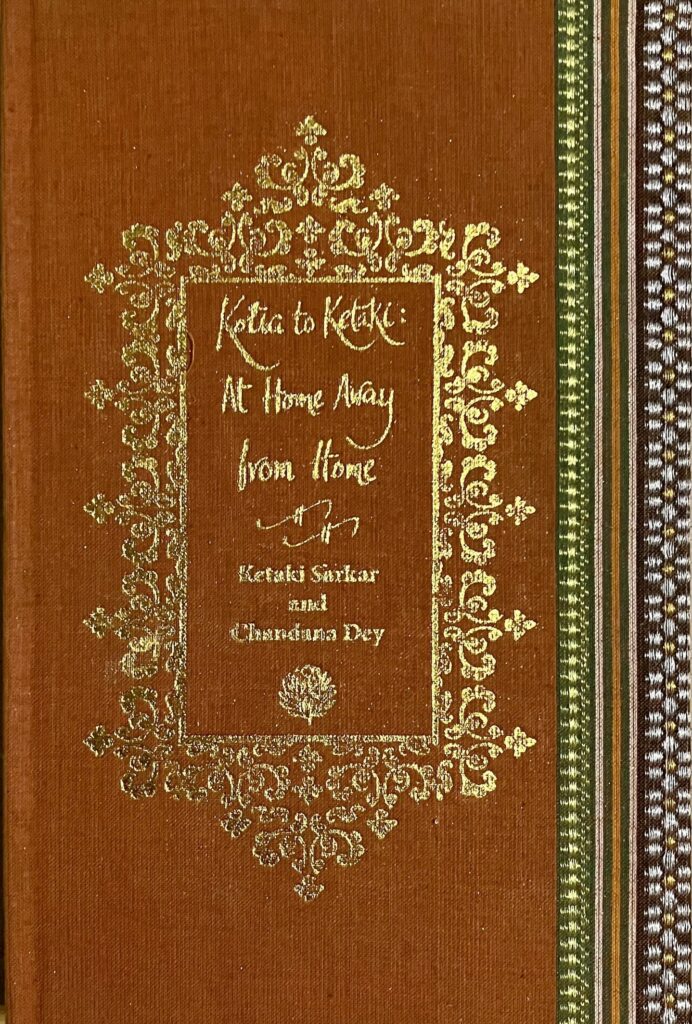
For Moneycontrol, I interviewed Chandana Dey on publishing her Russian/Lithuanian Jewish grandmother’s memoir — Kotia to Ketaki: At Home Away from Home. It is published by Writers Workshop.

Interview with historian and editor Chandana Dey

Chandana Dey studied Modern Indian History at the Jawaharlal Nehru University, Delhi and
International Affairs at the School of International Studies (SAIS), Washington D.C. She has recently published her Russian/Lithuanian Jewish grandmother’s memoir — Kotia to Ketaki: At Home Away from Home. It is published by Writers Workshop India. In fact, Chandana Dey more or less, co-authored the publication by adding a substantial afterword to the original memoir entitled My Life. Ketaki Sarkar was born Kotia Jonas to a middle-class family in Moscow in 1907. She lived through the Russian Revolution, famine and the civil war. The family moved to Switzerland in 1921. Kotya met her husband, Nitai De Sarkar, a medical student. They married in 1930 and came to India in 1934. Kotia learnt Bengali, always wore a sari and made India her home. On one of their visits to Santiniketan, Rabindranath Tagore bestowed the name, Ketaki, on Kotia Jonas. This is the name she retained for the rest of her life. Ketaki made Santiniketan her home and died at the age of ninety-one.  Kotia to Ketaki is a slim book but packed with detail – by both grandmother and granddaughter, stretching across time. Truly worth reading!

Here is the interview conducted with Chandana Dey conducted via email.

  1. When and why did your grandmother, Ketaki Sarkar nee Kotia Jonas write this Memoir? Was it all from memory or did she consult any living relatives at the time?

My grandmother has dated the memoir as 1972. My mother typed the manuscript on her portable typewriter. I would imagine that my Dida got the time for reflection and thought after 1971. She retired from the Alliance Francaise and came to live in Santiniketan, in her home, ‘Akanda’ permanently. Before this, she used to visit Santiniketan only on holidays or occasional weekends. My family members who had heard stories of her childhood in Russia kept urging Dida to write her memoir. I don’t think she consulted any family members, although she was in regular touch with her sister, Tina. When I started the research for the book, no one in the extended family knew that such a document existed. The only people who had read the memoir were people in Santiniketan whom my grandmother was close to — among these were Kshitis Ray, (Teacher of English in Patha Bhavan and Tagore researcher), Rani Chanda (artist and Freedom Fighter) and Uma Das Gupta (foremost scholar of the history of Santiniketan and Sriniketan). Part of the reason for not passing around the Memoir much was partly my grandmother’s own diffidence and the fact that the Jonas family members were not comfortable in English. This discomfort with English also affected many potential readers in Santiniketan in my grandmother’s circle.

  • The memoir reads swimmingly well for a modern reader, even if a little sparse on the historical details. Did you print it in its entirety or is this an abridged version?

It has recently come to my attention that there may have been an original version of the memoir that was written in French. I have never seen such a document. From the 1970s, family members heard of the memoir and each family member was given a typed copy of My Life. This is the entire text that I was given by my mother. I put it and the photographs my mother gave me in a small black suitcase. I think the genesis of Kotia to Ketaki was in my mind for the past 40 years. However, as all precious things are stored away, so was the black bag! When I went to retrieve the contents, I found the black bag empty. My late aunt came to my rescue. As my cousin and I went through her things, we found the copy of My Life. I immediately scanned the single copy and sent a copy to each living family member.

Unfortunately, the memoir ends in 1946. I think we did not pester my grandmother sufficiently to compel her to write about her remaining life history. It was a fascinating one. She was the sole breadwinner of the family. She worked in multiple jobs and made enough money to send my mother to Europe for her higher studies. She also built three houses. I really regret not recording her life and bringing out a companion volume. I also regret not asking her about the memoir in sufficient detail.

  • Your grandmother was a Lithuanian Jew who had been born and brought up in Russia before and after the Russian Revolution and in parts in Switzerland and France. Her memoir observes a smoothish transition for her to living in British India, especially in Shantiniketan; to the extent she learned Bengali so as to speak to family members. How did she assimilate in the Bengali Bhadra society? Did she have to forego her Judaism?

My grandmother spoke Bangla fluently. She did not manage to learn the language to be able to read or write in Bangla. But she used to listen to poetry, would attend all the functions in the Ashrama. Both my uncle and mother studied in Patha Bhavan and Bengali was spoken at home. My grandparents, however, spoke in French with each other. Perhaps it was my grandfather’s support that enabled such a smooth transition into Bengali society. The story goes thus: once they were settled in Calcutta, Dadu said to Dida, ‘Come, let me take you somewhere you will feel at home’- and this was Santiniketan — where there were many Bengalis married to foreigners. Besides, Rabindranth Tagore was almost singlehandedly responsible for trying to turn Santiniketan into a cosmopolitan place, while retaining its fundamentally Bengali ethos. Yet, it continues to be a mystery as to how Dida adjusted so well to Dadu’s family — a joint family that was extremely hierarchical and patriarchal. My grandmother’s mother-in-law was known to be a stern figure and extremely harsh with her daughters in law. My grandmother became her favourite daughter-in-law — and was given privileges, unheard of at that time. This remains a mystery to me and to everyone else.

A word on the Judaism is required here: my grandmother never had any Jewish artefacts in her home. Not even a menorah. The first menorah was one that my mother’s Jewish friend presented to her during their stay in the US. Nor did my grandmother ever step into a synagogue. Yet, the idea of Israel was very important to her since she felt that the Jews deserved a homeland after the Holocaust. This was a reason for perpetual strife in the family since my late brother was a vehement supporter of the Palestinian cause. The ‘Russianness’ revealed itself through a love of literature, music, language. She never taught Russian but never forgot the language. It was a great help to me when I started learning languages. I think I chose French and Russian so as to be able to speak to Dida.

  • Depending on the audience they are addressing, women tend to bifurcate their narratives for private or public consumption. You knew Ketaki Sarkar. Do you think her memoir is true to her personality, the person you knew, or did she skip information in writing that she may have told you verbally.

Interesting question. The memoir was written originally for her children — Maya and Nandan. In fact the memoir is addressed to them. Once written, my uncle and my mother persuaded my grandmother that it should be published. Initially reluctant, my grandmother acceded to their wishes. Dida was always very conscious of the lack of educational foundation in her growing years. She felt that she was self-taught to a large degree. In Santiniketan, she was surrounded by literati. But I think she held her own even in these circles. ‘Kotia Mashi’ was much sought after and she remained close to her friends and their children and grandchildren. Santiniketan is still a very small place where most people know each other. It would be natural therefore for Dida to eschew anything critical about the people she met. When she wrote the memoir, the characters in the narrative were all living. Besides, the memoir is a narrative where she looks back forty years. (She is writing in 1970 about what happened in 1930.). She is taking a look at her previous self.  

  • Why did your grandmother’s family move to Switzerland? Were conditions conducive for a Russian/Lithuanian Jewish family to relocate to the fairly newly established country, Switzerland (established 1874)? Did the internal passport issued by the Lithuanian authorities play a key role or was it linked to the Bolshevik Revolution and the ‘threat of communism’?

My great grandfather, David Jonas, had purchased a piece of land in a place called Richielien, near the Lac Leman. Doctors in Moscow had suggested he go and take rest somewhere and since the family traveled widely, he chose Switzerland. This was around 1912. By 1914, the Swiss doctors gave David a clean bill of health and the family returned to Moscow. After the Russian Revolution, famine and civil war, David was keen to leave Russia. This was only possible because of the internal passport, issued by the Ober-Ost government. A large part of Lithuania was then under German rule.  If David had been born in Moscow, it would have been impossible for the family to leave Russia after the Revolution. David’s sister, Sonya,  lived in Lithuania. Sonya and her husband, Dr Frumkin, helped David get the Lithuanian passports. During my research, a Lithuanian researcher, Elena Borik, found proof of my grandmother’s family’s passports in the Lithuanian archives. My grandmother has written about the large Russian émigré community in Switzerland at the time the Jonas family lived there.

  • What was your Bengali grandfather doing in Geneva when he met Ketaki at a student dance before they moved to Orsieres as a married couple? Or to put it another way, was Geneva a regular landing spot for Indian/Bengali students going overseas to study and work?

My grandfather was studying medicine at the University of Geneva. He had first tried his luck in Paris (where there were more Indian students) and then moved to Geneva. He studied French and even wrote his thesis in French. Some Swiss friends located his thesis in the University of Geneva archives. This Swiss degree was not really recognized as a proper degree when my grandfather returned to India. He struggled to land a proper job and did not manage to have a very successful practice either. My grandfather came from the Amrita Bazar family. The family consisted of staunch nationalists. My grandfather did not want to go and study in a colonial setting. He therefore chose France, then Switzerland. There were many Indian students in Britain. This was the most popular choice and there was no need to learn a foreign language here.

  • Your grandmother and you make references to the Yonas family being related to Eliezer Ben Yehuda (ne Perlman), the founder of the modern Hebrew language. How did you verify your grandmother’s account?

My grandmother spoke often of Eliezer Ben Yehuda. When my parents visited Israel (my father was then in the World Bank, therefore travel was possible), they met Dola BenYehuda, Eliezer’s daughter by his second marriage. (Eliezer Ben Yehuda would marry two of the Jonas sisters, first the eldest Devorah, then the youngest, Pola). Dola presented my mother with a copy of Robert St. John’s book, The Tongue of the Prophets: the Story of Eliezer Ben Yehuda. The Ben Yehuda family considered this the authoritative account of their illustrious forefather. I corroborated the account by delving further into the Ben Yehuda family. The genealogical website revealed a lot of information. I cross-checked this with writing to family members and asking them for more information. I watched films on Eliezer Ben Yehuda and read what he had written. I consulted my friend Dr Brenda McSweeney who taught in Brandeis University and asked her to suggest any colleague who might have worked on the role of women in early nineteenth century Palestine. She suggested the name of Margaret Shilo and I read her work and corresponded with her also. I tried all manner of ways to get information on the Jonas children. The two most interesting remain the most undocumented — Boris and Penina. Of course, the person who wrote the most was Eliezer’s second wife —Pola — who took on the name of Hemda. By all accounts, she had a terrific personality. However, I tried to stay clear of hagiographic accounts as much as possible. It was Hemda who stayed in touch with the entire Jonas clan.  

  • Your afterword is packed with historical context to Ketaki Sarkar’s memoir. Why did you feel the need to write this detailed account? Why did you decide to write a separate section, rather than heavily annotate Ketaki’s text?

My mother tried hard to get the memoir published. Everyone she spoke to said it was too short and could not be a standalone volume. Early on, I thought a short historical background was important to buttress the memoir. While working at the Social Science Press as an editor, I had approached Esha Beteille with the idea of the manuscript. She showed great enthusiasm, as did her daughter, Radha. I wrote a first draft but Radha found that the historical part should be more detailed and Esha di felt that something should be written on my grandmother’s siblings as well. I realized this would mean much more secondary research. Eventually, a chance meeting with Anada and Swati Lal at their iconic home at Lake Gardens allowed me to raise the matter with Ananda. He accepted the manuscript without question. I shortened the text to make it more reader-friendly and budget-friendly. Ananda did meticulous editing and this took time also. I started the research in 2017. My father passed away in 2018. My brother passed away earlier this year. I kept urging my brother to look at the various manuscripts, but he said he would wait to read the final book. This did not happen.

  • What was your research methodology? When did you realise you had sufficient material to put into this book?

I had thought, originally, of writing a very short background to the memoir. I felt that most people knew about Russia’s history, certainly about the Indian National Movement, the Bengal Renaissance and the genesis of Santiniketan. On rereading the memoir after many years, I just had so many questions on the veracity of my grandmother’s story. Surely my great-grandmother could not have ridden on horseback from Siberia to Moscow? I remember seeing her photographs and hearing stories about her. This was just one example. Another question in my mind and one that caused me sleepless nights was —what exactly were my great-grandparents’ political affiliations? Were they card-carrying Bolsheviks? My grandmother did not mention this anywhere. But I know they supported the Revolution. Were they Anarchists? I did not think so. So I went to consult Prof. Hari Vasudevan and he confirmed every single doubt I had. He gave me solid historical evidence to validate my grandmother’s memoir. Prof. Vasudevan passed away from the first round of Covid, leaving me and countless others bereft. I think that the ‘introduction’ developed into a ‘book’ when I found documentary evidence of the burgeoning Jewish ex-mercantilist, educated bourgeoisie and the wealth of secondary material on the Pale of Settlement, the Haskalah (Jewish religious reform movement) and the extent of education for Jewish girls in Russia. When I read about the Haskalah, I thought I was reading about the Brahmo Samaj and the Bengal Renaissance; when I turned to girls’ schools in Palestine or Russia, my thoughts turned to education for girls and women in nineteenth century Bengal. There were so many commonalities that could not be discounted as coincidence. And oh, the wealth of secondary material in English, French and Bengali! A veritable treasure trove. My one regret was that I had completely forgotten my Russian. As I read more and more, sitting in the India International Centre Library, New Delhi, I realized that there was material for a book, and this would be interesting for readers, if I could tie up the history with the narrative covered in the memoir.

  1. What did it mean to you to delve into this history and discover details about your lineage? More importantly, make visible linkages in global movements of the early twentieth century that would have remained hidden from view, but probably continue to have ramifications today.    

Global events such as the terrible treatment of migrants and refugees were the constant backdrop to researching and writing this book. I kept asking myself — were the barriers between countries really insignificant in the early twentieth century? It was indeed possible for my Russian grandmother to meet and marry my Bengali grandfather, live and work in Switzerland, and then come back and live in India. Would this story ever happen today? I have tried meeting and corresponding with Jonas/Frumkin/Ben Yehuda family members. It is astonishing how well we seem to ‘commune’, although I have to say that my fluency in French helps immensely. The global movements you speak of became visible during the research. But I think that more needs to be written on the commonalities of different historical events and movements. We should be linked by our common faith in humanity. I think Rabindranath Tagore thought deeply about so many issues and problems of the twentieth century. His answer was establishing Visva-Bharati — the world in one nest. But we who live and breathe Santiniketan have not been successful in taking his message of peace and brotherhood far enough.  

7 Nov 2025
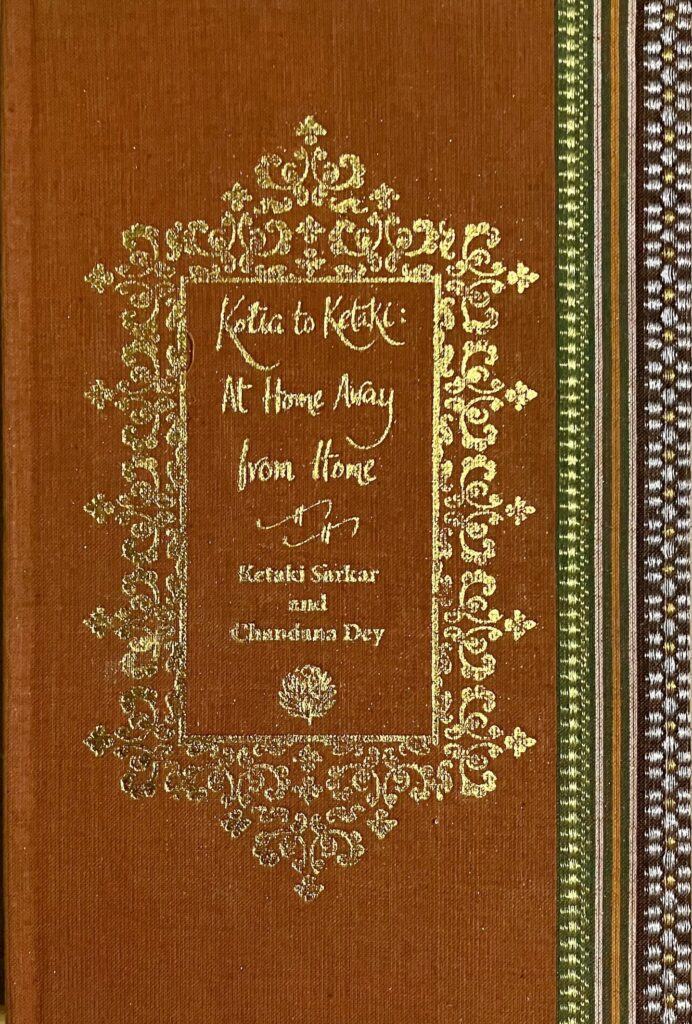
“Kotia to Ketaki: At Home Away from Home” by Ketaki Sarkar and Chandana Dey

After Ketaki Sarkar had retired (around 1970), her children urged her to write about her life as an archive of family history primarily for her children and grandchildren. She completed her memoir, entitled “My Life” in 1982. In her preface to the book, Ketaki’s granddaughter, Chandana Dey writes:

My Life traces her life from 1907 to 1946, or till just before India’s Independence. This is the story of a Russian woman who lived through the Russian Revolution, famine and the civil war, and whose family first took refuge in Lithuania and then Switzerland. After marriage to my grandfather, she left her family in Europe and made a new life in India. Calcutta [as it was known then] would become home and where she would become a teacher of spoken French in the Alliance Française, while Nitai [her husband] practised medicine. Kotia always wore a sari, spoke Bengali and was completely immersed in her surroundings. Santiniketan would become an integral part of their lives and she would live here in sylvan surroundings in the family home named “Akanda” (the Bengali name of the large shrub Calotropis gigantea) that she built and added to over the years, with her own earnings and savings.

Kotia to Ketaki: At Home Away from Home is in two parts: the first is Kotia Jonas or Ketaki Sarkar’s memoir, entitled My Life. The second is the historical background. Chandana Dey begins this account in the 1850s and took it up to the Second World War. She became interested in the Jonas family antecedents and found historical material on the Russian-Jewish bourgeoisie of the mid-nineteenth century. Chandana adds, that she “attempted to write a micro-history, taking up particular aspects mentioned in the memoir and expanding on the history of the period. When I first read the memoir, soon after it was written, I felt a historical backdrop was needed for readers to appreciate the life and times of the Jonas and Sarkar families. The photographs in the book are from family archives.”

The extract that has been published on Moneycontrol is taken from Ketaki’s My Life. It is an account of her witnessing the 1917 Russian Revolution and then experiencing the aftermath, the new government, living with the communist principles, including living in a commune.

Ketaki Sarkar was born Kotia Jonas to a middle-class family in Moscow in 1907. She lived through the Russian Revolution, Famine and the Civil War. The family moved to Switzerland in 1921. Kotya met her husband, Nitai De Sarkar, a medical student. They married in 1930 and came to India in 1934. Kotia learnt Bengali, always wore a sari and made India her home. On one of their visits to Santiniketan, Rabindranath Tagore bestowed the name, Ketaki, on Katia Jonas. This is the name she retained for the rest of her life. Ketaki made Santiniketan her home and died at the age of ninety-one. 

Chandana Dey studied Modern Indian History at the Jawaharlal Nehru University, Delhi and
International Affairs at the School of International Studies (SAIS), Washington D.C. She has
worked in an NGO for over 25 years. She lives in Santiniketan, in her grandmother’s home, ‘Akanda’. She speaks Bengali, English and French. This is her first book.

7 Nov 2025

Poetry in India

For some peculiar reason poetry is quoted and used extensively everywhere but rarely does it get a regular space in a publishing house. It is often said poetry is too complicated to publish and to sell. It is subjective. Also many customers prefer to read poetry at the store and put the book back on the shelf. For many poets in India, self-publishing their poems has been popular. For generations of poets the go-to place was Writers Workshop begun by the late P. Lal. Some of the poets published by Writers Workshop included Vikram Seth, Agha Shahid Ali, Adil Jussawalla, Arun Kolatkar, Arvind Krishna Mehrotra, Jayanta Mahapatra, Keki Daruwalla, Kamala Das, Meena Alexander, Nissim Ezekiel, and Ruskin Bond. Some of the other publishing houses published occasional volumes of poetry too.

Of late the practice has continued. Only the rare volume or two is published. Aleph Book Company has published some fine volumes of poetry which has included translations ( Mirabai and Tirukkal) and contemporary poets such as Jeet Thayil, Sridala Swami and Vikram Seth. Some years ago Harper Collins India published The HarperCollins Book Of English Poetry (ed. Sudeep Sen) and recently the excellent collection of poems by Tishani Doshi Girls are Coming Out of the Woods. Also that of  Sharanya Manivannan ‘s The Altar of the Only World which is considered as well to be a very good volume. Penguin Random House India has a reputation for publishing good volumes of poetry particularly of established poets such as 60 Indian Poets edited by Jeet Thayil. A volume to look forward to in 2018 will be Ranjit Hoskote’s Jonahwhale . The feminist publishing house Zubaan books published a fascinating experimental volume Andal: The Autobiography of a Goddess edited and translated by Priya Sarukkai Chhabra and Ravi Shankar.

Speaking Tiger Books has begun to actively publish poetry — at least far more frequently than the other firms. In the past few months alone some of their titles include Rohinton Daruwala’s The Sand Libraries of Timbuktu: Poems  ; Manohar Shetty’s Full Disclosure: New and Collected Poems (1981-2017) ;  C.P. Surendran’s Available Light: New and Collected Poems ; Guru T. Ladakhi’s Monk on a Hill: Poems ; Ralph Russell’s translations and edited by Marion Molteno A Thousand Yearnings: A Book of Urdu Poetry & Prose  ; Ruskin Bond’s I Was the Wind Last Night: New and Collected Poems ; Michael Creighton’s New Delhi Love Songs: PoemsLater this year the Sahitya Akademi is publishing what looks to be a promising collection of poetry by “younger Indians”, edited and selected by noted poet Sudeep Sen.

Having said that the self-publishing initiatives still continue. For instance a young poet and writer ( and journalist) Debyajyoti Sarma launched the i, write, imprint, press to publish poetry. Some of the poets published ( apart from him) include noted playwright Ramu Ramanathan, Uttaran Das Gupta, Sananta Tanty  and Paresh Tiwari. 

Now there are more opportunities for poets to publish in literary magazines as well. For instance well-known poet Sampurna Chattarji has been appointed the poetry editor of IQ magazine and is looking for submissions and hoping to be read as well! She writes about it on her blog. Another active space for poets is Poetry at Sangam which is edited by Priya Sarukkai Chhabra. It showcases poetry in English and translations as well as essays on poetics and news of new releases. Another vibrant space for poetry especially Urdu is the Jashn-e-Rekhta festival. 

There are plenty more initiatives in other local languages, meet ups, open mike sessions etc where poets can recite/perform their work. In the past decade there has been a noticeable increase in these events whether informal groups that meet at local parks or coffee shops to more formal settings as a curated evening.

Undoubtedly poets and their poetry is thriving, just more publishers are needed to publish the poets.

6 January 2018 


Guest post: Nabina Das on poetry in 2014

Nabina Das( I asked a few friends to write about the books they had read and wished to recommend. Here is the first post. It is by Nabina Das, a poet and a writer. Nabina Das, a 2012 Charles Wallace Fellow, University of Stirling, UK, and a 2012 Sangam House Fiction Fellow, has a recent poetry collection Into the Migrant City and a short fiction collection The House of Twining Roses: Stories of the Mapped and the Unmapped. Her debut poetry collection Blue Vessel was listed as one of best of 2012 and her first novel Footprints in the Bajra, was long-listed in the 2011 Vodafone-Crossword prize. A 2011 Rutgers University MFA, a 2007 Joan Jakobson (Wesleyan University) and a Julio Lobo fiction scholar (Lesley University), and a mediaperson for about 10 years, Nabina teaches Creative Writing in classrooms and workshops.

Poetry listing 2014—NABINA DAS

If writing poetry is a compulsion then reading the same becomes an obsession. And there’s almost no day or night I don’t read a poetry book or at least a single poem or even the fragment of a poem. At times, I read one or two lines and shut the poem or the magazine or the online site just to ponder what I read. Now that the year 2014 is rushing past like a busy moth, its silk turning to wintry woolen weaves, busy against the bright light of events and incidents and festivals that loom in our hearts and fates, I’ve been reading poetry each day and night to keep myself alive on a very metaphysical level. Below is a glimpse of my endeavor. Not all of this poetry is published in 2014. I tend to live by old and new, poetry found and retraced, given and sent away.

Reading Keki N Daruwalla is retracing poetry in Indian English writing. His work is an arc of the beginning and what is now shaping up. Reading lines like

Does the world need maps, where sign and symbol,
standing as proxies, get worked into scrolls? (Map-Maker)

I know the world still remains stratified in layers of time and space, and we grapple with its manifold schemes. Daruwalla’s prayer-like voice rings true for me as I read:

Though there were no words,
fear had a voice with many echoes.
Worship was quieter, adoration
spoke only through the eyes or knees. (Before the Word)

For those that have not yet read Keki N Daruwalla, do pick up his Collected Poems (1970-2005) for a wholesome treat.

Uddipana Goswami’s book Green Tin Trunk (Authorspress, 2014) was a good read this year. The poems crackle like coal fire on winter nights. I could relate to several, being from Assam. There’re a few others I’m still mulling over. Lines such as these bring my Guwahati back to me:

did not know I had to love you then, Guwahati,
When I lived, walked, danced, played, breathed/
In your streets. (Guwahati)

The crisis of identity is mine too, but we know in Goswami’s verse how the poet deals with it:

On the other shore
I am shorn of my identity
I stand half naked
‘You eat human flesh don’t you?’
Nowadays I do not protest
Quietly I pay the price of being
What they are not. (Exile I)
Vijay Sheshadri made news as his 3 Sections: Poems (2013) won the Pulitzer Prize in Poetry. I’ve been reading bits and pieces of Sheshadri even earlier. Although I hunted for this book in India and couldn’t find it right after he became much celebrated in India too, I recently found this Indian edition of 3 Sections: Poems (http://www.amazon.in/Sections-Pulitzer-Letters-Poetry-Winner/dp/155597662X) folks might like to buy. Having ordered it, I went back to reading this below. Mainly because the poet whose book eluded me this long, Sheshadri represented himself in these lines:

I’ve been excited about him as an individual.

I’ve met him as a person, emerging from his own shadow.

Indeed it is remarkable. (Life of a Savage)


And of course, his translation of Mirza Asadullah Khan Ghalib’s No, I wasn’t meant to love and be loved (http://www.poetryfoundation.org/poetrymagazine/poem/185277) had captured my attention because of my love for Ghalib in the Devnagri script; Ghalib, a poet I thought I saw close to my poetics.

Famous poets, prize winning poets, and commended poets abound easily. What does not abound easily is a lucid poet’s gift of her own book that comes as a promise of freshness in voice and tenor. Daya Bhat of Bangalore, in her A Maiden of 29 (Writers Workshop, 2009), effortlessly mixes the high voice of sarcasm with the low intensity cheekiness of an observer of a folly:

I no more care for I am no more me,
Call me by any name; it hardly matters.
It’s your call; it’s your fantasy! (Custom-made)

Bhat’s style is a good application of the vocative case I barely get to see in Indian English writing. It makes her poetry an apt purveyor of both satire and depth.

Elaine Terranova has been my mentor at Rutgers University, Camden, NJ, from 2010-2011. Usually, one reads one’s teacher sparingly. At least I did in high school and college. Much of the student-ness was about smirking and thinking – oh she’s telling me to write the way she does. But I have to confess, Terranova’s poetry and teaching were two different ballgames for me. They overlap as well as go right past themselves. In her Damages (Copper Canyon Press, 1995), a book she gave me as I left for home, I revisited her concern about the body, childhood experiences, and the turmoil of the ‘interior’ – things I thought were unavoidable especially when I saw my daughter growing up to a toddler:


I pass easily where he
is not allowed. Like her, I’m chilled
in my thin gown. There is
a fineness, a definiteness
to her face. This beauty
is her own decision. A TV screen
plays a loop of film, women circling
their breasts with their fingertips,
women staring into a mirror. (Self-examination)

Nilim Kumar is an Assamese poet who has been translated into English by various people, ace poets themselves or novices. The first time I came across his poetry was in The Dhauli Review. Kumar charts a territory in language that is hard reality. Not harsh, rather, lyrical and down to earth:

Whoever has prepared lunch washing and rubbing the blood smeared hands this midday
That meal would’ve been the just match with the dirtiest hunger in the earth
But
The irony is
Hunger is on someone’s stomach (A Poem, tr. Bibekanand Chaudhury)

But the fragrance of a soil and light that his work conveyed to me – not because again, he is from Assam – fascinated me with their juxtaposition with the romantic and the political, particularly, in Five Poems:

Her heart
A tall hill
I caress her
in the form of clouds.
Sometimes
I collide
on her stony bosom
And come down
drenching the trees, foliages,
fields and houses
People say
it is raining (Rain)

I hope to grab a copy of his original collection/s soon.

Having myself been published by Writers Workshop, Calcutta, in 2014, I’m aware how I share space with veteran poets. My own publication prompted me to pick up a 2010 WW volume by Hoshang Merchant, my mentor poet from Hyderabad. Titled Hyderabad Quartet, this is a special volume of Merchant’s collected works. Also special because, this volume acknowledges the demise of P Lal, the main intellectual driver of WW, in 2010. Merchant is fierce and coy both, a quality not very well known in modern Indian English poetry:

Walking down the street of banglesellers
Pleases the woman in me (Holi in Hyderabad)

Reading Merchant is a fresh-mint feeling on the tongue, although I’m not sure he’d approve of the analogy. His urbane chagrin made me wonder why I don’t get to read more lines like this:

Each one has his own dream over coffee
The chef dreams America
The waiter dreams custom
I dream about the waiter (Coffee 6/8/91)

In 2014, one of the loveliest events that happened is that I was privy to a book launch of and poetry reading in honor of Wang Ping, creative writing professor at Macalester, in Hyderabad. Ping’s latest book in its Indian edition was brought to us poets by young Linda Ashok of Raedleafpoetry India. Ten Thousand Waves felt good in my hands. Although as a principle I read new poetry books only after the launch and hype passes away, I took a look inside and didn’t seem to give up reading. Ping’s poetry made me comfortable as someone who mixes registers and images. China or America, hovering spirits or the living, water or its dream, identity or its duct-taping and re-duct-taping – all of that seemed close to what I’ve been doing so far.

And here we are, in the waist-deep sludge
A sac of mud – a tail of greed
Leaching in our stove. (A Hakka Man Farms Rare Earth in South China)

Her metaphors cling to dirt and dust, the imagery dances like coal fire, and the themes of the book read to me like prayers for rice and potato and all that sustains. In prose, dialogues, chorus and verse, this book stunned me at every page:

We know the tolls: twenty-three—Rockaway, NY, fifty-
eight—Dover, England, eighteen—Shenzhen, twenty-
five—South Korea and many more

We know we may end up in the same boat (Lin Zhi Fang, Yu Hui: Ten Thousand Waves)

Almost throughout the second part of 2014, I’ve been reading new writing by Seb Doubinsky, professor in Aarhus University, Denmark. But guess where I read most of his new work: it was on Facebook! My reading happened surreptitiously, as though I didn’t want to let anyone know I was reading these little verses – a series – on the social media. Not a bias, just a curious registering of the fact that Doubinsky’s new work was blooming with feedback and quips from his acquaintances on Facebook, an exercise not many poets would undertake and face the rigor of. Consider these:

this poem doesn’t believe
in poetry anymore
it thinks it is vain
pointless and limited
this poem, like Rimbaud in Aden,
wants to stop being written
***

this poem is 100% artificial
absolutely no natural images,
sugar or color added
***

(for Matthew Lippman)

this poem thinks it’s Jewish
but isn’t sure – it might be
Muslim, gypsy or gay
it might even be a woman or
a nine year old working in a textile factory
this poem could be anything
with a sad story to tell
but it sure has a big nose

The good news I got just now is that Doubinsky’s “this poem” bunch would be published by Leaky boot Press in early 2015. I guess from my side, that’s a big “like”!

Even before I‘d met Kazim Ali, who teaches in Oberlin University, at Hyderabad Literary Festival 2012 (HLF), I’ve been reading his poetry here and there. The same continued in 2014. Especially in the light of several  global crises – change of governments, such as the deeply rightwing power sweep in India, fundamentalist religious forces like the IS wreaking havoc in the Middle East, women’s and gay issues continuing to receive bashing at home and abroad – Ali’s poetry lifted me up to a zone of light this year. I read from his old and new.  Far Mosque (Alice James Books, 2005) and The Fortieth Day (BOA Editions, 2008). Reading Ramadan made my atheist self genuflect again to the cardinal values in human. Compassion for and reflection on life wasn’t ever more meaningful to me:

If the ground-water is too scarce one can stretch nets

into the air and harvest the fog.


Hunger opens you to illiteracy,

thirst makes clear the starving pattern,


the thick night is so quiet, the spinning spider pauses,

the angel stops whispering for a moment—

Kazim Ali will be publishing his new collection All One’s Blue: New and Selected Poems in India soon.

Another poet friend I’d met for the first time in HLF 2012 and shared the stage with, is Robert Bohm. I was familiar with his name but had never read his work earlier. While at the fest we exchanged notes and ideas and I brought back a couple of chapbooks by Bohm – especially, the much acclaimed Uz Um War Moan Ode – in 2014 I merely kept contemplating reading him but never thoroughly did barring a glimpse now and then. All this while, I kept writing to him and his wonderful wife Suman asking about their health and another possible India visit. He even contributed a blurb for my latest poetry collection. It’s only when recently Bohm sent me his latest book Closing the Hotel Kitchen (West End Press, 2011) that I found myself going through this scintillating collection. Bohm said in his Afterword that the poems here had grown out of his experiences with a complex smorgasbord of life: Beat life, army service, Indian connection by marriage, US hypocrisy in war and conflict mongering, Buddhism, brush with life in rural India, death and the façade of divinity.

Don’t ask me the color of the peach blossoms here.
when they fall, they flutter, pale and weightless
like thoughts in a sedated man’s mind,
toward whatever’s below. (Dear Mommy in your Grave at Nassau Knolls)

I’m glad I read Bohm finally – closely, intimately – to feel in my guts the words he had uttered at HLF 2012, during our meeting. The tragic in his voice is stridently upright, seeking a justice in this world:

“Where the fuck is my Bayonet?”
Brown once asked somewhere else.
Can’t think about that now.
Yesterday morning the Guptas saw me in the bus station.
“Are you wanting a place to rest for the night?” the husband asked.
She looked away. (Hospitality)

I’m a frugal and slow reader by disposition. In between all this, in 2014, I also re-read Sudeep Sen’s translation Aria and Billy Collins’ 180 More. Not to forget the timeless modern classic Madhushala. There’s so much to read. The list would get even longer and especially in poetry, one word leads to another, one metaphor leads to a new revelation, and that one poem will only prod me to think for days how language and realization come together to form a brilliant combination we all can cherish and share. Hope you had your own great poetry time in 2014!

(C) Nabina Das

29 December 2014


Web Analytics Made Easy -
StatCounter