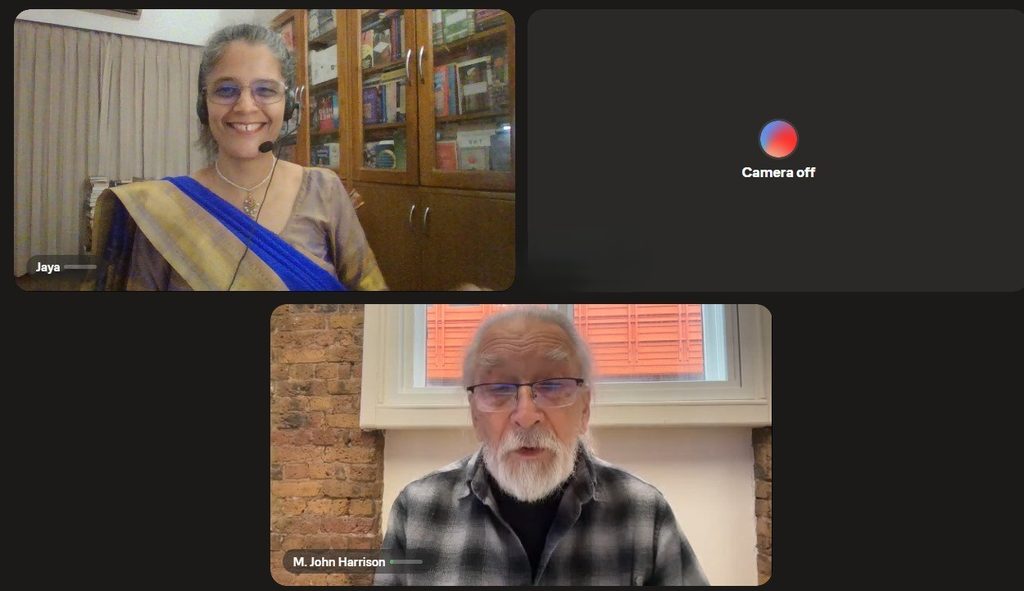
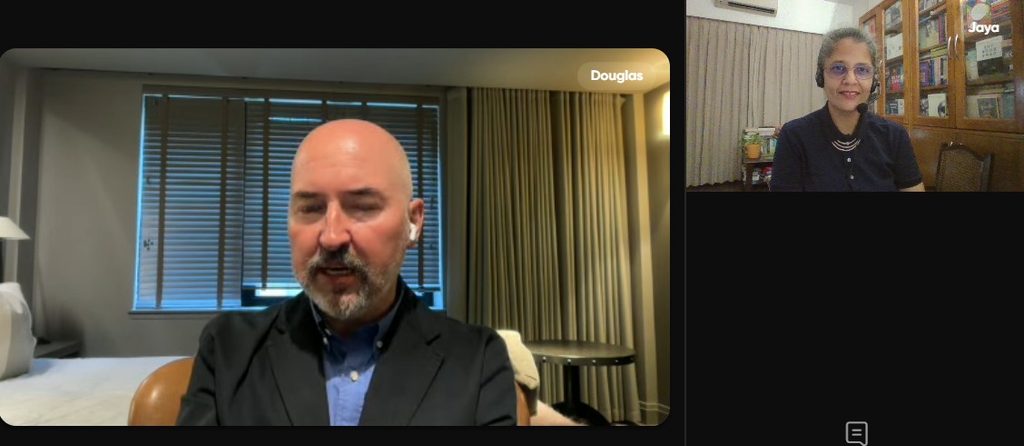
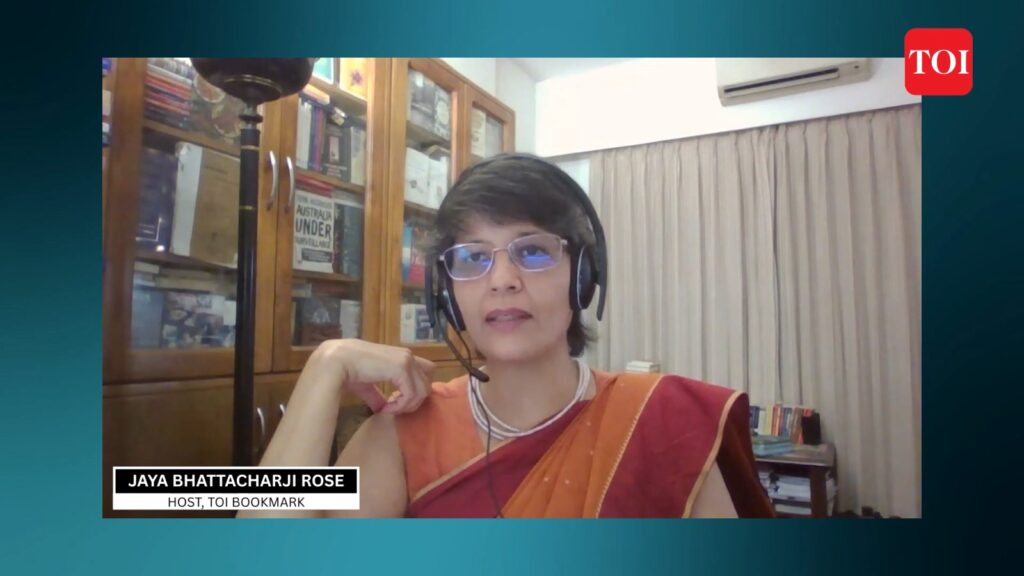
Newly minted Booker Prize 2026 winner, 81-year-old, M. John Harrison and I chatted on the TOI Bookmark* podcast about his novel, The End of Everything within hours of him having won the prize.
Here is the link on Spotify:
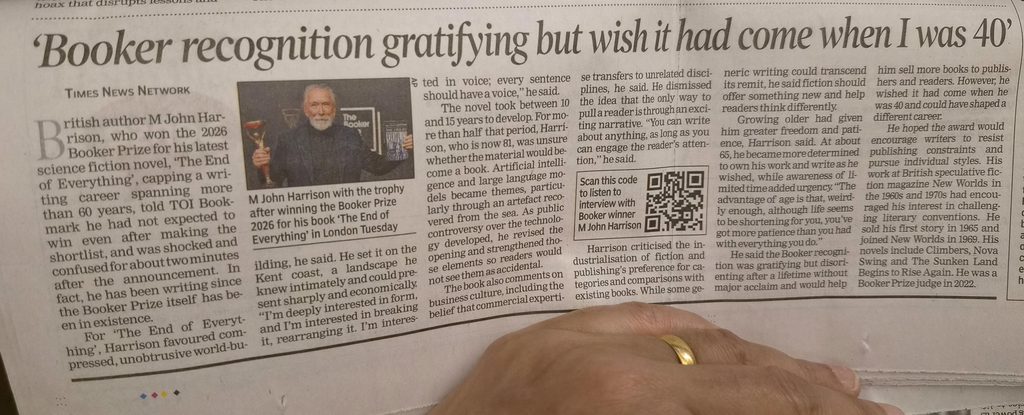
Today, on 12 Nov 2026, an account of the interview was carried in the print edition of The Times of India.
Coincidentally, I had spoken to M. John Harrison in September when he had been longlisted for the prize. The Spotify link:
The book is published by Serpent’s Tail and is distributed in India by Hachette India.
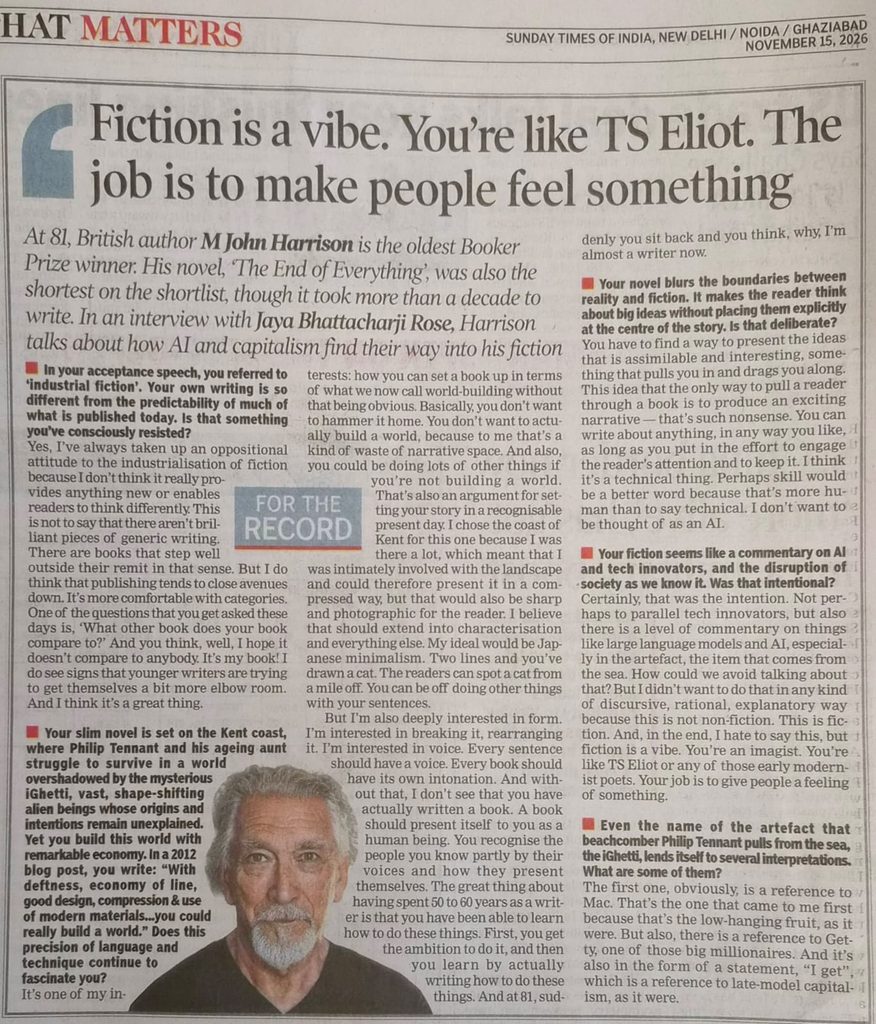
On Sunday, 15 Nov 2026, the Times of India published an extended version of the interview in the print edition of the paper.
*TOI Bookmark is a weekly podcast on literature and publishing. TOI is an acronym for the Times of India (TOI) which is the world’s largest newspaper and India’s No. 1 digital news platform with over 3 billion page views per month. The TOI website is one of the most visited news sites in the world with 200 million unique monthly visitors and about 1.6 billion monthly page views. TOI is the world’s largest English newspaper with a daily circulation of more than 4 million copies, across many editions, and is read daily by approximately 13.5 million readers. The podcasts are promoted across all TOI platforms. I have recorded more than 214+ sessions with Jnanpith, Padma Bhushan, and Padma Shree awardees, International Booker Prize winners, Booker Prize winners, Women’s Prize for Fiction, Nobel Laureates, Pulitzer Prize, Stella Prize, AutHer Awards, Erasmus Prize, BAFTA, Turing Prize, Magsaysay Prize etc. Sometimes the podcast interviews are carried across all editions of the print paper with a QR code embedded in it.
Some of the authors who have been interviewed are: M. John Harrison, Yáng Shuāng-zǐ & Lin King, David Szalay, Banu Mushtaq, Deepa Bhashti, Samantha Harvey, Jenny Erpenbeck, Michael Hoffman, Paul Murray, V. V. Ganeshananthan, Hisham Matar, Anita Desai, Amitava Kumar, Hari Kunzro, Venki Ramakishnan, Siddhartha Deb, Elaine Feeney, Manjula Padmanabhan, Edwin Frank, Jonathan Escoffery, Joya Chatterji, Arati Kumar-Rao, Paul Lynch, Dr Kathryn Mannix, Cat Bohannon, Sebastian Barry, Shabnam Minwalla, Paul Harding, Ayobami Adebayo, Pradeep Sebastian, G N Devy, Angela Saini, Manav Kaul, Amitav Ghosh, Viet Thanh Nguyen, Damodar Mauzo, Geetanjali Mishra, William Dalrymple, Sanjoy Roy, Abdulrazak Gurnah, Andrew Miller, Catherine Chidgey, Dr Rachel Clarke, Charlotte Wood, Megha Majumdar, Kiran Desai, Ken Follett, Philippe Sands, Victoria Bateman, Anuradha Roy, Sir Tim Berners-Lee, Danny Rensch, Anne Beate Hovind, Lyse Doucet, Tayari Jones and Annie Ernaux.
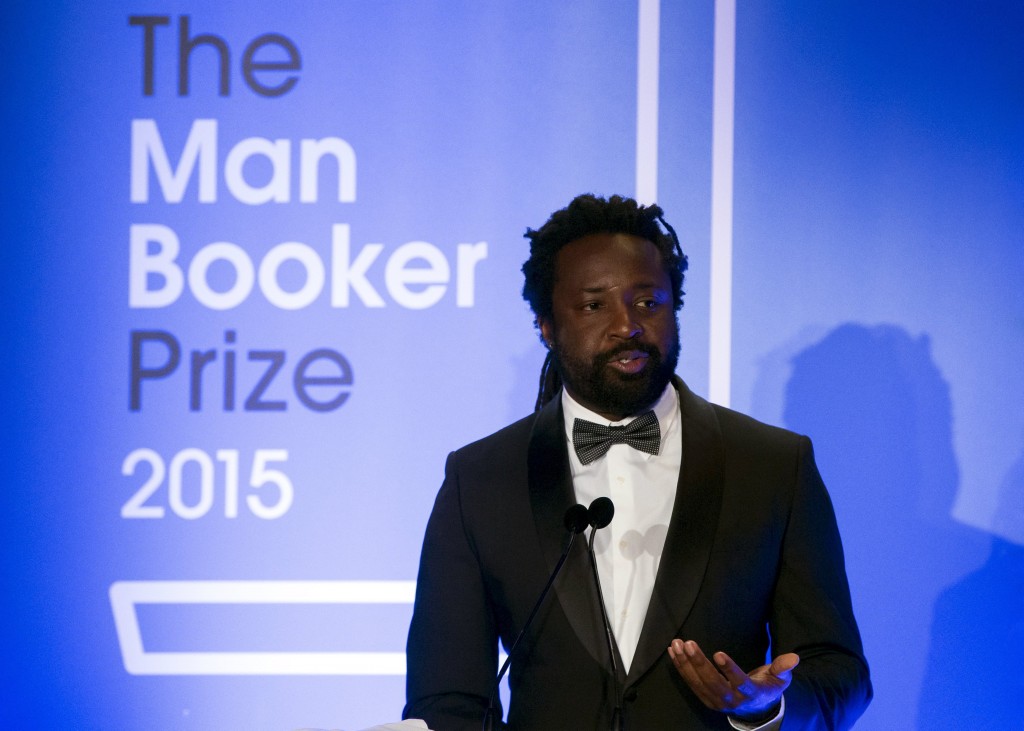
The Disappearers by Marlon James is about eight gay men who meet for the first time, in Kingston in 1988. They are well aware that they are taking a big risk in answering the casting call for an openly queer play. During one of the rehearsals, the actors are brutally assaulted. One dies. The story unfolds over the following years, tracking the individuals and their lives. It is an extremely violent book to read not just for the depiction of the physical and sexual violence, but the manner in which hostility exists towards gays, leaving the reader shatttered with the experience. To encounter this on a daily basis. For some, even their own homes are not safe places to exist. They have to leave in order to survive. The brutality of it. The last time I read such a book that left me completely shattered was Hanya Yanagihara’s A Little Life. It is a million copy bestseller that too had been shortlisted for The Booker Prize.
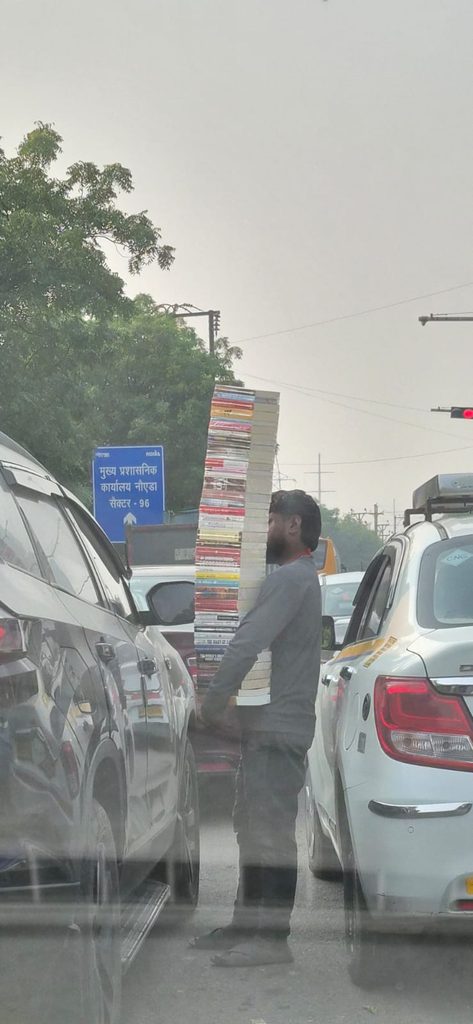
Despite the glowing reviews like the now famous NYT review and incredible support amongst readers worldwide, The Disappearers may have lost the Booker Prize but it is going to be a steady seller for years to come. It may not have the enviable spike in sales that all Booker Prize winners achieve, but Marlon James’s novel will be spoken about for very long time. Who knows it may even achieve this backhanded compliment that Hanya Yanagihara’s book has got by being pirated on the streets of Delhi and is being sold at crossroads. I took this picture a couple of weeks ago in Delhi NCR.
Here are a couple of images sourced from the Internet:
Debut novelist Rebecca Perry has had a dream run with May We Feed the King. She won the Waterstones Debut Fiction Prize 2026, an Observer Best Debut novelist and has been shortlisted for The Booker Prize 2026. In fact, the winner of the latter will be announced in a few hours from now.
May We Feed the King is set in two time periods. The present where a curator is commissioned to dress up rooms in a historic building. While on assignment, she meets an archivist who informs her about the 31 kings who had lived in the building within a space of 400 years. But it is one particular king who catches the curator’s fancy. It is a very short entry in the archives, although the page is much scribbled over. The digging into the archives, the exploration, and later the walkabout through the installations by the curator for the ticketed guests, bookend the novel. The middle section is taken up by imagining what it would have been like to live as a contemporary of this king.
The section on the king is the longest in the book. It is also where the poet-turned-author Rebecca Perry delves into history, without saying “what if” does exactly that with different scenarios. Each chapter reads like a stanza. The courtiers and others in the royal household have speaking parts and provide the chorus to the appointment of the new king, the political machinations, the impending war, quelling of the rebellion in the kingdom, and the sexual escapades that occur in the royal chambers.
Through it all, the desriptions of the food whether real as served to the king or later recreated with wax models by the curator are truly sumptious and in keeping with the mood of the scene.
The fact that this novel made it thus far to the Booker Prize shortlist is extraordinary. It is a poised voice. Sure and steady. Previously, Rebecca Perry has published two full-length poetry collections – Beauty/Beauty and Stone Fruit – both published by Bloodaxe Books (2015, 2021), as well as four pamphlets. Her poetry has been shortlisted for awards including the TS Eliot Prize and her first collection won the Michael Murphy Memorial Prize. Her first work of creative non-fiction – On Trampolining – was published by Makina Books in 2023. May We Feed the King has been published by Granta. It is distributed locally by Hachette India.
Whether Perry wins tonight or not is not the point. It is the emergence of a new literary voice that is to be celebrated.
Ever since Douglas Stuart burst upon the literary scene, I have been a huge fan. He writes exceptionally well. So, I was delighted when an opportunity to interview him for the TOI Bookmark* podcast presented itself. Overjoyed is more like it. John of Johns is an outstanding novel. So, to be able to interview the author immediately after having finished it, is a dream come true. We recorded this episode on 19 May 2026. It is published by Pan Macmillan India.
On 7 Nov 2026, Douglas Stuart made history with Waterstones Scottish Book of the Year win by having won it twice. His latest novel, John of John, has claimed the honour six years after his debut, Shuggie Bain, won the same prize in 2020. Now to discover on Monday 9 nov 2026 if he has achieved the same success with The Booker Prize 2026.
I am not even going to try and explain what the novel is about or analyse it. Read it for yourself. Here is a snippet from our conversation:
“I never believe the idea that people of faith are not human first. We are all human and we are all struggling. Whether it is on a moral scale or just on an idea what is life about and why are we here? So, as to paint the nuance of that is part of the idea why I wanted to write the book to really humanise. The modern world looks at the people of faith as if they are a trope or a cliché or just one type of thing. I think novels are a wonderful way to portray, better than painting a portrait, better than cinema, not only do you have the surface and the aesthetic, but you also have the interiority, the moral layer, the historical layer, the desire, the sexual, you have all of it. You can move in temporal directions that you cannot in other forms of capturing human life.”
Listen to it on Spotify:
It is available on Spotify:
From the book blurb:
Out of money and with little to show for his art school education, John-Calum Macleod takes the ferry home to the island of Harris to find that not much has changed except for him. In the windswept croft where he grew up, Cal resumes his old life, caught between the two poles of his childhood: his father John, a sheep farmer, weaver, and pillar of their local Presbyterian church, and his Glaswegian grandmother Ella, who has kept a faltering peace with her son-in-law for decades.
While Cal wonders if any lonely men might be found on the barren hillsides of home, John is dismayed by his son’s long hair and how he seems unwilling to be Saved. As the seasons pass, everything is poised to change as the threads holding together the fragile community become increasingly entangled.
This is a novel worth reading!
8 Nov 2026
*TOI Bookmark is a weekly podcast on literature and publishing. TOI is an acronym for the Times of India (TOI) which is the world’s largest newspaper and India’s No. 1 digital news platform with over 3 billion page views per month. The TOI website is one of the most visited news sites in the world with 200 million unique monthly visitors and about 1.6 billion monthly page views. TOI is the world’s largest English newspaper with a daily circulation of more than 4 million copies, across many editions, and is read daily by approximately 13.5 million readers. The podcasts are promoted across all TOI platforms. I have recorded more than 214+ sessions with Jnanpith, Padma Bhushan, and Padma Shree awardees, International Booker Prize winners, Booker Prize winners, Women’s Prize for Fiction, Nobel Laureates, Pulitzer Prize, Stella Prize, AutHer Awards, Erasmus Prize, BAFTA, Turing Prize, Magsaysay Prize etc. Sometimes the podcast interviews are carried across all editions of the print paper with a QR code embedded in it.
Some of the authors who have been interviewed are: Yáng Shuāng-zǐ & Lin King, David Szalay, Banu Mushtaq, Deepa Bhashti, Samantha Harvey, Jenny Erpenbeck, Michael Hoffman, Paul Murray, V. V. Ganeshananthan, Hisham Matar, Anita Desai, Amitava Kumar, Hari Kunzro, Venki Ramakishnan, Siddhartha Deb, Elaine Feeney, Manjula Padmanabhan, Edwin Frank, Jonathan Escoffery, Joya Chatterji, Arati Kumar-Rao, Paul Lynch, Dr Kathryn Mannix, Cat Bohannon, Sebastian Barry, Shabnam Minwalla, Paul Harding, Ayobami Adebayo, Pradeep Sebastian, G N Devy, Angela Saini, Manav Kaul, Amitav Ghosh, Viet Thanh Nguyen, Damodar Mauzo, Geetanjali Mishra, William Dalrymple, Sanjoy Roy, Abdulrazak Gurnah, Andrew Miller, Catherine Chidgey, Dr Rachel Clarke, Charlotte Wood, Megha Majumdar, Kiran Desai, Ken Follett, Philippe Sands, Victoria Bateman, Anuradha Roy, Sir Tim Berners-Lee, Danny Rensch, Anne Beate Hovind, Tayari Jones, Lyse Doucet, M. John Harrison, Luke Kennard, and Annie Ernaux.
On 20 May 2025, at a glittering ceremony at the Tate Modern, London, the International Booker Prize 2025 winners were announced. They were Kannada writer Banu Mushtaq and translator Deepa Bhashti. They won it for the collection of short stories called Heart Lamp: Selected Stories. It has been published in the UK by And Other Stories and in India/South Asia by Penguin Random House India. The original stories in Kannada were published by Abhiruchi Prakashana.
Heart Lamp is an extraordinary collection of short stories. In it Banu Mushtaq has written about the lives women lead. Or rather, she has depicted the life cycle of a girl to womanhood and the many, many responsibilities that are thrust upon her by men. There is also persecution and violation of the girl/woman’s rights by men/patriarchy. It is not necessarily always physical violence that is shown, but emotional, psychological, financial, sexual, and mental violence are construed as forms of gender violence globally. There is sufficient evidence in the stories to show how these are perpetrated upon women on a daily basis in the most ordinary of situations and frighteningly, by men and women, closest to them in their familial/friends circle. It is a vicious tyranny. Yet, Banu Mushtaq in her act of writing, illustrate how women can act and push back, if need be. It is definitely not easy fighting systemic patriarchy and the social indoctrination of girls from a young age as to how they should conduct themselves vis-a-vis boys/men. Most often than not they are taught to disregard their innermost feelings and wishes and conform to the wishes of society/family for their own good. These wishes could be as simple as pursuing higher education and learning to be independent. Having said that, while these stories are ostensibly about women and different responsibilities that motherhood brings with it, Banu also do not shy away from exploring masculine responses to the domestic scenarios. It is a brilliant balance that she achieves. Of course, it also left me wondering if the short story form gave her more freedom to mimic the manner in which women speak and live their chaotic lives, operating at multiple levels, rather than a longer form of writing. A question that remains to be answered.
Banu speaks Dakhni, a fascinating mix of Persian, Dehlavi, Marathi, Kannada, and Telugu. Deepa’s mother tongue is Havyaka, a dialect that harks back to Old Kannada and is spoken by a small community of upper-caste Brahmins from the Arabian coast. Yet, the rhythm of the English flows beautifully in the translation. In fact, it is impossible to discern how much of the translated text that is available to Anglophone readers is a direct and true translation of the Kannada text or has it also been transcreated along the way. Having said that, Heart Lamp is a wonderful introduction Banu Mushtaq’s oeuvre. Here is a perceptive extract from Deepa’s essay on translating this text that is published in the book:
When I began to work with Banu’s stories, I grappled with what this project would be: a lapsed Hindu and an upper-caste person translating a minority voice into our shared alien language. It would be a disservice to reduce Banu’s work to her religious identity, for her stories transcend the confines of a faith and its cultural traditions. Nonetheless, in today’s India, where a decade of far-right politics has descended dangerously into Hindutva-led majoritarianism, hatred and severe persecution of minorities – iterations of such violence are found in many other countries of the world too, lest we forget – it is essential to note the milieu that she lives in and works out of. While of course a translator need not be from the same background as the writer, it still felt important to me to acknowledge our differences, our respective positions and privileges, and use this awareness to be more responsible and sensitive in my translation.
These stories are very refreshing to read given that Banu does not capitulate to any form of othering but chooses to depict life as it is within the community. It is almost as if by reading these stories, she is encouraging cross-pollination of our diverse cultures, much in the fabulously elegant way she uses references to Rama and Lakshman and Shakuni Mama. It exemplifies our syncretic Indian culture. Hence, it is no surprise that years ago a fatwa was issued against Banu Mushtaq for her outspoken writings. In fact, she was also attacked but her husband managed to fend off the attacker. (“India’s Banu Mushtaq makes history with International Booker win” BBC dot com, 21 May 2025)
There is magic in this partnership. It worked as is evident in the International Booker Prize 2025 win.
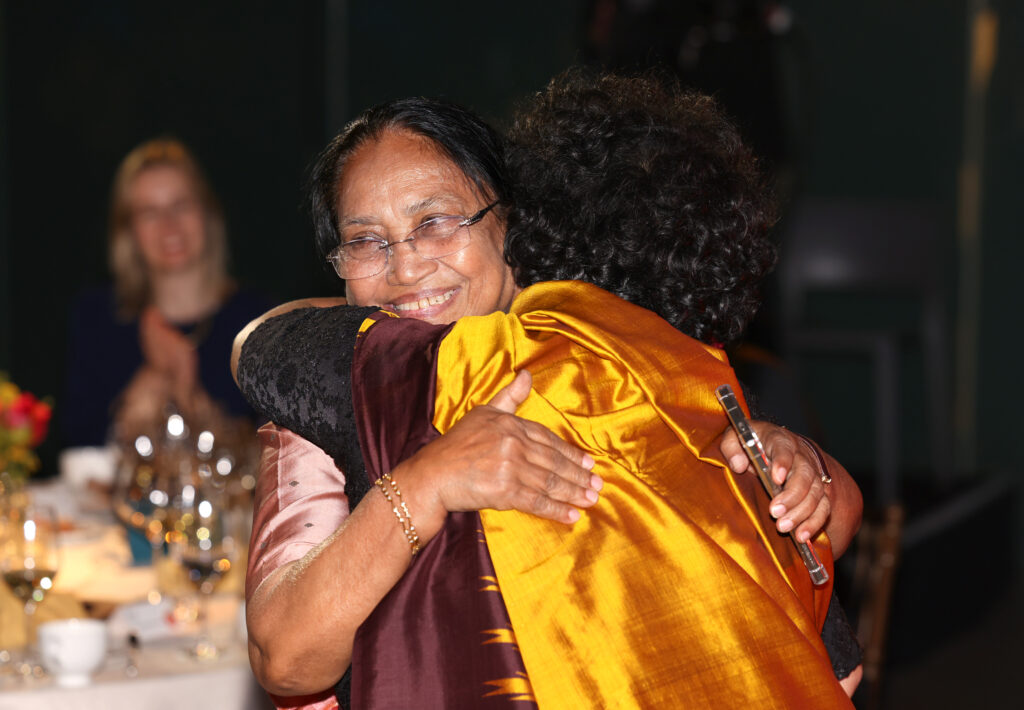
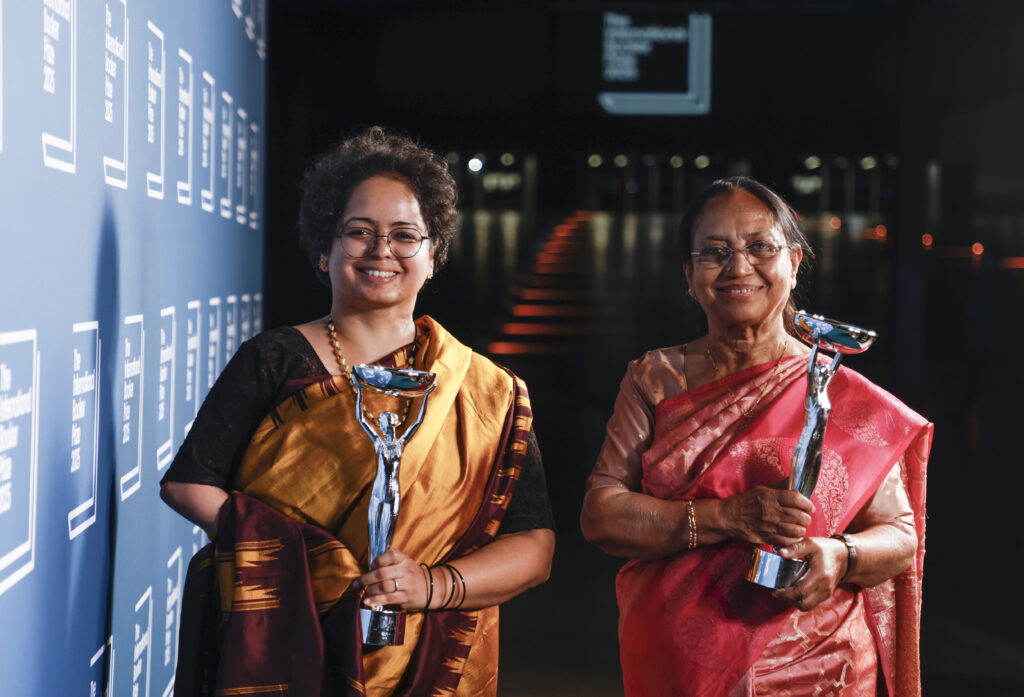
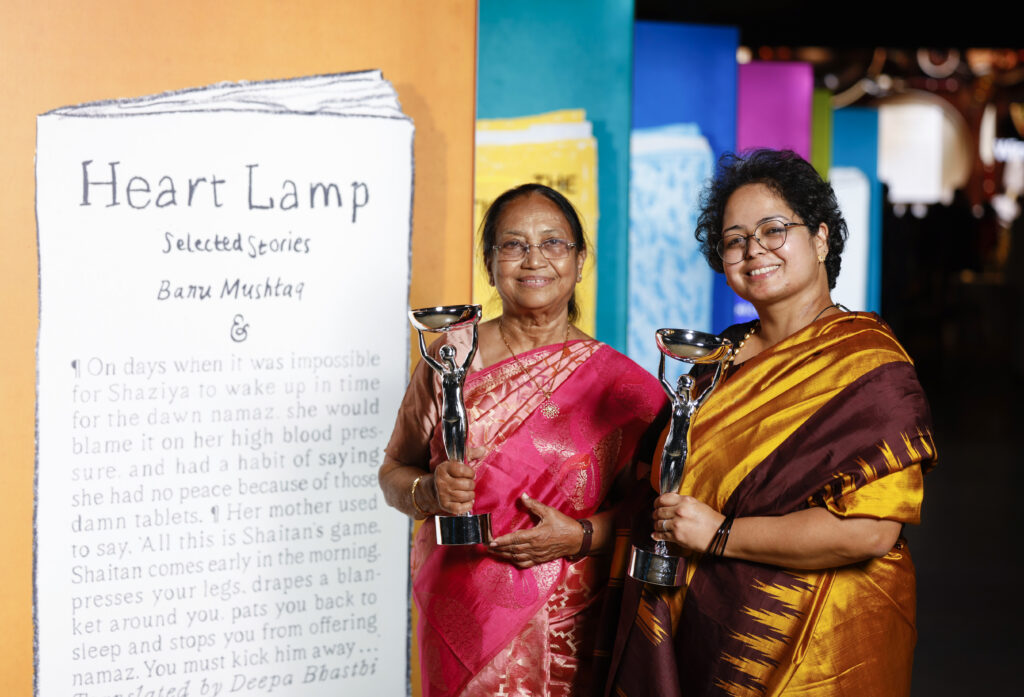
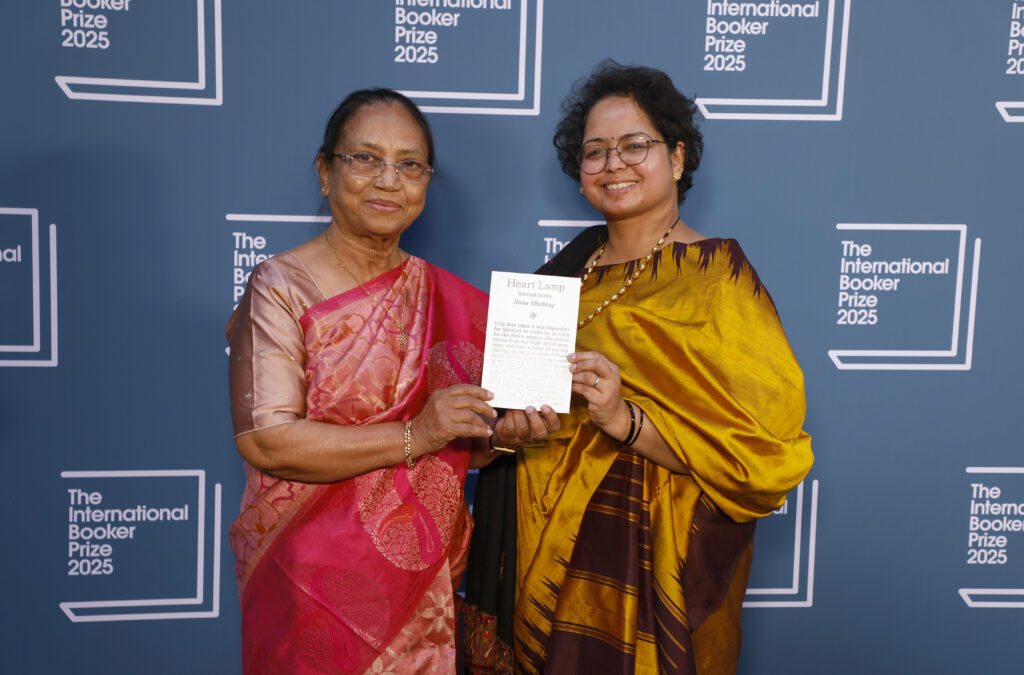
Author Banu Mushtaq (L) and translator Deepa Bhasthi, winners of the International Booker Prize 2025 ceremony at Tate Modern, London.
It was an honour and a privilege to interview the winners within hours of their win being announced. We recorded a special video podcast on 21 May 2025. The audio tracks were uploaded on the TOI website and Spotify. The video will be uploaded on YouTube shortly.
This morning’s Delhi NCR edition of Times of India has carried the news/podcast in all editions across India. It was on the front page and six articles inside. The QR code to the TOI Bookmark episode was embedded in an article and the brand name highlighted.
Front page, the Times of India, Thursday, 21 May 2025 The Times of India, Thursday, 21 May 2025
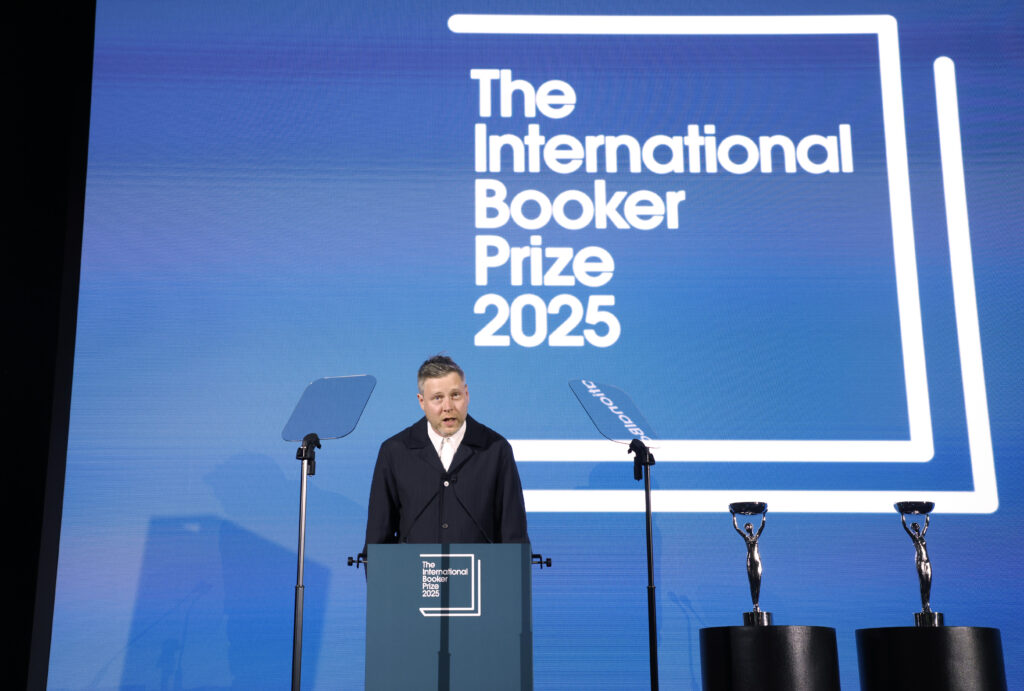
The prestigious literary prize, worth £50,000, is split equally, giving the author and translator their due recognition. The winners were announced by chair of the judges, Max Porter. He said ‘Heart Lamp is something genuinely new for English readers. A radical translation which ruffles language, to create new textures in a plurality of Englishes. It challenges and expands our understanding of translation. This was the book the judges really loved, right from our first reading.’ Heart Lamp is the first collection of short stories to have been awarded this literary prize.
Banu Mushtaq is a writer, activist and a lawyer and is from the state of Karnataka, southern India. Mushtaq began writing within the progressive protest literary circles in southwestern India in the 1970s and 1980s: critical of the caste and class system, the Bandaya Sahitya movement gave rise to influential Dalit and Muslim writers, of whom Mushtaq was one of the few women. She is a prominent champion of women’s rights. She was inspired to write stories by the experiences of women who came to her seeking help.
She is the author of six short story collections, a novel, an essay collection and a poetry collection. She writes in Kannada and has won major awards for her literary works, including the Karnataka Sahitya Academy and the Daana Chintamani Attimabbe awards. Her International Booker Prize 2025 winning book Heart Lamp is the first book-length translation of her work into English, having been translated into Urdu, Hindi, Tamil and Malayalam.
Kannada is spoken by an estimated 65 million people. These stories were written by Banu Mushtaq over a period of 30 + years, from 1990 to 2023. They were selected and curated by Deepa Bhasthi, who was keen to preserve the multi-lingual nature of southern India. When the characters use Urdu or Arabic words in conversation, these are left in the original, reproducing the unique rhythms of spoken language.
Author Banu Mushtaq (R) and translator Deepa Bhasthi, winners of the International Booker Prize 2025 ceremony at Tate Modern, London.
Deepa Bhasthi is a writer and literary translator based in Kodagu, southern India. Bhasthi’s columns, essays and cultural criticism have been published in India and internationally. Her published translations from Kannada include a novel by Kota Shivarama Karanth and a collection of short stories by Kodagina Gouramma. Her translation of Mushtaq’s stories won a PEN Presents award in 2024, a scheme from English PEN designed to support and showcase sample translations, giving UK publishers access to titles from underrepresented languages and regions. They were collected as the International Booker Prize 2025 winning book Heart Lamp.
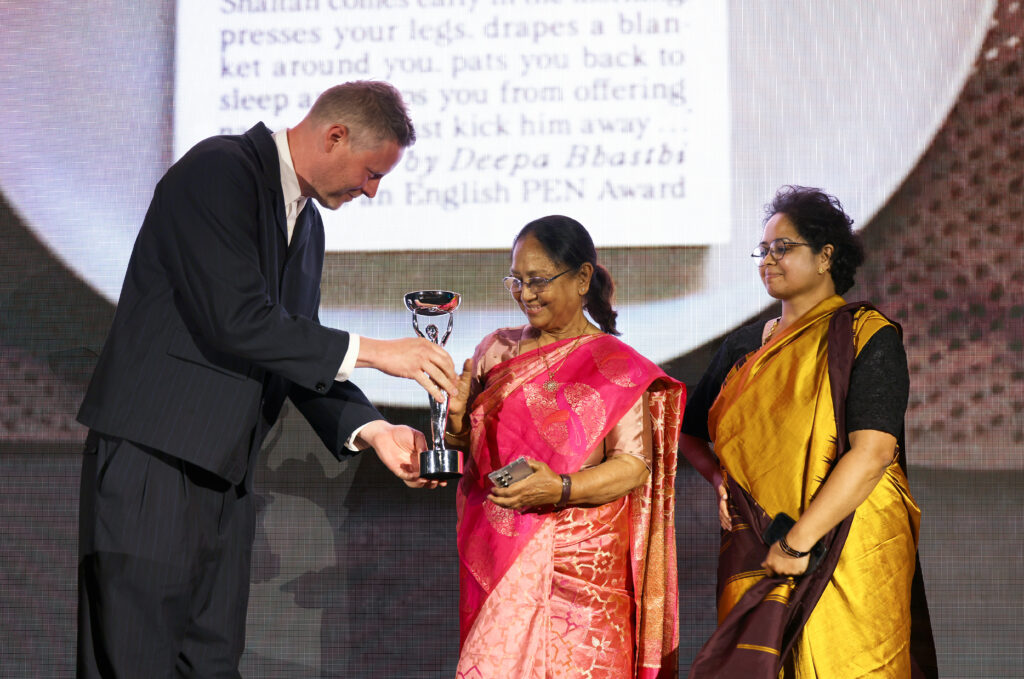
Max Porter presents author Banu Mushtaq and translator Deepa Bhasthi, winners of the International Booker Prize 2025 ceremony at Tate Modern, London.
Fiammetta Rocco, Administrator of the International Booker Prize, said: ‘Heart Lamp, stories written by a great advocate of women’s rights over three decades and translated with sympathy and ingenuity, should be read by men and women all over the world. The book speaks to our times, and to the ways in which many are silenced.
‘In a divided world, a younger generation is increasingly connecting with global stories that have been skilfully reworked for English-language readers through the art of translation. Since 2016, the International Booker Prize has promoted the world’s best writing in translation, and it’s been fantastic that this year’s nominated titles have come to life through our “A feast of fiction from around the world” campaign, which we’ve been delighted to see projected through new and returning collaborations with cultural venues, festivals, booksellers and content creators.
‘Next year the prize celebrates ten years in its current form, and I am optimistic that the anniversary will lead more people to discover and embrace great translated fiction.’
The winning book was chosen by the 2025 judging panel, chaired byPorter, which comprised: prize-winning poet, director and photographer Caleb Femi; writer and Publishing Director of Wasafiri Sana Goyal; author and International Booker Prize-shortlisted translator Anton Hur; as well as award-winning singer-songwriter Beth Orton. The judges were looking for the best work of long-form fiction or collection of short stories translated into English and published in the UK and/or Ireland between 1 May 2024 and 30 April 2025.
Both Mushtaq and Bhasthiwere nominated for the International Booker Prize for the first time this yearand Heart Lamp is Mushtaq’s first English-language publication. Mushtaq is the second Indian author to win the prize, and follows Geetanjali Shree who won in 2022 for Tomb of Sand, translated from Hindi by Daisy Rockwell. Bhasthi is the first Indian translator to win the prize. Mushtaq is the sixth female author, with Bhasthi the ninth female translator, to be awarded the prize since it took on its current form in 2016.
At just over 200 pages long, Heart Lamp was the second longest book on a shortlist of slim books: four of the six shortlisted works are under 200 pages long, with Under the Eye of the Big Bird the longest, at 278 pages.
Author Banu Mushtaq (L) and translator Deepa Bhasthi, winners of the International Booker Prize 2025 ceremony at Tate Modern, London.
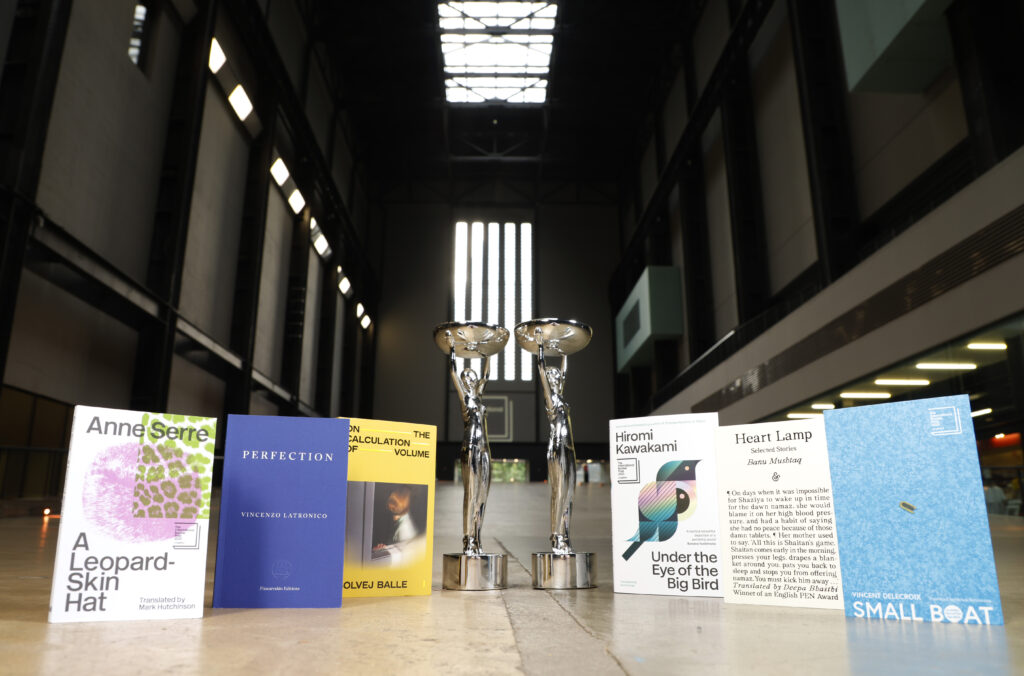
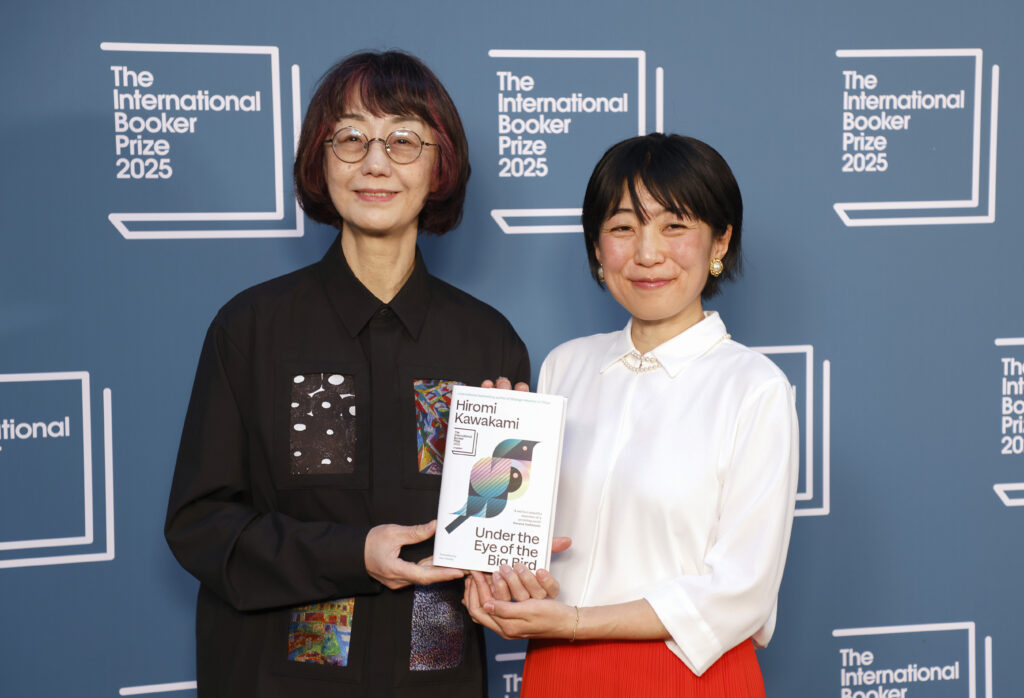
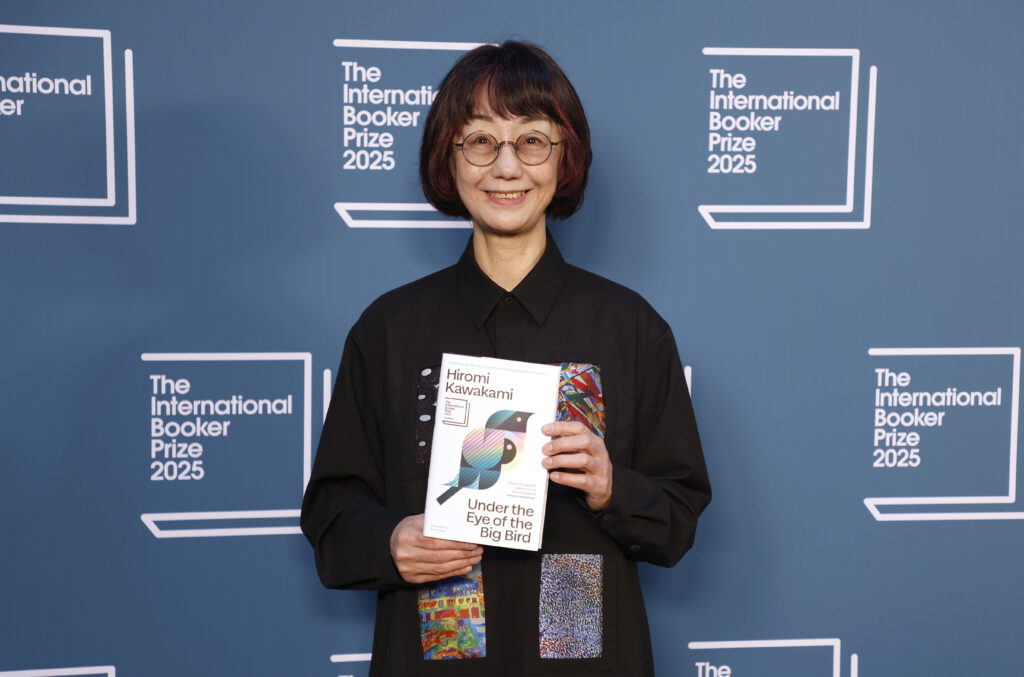
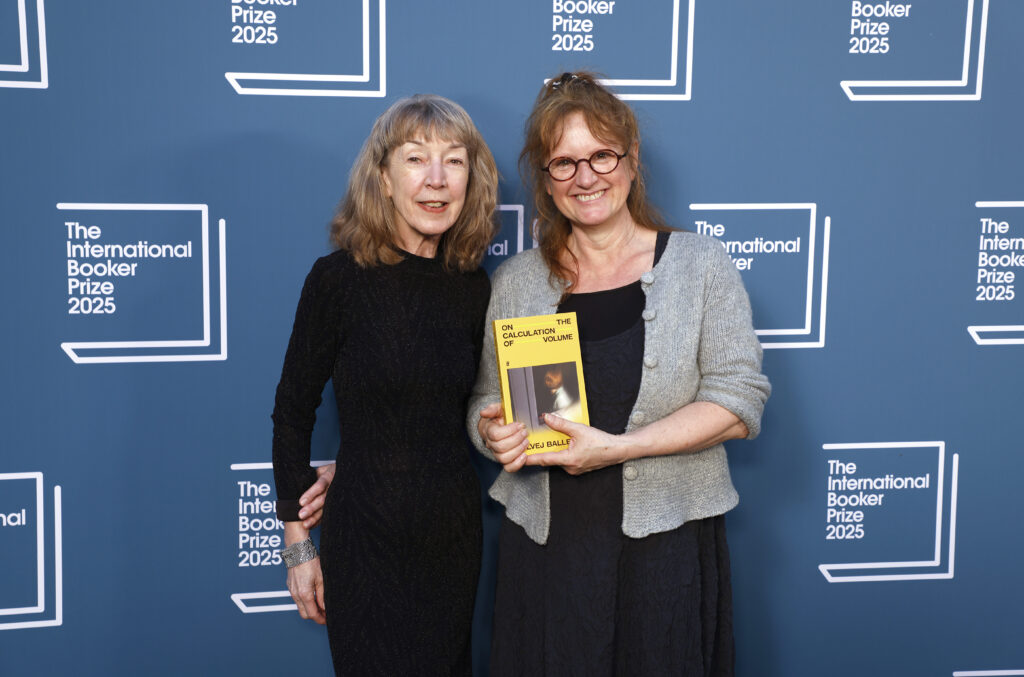
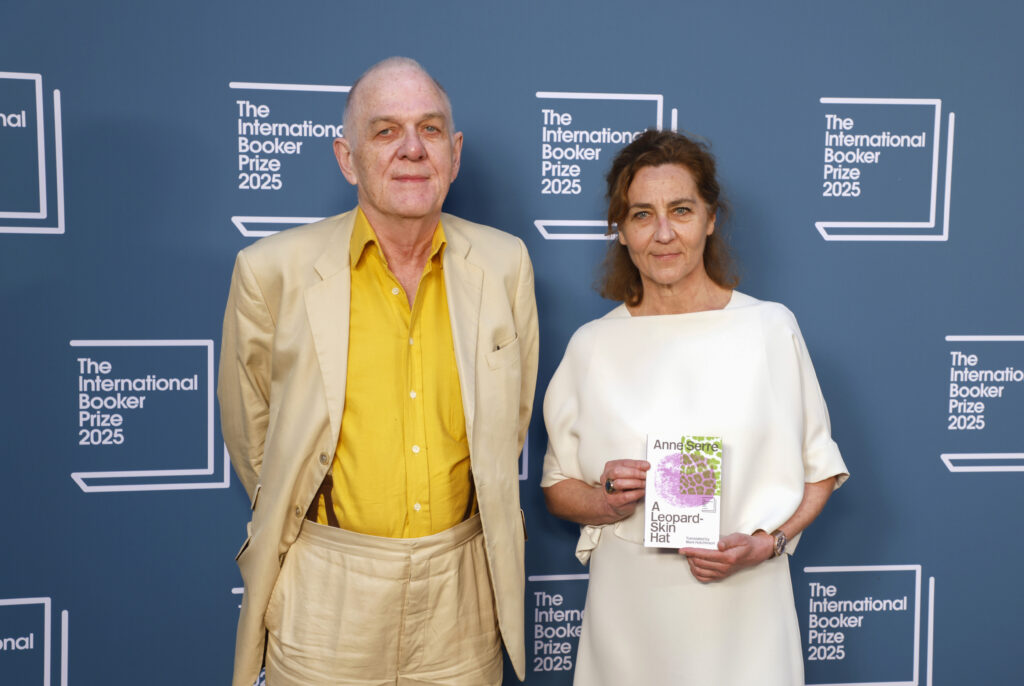
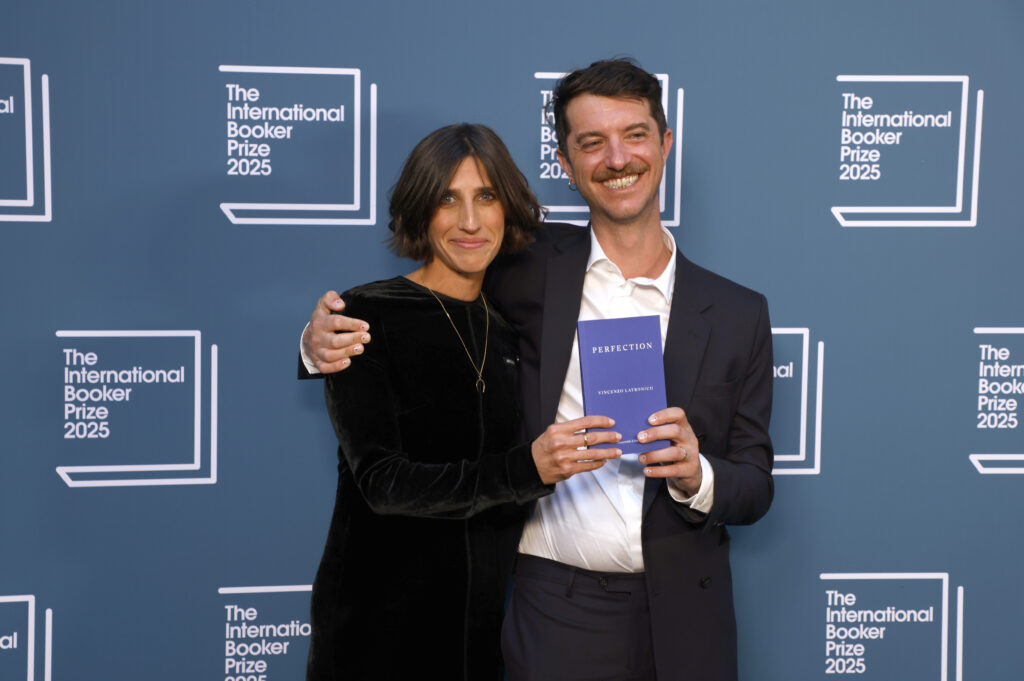
The other shortlisted writers and translators were photographed holding their books at the Tate Modern too. Here are the pictures:
The International Booker Prize 2025 ceremony at Tate Modern, London.Hiromi Kawakami and Asa Yoneda at the International Booker Prize 2025 ceremony at Tate Modern, London.Hiromi Kawakami at the International Booker Prize 2025 ceremony at Tate Modern, London.Barbara J. Haveland and Solvej Balle at the International Booker Prize 2025 ceremony at Tate Modern, London.Banu Mushtaq and Deepa Bhasthi at the International Booker Prize 2025 ceremony at Tate Modern, London.Mark Hutchinson and Anne Serre at the International Booker Prize 2025 ceremony at Tate Modern, London.Sophie Hughes and Vincenzo Latronico at the International Booker Prize 2025 ceremony at Tate Modern, London.
This is a selection by an eminent jury that is spot on. Read Heart Lamp.
22 May 2025
* The photographs have been used with due permission from The Booker Prize Foundation.
Read more:
“The roots of Banu Mushtaq’s literary rebellion” by Meghna Rao Banu Mushtaq’s International Booker-winning ‘Heart Lamp’, translated by Deepa Bhasthi, marks many historic firsts for Kannada literature and offers an unflinching look Muslim women’s lives in Karnataka (Himal SouthAsian, 21 May 2025)