AutHer Awards Posts

Interview with Likla Lall
The following interview with Likla Lall was conducted for Moneycontrol (15 April 2026).

Likla Lall (Author) & Eva Sánchez Gómez (Illustrator) Ganesh Haloi: Colours of Home ART1ST, Pb. 2025

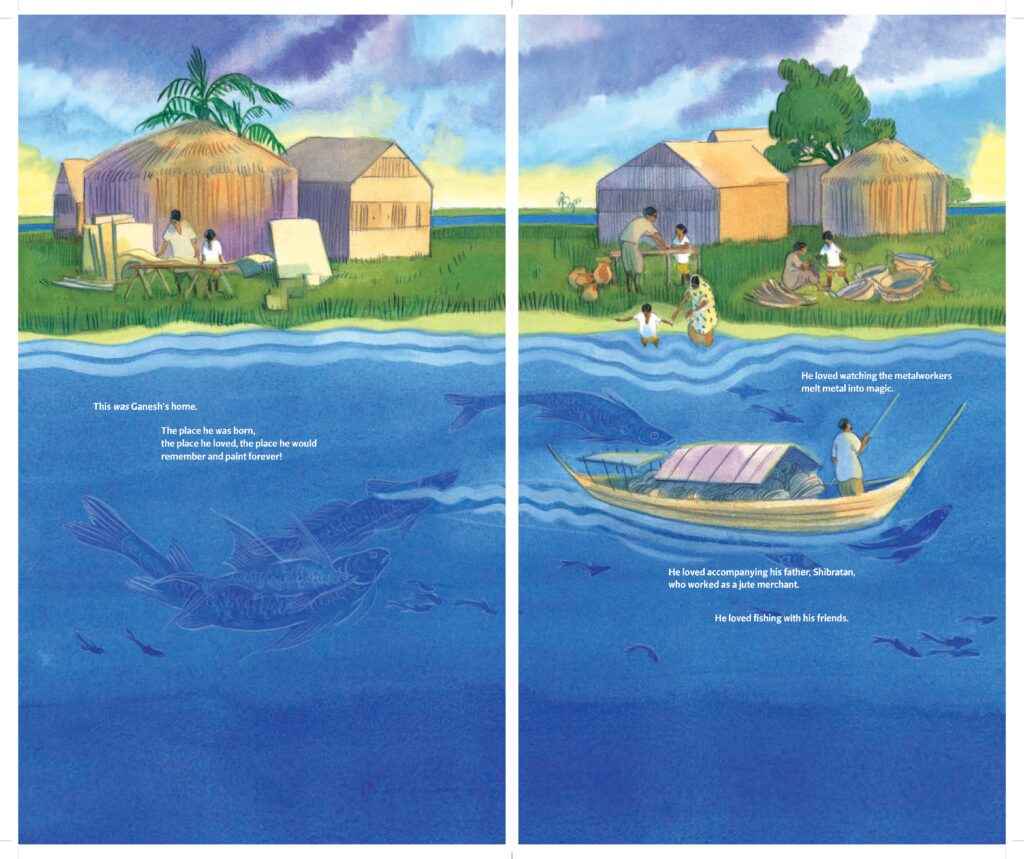
Ganesh Haloi: Colours of Home (2025), is a fascinating picture biography of the artist Ganesh Haloi. It narrates his life history simply and it is multi-layered that readers of all ages can appreciate it. The text is soaked in the art work in a manner that is readable, relevant, and resonates with the art on display. So, the connections offered are once again at multiple levels. Depending on which of the senses of the reader is tickled, it is an introduction to the heart and soul of what defines Ganesh Haloi’s work. Then from there, the reader may move on to different aspects of the story and the beauteous book production supports it impressively. The art work is inspired by Ganesh Haloi’s style including a wonderful three pages that briefly seem to emulate the tunnel books of the nineteenth century. In this book, they replicate the frescoes of the Ajanta Ellora caves that have deeply influenced Haloi. This is a book that weaves within it historical facts, such as that of the Partition of the Indian subcontinent; it is always anchored in time with dates in the artist’s life mentioned and innumerable concepts significantly that of the idea of home — the refugee camp called Cooper Camp, railway platform at Howrah station or Government College of Art and Craft, Calcutta or the caves of Ajanta and Ellora that ultimately shaped Haloi’s art. Ganesh Haloi contains a workbook section wherein the younger readers, can familiarise themselves with the various forms of art, taking inspiration from “ordinary” objects around them and learning to observe before reimagining it with their creative impulse. The end papers of the book provide a mini catalogue of the prominent paintings by Ganesh Haloi, providing thumbnail reproductions and the provenance; thereby gracefully educating readers on how to appreciate and recognise art. It is a legacy worth cherishing.

Published by Art1st and Kiran Nadar Museum of Art, supported by aKaR pRaKaR (Research Partner) and Institut Ramon Llull (with an illustration grant), written by Likla Lall, illustrated by Eva Sánchez Gómez and designed by Rohina Thapar. Art1st Books, reaches beyond art history to the cultural history of India, helping children in various cultural contexts make a personal connection to this heritage. The book is a part Art1sts’t Art Exploration Series. The series delves into the lives, particularly the childhood, of eminent artists. It explores the artists’ work and philosophy, approach and methodology, success and failure, in a story format, to engage and inspire children to in turn create their own art.

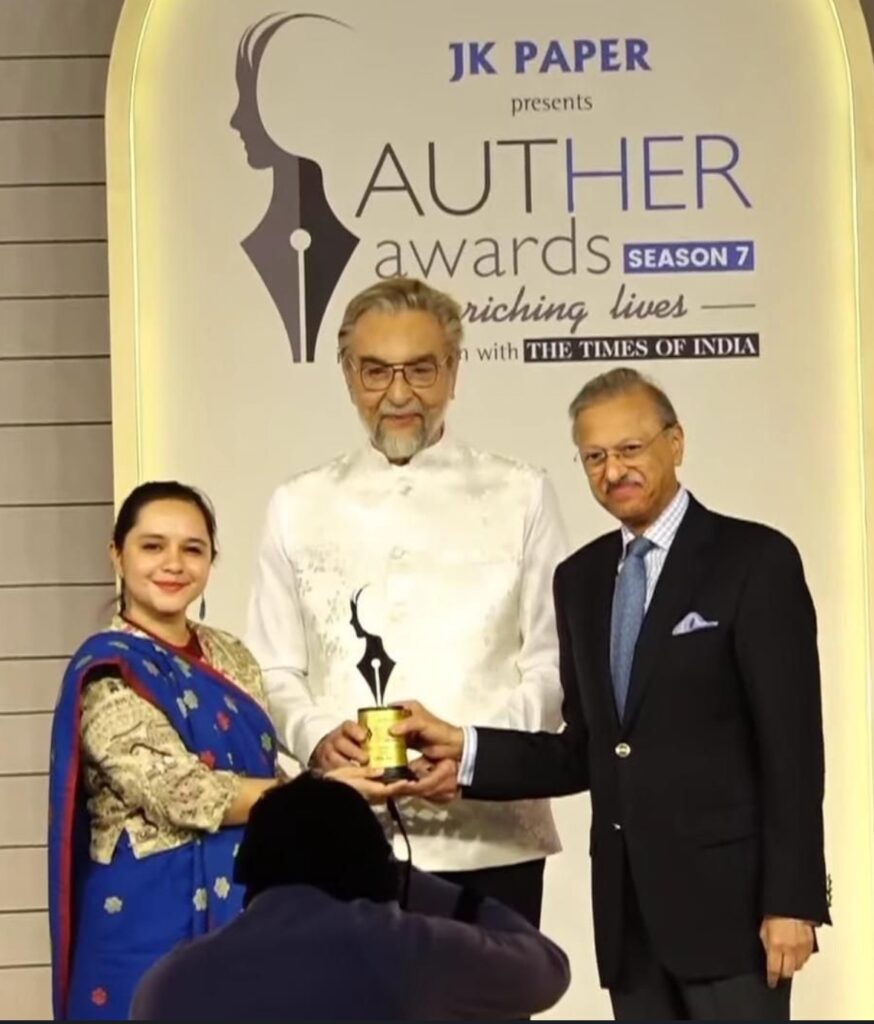
With Art1st, Likla Lall has been writing children’s books about art, including award-winning Art is a Verb and Somnath Hore: Wounds. She writes about the Self (with Little Light), on adventures (with PanicNot!) and comics on nature and mythology (with her sister and illustrator Keya Lall). She won the Best Children’s Literature AutHER Award 2026 for Ganesh Haloi. It was also selected for the BRAW Amazing Bookshelf – part of the Bologna Ragazzi Award 2026.

Eva Sánchez Gómez graduated with her Fine Arts degree from University of Barcelona. Now she lives and draws in La Garriga. She has illustrated more than thirty novels and picture books for publishers from different countries.

Rohina Thapar is a multi-disciplinary designer working at the intersection of communication, product, & brand. Rohina and Likla work together on Khel Theory, a collective that creates interactive educational material. 

The following interview with Likla Lall was conducted via email.

  1. How did this book come about?

Ganesh Haloi: Colours of Home is a part of Art1st’s Artist Exploration series that takes on the format of a picture book biography, along with an exploration of the artist’s work. The series aims to make artists approachable to young readers and inspire them to create their own art. The series began with Raza’s Bindu, but has since covered important Indian artists like Abanindranath Tagore, Somnath Hore, Ganesh Pyne, Jamini Roy, most recently Ganesh Haloi and many others. Our collaboration with the Kiran Nadar Museum Art and Akar Prakar has guided our choice of artists for this series. Reena and Abhijith Lath of Akar Prakar, especially, have a close and long relationship with Ganesh Haloi, and have been instrumental in guiding the research for this book. 

  • Whose story is this? If it is an amalgamation, then how much research did it involve? What were the primary sources used? Sometimes it almost feels as if you are referring to diaries/letters of the artist. Has Ganesh Haloi seen your book? What has he said about it?

The research for this book began with reading as much as possible about the Ganesh Haloi. We were grateful to access Naishabder Chitrakar, a biography of the artist, edited by Prakash Das. It includes essays on various aspects of his life, from his childhood to his entry into the world of art, his philosophy and pedagogy on art, and some of his poems, which gave me such clear insight into the way his mind works. I was also fortunate to meet and interview him several times, a delightful experience. He was in equal parts cheerful, poetic and kind as he led me through his home and his works. He patiently received various drafts of the story and was always encouraging.  The very last page of the story is a direct quote from him. One of the first few copies of the books was received by him and his family in Calcutta. In fact, I called him the day after winning at the AutHer Awards 2026 to share the news, and he was ever-joyful, inviting me once again to visit them in Kolkata. 

  • Brevity of text is the hallmark of this story. There is so much history to unpack in every sentence. How did you balance the words, facts, concept, and readability for all ages?

It is a task to condense an entire life story into a short story for children. For me, the next step is to arrive at a concept that brings it all together. As I read through the various and distinct parts of Ganesh Haloi’s journey, as well as immersed myself in his vibrant artwork, I began to imagine capturing this in a museum or gallery, much as his art is often displayed. What stuck were these four distinct places that defined him — four places with distinct memories, colours, ecologies and experiences. The illustrations invite the reader to dive into each place and see it through his eyes. The text pulls you through the narrative, guiding you through time and towards the next stop on the journey. And balancing in the space where word and picture meet are the emotions of this journey, of a child turning into a young man. And once you’ve read through the story, you’re invited to see the works for yourself and make your connections to it. These pages are crafted to include history, introspection, curiosity and expression. The instructions are easy to follow, but not dull, leaving room for artistic interpretation; after all, our readers are artists, no matter what age. 

  • It is more than complemented by the layers of artwork. Was this conceptualised digitally? Please share the ideation process and the various iterations. 

The Art1st process of book creation is extremely collaborative. The writer (Likla), illustrator (Eva) and designer (Rohina) have worked together previously on Abanindranath’s House of Stories, and have a beautiful working rhythm between them, executed across geographies. The research isn’t simply for the text and story, but to build visual references for this particular time period in Bengal. ‘What did people wear? Were there photographs and illustrations of Calcutta? Which fish call the Brahmaputra their home?’ Eva is a brilliant illustrator based in Spain, with a keen sense of visual narrative. Her wonderful imagination is perfectly paired with her skills with coloured pencils. She brought each of the four places in the book to life with her vibrant colours. She imagined the fabrication of the book: the many layers of the Ajanta Caves, or the never-ending spreads of the dismal Cooper’s Camp. We’re grateful for the support of Institut Ramon Llull in making this inter-national collaboration possible. 

  • Did the design evolve to fit the content? How do you ensure that your instructions are followed 100% while it is in production? The pages are shaped differently. There are cutouts arranged in the manner of tunnel books.  

The next part of the book-making is the design. Each of us brings a different perspective as we ‘read’ the works of Ganesh Haloi. Bangalore-based Rohina has designed several Art1st books, amongst other creative design projects. Her task was to integrate these various threads (the text, illustration, artworks and activities) and weave them into a coherent and self-encompassing world. She has a fine mastery over the shapes of paper as they fold, open, and even pop right out of the book. There is a long process of testing of pages, redesigning, colour correcting, and sample prints before the book is ready to go. Our print partners are Maharashtra-based Prudent Art & Fab. They painstakingly assemble each complex section of the book to create a piece of magic you can hold in your hands. 

  • Was the text tested thoroughly before being edited and then discussing design layouts? What did it involve? 

The text went through various iterations under the watchful eye of our editor, Ayushi Saxena. The biggest challenge was to wrangle and bring down the word count: there’s always so much more to say! As the illustration and design came together, we could see the shape we were making. It became easier to trust the collaboration of text and picture and kill some of our darlings. 

  • Art1st specialises in making biographies of prominent Indian artists in a pictorial format with worksheets provided to help learn the basic brushstrokes/ideology of the artist featured. It is the same for Ganesh Haloi too. What were the key details that you wished to incorporate and did and/or were challenged to do so?

This series follows an effective pedagogical design. The first part is the story, where one reads about the life of the artist. In the second part, one is presented with the artist’s works and provocations to look deeper. And finally, one is encouraged to create, through activities inspired by the artist’s process. Ganesh Haloi, as an artist, has a wonderful ability to capture the unseen. His works present abstract-looking landscapes that seem incredibly familiar in their essence. He has developed a language of his own that captures the rhythms of the unseen, the movement of the wind, the whispers of the rivers and the sensation of colour. These are some of the ideas that rest within the pages of this book, through questions and activities. 

  • Good children’s literature works at multiple levels and is timeless. It cuts across generations and ages. Thankfully, your text does not specify the age group it is meant for. Nevertheless, when working on the draft, how do you determine the target audience? What is it that you seek?

While the series is meant for children aged 8-12, our decade-long experience has repeatedly shown us that art really does transcend age. I have found adults absolutely enchanted by my first book Art is a Verb and its curious paper play. Similarly, adults are quick to admit in a safe space created for children that they haven’t heard of a particular artist or an art form, and the books playfully encourage them to read. Conversely, there is a notion that art belongs to adults, and yet, children of all ages are enchanted by art and quick to share their observations. There is a pedagogical base that guides the creation of the book (the structure, language, font size and so on), but it isn’t prescriptive, rather immersive. There is a freedom to allow the book to turn into the creature it is meant to be. 

  • How do you incorporate big ideas of free will, independent thinking, being a dreamer while focusing on turning thought into action, being imaginative, freedom of expression, idea of home, etc?

In retrospect, it is possible to decipher themes and learnings in the book, but to me, the process of creation was simpler. I was guided by the life story of an amazing artist. I tried to represent in the truest way possible way the circumstances of Haloi’s life: his birth in Jamalpur, the partition of the Indian subcontinent at the time of Independence in 1947 and the seeking of a new home in Calcutta (as it was known then), his life experience as a teacher and so on, knowing that it will resonate with the reader. Art-making, too, can be contemplated on and understood in so many ways. The absolute imagination of an artist brave enough to confront a blank canvas. The almost-alchemical understanding of materials as they turn pigments and paper into entirely new worlds. Their preoccupations as they consider the same subjects from different angles, repeating symbols, colours and ideas in an attempt to express the world. Once more, as a writer of art, I am guided by the art and by the artist, and I choose to follow and retrace their colourful paths. 

  1. How do you devise the worksheets? What is the intent? Can these be replicated in a classroom or are dependent on the individual text? What results have such experiments shown in the past?

Art1st has a pedagogical division that works with schools and educational organisations. It was from this work that Ritu Khoda (founder of Art1st) saw the gap in and need for books about Indian art for Indian children. We try to create the activity pages in a direct and DIY manner, well aware that not all readers have the same access to art environments or educators. For educators, we often offer a workshop or guide on how to use the books in their classrooms, if required. It is a practice for the book creators to conduct workshops at festivals, schools, libraries and foundations. A huge reason is the advocacy for art education, which is often treated as a secondary subject in STEM-first systems. I am often surprised by the responses. For example, our book Somnath Hore: Wounds came out as the COVID-19 lockdown was lifted. Our engagements around the idea of wounds, catharsis and healing created a safe space for people to share their own wounds and find connection. Colours of Home has been a lovely opportunity to step into ‘abstract’ art, often confusing them, but also giving them the freedom to explore beyond their assumed boundaries of art. 
22 April 2026
AutHer Awards, Season 7

I am the Literary Director of AutHer Awards.

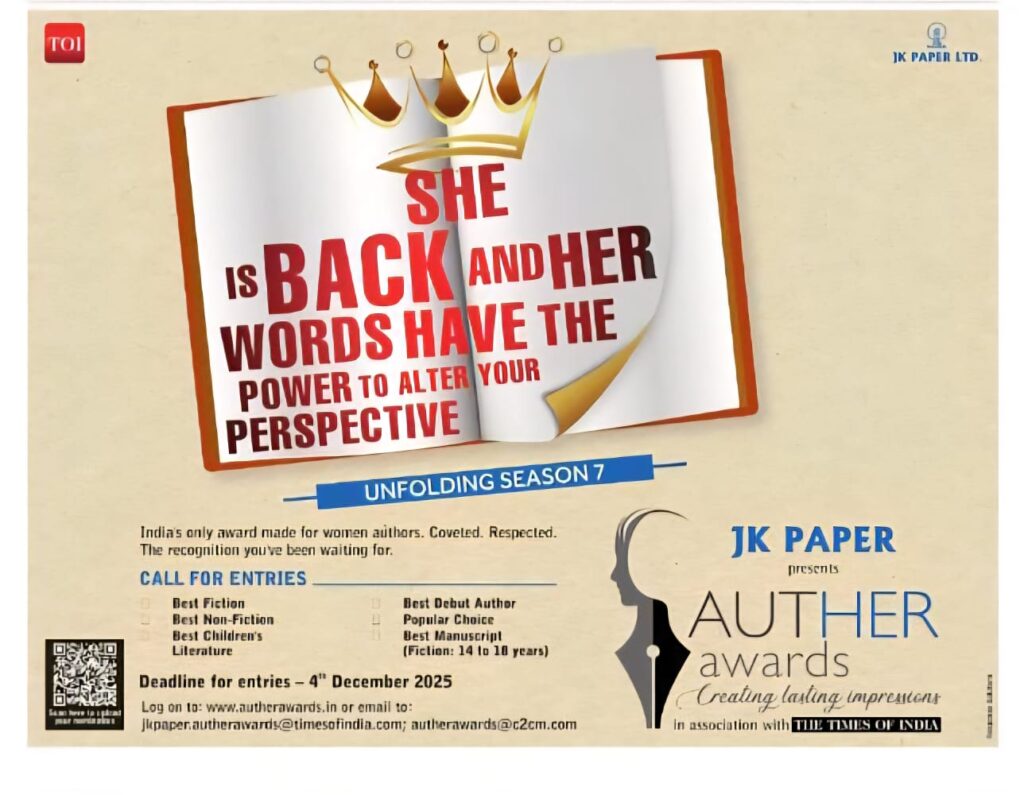
Call for entries.

Final date for submission: 4 Dec 2025

JK Paper and the Times of India proudly present 𝐒𝐞𝐚𝐬𝐨𝐧 𝟕 of India’s most prestigious literary celebration, AutHer Awards, honouring the brilliance, creativity, and powerful voices of women authors who continue to redefine storytelling.

We invite publishers and Indian women authors to submit their works for the prestigious award. Entries are open across six categories:

– Best Fiction

– Best Non-Fiction

– Best Children’s Author

– Best Debut

– Best Manuscript

– Popular Choice

Register now, visit: https://autherawards.in/

*T&C apply.

1 Nov 2025

“Kanchhi” by Weena Pun

Nepali writer Weena Pun’s writings have appeared in Himal Southasian, the Kathmandu Post, The Record, “House of Snow: An Anthology of the Greatest Writing About Nepal”, and elsewhere. She is a graduate of Stanford University and the MFA Program in Creative Writing at Cornell University. Her debut novel “Kanchhi” is published by Hachette India.

It was a pleasure speaking with Weena Pun on TOI Bookmark.

Here is a snippet of our conversation:

“…it was not easy. It took me a lot of drafts to make it seem like the scenes wrote themselves. Language was a problem. If I had to write a dialect, I would write it in Nepali first in longhand, then I would later translate it and then go back and edit it to ensure that they flowed well. “

Spotify link is given below.

Book blurb

In the misty foothills of Torikhola, Kanchhi, the only child of her mother, Maiju, refuses to play by the stifling rules of her hamlet. She befriends boys, writes letters to them, and opposes the shame imposed on her swelling ambitions and curiosity. There is a life beyond the forlorn valleys and gorges, and Kanchhi is intrigued by the possibilities. One cold November morning she leaves home – with two bags and some millet bread Maiju prepares for her. That, however, is the last anybody sees of her.

Now, a decade after Kanchhi’s puzzling disappearance, echoes of her defiance grow thin. Life has moved on. For one, the civil war has arrived at the hamlet’s doorstep. And yet, much has remained still. Maiju lights a lamp in front of the gods and feverishly prays for her daughter’s return. And the villagers, uncertain of what befell Kanchhi, continue to debate. Did she run off, chasing the highs and lights of the big city? Or did the cruelties of the ongoing civil war engulf her whole?

In this impressively sure-footed debut, Weena Pun brings to life the political and social tremors stirring the valleys of Nepal at the turn of the millennium, as well as the tenacious, tragedy-riven women of the time. A delicate and finely wrought saga, Kanchhi is an intimate exploration of vulnerable girlhood in turbulent territories.

***

TOI Bookmark is a weekly podcast on literature and publishing. TOI is an acronym for the Times of India (TOI) which is the world’s largest newspaper and India’s No. 1 digital news platform with over 3 billion page views per month. The TOI website is one of the most visited news sites in the world with 200 million unique monthly visitors and about 1.6 billion monthly page views. TOI is the world’s largest English newspaper with a daily circulation of more than 4 million copies, across many editions, and is read daily by approximately 13.5 million readers. The podcasts are promoted across all TOI platforms. I have recorded more than 145+ sessions with Jnanpith, Padma Bhushan, and Padma Shree awardees, International Booker Prize winners, Booker Prize winners, Women’s Prize for Fiction, Nobel Laureates, Pulitzer Prize, Stella Prize, AutHer Awards, Erasmus Prize, BAFTA etc.

Some of the authors who have been interviewed are: Banu Mushtaq, Deepa Bhashti, Samantha Harvey, Jenny Erpenbeck, Michael Hoffman, Paul Murray, V. V. Ganeshananthan, Hisham Matar, Anita Desai, Amitava Kumar, Hari Kunzro, Venki Ramakishnan, Siddhartha Deb, Elaine Feeney, Manjula Padmanabhan, Edwin Frank, Jonathan Escoffery, Joya Chatterji, Arati Kumar-Rao, Paul Lynch, Dr Kathryn Mannix, Cat Bohannon, Sebastian Barry, Shabnam Minwalla, Paul Harding, Ayobami Adebayo, Pradeep Sebastian, G N Devy, Angela Saini, Manav Kaul, Amitav Ghosh, Damodar Mauzo, Boria Majumdar, Geetanjali Mishra, William Dalrymple, Abdulrazak Gurnah, Andrew Miller, Dr Rachel Clarke, and Annie Ernaux.

2 Sept 2025

Kavitha Rao’s books

Kavitha Rao is a London-based author and journalist. Her work has appeared in the Guardian, New York Times, South China Morning Post, Mint, The Hindu and various other publications. She is the bestselling author of Lady Doctors. Spies, Lies and Allies is her latest books and is published by Westland Books.

We spoke on TOI Bookmark regarding her Spies, Lies and Allies. Here is a snippet:

Well, you just sink yourself in it. I mean when you are writing historical fiction this book is curious because as you pointed out, it has won a couple of prizes for historical fiction and both those prizes have a rule which is that it has got to be set sixty years before the date of publication. So, we were just kind of over a line. I don’t claim to be an expert, there is a lot of smoke and mirror involved, you try to get a feel and a sense of what it might have been. So yes it is research, reading, and the kind of stuff a scholar might recognise, but we are not scholars.  

Listen to our conversation on the Times of India website and Spotify:

TOI Bookmark is a weekly podcast on literature and publishing. TOI is an acronym for the Times of India (TOI) which is the world’s largest newspaper and India’s No. 1 digital news platform with over 3 billion page views per month. The TOI website is one of the most visited news sites in the world with 200 million unique monthly visitors and about 1.6 billion monthly page views. TOI is the world’s largest English newspaper with a daily circulation of more than 4 million copies, across many editions, and is read daily by approximately 13.5 million readers. The podcasts are promoted across all TOI platforms. I have recorded more than 145+ sessions with Jnanpith, Padma Bhushan, and Padma Shree awardees, International Booker Prize winners, Booker Prize winners, Women’s Prize for Fiction, Nobel Laureates, Pulitzer Prize, Stella Prize, AutHer Awards, Erasmus Prize, BAFTA etc. Sometimes the podcast interviews are carried across all editions of the print paper with a QR code embedded in it.

Some of the authors who have been interviewed are: Banu Mushtaq, Deepa Bhashti, Samantha Harvey, Jenny Erpenbeck, Michael Hoffman, Paul Murray, V. V. Ganeshananthan, Hisham Matar, Anita Desai, Amitava Kumar, Hari Kunzro, Venki Ramakishnan, Siddhartha Deb, Elaine Feeney, Manjula Padmanabhan, NYRB Classics editor and founder Edwin Frank, Jonathan Escoffery, Joya Chatterji, Arati Kumar-Rao, Paul Lynch, Dr Kathryn Mannix, Cat Bohannon, Sebastian Barry, Shabnam Minwalla, Paul Harding, Ayobami Adebayo, Pradeep Sebastian, G N Devy, Angela Saini, Manav Kaul, Amitav Ghosh, Damodar Mauzo, Boria Majumdar, Geetanjali Mishra, William Dalrymple, Abdulrazak Gurnah, Dr Rachel Clarke, Charlotte Wood, Catherine Chidgey, Andrew Miller, Sam Dalrymple, and Annie Ernaux.

22 August 2025

TOI Bookmark podcast with Andaleeb Wajid

Andaleeb Wajid is a hybrid author, having published nearly 50 novels in the past 15 years. Andaleeb enjoys writing in a number of different genres such as young adult, romance, and horror. Andaleeb’s YA novel “Asmara’s Summer” was adapted for screen to become “Dil, Dosti, Dilemma” on Amazon Prime and other works are in the process of being optioned or adapted. Her YA novel, “The Henna Start-up” is the winner of the Neev Literature Festival Award 2024, Crossword Book Award 2024, and TOI Auther Award 2025, along with receiving honourable mention at the BK Awards, 2024.

She recently published her moving memoir “Learning to Make Tea for One: Reflections on Love, Loss and Healing”, published by Speaking Tiger Books.

I have known Andaleeb for years. It is absolutely marvellous to witness her growth as an author year on year. Hence, recording an episode of TOI Bookmark was extra special.

Here is a snippet from the conversation:

I really enjoy writing fiction. So, nonfiction as a rule I don’t like to approach. But this was different because I have also put so much of myself into the book. Which was why it was so difficult to write. When I write fiction I do tend to put parts of myself into the book but those are very miniscule parts. And this book took huge chunks of me. And I think it was supposed to be healing but at that time it did not feel that way. Now maybe in a couple of months I will be able to look at it.

TOI Bookmark is a weekly podcast on literature and publishing. TOI is an acronym for the Times of India (TOI) which is the world’s largest newspaper and India’s No. 1 digital news platform with over 3 billion page views per month. The TOI website is one of the most visited news sites in the world with 200 million unique monthly visitors and about 1.6 billion monthly page views. TOI is the world’s largest English newspaper with a daily circulation of more than 4 million copies, across many editions, and is read daily by approximately 13.5 million readers. The podcasts are promoted across all TOI platforms. I have recorded more than 138+ sessions with Jnanpith, Padma Bhushan, and Padma Shree awardees, International Booker Prize winners, Booker Prize winners, Women’s Prize for Fiction, Nobel Laureates, Pulitzer Prize, Stella Prize, AutHer Awards, Erasmus Prize, BAFTA etc. Sometimes the podcast interviews are carried across all editions of the print paper with a QR code embedded in it.

Some of the authors who have been interviewed are: Banu Mushtaq, Deepa Bhashti, Samantha Harvey, Jenny Erpenbeck, Michael Hoffman, Paul Murray, V. V. Ganeshananthan, Hisham Matar, Anita Desai, Amitava Kumar, Hari Kunzro, Venki Ramakishnan, Siddhartha Deb, Elaine Feeney, Manjula Padmanabhan, NYRB Classics editor and founder Edwin Frank, Jonathan Escoffery, Joya Chatterji, Arati Kumar-Rao, Paul Lynch, Dr Kathryn Mannix, Cat Bohannon, Sebastian Barry, Shabnam Minwalla, Paul Harding, Ayobami Adebayo, Pradeep Sebastian, G N Devy, Angela Saini, Manav Kaul, Amitav Ghosh, Damodar Mauzo, Boria Majumdar, Geetanjali Mishra, Viet Thanh Nguyen, William Dalrymple, Abdulrazak Gurnah, and Annie Ernaux.

2 July 2025

“A Man of Two Faces” by Viet Thanh Nguyen

Award-winning writer and academic Viet Thanh Nguyen is a name that many in the literary world are familiar with. As a Vietnamese-American, he is acutely aware of his two identities and the histories he carries within himself. This is one of the recurring themes of his memoir, A Man of Two Faces. He has written plenty of books, most notably his Pulitzer Prize for Fiction 2016 The Sympathiser. It was recently turned into a TV series with Park Chan-wook and Robert Downey Jr. His books are published in India by Hachette India.

In 2023-24, Viet Thanh Nguyen delivered the prestigious Norton Lectures. In the lectures as well as in the discussions that follow, he addresses many of the aspects of being an immigrant in the USA that are at the heart of his moving memoir A Man of Two Faces.

We have recorded more than 134 episodes of TOI Bookmark. Each one is special and memorable. Every conversation is unique. It was an honour and a privilege to record this episode with Viet Thanh Nguyen. He is exceptionally busy with a demanding schedule. Yet, once we had figured out a mutually convenient time to record, across time zones, days and dates, he was immensely courteous and gave us his focussed attention. It did not seem as if he had been in back-to-back meetings/interviews during the day. It was Memorial Weekend in the USA, but he was working.

It was a fascinating conversation about reading and writing memoirs while discussing his book A Man of Two Faces. Also, how he had to think through himself, think through the history of his family that he was dealing with, and think through the language he was going to use.

Read an extract from the book published on Moneycontrol.

Incidentally, 30 April 2025 marked fifty years since the conclusion of the Vietnam War.

Listen to the podcast on Spotify:

TOI Bookmark is a weekly podcast on literature and publishing. TOI is an acronym for the Times of India (TOI) which is the world’s largest newspaper and India’s No. 1 digital news platform with over 3 billion page views per month. The TOI website is one of the most visited news sites in the world with 200 million unique monthly visitors and about 1.6 billion monthly page views. TOI is the world’s largest English newspaper with a daily circulation of more than 4 million copies, across many editions, and is read daily by approximately 13.5 million readers. The podcasts are promoted across all TOI platforms. I have recorded more than 134+ sessions with Jnanpith, Padma Bhushan and Padma Shree awardees, International Booker Prize winners, Booker Prize winners, Women’s Prize for Fiction, Nobel Laureates, Pulitzer Prize, Stella Prize, AutHer Awards, Erasmus Prize, BAFTA, Walter Scott Prize for Historical Fiction etc. Sometimes the podcast interviews are carried across all editions of the print paper with a QR code embedded in it.

Some of the authors who have been interviewed are: Banu Mushtaq, Deepa Bhashti, Samantha Harvey, Jenny Erpenbeck, Michael Hoffman, Paul Murray, V. V. Ganeshananthan, Hisham Matar, Anita Desai, Amitava Kumar, Hari Kunzro, Venki Ramakishnan, Siddhartha Deb, Elaine Feeney, Manjula Padmanabhan, NYRB Classics editor and founder Edwin Frank, Jonathan Escoffery, Joya Chatterji, Arati Kumar-Rao, Paul Lynch, Dr Kathryn Mannix, Cat Bohannon, Sebastian Barry, Shabnam Minwalla, Paul Harding, Ayobami Adebayo, Pradeep Sebastian, G N Devy, Angela Saini, Manav Kaul, Amitav Ghosh, Damodar Mauzo, Boria Majumdar, Geetanjali Mishra, Viet Thanh Nguyen, William Dalrymple, Abdulrazak Gurnah, and Annie Ernaux.  

16 June 2025

“Apple in China” by Patrick Mcgee

‘Absolutely riveting’ Peter Frankopan, author of The Silk Roads
‘Disturbing and enlightening’ Chris Miller, author of Chip War
‘Hugely important’ Rana Foroohar, author of Makers and Takers
‘A once-in-a-generation read’ Robert D. Kaplan, author of Waste Land

As Trump wages a tariff war with China, seeking to boost domestic electronics manufacturing, this book offers an unparalleled insight into why his strategy is embarrassingly naïve.

Apple isn’t just a brand; it’s the world’s most valuable company and creator of the 21st century’s defining product. The iPhone has revolutionized the way we live, work and connect. But Apple is now a victim of its own success, caught in the middle of a new Cold War between two superpowers.

On the brink of bankruptcy in 1996, Apple adopted an outsourcing strategy. By 2003 it was lured to China by the promise of affordable, ubiquitous labour. As the iPod and iPhone transformed Apple’s fortunes, their sophisticated production played a seminal role in financing, training, supervising and supplying Chinese manufacturers – skills Beijing is now weaponizing against the West.

Investigative journalist Patrick McGee draws on 200 interviews with former Apple executives and engineers to reveal how Cupertino’s choice to anchor its supply chain in China has increasingly made it vulnerable to the regime’s whims. Both an insider’s historical account and a cautionary tale, Apple in China is the first history of Apple to go beyond the biographies of its top executives and set the iPhone’s global domination within an increasingly fraught geopolitical context.

Read an extract from the book on Moneycontrol. The book has been published by Simon & Schuster India.

Listen to our conversation on TOI Bookmark* podcast.

Review

‘Apple is more than the world’s greatest company. It is integral to the whole culture of globalisation. Patrick McGee not only narrates the epic history of Apple, but explains how, in effect, it got taken over by China, the world’s greatest illiberal power. To call this book a page-turner is almost to diminish its importance. It is a once-in-a-generation read‘ — Robert D. Kaplan, author of the New York Times bestseller The Revenge of Geography and the forthcoming Waste Land: A World in Permanent Crisis, and Robert Strausz-Hupé Chair in Geopolitics at the Foreign Policy Research Institute

Absolutely riveting. An extraordinary story, expertly told – and one that has important implications for Apple, for tech and for global geoeconomics.’ — Peter Frankopan, Professor of Global History at Oxford and author of the bestselling The Silk Roads

Deeply researched, disturbing and enlighteningApple in China reveals how Apple enabled China’s rise, seemingly at the cost of its own future. In these pages we watch as the world’s most profitable company gets outmaneuvered by the world’s most powerful dictator. Using an impressively broad palette, McGee paints a picture of Apple CEO Tim Cook resolutely trying to save costs by placing nearly all of the company’s advanced manufacturing base in Beijing’s grip, only to find it impossible to wriggle free’ — Chris Miller, New York Times bestselling author of Chip War

‘A masterpiece of investigative journalism, replete with revelations. Every iPhone owner will want to read this book, but no Apple employee will risk being seen with it. McGee shows how China played the long game, convincing Apple to invest on an unprecedented scale and, inadvertently, help build its grand authoritarian project. This book is a warning for anyone eager to do business in hostile countries.’ — Geoffrey Cain, author of Samsung Rising and The Perfect Police State, and a former sanctions investigator for the US Congress

‘There is little doubt that Big Tech companies – like the world’s richest and most influential one, Apple – wield as much power as many nation states. But what’s less well known is how these companies are themselves manipulated by the Chinese state for its own economic and political ends. In this hugely important new book, Patrick McGee shows us how Apple’s quest for wealth and power in China may in the end be the undoing both of the company and of America’s quest for technology supremacy’ — Rana Foroohar, Financial Times Global Business Columnist, CNN Global Economic Analyst, and author of Makers and TakersThe Rise of Finance and the Fall of American Business

‘A tour-de-force account of how the world’s most influential company empowered the inexorable rise of the regime that now shapes its – and our – future. Paced like a thriller and spanning the years from before Steve Jobs’s fateful decision to outsource production to more recent times which shine a fresh spotlight on Tim Cook’s careful wooing of Donald Trump, Apple in China captures every twist and turn of the tech giant’s off-kilter and decidedly off-script relationship with the authoritarian state. What will surprise many is how China ensnared a corporate titan by matching and then surpassing its knack for ruthless efficiency and global dominance’ — Megan Murphy, former Editor in Chief of Bloomberg BusinessWeek

‘A masterful and deeply reported portrayal of how Apple gained China and lost its soul’ — Isaac Stone Fish, author of America Second and CEO of Strategy Risks 

Patrick McGee has been a journalist with the Financial Times since 2013, reporting from Hong Kong, Germany, and California. He led the FT’s Apple coverage from 2019 to 2023 and won a San Francisco Press Club Award for his deep dive into Apple’s HR problems. Previously, he was a bond reporter at The Wall Street Journal in New York. He has a Master’s in Global Diplomacy from SOAS, University of London, and a degree in Religious Studies from the University of Toronto. He resides in the Bay Area with his wife and two daughters. 

6 June 2025

*TOI Bookmark is a weekly podcast on literature and publishing. TOI is an acronym for the Times of India (TOI) which is the world’s largest newspaper and India’s No. 1 digital news platform with over 3 billion page views per month. The TOI website is one of the most visited news sites in the world with 200 million unique monthly visitors and about 1.6 billion monthly page views. TOI is the world’s largest English newspaper with a daily circulation of more than 4 million copies, across many editions, and is read daily by approximately 13.5 million readers. The podcasts are promoted across all TOI platforms. I have recorded more than 142+ sessions with Jnanpith, Padma Bhushan, and Padma Shree awardees, International Booker Prize winners, Booker Prize winners, Women’s Prize for Fiction, Nobel Laureates, Pulitzer Prize, Stella Prize, AutHer Awards, Erasmus Prize, BAFTA etc. Sometimes the podcast interviews are carried across all editions of the print paper with a QR code embedded in it.

Some of the authors who have been interviewed are: Banu Mushtaq, Deepa Bhashti, Samantha Harvey, Jenny Erpenbeck, Michael Hoffman, Paul Murray, V. V. Ganeshananthan, Hisham Matar, Anita Desai, Amitava Kumar, Hari Kunzro, Venki Ramakishnan, Siddhartha Deb, Elaine Feeney, Manjula Padmanabhan, NYRB Classics editor and founder Edwin Frank, Jonathan Escoffery, Joya Chatterji, Arati Kumar-Rao, Paul Lynch, Dr Kathryn Mannix, Cat Bohannon, Sebastian Barry, Shabnam Minwalla, Paul Harding, Ayobami Adebayo, Pradeep Sebastian, G N Devy, Angela Saini, Manav Kaul, Amitav Ghosh, Damodar Mauzo, Boria Majumdar, Geetanjali Mishra, William Dalrymple, Abdulrazak Gurnah, Dr Rachel Clark, Charlotte Wood, Catherine Chidgey, Andrew Miller, Sam Dalrymple, and Annie Ernaux.  

“My Friends” by Hisham Matar

Recording every episode of TOI Bookmark is an honour and a privilege. I get to speak with incredible writers and publishing professionals around the world. This interview with Hisham Matar was truly special. I have read every single book that he has written so far. My Friends was exceptionally good and I devoured it in one sitting.

Here is a snippet from the conversation:

Going through… if you have ever lived through a moment of great political upheaval and rupture in your country and therefor you have experienced it beside and alongside people whom you know very well, whom you have grown up with, and known for a very long time. I am sure many of your listeners can find many examples in their mind of this. What’s fascinating is that some of those people will agree with you totally about you know what is a hopeful future and how might it look like but then you notice over the years that each one of you ends up in a different place. I think part of the question isn’t ethics or ideology or political persuasion but it is actually questions of temperament. And within political conversations it is impossible to talk about this because nobody knows what you are talking about, but we all know what is temperament. For example, some of our friends are excited by argument and they get really heated up, and I have other friends who grow poetic saying arguments will convince no one. They think that in order to get to the truth, you have to have a different kind of conversation. And they tend to be quieter perhaps and more reluctant. So those are questions of temperament. And I think, I have always thought of the novel really, the novel really is the place for human temperament. Here, I am focussing more on questions of politics, but of course these questions touch and they do deal with these characters, questions of belonging, what love is, friendship is, intimacy is. They affect all of these.  

Listen to it on Spotify:

TOI Bookmark is a weekly podcast on literature and publishing. TOI is an acronym for the Times of India (TOI) which is the world’s largest newspaper and India’s No. 1 digital news platform with over 3 billion page views per month. The TOI website is one of the most visited news sites in the world with 200 million unique monthly visitors and about 1.6 billion monthly page views. TOI is the world’s largest English newspaper with a daily circulation of more than 4 million copies, across many editions, and is read daily by approximately 13.5 million readers. The podcasts are promoted across all TOI platforms. I have recorded more than 130+ sessions with Jnanpith, Padma Bhushan, and Padma Shree awardees, International Booker Prize winners, Booker Prize winners, Women’s Prize for Fiction, Nobel Laureates, Pulitzer Prize, Stella Prize, AutHer Awards, Erasmus Prize, BAFTA etc. Sometimes the podcast interviews are carried across all editions of the print paper with a QR code embedded in it.

Some of the authors who have been interviewed are: Banu Mushtaw, Deepa Bhasthi, Samantha Harvey, Jenny Erpenbeck, Michael Hoffman, Paul Murray, V. V. Ganeshananthan, Hisham Matar, Anita Desai, David Nicholls, Amitava Kumar, Hari Kunzro, Venki Ramakishnan, Siddhartha Deb, Elaine Feeney, Manjula Padmanabhan, NYRB Classics editor and founder Edwin Frank, Jonathan Escoffery, Joya Chatterji, Arati Kumar-Rao, Paul Lynch, Dr Kathryn Mannix, Cat Bohannon, Sebastian Barry, Shabnam Minwalla, Paul Harding, Ayobami Adebayo, Pradeep Sebastian, G N Devy, Angela Saini, Manav Kaul, Amitav Ghosh, Damodar Mauzo, David Walliams, Boria Majumdar, Geetanjali Mishra, William Dalrymple, Abdulrazzak Gurnah, and Annie Ernaux.  

28 May 2025

100 episodes of TOI Bookmark (5 Oct 2024)

I am sharing the text of a Facebook post that I created on 5 October 2024. We had crossed 100 podcast recordings. In December 2024, the podcast became available on Spotify as well. Today, we have crossed 130+ and growing every month.

An incredible milestone! We have recorded 100 episodes of #TOIBookmark. As the host of the show, I have interviewed a wide variety of authors, across genres.

We have recorded sessions with the winners of Jnanpith, Padma Bhushan, Padma Shree, International Booker Prize, Booker Prize, Women’s Prize for Fiction, AutHer Awards, Stella Prize, Nobel Laureates, Pulitzer Prize, BAFTA winners, etc. Also, diplomats, bestselling authors, debut writers, and legendary writers, across genres and languages. Sometimes the podcast interviews are carried across all editions of the print paper with a QR code embedded in it.

Some of the authors who have been interviewed are:Jenny Erpenbeck, Michael Hoffman, Paul Murray, V. V. Ganeshananthan, Hisham Matar, Anita Desai, Amitava Kumar, Hari Kunzro, Venki Ramakishnan, Siddhartha Deb, Elaine Feeney, Manjula Padmanabhan, NYRB Classics editor and founder Edwin Frank, Jonathan Escoffery, Joya Chatterji, Amish Tripathi, Ashwin Sanghi, Arati Kumar-Rao, Paul Lynch, Dr Kathryn Mannix, Cat Bohannon, Sebastian Barry, Shabnam Minwalla, Paul Harding, Ayobami Adebayo, Pradeep Sebastian, G N Devy, Angela Saini, Manav Kaul, Amitav Ghosh, Damodar Mauzo, Sonora Jha, Geetanjali Mishra, William Dalrymple, and Annie Ernaux.

TOI Bookmark is a weekly podcast on literature and publishing. TOI is an acronym for the Times of India (TOI) which is the world’s largest newspaper and India’s No. 1 digital news platform with over 3 billion page views per month. The TOI website is one of the most visited news sites in the world with 200 million unique monthly visitors and about 1.6 billion monthly page views. TOI is the world’s largest English newspaper with a daily circulation of more than 4 million copies, across many editions, and is read daily by approximately 13.5 million readers. The podcasts are promoted across all TOI platforms. The podcast is not behind a paywall. It is free to listen anywhere in the world.

We began recording TOI Bookmark episodes about two years ago. Initially it was with long gaps in between as we were trying to figure out details. Ultimately, it became easier to figure out the programme. This is a massive team effort with lots of folks helping behind the scene.

19 May 2025

“The Fall of Kabul: Despatches from Chaos” Nayanima Basu

On Thursday, 15 May 2025, the Indian Foreign Minister, Mr. S. Jaishankar tweeted that he had spoken to the Acting Afghan Foreign Minister Mawlawi Amir Khan Muttaqi. As NDTV reported, by speaking with the Taliban foreign minister, Jaishankar had scripted history.

One of the responses to this conversation that stood out was that of journalist and author Nayanima Basu. She posted a long post on Facebook on Friday, 16 May 2025. I am reproducing the text here:

Four years can significantly affect public memory. When the Taliban returned to power in Kabul on 15 August 2021, global reactions were largely negative, including from India, which promptly shut down its embassy in Kabul and revoked valid visas for Afghans, including those traveling to India for higher studies under ICCR scholarships and medical treatment.

The Indian government, despite multiple requests from former Afghan diplomats and ministers, did not provide temporary refuge to these individuals. Consequently, Afghan students and patients were left in a difficult situation as India prioritized security and viewed the Taliban as an adversary.

I was in Kabul and also in other key cities of Afghanistan in August 2021. Reporting from ground zero I witnessed first-hand how the situation was rapidly evolving as the U.S. withdrawal concluded in the most chaotic manner, marking the end of their longest war. I reported that many Afghans, excluding the elite in Kabul, were preparing to adjust to the Taliban’s return. But they knew India will remain their steadfast friend, no matter what.

Subsequently, I wrote several analyses discussing and advocating the importance of India reassessing its stance towards the Taliban, highlighting that significant global changes have occurred since the Taliban’s previous rule in the 1990s. I also wrote in my book (The Fall Of Kabul : Despatches From Chaos) why India needs to engage with the Taliban, including addressing issues such as women’s education and the implications of regional dynamics, particularly regarding Pakistan.

Read one of my pieces from August 2023 that explores the potential benefits of re-establishing people-to-people ties with Afghanistan in light of these challenges. For further insight, read my book (Available both online and in bookstores globally).

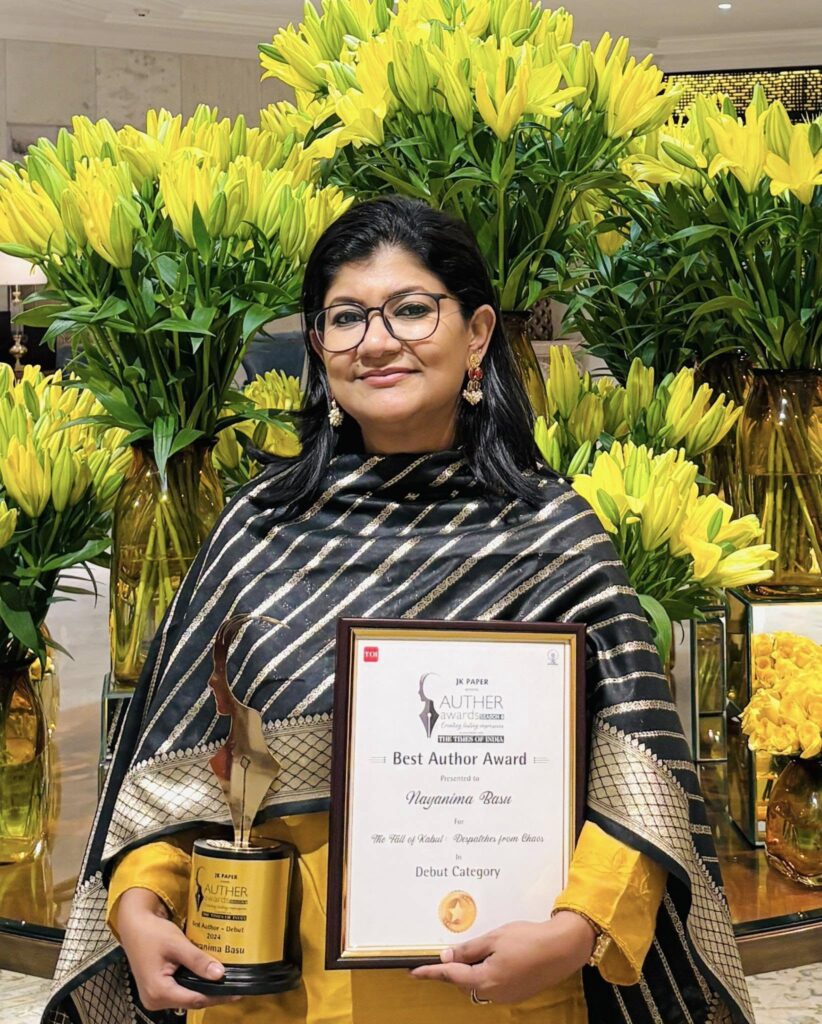
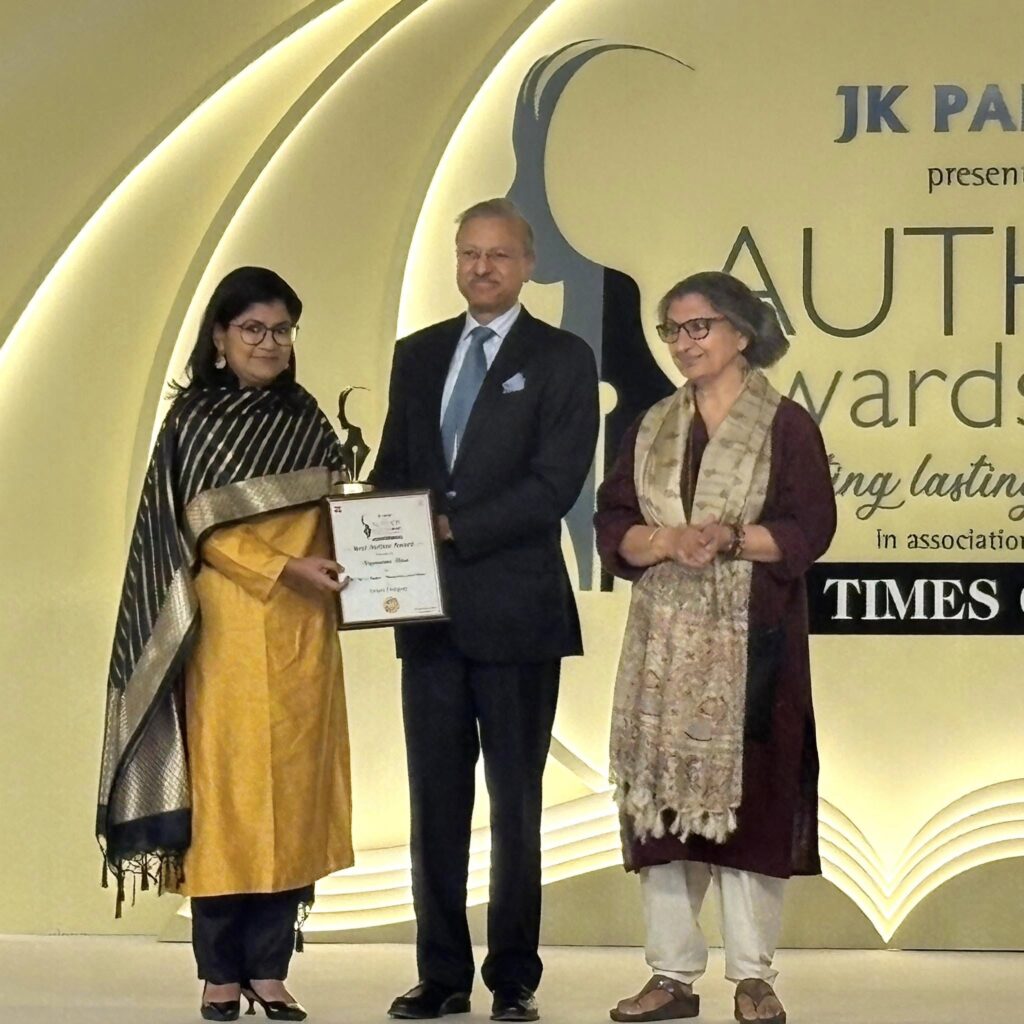
I endorse her book too. It is very well written. It won the debut writer’s prize at AutHer Awards 2025. (Read more here and here.)

As the Literary Director, AutHer Awards, I was pleased that a new voice had been discovered and recognised. I hope Nayanima Basu will write more reportage and publish books regularly. We need balanced and nuanced voices to write about moments in history as we live through them. It is easy to be swayed by popular sentiment, but Nayanima Basu’s commentaries are worth reading in real time. They have gravitas.

Good luck to Nayanima!

16 May 2025

Web Analytics Made Easy -
StatCounter