
‘The state was the most important institution in capitalism’
The following interview was conducted for Moneycontrol. The original link is here. It was published on 26 August 2026.
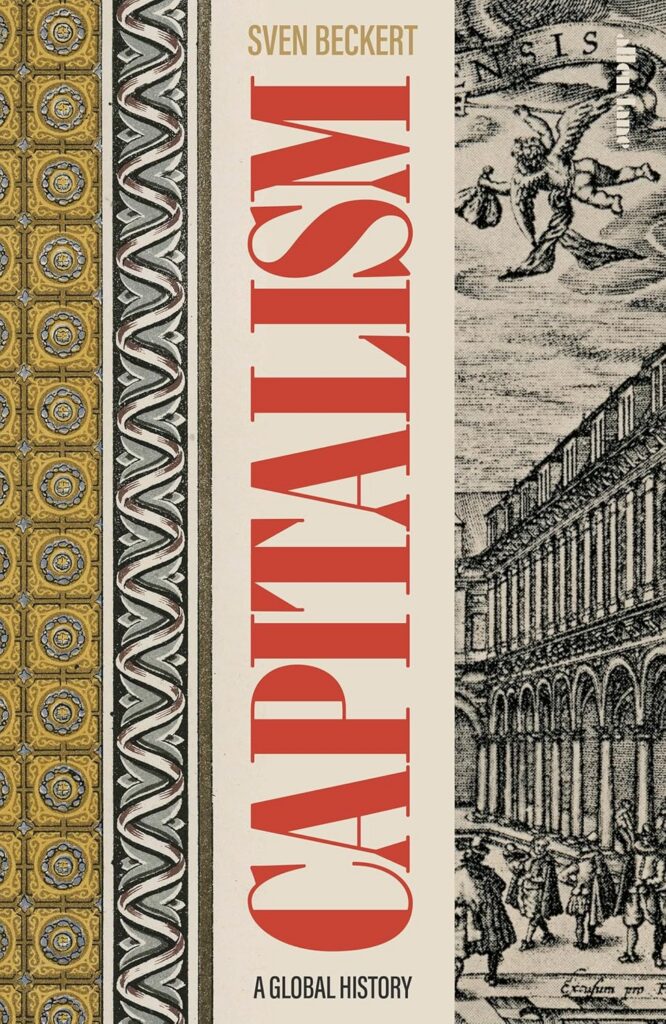
Sven Beckert situates the story of capitalism within the largest conceivable geographical and historical framework. Capitalism, he argues, was born global. Emerging from merchant communities across Asia, Africa and Europe, capitalism’s radical recasting of economic life rooted itself only gradually. Then it burst onto the world scene, as European states and merchants built a powerful alliance that would propel them across the oceans. This epic drama corresponded at no point to an idealised dream of free markets. All along, state-backed institutions and imperial expansions shaped its dynamics. Capitalism decentres the European perspective, highlighting agency, resistance, innovation and ruthless coercion around the world through to the present with the rise of Asian economies, particularly China.
Capitalism is packed with information and historical insights into the thousand pages. This detailed text is similar to that found in the Encyclopaedia Brittanica volumes that always made one curious to know more. It is impressive at the choices made to create a narrative away from the Euro-American narrative and spread it globally. There are tiny examples scattered throughout the text such as Amsterdam being referred to as “Europe’s Surat”. It is almost as if the historian’s knowledge is the bedrock of the narrative but a deep understanding of an economic basis to the relationships forged over time converted the manuscript into a focussed spiel on capitalism.
Early on in the book Beckert says that “Discussions of capitalism have been dominated by a focus on cities and industry, but this book will demonstrate the vital importance of the countryside aa a source of labor, raw materials, and markets, placing peasants, share cropper, and enslaved people alongside artisans, manufacturers, and industrial workers.” It was an interesting observation that nineteenth century artists like J.M. W. Turner were already documenting this shift in their paintings about the shifts in society that the Industrial Revolution had wrought. For example, in Turner’s Rain, Steam and Speed – The Great Western Railway.
Capitalism as any good scholarship must do, raises many questions in the reader’s mind. Beckert quotes Jawaharlal Nehru’s dictum that it is no longer possible to write history “in terms of any one nation or country or patch of territory,” and that we must “think of the world as a whole,” In fact, Beckert asserts that “capitalism was born global — it was always a world economy”. If that is the case, then it raises the question as to what happens to the mixed economy that existed in India before 1991 or the socialist systems in the communist countries before 1989? Would it be correct it to argue that there is sufficient evidence that even largely capitalist economies borrow heavily from socialist principles like welfare states and co-operatives?
Capitalism is a tremendous book. Read it.
Sven Beckert is Professor of History at Harvard University in Cambridge, USA. He has published widely on the economic history of the United States, social history and global history, including his award-winning Empire of Cotton. A Pulitzer Prize finalist, Guggenheim Fellow and an elected member of the American Academy of Arts and Sciences, Beckert’s newest book, Capitalism: A Global History has just been published to great acclaim.
The following interview was conducted via email and has been lightly edited.
- What sparked your interest in this topic — “Capitalism”? What is the story that you wished to tell and what is the story that you ended up telling?
My interest in writing Capitalism: A Global History emerged from two directions. For one, I have spent my career as a scholar thinking about aspects of the history of capitalism. I have written on New York’s economic elite, on nineteenth century labor, on the global history of cotton and many other topics. After I had finished my previous book, Empire of Cotton, I decided that I needed to follow it up with an effort to think about capitalism in its entirety, across a millennium of history and across the world. I wanted to put this important and exciting story, all of it, between two book covers.
Second, we live in capitalism. Capitalism organizes the largest structures we inhabit – how we work, how we consume, how we trade—as well as some of the most intimate aspects of our lives. Capitalism’s emergence and spread is the most significant process of historical change unfolding on planet earth over the past millennium. But often we do not see it, or we think of it as the natural order of the world. My work shows how capitalism is not natural, but historical; how it is a radical departure from the organization of economic life throughout most of human history. The book helps the reader see and understand how capitalism emerged and how it changed significantly across the centuries and across the lands of the world. I wrote the book because I believe that for us to navigate our present, we need to come to terms with capitalism, we need to understand how we got to where we are now.
That’s how the book came into being. I spent eight years researching and writing it. And it ended up roughly where I wanted it to be. I was particularly eager to write about capitalism from a truly global perspective, discarding the powerful but dated Eurocentric narratives that many of us grew up with. And I wanted to write a book that was accessible to a broad audience.
- This is not a Euro-centric book. So, did you hone in upon the trade centres /countries that you choose to write about because of their relevance in the specific historical period or was the selection linked to their relevance in the 21C global economy?
Very good question! The book is written from the past toward the future, as history itself unfolds through time. The present is not necessarily the best guide to what mattered a long time ago. The book, for example, begins with a story about the merchant community of Aden in present day Yemen in the twelfth century. Today, Yemen is probably the poorest country on earth and certainly not at the core of contemporary capitalism. But 900 years ago, its merchants stood at the center of one of the most dynamic trade networks—connecting the Arab world with the western coast of South Asia, across the Indian Ocean. They brought the new and exotic logic that made up the core of capitalism – namely investing privately owned capital productively with the goal of producing more capital—into new areas of the world and new spheres of life. They mattered greatly to capitalism’s history, but not to our present-day world. My work tells capitalism’s history in a roughly chronological manner and seeks to understand each moment of its history on its own terms.
Moreover, I try to tell the global history of capitalism as much as possible from local vantage points—from Aden, as mentioned, from Surat, from Barbados, from Rio de Janeiro, from New York, from Turin and from Mumbai, for example. These locations let me say something important about particular moments in the history of capitalism, but I also chose them because they can surprise readers. When you might expect to be taken to Amsterdam, you are instead learning about Cambay, when you think that the United Kingdom will exemplify the story of global neoliberalism, I take you instead to Chile.
That said, in some ways all history is contemporary history. The world we live in influences the kinds of questions we ask. And this is also the case with my book. When Adam Smith, Karl Marx or Max Weber wrote about capitalism, they lived in a world in which Europe had become the dominant economic actor in the world. Today we live in a world in which—just to cite one example—Asia produces a significantly higher share of global GDP as calculated by purchasing power parity than the United States and Europe combined. This means that we can’t replicate today the stories that were told in the nineteenth century. We have new questions, and we find new answers. In that way the present intrudes in very productive ways upon the past.
- What is the recent historical scholarship, global history, that enabled your rethinking of the history of capitalism? What did you discover in the archives that amazed you as significantly new information that had never been shared or mentioned earlier?
These are really two separate questions. To answer the last one first: I researched this book in archives on all continents—including in various locations in India. This archival research was crucial to understanding certain questions and moments and places in fresh ways and to being able to tell important local stories in great and revealing detail. Spending time at the Godrej archives in Mumbai for example, provided me with new insights and arguments about the importance of anti-colonialism to global capitalism. (And of course to the development of India itself) I spent some time at the National Archives of Barbados, and the documents I found there gave me a new understanding of how the violent history of that island mattered greatly to the unfolding of global capitalism in the seventeenth century. I could provide a long list of further examples of how that research is reflected in the arguments and the narrative of the book, but to me the freshest insights often come from spending time in archives and readings documents that often had gathered dust for decades or centuries.
But let me get back to your first question about the importance of recent scholarship. Yes, it mattered greatly. For about a century, much writing on history was national history, especially as it was practiced in the West. French history. American history. Brazilian history. But in the past 20 years scholars have advocated for more global approaches to history and have shown the exciting opportunities of thinking about connections and comparisons.
My book is deeply informed by that discussion—but it is also different than many works in that newer tradition in that it does advocate an actor-centric perspective on history and it tells the global history not just from a satellite perspective, but from very local vantage points. Moreover, a rethinking of capitalism’s history was possible because in recent years scholars have spent enormous effort and produced important works on the history of capitalism outside Europe and the United States (for example in India), and this research enabled me to bring the non-European world in much greater depth into this global narrative. The work of historians is also always cumulative—we learn from one another, and we know much more today than we knew a generation ago.
- What is a “capitalist revolution”?
As capitalism emerged and spread across space and in society, it changed almost all aspects of our lives. Where people once upon a time produced for subsistence purposes, they now produced for exchange on markets. Where people once upon a time lived within the rhythms of nature, they now lived within a rhythm dictated by machines. Where people lived in a world of very slow economic growth and limited technical invocation, they now lived in a world of rapid and continuous economic growth as well as unfathomably fast and radical technological change. Capitalism is thus not conservative, quite the opposite: It is revolutionary. Indeed, I consider it the most impactful revolution that has ever hit the earth.
- How did you arrive at the thesis: “capitalism is a global development whose local articulation can only be understood globally”? Isn’t this similar to the terms like “global village” and “glocal” that were in vogue some time ago?
Certainly, there is some overlap. The basic take away here is that even seemingly very local stories can only be made sense of when they are embedded within their global contexts. This also applies to national histories—they also only make sense within their respective global contexts. History unfolds on a range of different but always connected spatial scales—from very local to very global. The book tries to always keep all these spatial scales in play.
- Improvements in transport and discovery/mapping of new lands/routes most likely contribute to the global mobility of merchant communities and their merchandise. Would you ever consider making an atlas of the trade routes over the centuries? Probably with transparent sheets denoting different commodities that can be flipped on to the map. And/or have an interactive website with trade routes imposed on modern maps to be accessible to a modern reader. But at the same time, have a tab on the home page that reproduces contemporary maps with the trade routes. Thereby providing both options to the user to visually map the routes across centuries.
A wonderful idea, but beyond of what I myself am capable of. Map making is a skill that takes long training to master—and I don’t have that. It’s a wonderful idea for someone with these skills.
- Despite all the elaborate systems to facilitate global trade, what are the basic principles governing it that have existed through the ages? Trust is one. What would the others be?
There are many, and they changed over time. Trust was certainly important, but how it was constructed and enforced changed quite radically over time. I would also put great emphasis on the state. The state created structures in which trade unfolded and provided enforcement mechanisms. This links to my more general argument that the state was the most important institution in capitalism and that capitalism is the most state centric economic civilization ever — except for Soviet Communism. Moreover, at certain moments, trade is also embedded within mechanisms of coercion and violence—warfare and colonialism both shaped trade in very significant ways. And then there are certain institutions that go back a very long time—hundis for example were crucial to transfer capital from one person to another in a reliable fashion starting many centuries ago.
- What financial agency did women have in strengthening global trade across regions and time periods? Did you discover fresh evidence of their key roles?
Women were central to the history of capitalism on multiple levels. Going back to our discussion of trust, for instance, families were crucial in enforcing trust, and women were central to constructing and maintaining these families. This was a very labor-intensive job, and made women crucial to the world of business. But women also acted as entrepreneurs, and they played crucial roles in transmitting social capital, in raising children, and in managing the marriage market. And, of course, women were absolutely crucial in the world of labor. The first workers in factories were usually girls and women. Millions of women spun yarn in the Indian countryside. Women are still crucial to many economic sectors today. Capitalism is therefore also the outcome of millions of women working very hard and often at very low pay. Just as important, capitalism relies in fundamental ways on reproductive labor outside the market—all that unpaid cooking, cleaning and childrearing that is mostly done by women. Capitalism has always been a gendered order, and my book tries to explain how that order was important to its enormous economic dynamism.
- What was the cross-pollination of regional trade practices that seeped into global trade or adopted by other regions? How many of these features are still visible in modern economic practices?
As merchants traded with each other, they learned from one another. Certain economic practices spread across vast distances very early—by the first half of the second millennium. How to transmit capital across very long distances. How to share risk. How to mobilize capital for large and risky undertakings. But local traditions and local differences also persisted. And practices, of course, changed too. Management and ownership went their separate ways. New forms for the pooling of vast amounts of capital came about. Capital itself become mobile in ways that would have been unimaginable a few centuries earlier. Firms developed entirely new legal structures that allowed them to survive for much longer and to amass much greater sums of capital. The focus of investment itself shifted over time—from trade to agriculture to industry and back to trade and finance. Capitalism never stood still.
- What impact did growing networks of capitalism, access to disposable incomes, the desire for a merchant to be immortal, have upon theological practices and cultural activities?
The logic of economic life under capitalism was thought to be deeply suspicious by many religious traditions. Merchans were often of low social rank—in China, for example, they were considered below the status of rural cultivators. The European Catholic church for a long time despised those who organized their lives around capitalist logic. In the Cham polity (today’s Vietnam), merchants were so feared that an inscription in a temple attributed to the year 875 described them as people “who were likely to abscond with a temple’s wealth,” they were “demonic,” “vicious” and “stupid.” We can find many examples of this hostility to the logic of capitalism across the world. We can conclude from this that the capitalist logic was such a radical departure from how people had structured their economic lives that it encountered tremendous resistances, including from religious authorities.
Of course, things changed. For example, once European merchants became crucial funders of the Catholic church, the Church’s attitudes towards these wealthy traders began to soften as well. But no matter what, there remains a tension to this day between the capitalist logic and religious beliefs. Just think about the Catholic church’s insistence that there is value to human life outside the logic of the market.
- What is post-colonial capitalism?
I take the struggle against colonialism to be the most important event in the history of 20th century capitalism. One of the most damaging effects of colonialism had been the creation of a disjuncture between local nodes of capital and local nodes of state power. India is a very good example. The British colonial government was oriented toward the interests of British capital, not Indian capital. Once the Indian freedom struggle succeeded, a local node of state power emerged that linked up with a local node of capital. That brought new developmental perspectives. This moment of decolonization inaugurated our present world in which economic power across the world has again shifted, especially into the Asian continent (which, incidentally, before Europe’s ascendancy was for many centuries the beating heart of the global economy). We can observe that the freedom struggle in India and elsewhere were crucial to present-day capitalism. The book tells that story in some detail by looking at the political activism of Indian entrepreneurs from the 1890s to the 1940s.
- How do you define capitalism in the age of artificial intelligence?
Capitalism has changed drastically in the past few centuries, and it continues to shapeshift. But its core remains the same: private owner capital is invested with the goal of producing more capital. And thus, I define capitalism today in exactly the same way I define it for the 12th century. Which is also why history is so important to coming to terms with our often-disconcerting present. Without a deep understanding of the history of capitalism, it is difficult understand where we find ourselves today.

Sven Beckert, Capitalism: A Global History, Allen Lane, An imprint of Penguin Random House India, 2026. Hb.


 essential task of being a rich historical documentation of a sterling list while being a repository of world literature translated in to English. Henry Eliot’s comments in the book about Dr Rieu’s vision and his intention of housing only the well-known texts as translations on this list is a good reference point for many of the ongoing discussions in the literary world about translations. In fact Dr Rieu’s classic translation of Homer’s The Odyssey has been prescribed for decades by universities around the world. Dr. Rieu favoured prose but this was (thankfully!) reviewed by his successor, Betty Radice. While reading The Penguin Classics Book I came across a fabulous discussion between Dr E.V. Rieu and Rev. J. B. Phillips on


